Finding Auto Glass Replacement Near Me
Searching for 'auto glass replacement near me'? Our guide covers cost, insurance, ADAS recalibration, and choosing the best local shop for your car's safety.
Oct 12, 2025
generated
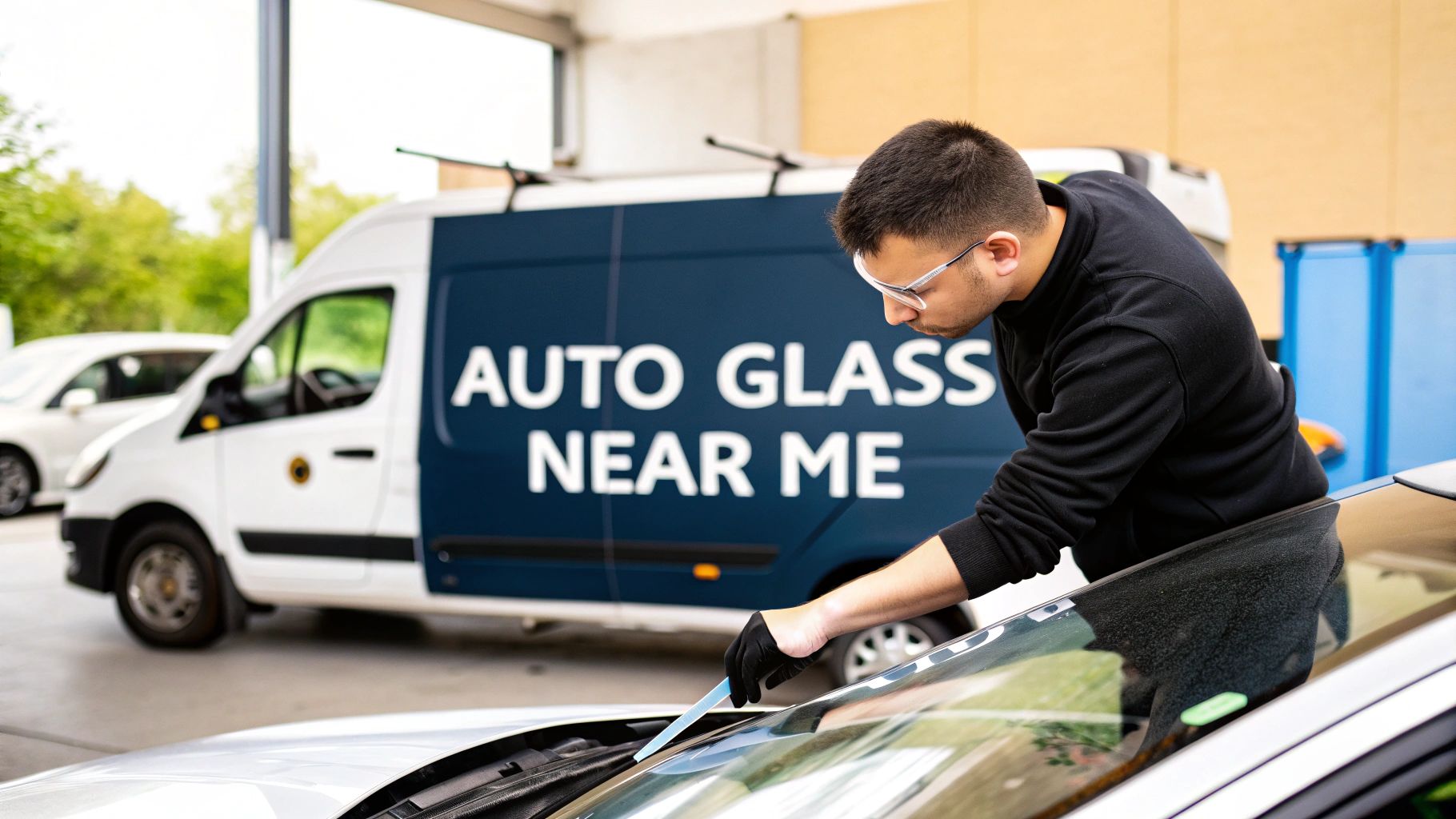
That little crack in your windshield? It’s more than just an annoying distraction. It’s a serious safety failure just waiting to get worse. Searching for an auto glass replacement near me is about way more than fixing your view—it’s about restoring the life-saving safety systems your car was built with. When your windshield is compromised, it can affect everything from how your airbags deploy to the roof's stability in a crash.
Why Your Windshield Is a Critical Safety Feature
It's easy to think of a windshield as just a shield against wind and rain. But in reality, it’s a highly engineered piece of your car's structural framework. A good way to think about it is like the keystone in a stone arch; if you remove it, the whole structure becomes dangerously weak.
This infographic breaks down why a windshield is so much more than a simple window.

As you can see, the main point of a proper replacement is to restore that original strength, making sure your car protects you exactly as the engineers intended. This isn't a small detail; it's a feature that can save your life.
The Unsung Hero of Vehicle Safety
A professionally installed windshield does two critical jobs that most people never even think about. First, it provides a huge amount of your vehicle's roof strength. If you’re ever in a rollover accident, the windshield is what helps stop the roof from caving in, protecting the people inside. In fact, it can provide up to 60% of the cabin's structural strength in a rollover.
Second, the windshield is absolutely essential for the passenger-side airbag to work correctly. When that airbag inflates, it’s designed to bounce off the windshield to cushion the passenger. A cracked or poorly installed windshield can shatter or even pop out from the force, making the airbag useless right when it's needed most.
A compromised windshield doesn’t just block your view; it weakens the entire safety cage designed to protect you. Driving with a damaged windshield is like choosing not to wear a seatbelt.
Understanding Glass Quality: OEM vs. Aftermarket
When it's time to replace your auto glass, you’ll hear two terms pop up: Original Equipment Manufacturer (OEM) and aftermarket. It’s important to know the difference.
OEM Glass: This glass is made by the very same company that made the original windshield for your car. It’s a guarantee you’re getting a perfect fit, the same quality, and a seamless connection with any cameras or sensors attached to it.
Aftermarket Glass: This glass is made by a different company. While it’s designed to fit your vehicle, it can sometimes differ in thickness, clarity, or even the curve. It's usually a cheaper option, but it might not live up to the original’s exact specifications.
The choice isn't just about saving money. It's about safety. A windshield that doesn't fit perfectly can cause annoying wind noise and water leaks, but more importantly, it might not provide the structural support your car needs in an accident.
Choosing Between Mobile and In--Shop Service
When your windshield shatters, one of the first questions you’ll face is a practical one: should the technician come to you, or should you take your car to them? Deciding between a mobile service and an in-shop replacement isn't just about convenience—it's about getting the job done right for your specific vehicle and situation. The answer often comes down to your car's tech, your daily schedule, and even what the weather looks like outside.

There's no denying the appeal of mobile service. Instead of carving out half your day to sit in a waiting room, the shop comes to your driveway or office parking lot. It's a lifesaver for busy parents or professionals who can't hit pause on their day. A skilled tech can get the work done while you're in a meeting or making lunch.
But there’s a catch. Mobile replacement is at the mercy of Mother Nature. If it's raining, brutally cold, or incredibly humid, the specialized urethane adhesives used to bond the glass won't cure correctly. A bad cure means a weak seal, which can compromise the structural integrity of your vehicle and your safety.
The Case for In-Shop Precision
Taking your car to the shop guarantees a perfectly controlled environment, and for today's cars, that's a huge deal. It’s the difference between a surgeon working in a sterile operating room versus a medic in a field tent. Both can save the day, but the OR ensures every single variable is managed for a complex procedure. That's what a shop environment does for your windshield.
The biggest advantage of an in-shop replacement is taking weather and other variables completely out of the equation. Consistent temperature and humidity are key for getting that high-strength adhesive to bond perfectly, creating the factory-tight seal your car's safety systems rely on.
This controlled setting is absolutely essential for any vehicle with Advanced Driver-Assistance Systems (ADAS). These are the cameras and sensors mounted to your windshield that run features like automatic emergency braking and lane-keeping assist.
After a new windshield goes in, those systems must be recalibrated. This isn't a simple software reset; it's a precision process requiring special targets, perfectly level ground, and specific lighting—conditions that can only be guaranteed in a dedicated service bay. Skipping this step can make your safety features dangerously unreliable.
Making the Right Choice for You
So, what's the verdict? It really boils down to weighing convenience against your car's specific needs. If you have an older car without any fancy camera systems and the weather is clear and mild, a mobile replacement is a fantastic and efficient option.
However, for any newer vehicle equipped with ADAS, an in-shop appointment is the only way to go. It’s the safest and most reliable choice, period.
Mobile vs In-Shop Service At a Glance
Still on the fence? This side-by-side comparison should help you quickly decide between mobile convenience and in-shop precision.
Feature | Mobile Replacement | In-Shop Replacement |
|---|---|---|
Convenience | High—the technician comes to you. | Lower—you have to bring your car to the shop. |
Environment | Dependent on good weather (no rain, extreme temps). | Climate-controlled and consistent every time. |
ADAS Recalibration | Rarely possible and not recommended. | The ideal and necessary setting for accuracy. |
Best For | Older vehicles, simple glass, good weather days. | All modern vehicles, especially those with ADAS. |
In the end, finding the best "auto glass replacement near me" isn't just about speed—it's about ensuring your vehicle is as safe as it was when it left the factory. A trustworthy glass provider will always assess your car's needs and guide you to the right choice.
Breaking Down Auto Glass Replacement Costs
Ever searched for "auto glass replacement near me" and wondered why the quotes are all over the map? It’s not random. The final bill is a mix of several key ingredients, and each one plays a big part in the total price.
Think of it like buying a car. The base model has one price, but adding the sunroof, the premium sound system, and the upgraded engine? That final number starts to climb. Auto glass works the same way.
The first thing that sets the price is your vehicle itself. The make, model, and year are the starting point. It makes sense that a windshield for a brand-new luxury SUV, packed with technology, will cost a lot more than one for a 15-year-old sedan. The size, shape, and sheer complexity are just in different leagues.
Key Factors That Influence Your Quote
Beyond the basics of your car, a few specific features really drive up the cost. Each one adds a layer of tech or a manufacturing headache that affects the final price tag.
Specialized Glass: Does your windshield have a little rain sensor that turns on the wipers automatically? Or maybe a heating element for those icy mornings? How about a built-in radio antenna? Each of these features means you need a special piece of glass and a technician who knows how to handle it.
OEM vs. Aftermarket Glass: We've touched on this before, but it's a big one. Original Equipment Manufacturer (OEM) glass is the exact same stuff your car had when it rolled off the assembly line. It’s a perfect match but also the priciest option. Aftermarket glass is a solid, budget-friendly choice, though you might find tiny variations in quality or fit.
ADAS Recalibration: This is the big one—the "hidden" cost that’s absolutely non-negotiable for any modern car. If your vehicle has lane-keep assist, automatic braking, or adaptive cruise control, that forward-facing camera on your windshield has to be recalibrated. It’s a high-precision job that requires special equipment to get it right.
Getting a handle on these variables is key. It’s no surprise that the U.S. auto window replacement industry is expected to hit $3.1 billion in revenue by 2025. All this new tech in our cars is driving that growth, and it’s directly shaping what we pay for repairs. You can see these trends playing out in recent industry analyses.
Why ADAS Recalibration Is a Critical Investment
It’s tempting to look at ADAS recalibration as an optional line item you can skip to save a few bucks. Let me be clear: that’s a huge mistake.
Failing to recalibrate that camera is like getting a new pair of prescription glasses but keeping the lenses from your old, weaker prescription. Everything would be dangerously out of focus.
An uncalibrated ADAS camera can’t judge distances correctly. It might not see the lane markings, or worse, it could completely disable your automatic emergency braking system right when you need it most. The cost of recalibration is a small price to pay to make sure your car's life-saving features are actually ready to save your life.
Any shop worth its salt will automatically include this service in their quote if your car needs it. Knowing what goes into the price puts you in the driver’s seat. For a deeper dive, check out our comprehensive guide on windshield replacement. This will give you the confidence to talk to your technician, ask the right questions, and make sure the job gets done right.
Navigating Your Insurance Claim
Let's be honest—nobody wants to deal with insurance paperwork. When you've got a cracked windshield, the last thing you want is to spend an hour on the phone with your insurance company. The good news? You probably don't have to.
Most quality auto glass shops are pros at handling the insurance side of things for you. They turn what feels like a major chore into a simple conversation. Knowing a bit about your coverage beforehand, though, can make the whole process completely stress-free.
Your auto insurance policy holds all the answers. Most of the time, a cracked or shattered windshield is covered under the comprehensive part of your policy. This is the coverage for damage that doesn't happen in a collision—think hail, a stray rock on the highway, or even vandalism. Some policies also have a special full glass coverage option, which is fantastic because it often means you have $0 deductible for glass replacement.
The Claims Process, Demystified
Filing a claim is way more straightforward than it sounds, especially when you let the glass shop take the lead. They talk to insurance companies all day, every day, so they know exactly what's needed to get your job approved fast.
Call the Glass Shop First: This might sound backward, but it's the best first step. Before you even think about calling your insurance agent, get in touch with the shop you want to use. They can look up your coverage and often start the claim for you, saving you a ton of time and hassle.
Have Your Info Ready: You'll need your insurance policy number, a rough idea of when the damage happened, and your car's basic details (year, make, and model).
Approval and Scheduling: The shop will then contact your insurance company directly to verify everything and get the green light. As soon as it's approved, they’ll call you to get your replacement on the calendar.
A common worry we hear is, "Will a glass claim make my rates go up?" The answer is almost always no. Comprehensive claims are typically considered "no-fault" incidents. Since it wasn't your fault a rock hit your windshield, it doesn't count against your driving record and is highly unlikely to affect your premium.
When Paying Out-of-Pocket Makes Sense
Using your insurance is usually the way to go, but it isn't always the cheapest option. It all comes down to your deductible—that's the amount you have to pay before your insurance plan starts paying.
Let's say your comprehensive deductible is high, like $500 or even $1,000. If the total cost to replace your windshield is close to or less than that amount, it might be smarter to just pay for it yourself. You avoid having a claim on your record and simply handle the bill directly with the shop.
The best way to know for sure is to get a quick quote. When you're searching for "auto glass replacement near me," just ask for the out-of-pocket price. That one number will give you all the info you need to make the right call for your wallet.
The Critical Role of ADAS Recalibration
If your car has features like lane-keeping assist or automatic emergency braking, your windshield is doing a lot more than just keeping the wind and rain out. It’s actually the eyes for your vehicle's Advanced Driver-Assistance Systems (ADAS). These life-saving technologies depend on a forward-facing camera, usually mounted right on the windshield, to read the road ahead. When you get a new windshield, that camera’s view can get knocked completely out of whack.
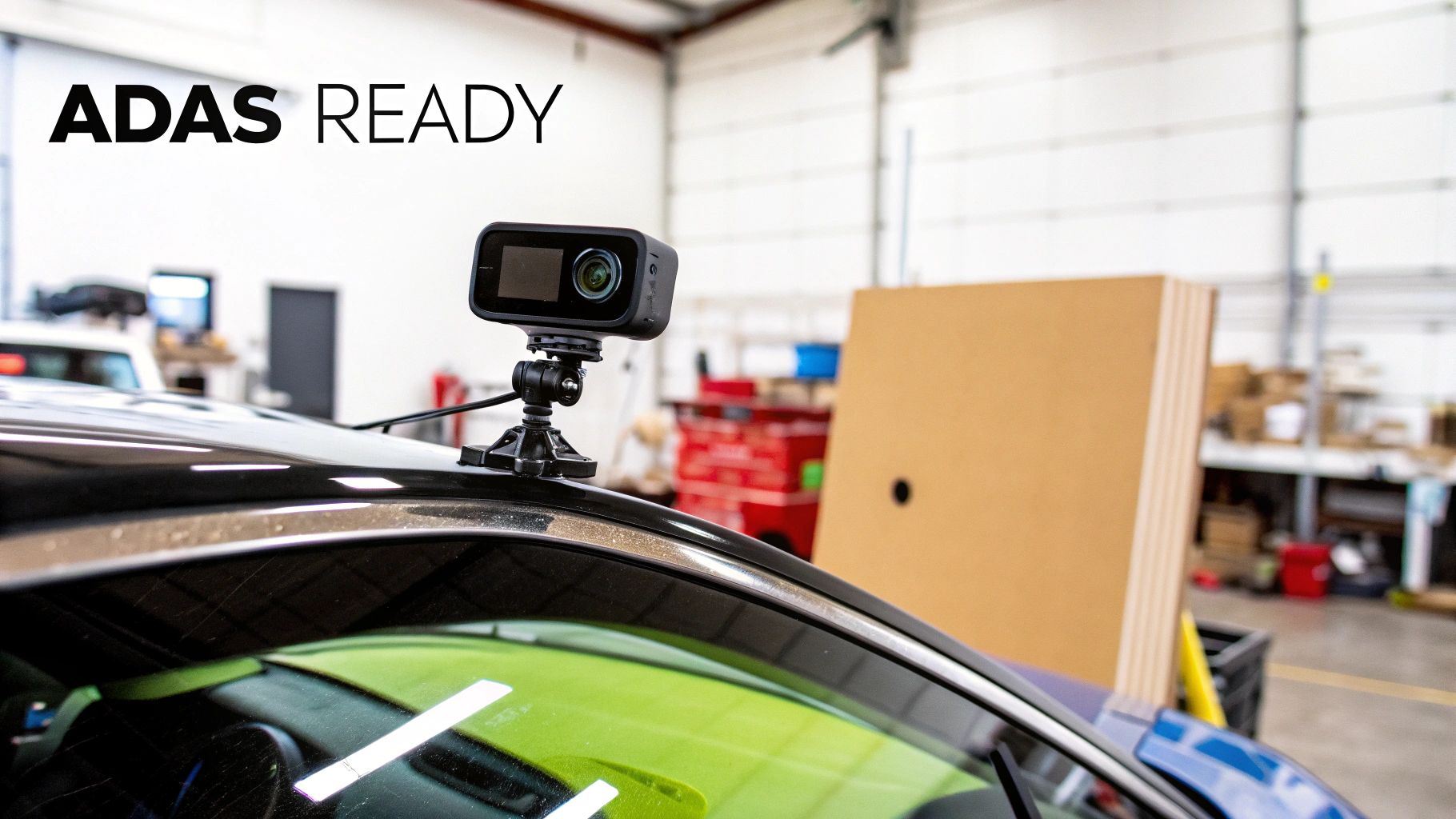
Think about it like this: getting a new windshield without recalibrating the camera is like putting on a new pair of prescription glasses without checking if the lenses are right for your eyes. Everything might look okay at first glance, but your perception of the world—and the road—will be dangerously off. That's why ADAS recalibration isn't just an optional add-on; it's an absolutely essential step for any modern vehicle.
This technology is a huge part of the auto industry's future. The global market for automotive glass replacement is expected to hit around $58.5 billion by 2029, a massive leap from $40.7 billion in 2025. A huge chunk of that growth comes from the demand for sensor-compatible glass and the specialized services needed for ADAS-equipped cars. If you're interested in the numbers, this detailed automotive glass industry report breaks down these market trends.
Understanding the Types of Recalibration
Recalibration isn't a simple, one-size-fits-all job. Car manufacturers design their systems differently, so your technician will use one of two specific methods to get your car’s safety camera aimed perfectly again.
Static Recalibration: This is done inside the shop with the vehicle parked. The technician sets up a specific target board in front of the car and uses specialized diagnostic tools to align the camera with the manufacturer's exact specifications. It's a precise process that requires a perfectly controlled environment.
Dynamic Recalibration: Just like it sounds, this one happens while the car is moving. A technician takes the vehicle for a drive on clearly marked roads, using a handheld device plugged into the car's computer. This allows the camera to recalibrate itself by reading its surroundings in real time.
No matter which method is used, the objective is the same: making sure your car’s safety features work exactly as they were engineered to.
Critical Safety Takeaway: Skipping ADAS recalibration can make your safety systems completely useless. Worse, they could act unpredictably. An uncalibrated system might not see a stopped car in time or could even steer the vehicle incorrectly, turning a helpful feature into a serious hazard.
Why You Cannot Skip This Step
When you start searching for an "auto glass replacement near me," one of the first questions you should ask is whether the shop is certified to perform recalibration. Even a tiny, one-millimeter shift in the camera's position on the new windshield can cause the system to miscalculate distances by several feet down the road.
This isn't an upsell or a way for shops to pad the bill. It’s a non-negotiable part of a safe, professional repair. Any trustworthy auto glass provider will explain the need for it and build it into the quote for a vehicle with ADAS. We have a guide where you can learn more about ADAS windshield calibration that dives deeper into the technical side. At the end of the day, having it done right is the only way to get your car back to its factory-level safety standards.
Finding the Right Local Auto Glass Shop
Now that you have a handle on the process, your search for "auto glass replacement near me" probably feels a lot less daunting. The real goal isn't just to find the cheapest or fastest option; it's to find a pro who puts your safety first. But how can you tell the good ones from the rest? It all starts with their training and the materials they have on their truck.
A reputable shop won’t be shy about its qualifications. You want to see technicians certified by the Auto Glass Safety Council (AGSC). This isn't just a fancy certificate to hang on the wall—it's proof that they’re up-to-date on the latest safety protocols and installation techniques. Think of it as a baseline for professionalism.
Just as critical is the adhesive, or urethane, they use. This is the heavy-duty glue that literally holds your windshield to your car's frame. A top-notch installer will only use OEM-grade urethane, which creates a bond as strong as the one from the factory. This is non-negotiable for your car's structural safety and for making sure your airbags deploy correctly in a crash.
Questions to Ask Before You Commit
When you call around for quotes, don't let the conversation stop at the price. This is your chance to interview them and gauge their expertise. A few direct questions can tell you everything you need to know about their standards.
Here’s a quick checklist to run through:
"Are your technicians AGSC certified?" This is a simple yes-or-no question that speaks volumes about their training.
"What kind of adhesive do you use, and what’s the minimum drive-away time?" This gives you insight into the quality of their materials and their commitment to your safety.
"Can you explain your process for ADAS recalibration?" If you have a newer vehicle, their answer should be confident and clear, not vague or dismissive.
"What does your warranty cover?" Look for a lifetime warranty that covers leaks and any defects in the workmanship. That’s the industry standard.
The auto glass market is booming, expected to hit a value of around $32 billion by 2025. This explosion is driven by all the new tech in our cars, which forces the best shops to constantly invest in new training and equipment.
Reading Between the Lines of Customer Reviews
Online reviews are a fantastic tool, but you have to learn how to interpret them. Don't just glance at the star rating; dive into the actual comments. Are people mentioning the technician by name and praising their professionalism? Do they comment on how clean the work area was left?
Pay special attention to reviews that bring up problems after the job was done, like new wind noise or water leaks. One disgruntled customer isn't a death sentence, but if you see a pattern of the same complaints, that's a serious red flag.
By putting it all together—checking for certifications, asking the right questions, and carefully reading reviews—you can feel confident you're choosing a great local shop. If you’re ready to find a certified installer, you can check our list of service locations to get started.
Frequently Asked Questions About Auto Glass
Even after you've done your research, you probably still have a few lingering questions. It's completely normal. When you're searching online for "auto glass replacement near me," a few specific concerns almost always pop up. Getting straight answers to these can make all the difference in choosing the right shop.
Let's tackle the most common one right away: "How long is this actually going to take?" A skilled technician can typically get the old glass out and the new windshield installed in about 60 to 90 minutes. But the job isn't finished when the tools are put away.
The real waiting game is for the adhesive to cure. This is what an expert will call the Safe Drive-Away Time (SDAT), and it's non-negotiable for your safety. Depending on the specific urethane used and factors like humidity and temperature, you could be waiting anywhere from another hour to several hours before your car is truly ready for the road.
What Happens After the New Glass Is In?
Once your new windshield is installed, there are a few simple but crucial rules to follow. Your technician will walk you through them, but here’s a quick rundown to ensure that new seal sets perfectly and lasts for years.
Hold Off on the Car Wash: This is a big one. Avoid any high-pressure car washes for at least 24 to 48 hours. Those powerful water jets can easily damage the fresh seal before it's fully cured.
Crack a Window: For the first day or so, leave one of your side windows cracked open about an inch. This simple trick equalizes the air pressure when you shut your doors, preventing it from pushing outward on the new windshield seal.
Be Patient with the Tape: Technicians often use retention tape to keep the moldings secure while the adhesive sets. Just leave it be for at least 24 hours, then you can peel it off gently.
A question I hear all the time is, "Can't you just fix this little chip?" The answer is sometimes! If the damage is smaller than a quarter and isn't directly in your line of vision, a repair is usually a great, cost-effective option.
But once a crack starts to run, especially if it’s more than a few inches long or has reached the edge of the glass, a full replacement is almost always necessary. At that point, the windshield's structural integrity is compromised, and a repair just won't cut it.
When you need a reliable, professional, and convenient solution, trust the experts at Auto Renu Auto Glass LLC. We bring certified service directly to you, handling everything from the replacement to the insurance claim. Get your free estimate and schedule your mobile service today by visiting the Auto Renu Auto Glass website.