Finding the Best Window Tint for Cars A Complete Guide
Discover the best window tint for cars with our guide. We explain ceramic vs. carbon films, VLT, and how to choose the perfect tint for your needs.
Jan 27, 2026
generated
best window tint for cars, ceramic window tint, car tinting guide, auto window tint
For most drivers, the best window tint for cars is easily ceramic film. It delivers incredible heat and UV rejection without messing with your phone or GPS signals. But if you're looking for a sweet spot between performance and price, a quality carbon tint is a fantastic choice, offering a durable, sleek matte finish that's miles ahead of basic dyed films.
Choosing the Right Car Tint for Your Needs
Finding the "best" tint isn't about one specific brand or product. It’s about figuring out what you need. Are you trying to survive a brutal summer commute? Do you want more privacy from prying eyes? Or are you just hoping to keep your dashboard from cracking and fading?
Each goal points you toward a different type of tint. Think of this guide as your cheat sheet. We'll help you decide if you need the elite heat-blocking power for a sun-drenched daily drive or a stylish, budget-friendly option to just darken your windows.
The Main Contenders in Car Window Tinting
To make a smart choice, you have to know the players. The market really boils down to three main types of window film, and each has its own unique strengths when it comes to performance and cost. It's no surprise the demand is exploding—the global automotive tinting market hit a staggering USD 7.59 billion in 2024. More and more drivers want top-tier heat rejection and UV protection to make their time on the road more comfortable. You can read more about the automotive tinting market's rapid expansion if you're curious.
Here’s a quick rundown of your main options:
Ceramic Tint: This is the top of the line. It blocks an incredible amount of heat and UV rays without any metal, so it won’t interfere with your electronics.
Carbon Tint: A great middle-ground choice. It’s known for being tough, having a non-reflective matte look, and blocking heat effectively without fading.
Dyed Tint: The most affordable way to get that tinted look. It's great for privacy and style but offers only basic heat rejection.
To give you a clearer picture before we dive deep into the details, the table below offers a simple side-by-side comparison of how these films stack up.
Quick Comparison of Popular Car Window Tints
This table gives you a snapshot of the most popular window tint films, comparing them on the factors that matter most to car owners.
Tint Type | Heat Rejection | UV Protection | Signal Clarity | Cost Level | Ideal For |
|---|---|---|---|---|---|
Dyed | Low-Moderate | Good | Excellent | Low | Drivers prioritizing privacy and style on a tight budget. |
Carbon | High | Excellent | Excellent | Mid | Those wanting a durable, non-fading matte look with great heat blocking. |
Ceramic | Highest | Excellent | Excellent | High | Car owners who demand the absolute best heat rejection and clarity. |
As you can see, your choice really comes down to balancing your budget with the level of performance you expect from your tint. Now, let's explore each one a bit more.
Decoding the Different Types of Car Window Tint
Picking the right window tint for your car is a bit like choosing a good jacket. Some are just for looks, while others are engineered for serious protection against the elements. The truth is, not all window films are created equal—they're built with different technologies that deliver vastly different results for comfort, privacy, and how long they'll last.
Let's pull back the curtain on what separates a basic tint from a high-performance one. We'll walk through the four main types on the market today, using some simple analogies to make the tech less intimidating. This way, you'll know exactly what you're paying for and which film actually makes sense for you and your car.
Dyed Window Tint: The Classic Choice for Privacy
Dyed window tint is the old-school original and still the most affordable option out there. Think of it as a solid pair of sunglasses for your car. Its main job is to absorb sunlight, which is what makes the glass dark and gives you that classic tinted look and a real sense of privacy.
The film itself has a layer of dye that soaks up light and heat. While it’s great at blocking over 99% of the harmful UV rays that fade your interior and damage your skin, it’s only so-so when it comes to rejecting heat.
Pros: It’s the easiest on the wallet, gives you great privacy, and stops UV rays in their tracks.
Cons: It offers the least heat rejection, and over time, the dye can fade and turn that dreaded shade of purple.
Best For: Anyone whose main goals are privacy and a tinted aesthetic, without needing top-of-the-line heat blocking.
Metalized Window Tint: A Reflective Heat Shield
Next in line is metalized tint, which uses a completely different strategy to handle the sun. Instead of just absorbing heat like a dyed film, it has tiny, microscopic metal particles woven into it that literally reflect the sun's energy away from your car. This makes it a huge step up in keeping your cabin cool.
That reflective quality also makes the film incredibly strong and shatter-resistant, which adds a nice layer of security. The big catch? Those same metallic particles that are so good at blocking the sun can also block radio, GPS, and cell phone signals.
This signal interference issue is a major reason why drivers have shifted toward newer technologies like carbon and ceramic films, especially with how connected our cars are today.
Carbon Window Tint: Durable Performance Without the Static
This is where the technology really starts to get impressive. Carbon window tint has zero metal in it. Instead, it’s infused with carbon particles that are fantastic at absorbing and dispersing infrared light—that's the type of light that makes you feel the heat. A good carbon film can block 40% or more of the infrared heat that would otherwise bake your interior.
The result is great heat rejection and UV protection without any risk of messing with your electronic devices. Plus, carbon film has a deep, true-black matte finish that looks incredibly sleek and is guaranteed not to fade or turn purple. It’s the perfect sweet spot, offering strong performance and lasting quality. If you want to get into the nitty-gritty, you can learn more about how window tinting works and why these materials matter so much.
Ceramic Window Tint: The Ultimate in Heat Rejection and Clarity
Finally, we've arrived at the top of the mountain: ceramic window tint. This is the most advanced, highest-performing film you can get. Think of it as a transparent thermal shield for your glass. It uses non-metallic, non-conductive ceramic nanoparticles that are engineered to target and block solar heat without having to be dark or reflective.
Ceramic film is an absolute beast when it comes to rejecting infrared light, often blocking over 90% of IR rays. This is what delivers the best heat rejection possible, keeping your car noticeably cooler on even the most brutal summer days.
Here’s why ceramic stands in a class of its own:
Maximum Heat Rejection: Nothing beats it for keeping your car comfortable when temperatures soar.
Superior Clarity: You get incredible visibility looking out, day or night, with no haze or distortion.
No Signal Interference: It's 100% metal-free, so your phone, GPS, and satellite radio will work flawlessly.
Unmatched Durability: It’s extremely scratch-resistant and built to last the life of your vehicle without fading, bubbling, or discoloring.
Yes, it’s the most expensive option. But for anyone looking for the absolute best window tint for cars, the investment in ceramic pays off with incredible comfort, protection, and longevity. It's the undisputed champion for modern vehicles and for drivers who simply want the best.
Making Sense of Tint Specs: VLT, Heat Rejection, and UV Protection
When you start looking at window tint quotes, the acronyms and percentages can feel like a foreign language. But understanding terms like VLT, IRR, and UV rejection is what separates a purely cosmetic choice from a high-performance upgrade. It’s the key to choosing the best window tint for cars.
Let's demystify these technical specs. Think of them as the "nutrition label" for your window film. Just like you'd read the ingredients on a food label, you need to check these numbers to know exactly what kind of comfort and protection you're really getting for your car.
What Does Visible Light Transmission (VLT) Mean?
The first and most common spec you'll see is Visible Light Transmission, or VLT. In simple terms, VLT tells you how dark the tint is. The percentage represents how much visible light the film allows to pass through into your car.
A lower VLT percentage means a darker tint. A higher VLT percentage means the film is lighter and more transparent.
5% VLT: This is what most people call "limo tint." It offers maximum privacy but makes it much harder to see out, especially at night. It's illegal for front windows in almost every state.
20-35% VLT: This is a very popular range. It gives your car that sleek, dark look and solid privacy without being as restrictive as limo tint.
50-70% VLT: This is a much lighter shade. A film with 70% VLT looks almost clear, but don't be fooled—a high-quality ceramic version can still block an incredible amount of heat.
One of the biggest myths in tinting is that darker is always better for heat rejection. That's just not true anymore. A light, high-tech ceramic tint can easily keep a car cooler than a dark, old-school dyed film. This brings us to the metric that really matters for comfort.
This flowchart breaks down how different tint technologies deliver unique benefits—from the impressive heat-blocking power of ceramic films to the simple privacy of dyed options.
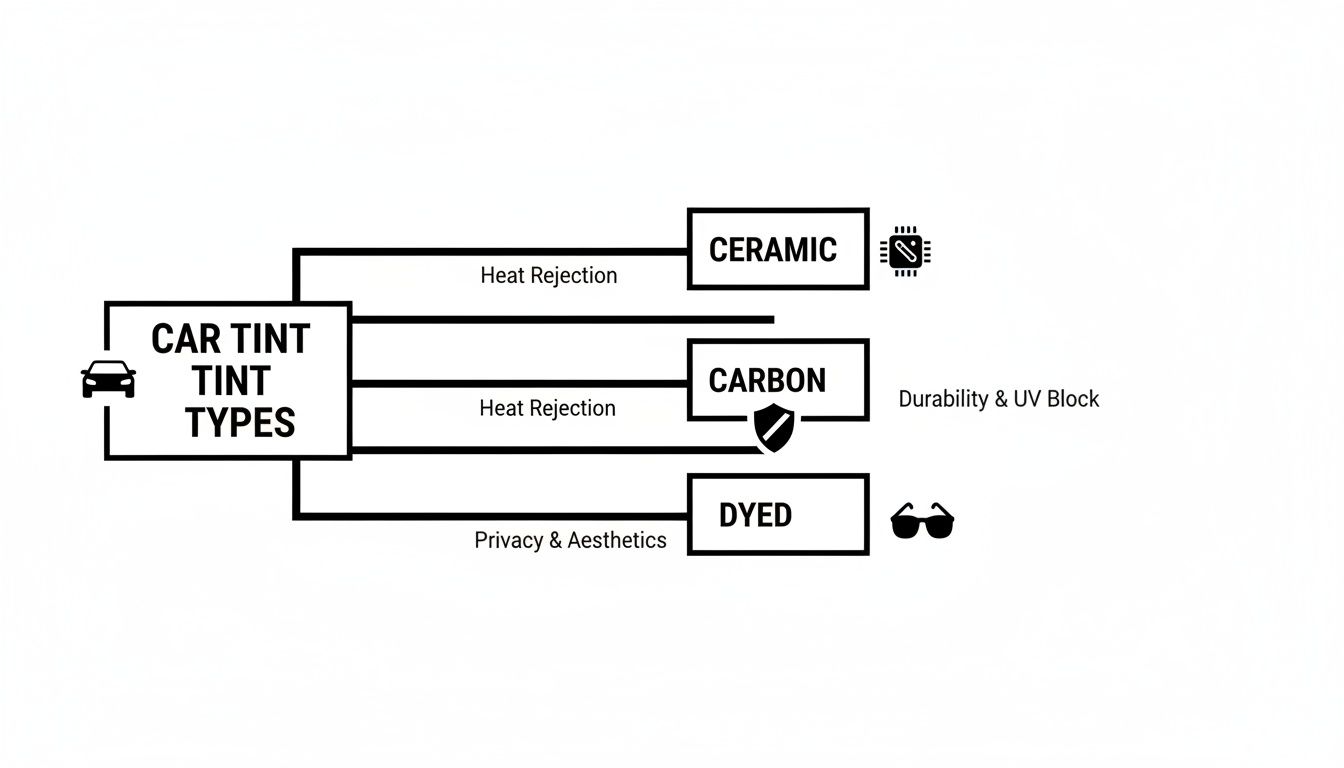
It’s a great visual reminder that your choice is all about balancing performance, durability, and cost to find the perfect fit for your car and your needs.
Why You Should Care About Infrared Rejection (IRR)
While VLT is about what you see, Infrared Rejection (IRR) is all about what you feel. Infrared light is the invisible part of the solar spectrum that we experience as heat. So, a high IRR rating is the secret weapon for keeping your car's interior from feeling like a sauna on a sunny day.
Let's paint a picture. Imagine two cars parked side-by-side in a scorching parking lot. One has a basic, dark dyed tint. The other has a quality ceramic tint. When you open the door to the first car, a wave of heat hits you. The second car? It's noticeably cooler and more comfortable. That’s the difference a high IRR makes.
When you're comparing films, pay close attention to the IRR percentage. A top-tier ceramic film can block over 90% of infrared heat, which makes a huge difference in cabin comfort and means you won't have to blast your A/C on full all summer.
The Hidden Power of 99% UV Protection
Finally, let's talk about UV Rejection. We can't see or feel ultraviolet rays, but they cause a lot of damage over time. They're the reason your car's dashboard cracks, your leather seats fade, and other interior surfaces start to look old and worn. More importantly, they're the same rays that harm your skin.
The good news is that virtually all quality window films today—from the most affordable dyed options to the most advanced ceramics—block over 99% of harmful UV rays. This feature is like applying a powerful, permanent sunscreen to your car's windows. It’s one of the best investments you can make to protect your vehicle's interior from aging and to shield yourself and your passengers from sun exposure during every drive.
Here's a quick cheat sheet to help you translate these technical specs into real-world benefits.
What Window Tint Performance Metrics Mean
Metric | What It Measures | Why It Matters for You |
|---|---|---|
VLT (Visible Light Transmission) | The percentage of visible light that passes through the film. | Determines the tint's darkness. A lower percentage means a darker look and more privacy. |
IRR (Infrared Rejection) | The percentage of heat-causing infrared light the film blocks. | This is your comfort metric. High IRR keeps the cabin cool and reduces A/C strain. |
UV Rejection | The percentage of damaging ultraviolet rays the film blocks. | Protects your skin from harm and prevents your car's interior from fading and cracking. |
TSER (Total Solar Energy Rejected) | The total amount of solar energy (UV + visible + IR) blocked by the film. | This is the most complete measure of a tint's overall performance. |
Understanding these key numbers moves you beyond just picking a shade you like. It empowers you to choose a film that delivers the specific performance you need, whether it's maximum heat rejection, ultimate privacy, or just protecting your car's interior for the long haul.
Navigating Your Local Window Tinting Laws
Picking out the perfect tint film is exciting, but it's only half the job. The other, more critical half is making sure your slick new upgrade is actually legal. Every state has its own set of rules designed to keep drivers safe on the road, and these laws can change dramatically the moment you cross a state line.
If you ignore these regulations, you're setting yourself up for a real headache. You could end up with a "fix-it" ticket, which means you'll have to tear off that brand-new film you just paid for. Even worse, you could be facing some hefty fines. This is where a professional installer's knowledge is worth its weight in gold—they know the local VLT limits inside and out and can help you find a film that checks all your boxes while keeping you on the right side of the law.
VLT Limits Aren't One-Size-Fits-All
State tint laws don't just throw out a single number for the whole car. They get very specific, breaking down exactly how dark you can go window by window, using that VLT percentage we talked about.
Here’s a typical look at how these rules are laid out:
Front Side Windows: These almost always have the tightest restrictions. States want to ensure the driver has a clear, unobstructed view, so the VLT allowed here is usually higher (meaning a lighter tint), often around 35% or even as high as 50%.
Rear Side Windows: Things usually get a bit more lenient for the back passengers. Many states let you go much darker here, sometimes all the way down to 5% VLT (often called "limo tint") for maximum privacy.
Rear Windshield: Like the rear side windows, the back glass can typically be tinted darker. However, there's often a catch: you must have fully functional side mirrors to compensate for any reduced visibility.
This tiered system is all about striking a balance—giving you the privacy and comfort you want without compromising safety for everyone else on the road. For example, if you're in Texas, knowing the specific Texas state inspection requirements is crucial for making sure your tint will pass inspection without a problem.
What About Medical Exemptions?
Many states have a process for medical exemptions. If you have a diagnosed medical condition that causes light sensitivity, you may be able to get a special permit to install a darker tint than what's normally allowed.
This isn't just a doctor's note you can tuck in your glove box. It's a formal process that typically requires a signed prescription or an official waiver from a physician. You'll need to keep this official documentation in your vehicle at all times in case you're ever pulled over.
The Real Cost of Illegal Tint
Getting stopped for tint that’s too dark is a lot more than a minor annoyance. The penalties can range from a simple warning to a serious hit to your wallet.
Fix-It Tickets: This is the most common penalty. You'll get a citation ordering you to remove the illegal film by a specific deadline and prove that you've done it.
Fines: Depending on the state and whether you're a repeat offender, fines can start under $100 and climb into the several-hundred-dollar range.
Failed Inspections: If your state requires vehicle safety inspections, an illegal tint is an automatic fail. This means you won't be able to renew your registration until it's fixed.
At the end of the day, just staying compliant is the smartest play. It protects the money you invested in a great tint job and saves you from the stress and cost of legal troubles. Any good installer will make sure your tint is legal first and foremost, so your car looks amazing without attracting the wrong kind of attention.
Why Professional Installation Makes All the Difference
You can buy the most advanced, top-of-the-line ceramic tint film available, but if it's installed poorly, you've completely wasted your money. The difference between a flawless, from-the-factory finish and a bubbly, peeling mess comes down to one single factor: the installer's skill. This is where you truly get your money's worth when searching for the best window tint for cars.
Those DIY kits can look mighty tempting. They promise to save you a few bucks, but they often end in frustration and a result that looks nothing like the picture on the box. Without professional tools, a clean environment, and years of practice, you’re just asking for trouble.
Ugly Bubbles and Creases: These are the tell-tale signs of an amateur job, caused by trapped air and water.
Dust and Debris Contamination: One tiny speck of dust or a stray pet hair trapped under the film creates a permanent, ugly blemish.
Peeling Edges and Ragged Cuts: Film that isn't trimmed with surgical precision and sealed perfectly at the edges will inevitably start to lift and peel.
These mistakes don't just look awful; they actively undermine the tint's ability to do its job and dramatically shorten its lifespan. A professional installation isn't just about sticking film to glass—it's a meticulous craft that guarantees a perfect, durable result.
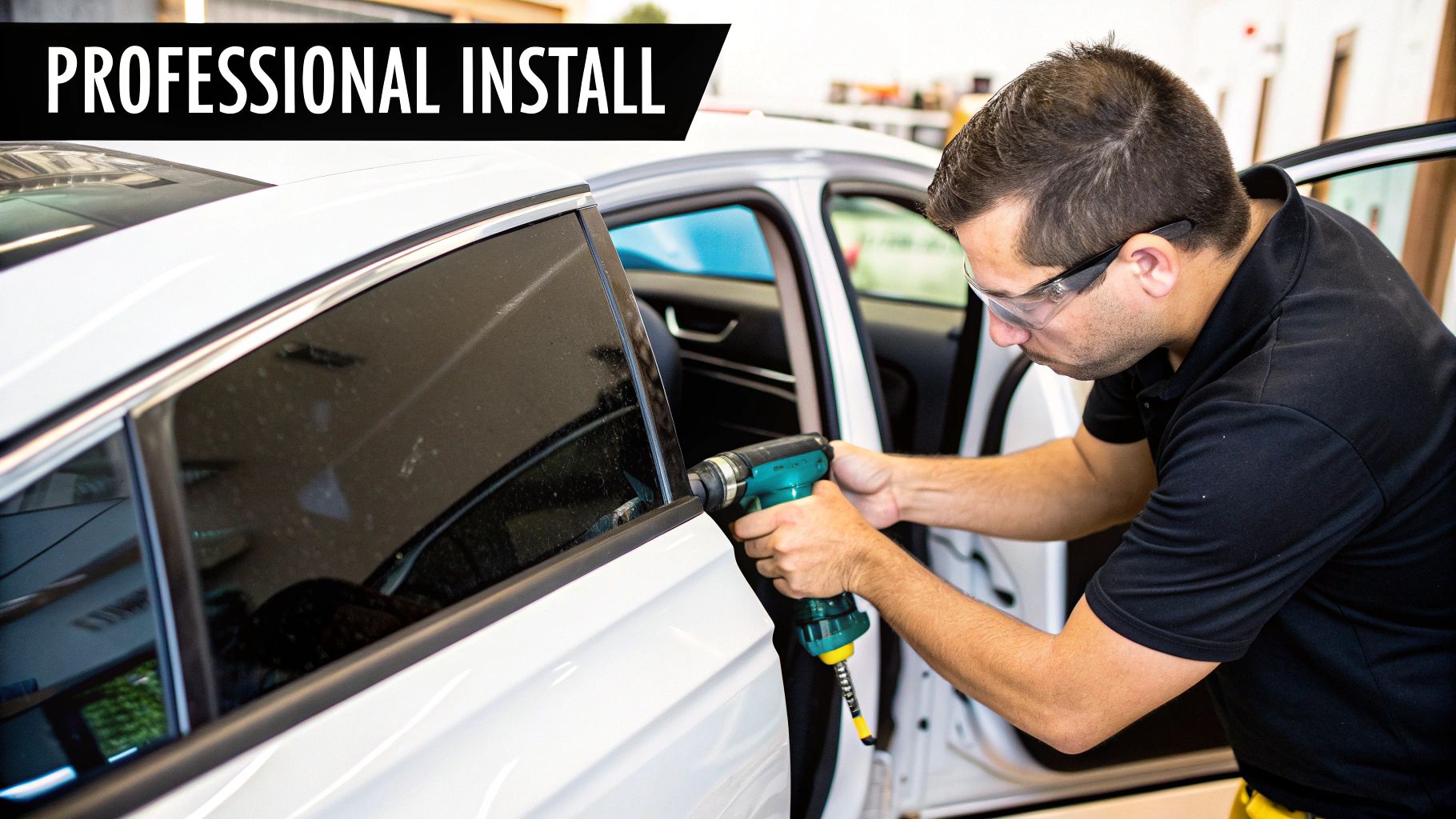
The Art and Science of a Perfect Tint Job
A seasoned technician follows a detailed process that you just can't duplicate in your garage with a spray bottle and a squeegee from the auto parts store. It’s a skill that requires patience, a steady hand, and specific techniques to make the tint look like it was installed at the car factory.
First up is the prep work, which is almost surgical. The technician deep-cleans every square millimeter of the glass, inside and out, using special clay bars and even razor blades to scrape off invisible contaminants. This creates a perfectly pure surface for the film to bond to.
Then comes the shaping. Your car's windows aren't flat—they have all sorts of subtle and complex curves. A pro uses a method called heat-shrinking, skillfully using a heat gun to mold the flat sheet of tint film to the exact curvature of your glass. This is the secret to getting a seamless fit on tricky back windshields.
The difference is in the details. A pro will often remove door panels and gaskets to tuck the film below the window seals. This ensures there are no visible edges and eliminates any chance of the tint peeling when you roll the windows up and down.
The Ultimate Convenience: Mobile Installation
Not long ago, getting a professional tint meant surrendering your car to a shop for hours, maybe even a full day. Now, the best installers bring that same level of expertise right to your driveway. Mobile installation delivers shop-quality results with the unbeatable convenience of having the work done at your home or office.
This modern approach has some serious perks:
It Saves You Time: Forget arranging for a ride or killing hours in a waiting room. You don't have to interrupt your day at all.
It’s a Controlled Process: A professional mobile installer has everything they need to control the environment and produce the same high-quality work you'd get in a shop.
It Allows for Immediate Curing: Your car can start the critical curing process right away in your own garage, safe from rain, wind, and dust.
Ultimately, choosing a professional installation isn't an expense; it's an investment in your vehicle's value and the tint's long-term performance. To see just how easy and effective this can be, you can learn more about mobile window tint services that bring the workshop to you. It's simply the smartest way to ensure your new tint looks amazing and lasts for years.
How to Care for Your New Window Tint
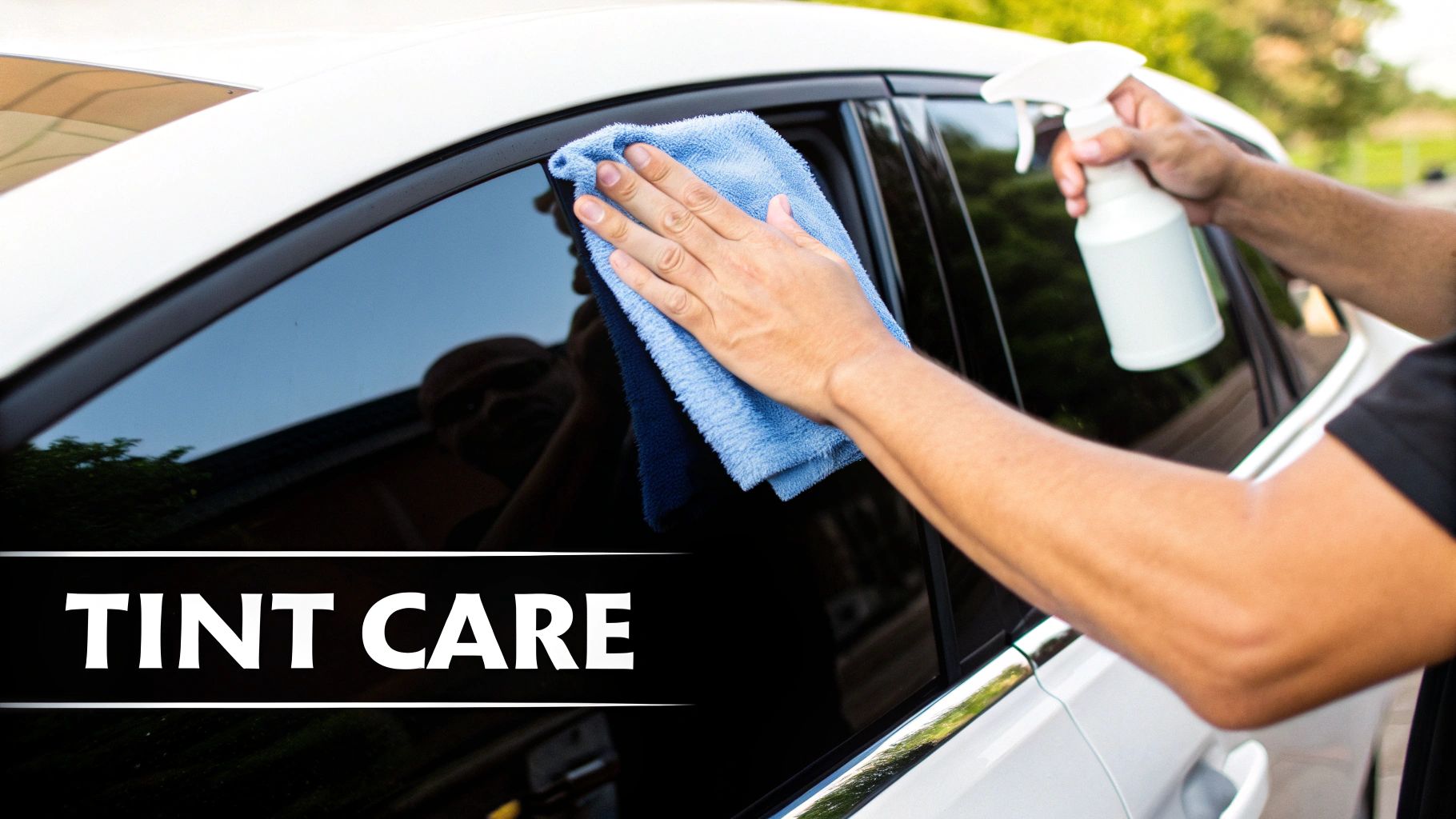
Getting a quality tint job is one of the best upgrades you can make for your vehicle, but keeping it looking flawless comes down to a little aftercare. Think of it this way: you wouldn't take a brand-new car off-roading without the right prep. The same logic applies to your new tint, especially in the first few days.
A few simple habits will protect your investment, prevent accidental damage, and keep your windows looking sharp for years. It's this long-term performance that truly makes a product the best window tint for cars.
The Critical Curing Period
Right after installation, your new tint needs time to "cure." This is when the last bits of moisture between the film and the glass evaporate, allowing the adhesive to bond permanently. This process can take anywhere from 3 to 7 days, sometimes longer depending on the weather and the type of film.
It's a lot like letting fresh paint dry—touch it too soon, and you'll leave a mark. During this curing window, it is absolutely critical that you do not roll down your windows. Even once. Rolling them down can snag the soft edge of the film, causing it to peel, bubble, or lift before it has a chance to set properly.
Safe Cleaning Practices for Long-Term Care
Once the tint has fully cured, you can clean your windows as needed. But the products you reach for make a huge difference. Using the wrong cleaner can eat away at the film’s protective layers, leading to scratches, haziness, or discoloration over time.
Here are a few simple rules to live by for keeping your tinted windows pristine:
DO use a soft, clean microfiber cloth. Steer clear of paper towels or old rags, which can leave behind tiny, fine scratches that build up over time.
DON'T ever use cleaners that contain ammonia. Ammonia-based products are the enemy of window tint; they break down the adhesive and will eventually cause it to bubble and fail.
DO stick with a simple mix of mild soap and water or an approved, ammonia-free glass cleaner.
DON'T use anything abrasive like a scouring pad, scraper, or razor blade to get stubborn spots off the film.
For quick cleanups on the inside, gentle car cleaner wipes can work in a pinch, just double-check that they are completely ammonia-free.
Here's a pro tip: Instead of spraying cleaner directly onto the window, spray it onto your microfiber cloth first. This keeps excess liquid from dripping down into the door panel and potentially compromising the tint’s edges.
Understanding Your Warranty
A lifetime warranty is the gold standard for high-quality tint and professional installation. But it's important to understand what it actually covers. A good warranty protects you from defects in the product or the installation itself, not from damage caused by neglect.
A typical lifetime warranty will cover issues like:
Bubbling: Those ugly air pockets that can form between the film and the glass.
Peeling: When the film starts lifting away from the edges of the window.
Fading or Discoloration: The film changing color, most notoriously turning a faded purple.
Proper maintenance is your end of the bargain. Following these simple care steps ensures your warranty stays valid and your tint performs just as it should. For a deeper dive, check out our guide on how long does window tint last when it's well cared for.
Common Questions About Car Window Tinting
Even after digging into the different film types, performance stats, and local laws, you probably still have a few questions rolling around in your head. That’s perfectly normal. Deciding to tint your car is a real investment, and getting clear answers is the best way to feel good about your choice.
Let's walk through some of the most frequent questions we hear from car owners before they pull the trigger.
How Much Should I Expect to Pay for a Good Tint Job?
The cost to tint your car windows can swing pretty widely. It really boils down to three things: the type of film you pick, the size of your vehicle, and even where you live. For a basic dyed tint on a small sedan, you might be looking at a starting price around $150-$200.
But if you step up to a high-performance ceramic film on a big SUV with lots of glass, the price could climb to $500 or more. While ceramic films do cost more upfront, their ability to block serious heat and protect your interior for years makes them a fantastic long-term value.
Will Ceramic Tint Mess With My Phone Signal or GPS?
Nope, not at all. This is actually one of the biggest selling points for modern ceramic and carbon films. They are specifically designed without any metal particles.
Because they're non-metallic, they are guaranteed not to interfere with any of your car's electronics. You can count on them to play nice with:
Cell phone signals (5G, LTE, etc.)
GPS navigation
Satellite radio like SiriusXM
Keyless entry fobs and tire pressure monitors
This makes them the go-to, hassle-free option for any modern vehicle packed with tech.
How Long Does Window Tint Actually Last?
The lifespan of your tint really comes down to two things: the quality of the film itself and the quality of the installation. Cheap, bargain-bin dyed films can start to look terrible in just a couple of years. You've probably seen it before—that awful bubbling, peeling, or fading to a weird purple color.
On the other hand, premium carbon and ceramic films installed by a pro are made to go the distance. These almost always come with a lifetime warranty that covers bubbling, peeling, and color change, meaning the tint should look great for as long as you own your car.
That kind of durability is a huge reason why investing in quality film pays off.
Can I Just Put New Tint Over My Old Tint?
That's a hard no. It's a shortcut that no reputable installer would ever take. Trying to stick new film over old, failing tint is like building a house on a shaky foundation—it’s just not going to work. The new film can't bond correctly to the glass and will fail in no time.
A true professional always starts by carefully removing every bit of the old film and meticulously scraping off all the leftover adhesive. This gives them a perfectly clean slate of glass, which is the only way to ensure a flawless, bubble-free finish that will last for years.
Ready to feel the difference a professional tint makes in comfort, privacy, and protection? The experts at Auto Renu Auto Glass LLC bring premium, mobile window tinting right to your doorstep. Schedule your mobile tint installation today!