How Long Does Windshield Repair Take
Wondering how long does windshield repair take? Our guide breaks down repair and replacement times, including ADAS calibration, so you can plan your day.
Oct 28, 2025
published
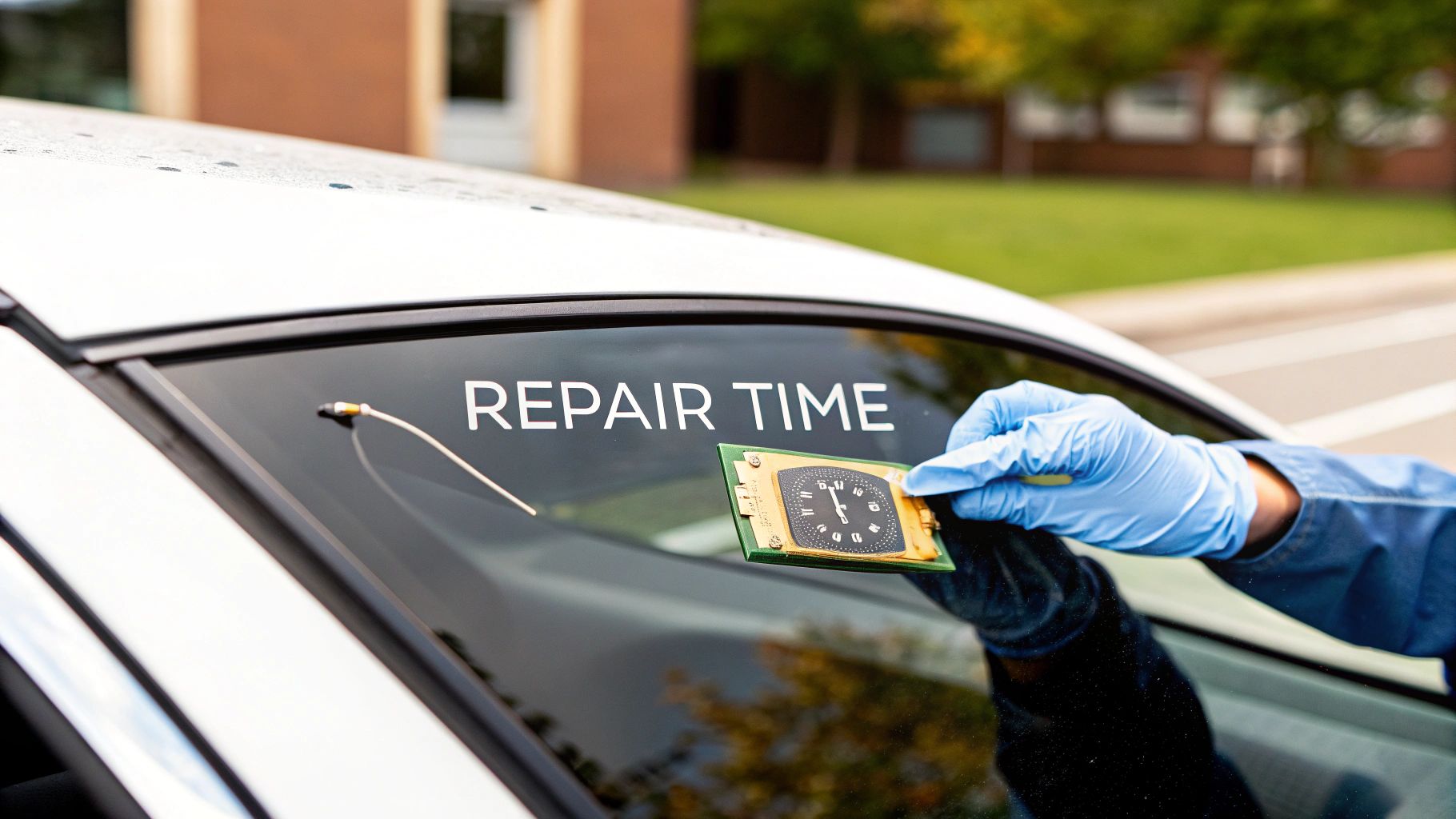
When you spot that dreaded chip in your windshield, one of the first thoughts that probably crosses your mind is, "How long is this going to take?" For a straightforward chip repair, you're often looking at a fix that takes under 30 minutes. A full replacement, however, is a different story and can stretch out for a few hours.
Setting Clear Expectations for Service Time
Figuring out the timeline for a windshield service means looking at the bigger picture. The total time isn't just the hands-on work of fixing the glass; it also includes essential steps that make sure your car is safe to drive again. It's not just a quick patch-up—it's a detailed process with very specific stages.
This visual breaks down the key phases of windshield service, covering everything from a simple repair to a full-blown replacement that includes advanced camera calibration.
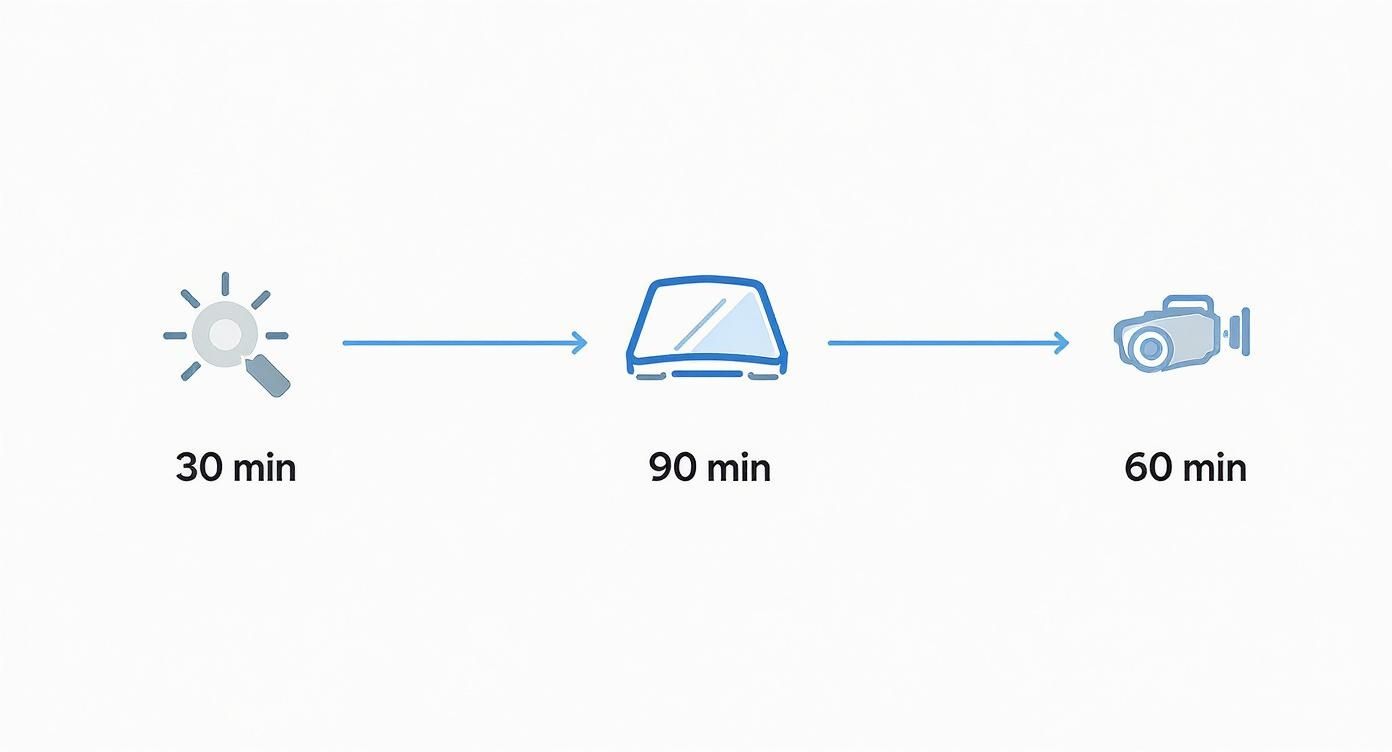
As you can see, the more complex the job, the longer it takes. Modern technology like ADAS adds a crucial—and non-negotiable—step to the process.
Breaking Down the Time Commitments
The total time you’ll spend at the shop really boils down to the type of work your windshield needs. A small chip or crack can often be repaired in just 30 to 60 minutes, but a complete windshield replacement is a much more involved procedure.
For a new windshield, the installation itself usually takes between 45 to 90 minutes. But you can't just drive off then. The powerful adhesive used needs another 30 to 60 minutes to cure enough for the car to be safely driven.
And for anyone with a newer car, there's another layer to consider. Most modern vehicles are equipped with Advanced Driver-Assistance Systems (ADAS), which use cameras mounted directly on the windshield. After a replacement, these systems have to be precisely recalibrated, a process that can add another 30 to 90 minutes to the job.
All told, a full replacement on a vehicle with ADAS could easily take 2 to 3 hours from start to finish. You can get a more in-depth look at these timelines by checking out some research on windshield service duration. Knowing what to expect helps you plan your day around the service without any last-minute surprises.
To make it even clearer, here’s a quick reference table for what you can generally expect.
Estimated Time for Windshield Services
Service Type | Estimated Time |
|---|---|
Chip or Crack Repair | 30 - 60 minutes |
Windshield Replacement (No ADAS) | 1.5 - 2.5 hours |
Windshield Replacement (With ADAS) | 2 - 4 hours |
These times are solid estimates, but remember they can shift based on your specific vehicle and the shop's schedule. It's always a good idea to confirm the timeframe with your technician beforehand.
A Closer Look at the Windshield Repair Process
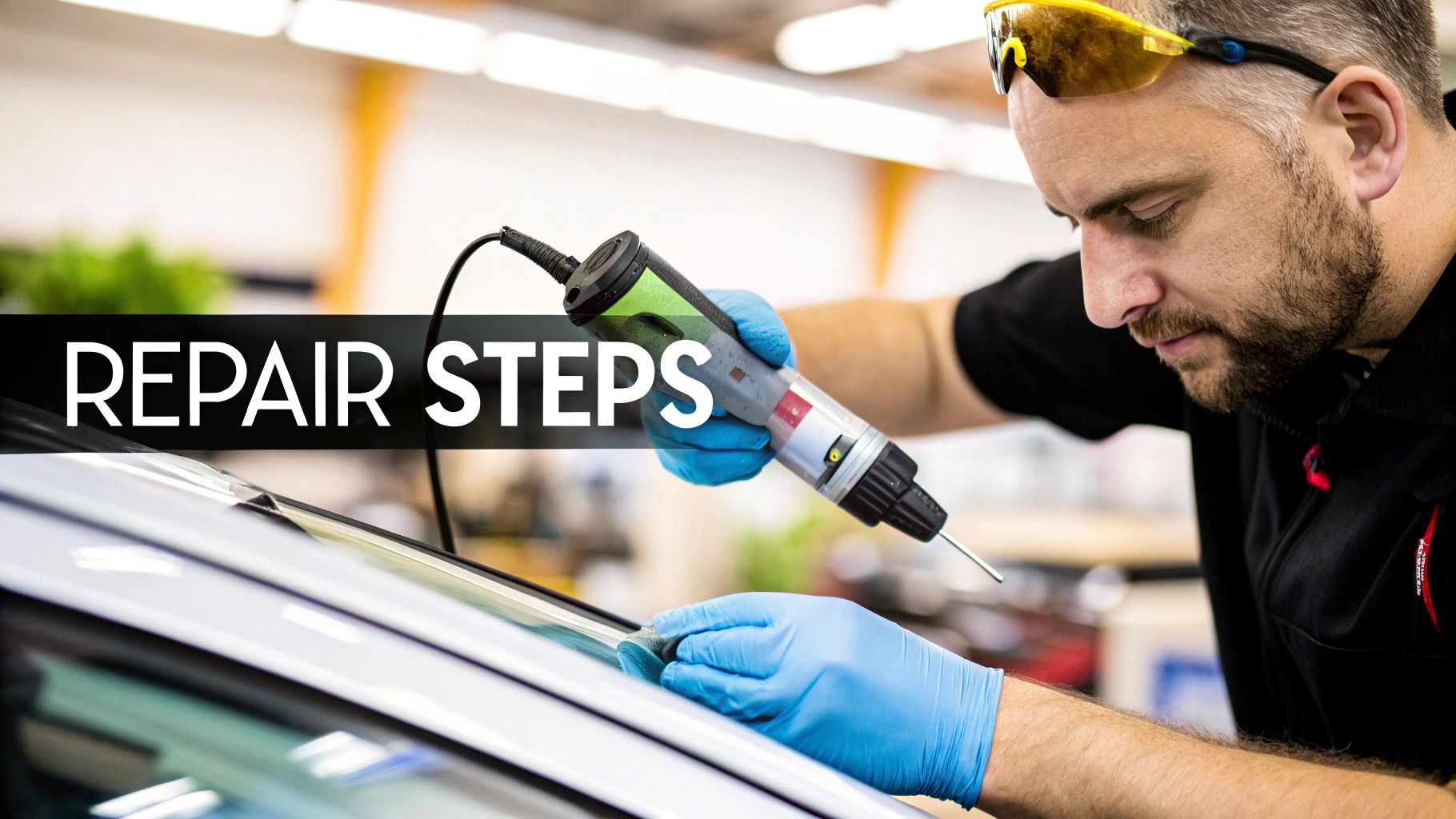
So, how long does windshield repair take in the real world? It helps to walk through what's happening behind the scenes. The whole process is remarkably precise, designed to restore both the clarity and strength of your glass. Every step is there for a reason—to make sure the repair is safe, solid, and built to last.
You can think of a chip repair a lot like a dentist filling a cavity. First, the technician meticulously cleans the damaged area, clearing out any tiny shards of glass and road grime. This prep work is crucial for getting the resin to bond perfectly with the surrounding windshield.
Then, a special vacuum-like tool is mounted directly over the chip. This device does two things: it pulls out any air and moisture trapped deep inside the crack, and it creates the perfect environment for the resin to be injected. It’s a make-or-break step for a flawless, strong finish.
Injecting and Curing the Resin
With the damage prepped and ready, the technician injects a specialized, high-quality liquid resin. This clear material is designed to seep into every nook and cranny of the chip, filling the void completely and bonding the glass back together. The idea is to make the glass one solid piece again.
The magic really happens during the final step: curing. Using an ultraviolet (UV) light, the technician hardens the liquid resin in just a few minutes. This process transforms the resin into a rock-solid material, permanently bonding it to the glass and restoring your windshield’s structural integrity. This rapid curing is why you can often drive off safely right after the service is done.
If you're curious about the specific techniques involved, our detailed guide on professional windshield repair services goes even deeper.
Now, a full windshield replacement is a different beast altogether. It's a much more involved job with several distinct stages:
Careful Removal: The technician starts by taking off the trim, wipers, and seals before carefully cutting through the old adhesive to lift the damaged glass out of the frame.
Frame Preparation: The vehicle's frame is then thoroughly cleaned of any old adhesive and primed. This ensures the new bond will be incredibly strong and completely watertight.
Adhesive Application: A bead of powerful urethane adhesive is applied evenly around the frame.
New Glass Installation: Finally, the new windshield is carefully set into place, creating a perfect seal that's vital for your safety and for keeping the elements out.
So, What Can Change Your Repair Time?
While a simple chip repair is often a quick in-and-out job, several things can throw a wrench in that standard timeline. It's good to know what they are so you can have a more realistic idea of how long you'll be waiting.
Think of it this way: a tiny, clean bull's-eye chip is like patching a small nail hole in a wall. It's straightforward. But a long, sprawling crack that's starting to creep toward the edge of the glass? That’s more like a major drywall repair—it takes more finesse, more time, and a much more careful approach to make sure it's stable.
The weather plays a surprisingly big role. The special resin used to fix chips and the heavy-duty adhesive for full replacements are picky. They need just the right conditions to cure properly, just like pouring a concrete sidewalk.
Frigid temperatures can make the resin cure at a snail's pace, and really high humidity can mess with the adhesive's ability to create a strong, permanent bond. Your technician might need to move the car into a climate-controlled bay or even wait for a break in the weather, which can add time to your appointment.
How Your Car's Tech Plays a Part
These days, your windshield is more than just glass. It's often the mounting point for some pretty sophisticated technology. If your car helps you stay in your lane or brakes automatically in an emergency, it's relying on a camera system called Advanced Driver-Assistance Systems (ADAS). This is a huge factor in the timeline.
After a new windshield goes in, that ADAS camera has to be recalibrated. This isn't optional—it's a critical safety step to ensure the system sees the road accurately. This process alone can add a serious chunk of time to the job.
Let's look at how these different variables can add or subtract time from a standard windshield service.
Factors Affecting Windshield Service Duration
Factor | Impact on Time (Shorter vs. Longer) | Explanation |
|---|---|---|
Damage Type | Can be much longer | A single, small chip is fast. Multiple chips or long cracks (over 6 inches) require much more meticulous work to fill and cure. |
Weather | Can be longer | Ideal weather (40°F to 90°F, low humidity) is perfect. Extreme cold, heat, or rain will slow the curing process and can delay the job. |
ADAS Calibration | Adds 30-90 minutes (longer) | If your car has ADAS, the camera system must be recalibrated after a replacement. This is a non-negotiable safety step. |
Technician's Schedule | Can be shorter or longer | A mobile technician coming to you might be faster than waiting for an open bay at a busy shop, or vice-versa depending on their daily route. |
As you can see, the "standard" time is really just a starting point. The specific damage, the day's weather, and your car's features will ultimately determine your true wait time.
How the Type of Damage Shapes Your Repair Time
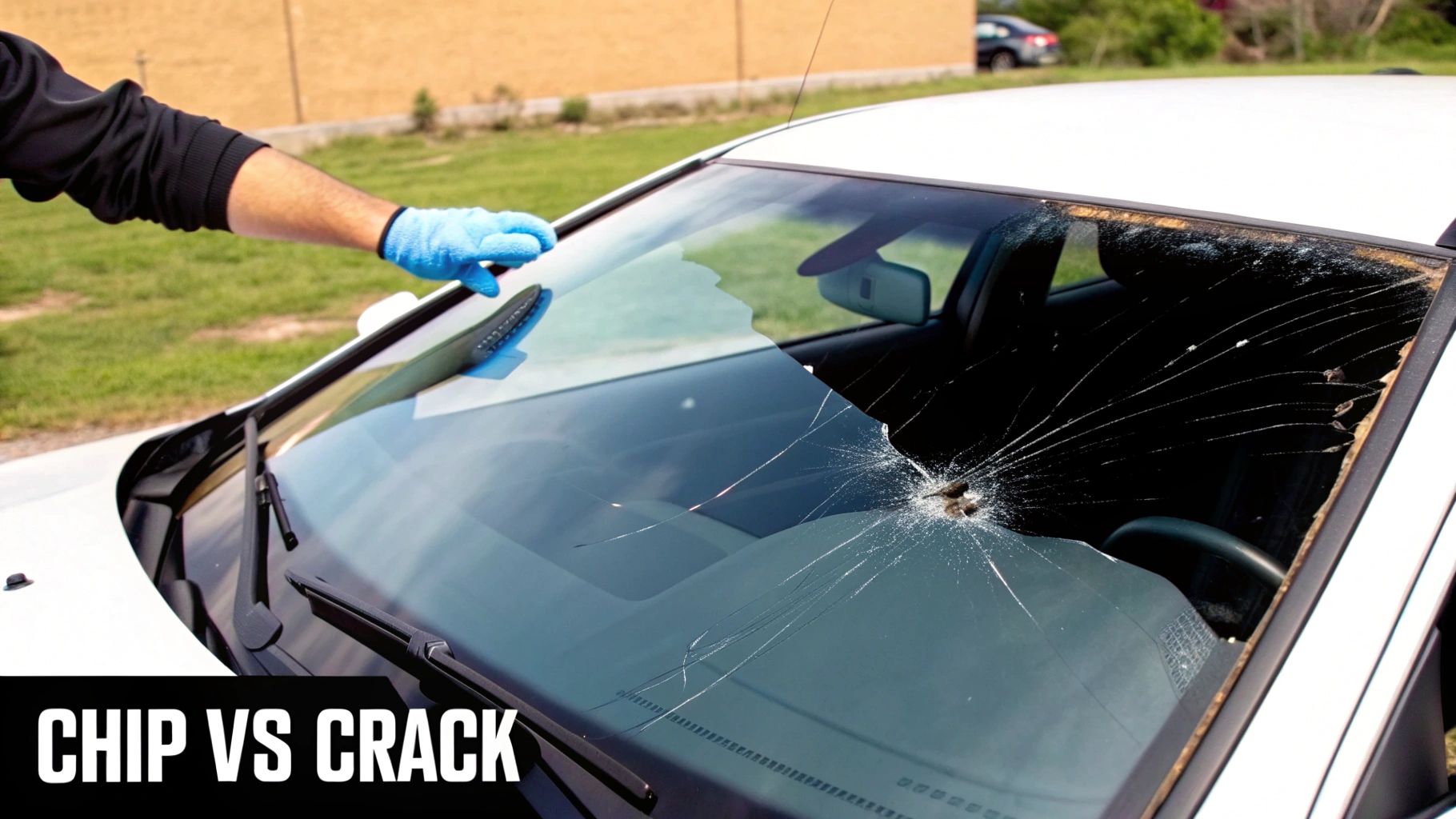
When it comes to how long you'll be waiting for a windshield fix, the type of damage is the single biggest variable. Think of it this way: patching a small nail hole in a wall is a quick job, but fixing a long, sprawling crack takes a lot more finesse and patience.
For a simple chip—like a classic bull's-eye or a small star break—you’re in luck. Most of these can be repaired in under 30 minutes.
These minor impacts are what most drivers deal with. In fact, some fascinating windshield damage statistics on ultrabond.com show that around 66% of all windshield damages are chips, while the other 34% are cracks. This means for most people, the answer to "how long will this take?" is surprisingly short.
The process is pretty straightforward: a technician cleans out the damaged spot, injects a special resin to fill the void, and then cures it with a UV light. It’s a fast, highly effective fix that makes your windshield strong and safe again.
When Cracks Call for More Time
Long cracks are a different beast entirely. A crack that snakes several inches across the glass requires a much more methodical approach. The technician has to patiently work the resin along the entire length of the fracture, making sure no air bubbles get trapped inside. It’s a slow, deliberate process because one wrong move could make the crack spread even further.
A long crack repair isn't just about filling a gap. It's about carefully stabilizing the glass to stop it from failing completely. Rushing a job this delicate can compromise the repair and, ultimately, your safety.
Because of this extra care, fixing a long crack can easily take an hour, sometimes more. And if the crack is too long, too complex, or sits right in your line of sight, a full windshield replacement becomes the only safe solution.
This is exactly why it pays to get those little chips fixed right away. You’ll save a ton of time and money by preventing them from turning into a much bigger headache down the road.
Why ADAS Calibration Is a Critical Step
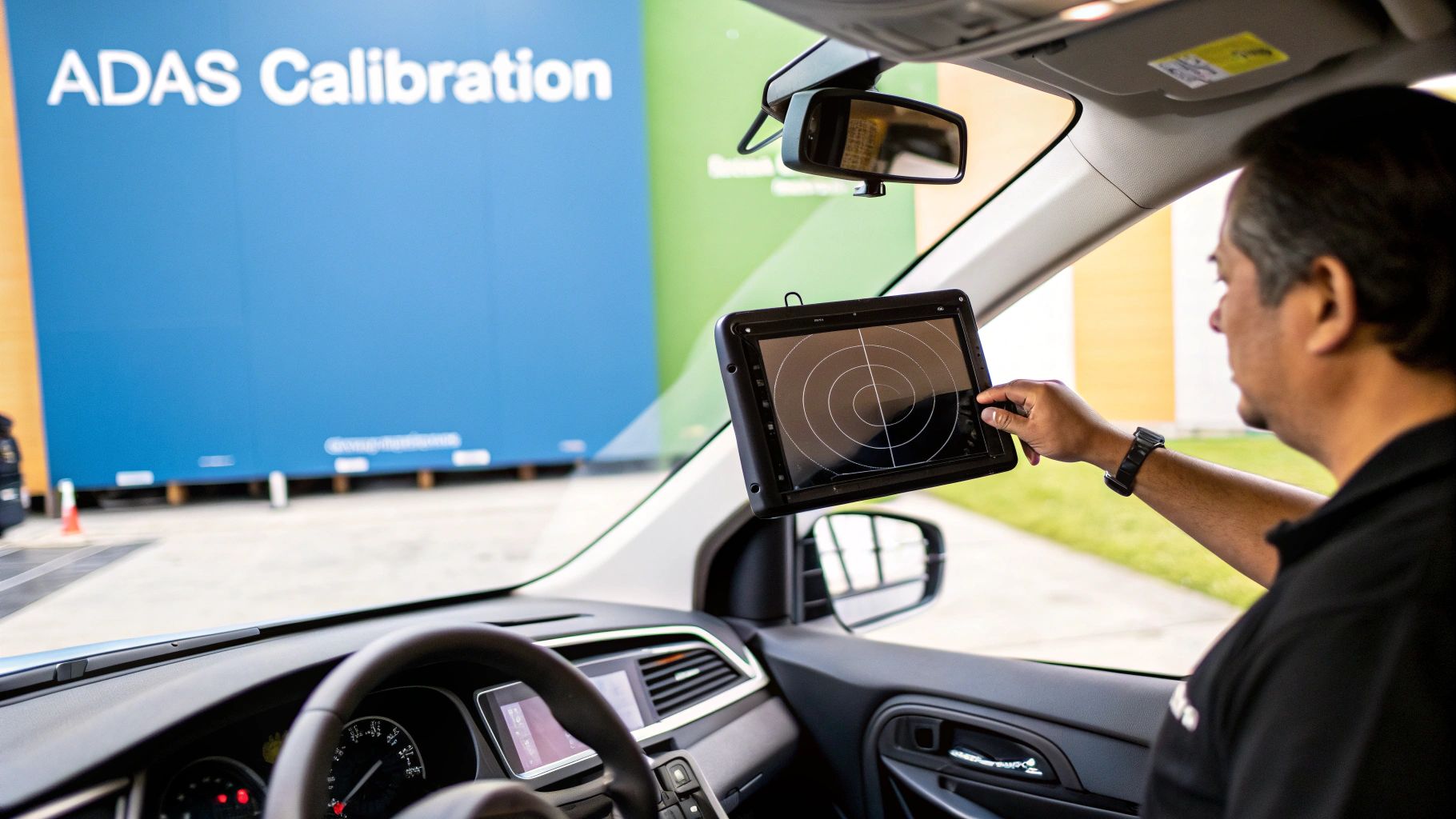
If your car has features like lane-keeping assist, adaptive cruise control, or automatic emergency braking, your windshield is doing a lot more than just blocking wind and rain. It’s actually a high-tech hub for the cameras and sensors that make up your vehicle’s Advanced Driver-Assistance Systems (ADAS).
After a windshield replacement, that system's camera has to be precisely recalibrated. Think of it like sighting in a rifle scope—if it’s moved even a tiny bit, it won’t be accurate. A misaligned ADAS camera could fail to spot a pedestrian or another car, putting you in real danger.
This safety procedure is one of the biggest reasons why a modern windshield replacement takes longer than it used to. It's a step you simply can't skip.
Static vs. Dynamic Calibration Methods
Technicians have two main ways of getting this job done, and the method used will affect your total wait time.
Static Calibration: This happens right in the shop. The car stays put while a technician uses special targets and tools to align the camera to the exact factory settings.
Dynamic Calibration: This one requires a road test. A technician has to drive the car on clearly marked roads at certain speeds, which allows the camera to recalibrate itself using real-world data.
Because it demands such precision, ADAS calibration can easily add 30 to 90 minutes to the total service time. Trying to save a few minutes by skipping this is a huge mistake, as it could cause your safety features to fail when you need them the most.
Proper ADAS windshield calibration is all about making sure your car’s safety net works exactly as the engineers designed it. It's a small investment of time that pays off with priceless peace of mind on the road.
Common Questions About Windshield Repair Timelines
Even when you know the basics, a few questions are bound to pop up. Let's walk through some of the most common things people ask about how long a windshield repair really takes. This way, you'll know exactly what to expect.
Can I Drive My Car Immediately After a Repair?
For a simple chip repair, the answer is almost always yes. The resin used to fill the chip is hardened instantly with a special UV light. Once the technician says you're good to go, you can drive away.
A full windshield replacement, however, is a different ball game. The powerful urethane adhesive that holds the new glass in place needs time to cure and form a watertight, structural bond. This is what we call the Safe Drive-Away Time (SDAT), which is usually 30 to 60 minutes after the installation is complete. It's critical to wait this out—driving too early could mess up the seal and compromise your car's safety.
Does Vehicle Age Affect the Timeline?
It absolutely can. On an older car, a technician might pull off the old windshield and discover hidden rust on the frame. That has to be treated and removed before the new glass can go in, which can add a chunk of time to the job.
On the flip side, a brand-new car probably has advanced driver-assistance systems (ADAS) tied to the windshield. These systems need a careful, and often lengthy, calibration after the glass is replaced. With the average car on U.S. roads now being around 12.5 years old, experienced technicians have seen it all, but it’s a good reminder that your car's age can definitely swing the total service time.
Will Insurance Cover a Longer Process with ADAS?
More often than not, the answer is yes. This is a huge point of concern for many drivers, so it helps to understand your policy. Knowing What Is Comprehensive Auto Insurance? can clear up a lot of confusion about what's covered and what isn't.
Most comprehensive insurance policies will cover the entire cost of a windshield replacement, and that includes mandatory safety procedures like ADAS calibration. Insurers know this isn't an "extra"—it's an essential part of making modern vehicles safe to drive again.
Still, it never hurts to give your insurance agent a quick call beforehand to double-check your policy details and ask about your deductible. Any good auto glass shop deals with insurance claims all day long and can help you navigate the paperwork, ensuring that every required step, like calibration, is properly documented for your claim.
At Auto Renu Auto Glass LLC, we prioritize safety and transparency, ensuring every repair and replacement is done right, including essential ADAS calibrations. If you need fast, reliable mobile service in the Bay Area, visit us online to get your free estimate today at https://www.autorenu911.com.