
How to Prevent Windshield Cracks From Spreading
Discover how to prevent windshield cracks with expert tips on driving habits, immediate repairs, and smart car care. Keep your auto glass safe and intact.
Sep 29, 2025
generated
When it comes to preventing windshield cracks, a little foresight goes a long way. The real secret is a mix of quick action, smart habits, and defensive driving. It's about repairing those tiny chips before they have a chance to spread, being mindful of sudden temperature changes, and staying clear of road debris.
Think of these simple, proactive steps as your first line of defense against a full, and often expensive, windshield replacement.
How to Stop a Windshield Crack in Its Tracks
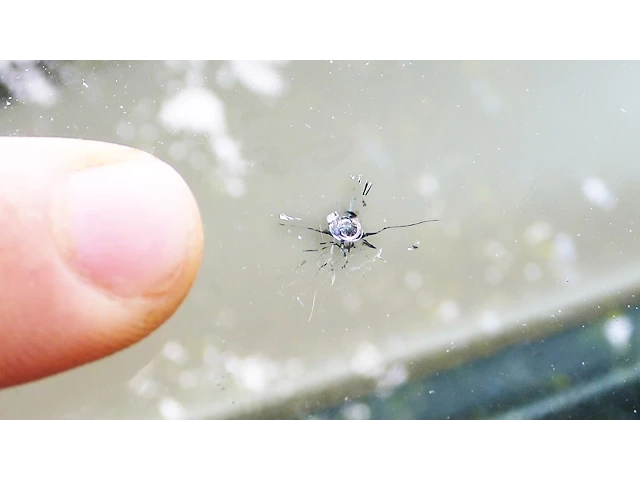
That sinking feeling when you spot a new chip in your windshield is all too familiar. But don't panic—a small chip doesn't have to turn into a massive crack that spiders across your line of sight.
The single most important thing you can do is get that damage looked at right away, no matter how insignificant it seems. That little chip is a structural weak point. The daily stress of driving, from simple road vibrations to hitting a pothole, puts constant pressure on that spot.
Getting a chip repaired is almost always cheaper and faster than replacing the entire windshield. Plus, with modern vehicles, a full replacement isn't so simple anymore. It often involves recalibrating the complex camera and sensor systems mounted to the glass. You can get the full rundown on that process in our guide to ADAS windshield calibration.
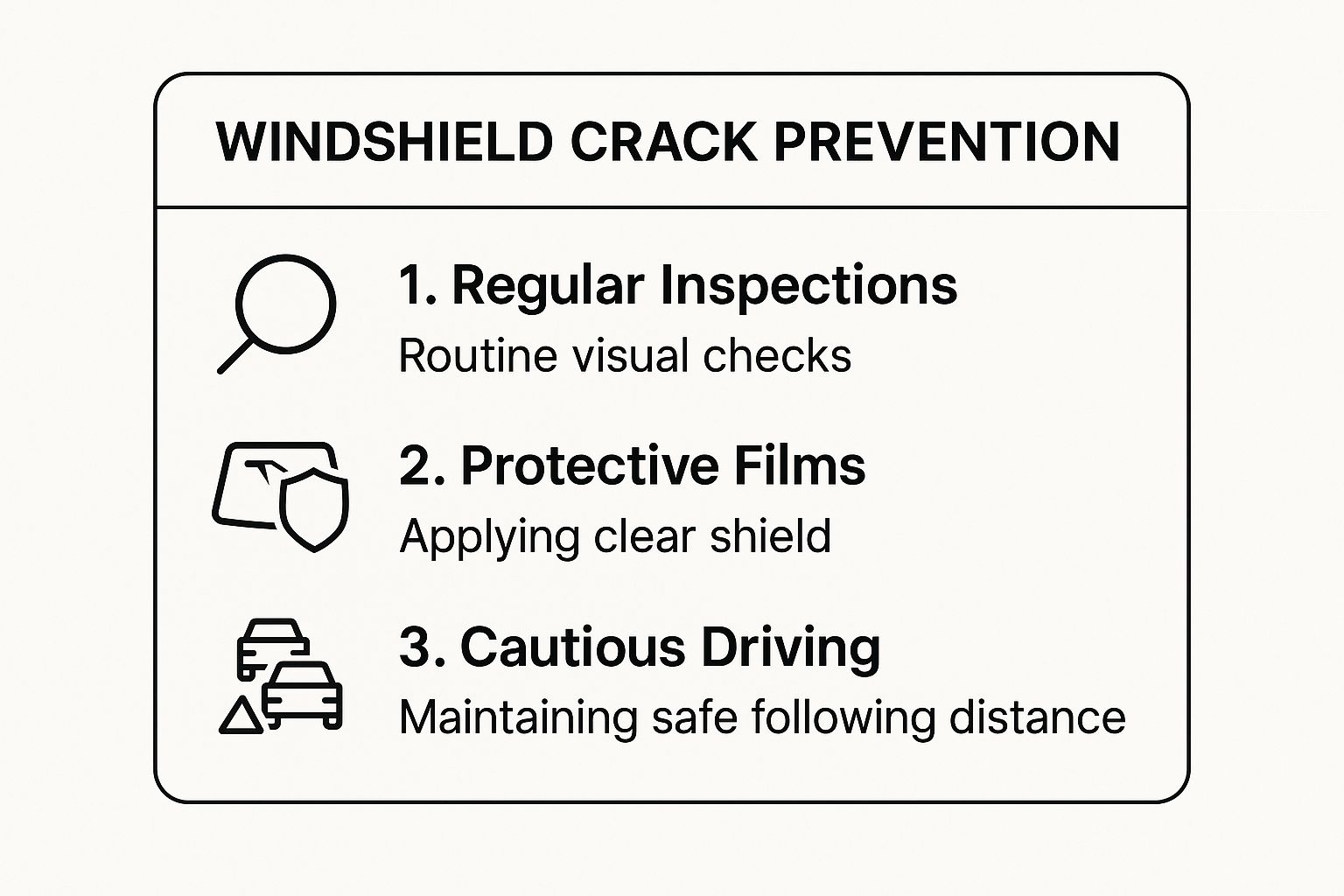
As you can see, a few mindful habits can make a huge difference in protecting your glass. Let's break down the most common threats and the simple actions you can take to counter them.
Common Windshield Threats and Immediate Actions
Threat | Preventative Action | Why It Works |
|---|---|---|
Road Debris | Increase your following distance, especially behind large trucks. Avoid driving on unpaved or gravel roads when possible. | Gives you more time to react and creates space between you and the debris kicked up by tires ahead. |
Temperature Extremes | Warm up your car gradually in winter. Avoid blasting the AC on max on a hot day. Don't use hot water on an icy windshield. | Sudden, drastic temperature changes cause the glass to expand or contract too quickly, which can turn a tiny chip into a long crack. |
Potholes & Bumps | Drive cautiously on poorly maintained roads. Slow down significantly before hitting any unavoidable bumps in the road. | The jarring impact from a pothole sends vibrations through the entire vehicle frame, putting immense stress on weak points in the glass. |
Improper Cleaning | Use an ammonia-free glass cleaner and a clean microfiber cloth. Replace worn-out, chattering wiper blades. | Harsh chemicals can weaken the glass over time, and old wiper blades can drag grit across the surface, causing scratches that can develop into cracks. |
Ultimately, combining regular inspections with cautious driving creates a powerful defense for your windshield. It’s all about actively reducing the risk of both impact damage and stress fractures before they start. A little awareness on the road can save you a lot of time, money, and hassle later on.
What Really Causes Windshield Damage?
We all know to watch out for flying rocks and debris on the highway. But what if I told you the biggest threats to your windshield are often invisible? To truly protect your glass, you have to understand the hidden culprit that does a lot of the damage: thermal stress.
Think about it this way. On a blistering summer day, you jump in your car and crank the AC to full blast. That icy air hits the super-heated inner surface of the windshield while the outside is still baking in the sun. This sudden, uneven temperature shock creates powerful tension within the glass.
The same thing happens in reverse during winter. Pouring hot water on a frozen windshield is one of the worst things you can do. The glass can't handle one section expanding rapidly while the rest stays frozen solid and brittle. That's a surefire way to get a crack.
A windshield isn’t just a sheet of glass. It’s a complex, laminated safety component. When you subject it to extreme temperature swings, you weaken the bond between its layers. This is how a tiny, invisible flaw can suddenly spiderweb across your line of sight.
Cracks From the Inside Out
Beyond temperature, the very structure of your vehicle can be working against you. If a windshield was installed improperly—even by a fraction of an inch—it creates constant pressure points where the glass meets the frame.
Every little bump and jolt from daily driving adds to this strain. Hitting a pothole, slamming a door, or just the natural flex of the car’s body on an uneven road can focus all that force on one weak spot. Eventually, something has to give, resulting in a "stress crack" that appears for no apparent reason.
These factors get a lot worse in certain climates. In places with daily temperature swings of over 20°F (about 11°C), windshields are constantly expanding and contracting. When you combine that with heavy traffic kicking up road debris, you've got a perfect recipe for damage. You can dig deeper into the science behind auto glass failure to see just how fragile this balance is.
Getting a handle on these hidden causes—both from temperature and structural stress—is the real first step to keeping your windshield in one piece.
Defensive Driving Habits That Save Your Glass
Your first line of defense against a nasty windshield chip isn't a special coating or miracle product—it's you. How you drive has a massive impact on whether that stray rock ever makes contact. Developing a few key driving habits is genuinely the most effective way to keep your glass intact and avoid the hassle of repairs.
The single biggest thing you can do? Back off. We've all heard the old rule of staying one car length behind for every 10 mph, but that's not nearly enough to protect your windshield. This is where the three-second rule comes into play, and it’s a game-changer.
Here's how to put it into practice: Find a fixed object on the road ahead, like a bridge or a road sign. As soon as the car in front of you passes it, start a slow count: "one-one thousand, two-one thousand, three-one thousand." If you reach that same object before you finish counting, you're tailgating. Simple as that.
Master Your Position on the Road
Just keeping your distance is only half the battle. You also need to be constantly aware of the types of vehicles sharing the road with you. Let’s be honest, we all know which ones are the biggest culprits.
Gravel haulers
Dump trucks
Construction vehicles
These trucks are notorious for kicking up or dropping debris. When you spot one, don't just follow it from a distance—actively maneuver away from it. If you can safely switch lanes, do it. If you're stuck behind one, extend your following distance to at least a four or five-second gap. That extra time and space allows most of the debris to hit the pavement before it can get to you.
The idea is to build a buffer zone around your vehicle—an invisible shield for your windshield. The bigger that buffer, the lower the odds of a high-speed rock making contact and leaving its mark.
Slowing down on gravel roads or through construction zones isn't just about safety; it's a practical move to protect your car. At first, you'll have to consciously think about creating this space, but soon enough it becomes second nature. By taking control of the space around you, you're directly protecting your windshield from harm.
Don't Ignore That Chip—Fix It Fast
It’s tempting to just shrug off a tiny chip in your windshield. It’s small, not really in your line of sight, and you’ve got places to be. But in my experience, that little blemish is the single biggest threat to your windshield's lifespan. Procrastination is not your friend here.
Think of that chip as a weak link. Every pothole you hit, every door you slam, and every sudden temperature change puts stress directly on that fragile point. A cold morning and a blast from the defroster is often all it takes for that stable-looking chip to suddenly snake its way across your entire field of vision. Dealing with it right away is everything.
What To Do The Moment You See A Chip
Your immediate actions can be the difference between a quick, inexpensive fix and a costly full replacement. The key is to keep the impact point clean and dry so a professional repair can be as effective as possible.
Cover It Up: The first thing you should do is stick a piece of clear tape over the chip. This simple trick acts as a shield, keeping out the dirt, road grime, and moisture that can ruin a professional repair.
Go Easy on the Climate Control: Avoid blasting your defroster or AC directly onto the glass. Extreme temperature swings can cause the glass to expand or contract too quickly, which is a surefire way to turn a small chip into a long, running crack.
Drive Carefully: This is the time to be gentle. Try to avoid potholes and rough roads, and don’t slam your car doors. Each vibration sends a shockwave through the glass, zeroing in on that weak spot.
The idea here isn’t to fix it yourself, but to preserve the damage. A clean, stable chip gives a repair technician the perfect foundation to inject the resin, making the final fix strong and nearly invisible.
There’s a huge financial reason to act fast, too. Believe it or not, windshield damage makes up about 30% of all auto insurance claims. A simple chip repair is a fraction of the cost of a full replacement. Better yet, most comprehensive insurance policies will waive your deductible for a repair because they’d much rather pay for a small fix now than a huge replacement later. You can get more details on how insurance claims for auto glass work on InsuranceJournal.com.
Waiting is just a gamble you’re likely to lose. A prompt, professional https://www.autorenu911.com/windshield-repair doesn't just save you a headache; it restores your windshield's strength, keeps money in your pocket, and ensures your view of the road stays safe and unobstructed.
Smart Maintenance for Long-Term Windshield Health
Knowing how to dodge rocks on the freeway is one thing, but keeping your windshield healthy for the long haul comes down to simple, consistent care. It's the small, everyday habits that make the biggest difference.
Think about your windshield wipers. We usually only notice them when it's pouring rain, but worn-out wipers are a constant, low-grade threat to your glass.
When the rubber becomes old and brittle, it can't sweep cleanly across the surface. Instead, it scrapes and drags tiny bits of dirt and debris, etching thousands of microscopic scratches into the glass. You won't see them at first, but these tiny flaws create weak spots, making your windshield far more likely to crack from a future impact or even just a sudden temperature change.
The Right Way to Care for Your Glass
Proper cleaning is another cornerstone of windshield health. This is one area where you definitely don't want to cut corners by grabbing a bottle of household cleaner from under the sink.
Never use anything containing ammonia. Cleaners like Windex are great for your windows at home, but on a car, the ammonia can slowly degrade the tint and protective UV coatings on your auto glass.
Here are a few best practices to follow:
Always use an ammonia-free auto glass cleaner. These are specially formulated for the materials in your vehicle.
Use clean microfiber towels. A dirty rag is just like a bad wiper blade—it will grind dirt into the glass, defeating the whole purpose of cleaning.
Wipe in two different directions. Clean the inside with horizontal strokes and the outside with vertical strokes. That way, if you see any streaks, you'll immediately know which side they're on.
Your daily habits are a form of preventative medicine for your windshield. Things like parking in the shade or using a sunshade might seem small, but they significantly reduce the thermal stress that causes cracks to form and spread.
One of the easiest things you can do is simply be mindful of where you park. Whenever possible, choose a garage, a carport, or even just a shady spot under a tree. This protects your windshield from the punishing heat of direct sunlight, minimizing the extreme temperature swings that are a leading cause of stress cracks.
These simple maintenance habits create a powerful defense. But of course, even the most careful driver can't prevent every chip or crack. When damage is too severe for a simple repair, knowing what’s involved in a professional windshield replacement is the next logical step.
Answering Your Top Windshield Protection Questions
When it comes to taking care of your car's glass, a few questions pop up time and time again. Let's clear the air and give you the straightforward answers every driver needs to know about keeping their windshield intact.
Is a Tiny Chip Really a Big Deal?
This is probably the number one question I hear. The short answer? Yes, it's a huge deal.
That little ding might look harmless, but it has seriously compromised the structural integrity of your entire windshield. Think of it as a tiny crack in a dam. It creates a weak point that's under constant stress from road vibrations, temperature swings, and every pothole you hit.
A scorching summer day can make the glass expand, or an overnight frost can cause it to contract. That's often all it takes to turn that tiny chip into a massive crack that spiders right across your line of sight. This is exactly why the first rule of preventing big cracks is dealing with small chips immediately.
Will My Insurance Actually Cover a Chip Repair?
Concerns about cost and insurance are right up there, and it’s a great question. The good news is that in most cases, your insurance provider is on your side with this one.
If you have a comprehensive auto insurance policy, it will almost certainly cover chip repairs. Many insurers will even waive your deductible for the service. It’s simple math for them: they’d much rather pay for a quick, affordable repair today than a full, expensive windshield replacement tomorrow. It makes professional repair a no-brainer—and often, a free one. Just be sure to double-check your specific policy details.
What About Those DIY Repair Kits?
This brings us to another frequent debate: are those DIY kits from the auto parts store a viable option?
While the low upfront cost of a DIY kit is tempting, they are rarely a permanent or effective fix. They simply can’t match the professional process, which uses a specialized vacuum to remove all air and moisture before injecting a high-grade resin under pressure. That's what actually restores the windshield's strength.
A botched DIY repair often traps air and debris inside the chip, making a future professional repair impossible. You could easily turn a simple, fixable chip into a problem that requires a full, costly replacement. Trust me, getting it done right the first time is always the smartest move for your safety and your wallet.
The moment you spot a chip or crack, don't put off the repair. The expert mobile technicians at Auto Renu Auto Glass LLC come right to your location for fast, professional service that gets you back on the road safely. Get your free estimate online today by visiting us at https://www.autorenu911.com.