Auto Window Tinting Cost: A Clear Guide to Pricing by Type and Vehicle
Discover auto window tinting cost with a concise breakdown by film type, vehicle size, and installation options to plan your budget confidently.
Dec 20, 2025
generated
auto window tinting cost, car tint prices, ceramic tint cost, window tinting guide
Alright, let's get straight to it: what's this going to cost you? For a professional tint job on a standard sedan, you should budget somewhere between $250 and $800. Of course, that number can tick upward if you're looking at high-end films or have a larger vehicle like an SUV or truck.
The Bottom Line on Auto Window Tinting Costs
Knowing the ballpark price for a professional tint job is the first step. But what really drives that final number on the quote? While a few things come into play, it really boils down to two main factors: the size of your vehicle and the type of film you pick.
Think about it like this. Tinting a little two-door coupe is a much quicker job than working on a massive SUV with a third row and a huge back window. The smaller car needs less material and less time. The SUV, on the other hand, is a bigger project that demands more film and more labor, which naturally bumps up the price. That's why you'll always see different pricing for a sedan versus a truck.
Cost Breakdown by Film and Vehicle
The other big piece of the puzzle is the film itself. Not all window tints are made the same. You have your basic dyed films that get the job done for privacy and looks, and then you have advanced ceramic or carbon films that offer serious heat rejection and UV protection—but they come at a higher price point.
To give you a clearer picture, I've put together a table breaking down the average auto window tinting cost based on different film and vehicle types. It’s a handy reference to see where your needs and budget might land.
Estimated Auto Window Tinting Cost by Film Type and Vehicle
This table gives you a quick look at typical price ranges, so you can see how your choice of film and vehicle size will affect the final cost.
Film Type | Sedan (4-Door) | SUV / Truck | Key Benefits |
|---|---|---|---|
Dyed Film | $250 – $400 | $300 – $500 | The most affordable option, provides privacy and that classic dark look. |
Carbon Film | $350 – $550 | $400 – $650 | A great mid-range choice. Offers better heat rejection, won't fade, and doesn't interfere with your phone signal. |
Ceramic Film | $500 – $800+ | $600 – $1,000+ | The best of the best. Delivers maximum heat and UV rejection with incredible clarity and durability. |
Keep in mind, these price ranges are estimates and can vary. But they give you a solid foundation for what to expect.
The desire for a cooler, more comfortable ride is huge, especially here in the States. In fact, North America makes up 33.4% of the global revenue for automotive tinting, a clear sign that people value the benefits. This demand helps shape the average auto window tinting cost, which, as we've seen, usually lands between $250 and $800 for a sedan. If you go for top-tier nano-ceramic films on a big vehicle, you could see prices closer to $1,200. For a deeper dive into the numbers, you can check out more stats on the automotive tinting film market on grandviewresearch.com.
What Really Drives the Price of a Tint Job
Ever wonder why your buddy paid $250 to tint his little coupe, but the quote for your SUV came back at $800? It's not just a random number. The final auto window tinting cost really boils down to the quality of the materials, the size and shape of your car, and the skill needed to get that perfect, seamless finish.
Think of it like buying sunglasses. You can grab a cheap pair at a gas station that makes things darker, or you can invest in a high-quality pair with polarized, UV-blocking lenses that actually protect your eyes and cut the glare. They both serve a basic purpose, but the performance, materials, and how long they'll last are worlds apart. Window tint film is exactly the same.
By far, the biggest thing that moves the price needle is the type of tint film you pick. A basic dyed film can look great at first, but a premium ceramic film delivers a level of performance you can actually feel on a blistering summer day. Let's dig into what makes up that final price tag.
The Film Is the Foundation
The technology packed into the film itself is where you'll see the biggest jump in cost. Each type offers a different level of performance, and the price reflects that.
Dyed Film: This is your entry-level, most budget-friendly option. It uses layers of dye to soak up some solar heat and gives you that classic tinted look. It’s great for privacy, but its heat rejection is pretty minimal, and over time, it's known to fade and turn that dreaded shade of purple.
Carbon Film: A fantastic middle-ground choice. Carbon film is infused with tiny carbon particles that are amazing at blocking the infrared heat that makes your car feel like an oven. It gives you a true black, matte finish that won’t fade, and unlike older metallic films, it won't mess with your phone or radio signals.
Ceramic Film: This is the top of the food chain. It uses advanced ceramic nanoparticles—which are non-metallic and non-conductive—to block a massive amount of solar heat and up to 99% of damaging UV rays. You get incredible clarity and durability without any interference with your electronic devices.
Choosing a film is all about balancing what you want to spend with the performance you need. If you're just going for a sleek, dark look, dyed film might be enough. But if you want to be noticeably cooler and get serious protection from the sun, ceramic film is an investment that pays you back every single time you drive.
At the end of the day, paying more for a better film means you're getting better technology and real, tangible benefits, like a cooler car and protection for both you and your vehicle's interior.
Vehicle Size and Shape Matter
Right after the film choice, the next big factor is your car. It really comes down to two simple things: how much material we need and how much time the job is going to take.
Think about painting a small bedroom versus painting a huge living room with vaulted ceilings. The living room doesn't just need more paint; it takes way more time and effort. It's the same deal with cars.
A two-door coupe has way less glass than a full-size SUV with a third row, extra quarter windows, and a massive rear windshield. More windows mean more film, simple as that. It also means more time for the installer to meticulously clean, prep, cut, and apply the tint to each and every piece of glass.
That’s why a quote for an SUV or a truck is always going to be higher than one for a compact sedan. The job is just plain bigger.
The Complexity of the Glass
Not all car windows are created equal. Many new vehicles have these incredibly curved rear windshields or tiny, odd-shaped side windows that can be a real headache for an installer.
Putting a flat sheet of tint film on a deeply curved window requires a special skill called heat shrinking. A skilled technician has to use a heat gun to patiently and precisely mold the film to the glass's unique shape. It's a true art form that takes a steady hand and a ton of experience—one wrong move can easily ruin a big, expensive piece of film.
The curvier your car's windows, the more skill and time it takes to get that flawless look. That specialized labor gets factored into the final auto window tinting cost because you're paying for an expert's ability to handle these tricky spots without any bubbles, creases, or gaps. It’s that level of craftsmanship that makes all the difference between a professional job and a DIY disaster.
Choosing the Right Film for Your Budget and Needs
Picking the right window tint for your car is a lot like choosing a good pair of sunglasses. You can grab a cheap pair at a gas station for basic glare reduction, or you can invest in high-quality polarized lenses that genuinely protect your eyes and make driving more comfortable. The same idea applies here.
Your total auto window tinting cost is almost entirely driven by the technology packed into the film itself. Let's walk through the three main players—dyed, carbon, and ceramic—to see what you actually get for your money.
Dyed Film: The Budget-Friendly Classic
Dyed window tint is what most people picture when they think of tint. It's the most common and affordable option out there, made by adding a layer of dye between layers of polyester film to soak up sunlight.
This film is a great starting point if you're mainly looking for privacy and that classic, sleek tinted look. It does an okay job of cutting down on heat and glare. The biggest downside, though, is that it doesn't last forever. Years of sun exposure will eventually break down the dye, causing it to fade and turn that ugly purple you sometimes see on older cars.
Carbon Film: The Solid Mid-Range Performer
A significant step up from dyed film is carbon tint. This film has microscopic carbon particles mixed in, which are fantastic at blocking infrared light—the kind of light that’s responsible for turning your car into a sauna on a sunny day. Because of this tech, carbon film can reject a lot more heat than dyed film without having to be limo-dark.
What I really like about carbon film is its durability. It contains no dye, so it’s guaranteed to never fade or change color. It also gives you a clean, true-black matte finish that looks sharp on any vehicle. Plus, it's non-metallic, meaning it won’t mess with your phone, GPS, or satellite radio signals, which was a common headache with older metallized films.
Ceramic Film: The Premium Performance Choice
At the very top of the ladder, you have ceramic window tint. This is the most advanced stuff you can get, using powerful, non-metallic ceramic nanoparticles to block a massive amount of solar energy. It’s an absolute beast at rejecting both infrared heat and those damaging UV rays, typically blocking over 99% of UV light.
What does that mean for you? A much cooler cabin, way less squinting from glare, and real protection for both your skin and your car's interior. The amazing thing about ceramic film is that it can block more heat than even the darkest, lower-quality films. You can choose a lighter shade that keeps your visibility crystal clear while still getting maximum heat rejection. While the upfront auto window tinting cost is higher, its incredible performance makes it a smart investment for anyone who wants the best.
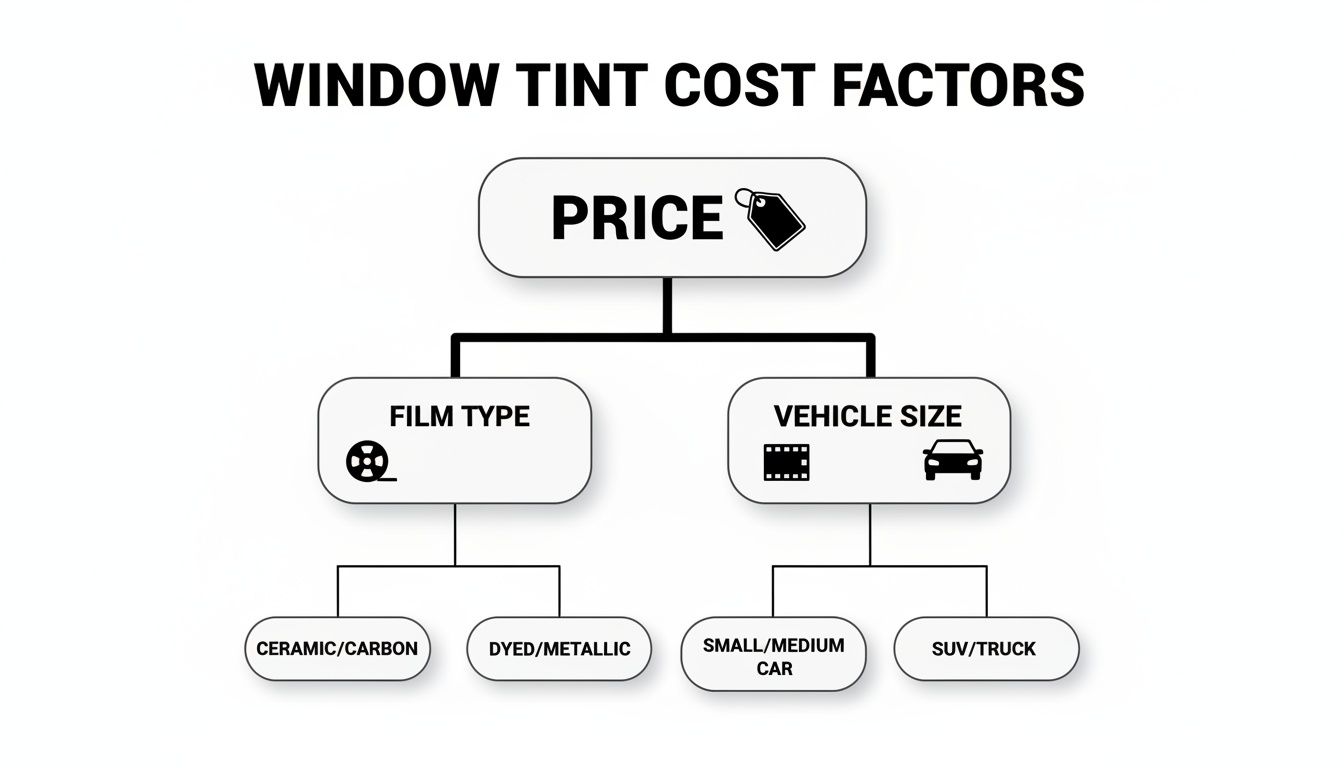
As you can see, the type of film you pick is the biggest factor, but the size of your vehicle also plays a huge role in the final price. A bigger vehicle simply requires more material and more time to install.
To make the choice a little easier, let's compare these films side-by-side.
Window Tint Film Comparison: Cost vs. Performance
This table cuts right to the chase, showing you exactly what you gain as you move up in quality and price.
Feature | Dyed Film | Carbon Film | Ceramic Film |
|---|---|---|---|
Average Cost | $250 – $400 | $350 – $550 | $500 – $800+ |
Heat Rejection | Low to Moderate | Good | Excellent |
UV Protection | Good (up to 99%) | Excellent (up to 99%) | Superior (up to 99.9%) |
Glare Reduction | Good | Very Good | Excellent |
Durability | Fair (can fade to purple) | Excellent (color-stable for life) | Superior (maximum longevity) |
Signal Interference | None | None | None |
Best For | Owners on a tight budget focused on privacy & style. | Drivers wanting a great balance of performance and value. | Those who demand the absolute best in comfort and protection. |
Ultimately, it all comes down to what you value most. If you're on a strict budget, dyed film gets the basic job done. If you want a fantastic, long-lasting product that offers serious heat rejection without breaking the bank, carbon is the sweet spot. But for those who refuse to compromise on comfort and protection, ceramic film is, without a doubt, the way to go.
For a deeper look into the specifics, check out our services at Auto Renu Window Tinting.
Professional Install vs. DIY: The True Cost of "Saving Money"
It’s always tempting to go the DIY route. You see a $50 tint kit online, look at professional quotes ranging from $250 to over $800, and the math seems simple. Why pay someone else when you can do it yourself for a fraction of the price?
But as anyone who’s tried it will tell you, the sticker price on that DIY kit is just the beginning of the story. This path is littered with hidden costs—in both money and frustration—that can quickly turn a weekend project into a costly mistake. Before you click "add to cart," it's worth understanding what you're really getting into.
A professional-grade tint job isn't just about sticking film to glass. It requires a perfectly clean, dust-free space and a whole arsenal of specialized tools that definitely don't come in that all-in-one box.
The Unseen Costs of a DIY Project
That initial $50 for the film? Think of it as your entry fee. The real investment starts when you realize what you actually need to do the job right.
Here’s a quick look at what a professional installer has on their cart, and what you’ll likely end up buying:
High-Quality Squeegees: You'll need different shapes and flex levels to tackle every curve of your car's windows.
Heat Gun: This is absolutely essential. There's no other way to properly shrink the film to fit curved glass like a rear windshield.
Specialized Cutting Blades: Your standard utility knife won't cut it. You need ultra-sharp, precise blades to avoid tearing the film.
Application Solution: A specific slip solution (a mix of soap and water) is crucial for positioning the film without it sticking too early.
Lint-Free Cloths: Even one tiny speck of dust or lint trapped under the film will become a permanent, glaring bubble.
By the time you've gathered all the necessary gear, you can easily add another $50 to $100 to your total. Suddenly, the gap between DIY and professional work starts to shrink. But the tools aren't even the biggest hidden expense—the learning curve is.
The single biggest hidden cost in any DIY tint job is the material you're going to waste. Even seasoned pros mess up a piece of film now and then. For a first-timer, ruining one or two sections is practically a guarantee. One slip of the blade, one accidental crease, and you're headed back to the store for another kit.
The Frustration Factor and the Final Result
Beyond the tools and wasted film, there's the skill itself. Applying window tint is a craft that takes hundreds, if not thousands, of hours to perfect. Pros spend years honing their technique to handle complex curves and get those perfectly clean, seamless edges.
A DIY job, on the other hand, often ends with a collection of tell-tale mistakes:
Bubbles and Fingerprints: Trapped air pockets or oils from your skin become permanent blemishes.
Creases and Wrinkles: This is what happens when the film isn't properly heat-shrunk on curved glass.
Peeling Edges: If the glass isn't perfectly prepped or the film isn't cut just right, it will start to lift.
Gaps and Misalignment: That unsightly gap between the edge of the film and the window frame is a dead giveaway of an amateur job.
What’s worse than a bad tint job? Having to pay to get it fixed. Many professional shops charge an extra fee—often $100 or more—just to remove old, poorly applied film. That baked-on adhesive is a nightmare to get off. After paying for removal, you’re right back where you started, paying the full price for the professional installation you tried to avoid.
Ultimately, going with a pro isn't just about buying tint. It’s an investment in a guaranteed, flawless result. You're paying for an expert's time, their specialized equipment, and their hard-won experience. Most importantly, you're paying for the peace of mind that comes with a lifetime warranty, ensuring your car looks great for years to come.
How Your Location and Local Laws Shape Your Final Price
The final price tag for a window tint job isn't the same everywhere. Where you live plays a surprisingly big role in the auto window tinting cost, and it’s not just about what local shops charge for labor. It also comes down to your state's specific laws on window tinting.
At the heart of these laws is something called Visible Light Transmission, or VLT. Think of it as a percentage: it’s the amount of light that’s legally required to pass through your tinted windows. These rules can be wildly different from one state to the next. For instance, many states are much stricter about how dark your front side windows can be compared to the back ones. This legal limit directly impacts what kind of film you can even install.
State Tint Laws and Your Film Options
Let's say you live in a state with really tight VLT restrictions. You can't just slap on the darkest film you find online. If you want serious heat rejection without breaking the law, you'll likely need to step up to a high-performance ceramic film. These films are incredible because they can block a ton of heat even in lighter, legally compliant shades—but that advanced technology comes with a higher price.
On the flip side, if your state is more lenient, you might get the privacy and look you want with a more budget-friendly carbon film. This is exactly why it pays to work with a local pro who knows the rulebook. Guessing wrong can lead to a hefty ticket and an order to strip off the tint you just paid for.
An experienced local installer is your best friend here. They'll make sure your tint looks fantastic and is 100% compliant with state and local laws, saving you from fines and the headache of having to do it all over again.
Local Labor Rates and Price Variations
Ever notice how a cup of coffee costs more in a big city? The same logic applies to skilled labor. The cost of living is higher in major metro areas, which means wages are higher, and that gets baked into the price of services like window tinting. A top-tier ceramic tint installation in a bustling city could easily cost more than the exact same job in a smaller town, simply due to higher business overhead. This is a huge factor behind the wide range you see in auto window tinting cost.
You can see how our mobile service offers competitive rates across different areas by checking out our Bay Area locations.
This isn't just a local thing; it's a global one. The automotive tinting film market in the Asia Pacific region is expected to be a $4.2 billion industry by 2025, fueled by massive demand in places like China. There, you might see prices ranging from $150-$500. But in a different market like Japan, those same high-end films could run anywhere from $400-$900 due to different economic pressures. If you're curious about the global market, you can explore the full automotive tinting film market report on futuremarketinsights.com.
Getting an Accurate Quote and Finding a Great Installer
Alright, you’ve done the research and you’re ready to get your windows tinted. But how do you make sure you're getting a fair price and, more importantly, a quality job? The key is to compare quotes based on total value, not just the sticker price. The film quality, the installer's experience, and the warranty are just as much a part of the auto window tinting cost as the labor itself.
To get a solid quote, you'll need to have a few details about your car handy. Any professional installer will need to know the make, model, and year. This simple piece of info tells them everything about the window count, their size, and any tricky curves they'll need to navigate.
Questions to Ask Before You Commit
When you start reaching out for prices, don't just stop at "how much?" A truly professional installer will be more than happy to walk you through their process. Think of it as a quick chat to make sure your car is in good hands.
Here are a few essential questions you should always ask:
What brand and type of film do you use? You want to hear well-known names like 3M, Llumar, or Xpel. It’s also critical to know if they’re quoting you for a basic dyed film, a better carbon film, or a premium ceramic one.
What does your warranty cover? Get specific. Does it cover bubbling, peeling, and color fading? The gold standard is a lifetime warranty that covers both the film material and the installation labor.
What is your installation process? A flawless finish demands a clean, dust-free environment. Ask them how they ensure a perfect application.
How long have you been installing window tint? Experience really matters here. Tinting a flat window is one thing, but expertly handling the complex curves on a modern car is an art form that takes years to master.
Remember, a suspiciously low price is often a red flag. It usually points to a compromise on film quality or installation skill. Spending a little more for a reputable installer with a rock-solid warranty will almost always save you a world of frustration (and money) down the road.
Once you have these answers, you'll be able to compare your options and make a decision you feel good about. If you're ready to see what a convenient, professional mobile service can offer, you can easily request a free window tinting quote from us.
After you've done your homework and found the right fit, the final step is simple. Book your auto window tinting appointment and get ready to enjoy a cooler, more stylish ride.
Common Questions About Window Tinting Costs
When you start looking into window tinting, the same questions always seem to pop up. Getting straight answers is the key to feeling good about the money you're spending and really understanding the value behind the initial auto window tinting cost. Let's tackle the questions I hear most often.
How Long Will My Window Tint Last?
This is usually the first thing people ask. The honest answer? It completely depends on the type of film you get. A basic dyed film might look sharp for a little while, but you can expect it to start fading or even turning that dreaded purple color in as little as 3-5 years thanks to the sun.
On the other hand, if you step up to a quality carbon or ceramic film, you're investing in something built to last. These films don't use dye; they use super-stable carbon or ceramic particles that simply don't fade or change color. Ever. It's common for these premium films to last 10 years or more, which is longer than most people even own their car.
Is a Lifetime Warranty Really Worth the Extra Cost?
It's a fair question. When a shop offers a lifetime warranty, are they just trying to upsell you? Not at all. A solid warranty is the single best protection for your investment. It's your safety net against a bad film or a mistake during installation.
A real-deal lifetime warranty should cover the big problems:
Bubbling: Those ugly air pockets that can appear down the road.
Peeling: When the film starts to lift up around the edges.
Fading or Discoloration: Nobody wants their tint turning purple.
With this kind of guarantee, you know that if the film fails for any of these reasons, it gets replaced for free. Think about it—one bad window can throw off the look of your entire car. That peace of mind alone is well worth the slightly higher cost of professional-grade materials and labor. When you're shopping around, having some insights into the automotive service industry can help you spot the quality shops that truly back up their work.
Can I Get My Front Windshield Tinted?
Lots of people ask about tinting the front windshield to cut down on as much heat as possible. You can't just slap a dark tint on the whole thing—it's illegal and unsafe. But you do have a couple of great options.
Most states let you put a non-reflective tint strip across the very top of the windshield, usually down to the "AS-1" line marked on the glass.
For the rest of the windshield, we use a special, virtually clear ceramic film. It’s designed specifically to block a massive amount of heat and UV rays without affecting your ability to see clearly. This way, you get a much cooler car and stay completely legal.
Ready to invest in a cooler, more comfortable ride with the peace of mind of a lifetime warranty? The experts at Auto Renu Auto Glass LLC bring premium mobile tinting services directly to you. Visit us online to get your free quote today!