A Complete Guide to Car Windows Replacement Glass
Need car windows replacement glass? Our guide covers damage assessment, OEM vs. aftermarket options, insurance claims, and ADAS recalibration for a safe fix.
Jan 5, 2026
generated
car windows replacement glass, auto glass replacement, mobile auto glass, adas recalibration, car window repair
A cracked or shattered car window isn't just an ugly blemish—it's a serious safety issue. It weakens your car's frame and messes with your ability to see the road clearly. Figuring out the car windows replacement glass process means knowing what you're looking at, picking the right parts, and finding someone who knows what they're doing.
This guide will walk you through everything, making it a simple, no-stress process.
Navigating Your Car Window Replacement
A damaged window is one of those problems you can't afford to ignore. A tiny chip can spiderweb across the glass in no time, thanks to road vibrations or a sudden temperature swing. What could have been a quick fix suddenly becomes a full-blown replacement.
It's easy to forget, but your car's glass is a huge part of its safety design. It helps keep the roof from caving in during a rollover and even plays a role in making sure airbags deploy correctly. Driving around with a damaged window is a risk you don't want to take.
This isn't a rare problem. The global market for automotive glass replacement recently hit USD 2.45 billion and is expected to climb to USD 3.69 billion. That number tells you one thing: road hazards happen to everyone. You can dig into the specifics in this in-depth automotive glass report.
Understanding the Process at a Glance
Getting a window replaced is a straightforward, three-part job. This simple flow ensures everything from the first look to the final installation is handled professionally for a safe, durable result.
This infographic lays out the essential steps for any car window replacement.
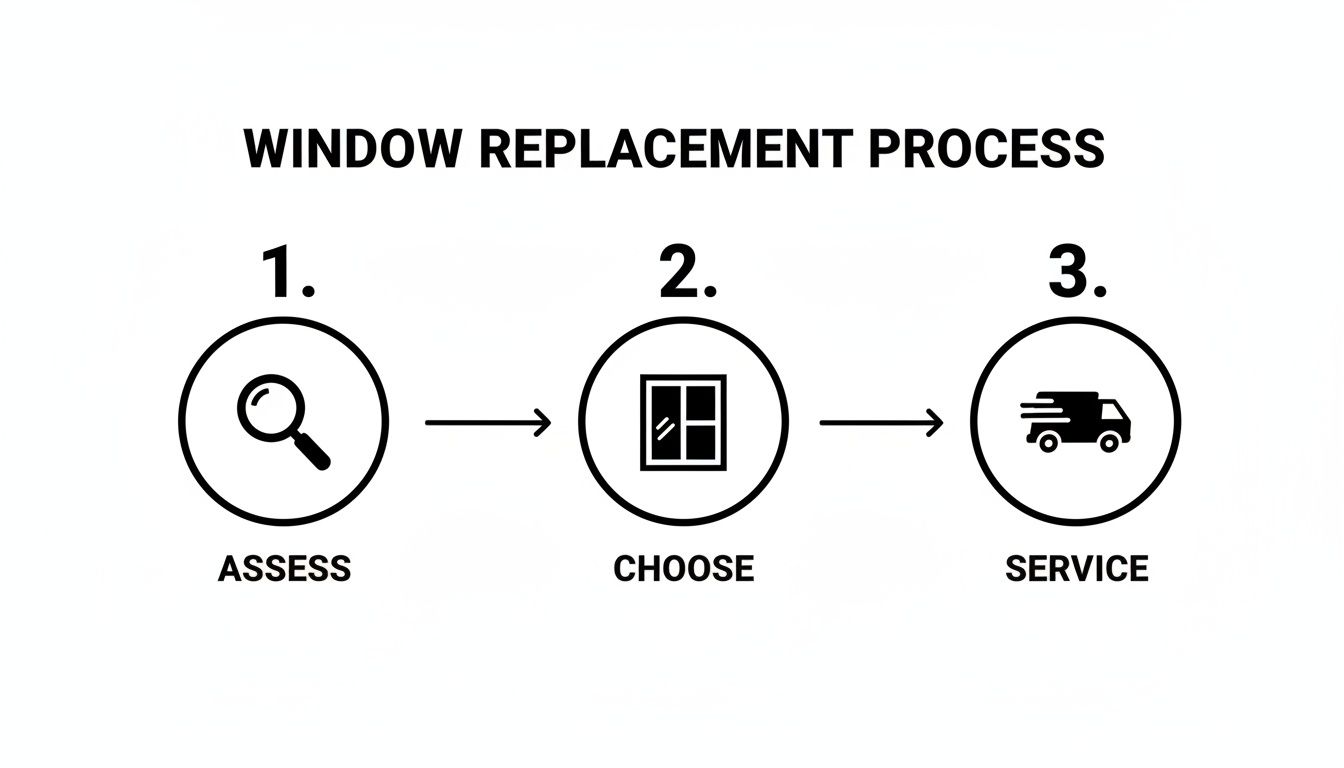
As you can see, a quality replacement always starts with a solid damage assessment, moves to an informed decision on the glass, and finishes with expert mobile service.
Key Takeaway: A damaged car window is a safety hazard that needs immediate attention. The replacement process is designed to get your vehicle back to its original safety standards with as little hassle as possible, especially with today's mobile service options.
We'll break down each of these stages so you can make confident choices. We'll cover it all—from sizing up the damage and deciding between OEM and aftermarket glass to dealing with insurance and why ADAS recalibration is so important.
Ready to get started? You can get a fast and accurate quote for your vehicle right now. Our goal is to make this process clear and simple so you can get back on the road safely.
Choosing the Right Glass for Your Vehicle
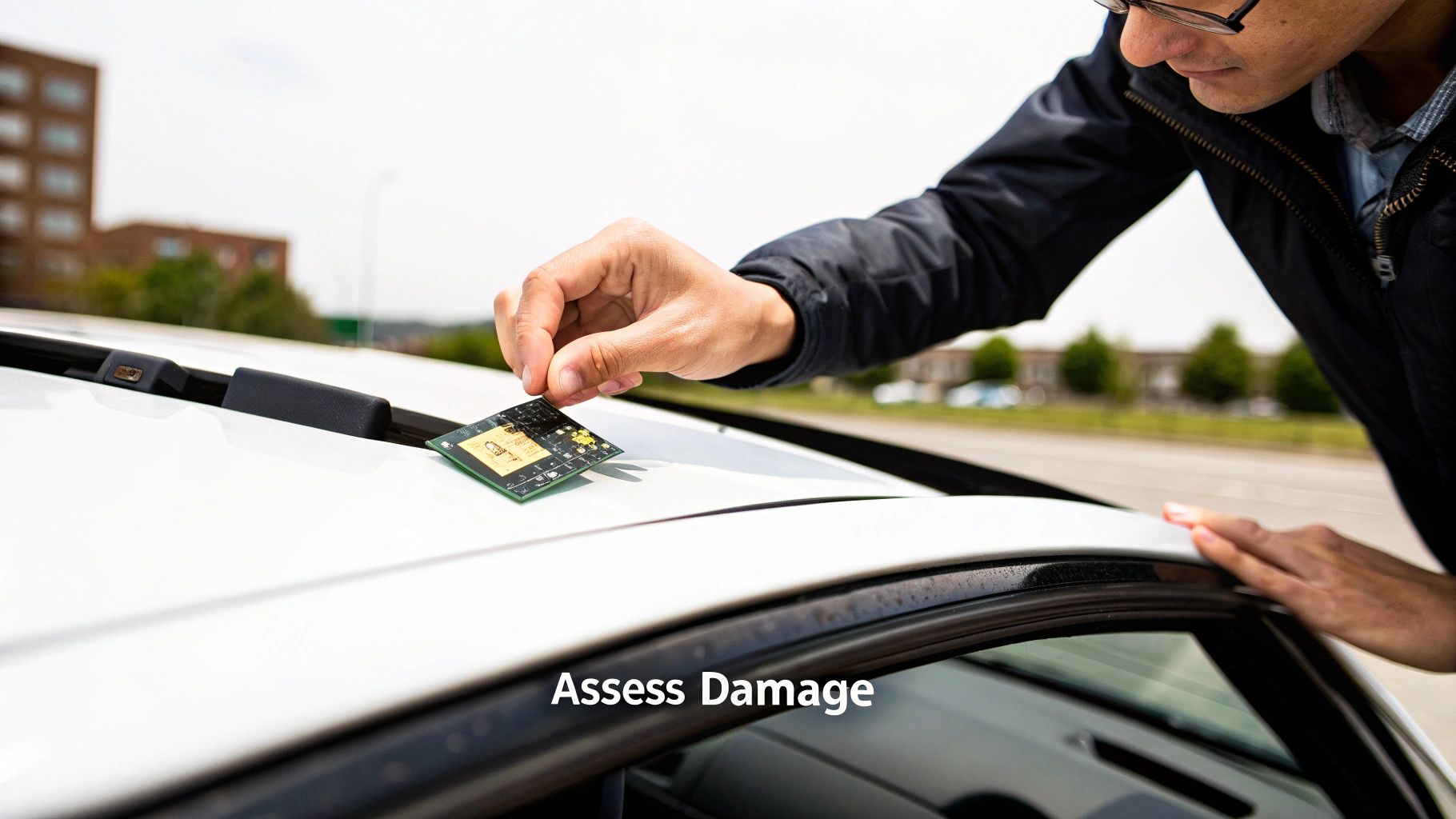
Before you can even think about what kind of car windows replacement glass you need, you have to figure out how bad the damage really is. A quick, honest assessment is the first step toward a safe and affordable fix. Not every little nick means you need a whole new windshield, but you absolutely can't ignore a serious crack.
A handy rule of thumb we use in the industry is the "dollar bill test." If a chip or crack is smaller than a dollar bill, there's a good chance it can be repaired. This works especially well for those little bullseye or star-shaped chips that haven't spread.
But some damage is a deal-breaker for repairs. If a crack is more than a few inches long, has spiderwebbed out to the edge of the glass, or—and this is a big one—is right in your line of sight, a replacement is non-negotiable. At that point, a simple repair just won't restore the windshield's structural integrity, and that’s a safety risk you don't want to take.
Your Two Main Choices: OEM vs. Aftermarket
Once it's clear you need a replacement, you’ll face a big decision: should you go with Original Equipment Manufacturer (OEM) glass or an aftermarket alternative? This choice affects everything from safety and performance to your car's future resale value. There's no single right answer, as it really depends on your car, your budget, and what you prioritize.
OEM glass is pretty straightforward—it's made by the same company that produced the original glass for your car's manufacturer. Think of it as an identical twin to what was installed on the assembly line. It meets the same rigorous standards for fit, thickness, clarity, and color.
Aftermarket glass, on the other hand, comes from a different company. While it is legally required to meet federal safety standards, it isn't made to the car manufacturer's exact specifications. These differences might seem small, but they can sometimes impact the glass's fit and long-term performance.
The Great Debate: OEM vs. Aftermarket
Deciding between the two often comes down to balancing quality, fit, and cost. For a newer, high-end vehicle loaded with technology, the precision of OEM glass is almost always the best bet. For an older, reliable daily driver, a high-quality aftermarket windshield can be a perfectly sensible and cost-effective solution.
Here are a few key differences I always point out to customers:
Fit and Finish: OEM glass is guaranteed to fit your vehicle's frame perfectly. This means a tight, factory-spec seal that keeps wind noise and water leaks out. Aftermarket glass can occasionally have slight variations in its shape or curvature.
Clarity and Distortion: With OEM, you're getting the exact optical quality your car was designed for. Some lower-end aftermarket glass might have minor distortions you'll notice when looking through it at an angle.
Material Thickness: The thickness of OEM glass is precisely engineered for your car's safety cage and airbag deployment systems. Aftermarket glass thickness can vary, though it still has to meet safety minimums.
A critical point for modern cars: If your vehicle has Advanced Driver-Assistance Systems (ADAS) like lane-keep assist or automatic braking, OEM glass is strongly recommended. The cameras and sensors for these systems are mounted directly to the windshield, and the precise specs of OEM glass are essential for them to be recalibrated and function correctly.
To make things a bit clearer, let’s break down the head-to-head comparison.
Comparing OEM and Aftermarket Auto Glass
Choosing between OEM and aftermarket glass can feel complicated, but it's much easier when you see the key differences side-by-side. This table breaks down what you get with each option, helping you match the right glass to your vehicle and budget.
Feature | OEM Glass | Aftermarket Glass |
|---|---|---|
Manufacturer | Made by the same company that supplied the original factory glass. | Made by a third-party company, not the original supplier. |
Fit and Seal | Guaranteed to be an exact match for your vehicle's specifications. | Generally fits well, but minor variations can sometimes occur. |
Quality | Meets the car manufacturer's highest standards for safety and clarity. | Must meet federal safety standards, but quality can vary by brand. |
Cost | Typically more expensive due to its guaranteed quality and branding. | A more budget-friendly option, often significantly cheaper than OEM. |
ADAS Compatibility | The ideal choice for vehicles with ADAS to ensure proper recalibration. | May work but can sometimes cause issues with sensor alignment. |
Ultimately, the best choice depends on your specific situation. A trustworthy installer can look at your car, discuss your needs, and give you a professional recommendation. Making an informed choice now on the right car windows replacement glass is the best way to avoid headaches and stay safe on the road.
Navigating the Insurance Claim for Your Auto Glass
Let's be honest, dealing with insurance can feel like a headache. But when it comes to getting your car windows replacement glass covered, you might be surprised at how straightforward it can be. Many drivers don't realize their policy often handles glass damage with little or even zero out-of-pocket cost. It all comes down to knowing what your policy says and how to get the ball rolling.
First things first, pull up your auto insurance policy. The term you're looking for is "comprehensive coverage." This is the part of your plan that deals with damage not caused by a collision—think a rock flying up on the highway or a window smashed during a break-in. Some policies go a step further with a specific glass waiver that can dramatically lower or even eliminate your deductible for glass work.
Getting Ready to Make the Call
Before you pick up the phone to call your agent or the claims hotline, a little prep work can make a world of difference. Spending five minutes gathering details now can save you from frustrating back-and-forth calls later and speed up your approval.
Make sure you have this info handy:
Your Policy Number: This is the key to everything.
Date and Time of Damage: Get as close as you can. "Yesterday afternoon around 3 PM" is better than "sometime last week."
A Clear, Simple Story: What happened? A stray rock on I-95? Vandalism in a parking lot? Just stick to the facts.
Your Vehicle’s Details: Know the make, model, year, and have the Vehicle Identification Number (VIN) ready.
Walking into that call organized shows the insurance rep you’re on top of things. It can turn what could be a long, drawn-out conversation into a quick, productive one.
My Pro Tip: When you get someone on the line, ask this specific question: "Does my policy have a separate or zero deductible for glass damage?" Many insurers offer this, and in most states, a no-fault glass claim like this won't bump up your rates.
Let Your Auto Glass Shop Do the Heavy Lifting
Here’s one of the best parts about working with a professional mobile auto glass service: they usually handle the insurance maze for you. Any reputable shop has built relationships with the major insurance carriers and knows their process inside and out. They can file the claim, confirm your coverage, and bill the insurance company directly.
This means you’re not stuck in the middle. You won't have to pay the full amount out of pocket and then chase your insurance company for reimbursement. The shop and the insurer sort it out, and all you have to worry about is paying your deductible, if you even have one.
To get a deeper dive into what your plan might cover, our guide on whether insurance covers windshield replacement is a great resource to check out before you make any decisions.
Will a Glass Claim Raise My Insurance Rates?
This is the big question on everyone's mind. Will filing a claim for car windows replacement glass make my premium go up? In most cases, the answer is no. A comprehensive claim for glass damage is typically considered "no-fault," meaning it doesn't affect your rates.
That said, policies and state rules can differ. The best way to get a straight answer is to ask your agent directly: "Will this glass claim impact my future premiums?" It’s a simple question that gives you total clarity and prevents any unwelcome surprises when your policy renews.
If the window was broken as part of a larger car accident, the claims process gets a bit more involved. For those situations, a practical guide to car accident claim insurance is a fantastic resource for navigating the more complex world of collision claims. By following these steps, you can get your glass fixed quickly, confidently, and without the usual insurance runaround.
Why Your Car's "Eyes" Need a Reset After a New Windshield
If you're driving a car built in the last few years, a windshield replacement has become a lot more than just swapping out a piece of glass. Your windshield is now a critical part of your car's brain—specifically, its safety systems. When you get a new piece of **car windows replacement glass**, you're also resetting the "eyes" of your car.
This all comes down to something called ADAS, or Advanced Driver-Assistance Systems. It’s the network of cameras and sensors, many mounted right on the windshield, that power the safety features we now take for granted. Think lane-keeping assist, automatic emergency braking, and adaptive cruise control.
This tech has completely changed the game. The automotive windshield market itself has exploded, currently valued at USD 29.74 billion and on track to hit USD 59.04 billion by 2032. We're seeing a huge demand for advanced glass with built-in technology and even features like UV protection that can block up to 99% of harmful rays. You can see more on these innovations in the windshield market. But this evolution also means a simple replacement is now a high-tech procedure.
Recalibration Is Not Optional—It’s a Safety Requirement
Here's the critical part: when a technician installs a new windshield, the ADAS camera's position can shift ever so slightly. We're talking about a difference of a millimeter or less. To the naked eye, it's nothing. But to your car's computer, that tiny misalignment can cause it to completely misread the road ahead.
What does that look like in the real world? It could mean your lane-keeping assist nudges you out of your lane because it thinks the white line is in a different spot. Even worse, it could mean your automatic emergency braking system doesn't see a stopped vehicle in time. These aren't just hypotheticals—they are the very real dangers of skipping a proper recalibration.
Key Insight: Let's be clear: recalibration is not an upsell. It's a non-negotiable safety step required by almost every vehicle manufacturer to ensure your ADAS features work correctly after a windshield replacement.
The recalibration process essentially gives the camera a new baseline, teaching it how to see accurately through the new glass. It's the only way to get your car's safety systems back to factory specifications. We dive much deeper into this in our guide on ADAS calibration after windshield replacement.
Static vs. Dynamic Recalibration: What's the Difference?
A professional technician will use one of two main methods to recalibrate the system, and the right one is determined by your vehicle’s manufacturer.
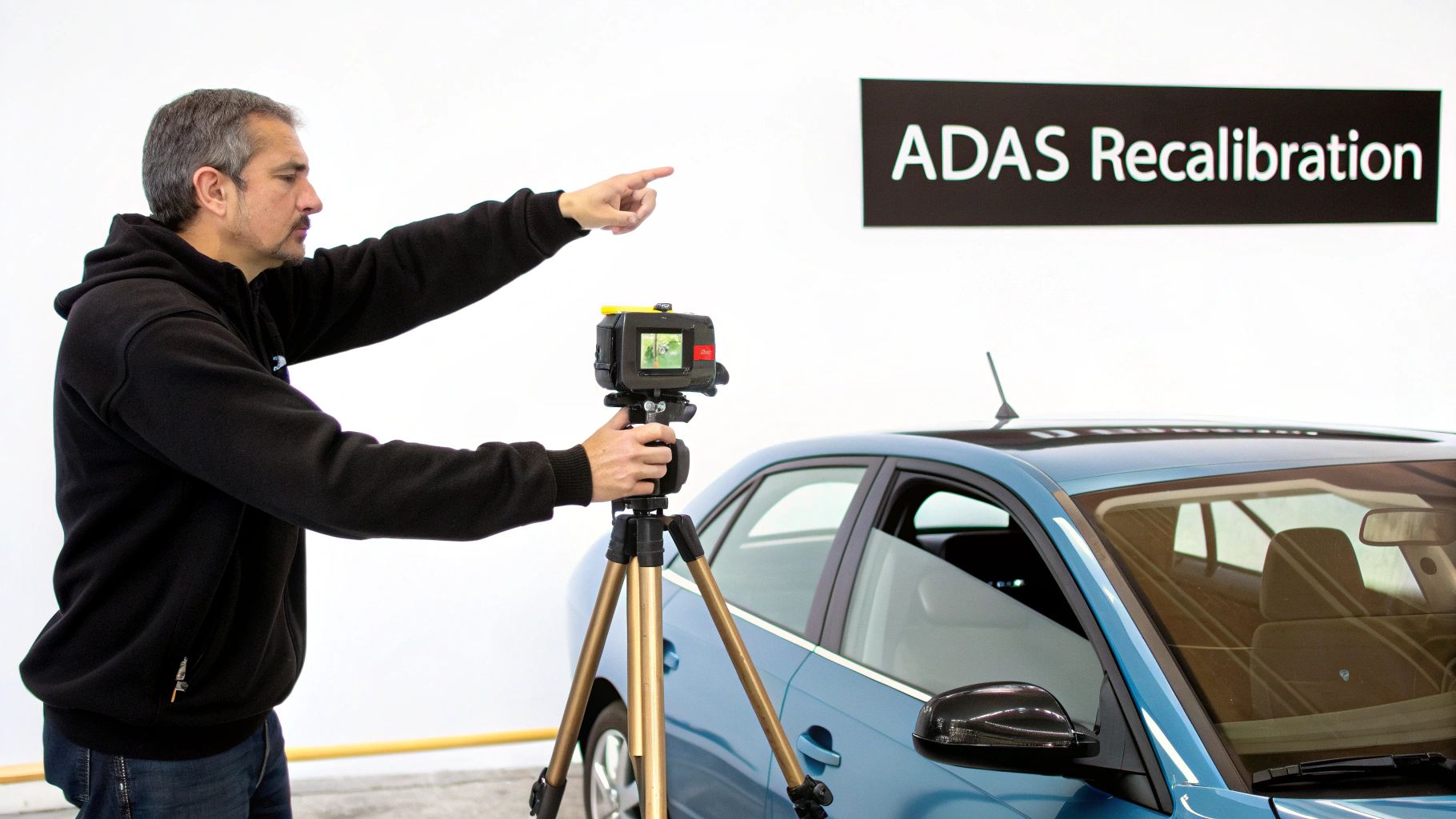
Static Recalibration: This is done in a controlled shop setting. Think of it like an eye exam for your car. The tech places special targets at very specific distances and angles from your vehicle, and the car's computer uses them to perfectly reset the camera's alignment.
Dynamic Recalibration: This one requires a road test. A technician drives the vehicle on clearly marked roads at a set speed for a certain amount of time. During the drive, the ADAS system learns and adjusts itself by reading real-world lane markings and traffic signs.
Some cars even need a combination of both static and dynamic procedures to get the job done right. This is precisely why you need to choose a service provider who has the proper training and equipment. Trying to recalibrate an ADAS system without the right tools isn't just ineffective; it’s a serious safety risk for everyone on the road.
The bottom line? When you get new car windows replacement glass, the job isn't finished until the ADAS recalibration is complete. It’s the final, crucial step that ensures the technology designed to protect you can actually do its job.
Aftercare and Upgrades: What to Do After Your New Glass Is In
So the technician has packed up and driven off. Job done? Not exactly. The next 24 to 48 hours are the most critical for your new car windows replacement glass. The powerful urethane adhesive used to bond the glass to your car's frame needs time to cure properly, creating a permanent, watertight seal.
Think of it like this: rushing the aftercare is a surefire way to end up with annoying wind noise, frustrating water leaks, or worse—a compromised seal that weakens your car's structural integrity. You’ve got to let it set.
The First 48 Hours: Your Aftercare Game Plan
Giving your new glass a little TLC for the first day or two will make all the difference. It's not complicated, but it is important. Here’s what you need to do:
Skip the Car Wash: Those high-pressure jets are the enemy of a fresh seal. Hold off on any car washes, especially automatic ones, for at least 48 hours.
Close Doors Gently: Slamming a door sends a jolt of air pressure through the cabin, which can literally push on the new glass and disrupt the curing adhesive.
Crack a Window: If you can, leave a different window cracked open about an inch. This little trick helps equalize the pressure inside and out, taking stress off the fresh seal.
Hold Off on the Rear Defroster: If you had your back glass replaced, don't use the rear defroster for at least a full day. This gives the new electrical connections and the seal time to set without any stress from heat.
A Pro Tip From the Field: That tape the technician puts around the new glass isn't just for looks. It's called retention tape, and it’s there to hold the glass perfectly in place while the adhesive cures. Leave it on for at least 24 hours before you peel it off.
Beyond the Repair: Time for an Upgrade?
Having a window replaced isn't just a repair; it's an opportunity. While the glass is already out and being worked on, it's the perfect time to think about upgrades that can make your drive safer, more comfortable, and even more stylish.
Professional window tinting is easily the most popular add-on. And we're not just talking about aesthetics. The automotive glass industry, now valued at over USD 21.49 billion, is booming partly because of value-added services like this. A quality tint film can block up to 99% of damaging UV rays and slash the heat inside your car by over 50%. That’s good for you and protects your interior from fading and cracking.
Another great option is to add a protective coating. Think of it as Rain-X on steroids. Professional windshield ceramic coatings create an incredibly slick, hydrophobic surface. Water beads up and flies right off, which dramatically improves your visibility in a downpour and helps keep your glass clean.
By thinking ahead about these simple aftercare steps and potential upgrades, you're not just fixing a problem—you're making a smart investment in your vehicle.
Got Questions About Car Window Replacement? We've Got Answers.
When you're dealing with a broken window, a million questions can pop into your head. It's totally normal. From how long you'll be without your car to whether the fix will hurt its value, getting straight answers is key.
We hear these questions every day from drivers just like you. So, we've put together this straightforward guide to clear things up and help you feel confident about the repair process.
How Long Does the Replacement Process Take?
One of the first things everyone wants to know is how much time to block out for the appointment. The actual hands-on work is surprisingly fast, but the real key to a safe installation is patience.
A side or rear window is a relatively quick job, usually wrapped up in about an hour. A full windshield replacement is more involved, taking our technicians anywhere from 60 to 90 minutes to carefully remove the old glass, prep the frame, and set the new one.
But the work doesn't stop when the tools are put away. The powerful urethane adhesive that holds the glass in place needs time to cure. We call this the "safe drive-away time," and it's absolutely critical for your safety.
Depending on the specific adhesive we use and the day's weather, the safe drive-away time can be as short as 30 minutes or stretch to a few hours. Your technician will give you a precise time, and sticking to it ensures the glass properly bonds and provides the structural support your car needs.
Will New Glass Affect My Car's Value?
This is a great question. The answer? A high-quality, professional car windows replacement glass installation absolutely preserves—and can even boost—your car's value. It shows a potential buyer that you’ve taken proper care of the vehicle.
When a certified pro uses top-tier OEM or equivalent glass and correctly recalibrates your ADAS safety systems, you’re restoring the car to its factory-spec condition. That’s a huge plus.
On the other hand, a botched job is a major red flag that can tank your resale value. Cheap glass that doesn't fit right can cause a domino effect of problems.
You'll see issues like:
Persistent Leaks: Water sneaking in can lead to rust, mold, and damaged electronics.
Annoying Wind Noise: A bad seal creates that unmistakable whistling sound on the highway.
Faulty Safety Features: An ADAS system that hasn't been recalibrated is a serious safety risk.
Think of it this way: a professional replacement isn't just a repair. It's an investment in your car's long-term safety, function, and worth.
Can My Car Glass Be Replaced in Bad Weather?
The beauty of mobile service is that we come to you, but what happens if it's raining? It’s a valid concern, because weather has a direct impact on how well the adhesive cures.
Our technicians are ready for most conditions. Our service vans are equipped with awnings and other gear to create a dry, protected workspace in light rain.
That said, safety comes first, and some weather is just a non-starter. Heavy, driving rain or extreme cold can compromise the installation. Urethane adhesives need to cure within a specific temperature range—if it drops below 40°F (4°C), the bond won't set correctly.
A reputable company will never risk your safety by cutting corners. Instead, we'll work with you to find a solution:
Move the job into a covered space like your garage or a carport.
Meet you at a covered parking garage at your office or nearby.
Simply reschedule for the next clear day that works for you.
Our priority is always a flawless, secure installation.
What Is the Difference Between Laminated and Tempered Glass?
It might surprise you to learn that not all the glass in your car is the same. Your vehicle uses two different types of safety glass, each designed for a specific job. Knowing the difference explains why they break in such dramatically different ways.
Laminated Glass is used for your windshield. It’s a sandwich of two layers of glass with a tough layer of plastic (polyvinyl butyral, or PVB) in the middle.
How it breaks: When something hits it, the PVB layer holds the glass fragments together. This is why a rock chip creates a small starburst or crack, but the windshield stays intact, protecting you from debris.
Tempered Glass is used for your side and rear windows. It's made by heating glass to extreme temperatures and then cooling it rapidly.
How it breaks: This process makes the glass incredibly strong—about four times stronger than normal glass. When it finally gives way, it shatters into thousands of tiny, dull-edged, pebble-like pieces, which minimizes the risk of serious cuts.
This isn't an accident; it's smart safety engineering. The laminated windshield provides structural integrity, while the tempered side windows are designed to break apart for a potential escape route in an emergency.
At Auto Renu Auto Glass LLC, we're committed to providing safe, reliable, and convenient mobile auto glass solutions. Whether you need a simple chip repair or a full windshield replacement with ADAS recalibration, our certified technicians are ready to help. Schedule your service with us today at https://www.autorenu911.com.