What to Expect: cost to repair chipped windshield
Find out the cost to repair chipped windshield and what affects it, from chip size and ADAS recalibration to insurance coverage.
Oct 29, 2025
generated
cost to repair chipped windshield, windshield chip repair, auto glass repair cost, car maintenance, ADAS recalibration
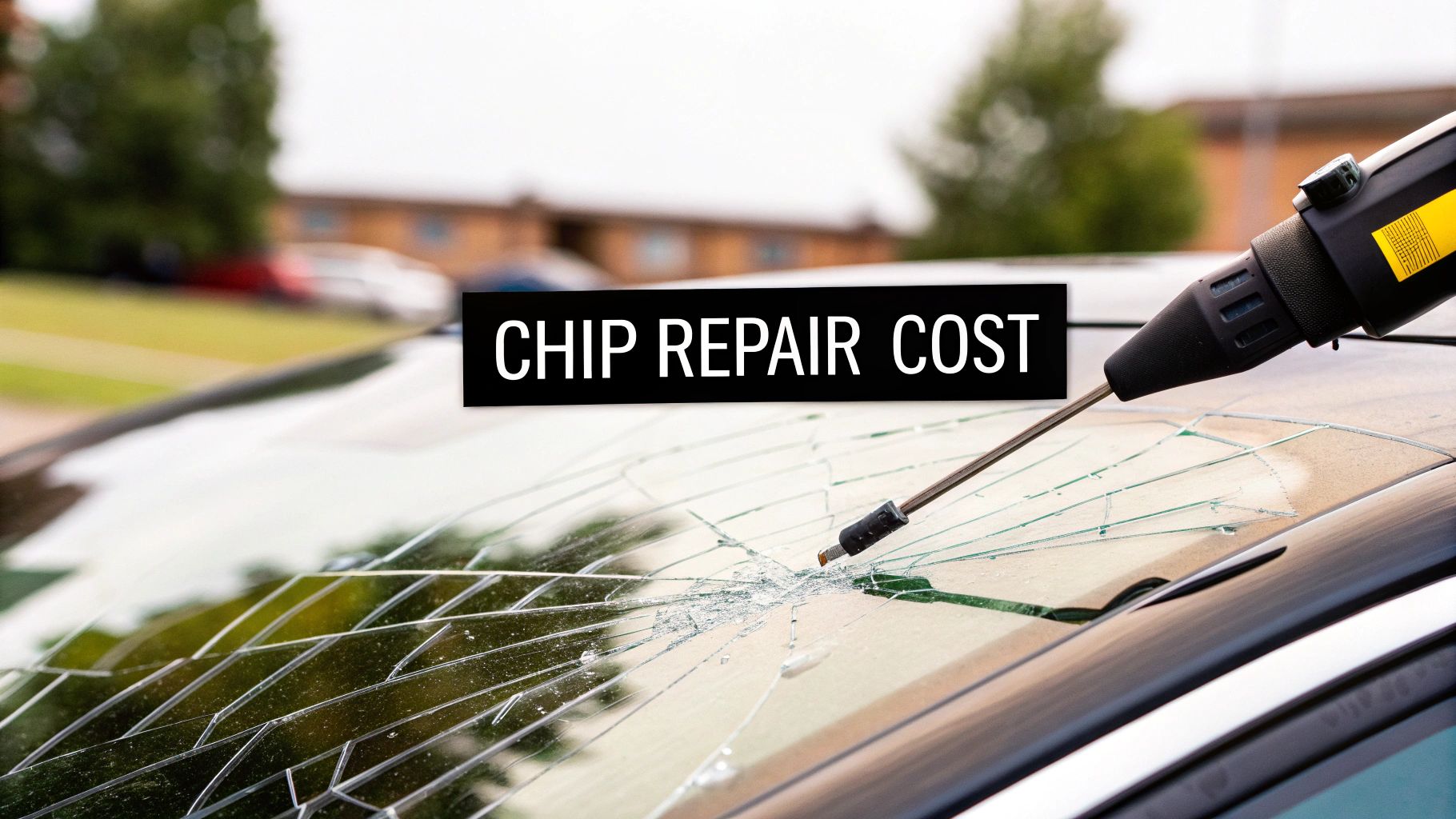
That little rock chip on your windshield might not seem like a big deal, but it's a problem you don't want to ignore. Think of it like a tiny snag in a sweater—leave it alone, and it's bound to unravel into a long, expensive crack.
Generally, you can expect the cost to repair a chipped windshield to range from $50 to $150. The good news? Many comprehensive insurance plans will cover this for you, often with no deductible. It's a small investment that can save you from a full windshield replacement, which can easily cost hundreds, or even thousands, of dollars.
Your Guide to Windshield Chip Repair Costs
So, what goes into that final price? It's not a simple flat fee. The final bill is really a mix of different factors, almost like a recipe with a few key ingredients.
The size of the chip, the type of break, and its location on the glass all matter. A chip directly in the driver's line of sight, for instance, is a more delicate job and might cost a bit more. The technology in your car, like advanced driver-assistance systems (ADAS), can also influence the final price.
A Quick Cost Breakdown
Thankfully, most common chip repairs are surprisingly affordable. Industry data often shows that a simple repair runs between $50 and $65. In fact, the average insurance payout for a chip repair is about $63, making it one of the smartest and most cost-effective bits of vehicle maintenance you can do. You can dig deeper into windshield repair market trends and pricing to see how these numbers shake out across the industry.
To give you a better idea of what to expect, here’s a quick summary of typical costs for different types of windshield damage. This can help you get a ballpark figure in your head before you call a pro.
Estimated Windshield Chip Repair Costs at a Glance
This table provides a quick summary of typical costs for different types of windshield damage, helping you understand potential expenses.
Damage Type | Average Cost (Out of Pocket) | Complexity Level |
|---|---|---|
Single Bullseye Chip | $60 - $100 | Low |
Star Break Chip | $70 - $120 | Moderate |
Combination Break | $80 - $130 | Moderate to High |
Small Crack (under 6") | $100 - $150 | High |
It's crucial to remember that these figures are estimates. The final quote will always depend on your specific situation, including your location and the repair shop you choose. Always get a firm quote before work begins.
So, What's the Real Cost to Fix That Chip?
Ever wondered why you can't get a single, flat-rate price for a windshield chip repair? It's because no two chips are exactly alike. The final number on your invoice depends on a handful of key factors, much like a mechanic can't give you a firm quote until they look under the hood.
Getting a handle on these variables will help you understand what you're paying for and spot a fair price when you see one. Let's break down the five things that really drive the cost of a windshield repair, from the damage itself to where you live.
Chip Size and Type
First things first, the technician has to look at the damage itself. Think of it like a dent in your car's fender—a tiny ding is a simple fix, but a massive crease is a different story. The same principle applies here.
Size: The industry rule of thumb is that if the chip is smaller than a quarter, it's usually an easy fix. Once the damage gets bigger than a dollar bill, you’re often looking at a full windshield replacement.
Type: A simple bullseye—that classic small, circular impact—is the most straightforward type to fill. But a star break, which has little cracks shooting out from the center, or a combination break (a messy mix of both) takes more finesse and time to seal up correctly, which bumps up the cost.
Location of the Damage
Where that rock decided to hit your windshield matters just as much as its size. A chip out of the way on the passenger side is one thing, but one right in your line of sight is a whole different ballgame.
Any damage directly in the driver's viewing area demands incredible precision. The tech has to make the repair as optically clear as possible to avoid creating a distortion that could distract you. Chips near the very edge of the glass are also tricky because they can weaken the entire windshield's structural stability, making them tougher and sometimes impossible to repair safely.
A chip near the edge is like a crack in a dam's foundation; it poses a greater risk to the entire structure, demanding more careful attention and sometimes making a full replacement the only safe option.
Your Vehicle's Specific Glass
Believe it or not, not all auto glass is created equal. A simple windshield on an older car is almost always going to be cheaper to work on than the high-tech glass found in a new luxury vehicle.
Modern cars often come with specialty glass—things like heated, tinted, or acoustic glass designed to reduce road noise. These have extra layers or tiny embedded wires that can make a repair more complex. And if your car projects a Heads-Up Display (HUD) onto the windshield, that glass has a special coating that adds another layer of difficulty (and cost) to the job.
Service Type and Your Location
Finally, how and where the repair gets done plays a big part in the price. The sheer convenience of a mobile service—where a technician comes to you—usually comes with a premium compared to you driving into their shop.
Your zip code matters, too. Auto glass repair is a massive global business, and labor rates and overhead costs vary significantly from one place to another. A repair in downtown Manhattan will naturally cost more than the same job in a small Midwestern town. If you're curious, you can dig into the global trends in the windshield service industry to see how these market forces work.
Understanding the Hidden Cost of ADAS Recalibration
Your car's windshield isn't just a piece of glass anymore. In most modern vehicles, it's a critical part of the high-tech safety net known as Advanced Driver-Assistance Systems (ADAS). This is the technology that powers features like lane-keep assist, automatic emergency braking, and adaptive cruise control.
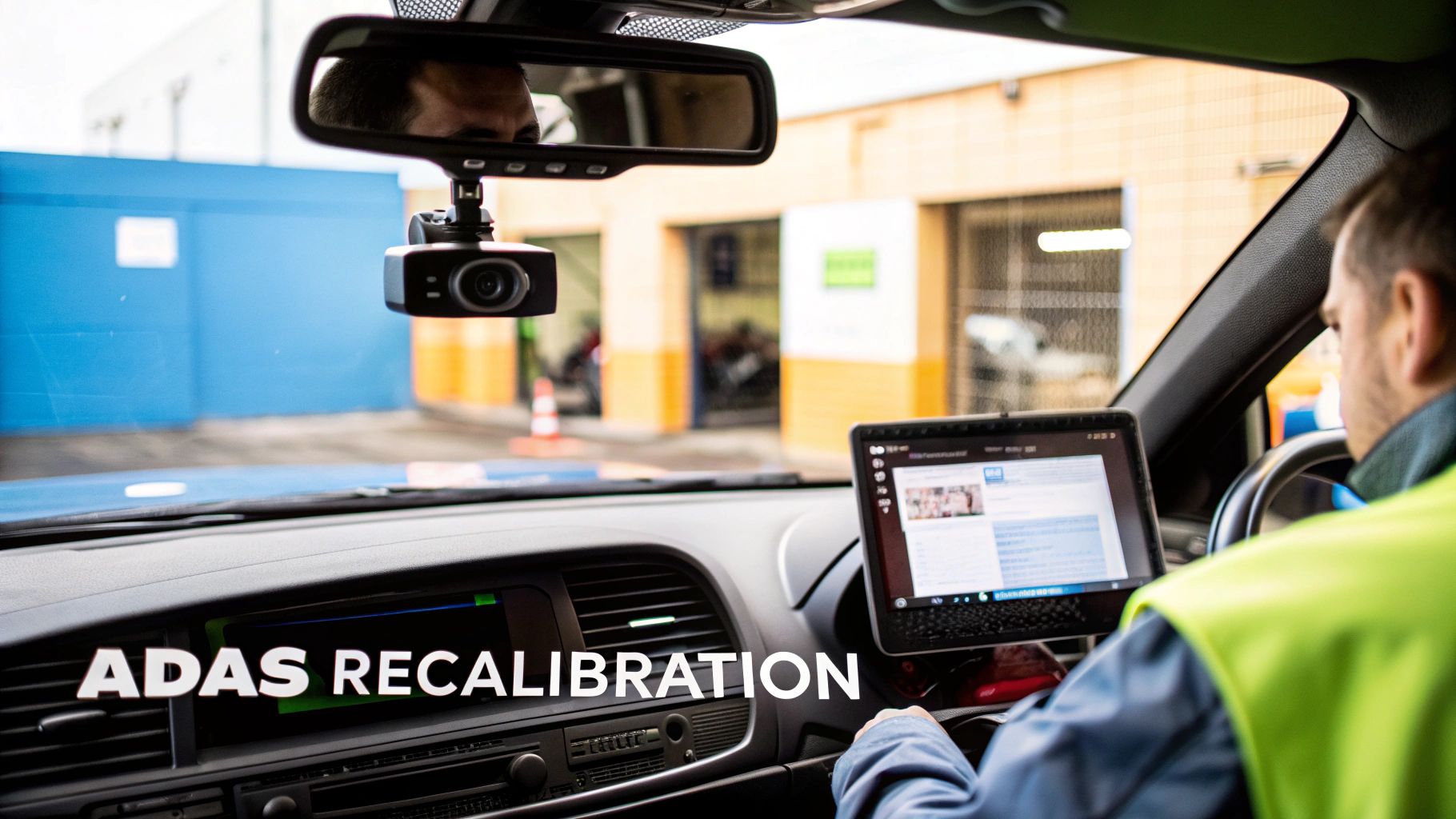
The "eyes" of these systems—a collection of sophisticated cameras and sensors—are usually mounted right on your windshield. Think of them as being perfectly zeroed in, like a sniper's scope. Even a tiny, microscopic shift can completely throw off their view of the road, and that's where an unexpected cost can sneak into what seems like a simple windshield repair.
Even if a chip repair doesn't involve removing the glass, working near these sensors can disrupt their delicate calibration. And if you need a full replacement? Recalibration isn't just a good idea; it's an absolute must for safety.
Why Recalibration Is Non-Negotiable
Skipping an ADAS recalibration is a bit like getting a new pair of prescription glasses but refusing to have them properly fitted. The prescription might be right, but if the lenses sit crooked on your face, your vision will be blurry, distorted, and unreliable.
It's the same principle with your car. A misaligned ADAS camera might struggle to see lane markings or miscalculate the distance to the vehicle in front of you. This could lead to your safety features failing in a critical moment or, even worse, activating when they shouldn't. That’s why car manufacturers insist on it after any windshield work.
Key Takeaway: A poorly calibrated ADAS system can turn a life-saving feature into an unpredictable liability. The cost of recalibration is really an investment in making sure your car’s safety tech works exactly as it was designed to.
Static vs. Dynamic Recalibration Costs
Technicians use two main methods to get your car’s safety systems back in sync, and the right one depends on your vehicle’s make and model. Each comes with its own process and price tag.
Static Recalibration: This is done in the shop using a special rig with targets set up at very specific distances and angles. It’s a precise, highly controlled process that generally costs between $250 and $400.
Dynamic Recalibration: This method actually requires driving the car at set speeds on clearly marked roads, allowing the system to recalibrate itself in real-world conditions. It might sound easier, but it still needs a trained technician and can take a good chunk of time, typically costing from $200 to $350.
When this service is needed, it can definitely add a significant amount to the final bill. The good news is that many comprehensive auto insurance policies will cover this essential safety procedure. To get a deeper dive into the technical side, you can learn more about professional ADAS windshield calibration and see why it’s so important for your car.
Does Insurance Cover Windshield Chip Repair?
The second you hear that dreaded tick and see a new chip in your windshield, your mind probably jumps straight to one question: "Is my insurance going to cover this?" The good news is, it often will—but it all comes down to what kind of coverage you have.
Generally, windshield damage is handled by your comprehensive coverage. This is the part of your policy that takes care of non-collision incidents, like a rock hitting your glass on the highway, a tree branch falling on your car, or vandalism. If you only carry basic liability, you'll likely be paying for the repair yourself.
But if you do have comprehensive, you’re probably in luck. Many insurance companies are so eager for you to fix small chips that they’ll cover the entire cost, often by waiving your deductible for the repair.
Why Your Deductible Matters (Or Sometimes Doesn't)
So, why would an insurer just waive your deductible? It’s a classic case of simple math. Your car insurance deductible is the amount you have to pay out of pocket before your insurance starts paying. If you have a $500 deductible, you’re on the hook for the first $500 of any claim.
A typical chip repair only runs about $60 to $100, which is way under that threshold. Logically, you’d think you’d have to pay for it. But insurance companies are playing the long game. They know that a tiny, ignored chip can easily spread into a massive crack, demanding a full windshield replacement that could cost $500, $1,000, or even more.
By paying for the small repair now, the insurance company saves itself from a much bigger bill down the road. It’s a preventative move that works out for everyone: you get a free repair, and they avoid a major claim.
Filing a Claim vs. Paying Out of Pocket
Even if your repair is covered, does it always make sense to file a claim?
For a simple chip repair where your insurer waives the deductible, the answer is almost always yes. These are usually considered no-fault claims and are unlikely to raise your rates. Think of it as preventative maintenance that your insurer is happy to pay for.
The situation gets a little trickier when you’re looking at a full replacement. If the total cost is just a little bit more than your deductible, you might want to consider paying for it yourself to keep your claims history clean. While a single glass claim rarely affects your premium, a pattern of multiple claims in a short time could flag you as a higher risk.
Before you decide, it's always a smart move to pull up your policy or give your agent a quick call. Some states even have laws about glass coverage, and many insurers offer an optional "full glass coverage" rider with a $0 deductible for any glass damage, making the choice a no-brainer.
When to Repair vs Replace Your Windshield
Trying to figure out if your windshield needs a quick fix or a complete replacement is a bit like deciding between a bandage and stitches. A small, clean chip can often be sealed up, saving you a headache and some cash. But some damage is just too severe, compromising the glass's structural integrity and making a full replacement the only safe route.
Auto glass technicians have a pretty clear set of guidelines they follow to make this call. It really boils down to three main things: the size, the depth, and the location of the damage. These factors will determine whether a repair is even on the table or if you need to start thinking about a new windshield.
This infographic lays out how things like your insurance coverage can play a big part in the final cost.
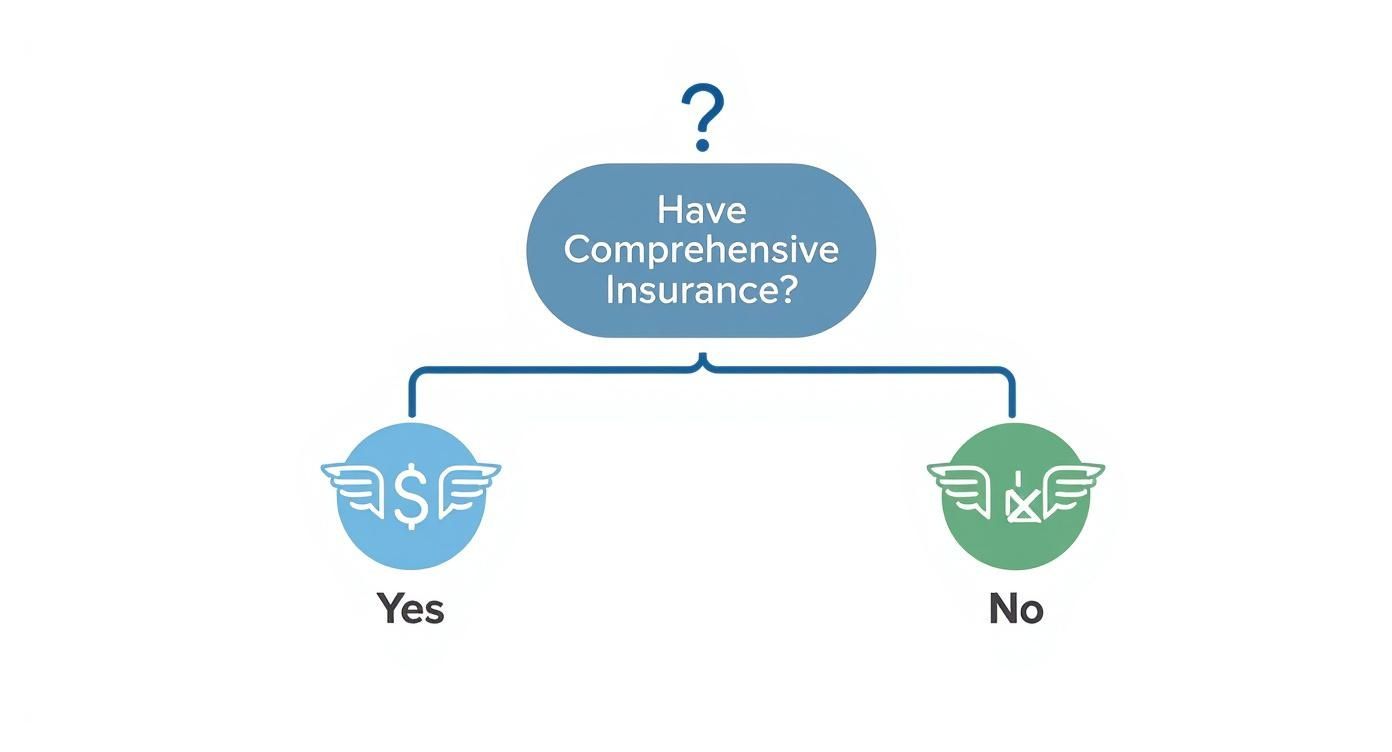
As you can see, if you have comprehensive insurance, the repair is often covered with no out-of-pocket cost. That can make the decision to fix it right away a no-brainer.
Key Factors for Repairability
So, what are the actual rules of thumb? Here’s a breakdown of what a professional technician is looking for when they inspect your windshield:
Size and Depth: The classic rule is that if a chip is smaller than a quarter or a crack is shorter than a dollar bill (about six inches), it's likely repairable. The damage also can't go too deep; it shouldn't have penetrated both layers of the laminated safety glass.
Location: This is a big one. Any chip or crack sitting directly in the driver’s line of sight is a major problem. Even the best repair can leave a tiny distortion, which is the last thing you want distracting you on the road. Damage right at the edge of the windshield is also a red flag because it can weaken the entire structure.
Damage Type: A simple, clean bullseye chip is the ideal candidate for repair. On the other hand, complex star breaks with multiple legs or long, wandering cracks are much tougher to fill correctly and often point toward a full replacement for safety's sake.
A windshield provides up to 30% of a vehicle's structural strength in a rollover. Opting for a replacement when the damage is severe isn't an upsell—it's a critical safety measure that keeps your car's frame solid.
When the damage is too significant for a simple repair, a full replacement becomes necessary. This table breaks down the key decision points to help you understand which path is right for your situation.
Windshield Repair vs. Replacement Decision Guide
Factor | Repair | Replacement |
|---|---|---|
Damage Size | Chip smaller than a quarter; crack under 6 inches. | Chip larger than a quarter; crack over 6 inches. |
Damage Location | Outside the driver's direct line of sight. | In the driver's line of sight or near the edge. |
Damage Type | Simple bullseye or small star-shaped chip. | Complex cracks, deep pits, multiple chips. |
Cost | Typically $50 - $150. Often covered by insurance. | Typically $200 - $1,000+. Subject to deductible. |
Time | About 30-60 minutes. | Can take several hours, including curing time. |
Safety | Restores strength for minor damage. | Fully restores the windshield's structural integrity. |
Ultimately, choosing a replacement for more extensive damage is the only way to ensure your vehicle's safety features function as designed.
When a repair just won't cut it, our guide on windshield replacement can walk you through that entire process. If you find yourself needing a new windshield, making an informed decision between OEM vs aftermarket parts will be a key step that affects both the cost and the quality of the job.
How to Find a Reputable Repair Shop
https://www.youtube.com/embed/V2i8tu36qZ8
Even the best price in the world doesn't mean much if the repair itself is garbage. A botched fix isn't just a waste of money—it can fail down the road, forcing you into a full, expensive windshield replacement. The technician you trust with your glass is every bit as important as the resin they use.
So, where do you start? Look for credentials. A top-notch shop will proudly mention that their technicians are certified by groups like the Auto Glass Safety Council (AGSC). This isn't just a piece of paper; it's proof they're up-to-date on the latest safety protocols and repair techniques.
Next, talk materials. A quality repair hinges on using a high-grade resin that bonds perfectly with the glass, cures crystal clear, and restores your windshield's strength. Low-quality resin, on the other hand, can yellow over time or simply fail to hold, leaving you right back where you started.
Spotting Red Flags and Asking the Right Questions
Let's be honest—scams are out there. Be very skeptical of anyone who just walks up to you in a parking lot offering a super cheap, on-the-spot repair. These "pros" often use subpar materials and pressure you into a quick decision.
A true professional will be transparent, explaining the process and backing up their work with a solid warranty. Don't be shy about vetting them. Before you hand over your keys, get answers to these simple questions:
Are your technicians certified? This is a quick way to gauge their commitment to quality and safety.
What kind of resin do you use? You want to hear that they use high-quality, industry-approved materials.
Do you offer a warranty on your work? A shop that’s confident in their repairs will have no problem guaranteeing them.
Key Takeaway: A reputable shop stands behind its work. A lifetime warranty against defects or the repair spreading is the gold standard and a strong indicator of a trustworthy business.
Taking a few minutes to do your homework ensures your windshield repair is done right the first time, saving you headaches and money.
Common Questions About Windshield Repair
Got a chip in your windshield? You probably have a few questions running through your mind. Getting straight answers is the best way to make a smart decision, so let's tackle the most common ones I hear from drivers.
How Long Does a Chip Repair Take?
This is usually the first thing people ask, and the good news is, it's incredibly quick. A professional chip repair is a surprisingly fast process. From the moment we start cleaning the damaged spot to injecting the resin and curing it solid with a special UV light, the whole thing is typically done in just 20 to 30 minutes. No long waits—you can get right back on the road.
Will the Repair Be Completely Invisible?
This is a common hope, but it's important to set the right expectation. The main job of a chip repair is to restore your windshield's strength and stop that little chip from turning into a massive crack. A high-quality repair will make the damage 80-95% less noticeable, but you’ll likely still see a faint spot if you look for it. Think of it like a small, well-healed scar. The priority is structural safety, not flawless cosmetics.
Can I Go to a Car Wash Right After?
It's best to hold off on the car wash for a bit.
Give the repair resin a full 24 hours to completely cure and bond with the glass. Hitting it with high-pressure water jets or harsh soaps too early can weaken the repair and undo all the good work.
Are DIY Kits a Good Idea?
I get it, DIY kits look like a cheap and easy fix. But honestly, they often cause more harm than good. A professional technician uses specialized equipment to create a vacuum and inject high-quality resin deep into the chip. The kits you buy at the auto parts store just can't replicate that.
Worse yet, a botched DIY attempt can trap air and moisture inside the chip. This makes it impossible for a professional to properly fix it later, forcing you into a much more expensive full windshield replacement. It's a classic case of a small problem turning into a big one.
At Auto Renu Auto Glass LLC, we provide fast, professional, and reliable mobile chip repairs that restore your windshield's safety and clarity. Don't wait for that small chip to become a big problem—get your free estimate today