Cost to Replace Car Window: A Practical Guide to the cost to replace car window
Explore the cost to replace car window for windshields, side, and rear glass, plus ADAS calibration and how insurance can help you save.
Jan 7, 2026
generated
cost to replace car window, auto glass cost, windshield replacement, side window repair, car window insurance
When you're dealing with a cracked or shattered car window, one of the first questions on your mind is, "How much is this going to set me back?" The honest answer is: it depends. On average, you can expect the cost to replace a car window to fall somewhere between $250 and $1,200.
That's a pretty big range, right? The final price tag hinges on which piece of glass is broken, the type of car you drive, and some of the fancy tech that might be built into it. A simple side window on an older sedan is a completely different ballgame than a high-tech windshield on a brand-new SUV.
Understanding the Baseline Cost to Replace Car Window
Let's break down the typical costs so you can get a clearer picture of what to expect. Think of it like this: not all glass is created equal. The complexity, size, and features of each window play a huge role in the final bill.
Average Price Ranges by Window Type
Your car has a few different types of windows, and each one has its own replacement cost ballpark.
Side Window Replacement: These are usually the most straightforward and affordable, typically running between $250 and $450.
Rear Window (Backlite) Replacement: Your back glass is a bit more complex, often with defroster lines running through it. You're looking at a cost of around $300 to $600.
Windshield Replacement: This is almost always the most expensive piece of glass to replace. Costs can start around $500 and climb to $1,200 or even more, especially if your car has modern safety features.
This chart gives you a quick visual of how those costs stack up.
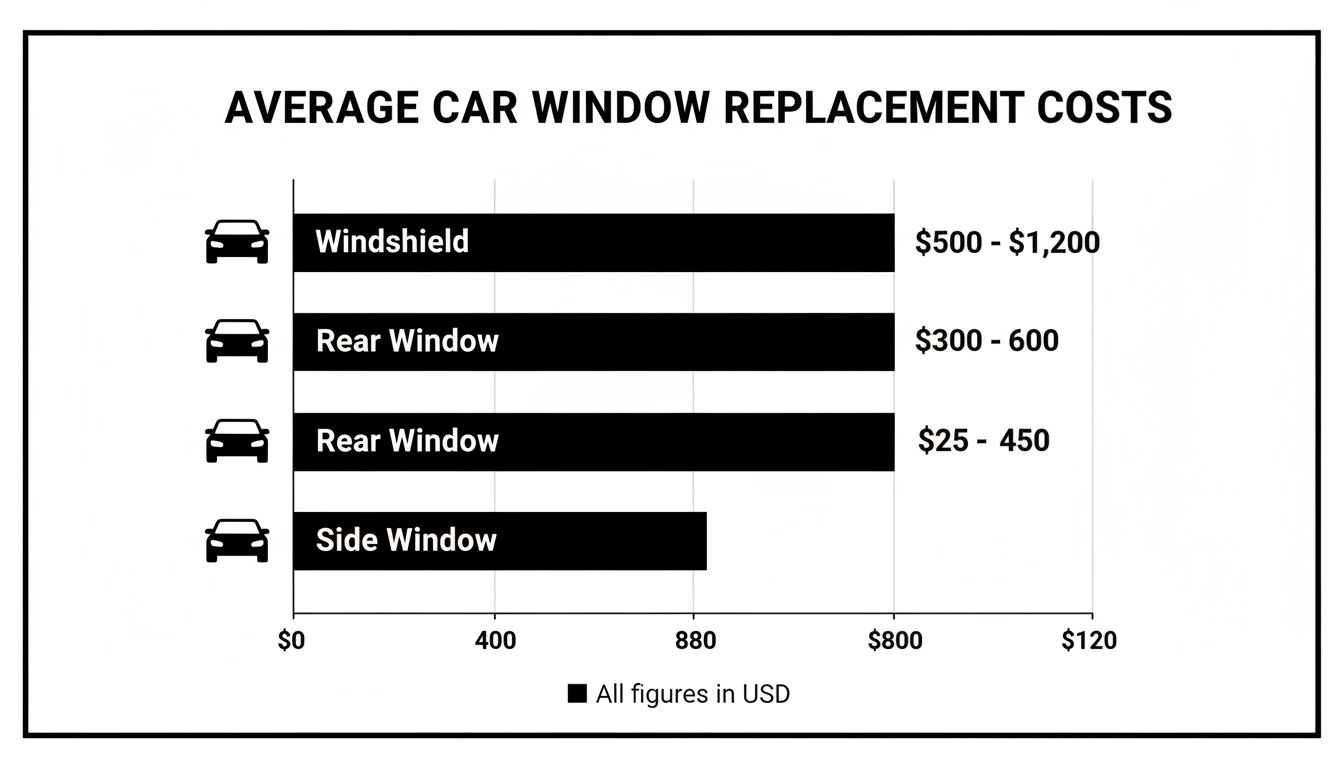
As you can see, windshields are in a league of their own. That's because they're not just a piece of glass anymore; they're a critical part of your car's structural integrity and safety systems.
Estimated Car Window Replacement Costs at a Glance
For a quick reference, here’s a table summarizing the potential costs you might encounter. This should help you quickly gauge where your specific repair might land.
Window Type | Average Cost Range (Standard Vehicle) | Average Cost Range (Luxury/ADAS Vehicle) |
|---|---|---|
Side Window | $250 - $450 | $350 - $600+ |
Rear Window | $300 - $600 | $500 - $900+ |
Windshield | $500 - $800 | $800 - $1,200+ |
Remember, these are just estimates. The best way to know for sure is to get a specific quote for your vehicle.
What Pushes the Price Up or Down?
So why the wide range? The numbers above are just a starting point. Several factors can swing the final price. For example, if you drive a luxury brand like a BMW or Audi, you could see the cost jump by 10-15% or more.
A huge factor in newer cars is the Advanced Driver Assistance Systems (ADAS). These are the cameras and sensors—often mounted on the windshield—that power features like lane-keeping assist and automatic emergency braking. After 2018, these systems became much more common, and replacing a windshield with ADAS requires a special recalibration process, adding to the cost. You can dive deeper into these industry shifts by checking out a full automotive windshield market report.
Key Takeaway: The type of window sets the initial cost, but your car's specific make, model, and built-in technology are what truly determine the final price you'll pay.
Now that we have a handle on the basic costs, let's dig into why these prices vary so much and what other factors come into play.
Why Different Windows Have Different Prices
It’s a common question we get: why does a small side window cost so much less to replace than the big windshield? It seems counterintuitive, but the answer has nothing to do with size and everything to do with what that specific piece of glass is engineered to do. The cost to replace a car window is directly tied to its unique materials, design, and function.
Think of it like this: the tires on a high-performance sports car look similar to those on a family sedan, but their construction, purpose, and price tag are worlds apart. It's the exact same story with your car's glass. Each window has a very specific job.
The Windshield: Your Car's Unsung Hero
Your windshield is so much more than a barrier against wind and bugs; it's a core part of your vehicle's safety system. This is precisely why it’s often the most expensive piece of glass to replace. The secret is in its construction.
Windshields are made from laminated safety glass. Imagine a glass sandwich: two layers of specially crafted glass fused together with a tough, clear layer of polyvinyl butyral (PVB) in the middle. When a rock hits it, that inner PVB layer absorbs the impact and holds the broken glass in place, preventing a cascade of dangerous shards from entering the cabin.
That lamination is the magic behind windshield repair. The PVB film stops a small chip from spreading instantly, giving you a window of opportunity to get it fixed before you need a whole new windshield.
Not only is this manufacturing process more complex, but the windshield itself contributes up to 30% of your vehicle's structural integrity. It’s crucial for supporting the roof in a rollover and ensuring your airbags deploy at the correct angle. Given its critical role, it’s worth understanding the factors involved. You can dive deeper into the specifics in our guide on the cost to replace a windshield.
Side Windows: The Designated Escape Route
Your side windows are built to do the complete opposite of a windshield in an emergency—they're designed to shatter on demand. This is because they are made from tempered glass.
Tempered glass is a single sheet of glass that goes through a rapid heating and cooling process. This creates incredible tension within the pane. When it breaks, it doesn’t create sharp, jagged daggers. Instead, it crumbles into thousands of small, relatively harmless, pebble-like pieces. This is a deliberate safety feature, allowing occupants to escape or first responders to gain access after a serious accident.
Because it's a single layer of glass and the manufacturing is less involved than lamination, tempered glass is typically much more affordable to produce and replace.
Rear Windows: The Technology Hub
Your rear window, also known as the backlite, is where safety engineering meets modern convenience. It's usually made from tempered glass, just like the side windows, but it’s often packed with integrated technology that adds to its complexity and cost.
These built-in features are the main reason a rear window replacement costs more than a side window.
Defroster Lines: Those thin orange or gray lines are tiny heating elements that melt ice and clear away fog.
Radio Antennas: Many modern cars embed the radio or GPS antenna directly into the glass for a cleaner look.
Wiper Mounts: On any vehicle with a rear wiper, the glass needs a durable, perfectly placed mount for the wiper motor assembly.
Each of these elements requires precise manufacturing and careful electrical hookups during installation, which drives up the price.
While windshields get all the headlines, don't overlook the backlite. Insurance data shows that rear window replacements in the U.S. frequently average between $400 and $800. Adding features like heated glass, which is now common, can tack on another $150 to $300 but provides a massive boost in visibility and safety.
At the end of the day, every window on your car has a story, and its price tag reflects the specific role it plays in keeping you safe and comfortable on the road.
The Hidden Factors That Drive Up Your Final Bill
The first number you hear for a car window replacement is rarely the last. That initial quote usually covers the basics—the new piece of glass and the time it takes to install it. But just like buying a plane ticket where the seat selection and baggage fees start to add up, several critical factors can bump up the final price.
Knowing what these are ahead of time is the key to avoiding that "sticker shock" moment when you get the final invoice. Let's break down exactly what goes into the real cost to replace a car window.
Your Vehicle's Make and Model Matters
This is one of the biggest price drivers, hands down. A new windshield for a dependable Honda Accord is going to be a lot more budget-friendly than one for a Porsche or a tech-heavy Tesla. It's not just about the brand name, either.
Several things are at play here:
Specialized Glass: High-end and performance cars often have glass with unique curves, tints, or coatings that are simply more expensive to produce.
Limited Production: Glass for rare or less common vehicles isn't mass-produced, which drives up the cost for each individual piece.
Brand Prestige: Let's be honest—parts for premium brands come with a premium price tag straight from the factory.
You can easily expect to pay 20-30% more for glass on a BMW or Mercedes-Benz compared to a similar mainstream car, and that's before we even get into the electronics.
OEM vs. Aftermarket Glass: A Key Decision
When it's time for a replacement, you'll face a choice between two kinds of glass: Original Equipment Manufacturer (OEM) and aftermarket. This decision has a direct line to your wallet and, sometimes, the quality of the repair.
OEM glass is the real deal—made by the same company that supplied the original glass for your car, complete with the automaker's logo. It’s a guaranteed perfect match for fit and function, but it's also the most expensive option.
Aftermarket glass, on the other hand, is made by third-party companies that follow the same design specs. A high-quality aftermarket piece is a fantastic way to save a good chunk of change. The trick is that quality can vary, so it's vital to work with an installer who sources their glass from reputable suppliers.
Choosing between OEM and aftermarket glass is a balance of budget and preference. For a leased vehicle or one with complex ADAS features, sticking with OEM might be recommended or even required. For many other situations, a high-quality aftermarket part offers excellent value.
The ADAS Recalibration Requirement
This is probably the single biggest "hidden" cost in modern auto glass replacement. If your car has features like lane-keeping assist, adaptive cruise control, or automatic braking, it’s using Advanced Driver Assistance Systems (ADAS). The cameras for these systems are mounted right on your windshield.
When we replace the windshield, it’s like performing surgery. Even a millimeter of difference in the glass or its position can throw off the camera's view, causing those safety features to malfunction. That’s a risk no one should take.
Recalibration is the process of realigning the cameras to factory specifications. It's not optional; it's absolutely critical for your safety. This requires special tools and trained technicians, often adding $250 or more to the job. Skipping it means your car’s most important safety features might fail when you need them most.
Special Features Add Up Quickly
Beyond the big-ticket items, all the little technologies built into your glass can also increase the cost. Each one adds a layer of complexity to manufacturing and installation.
Rain Sensors: These automatically trigger your wipers and need a special gel pack to work correctly.
Heads-Up Display (HUD): Windshields built for HUDs have a special film layer to project your dash info clearly.
Acoustic Glass: This is a laminated side glass designed to quiet road noise, and it costs more than standard tempered glass.
Heated Wiper Park Area: Tiny heating elements embedded in the glass prevent your wipers from freezing in place.
Each feature makes the glass more expensive and the installation more detailed. To see how these variables can impact your bill, take a look at the table below.
How Different Factors Impact Your Replacement Cost
The price you're quoted can shift based on your car's specific needs. Here’s a quick guide to how different elements can increase or decrease what you pay.
Cost Factor | Description | Potential Price Impact |
|---|---|---|
Vehicle Type | Luxury or specialty vehicles require more expensive, specialized parts. | +$100 to +$500 |
Glass Type | OEM glass is a perfect match but costs more than aftermarket options. | +$150 to +$400 |
ADAS Recalibration | A mandatory safety step for vehicles with advanced driver-assist systems. | +$250 to +$500 |
Special Features | Rain sensors, HUDs, or acoustic glass all add to the material cost. | +$50 to +$300 per feature |
Ultimately, understanding these factors helps you ask the right questions and know what you’re paying for. A transparent, professional service like Auto Renu Auto Glass LLC will always walk you through these costs from the start, ensuring there are no surprises.
Will My Car Insurance Foot the Bill for a New Window?
Dealing with a broken car window is stressful enough without having to figure out the insurance maze. So, let’s cut to the chase: will your policy cover the cost to replace a car window? The short answer is probably, but it all boils down to what kind of coverage you carry.
For any damage that wasn't caused by a collision—think a rock flying up on the freeway, a nasty hailstorm, or a break-in—your comprehensive coverage is what you’ll be looking at. This is the part of your policy that handles all the random, unexpected stuff life throws at your car.
When you make a claim, the first thing you’ll have to deal with is your deductible. That's simply the amount you've agreed to pay out of your own pocket before your insurance company starts pitching in.
For instance, if your new rear window costs $500 and you have a $250 deductible, you'll pay that first $250. Your insurance then picks up the remaining $250 balance. Easy as that.
What You Need to Know About Your Deductible
That deductible amount is the magic number. If the cost to replace your window is less than your deductible, it just doesn't make sense to file a claim because you’d be paying for the whole thing yourself anyway.
But here’s a pro tip: many people have an ace up their sleeve they don't even know about. It’s often called full glass coverage or a zero-deductible glass rider. This is an extra option you can add to your comprehensive policy, and it does exactly what it sounds like—it covers your auto glass with little or no out-of-pocket cost. It might bump up your premium by a few bucks a month, but it can literally save you hundreds when a window shatters.
Filing a Claim Without the Headache
Worried that filing a glass claim will make your insurance rates skyrocket? Don't be. Most of the time, a single comprehensive claim for glass is considered a "no-fault" incident. It’s not like an accident you caused, so it’s highly unlikely to have a major impact on your premium.
Here’s a quick rundown of how it usually plays out:
Check out the damage: First, see if it’s a full-blown replacement you need or just a small repair.
Give your insurer a call: Let them know what happened. You can usually start the process online, too.
Pick your glass shop: You get to choose who does the work. An experienced shop like Auto Renu Auto Glass LLC is a great choice because we work directly with all the major insurance providers.
Pay your part: We’ll verify your coverage, and you just pay us your deductible, if you have one.
The best part? Professional auto glass companies like ours handle all the messy insurance paperwork for you, making the whole thing a breeze. To get a deeper dive, check out our guide on whether insurance covers windshield replacement.
Side Window Damage Is More Common Than You Think
Windshields seem to get all the attention, but your side and rear windows are actually prime targets for damage. In fact, some industry reports show that over 60% of auto glass claims are for side and rear glass, not the windshield. That’s because the tempered glass in your side windows is engineered to shatter into a thousand tiny pieces on impact—a safety feature that means replacement is the only fix.
If the damage was from a break-in, it’s also a good time to think about your vehicle's security. A good car security system can not only help with your insurance claim but also give you peace of mind against future incidents. Your first step should always be talking to a trusted auto glass pro who can get your car secure and get you back on the road safely.
Practical Ways to Save Money on Your Car Window Replacement
Nobody wants to pay full price if they don't have to, and car window replacement is no exception. With a bit of know-how, you can trim down that final bill without cutting corners on quality or safety. A little smart shopping can make a huge difference.
Simply put, a bit of homework goes a long way. Prices for the exact same job can swing wildly from one shop to the next, so your first quote should never be your last.
Compare Quotes from Multiple Providers
Think about it this way: you wouldn't book the first flight you find online. Treat your auto glass the same. Make it a rule to get at least three quotes from different reputable shops in your area. This one simple step can easily save you $50 to $150 just by showing you what the fair market rate really is.
When you're comparing those quotes, make sure you’re comparing apples to apples. You need to know what's included in the price. Ask each shop if their quote covers:
The glass itself (OEM or aftermarket)
All the labor costs
ADAS recalibration, if your car needs it
Mobile service fees
Taxes and any other shop fees
Getting this breakdown upfront means no nasty surprises when it's time to pay the bill.
Ask About High-Quality Aftermarket Glass
Here's one of the biggest money-savers: choosing high-quality aftermarket glass instead of the pricier OEM (Original Equipment Manufacturer) parts. Don't let the name fool you; reputable aftermarket glass is made to meet or even exceed federal safety standards, and it's designed to fit your vehicle perfectly.
For the vast majority of cars on the road, a premium aftermarket window delivers the same safety, clarity, and performance as the OEM version, but at a much friendlier price. This is a fantastic way to lower your out-of-pocket costs. Just be sure to confirm your installer works with trusted, certified suppliers.
Don't Delay Small Repairs
That tiny rock chip on your windshield? It might look harmless, but it's basically a ticking time bomb. All it takes is a sudden temperature change, a bumpy road, or even just slamming a car door to turn that little chip into a giant crack that can't be fixed.
A windshield chip repair is a proactive move that can save you a ton of cash. The repair itself is fast—usually done in under 30 minutes—and often costs just $50 to $150. A full replacement, on the other hand, can easily cost ten times that.
By tackling that small problem early, you dodge the much bigger expense of a full replacement. It’s the single best investment you can make for your auto glass.
Inquire About Warranties and Guarantees
Last but not least, always ask about the warranty. A professional shop like Auto Renu Auto Glass LLC will always stand behind its work. Look for a warranty that covers both the new glass and the installation itself—this protects you from things like material defects or leaks caused by a faulty seal.
A solid warranty isn't just a piece of paper; it’s a sign of quality and confidence. It gives you the peace of mind that you won't be paying to fix the same problem twice, and it should be a non-negotiable part of any professional auto glass service.
Choosing the Right Service for Your Vehicle

Finding the right person for the job is just as important as the quality of the glass they're installing. Think about it—the best piece of glass in the world is a serious safety risk if it’s put in the wrong way. The technician you choose directly impacts the safety and reliability of your vehicle for years to come.
One of the biggest shifts we've seen in the auto glass industry is the move to mobile service. Instead of blocking out half your day to drive to a shop and wait, the technician comes right to you. Whether you're at home, at the office, or even on a job site, the repair gets done without interrupting your life. It's a huge time-saver and means you don't have to drive with a damaged window.
You can learn more about the convenience of having the repair shop come to you in our post on on-site car window replacement.
Verifying Technician Expertise
Let's be clear: not all technicians have the same skill set, especially with today’s complex vehicles. Most new cars and trucks are loaded with ADAS (Advanced Driver-Assistance Systems), and that changes everything. If your windshield-mounted camera is misaligned by even a millimeter after a replacement, your life-saving safety features could fail when you need them most.
Before you give anyone the green light, ask a few direct questions about their experience with your specific vehicle.
Are your technicians certified? This isn't just a piece of paper; it means they're up-to-date on the latest industry standards and safety procedures.
Can you handle ADAS recalibration in-house? This is a deal-breaker for any modern vehicle. If they can't, you'll have to make a separate, costly trip to the dealer.
What kind of warranty do you offer? A reputable shop will always stand behind their glass and their labor. No questions asked.
When you're weighing your options, you might even look into specialized glass repair services to find a professional who truly gets what your vehicle needs.
The goal is to find a service that provides dealership-level precision without the dealership price tag. A skilled technician ensures your replacement not only looks perfect but also performs safely, protecting you and your passengers on the road.
Choosing a service like Auto Renu Auto Glass LLC means you're not just buying a piece of glass; you're investing in peace of mind, knowing that certified professionals are handling every detail of your repair with care.
Your Top Car Window Replacement Questions, Answered
Even with all the cost details laid out, you probably still have a few questions about how this whole process works. Let's tackle some of the most common ones we hear from drivers.
How Long Will I Be Without My Car?
This is a big one, and it really depends on which piece of glass needs replacing.
For a side or rear window, the job is pretty quick. Most of the time, our technicians can have you back on the road in about 60 to 90 minutes.
A windshield is a bit more involved, usually taking between 90 minutes and two hours for the installation itself. But the most critical part comes after the new glass is in. Your vehicle needs to sit for at least an hour for what we call the "safe drive-away time." This gives the high-strength urethane adhesive enough time to cure and form a solid bond, which is absolutely vital for your safety.
Is Driving with a Cracked Windshield Really That Big of a Deal?
A tiny chip might not seem like an emergency, but a full-blown crack is a serious problem. It's not just about your view of the road; your windshield is a key structural component of your car.
In fact, it provides up to 30% of your vehicle's structural strength in an accident, particularly a rollover. It also plays a critical role in making sure your airbags deploy correctly. A big crack compromises all of that, putting you and your passengers at risk. It’s always best to get it fixed right away.
My Car Has Double-Paned Windows. Can You Just Replace the Broken Layer?
We get this question a lot, especially for luxury or newer vehicles with acoustic glass designed to keep the cabin quiet. Unfortunately, the answer is always no.
These specialty windows are built as a single, laminated unit. The two panes are permanently bonded together in the factory. If one side gets cracked or shattered, the entire unit has to be replaced. Trying to separate them would destroy the window's integrity, safety features, and noise-reducing magic.
Ready to get a clear, upfront quote for your car window replacement? The team at Auto Renu Auto Glass LLC provides expert mobile service throughout the Bay Area, ensuring a safe and convenient repair. Get your free estimate today.