Your Guide to Mobile Window Tint Services
Discover the convenience of mobile window tint services. This guide covers film types, the installation process, legal limits, and how to select a pro.
Oct 26, 2025
published
mobile window tint, car tinting, automotive tint, ceramic tint, tint services
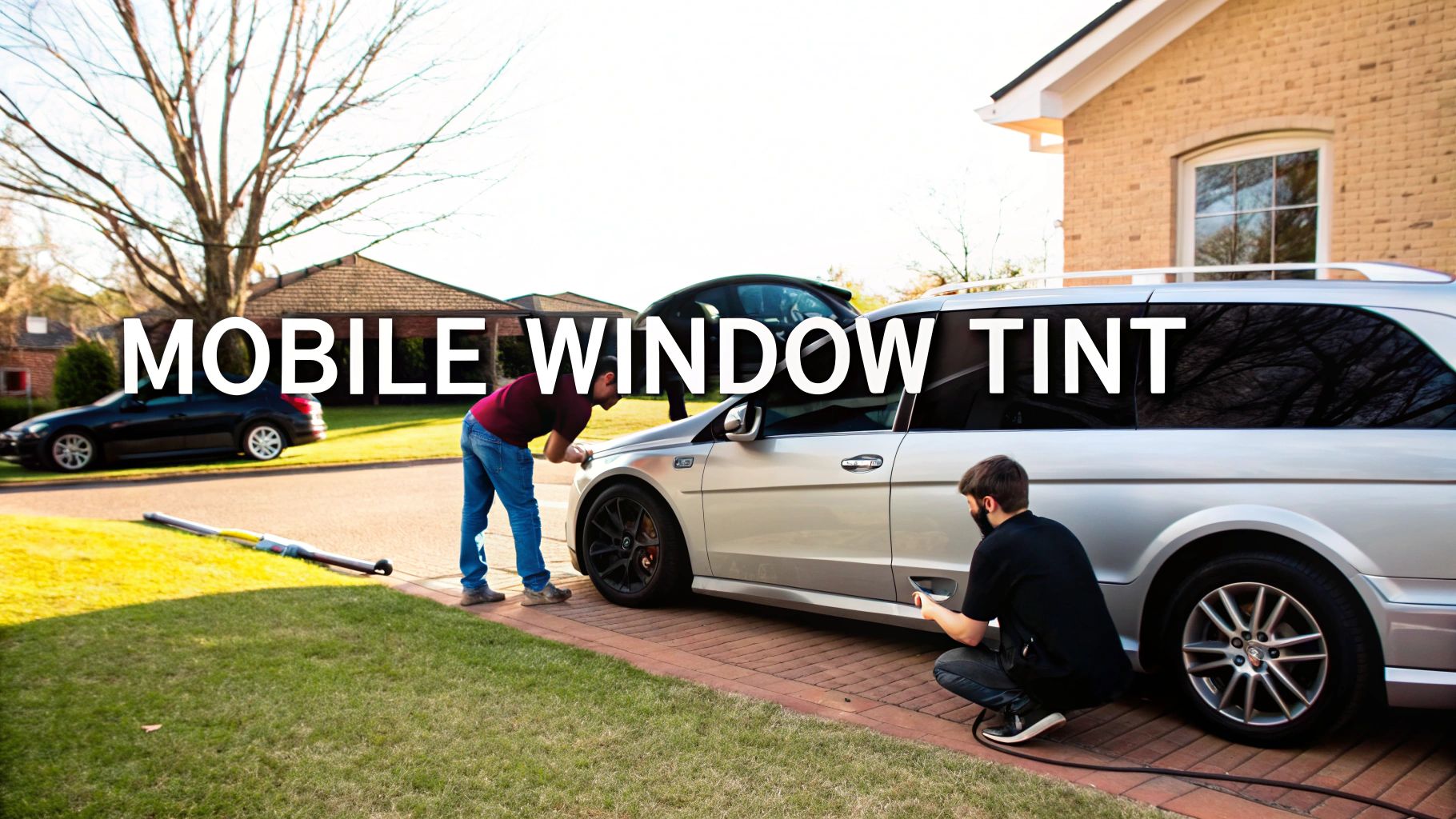
Think about the last time you had to take your car to a shop. You probably had to schedule it weeks in advance, arrange for a ride, and basically write off a good chunk of your day. Mobile window tinting completely flips that script.
This is a professional tinting service that comes directly to you—at home, at the office, wherever you are. You get all the perks of a high-quality tint job, like UV protection, heat reduction, and privacy, without ever having to leave your location. It’s all about convenience.
Bringing The Tint Shop To Your Driveway
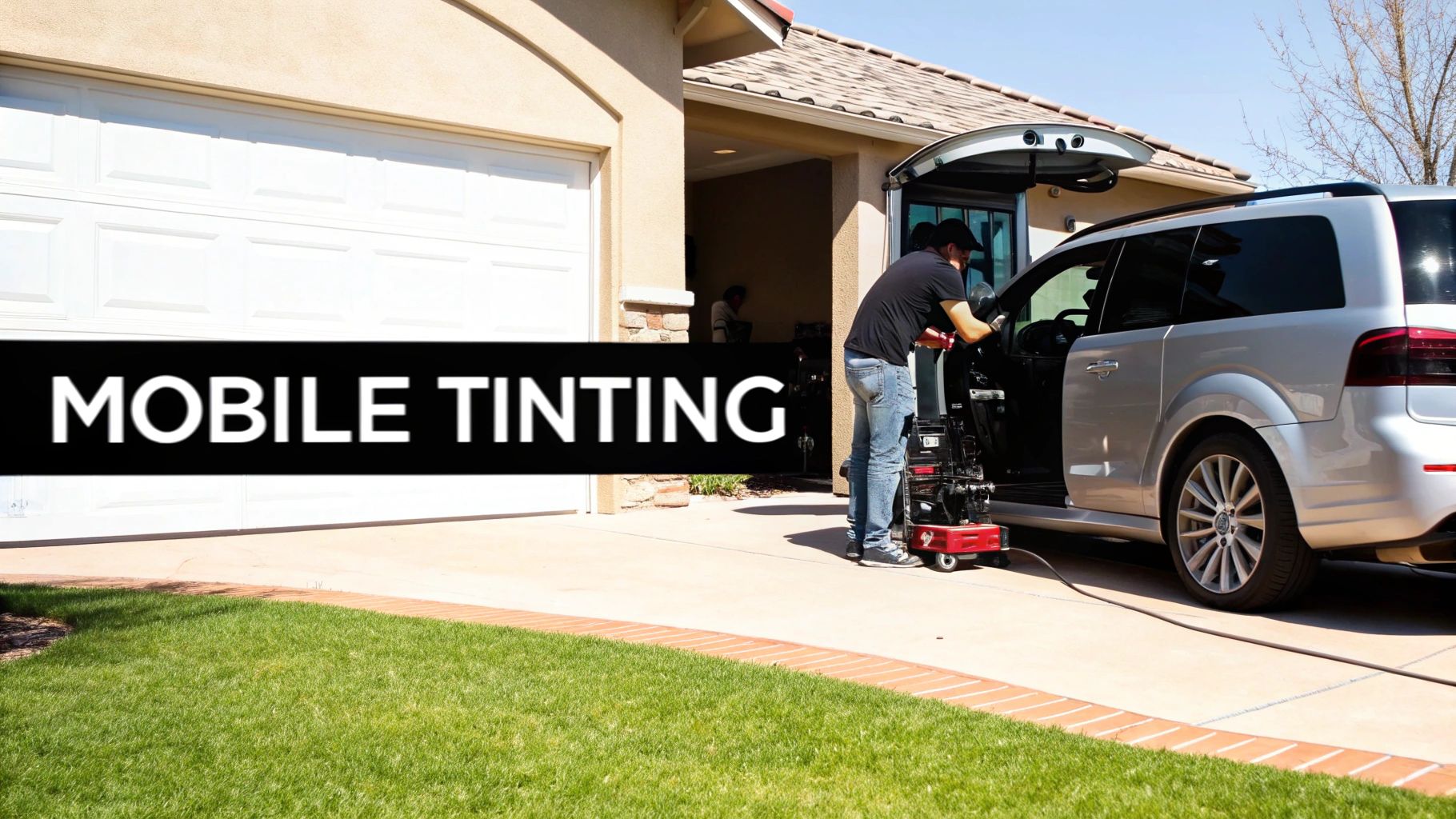
Picture this: you're at work, and during your lunch break, a technician is upgrading your vehicle right there in the parking lot. Or maybe it's a Saturday morning, and you're getting your windows tinted while you relax at home. That's the real magic of mobile window tinting.
It takes the hassle out of the equation. No more driving across town, waiting in a sterile lobby, or coordinating rides. A fully equipped van and a skilled installer show up at your chosen spot, ready to work. You get the same professional, bubble-free results you'd expect from a top-tier shop, but on your own terms.
The Modern Approach To Vehicle Upgrades
This isn't just a gimmick; it's a smart solution for our busy lives. The demand for vehicle customization is exploding. The global automotive tinting film market was recently valued at USD 7.59 billion and is expected to grow by 7.7% every year. In North America alone, it’s already a market worth over USD 1.2 billion.
That growth shows that people want personalized, convenient services, and mobile tinting fits that need perfectly.
Here’s why so many people are choosing this route:
Ultimate Convenience: The service literally comes to you, integrating seamlessly into your day.
Saves You Time: Forget the travel and waiting room time. Your car gets serviced while you do other things.
Personalized Experience: It's a one-on-one service. You can often chat directly with the technician and see the work as it happens.
At its core, mobile window tinting delivers a high-quality, permanent upgrade for your vehicle with the ease of an on-demand service. It turns a day-long errand into a simple background task.
How The Process Works For You
From your end, it couldn't be simpler. You just book an appointment. The technician arrives with everything they need to get the job done right.
To ensure a perfect, dust-free installation, they’ll typically ask for an enclosed space like a garage. This controlled environment is key to getting that flawless, professional finish. By bringing all the tools and expertise to you, mobile tinting makes the whole experience completely stress-free. Many companies cover a large service area, so it's always a good idea to check the available mobile tinting service locations near you.
Choosing The Right Window Tint Film
Stepping into the world of mobile window tinting, you’ll find there’s more to it than just picking a shade. The technology behind the film you choose has a huge impact on your driving comfort, your car's interior, and how long the tint will last. It's a lot like buying tires—you can go with a basic, all-season option, or you can pick a high-performance model built for specific needs.
Your decision here isn’t just about aesthetics. It’s about matching the right film to what you value most, whether that's keeping your car cool in the summer, getting a sleek look, or making sure your phone and GPS work perfectly. Let's break down the most popular types so you can make a smart choice.
Dyed Window Tint Film
Dyed window tint is the classic, budget-friendly choice. It works just like a good pair of sunglasses, using layers of dye to absorb sunlight and cut down on glare. This gives you that dark, private look many people want and makes driving on a sunny day much easier on the eyes.
But its simplicity has a few downsides. Since it absorbs heat instead of reflecting it, it offers the least heat rejection of all the film types. Over time, constant sun exposure can also cause the dye to break down, which is why you sometimes see older tints that have faded to a strange purplish color or started to bubble.
Metalized Window Tint Film
Taking a step up, we have metalized films. These tints have microscopic metal particles woven into the film. Think of these particles as tiny mirrors that bounce solar heat away from your car before it ever gets inside. This makes them way better at heat rejection and UV protection than standard dyed films.
They’re also tough and highly scratch-resistant. The one major catch? Those same metal particles that are great at blocking heat can also block electronic signals. This can sometimes interfere with your GPS navigation, satellite radio, and even cell phone service—a deal-breaker for many tech-savvy drivers.
Carbon Window Tint Film
Carbon window film is the perfect sweet spot for many drivers. It delivers excellent performance without the signal-blocking issues of metalized tints. Instead of metal, this film is loaded with thousands of tiny carbon particles, which are amazing at stopping infrared light—the kind of light that makes your car feel like an oven.
Thanks to this technology, carbon films can block up to 40% of infrared heat, keeping your interior significantly cooler. They also have a distinctive dark matte finish that won't fade over time like dyed films. It’s a fantastic choice if you want strong performance and a modern look without any electronic headaches.
Ceramic Window Tint Film
At the very top of the food chain is ceramic window tint. This is the most advanced technology on the market, using non-metallic, non-conductive ceramic nanoparticles to stop an incredible amount of solar energy in its tracks. It's specifically engineered to target and reject infrared heat.
Ceramic films can block up to 99% of damaging UV rays and a massive amount of solar heat, all without getting in the way of your electronic devices. You get the absolute best protection and comfort without compromising connectivity.
The base material for modern tints, polyethylene terephthalate (PET), is prized for its clarity and durability. But it’s the added technology that makes the difference. With ceramic films blocking up to 99% of UV rays and new innovations constantly emerging, as noted in the automotive tinting film market, it’s clear why ceramic is the premium choice for those who want the best of the best.
Window Tint Film Type Comparison
To help you see the differences at a glance, we've put together a simple chart. Think about what's most important to you—is it your budget, the look, heat rejection, or signal clarity? This table compares the key features of the most common automotive window tint films to help you choose the best option for your vehicle.
Film Type | Heat Rejection | UV Protection | Glare Reduction | Signal Interference | Average Cost |
|---|---|---|---|---|---|
Dyed | Low | Good | Good | No | $ |
Metalized | Good | Excellent | Excellent | Yes | $$ |
Carbon | Very Good | Excellent | Excellent | No | $$$ |
Ceramic | Excellent | Superior | Excellent | No | $$$$ |
Ultimately, choosing the right film is a key part of getting a great tint job. Our team can walk you through these options and help you find the perfect fit for your car and your budget.
To see our full range of films, take a look at our main window tint services page. This will help ensure the tint you choose not only looks fantastic but also provides the performance and protection you need for years to come.
A Look Inside The Mobile Window Tinting Process
Ever wonder how the pros get that perfect, bubble-free tint job done right in your driveway? It’s not magic, but it is a meticulous process that takes skill, precision, and the right setup. Knowing the steps involved helps you appreciate the craftsmanship that goes into a top-quality installation.
The whole idea is to bring a professional shop's quality directly to you. A great technician can turn your garage into a temporary cleanroom, making sure the final product is flawless. Let's walk through what to expect, from the moment they pull up to the final sign-off.
Setting Up the Mobile Workspace
The first, and arguably most important, step is site preparation. A true professional won't just start slapping film on your car in an open, dusty area. They need a controlled environment to keep dust, pollen, and other tiny bits of debris from getting trapped under the film—that's what causes those ugly bubbles and imperfections.
Your garage is the perfect spot. The installer will usually ask you to clear out a little room around the car so they can easily get to every window. From there, they'll lay out their specialized gear—heat guns, a variety of squeegees, and cutting tools—turning the space into a clean and efficient workshop.
Before the work even starts, you'll have chosen your film. This infographic breaks down the key steps in making that decision.
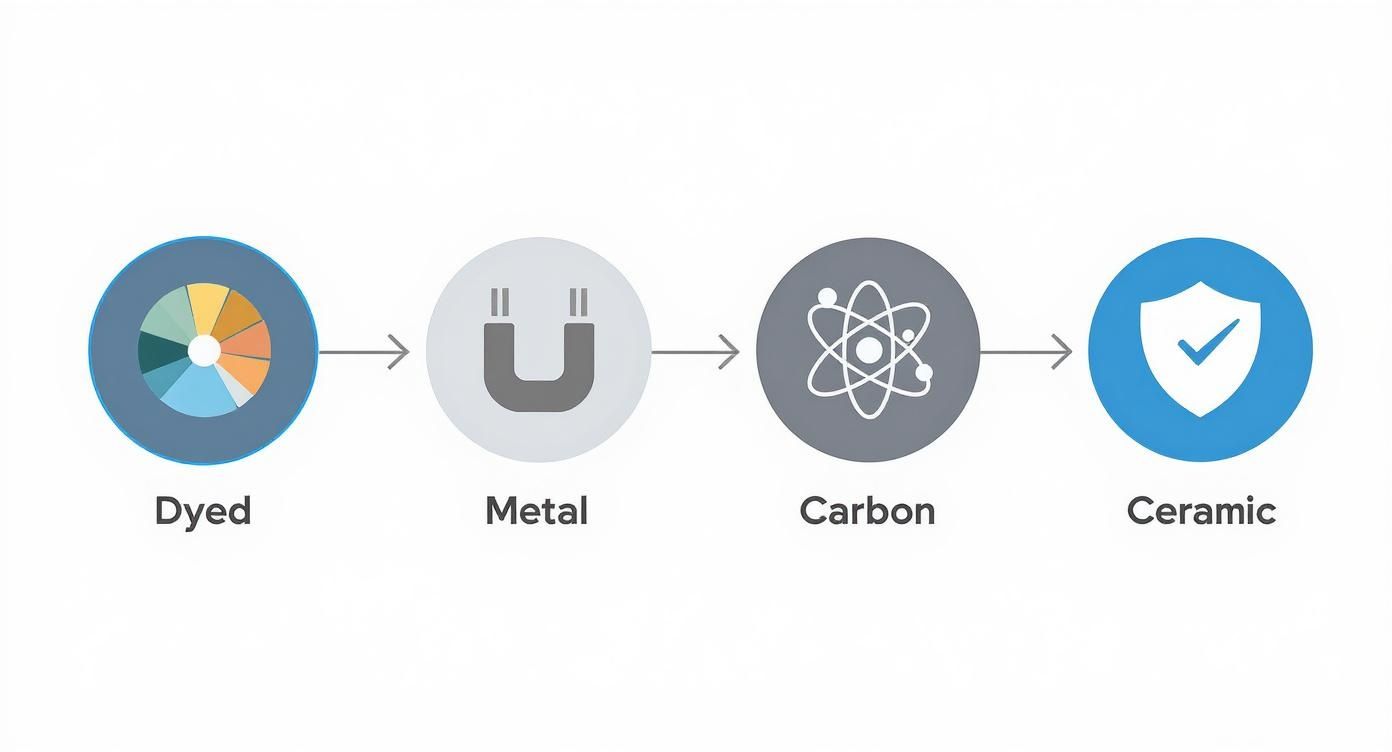
Think of this as your roadmap, guiding you from basic dyed tints all the way up to high-performance ceramic options.
Prepping and Applying the Film with Precision
With the workspace set, the real prep work begins: cleaning the windows. And this isn't just a quick spray and wipe. It’s an intensive, multi-stage cleaning process using special solutions to get rid of every last trace of dirt, oil, and grime from both sides of the glass. A single speck of dust left behind can ruin the entire application.
Next up, the film is cut to size. Installers today typically use one of two methods:
Computer Cutting: Many high-end services use a computer-guided plotter. It cuts the film to the exact digital template for your car's make and model, ensuring a perfect fit without a blade ever touching your glass.
Hand Cutting: A seasoned pro can also expertly hand-cut the film. They use the outside of your window as a template to create a custom piece before applying it to the inside.
No matter the method, the goal is the same: to get a piece of film that fits your window perfectly, edge to edge, for that clean, factory-installed look.
The film is then applied to the inside of the window using a special mounting solution. This liquid lets the technician slide the film into the perfect position. Once it's placed, they use a squeegee to methodically push the solution out from under the film. This is a real art form, requiring just the right pressure to bond the film to the glass without leaving any creases or bubbles.
For tricky curved windows, like your rear windshield, they’ll use a heat gun to heat-shrink the film. This gently molds it to the exact contours of the glass for a seamless finish.
The Curing Phase and Final Inspection
The job isn't over just because the film is on the glass. Now it enters the crucial curing process. You might see a little haziness or some cloudy spots for the first few days—don't panic, this is totally normal. It's just the last bits of moisture evaporating as the film’s adhesive fully bonds with the glass.
Your technician will give you a few key aftercare instructions. The most important one? Do not roll down your windows for at least 3 to 5 days. Rolling them down too soon can make the fresh tint peel or shift out of place.
The full curing time can take anywhere from a few days to a couple of weeks, depending on the film type and your local climate. Once it's fully cured, your tint will be crystal clear and ready to deliver years of style and protection.
Staying Legal: A Guide to Window Tint Laws and VLT
One of the best parts of getting your windows tinted is that slick, dark look. But before you go for that "limo tint," you need to make sure your stylish upgrade is actually legal. Every state has specific laws about window tinting, and they're there for a good reason: driver safety. Getting it wrong can mean tickets, fines, or even a "fix-it" order forcing you to strip off your brand-new film.
Thankfully, figuring out the rules isn't as complicated as it seems. It all boils down to a single term you need to know: Visible Light Transmission, or VLT.
VLT is just a fancy way of saying how much light the window film allows to pass through into your car. The VLT percentage tells you how light or dark the tint is. Think of it like a pair of sunglasses: a light, barely-there tint might have an 80% VLT, letting most of the light in. On the other hand, a super-dark, blackout tint could have a 5% VLT.
So, when it comes to car tint, a lower VLT number means a darker film.
Why Do Tint Laws Change from State to State?
You've probably noticed that a tint you see in Arizona might get you pulled over in New York. That's because each state gets to decide its own traffic safety rules. The main goal is to make sure the driver can still see clearly, especially at night or in bad weather, and that law enforcement can see into the vehicle when necessary.
It gets a little more specific than that, though. The rules almost always change depending on which window you're talking about. This is a crucial detail to get right.
Front Side Windows: Your driver and front passenger windows will always have the strictest VLT limits. This is non-negotiable, as they're essential for your peripheral vision and checking your mirrors.
Rear Side Windows: Things usually get more relaxed for the back seat. States often allow much darker tints here for passenger privacy or to keep valuables out of sight.
Rear Windshield: The rules for the back glass typically mirror those for the rear side windows, allowing for darker VLT percentages than the front.
Front Windshield: Tinting your entire front windshield is a no-go almost everywhere. What's usually allowed is a non-reflective strip across the very top, typically down to a small marking on the glass called the AS-1 line.
Here's the bottom line: following the law isn't a suggestion. Any trustworthy mobile window tint professional will know your local laws inside and out. They should guide you to film choices that look great and keep you out of legal trouble.
Finding Your Local Tint Laws
So, how do you find out the exact rules for where you live? Don't worry, you don't need a law degree.
The easiest way is to do a quick search for "[Your State] window tint laws." This will almost always take you to an official source like your state's DMV or Highway Patrol website, which is exactly what you want for the most accurate information.
When you look up the rules, you'll see the VLT percentages spelled out for each window. For instance, a state might list its law as "35/20/20." That’s code for: front side windows must allow at least 35% VLT, while the rear side windows and back windshield can be as dark as 20% VLT.
Knowing these numbers is the key to choosing a tint that’s both smart and legal. A little bit of homework and a conversation with your installer will ensure you get all the perks of a new tint—style, privacy, and heat relief—without any of the headaches.
How To Choose A Reputable Mobile Tinter
The convenience of a mobile tinting service is fantastic, but it’s only half the story. The real difference between a tint job that looks flawless for years and one that’s peeling in a few months comes down to a single factor: the skill of the installer.
Hiring the right mobile tinter is easily the most critical part of this whole process. A true pro delivers a finish that looks like it came straight from the factory. On the other hand, a less experienced technician can leave you with a mess of bubbles, dust, and a tint job you'll have to pay to get redone.
Let's walk through a practical checklist to help you spot a genuine professional.
Start With The Non-Negotiables
Before you even glance at their work, there are a few basic qualifications every legitimate mobile tinting business needs. Think of these as the price of entry—without them, nothing else matters.
First up, ask about insurance and licensing. A professional tinter will always carry liability insurance to protect your vehicle while they work on it. This is a crucial safety net that separates the pros from the hobbyists.
Next, dig into their experience. How many years have they been installing window tint on the go? A seasoned installer has tackled hundreds of different cars, trucks, and SUVs, so they know how to handle the unique curves and seals of just about any model.
Dig Into Their Portfolio and Past Work
Seeing is believing, right? Any tinter who’s proud of their work will be eager to show you examples of their finished projects. Ask to see a portfolio, or check out their social media for high-quality photos and videos.
When you're looking, pay close attention to the small stuff.
Edge Gaps: Does the film run perfectly to the edge of the glass, or are there sloppy, uneven gaps?
Contamination: Can you spot tiny specks of dust, hair, or other debris trapped under the film?
Clarity: Look through the tint. Is it perfectly clear, or does it seem hazy or distorted?
This visual check is your best glimpse into the quality they deliver day in and day out. It's also worth noting that many top-tier mobile tinters offer other vehicle customization options, like high-quality vehicle wrapping services, which showcases their broader expertise.
Vet Their Reputation Through Reviews
Online reviews are your best friend for getting a sense of a tinter's reliability and customer service. But don't just look at the star rating on one site. Read through reviews on Google, Yelp, and Facebook to get the full story.
Look for patterns in what people are saying. Are customers consistently raving about their professionalism, punctuality, and clean work? Or do you see repeated complaints about bubbles, peeling, or a lack of communication? Those trends will tell you exactly what to expect.
A strong reputation built over many years and hundreds of jobs is one of the clearest indicators of a trustworthy mobile tinter. It shows they not only do great work but also stand behind it.
Ask The Right Questions Before You Book
Once you have a shortlist, it’s time to pick up the phone. A real professional will be more than happy to answer all your questions.
Here are a few essential things to ask:
What film brands do you carry? Top installers stick with well-known, premium brands that are proven to perform and last.
What kind of warranty do you offer? You should get two: a manufacturer's warranty against defects like fading or bubbling, and an installer's warranty guaranteeing their labor.
What are your workspace requirements? A professional will insist on a clean, enclosed space like a garage to prevent dust and ensure a perfect application.
How do you handle post-installation issues? See what their policy is for fixing any minor imperfections that might show up after the film has fully cured.
Getting clear answers here will give you the confidence to make the right choice. When you're ready to talk to a vetted professional, you can easily request a free estimate for mobile window tinting and get the ball rolling.
Caring For Your New Window Tint
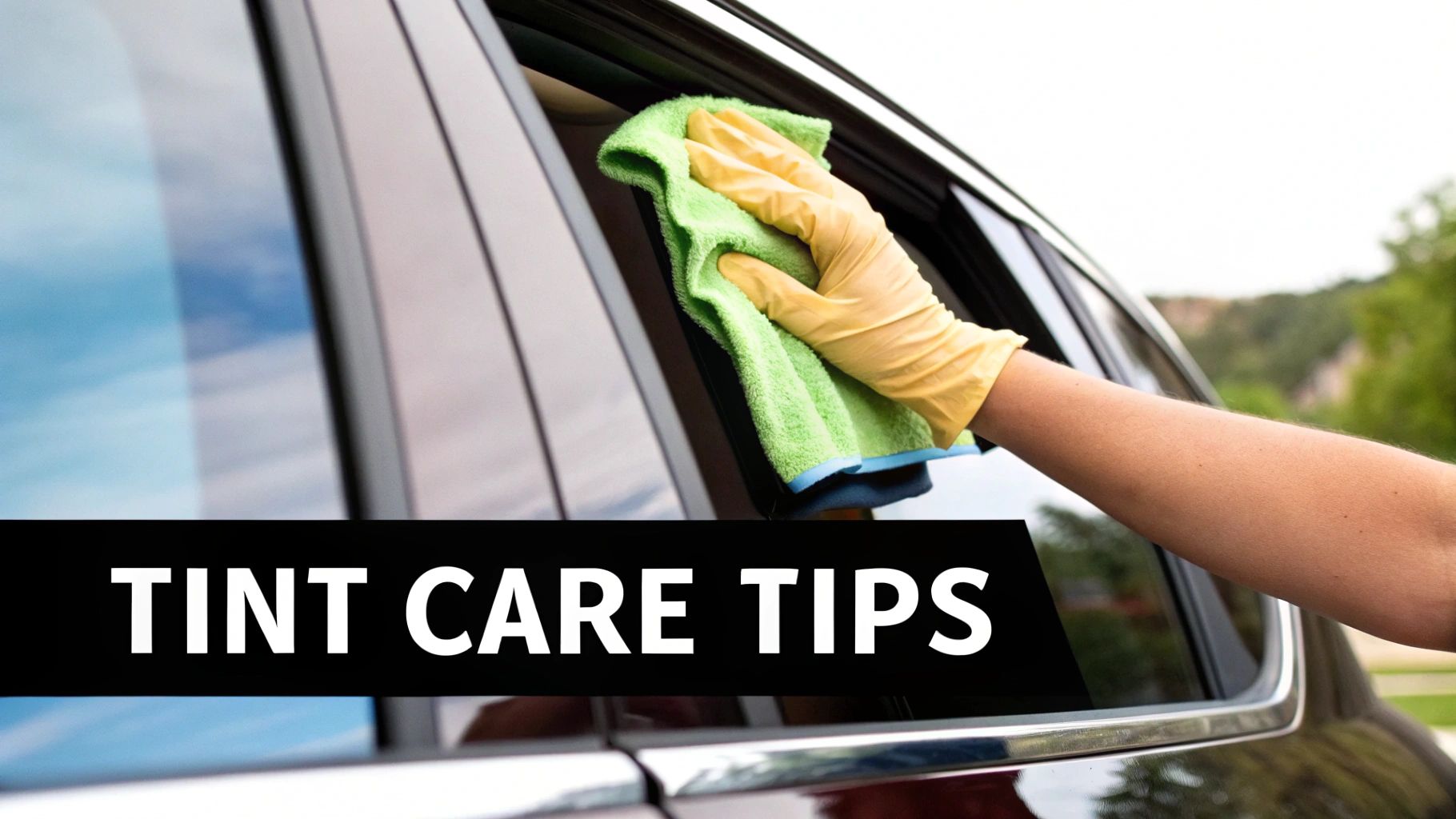
The job is done and your car looks sharp. Now, how do you keep that fresh tint looking brand new? A little bit of care goes a long way in protecting your investment and making sure the film performs flawlessly for years to come.
The first few days are the most crucial. This is the curing period, where the film’s adhesive is setting and the last bits of moisture are evaporating to create a solid bond with the glass.
The number one rule? Don't touch the window switches. You absolutely must avoid rolling down your windows for at least three to five days. Rolling them down too early can catch the edge of the film, causing it to peel, bubble, or lift. Patience here is key to a long-lasting, perfect finish.
Best Practices For Long-Term Tint Care
After the tint has fully cured, keeping it clean is simple. The secret is using the right tools for the job. While modern window films are tough, they aren't scratch-proof.
Grab a soft, clean microfiber cloth for any wiping or cleaning. Steer clear of paper towels or scrubby sponges, as their abrasive fibers can leave fine scratches on the film's surface.
As for a cleaning solution, always reach for an ammonia-free cleaner. Ammonia is the enemy of window tint—it can break down the adhesives and dyes over time, leading to discoloration and bubbling. Honestly, a simple mix of mild soap and water works just as well and is much safer.
Your Go-To Cleaning Method
For a perfect, streak-free shine every single time, just follow this simple process.
Mix Your Cleaner: Fill a spray bottle with water and add just a couple of drops of a gentle, pH-neutral soap, like baby shampoo.
Spray and Wipe: Lightly mist one window at a time. Take a clean microfiber cloth and wipe gently using straight, even strokes.
Dry and Buff: Use a second, dry microfiber cloth to immediately buff the glass. This simple step is what prevents annoying water spots and streaks from forming.
A classic mistake I see all the time is people cleaning their tinted windows in direct sunlight on a hot day. The heat makes the cleaning solution evaporate almost instantly, leaving a streaky residue behind. For the best results, always clean your windows in the shade or on a cooler day.
Following this gentle approach is all it takes. Just a few minutes of proper care will keep your tint looking as crisp and clear as the day it was installed, ensuring you get to enjoy all its benefits for its entire lifespan.
Got Questions? We've Got Answers
Still have a few things you're wondering about when it comes to mobile window tint? Let's clear up some of the most common questions people have before they book a service.
How Long Will I Be Without My Car?
Not long at all. For a typical sedan with standard windows, the whole process usually takes somewhere between 1.5 to 3 hours. If you have a bigger vehicle like an SUV or a truck, it might lean closer to 3 or 4 hours.
What can really change the timeline is the condition of your car. The number of windows is a factor, of course, but so is the shape—some cars have tricky curved glass that requires more time. The biggest variable? If we have to remove old, bubbling tint first. That can add a fair bit of time to the job.
Can You Really Do This in My Driveway?
Technically, yes, but we almost always recommend against it. The best results happen in an enclosed space, like your garage. This is all about controlling the environment.
A clean, indoor space is the single most important factor for achieving a high-quality, flawless finish. It minimizes the risk of bubbles and imperfections caused by airborne contaminants.
Working outside means we're fighting a losing battle against dust, wind, and little bits of debris that love to get trapped under the film. A garage gives us the clean slate we need for a perfect application.
Is It More Expensive to Have You Come to Me?
You'd be surprised—the cost is often very similar to what you'd pay at a traditional tint shop. While a mobile service has to account for travel, we don't have the high overhead of maintaining a physical storefront.
In the end, the price really comes down to the quality of the film you select (a high-performance ceramic tint will cost more than a standard film) and the skill of the person installing it. For most people, the incredible convenience of having the service done at their home or office more than makes up for any small price difference.
Ready to experience the ultimate convenience without compromising on quality? The expert technicians at Auto Renu Auto Glass LLC bring professional mobile window tint services directly to you. Book your appointment online or call us for a free estimate today.