A Quick Temporary Fix For Cracked Windshield To Prevent Spreading
Discover how a temporary fix for cracked windshield can prevent costly damage. Our guide offers practical steps, common mistakes, and when to call a pro.
Feb 1, 2026
generated
temporary fix for cracked windshield, windshield crack repair, DIY glass repair, stop windshield crack, auto glass safety
You hear that sharp thwack against the glass on the highway, and you just know. A quick glance confirms your fear: a new, unwelcome crack has appeared on your windshield.
The best immediate move is a temporary fix for cracked windshield damage. Using a DIY repair kit or even just a piece of clear tape can stabilize the crack and, most importantly, keep dirt and debris from getting inside. This is the critical first-aid step to stop the damage in its tracks.
Why You Need to Act Fast
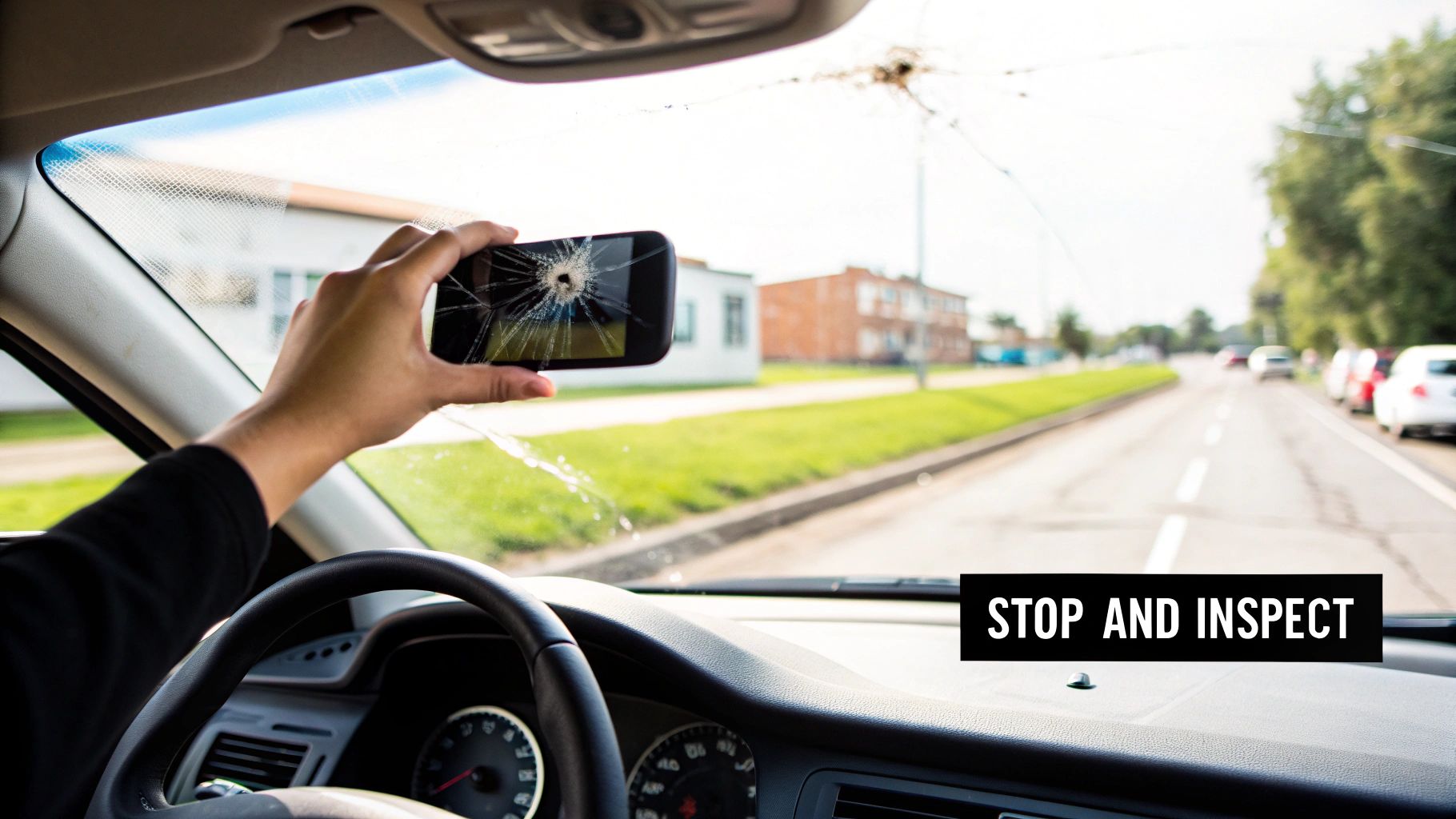
The second that rock chip or crack shows up, the clock is ticking. What looks like a tiny flaw can quickly spiderweb across your line of sight, turning a simple repair into a full, expensive replacement.
Your windshield is under constant tension, and everyday driving puts a surprising amount of stress on that compromised glass, practically forcing the crack to get bigger.
Everyday Stressors That Make Cracks Spread
We all deal with these things on the road, but with a cracked windshield, they become real threats to the integrity of the glass. Knowing what they are makes it obvious why a temporary fix is so vital.
Temperature Shocks: Ever blast the AC on a scorching day or fire up the defroster when it’s icy? That sudden temperature change between the inside and outside of the glass creates serious thermal stress, which is a top reason cracks expand.
Road Vibrations: Potholes, speed bumps, and even the normal jostling of a regular road send constant vibrations right through your car's frame. For weakened glass, that's all it takes for a small chip to "run" into a long, unrepairable crack.
Washing Your Car: High-pressure water from an automatic car wash or a power washer at home can force water and soap deep into the crack. This not only makes a professional repair harder down the line but the pressure itself can cause the crack to spread.
A temporary fix isn't about making it look pretty; it's about buying yourself critical time. Think of it as a bandage—it stabilizes the damage and seals out contaminants until you can get a pro to look at it.
Before you try any temporary measure, make sure the glass is perfectly clean so the seal can adhere properly. For a truly spotless surface, you could even consider services like professional window cleaning.
What a Temporary Fix Really Does
A temporary fix for cracked windshield damage plays two key roles. First, it seals the crack from moisture and dirt. If that gunk gets in there, it can ruin the chances of a successful permanent repair. You can learn more about what to look for in our guide to the different types of windshield damage.
Second, it adds a tiny bit of structural support right at the point of impact, making the area less likely to spread from vibrations. It's an essential first step that protects both your safety and your wallet.
Your Best Bet for a Quick Fix: The DIY Windshield Repair Kit
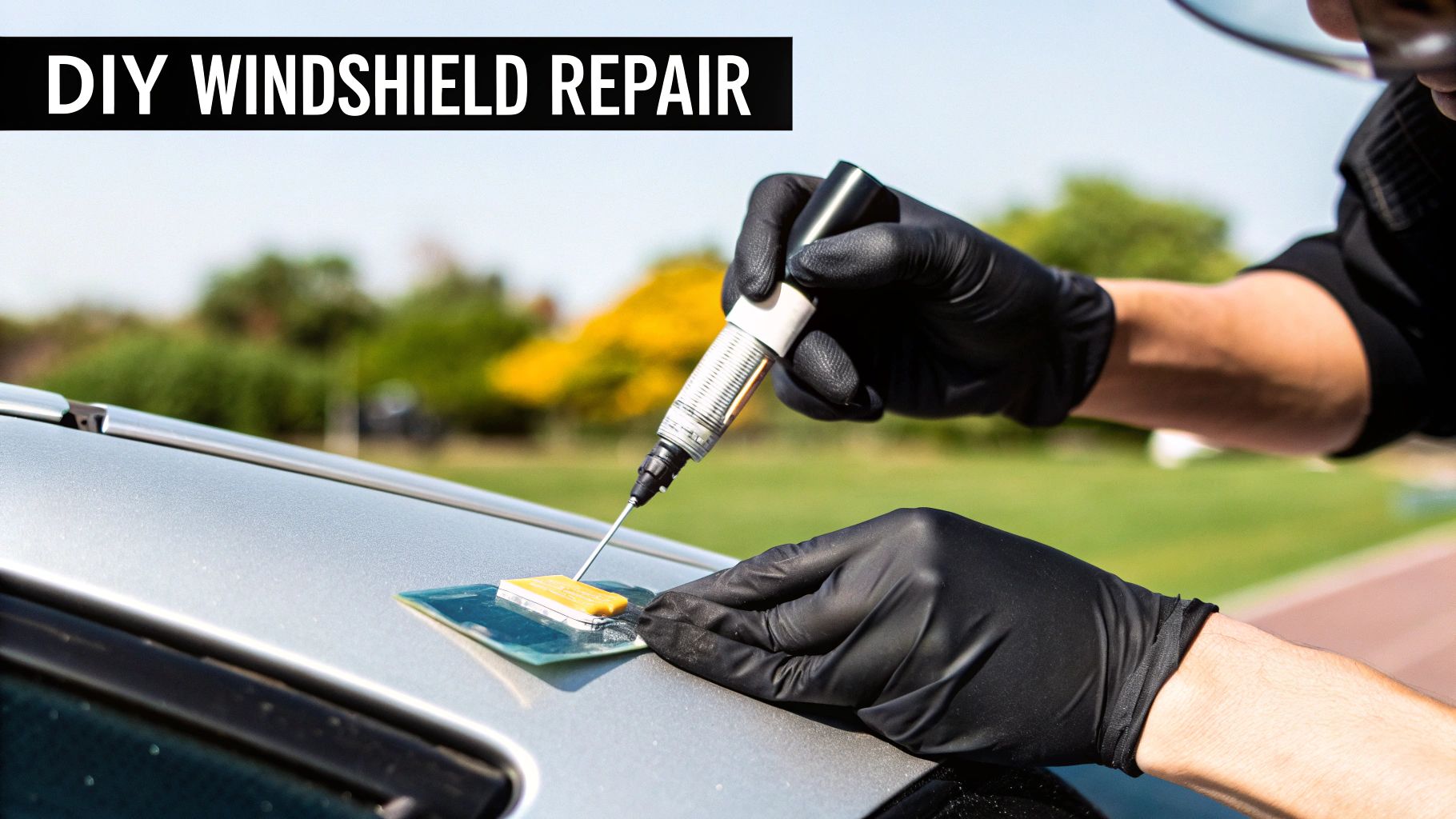
When you spot that fresh chip or a small crack, your best immediate defense is a DIY windshield repair kit. You can find these at just about any auto parts store, and they're a surprisingly effective temporary fix for cracked windshield damage. The whole idea is to inject a clear resin into the damaged spot, which then hardens to stop the crack from spreading and make the blemish less obvious.
Think of it like first aid for your glass. The resin acts like a stitch, holding the wound together. While it won't make the damage vanish, it’s a crucial step to stabilize the windshield until you can get a professional to look at it. For small chips (smaller than a quarter) and short cracks (under six inches), a DIY kit can work wonders.
Step 1: It's All About the Prep Work
I can't stress this enough: the success of your repair hinges almost entirely on how well you prepare the area. Rushing this part is the number one reason these DIY fixes fail. You need to create a perfectly clean and dry surface so the resin can form a strong bond with the glass.
Start by gently cleaning the area around the crack with a microfiber cloth and a bit of rubbing alcohol. Steer clear of household glass cleaners, as many contain ammonia or other additives that leave a residue, which will ruin the resin's ability to stick.
Next, you have to get any tiny, loose glass fragments out of the impact point. Most kits come with a small pushpin or a razor blade for this exact purpose. Use it to carefully pick out any debris. This is a critical step because any trapped dirt or moisture will create a weak spot in your repair.
Pro Tip: Never try to do a repair in direct, hot sunlight. The resin needs to cure slowly and evenly. If the windshield is hot, the resin can harden too fast, trapping air bubbles and leaving you with a weak, cloudy mess. Always find a shady spot to work.
Step 2: Applying the Resin (Without Trapping Air)
This is where a steady hand and a little patience really come into play. Your kit will have an applicator—usually a small suction-cup device with a pedestal that you center right over the crack. Once you've secured the applicator to the windshield, you'll add the resin into the pedestal.
Here's the clever part: you'll use the kit's syringe or plunger to create a vacuum. This pulls the air out of the crack, which allows the resin to flow deep into every nook and cranny. After that, you'll reverse the pressure to force the resin fully into the damaged area.
Read the Directions: Every kit is a little different, so take a minute to read the instructions before you start.
Don't Overdo It: When you stick the applicator on, make it snug but don't crank it down with a ton of force. Too much pressure can actually make the crack longer.
A Gentle Tap: Lightly tapping the glass from inside the car, right behind the crack, can help the resin work its way in and release any stubborn air bubbles.
Step 3: Curing the Resin for a Rock-Solid Bond
Once the resin has filled the crack, you’ll remove the applicator and place a clear curing strip over the wet spot. This little film holds the resin in place and protects it from dust while it hardens.
Now it's time to bring in the sun. Move your car into direct sunlight, as the UV rays are what actually cure the resin. This usually takes between 15 to 30 minutes, but your kit's instructions will give you the exact timing.
After it's fully cured, use the razor blade from the kit to carefully scrape off the excess hardened resin and the curing strip. The trick is to hold the blade at a 45-degree angle to the glass to avoid scratching it. What you should have left is a much less noticeable and, most importantly, stabilized crack.
The sheer volume of windshield damage is staggering. The global windshield service market was valued at an impressive $15 billion in 2025 and is projected to climb to $23 billion by 2033. In the U.S. alone, the industry pulled in $8.3 billion in 2025. These numbers show just how common this problem is and why having both professional services and effective temporary solutions is so important. You can explore the full market report analysis to see more on this growing industry.
Common DIY Repair Mistakes That Can Worsen The Damage
When you're staring at a fresh crack in your windshield, grabbing a DIY kit can feel like taking control of the situation. But believe me, I've seen countless well-intentioned temporary fixes turn a small, repairable chip into a full-blown replacement job. The goal is to carefully stabilize the damage, not accidentally make it worse.
One of the most common pitfalls is simply working in the wrong conditions. Trying to apply a repair kit in the blazing sun is a classic mistake. The resin in these kits is designed to cure under UV light, but intense, direct heat makes it harden way too fast—before it can properly flow into every nook and cranny of the damage. You're left with a weak, bubble-filled patch on the surface that does very little to stop the crack from spreading.
Using The Wrong Materials Or Methods
When you don't have a dedicated kit, the temptation to use something from the garage or junk drawer can be strong. This is almost always a bad idea that will cost you more money down the road.
Here are a couple of the worst offenders I see:
Super Glue and Nail Polish: Please, just don't. While it might look like you're sealing the crack, these materials don't bond with auto glass and can't handle the constant stress and temperature swings a windshield endures. Worse yet, they contaminate the crack, making it impossible for a professional technician to inject the proper resin later on.
Applying Too Much Force: The little suction cup device in a DIY kit needs a gentle touch. People often press down way too hard, thinking a tighter seal is better. In reality, that extra pressure can be the last straw that forces a small chip to spiderweb into a long, unrepairable crack.
A botched DIY repair isn't just an eyesore; it can completely eliminate the chance for a professional, seamless fix. Once that crack is filled with the wrong stuff, there's no getting it out, and your only option becomes a full windshield replacement.
Overlooking The Details During Application
Even if you have the right kit and find a nice shady spot, a few small oversights can ruin the whole repair. Preparation is everything. You absolutely have to clean the damaged area thoroughly. Any speck of dust, road grime, or moisture left in the crack will prevent the resin from creating a solid, lasting bond.
Impatience is the other big problem. Rushing the curing process is a surefire way to get a weak repair. Those little plastic curing strips in the kit are there for a reason—they create a smooth, protected surface. Peeling them off too early or not giving the resin enough time to cure properly just leaves you with a soft, gummy patch that won't hold.
To make it crystal clear, here’s a quick guide on what to do versus what to avoid when you're trying to patch a small crack yourself.
DIY Windshield Repair Do's and Don'ts
Action | What to Do (The Right Way) | What to Avoid (The Wrong Way) |
|---|---|---|
Preparation | Thoroughly clean the chip and surrounding area of all dirt, debris, and moisture. | Applying resin to a dirty or wet crack, which prevents a proper bond. |
Application Environment | Work in a shady, cool spot, out of direct sunlight. | Performing the repair in direct, intense sunlight, causing the resin to cure too quickly. |
Material Choice | Use a dedicated, high-quality DIY windshield repair kit. | Using household items like super glue, clear nail polish, or other random adhesives. |
Applying Pressure | Use just enough pressure to create a firm seal with the applicator. | Pushing down too hard on the applicator, which can expand the crack. |
Curing Process | Allow the resin to cure for the full time recommended by the kit instructions. | Rushing the curing process or removing the curing strips too early. |
Ultimately, each of these mistakes can turn a simple, temporary measure into a much bigger and more expensive headache. Taking your time and doing it right is key.
Knowing When A Temporary Fix Is Not Enough
Those DIY repair kits are fantastic for immediate damage control, but you have to know their limits. A temporary fix for cracked windshield damage is just that—temporary. Knowing when to put the kit down and call in a pro isn't just about looks; it's about staying safe behind the wheel.
Some types of damage are immediate deal-breakers for a DIY approach. Think of them as clear red flags that your windshield's structural integrity is already too far gone for a simple resin patch to do any real good.
The Unmistakable Red Flags
If your windshield damage checks any of these boxes, a quick fix isn't a safe option. It's time to get a professional assessment, and fast.
Size Matters: I always tell people to use the "dollar bill test." If a crack is longer than a dollar bill (that's about six inches), a DIY kit just isn't going to cut it.
Location is Everything: Any chip or crack sitting directly in the driver’s line of sight is a huge safety hazard. Even a good DIY repair can leave behind a slight distortion, which is the last thing you want creating glare or messing with your view of the road.
Edge Cracks are Critical: When a crack starts right at the edge of the windshield or has already run to the edge, it’s already weakened the entire structure. These are notorious for spreading quickly and almost always mean a full replacement is needed.
This decision tree gives you a great visual for figuring out whether a temporary fix is even on the table.
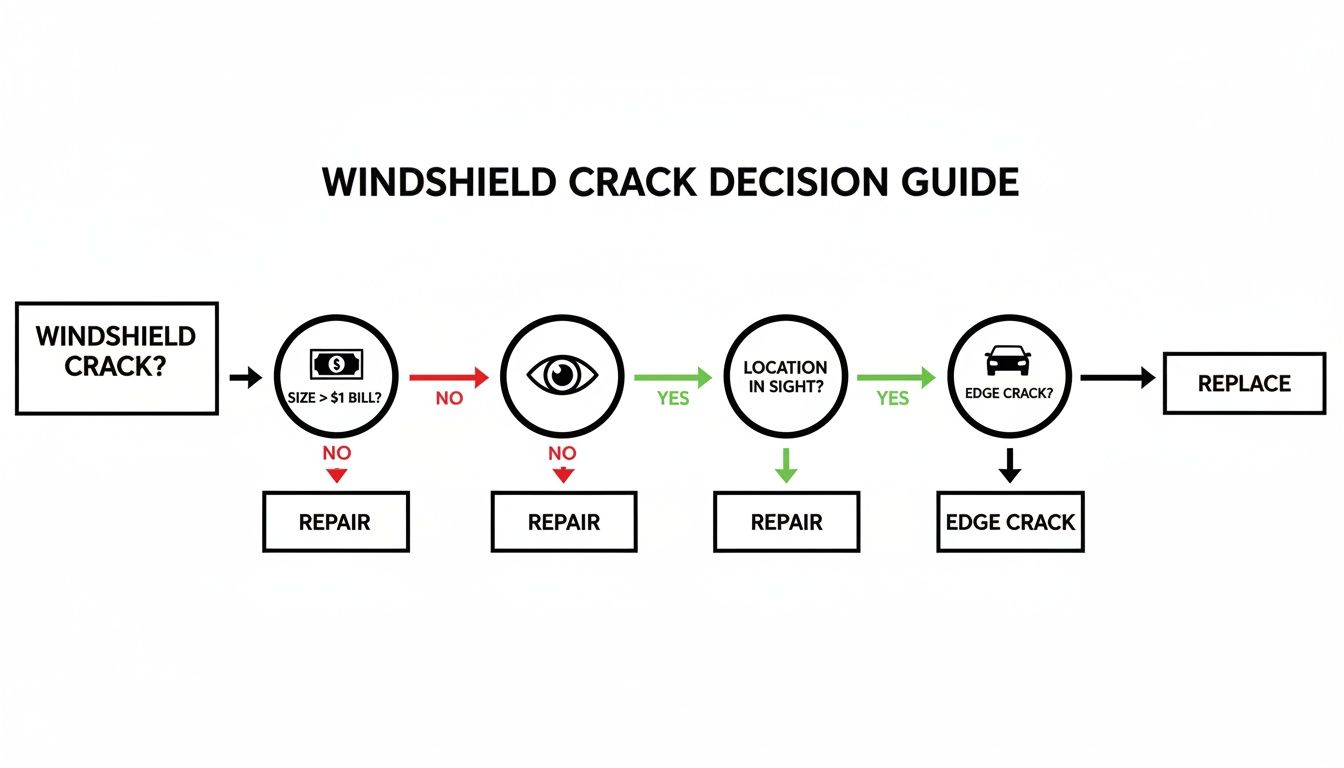
As you can see, the size, location, and position of the crack are what really dictate your next move. A professional can walk you through your options, and you can get more details from our guide on when to replace a windshield.
Your Windshield Is More Than Just Glass
It’s easy to forget, but a modern windshield is a high-tech safety component. It does a lot more than block wind and rain. In a rollover accident, that pane of glass provides up to 60% of the structural support to your car's cabin, stopping the roof from caving in. It's also the backstop that ensures your airbags deploy correctly toward you and not up and out of the car.
A compromised windshield compromises your entire vehicle's safety system. Don't ever gamble on a temporary fix when the damage is significant. It's just not worth it.
The ADAS Complication
If you drive a newer vehicle with Advanced Driver-Assistance Systems (ADAS), any work on your windshield gets even more serious. Features like lane-keep assist and automatic emergency braking depend on cameras and sensors mounted right on the glass.
A replacement done without professional recalibration can make these critical safety features fail completely. In fact, the market for ADAS recalibration hit $959 million in the U.S. in 2022, with an estimated 3.8 million windshield replacements requiring the service. This just goes to show how essential these systems are and why you absolutely need a specialist for modern cars.
Ignoring these red flags is a risk you shouldn't take. A temporary fix has its place, but knowing its limits is what keeps you safe.
Why A Professional Repair Is The Only Long-Term Solution
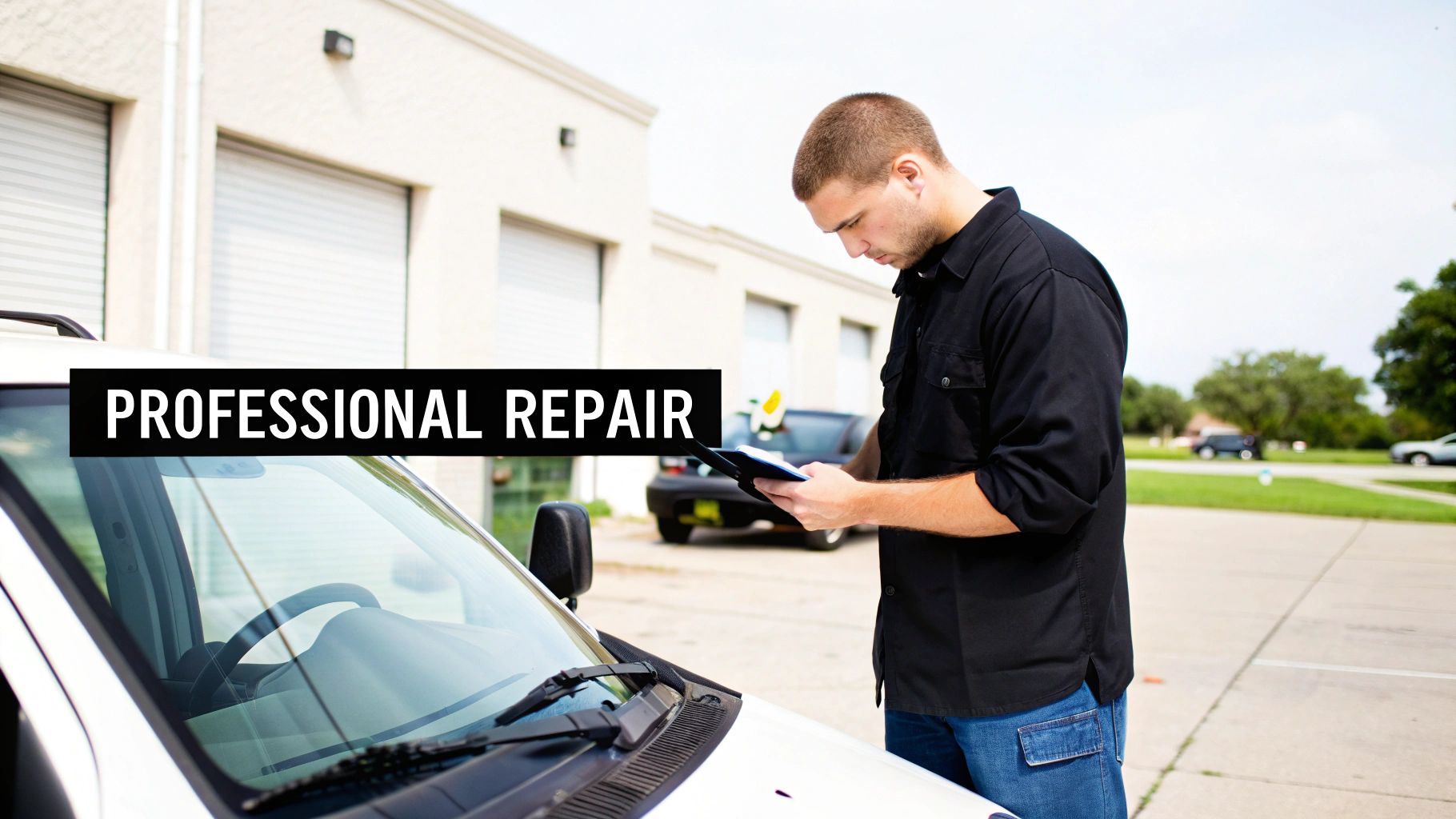
Putting a temporary patch on a cracked windshield is a smart first move. It’s an immediate, practical step to keep a small problem from getting much bigger. But it’s crucial to remember what that fix is for: buying you time, not solving the problem for good.
Thinking a DIY kit is a permanent solution is a real gamble on your car's safety. The only way to be sure you're protected is to get a professional to look at it. They have the right tools and materials that just aren't available over the counter.
A certified technician uses industrial-grade resins and a vacuum injection process. This method forces the resin deep into every part of the crack, pushing out tiny air pockets to create a powerful bond. This restores a significant amount of the windshield's original strength. The goal is always durability and effectiveness, much like when you invest in other long-lasting professional automotive services for your vehicle.
Expertise for Modern Vehicles
Cars today aren't what they used to be. Even in a standard SUV, the windshield is a critical component tied directly into the vehicle's frame and complex safety systems. This is where professional expertise really matters.
Structural Integrity: A pro ensures the glass properly reinforces the vehicle's cabin, which is absolutely essential for your safety in a rollover accident.
ADAS Recalibration: After a replacement, technicians recalibrate the cameras and sensors for your Advanced Driver-Assistance Systems. This guarantees features like lane-keeping assist and emergency braking will work when you need them.
A Perfect Seal: Professionals use specific primers and urethane adhesives to create a completely watertight seal. This isn't just about preventing leaks; it's about stopping rust from forming around the frame.
A professional repair gives you a level of confidence a DIY kit can't touch. It's the only way to be 100% sure your car's safety systems are ready to perform as designed.
The Value of Mobile Service
Let's be honest, the best part is the convenience. Mobile auto glass services come right to your driveway or office parking lot. You don't have to risk driving with a damaged windshield, and you don’t have to waste half your day at a shop.
You get the same quality of work you'd expect from a dealership, but on your schedule. It’s this combination of advanced technology and customer-first service that's fueling the growth of the automotive glass market, which is projected to hit $29.19 billion by 2029. This trend shows just how much people value getting expert work done right where they are.
Your Top Questions About Windshield Repair, Answered
Okay, so you've put a temporary patch on your windshield. That’s a great first step, but it’s totally normal to wonder what you should do next. Let's clear up some of the most common questions I hear from drivers in this situation.
How Long Will A Temporary Windshield Fix Last?
Think of that DIY kit as a first-aid bandage. Its main job is to keep the wound—the crack—clean and stable until a professional can properly treat it.
A temporary fix is designed to buy you a little time, maybe a few days or up to a week or so. It seals the crack to keep out moisture and road grime, which is crucial for a successful permanent repair later on. It also helps prevent vibrations and temperature swings from making the crack spread like a spiderweb across your glass. But that seal will break down, and it's by no means a permanent solution.
Is It Legal To Drive With A Cracked Windshield?
This is a big one, and the rules can get a little fuzzy depending on where you live. While laws vary from state to state, there’s one golden rule that’s pretty much universal: you can't have anything blocking your direct line of sight.
A tiny chip way over on the passenger side might not get you pulled over, but a crack that snakes into the driver’s viewing area is a definite no-go. That's not just illegal; it's incredibly dangerous. The glare alone from a crack like that can blind you at the worst possible moment.
A quick patch might make a crack look a little better, but it doesn't make it legal. If the damage is in your field of vision, the car is unsafe and likely in violation of traffic laws. Your only move is to get it professionally fixed before you drive it again.
Can Every Cracked Windshield Be Repaired?
I wish I could say yes, but unfortunately, some damage is just too severe for a repair. In the industry, we often use the "dollar bill rule" as a quick field guide—if the crack or chip is smaller than a dollar bill, there's a good chance we can fix it. But that's just a starting point.
Here’s what really determines if a repair is possible:
Location: If a crack runs to the very edge of the windshield, it has already weakened the entire structure. That’s an automatic replacement.
Depth: Your windshield has two layers of glass. If the damage goes all the way through to the inner layer, a repair simply isn't safe.
Contamination: This is why acting fast is so important. A crack that's been ignored for weeks and is packed with dirt can’t be cleaned out well enough for the repair resin to bond properly.
The only way to know for sure is to have a technician take a look. We cover this in more detail in our guide on whether your cracked windshield can be fixed.
Don't wait for a small chip to become a major safety hazard. For a professional, permanent solution that comes directly to you, trust the experts at Auto Renu Auto Glass LLC. We provide mobile windshield repair and replacement with dealership-level quality. Schedule your mobile service today