Your Guide to Auto Glass Replacement Cost
Demystify your auto glass replacement cost. This guide breaks down windshield prices, ADAS recalibration, insurance factors, and how to save money.
Feb 8, 2026
generated
auto glass replacement cost, windshield replacement cost, ADAS recalibration cost, car window replacement, auto glass insurance
So, you've got a cracked windshield or a shattered side window. The first question that probably pops into your head is, "How much is this going to set me back?" The short answer is: it depends.
For a standard windshield on a common car like a Honda or Toyota, you're typically looking at a bill between $250 and $500. But if you're driving a luxury vehicle or a newer model packed with advanced safety features, that cost can easily jump to $1,000 or more. And that's just the starting point.
Decoding the Price Tag on Auto Glass Replacement
When you get a quote for auto glass replacement, you're paying for a lot more than just the glass itself. It’s like buying a new set of tires—the price isn't just for the rubber. It includes the mounting, balancing, and the technician's expertise to get it done right. Your final bill for glass repair is a similar mix of parts, skilled labor, and, increasingly, complex technology.
This isn't a niche service, either. The North American vehicle glass market was valued at over USD 4.7 billion and is expected to grow to an estimated USD 7.9 billion by 2032. That massive number tells you just how common and critical these repairs are for every driver on the road. If you're curious, you can discover more insights about the vehicle glass market on htfmarketinsights.com.
A Snapshot of Average Costs
To get a clearer picture, let's look at some typical cost ranges. These are ballpark figures, of course, but they offer a great starting point for what to expect.
Minor Chip Repair: This is your cheapest and best option if the damage is small. You'll usually pay between $60 and $150.
Side or Rear Window Replacement: These are less complex than windshields but still vary. Expect a range of $200 to $450, with features like defrost grids adding to the cost.
Full Windshield Replacement: Here’s where the costs can really swing. A basic windshield might run you $250, while a high-tech one could push past $1,500.
To help you visualize this better, here's a quick breakdown. This table gives a simple overview of what you might expect to pay, but remember, the specifics of your vehicle are what truly matter.
Estimated Auto Glass Replacement Cost Breakdown
Service Type | Average Cost Range (Standard Vehicle) | Average Cost Range (Luxury/EV with ADAS) |
|---|---|---|
Windshield Chip Repair | $60 – $150 | $60 – $150 |
Side Window Replacement | $200 – $400 | $350 – $700+ |
Rear Window Replacement | $250 – $450 | $400 – $900+ |
Windshield Replacement | $250 – $500 | $700 – $1,500+ |
As you can see, the presence of advanced driver-assistance systems (ADAS) makes a huge difference. We'll dive into why that is in just a bit.
The specific needs of your vehicle are what ultimately drive the final auto glass replacement cost. A simple windshield for a 10-year-old sedan is fundamentally different from the one on a new Tesla, which is loaded with sensors and cameras integral to its safety systems.
Think of the numbers in this guide as a reference point. The real story is in the details. In the sections that follow, we'll break down all the factors—from your car's make and model to its hidden safety tech—that determine your final quote. Knowing this will help you understand not just what you're paying, but why.
What Really Drives Your Final Repair Bill
Ever get a quote for a windshield replacement and wonder why it’s so much more than what your neighbor paid for their car? It’s a common question, and the answer is that the final auto glass replacement cost is never a simple, flat fee. It’s a mix of several key ingredients, and each one has a real impact on your bottom line.
Think of it like ordering a pizza. The basic cheese pizza has a starting price, but the final cost depends on the toppings you add—pepperoni, extra cheese, gourmet veggies. In the same way, the base price for a piece of glass is just the beginning. The real cost comes from the specifics of your car, the type of glass you choose, and the technology built into it.
Your Vehicle's Make and Model
The biggest factor, hands down, is the car you drive. A windshield for a popular sedan like a Honda Accord is almost always going to be cheaper than one for a high-end SUV like a Range Rover. It all comes down to a few simple realities of manufacturing and supply.
Luxury brands often design their cars with unique glass shapes and curves that are just plain harder to make. They might also bake in special features, like acoustic layers to keep the cabin quiet or specific solar coatings you won't find on a standard vehicle. All those little extras add up.
Common Domestic & Japanese Models: Parts for cars like the Toyota Camry or Ford F-150 are everywhere. Multiple companies make them, which creates competition and helps keep prices down. You might be looking at a cost between $250 and $400.
Luxury & European Imports: The glass for a Mercedes-Benz or a BMW is often made by a specific supplier, making it harder to find and more expensive. A replacement for an E-Class could easily top $800.
SUVs & Trucks: It's simple physics—bigger vehicles need bigger pieces of glass. That means more material and often more labor to handle the large, heavy pane.
This is exactly why we need your vehicle's year, make, and model—and sometimes the VIN—to give you a quote you can actually count on.
The Great Debate: OEM vs. Aftermarket Glass
When it’s time for a new piece of glass, you’ll hear two acronyms tossed around: OEM and aftermarket. Knowing the difference is your key to making a smart decision that fits your budget and your needs.
OEM (Original Equipment Manufacturer) glass is the real deal. It’s made by the same company that supplied the original glass for your car when it was built. It’s a guaranteed 1:1 match in every way—fit, tint, thickness, and quality. You'll even see the car manufacturer's little logo etched into the corner.
Aftermarket glass (sometimes called OEE for Original Equipment Equivalent) is made by other reputable companies that specialize in auto glass. These parts are engineered to meet the exact same strict federal safety standards as OEM glass. While they won't have the carmaker's logo, a high-quality aftermarket piece is a perfectly safe and reliable option that costs quite a bit less.
Choosing between them is really about balancing your budget with your preferences. Going with OEM glass gives you that factory-perfect guarantee, but it can easily add 30% to 50% to the cost. A quality aftermarket part, on the other hand, delivers safety and savings.
One quick heads-up: if you're leasing your vehicle or it's still under the original warranty, you might be required to use OEM parts. It's always a good idea to check your agreement first.
It's Not Just a Pane of Glass
All auto glass is not created equal. The windshield is by far the most complex piece, but your side and rear windows have their own hidden technologies that affect the price. The quote will shift depending on which window is broken and what's built into it.
Take your rear window, for example. It’s not just glass. It has those thin orange defroster grids that melt away ice and fog. Many also have a radio antenna embedded right into the glass. When a technician replaces it, they have to carefully reconnect all that wiring, which adds to the labor and material cost.
Even side windows have their differences. Most are made from standard tempered glass, but many newer cars, especially luxury models, use laminated side glass to make the car quieter and more secure. That upgrade comes with a higher price tag.
Here’s a quick way to think about it:
Window Type | Common Features | Cost Influence |
|---|---|---|
Windshield | Laminated safety glass, ADAS mounts, tint bands, acoustic layers | Highest Cost due to safety tech and complex layers. |
Rear Window | Tempered glass, defroster grids, radio antennas | Moderate to High Cost because of the embedded electronics. |
Side Window | Tempered or laminated glass, tinting | Lower Cost, but pricier if you have the upgraded laminated version. |
At the end of the day, a shattered rear window with a built-in defroster is a much different job than a simple side window on the same car. Understanding what’s in your glass helps make sense of the numbers on your quote.
Understanding ADAS Recalibration and Its Cost
Not too long ago, a windshield was just a piece of glass. Its job was simple: keep the wind and rain out. But in modern cars, that same piece of glass has become the central hub for your vehicle's safety technology.
Today, most new vehicles come standard with Advanced Driver-Assistance Systems (ADAS). This is the tech behind features like lane-keeping assist, adaptive cruise control, and automatic emergency braking. The "eyes" for these systems—the cameras and sensors—are often mounted right on the windshield.
When a technician replaces your windshield, it's impossible to get that new glass in the exact same position, down to the micrometer. Even a tiny, one-millimeter shift can completely throw off how the ADAS camera sees the road. Without a proper recalibration, your car’s safety features could malfunction, or worse, make the wrong decision in a split-second emergency.
Think of it like getting a new pair of prescription glasses. Even if the lenses are perfect, they won't work if they're not aligned perfectly with your eyes. Everything will look distorted. ADAS recalibration is the essential step of realigning your car's "vision" so it can see the world clearly and accurately again.
This diagram breaks down the main things that affect what you'll pay, and you'll notice that the vehicle's technology is a huge piece of the puzzle.
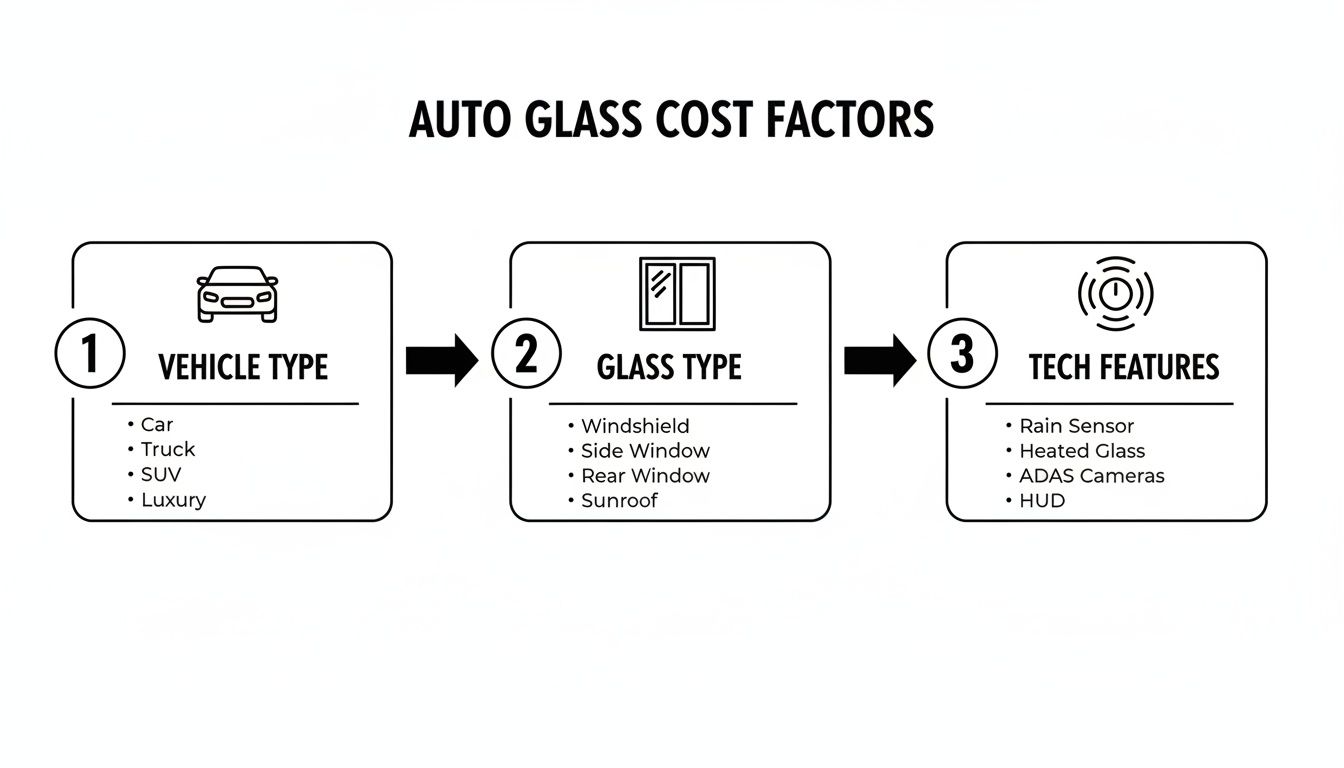
As you can see, the final bill isn't just about the glass itself. It's a combination of your car, the type of glass, and—increasingly—the technology built into it. That last part is where recalibration comes in, and it's a critical, non-negotiable part of the job.
The Two Types of Recalibration
Recalibration isn't a one-size-fits-all process. The right method depends entirely on what your car's manufacturer requires. A certified technician will use one of two main approaches.
Static Recalibration: This is done inside a workshop under controlled conditions. The technician sets up special targets and patterns at very precise distances from your vehicle. The car is then put into a special calibration mode, allowing its computer to "re-learn" the targets and perfectly align the camera's view.
Dynamic Recalibration: Just like it sounds, this one involves movement. A technician has to drive the vehicle on clearly marked roads, often at a specific speed for a set amount of time. The system uses the real-world lane markings and road signs to recalibrate itself on the fly. Some cars even need a combination of both static and dynamic methods to get it right.
Why Skipping Recalibration Is Not an Option
Trying to save a few bucks by skipping the recalibration is a massive gamble with your safety. A misaligned camera could cause your lane departure warning to go off for no reason or, far more dangerously, fail to trigger the automatic emergency brakes when a car stops short in front of you.
This isn't about an annoying warning light; it's about making sure your car's life-saving systems actually work.
Because the camera’s angle is so precise, even a one-degree misalignment can cause the system to misjudge distances by several feet down the road. That could easily be the difference between stopping safely and causing a serious collision. A reputable auto glass shop will always insist on recalibration as part of any modern windshield replacement.
The cost for ADAS recalibration usually adds $150 to $400 to the total auto glass replacement cost. It might seem like a lot, but it’s a small price for the confidence that your car will protect you when you need it most. You can learn more about this crucial process in our article on what to expect from ADAS calibration after windshield replacement.
And this technology is only becoming more common. The global automotive glass market, valued at USD 21.81 billion, is expected to skyrocket to USD 50.60 billion by 2034. This explosion is driven largely by the high-tech glass used in electric and luxury vehicles, which are packed with features like heated glass and complex sensor integration.
Will Insurance Pay for My New Auto Glass?
When a rock chips your windshield or a break-in shatters your side window, your first question is probably, "Will my insurance cover this?" The answer is often yes, but it all comes down to having the right kind of coverage.
Typically, damage from things like road debris, falling branches, hail, or even vandalism falls under your policy's comprehensive coverage. This isn't the same as collision coverage, which handles accidents with other cars. Think of comprehensive as your safety net for all the random, non-accident-related damage life throws at your vehicle.
First, You Need to Understand Your Deductible
Before you even think about filing a claim, you need to know your deductible. A deductible is simply the amount you agree to pay out-of-pocket for a repair before your insurance company steps in to cover the rest.
Let's say your deductible is $500. If a new windshield costs $450, filing a claim doesn't help you—you'd have to pay the full amount yourself anyway. But if that windshield replacement is $1,200, you’d pay your $500 deductible, and your insurer would handle the remaining $700.
That simple math is the most important factor in your decision. Always check your deductible first.
The bottom line: If the repair cost is less than—or even close to—your deductible, it almost always makes more sense to pay for it yourself and keep a claim off your record.
"Full Glass Coverage" and State-Specific Rules
Where you live can make a big difference. Insurance rules aren't the same everywhere, and some states have laws that work in your favor when it comes to glass damage.
A handful of states mandate something called "full glass coverage" or a "$0 deductible" on windshields for policies that include comprehensive coverage. If you live in one of these states, you might be able to get your windshield repaired or replaced without paying a single dime out-of-pocket. Your insurer is required to waive the deductible.
It’s worth taking a minute to check your policy or call your agent to see what the rules are in your state. You can also learn more about how insurance covers windshield replacement in our more detailed breakdown.
We Make the Claims Process Painless
Filing an insurance claim sounds like a chore, but when you work with an experienced auto glass shop, it’s actually incredibly easy. We take the entire burden off your shoulders.
Instead of you having to navigate phone trees and paperwork, here’s how we handle it:
Just Call Us: Forget the 1-800 number for your insurance company. Give us a call first with your policy number handy.
We Handle the Insurance Company: Our team connects directly with your insurer (usually through a network they trust) to verify your coverage, confirm your deductible, and file all the paperwork.
Get Approved and Scheduled: Approval often takes just a few minutes. As soon as we get the green light, we’ll schedule your service.
Pay Your Deductible (If You Have One): Once the work is done, you only owe us the deductible amount. We bill the insurance company for the rest.
It’s a process designed to get you back on the road safely without the headache of dealing with insurance red tape.
How to Choose a Reputable Service Provider

A rock-bottom quote for an auto glass replacement might look tempting, but it can often mean corners are being cut—corners that directly impact your safety. Choosing the right service provider is about much more than just the price tag. It's about investing in quality materials, professional installation, and your own peace of mind.
The auto glass industry is booming. The global market was recently valued at USD 2.57 billion and is expected to climb to USD 3.69 billion by 2032. With so many shops competing for your attention, it’s more important than ever to know how to separate the pros from the rest. You can read the full research about the automotive glass replacement market growth here.
Ask the Right Questions for an Accurate Quote
A transparent quote is the first sign of a trustworthy shop. When you call for an estimate, a true professional won't just ask for your car's make and model. They'll dig a little deeper to give you an accurate price without any nasty surprises down the road.
Be ready to talk about your car's specific features, and don't be shy about asking questions yourself. A good shop will appreciate that you care about the details.
Here’s what you absolutely need to ask:
Is ADAS recalibration included in this price? If your car has modern safety systems like lane-keep assist, this is a must-have, not an optional extra.
What kind of glass will you be using? Are they quoting OEM glass or a high-quality OEE (aftermarket) equivalent?
What type of adhesive do you use? They should be using an OEM-approved urethane and be able to tell you the safe drive-away time.
Are there any extra fees? Ask specifically about mobile service charges or disposal fees for the old glass. A professional quote should be all-inclusive.
What does your warranty cover? You're looking for a lifetime warranty on workmanship that protects you from leaks and defects.
Getting solid answers to these questions ensures the auto glass replacement cost you’re quoted is the price you’ll actually pay.
Technician Certifications and Quality Materials
The technician replacing your windshield is every bit as important as the glass itself. Look for shops whose technicians are certified by a respected organization like the Auto Glass Safety Council (AGSC). This certification is proof that they're trained in the latest safety standards and installation methods.
The adhesive, or urethane, is another make-or-break component. This isn't just glue; it’s what bonds the windshield to your car’s frame, making it a critical piece of your vehicle's structural integrity.
A cheap, low-grade adhesive can lead to all sorts of problems—water leaks, annoying wind noise, or even a complete windshield failure in a collision. A reputable shop will be proud to tell you they use only OEM-grade urethanes.
Mobile Convenience Versus In-Shop Service
Many top-notch providers offer mobile service, bringing the repair shop right to your driveway or office parking lot. It's incredibly convenient and saves you the headache of rearranging your day. Mobile techs use the exact same high-quality materials and follow the same safety protocols as they would back at the shop.
That said, there are a couple of situations where an in-shop appointment is the smarter move:
Bad Weather: Extreme cold, heat, or rain can mess with how the urethane cures, compromising the seal.
Complex Recalibrations: Some ADAS recalibrations are "static," meaning they have to be done in a controlled workshop environment using specific targets and tools.
A good company will always assess your situation and the weather, then recommend the safest and most effective option—whether it’s at your place or theirs.
Smart Ways to Manage and Reduce Your Costs
Knowing what drives the cost of auto glass replacement is one thing. Using that knowledge to make smart, wallet-friendly decisions without cutting corners on safety? That's the real goal. With a few strategic moves, you can often knock a significant amount off your final bill while still getting a top-notch, durable repair.
The single best way to save money on auto glass is simply to act fast. That tiny rock chip or star crack is a relatively cheap fix right now. But if you let it sit, dirt and moisture will work their way in, and temperature swings will do the rest. Before you know it, that small flaw has spiderwebbed across your windshield, turning an easy repair into a costly replacement.
Be Proactive with Repairs and Inquiries
Don't put it off. Waiting for that little chip to become a massive crack is a surefire way to pay more than you have to. Addressing it early can literally save you hundreds. If you want to dive deeper into the process and pricing, it’s worth understanding the typical auto glass chip repair cost to see if it makes sense for your situation.
When you do find yourself needing a full replacement, a few simple questions can open the door to some serious savings:
Ask About Glass Options: A quality aftermarket (OEE) windshield meets the same safety standards as OEM glass but can slash the material cost by 30% or more.
Inquire About Promotions: You'd be surprised how often auto glass shops have seasonal deals or special offers running. It never hurts to ask—it could lead to some unexpected savings on your invoice.
The smartest financial move is almost always the one that focuses on long-term value. Investing in a professional installation with high-quality materials might cost a little more upfront, but it prevents expensive headaches like water leaks, wind noise, or faulty ADAS systems down the road.
At the end of the day, managing your auto glass costs is all about balancing immediate savings with long-term reliability. By catching damage early, exploring your options, and choosing a reputable installer, you can ensure you’re getting the best possible value for your money.
Got Questions About Auto Glass Costs? We’ve Got Answers.
When it comes to getting your auto glass fixed, it's natural to have a few questions. Let's clear up some of the most common things people ask so you can feel completely confident about the process.
Will a Windshield Replacement Claim Make My Insurance Go Up?
Generally, no. Filing a comprehensive claim for a new windshield will not raise your insurance rates.
Most insurance companies see a rock chip or a crack from road debris as a 'no-fault' incident. It’s not like a collision; it's more like routine upkeep to keep your car safe. That said, it's always smart to double-check the fine print in your specific policy just to be sure.
How Long Does a Mobile Windshield Replacement Actually Take?
A mobile replacement is surprisingly quick. The hands-on installation part usually takes about 60 to 90 minutes.
But the job isn't done just because the glass is in. Your vehicle needs to sit undisturbed for at least another hour. This gives the strong urethane adhesive time to cure and form a watertight, secure bond. Skipping this wait time is a major safety risk, as the windshield's integrity in an accident depends on it.
What About ADAS? If your car has driver-assist features like lane departure warnings, the recalibration process will add another 30 to 60 minutes. Any good technician will give you a full time estimate for your specific vehicle before they even start.
Is It Safe to Use an Aftermarket Windshield Instead of OEM Glass?
Absolutely. A high-quality aftermarket windshield, sometimes called OEE (Original Equipment Equivalent), is a safe and budget-friendly choice.
These windshields are made to meet or even exceed the same strict federal safety standards as the original factory glass. They have to pass the same tests for strength, fit, and clarity. The real key is the installer—make sure they use glass from reputable manufacturers. While OEM glass is an identical match to what came from the factory, a top-tier aftermarket windshield delivers the same safety and performance, helping you save on the final auto glass replacement cost.
Ready for a clear, no-nonsense quote from a team that puts your safety and time first? Contact Auto Renu Auto Glass LLC for expert mobile service. Get your free estimate now!