Top Guide: auto windshield replacement at home for fast, safe fixes
Discover how auto windshield replacement at home works, find certified techs, understand insurance steps, and get a worry-free mobile service.
Feb 7, 2026
generated
auto windshield replacement at home, mobile windshield repair, at-home auto glass, ADAS calibration, windshield insurance claim
Dealing with a cracked windshield is a hassle, but getting it fixed doesn't have to be. An auto windshield replacement at home is exactly what it sounds like: a certified technician comes to you—at your home, your office, wherever—and handles the entire job on-site. This mobile service completely sidesteps the old routine of driving to a shop and waiting around, offering a far more convenient solution without cutting any corners on quality.
Why Mobile Windshield Service Is the Modern Choice
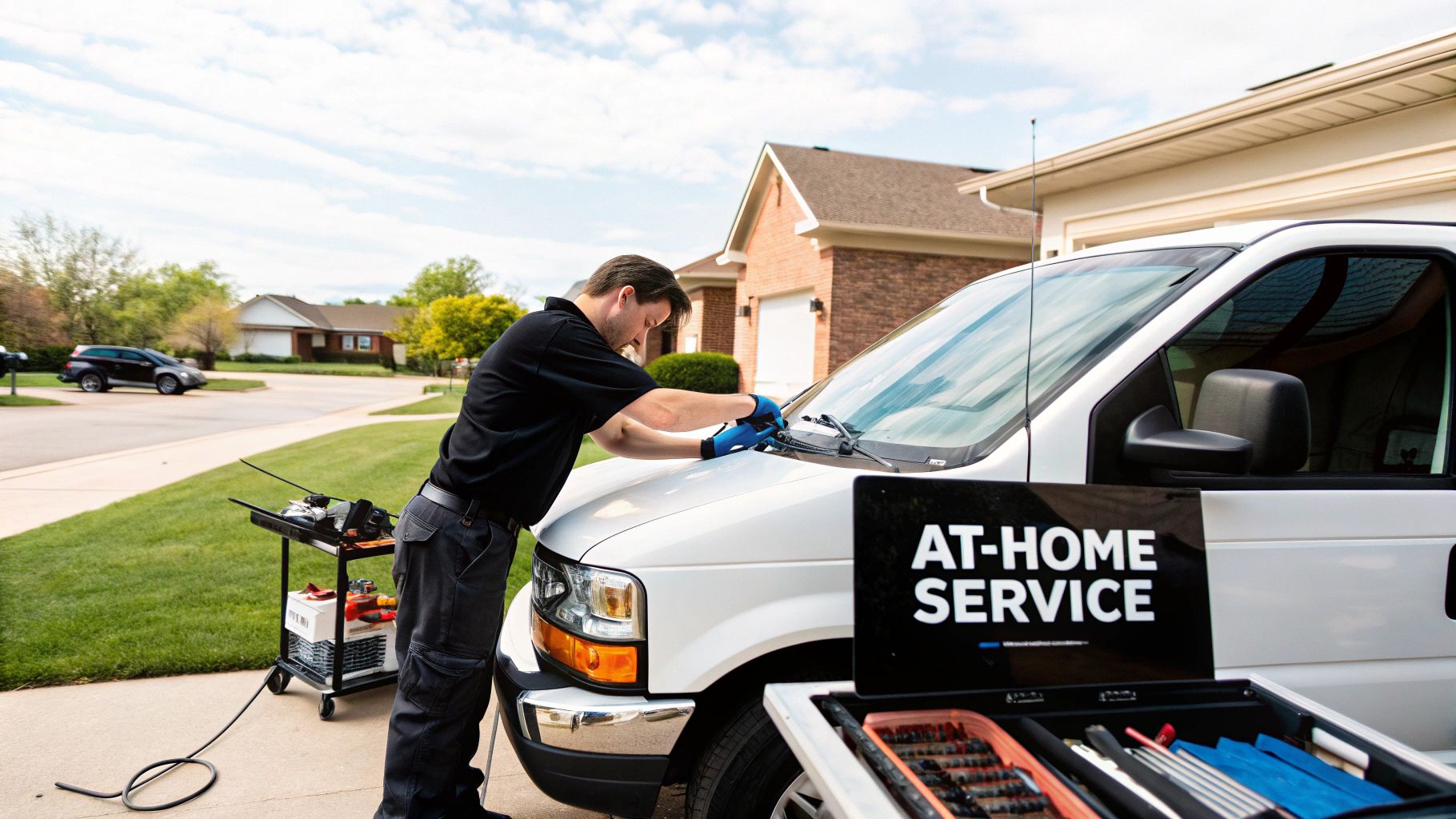
Let’s be honest, nobody has time to kill an afternoon in a waiting room. The old way of doing things—carefully driving a car with a damaged windshield to a garage, finding a ride home, and then repeating the process to pick it up—is becoming a thing of the past. Mobile service flips the script by bringing the workshop to you.
This isn't just a small-time trend. The demand for convenience is driving massive growth in the industry. The global automotive windshield market is on track to jump from USD 32.01 billion in 2025 to USD 64.01 billion by 2034. Here in North America, the market for vehicle glass repair and replacement was already over $4.7 billion in 2024 and is forecasted to climb to $7.9 billion by 2032. A huge piece of that growth comes from people like you who want reliable, expert service without the logistical headache.
Mobile vs. Shop Replacement: A Quick Comparison
To really see the difference, it helps to put the two options side-by-side. Here’s a quick breakdown of what you can expect from a mobile service versus a traditional shop visit.
Feature | Mobile At-Home Service | Traditional Auto Shop |
|---|---|---|
Location | Your home, office, or any suitable location | You must drive to their physical location |
Scheduling | Flexible; fits into your day without disruption | Fixed appointment times; requires you to wait on-site |
Safety | Eliminates the need to drive with a damaged windshield | Requires you to drive a potentially unsafe vehicle |
Quality | Uses the same OEM/OEE-quality glass and adhesives | Uses OEM/OEE-quality glass and adhesives |
Time | 1-2 hours of your time is not required; you can work or relax | Requires travel and waiting, often 2-4 hours of your day |
As you can see, the core quality of the materials and work remains the same with a reputable provider. The real difference is in the experience—mobile service is built around your schedule, not the other way around.
Key Advantages of At-Home Service
The benefits go well beyond just saving you a trip. When you opt for a mobile replacement, you’re choosing a smarter, safer, and more efficient process.
Unbeatable Convenience: Your technician can meet you just about anywhere. You can be on a conference call in your home office while your new windshield is being installed in the driveway. It’s that simple.
Immediate Safety: Driving with a badly cracked or shattered windshield is a genuine risk. It compromises your visibility and the structural integrity of your vehicle. A mobile service means your car stays put until it’s 100% safe to drive again.
No Compromise on Quality: Let's clear up a common myth. A reputable mobile company like Auto Renu Auto Glass LLC uses the exact same OEM (Original Equipment Manufacturer) or OEE (Original Equipment Equivalent) glass and professional-grade adhesives as the best brick-and-mortar shops. A great installation comes down to the technician’s skill, not the building they work in.
On-Site ADAS Recalibration: Many newer cars have Advanced Driver Assistance Systems (ADAS) with cameras mounted on the windshield. These systems control features like automatic emergency braking and lane-keeping assist. After a replacement, they must be recalibrated. Our mobile specialists can perform this critical service right on-site, ensuring all your safety features work perfectly.
One of the biggest misconceptions I hear is that mobile service is somehow a "lesser" option. In reality, a certified mobile technician follows the same rigorous safety protocols and uses identical, high-quality materials as they would in a shop. The quality is in the craftsmanship, not the location.
Ultimately, choosing a provider like Auto Renu means putting your time and safety first. You get a dealership-quality replacement without ever having to leave your property. If you want to get a better sense of what the process looks like, take a look at our detailed guide on on-site car window replacement.
How to Find a Trusted Mobile Glass Technician
The quality of your auto windshield replacement at home comes down to one thing: the person doing the work. Finding a skilled, reliable technician is about more than just a good price—it's about the structural integrity of your vehicle and the safety of everyone inside it. A shoddy installation can cause the windshield to fail in an accident, which compromises the roof's stability and how your airbags deploy.
So, how do you cut through the noise and find a real pro? It starts with looking past the flashy ads and digging into the things that actually matter: credentials, materials, and what real customers have to say. A great mobile technician brings the same expertise and quality parts to your driveway that you’d expect from a top-tier garage.
Look for Verified Credentials and Insurance
First things first: confirm the technician or company is properly certified and insured. This is your non-negotiable baseline for quality and safety. Certifications from recognized industry organizations show a commitment to proper training and staying up-to-date on the best practices.
Even more important, always verify their insurance. Any reputable mobile service will have comprehensive liability insurance. This protects your vehicle and your property from any accidental damage during the replacement. It’s not rude to ask for proof—it’s just smart.
Auto Glass Safety Council (AGSC): This is the gold standard. An AGSC-certified technician has passed tough exams and adheres to strict safety protocols.
Proof of Insurance: Ask to see a certificate of insurance. It's your safety net in the unlikely event something goes wrong.
Digging Deeper Than Star Ratings
Online reviews are a great starting point, but you have to read between the lines. A simple five-star rating doesn't give you the full picture. Take a few minutes to read the actual comments to get a feel for the technician's professionalism and the company's service.
Look for reviews that mention specifics. Did the technician show up on time? Did they walk the customer through the process? Did they leave the area spotless? These details often speak volumes about a company's standards, far more than a generic "great service!" comment.
The most insightful reviews are the detailed ones. When a customer mentions that the tech from Auto Renu took the time to explain the difference between OEM glass and aftermarket options, then meticulously scraped away every last bit of old adhesive, you're getting a real glimpse into their professional standards.
Asking the Right Questions Before You Book
Once you have a shortlist, a quick phone call can tell you everything you need to know. A true professional will be happy to answer your questions with confidence. If they sound vague or can't give you a straight answer, consider that a major red flag and move on.
Here are the essential questions you need to ask:
What type of glass do you use? They should be using either OEM (Original Equipment Manufacturer) glass or a high-quality OEE (Original Equipment Equivalent) that meets federal safety standards.
What kind of adhesive is it? The only right answer is a professional-grade urethane adhesive, not a cheap silicone from a hardware store. Urethane is an engineered structural component that holds the glass in place.
What is the Safe Drive-Away Time (SDAT)? A knowledgeable technician can give you a precise time based on the specific adhesive used and the current weather. This usually falls between 30 to 60 minutes.
Are you equipped to handle ADAS recalibration on-site? For any modern vehicle with features like lane-keep assist or emergency braking, this is a deal-breaker. If they can't recalibrate your car's safety systems, you need to find someone who can.
By arming yourself with this knowledge, you can vet any company like a pro and choose a mobile technician who puts your safety first. A proper auto windshield replacement at home should leave you with a secure, perfectly installed piece of glass and absolute peace of mind.
Navigating Insurance Claims and Out-of-Pocket Costs
A cracked windshield is a pain, but figuring out how to pay for it shouldn't add to the headache. The good news? Your comprehensive auto insurance policy likely covers windshield replacement, and often with a small deductible—or even no deductible at all. Best of all, getting an auto windshield replacement at home is covered just the same as going to a traditional shop.
The first thing you should do is pull up your policy details or just give your insurance agent a quick call. They’ll tell you exactly what your glass coverage looks like and what your deductible is. Many insurers even have preferred partners, like us here at Auto Renu Auto Glass LLC, to make the whole process completely seamless for you.
Filing a Claim for a Mobile Windshield Replacement
Getting a claim started is usually pretty simple. Most insurance companies let you do it right on their website or over the phone in just a few minutes.
To make the call or online form go smoothly, it helps to have a few things handy:
Your insurance policy number.
The date the damage happened (an estimate is fine if you're not sure).
Your car’s year, make, and model.
A quick description of the damage—like where the crack is and how big it is.
Once the claim is filed, you can tell them you want to use a specific mobile service. From there, the insurance company and the glass shop handle the backend stuff like verifying coverage and sorting out the bill. All you have to worry about is setting a time for the technician to come to you.
We deal with major insurance carriers every single day. If you're feeling overwhelmed by the process, we can walk you through it and make sure all the i's are dotted and t's are crossed on our end. It's our job to make this easy for you.
When you're talking with your insurer, it's smart to know a bit about glass quality. Understanding the difference between factory OEM glass and high-quality aftermarket glass, like CAPA certified parts, helps you make sure you’re getting a safe, top-notch replacement.
What if I’m Paying Out-of-Pocket?
Maybe you don't have comprehensive coverage, or your deductible is high enough that it makes more sense to just pay for it yourself. Paying directly can definitely be the faster, simpler route. Knowing what goes into the final price will help you budget and avoid any surprises.
The cost of an auto windshield replacement at home is more than just the piece of glass. A few key things will determine your final quote.
The main factors driving the cost are:
Your Vehicle: It's no surprise that the windshield for a Porsche or a Tesla is going to cost more than one for a standard sedan.
Built-in Tech: Modern windshields are loaded with technology. If yours has features like rain sensors, heating elements, or a heads-up display (HUD), the glass itself is more complex and expensive.
ADAS Recalibration: This is a non-negotiable safety step for most cars built in the last decade. Your forward-facing camera needs to be perfectly recalibrated to the new windshield, and this service is a critical part of the total cost.
This last point is becoming more important every year. In 2022 alone, 3.8 million windshield replacements in the U.S. required ADAS calibration. It’s a major reason why 65% of consumers say they prefer mobile services that can handle this complex work right in their driveway.
Whether you're using insurance or paying yourself, a reputable company will always give you a clear, itemized quote before any work begins. It should break down the cost of the glass, the labor, and any recalibration fees.
For a more detailed look at how your policy might handle the costs, check out our guide on whether insurance covers windshield replacement.
Getting Ready for Your At-Home Windshield Replacement
So, you've scheduled your auto windshield replacement at home. Great! Now, a little bit of prep work on your end will make a huge difference, helping the entire process go smoothly and getting you back on the road that much faster.
Think of it like clearing a path for any other trade professional coming to your home. You wouldn't ask a plumber to work around a mountain of laundry, right? The same courtesy helps your auto glass technician work safely and efficiently. Just a few simple steps can set the stage for a perfect installation.
Creating the Ideal Workspace for the Technician
Your mobile technician is bringing a rolling workshop to you, but they still need a good spot to work. Having enough room to move around your vehicle is key, especially when they're handling a large, new piece of glass.
More importantly, though, is the weather. The professional-grade urethane adhesive that bonds the new windshield to your car's frame is pretty particular about temperature and moisture.
Got a Rainy Day Plan? If there's rain in the forecast, the technician absolutely needs a covered area. A garage, carport, or even a parking garage works perfectly. This is non-negotiable for ensuring the adhesive cures correctly and creates a safe, permanent bond.
Give Them Some Elbow Room: Try to clear at least 3-4 feet of space around the entire vehicle. This allows the tech to open the doors fully and maneuver their tools without bumping into anything.
Keep It Level: Parking on a flat, level surface is surprisingly important. It's not just for stability during the installation; it's also critical for the ADAS recalibration that often follows.
A Quick Pre-Appointment Checklist
Before the technician shows up, running through this quick list will make their job—and your day—a lot easier. Ticking off these small tasks means they can jump right into the important work.
Clear the Dash: Grab any personal items, parking passes, phone mounts, or decorations off your dashboard and from around the rearview mirror. This keeps your stuff safe and out of the technician's way.
Keys and Info: Have your car keys ready to go. If you're going through insurance, it's also smart to have your policy information handy just in case the technician needs to confirm a detail.
Unlock the Doors: The technician will need to get inside your car, so make sure it's unlocked and accessible when they arrive.
This diagram breaks down the claims process, which is often the first step in getting your replacement scheduled.
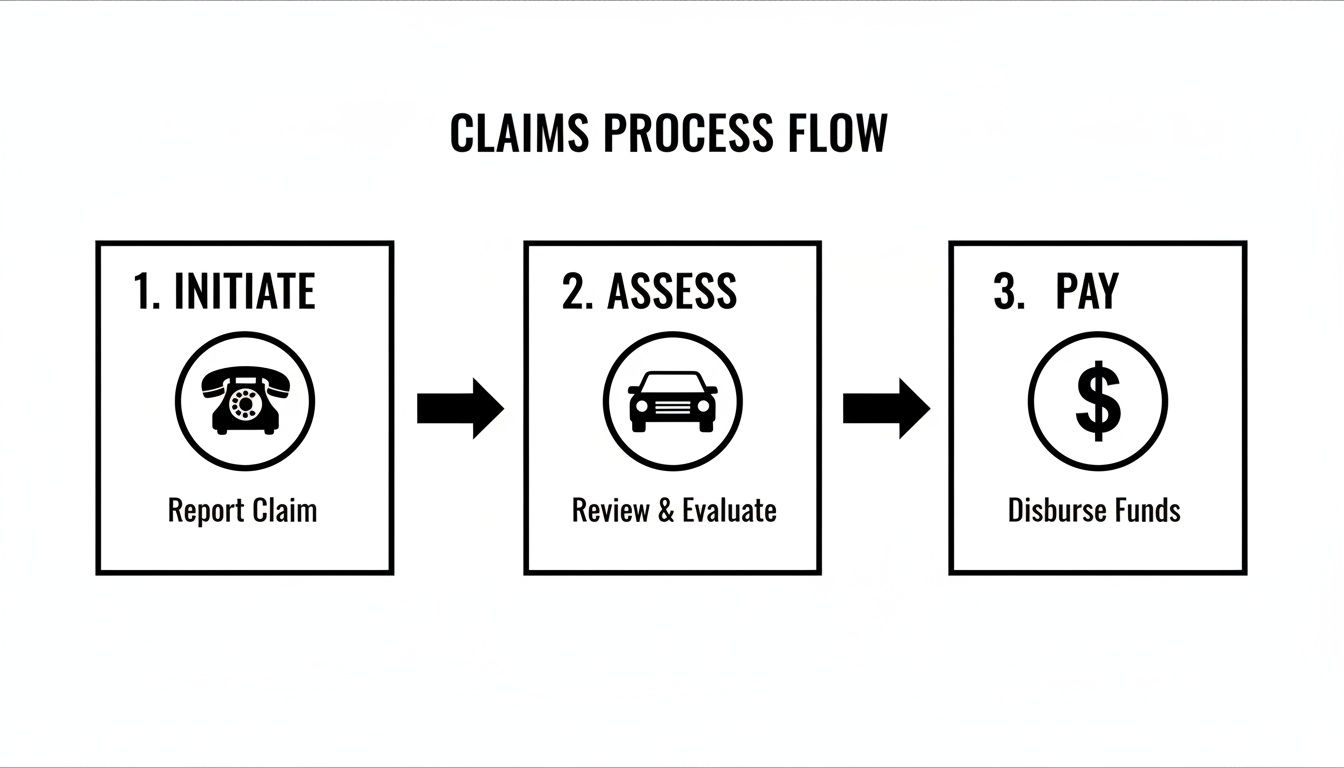
As you can see, it's a pretty direct path from that first call to getting the payment handled, which simplifies what can feel like a complicated task.
What to Expect During the Replacement Itself
When your technician arrives, they'll first do a quick walk-around, confirm the job with you, and answer any last-minute questions. They'll then carefully cover your vehicle's interior and fenders to protect them from any potential scratches or adhesive drips.
The replacement itself is a multi-step, precise operation. First, they’ll remove the wipers and any trim surrounding the old windshield. Then, using specialized tools, they'll slice through the old urethane seal and lift the damaged glass out. The next part is crucial: they painstakingly scrape away every last bit of old adhesive from the car's frame. This creates a perfectly clean surface, which is essential for a strong, leak-proof bond.
A lot of people ask us how long the hands-on work takes. It varies, but you can usually expect the technician to be actively working on the car for about an hour. We break down the timing in more detail in our guide on how long windshield repair takes.
With the frame prepped, the technician applies a new, even bead of urethane. They then expertly set the new windshield into place, re-installing all the trim and wipers for a seamless, factory-finish look.
The Critical Final Step: ADAS Recalibration
On most modern cars, the job isn't done when the glass is in. The final, and arguably most important, step is recalibrating your Advanced Driver Assistance Systems (ADAS). These are the safety features—like lane-keeping assist and automatic emergency braking—that depend on a forward-facing camera mounted right on your windshield.
This isn't just a suggestion; it's a critical safety requirement. With front windshields making up a massive 63.2% of the auto glass market, their role in housing this tech is huge. In fact, post-replacement ADAS calibration is mandatory for about 40% of modern cars to ensure the systems work correctly, and getting it right can slash accident rates by as much as 90%.
There are two ways this is done:
Static Recalibration: This is usually done while the car is parked. The technician sets up specific targets in front of your vehicle and uses a scanning tool to aim the camera with pinpoint accuracy.
Dynamic Recalibration: This type requires the technician to drive the vehicle on well-marked roads at certain speeds, allowing the camera system to re-learn its environment in real-world conditions.
Your technician will know exactly which method your car's manufacturer requires and will perform it on-site. They won't consider the auto windshield replacement at home complete until every safety system is functioning exactly as designed.
What to Do After Your New Windshield Is Installed
So, the technician has packed up, and you’re looking at a brand-new, crystal-clear windshield. The hard part is over, but the job isn’t quite done yet. The next 24 to 48 hours are absolutely critical. This is when the powerful urethane adhesive cures and forms the bond that’s essential for your car's structural integrity and your safety.
Think of aftercare as part of the installation itself. How you treat your vehicle in these first couple of days will directly impact how well your new windshield holds up for years to come. A few simple precautions protect your investment and ensure the glass performs exactly as it should in an emergency.
The First 24 Hours: Dos and Don'ts
That initial curing period is all about letting the adhesive set without any interruptions. The urethane needs time to create that permanent, watertight seal. Any sudden pressure changes or jarring movements can weaken the bond while it's still vulnerable.
Here’s a quick rundown of what you should and shouldn't do right after the technician hands you the keys.
Immediate Aftercare Checklist
Action | Do This | Don't Do This |
|---|---|---|
Driving | Wait for the Safe Drive-Away Time (SDAT). This is usually 30-60 minutes. | Jump in and drive off the second the technician is gone. |
Doors & Windows | Close doors gently. Leave a window cracked about an inch to equalize air pressure. | Slam your car doors. This sends a shockwave of air pressure right against the fresh seal. |
Retention Tape | Keep the tape on for at least 24 hours. It’s holding the molding and glass perfectly in place. | Rip the tape off early because it looks a bit clunky. |
Cleaning | Wait at least 48 hours before washing your vehicle. | Hit a high-pressure car wash. Those powerful jets can easily compromise a fresh seal. |
Dashboard | Keep your dashboard clear for a day or two. | Prop up a sunshade or anything else that puts pressure on the glass from the inside. |
Following these simple rules is the single best thing you can do to prevent headaches like water leaks, annoying wind noise, or a seal that might not hold up in a collision.
Long-Term Care for a Lasting Windshield
Once that initial curing window has passed, your focus can shift to keeping your new glass in top shape for the long haul. A few good habits will protect its clarity and any of the high-tech features embedded within it. The goal is simple: prevent scratches and stop small problems from becoming big ones.
First up, your wiper blades. Old, brittle wipers are notorious for scratching new glass. I always recommend installing a fresh pair right after a windshield replacement. Check them every few months and swap them out as soon as they start streaking.
Your investment isn't just the glass; it's the technology inside it. Many new windshields have cameras and sensors for your ADAS. Ammonia-based cleaners can eat away at the protective coatings on these sensitive areas over time. Always grab a bottle of automotive-specific, ammonia-free glass cleaner.
Finally, be on the lookout for new damage. A tiny rock chip can turn into a massive, unfixable crack in a heartbeat, especially when temperatures swing. Getting small chips filled immediately is the most cost-effective way to avoid another full replacement.
Proactive Care Tips
Wiper Blade Wellness: Replace your wiper blades at least once a year. It's cheap insurance for your glass.
Gentle Cleaning: Stick with a microfiber cloth and that ammonia-free cleaner. You'll avoid streaks and protect any sensors.
Chip Happens, Fix It Fast: If you get a rock chip, put a small piece of clear tape over it to keep out dirt and moisture, then call a professional for a resin repair right away.
Combine this careful aftercare with some basic maintenance, and the auto windshield replacement at home you just got will provide years of safety and clarity.
Your Top Questions About Mobile Windshield Replacement
Even when you know having the work done at home is more convenient, it's totally normal to have a few questions. After all, you’re trusting us with a critical piece of your vehicle’s safety, and we're working right in your driveway. Let's walk through the questions we hear most often so you can feel completely confident about the process.
These answers come from years of doing this work out in the field. We want to clear up any confusion and make sure you're comfortable from the moment you book with us to the second you’re back on the road.
Is a Mobile Replacement as Safe as One Done in a Shop?
Absolutely. The safety of a windshield replacement comes down to two things: the skill of the technician and the quality of the materials. The location doesn't change that. We use the exact same high-quality glass and professional-grade urethane adhesives that the best brick-and-mortar shops do.
The step-by-step process is identical. We meticulously remove the old glass and adhesive, prep the frame, and then apply the new urethane to create a perfect, factory-like bond. As long as we have decent weather to work in, an at-home replacement is every bit as secure, durable, and safe as any installation done inside a garage. We bring the professional standards right to your door.
"A common misconception is that a controlled shop environment is inherently better. In reality, a certified mobile technician creates their own controlled environment. By following strict protocols for surface preparation and adhesive application, they ensure a factory-quality seal, regardless of location."
Can My Car's ADAS Safety Features Be Recalibrated at Home?
Yes, and honestly, this is one of the most critical services a modern mobile provider can offer. If your vehicle has features like lane-keep assist or automatic emergency braking, ADAS recalibration isn't just a good idea after a windshield replacement—it's essential for your safety.
We come equipped with the sophisticated scanning tools and targets needed to perform both types of recalibration right on-site, immediately after the new glass is in.
Static Recalibration: This involves setting up specific targets in a controlled space in front of your parked car to perfectly align the forward-facing camera.
Dynamic Recalibration: This requires us to drive the vehicle on clearly marked roads, allowing the system to re-learn its surroundings in real-world conditions.
Skipping this step is a huge risk; it can cause your car's most important safety systems to malfunction or fail entirely. A true professional won't call the job finished until every feature is perfectly calibrated and working as it should.
How Long Until I Can Safely Drive My Car Again?
This is easily one of the most common—and most important—questions we get. The answer is all about something called the Safe Drive-Away Time (SDAT). This is the minimum amount of time the urethane adhesive needs to cure before it's strong enough to protect you in an accident.
We only use advanced, fast-curing adhesives that dramatically shorten this wait. For most jobs, the SDAT is between just 30 to 60 minutes after we finish the installation. Your technician will give you a precise time based on the specific adhesive used and the day's temperature and humidity, always putting your safety first.
What if There Is Bad Weather on My Appointment Day?
This is a great question because the weather does matter. The urethane adhesive that bonds the windshield to your car is sensitive to moisture and extreme temperatures. Rain or intense heat can prevent it from curing correctly and forming that strong, permanent seal.
But the solution is usually pretty simple. If bad weather is on the forecast, all we need is a covered area to work under. A garage, carport, or even a covered parking structure gives us the protection needed to do a flawless job. If the weather is truly severe, we'll be proactive and call you to reschedule for the next clear day. We will never cut corners or compromise on the quality and safety of your installation.
If you're interested in learning more about general vehicle upkeep, you can find a lot of great information in automotive blog posts from various experts. Keeping up with your car's needs is always a smart investment.
Ready for a hassle-free, dealership-quality windshield replacement that comes to you? Contact Auto Renu Auto Glass LLC today for a fast, transparent quote and schedule your convenient mobile service. https://www.autorenu911.com