How to Get Frost Off Windshield: how to get frost off windshield in 3 steps
Learn how to get frost off windshield quickly and safely with proven methods, DIY fixes, and prevention tips.
Feb 6, 2026
generated
how to get frost off windshield, remove ice from windshield, car winter tips, defrost windshield fast, windshield care
So, what’s the fastest way to deal with a frosted-up windshield? The best bet is a two-pronged attack: crank up your car's defroster while you get to work with a good ice scraper or a de-icing spray.
If you're just dealing with a thin layer of frost, you can often get away with just running the defroster. Set it to high heat and turn on the A/C—that helps pull moisture out of the air and speeds things up. But for anything thicker, you'll absolutely need to spray or scrape to get the clear visibility you need to drive safely.
Why A Smart Approach To Frost Matters
We've all been there. You're running late, you walk out to the car, and the windshield is a solid sheet of ice. It’s a frustrating way to start the day, to say the least.
But that opaque layer of ice is more than just an inconvenience. It’s a major safety hazard, completely blocking your view of the road. Your first instinct might be to grab whatever is handy—a credit card, a spatula—or try some "life hack" you saw on social media. Resist the urge. Using the wrong method can easily lead to deep, permanent scratches or, even worse, a cracked windshield from thermal shock.
Knowing the right way to get frost off your windshield isn't just a party trick; it's a fundamental skill for anyone who drives in the winter. This simple decision tree breaks it down.
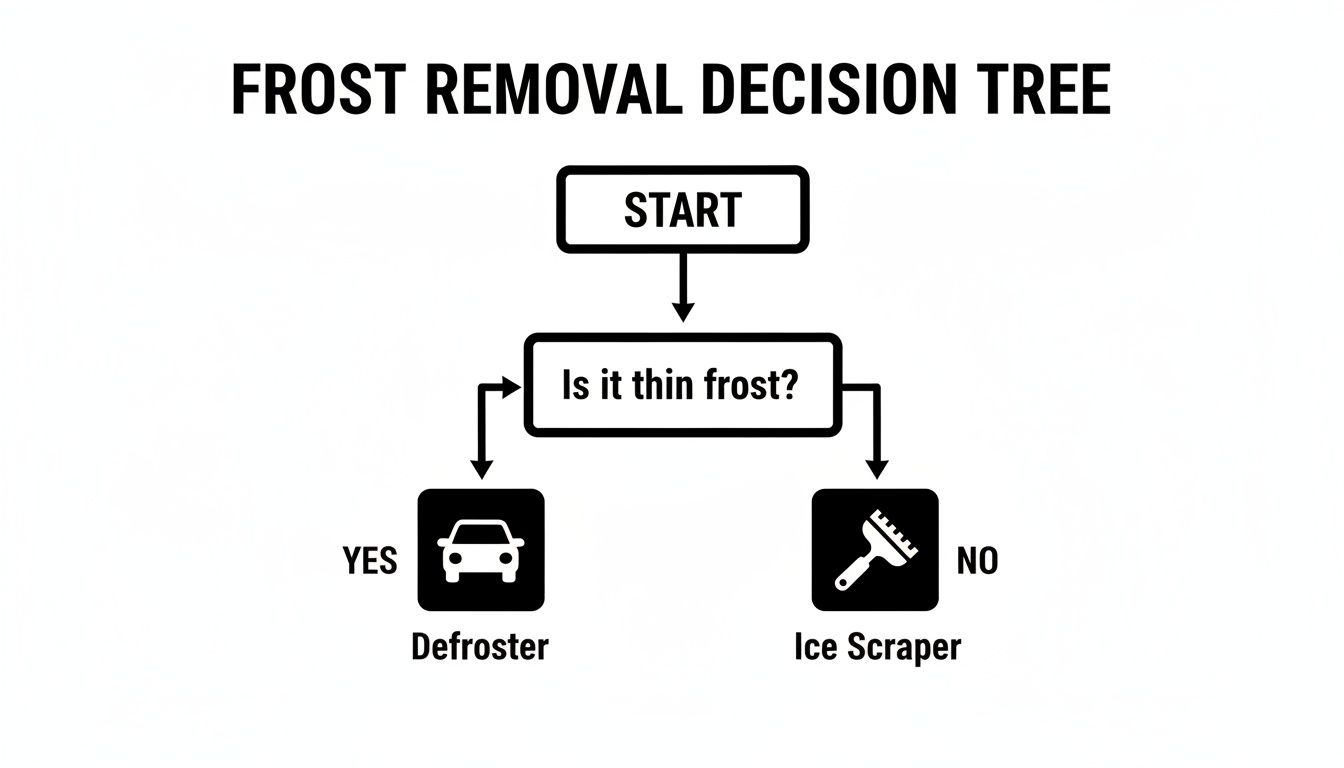
The takeaway is pretty clear: your car’s built-in defroster is your best friend for light frost, but you need to bring in the tools for heavier ice.
The Right Tools Make All The Difference
The daily ritual of de-icing has spawned a huge market for specialized tools. Think about it—millions of drivers face this every single morning in the winter. In fact, the global market for windshield ice scrapers hit USD 1.21 billion in 2024.
This isn't just a niche product. North America alone makes up a massive 38% of that market. With over 280 million cars on U.S. roads, having an effective way to clear your windshield is an absolute must for road safety.
Choosing the right method isn’t just about speed; it's about protecting your vehicle’s most important safety feature—your visibility. Rushing the process with the wrong tools can cause more harm than good.
To help you decide which approach is best for you, here’s a quick rundown of the most common methods.
Frost Removal Methods at a Glance
Method | Typical Time | Glass Safety | Cost |
|---|---|---|---|
Ice Scraper | 2–5 minutes | High (with proper tool) | Low ($5–$20) |
Vehicle Defroster | 5–15 minutes | Highest | None (fuel cost) |
De-Icing Spray | 1–3 minutes | High (if formulated for auto glass) | Medium ($8–$15 per can) |
DIY Solution | 2–4 minutes | Medium (risk of residue/damage) | Lowest ($1–$3 per batch) |
As you can see, there's a trade-off between speed, cost, and safety. While a de-icing spray is quickest, a good old-fashioned scraper combined with your defroster is often the most reliable and cost-effective choice.
Beyond The Windshield
Ultimately, a frost-free morning is about more than just scraping ice. It’s the first step in setting yourself up for a safer drive, especially when the roads are slick and visibility is poor.
Once your glass is clear, your focus should shift to the road itself. Brushing up on some essential winter driving tips from the pros—like professional truckers—can help you stay safe long after the frost has melted.
Using Your Car's Defroster the Right Way
Your car’s own defroster is your best friend on a frosty morning. It’s built for the job, but there's a right way and a wrong way to use it. Following a few simple steps in the right order can make a huge difference, getting you on the road faster without just blowing cold air around.
First things first: start your engine. The defroster needs hot coolant running through the heater core to produce warm air, and that only happens when the engine is running. Don't even bother turning the fans on until the car is on—it won't do a thing.
As soon as the engine is running, crank the temperature dial all the way to hot. Then, find the defrost button on your climate controls (it's the one that looks like a little windshield with wavy arrows) and press it. This sends all that precious warm air right up onto the glass where you need it.
The Surprising Role of Air Conditioning
Now for a pro tip that sounds completely wrong but works wonders: turn on the A/C. Yes, even when you're trying to heat things up.
The A/C system is an incredible dehumidifier. As the ice on the outside of your windshield starts to melt, the temperature difference often causes a thick layer of fog to form on the inside. By running the A/C, you're pulling that moisture out of the air, creating a dry heat that fights both the frost on the outside and the fog on the inside at the same time. You'll get a crystal-clear view much, much faster.
Don't forget to turn off the air recirculation button! You want to pull in the fresh, less humid air from outside, not just keep recycling the damp air inside the car. Making sure that little light is off can seriously cut down your defrosting time.
Optimizing Airflow for Faster Results
Your defroster is only as good as the air it can pull in. Before you do anything else, take a second to clear away any snow or ice piled up on the air intake vents. You'll find them at the base of your windshield, right by the wipers. If those are blocked, your system will be starved for air and won't work nearly as well.
Here are a few other things you can do to get the most out of your defroster:
Embrace modern tech. If your car has a remote start, it's a game-changer. Firing it up 5 to 10 minutes before you head out the door gives the engine plenty of time to warm up. That way, you're getting hot air the second you get in.
Check for special features. Some newer cars have heated windshields with tiny, nearly invisible wires embedded in the glass or heated "wiper park" areas. If you've got these, turn them on along with the main defroster for maximum melting power.
Just be patient. It's tempting to rev the engine, thinking it will warm up faster. It won't. Modern engines are designed to warm up most efficiently while driving gently, not while idling at high RPMs. Just let the system do its thing.
Mastering the Art of Scraping Without Scratches
We’ve all been there: running late, staring at a windshield encased in ice. It's incredibly tempting to grab the nearest hard object—a credit card, your house key, maybe even a kitchen spatula—and just start hacking away. But trust me, that momentary convenience is a recipe for disaster. These improvised tools will almost certainly leave permanent scratches on your auto glass, compromising your visibility long after the frost is a distant memory.
When it comes to your windshield, there’s only one tool for the job: a high-quality plastic ice scraper made specifically for cars. Anything else is just asking for trouble.
The Right Way to Scrape
Having the right tool is only half the battle; technique is everything. Your goal is to lift the ice off the glass, not grind it in.
Always start at the top of the windshield and work your way down. Gravity is your friend here, helping pull the loosened ice and debris away from the areas you've already cleared.
Keep the scraper's blade flat against the glass and apply firm, consistent pressure. It’s crucial to avoid digging in with the corners of the scraper. That concentrates all the force onto a tiny point, which is a common way people end up with a nasty chip or scratch. Use steady, overlapping strokes to clear the surface methodically.
Picking a Good Scraper
Let's be honest, not all ice scrapers are created equal. A flimsy one from the dollar store might snap in your hand on a particularly cold morning, leaving you in a real bind.
Here’s what you should look for in a tool that won't let you down:
A Solid Plastic Blade: The blade should be thick and sturdy. Before you use it, run your finger along the edge to make sure there are no nicks or burrs that could drag across the glass.
A Comfortable Grip: You need a handle that lets you apply even pressure without your hand cramping up.
An Integrated Brush: A scraper with a snow brush on the other end is a fantastic two-in-one tool. You can sweep off all the loose powder before you get down to the icy layer.
It might surprise you, but the market for tools like windshield snow brushes is enormous, growing to USD 65.23 billion in 2023. This shows how seriously people take winter driving, especially when you consider that over 155 million drivers in the U.S. deal with freezing temperatures. While poor visibility causes thousands of accidents, improper scraping has its own consequences, contributing to a 15-20% jump in windshield chip repairs during winter.
Common Mistakes That Can Wreck Your Windshield
Even with the perfect scraper, a few bad habits can cause serious damage. A single piece of grit or a tiny pebble trapped under your scraper blade can act like sandpaper, carving a long, ugly scratch right in your line of sight. To prevent this, always brush off any loose snow and debris before you start scraping. If the worst happens, understanding effective windshield wiper scratch removal can help you figure out your next steps.
And one final word of warning: never, ever try to use your windshield wipers to break up or clear away thick ice. The wiper motor isn't built to handle that kind of resistance, and you can easily burn it out. Plus, the jagged ice will tear your rubber wiper blades to shreds. Always make sure the glass is completely clear before you flip that switch.
Effective De-Icers and Safe DIY Alternatives
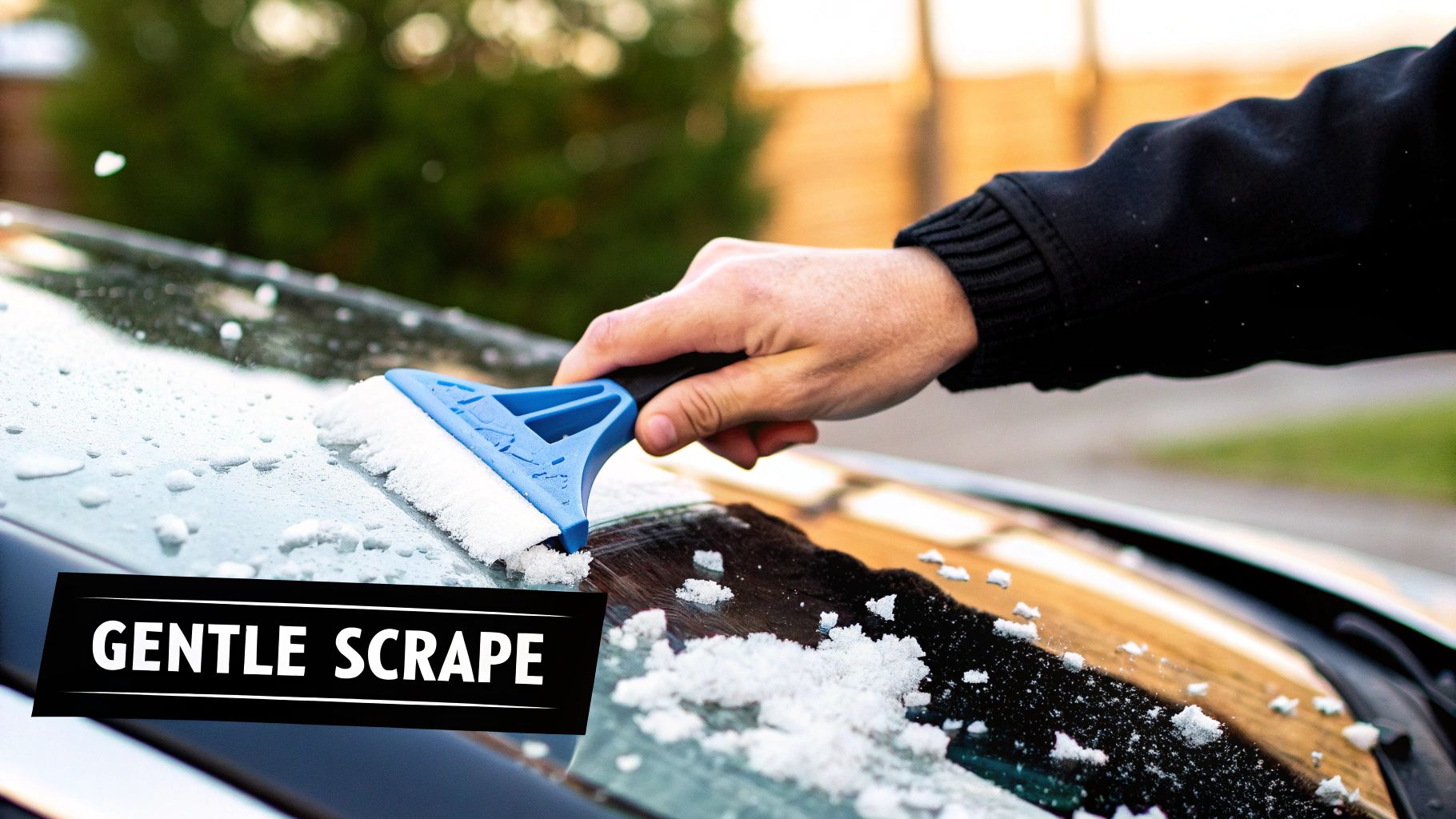
Sometimes, the ice on your windshield is just too thick for the defroster and a scraper to handle alone. When you’re short on time and facing a stubborn sheet of ice, a commercial de-icing spray can feel like a secret weapon.
These products are designed to work fast. The magic ingredient is usually an alcohol, like isopropyl or ethylene glycol, which have freezing points far below that of water. When you spray it on, the alcohol immediately starts dissolving the ice, turning it into a watery slush you can easily clear with your wipers.
Creating a Safe DIY De-Icer
No store-bought spray? No problem. You can mix up an incredibly effective de-icer with a couple of things you probably already have at home. This is my go-to backup plan, and it has saved me on more than one frantic morning.
Here's the simple, car-safe recipe:
Get a clean spray bottle.
Fill it with two parts isopropyl (rubbing) alcohol and one part lukewarm water. A 70% alcohol concentration is perfect.
Give it a gentle shake to mix.
Spray this solution generously over the frosted glass. You'll see it start to work in under a minute. The alcohol melts the ice on contact, and you can just wipe away the mess with a soft brush or your wipers.
This DIY spray is a game-changer when you're in a hurry. It works instantly, often faster than waiting for your car's heater to get warm enough to do the job. It’s the perfect answer for getting frost off your windshield without the wait.
Dangerous Frost Removal Myths You Should Never Try
The internet is full of "quick hacks" for just about everything, but when it comes to your car, bad advice can lead to expensive damage. It’s just as important to know what not to do.
Steer clear of these two widespread and destructive myths:
Never Use Hot Water: Pouring hot water on a frozen windshield is a recipe for disaster. The sudden, drastic temperature change—a phenomenon called thermal shock—can cause the glass to crack or even shatter on the spot. You'll turn a five-minute inconvenience into a several-hundred-dollar windshield replacement.
Avoid Salt at All Costs: While cities use rock salt on roads, you should never put it on your vehicle. Salt is incredibly corrosive. It will pit your paint, rust any exposed metal, and ruin the rubber on your wiper blades.
Before you start mixing up a homemade de-icing solution, it's crucial to understand which household items are safe for your vehicle and which could cause irreversible damage.
DIY De-Icer Safety Check
Ingredient | Safe for Glass & Paint? | Effectiveness | Potential Risks |
|---|---|---|---|
Isopropyl Alcohol | Yes | High | None, when diluted properly. |
Lukewarm Water | Yes | Low (as a diluent) | Safe; used to create the spray mixture. |
Vinegar | No | Moderate | Acidic; can damage paint, rubber seals, and metal over time. |
Salt (NaCl) | No | High | Extremely corrosive; will cause rust and damage paint. |
Hot/Boiling Water | No | N/A | Causes thermal shock, leading to cracked or shattered glass. |
Ultimately, the goal is to clear your windshield without creating a bigger problem. Stick to proven, safe methods like the alcohol-and-water spray to protect your car's glass and finish.
How to Prevent Windshield Frost Before It Forms
Knowing how to de-ice your windshield is a must, but let's be honest—the best-case scenario is not having to do it at all. A little prep work the night before can completely change your morning routine, saving you from a frantic scraping session in the cold.
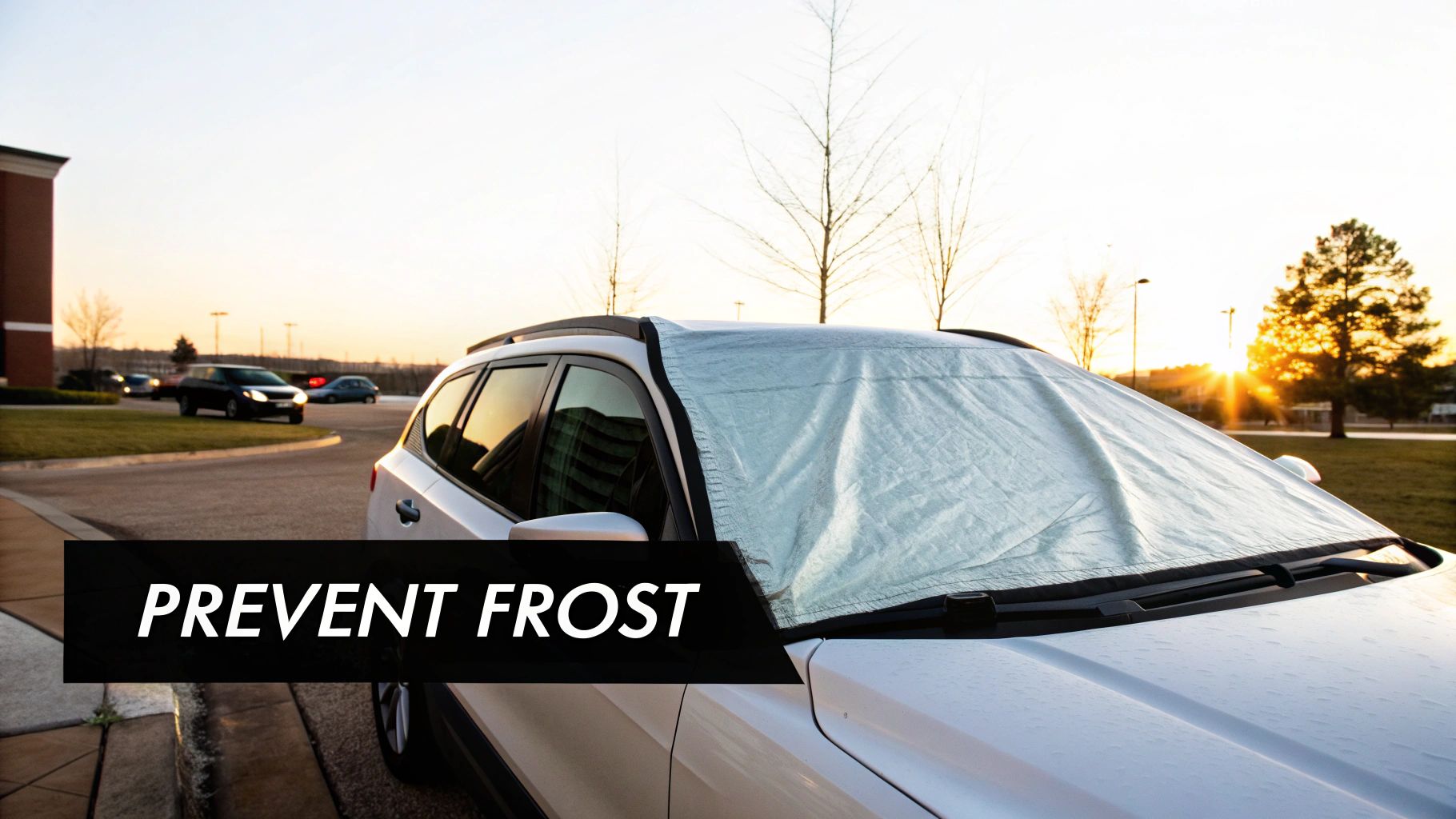
The most effective method is also the simplest: park inside. A garage or even a carport acts as a physical shield, keeping the cold, moist air from ever reaching your glass. If that’s not an option, the next best thing is a dedicated windshield cover.
These covers are a game-changer. You just lay one across your windshield, and in the morning, you peel it off, taking all the ice and frost with it. No scraping, no spraying, no waiting.
Simple Tricks for Frost Prevention
No garage or cover? No problem. You can still outsmart the frost with a few clever tricks. First, think about where you park. If you have the choice, try to park your car facing east.
It sounds almost too simple, but it works. The first rays of the morning sun will hit your windshield head-on, giving you a free, natural de-icer while you're still brewing your coffee. I've found this little habit makes a huge difference on moderately frosty days.
Another great hack involves a homemade spray solution.
Mix three parts white vinegar with one part water in a spray bottle. The night before a frost is expected, give your exterior glass a light mist. The vinegar's acidity creates a barrier on the glass that makes it much harder for ice crystals to get a grip.
Of course, frost prevention is just one piece of the puzzle. Adopting essential winter car prep strategies will keep your entire vehicle running safely when the temperatures drop.
Managing Interior Moisture
Don't forget about the inside of your car. Trapped humidity is the main culprit behind that stubborn layer of interior fog that can freeze overnight. If you've ever had to scrape both the outside and inside of your windshield, you know how frustrating it is. You can learn more about tackling this by reading our guide on how to prevent your windshield from fogging up.
Here are a few easy habits to keep your car’s interior dry:
Knock your boots: Before you even get in, bang your shoes together to knock off as much snow and slush as you can. Less moisture tracked in means less fog later.
Use all-weather floor mats: Rubber mats are a lifesaver. They contain melting snow and keep it from soaking into your carpets, where it would otherwise evaporate and fog up the glass.
Air out the cabin: This is my favorite quick tip. Right before you get out of your car for the night, crack the windows for about 30 seconds. This lets the warm, humid air inside escape and match the colder, drier air outside, drastically cutting down on morning condensation.
What to Do When Frost Removal Damages Your Glass
Even when you're careful, accidents can happen. One overzealous scrape with an ice scraper or a sudden temperature shock from hot water can turn a simple morning chore into a real headache. If you find a new chip or crack after clearing the frost, it's crucial to know what to do next before a small problem becomes a big, expensive one.
That little chip might look harmless, but it's a major weak spot. Every bump you hit and every time the temperature swings, that tiny imperfection is under stress, practically begging to spread into a long, vision-obscuring crack. Remember, your windshield does more than just keep the wind out of your face; it's a critical safety feature, providing up to 60% of your car's roof strength during a rollover.
Immediate Steps for a Damaged Windshield
If you spot fresh damage, you need to act fast.
First, do your best to keep the damaged spot clean and dry. A small piece of clear packing tape placed over the chip is a great temporary fix. It helps keep dirt and moisture out, which can ruin the chances of a clean, successful repair.
Next, try to minimize any further stress on the glass. Avoid slamming car doors and take it easy over potholes and speed bumps. Those vibrations can be all it takes for a small crack to start running across the windshield.
The most important thing you can do is call a professional auto glass technician for an assessment. Not every chip means you need a brand-new windshield, and a pro can tell you if a simple repair will do the trick. For more on this, we've put together a helpful guide on when you should replace your windshield.
Freezing rain can easily create ice layers a quarter-inch thick, and using the wrong tool or technique is a leading cause of winter glass claims. Thankfully, a mobile service like Auto Renu Auto Glass LLC in the Bay Area can come straight to your home or office. They handle repairs and replacements for all vehicles, even luxury brands like Porsche and Audi.
Getting professional help ensures the job is done right. This includes the essential ADAS recalibration that modern cars require after a windshield replacement, making sure your vehicle's advanced safety systems are working exactly as they should.
Your Top Windshield Frost Questions, Answered
Even when you know the basics, a few tricky situations always seem to pop up on those cold mornings. Let's tackle some of the most common questions I hear, making sure you have the expert take on keeping your windshield clear and damage-free.
Can I Just Use My Wipers for Light Frost?
It’s one of the biggest temptations on a frosty morning: a quick swipe of the wipers to clear a thin, powdery layer. Please, don't do it.
Think of that light frost as a layer of fine-grit sandpaper. Running your wipers across it will prematurely wear down the delicate rubber blades. Over time, this habit can even lead to micro-scratches on the glass itself.
A quick spritz of de-icer or a few minutes with the defroster is all it takes to melt that layer away safely. Your wipers will thank you by working flawlessly when you actually need them for rain or heavy snow.
Is It Okay to Leave De-Icer Spray on My Car?
For the most part, yes. Commercial de-icers and homemade solutions with isopropyl alcohol are designed to be safe for your car’s finish. The alcohol does its job and then evaporates pretty quickly.
That said, it’s a good idea to rinse your car off when you have a chance, especially if you've been using de-icer heavily all winter.
Here's the real issue: it's not the de-icer itself, but what it melts. The salty, grimy slush that runs off your windshield can settle on your paint. A quick wash helps remove that corrosive residue before it can cause any long-term problems.
What Do I Do if the Frost Is on the Inside?
Waking up to a sheet of ice on the inside of your windshield is frustrating, and it points to one thing: too much moisture trapped in your car. When you park, the warm, humid air in the cabin condenses on the freezing-cold glass and turns to ice.
The fix is simple. Turn your defroster on high and aim it at the windshield, but here's the key: press the A/C button. Your air conditioner is a fantastic dehumidifier and will pull that moisture from the air way faster than heat alone.
To keep it from happening again, try cracking your windows for 30 seconds before you get out of the car at night. This lets the damp, warm air escape and helps equalize the interior temperature with the outside, stopping condensation in its tracks.
Sometimes, despite your best efforts, a chip or crack appears. When the unexpected happens, don't let a small problem turn into a big one. For fast, reliable mobile auto glass repair and replacement in the Bay Area, you can count on Auto Renu Auto Glass LLC. Visit our website at https://www.autorenu911.com to get your service scheduled today.