Automotive glass installers: How to choose trusted pros safely
Discover how automotive glass installers are evaluated for safety and ADAS recalibration, plus essential questions to ask before you hire.
Dec 13, 2025
generated
automotive glass installers, windshield repair, adas recalibration, auto glass safety, car window replacement
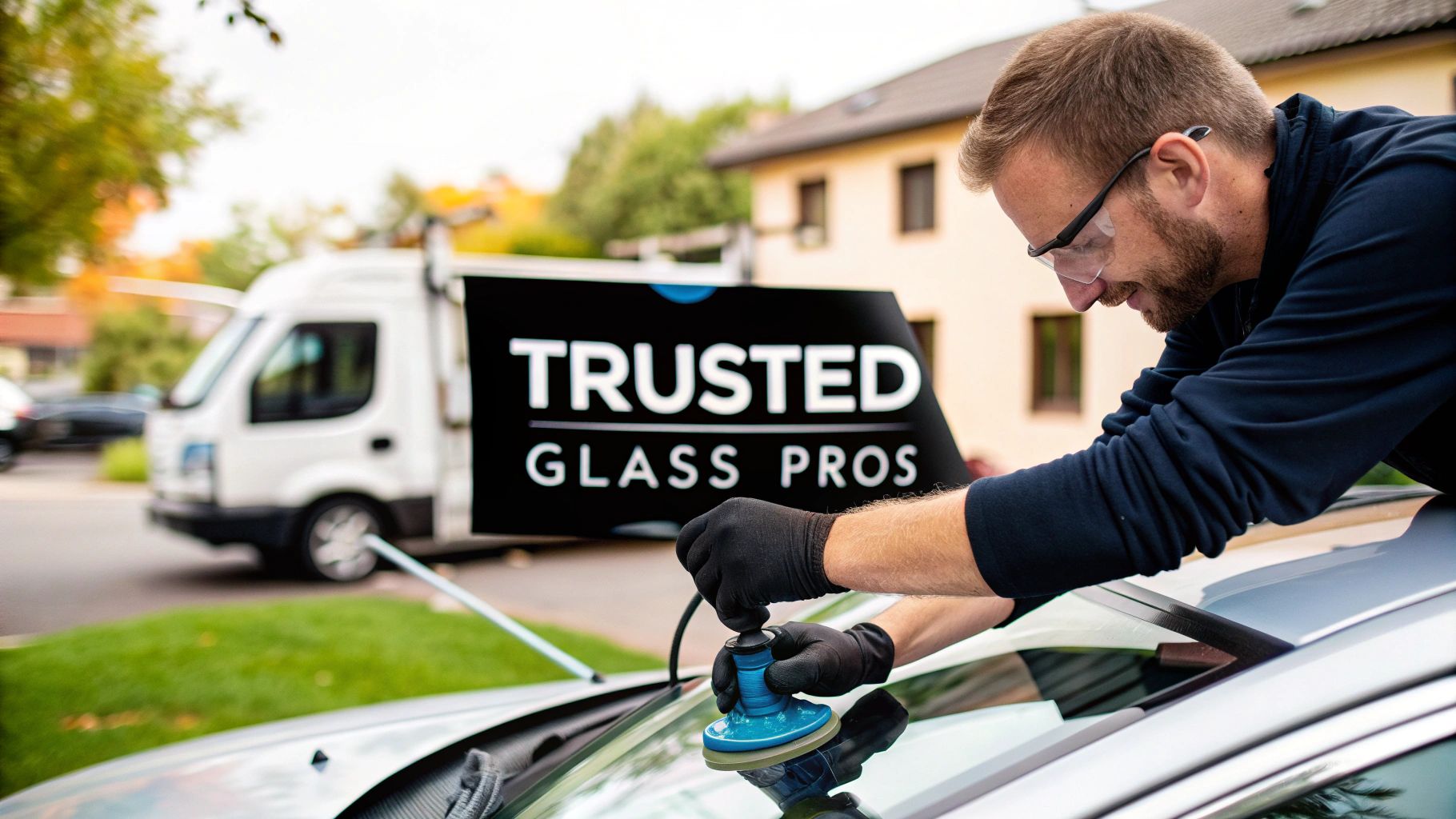
You might think of an auto glass installer as just the person who swaps out a broken windshield. But that image is seriously outdated. Today's installer is a highly skilled safety professional, someone whose work is critical to your car's structural integrity and the proper function of its advanced safety systems.
More Than Just Glass: The Real Job of an Auto Glass Installer
Let's get one thing straight: your car's windshield isn't just a window. It’s a foundational piece of your vehicle's safety cage. In a serious rollover crash, it provides up to 60% of the cabin's structural strength, preventing the roof from collapsing. It's also the backboard that your passenger-side airbag deploys against.
An installer’s job is to make sure that crucial structural bond is perfectly restored after a replacement. This isn't just about sealing out rain; it's about ensuring your car can protect you and your family exactly as its engineers designed it to.
A Technician's Toolkit: Skill, Knowledge, and Precision
The work requires a deep understanding of very different types of automotive glass and the specific techniques needed for each.
Laminated Glass: This is your windshield. It's made of a tough vinyl layer pressed between two sheets of glass. When it breaks, that inner layer holds the dangerous shards together, keeping them from flying into the cabin.
Tempered Glass: Used for side and rear windows, this glass is heat-treated to be much stronger than normal glass. If it does break, it shatters into thousands of tiny, relatively harmless pebble-like pieces.
A true professional knows exactly what glass to use where, but more importantly, they master the complex chemistry of the adhesives that bond it to your car. Applying the urethane correctly is a science, creating a seal that's both watertight and structurally sound.
Modern auto glass installation is less about brute force and more about technical finesse. The difference between a safe and an unsafe installation often comes down to the technician’s knowledge of curing times, primer application, and creating a perfect urethane bead.
This specialized skill set is a core part of the automotive repair world. In the U.S. auto glass sector, installation and repair roles account for 50% of all jobs. Within that, dedicated automotive glass installers and repairers make up a niche but vital 5%. You can dig deeper into these auto glass industry statistics on verysmoothautoglass.com.
While they may be a small group, their impact on vehicle safety is huge.
Deciding Between Windshield Repair and Full Replacement
When a rock flies up and smacks your windshield, the first question is always the same: can this be fixed, or do I need a whole new one? The decision between a quick repair and a full replacement isn’t a matter of opinion—it’s based on a clear set of safety standards that every professional installer follows.
Think of it like a trip to the dentist. A small cavity can be handled with a simple filling, saving the original tooth. That’s what a resin repair is for your windshield. An installer injects a special resin into the chip, which then cures to restore the glass's strength and clarity. It’s a targeted, effective fix that stops the damage in its tracks.
But if a tooth is severely cracked, a filling won't cut it; you need a full crown to restore its function. A full windshield replacement is the automotive version of that. When the damage is too big, in a bad spot, or has already started to spread, a patch-up job just isn't safe. The entire pane of glass has to be replaced to bring the vehicle's structural integrity back to 100%.
When Can a Windshield Be Repaired?
A repair is always the first choice if possible. It's faster, cheaper, and better for the environment. But it's only on the table under very specific conditions.
The rule of thumb most technicians use is the "dollar bill rule." If the chip or crack can be completely covered by a standard dollar bill (about six inches for a single crack), it's usually a good candidate for repair. The damage should also be a simple break, like a small bullseye or star shape.
Another key factor is how deep the damage goes. Your windshield is made of two layers of glass with a vinyl layer in between. A repairable chip only affects that outer layer. If the impact went through to the vinyl or the inner layer, it’s past the point of a simple fix.
A successful windshield repair is about more than just looks; it's about restoring structural integrity. The injected resin chemically bonds with the glass, preventing tiny fractures from spreading under the stress of temperature changes and road vibrations, which can quickly turn a small chip into an unfixable crack.
This simple flowchart shows exactly how a pro makes the call.
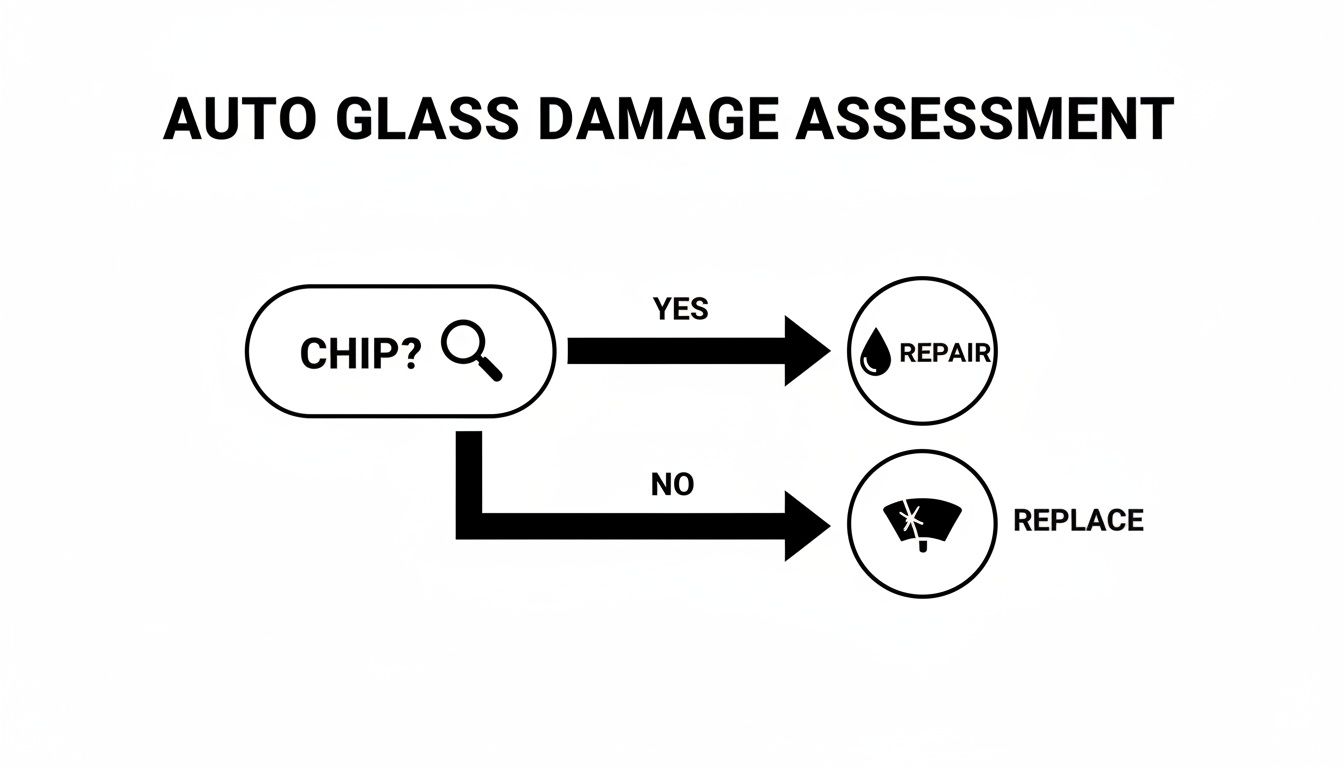
The takeaway here is that the initial assessment—a small, contained chip versus a spreading crack—is what drives the whole process.
To make things even clearer, here’s a quick guide to help you size up the damage on your own vehicle.
Windshield Repair vs Replacement Decision Guide
Factor | Repair Is Likely an Option | Replacement Is Necessary |
|---|---|---|
Size | The chip or crack is smaller than a dollar bill. | The crack is longer than 6 inches, or the chip is larger than a quarter. |
Location | The damage is outside the driver's direct line of sight. | The damage is directly in the driver's line of sight, creating a distraction. |
Depth | The impact only penetrated the outer layer of glass. | The impact has gone through to the inner vinyl layer or the second glass layer. |
Type of Damage | A simple bullseye, star, or small combination break. | Long cracks that run to the edge of the glass or complex "spiderweb" patterns. |
Quantity | There are only 1-2 small chips on the entire windshield. | There are 3 or more chips, which compromises the glass's overall strength. |
This guide is a great starting point, but always trust a certified technician to make the final call on what's safest for your car.
When Replacement Is the Only Safe Option
While repairs are convenient, some situations make a full replacement non-negotiable for your safety. An experienced installer won't even consider a repair under these circumstances.
Damage in Your Line of Sight: Any chip or crack right in front of the driver is a dealbreaker. Even the best repairs can leave a slight distortion, and anything that messes with your view of the road is a huge hazard.
Cracks on the Edge: If the damage starts at or spreads to the edge of the windshield, it has already weakened the crucial seal that bonds the glass to your car's frame. These cracks are almost guaranteed to spread and can't be reliably repaired.
Too Many Chips: A windshield with three or more chips has lost too much of its structural integrity. Even if they're small, the glass is compromised, and replacement is the only safe move.
Complex or Sprawling Damage: Long, winding cracks or that classic "spiderweb" effect from a major impact are impossible to fix with resin. Safety demands a new windshield.
The replacement process is a whole different ballgame. A technician has to carefully cut out the old windshield without damaging your car's paint. Then, they clean the frame completely, apply a special primer, and lay down a perfect bead of high-strength urethane adhesive. Finally, they set the new glass, making sure the seal is perfect and meets all factory safety specs.
You can learn more about the details by checking out the windshield repair process on our service page. Knowing what's involved makes it clear why some damage can be fixed while other types absolutely require a full replacement to keep you safe.
Why ADAS Recalibration Is a Non-Negotiable Safety Step
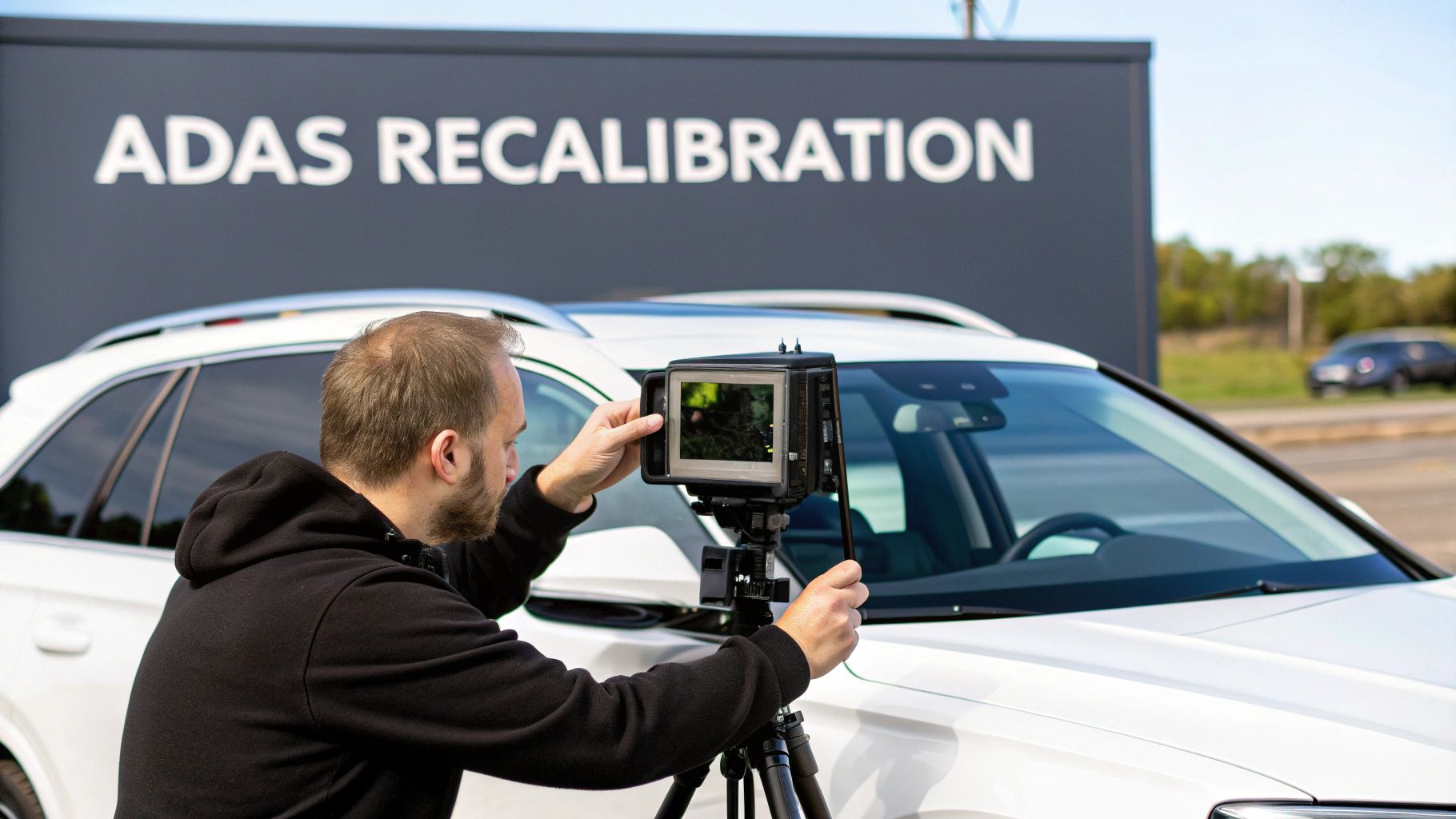
If your car can brake for you, nudge you back into your lane, or automatically adjust its speed in traffic, your windshield is doing a lot more than just keeping the bugs out. It's become the mounting point for the "eyes" of your car's Advanced Driver-Assistance Systems (ADAS).
These aren't just fancy bells and whistles; they are critical safety features that actively work to prevent accidents. Their function depends on a forward-facing camera, usually tucked away behind your rearview mirror, that constantly reads the road. It watches lane markings, tracks other cars, and spots pedestrians, feeding all that data back to your car's brain.
When a technician replaces your windshield, that camera has to be detached and then remounted onto the new glass. No matter how carefully it's done, its position will shift—even a single millimeter is enough to throw everything off. And that tiny shift can have some pretty big consequences.
The Prescription Glasses Analogy
Here’s a good way to think about it. Imagine getting a new pair of prescription glasses. The lenses are made just for you and set perfectly in the frames to align with your pupils. But what happens if those frames get bent? Your vision becomes distorted, blurry, and unreliable. You certainly wouldn't feel safe driving.
Putting in a new windshield is like bending the frames for your car's camera. Without recalibration, the camera's view is no longer accurate. This could cause your lane-keeping assist to misread the lines on the road, or worse, your automatic emergency braking might engage a split-second too late—or not at all.
Recalibration is the process of telling the camera where its new "center" is. It's like a reset button that realigns the camera's vision with the reality of the car's position, ensuring all its safety calculations are based on a perfectly true picture. Skipping it makes your high-tech safety features dangerously unpredictable.
The industry sees just how important this is. The global automotive glass market is expected to jump from $38.5 billion in 2025 to $61.0 billion by 2035. A huge piece of that growth comes from smart glass built specifically for ADAS, a segment expanding at 12.8% a year. This boom means that specialized recalibration skills are no longer optional for a good installer. You can read more about the future of automotive glass on Fact.MR.
Static vs. Dynamic Recalibration Explained
Professional automotive glass installers have two main ways of getting your car's safety vision back on track. The right method is dictated entirely by your car’s manufacturer, not by the technician's preference.
Static Recalibration: This is done in the shop. The technician parks the car in a specific spot facing a large board printed with targets and patterns. Using a diagnostic tool, they tell the ADAS camera to look at these targets and re-learn its precise position relative to the car's centerline.
Dynamic Recalibration: This one requires actually driving the car. The technician takes the vehicle out on well-marked roads with a diagnostic tool connected. By driving at certain speeds, they allow the camera to re-learn its job in a real-world setting.
Some cars only need one type, but many modern vehicles require a combination of both static and dynamic procedures to make sure every safety feature is reset perfectly. A qualified technician will never guess—they follow the manufacturer's exact, step-by-step process.
This isn't an upsell or an add-on. It's an essential part of a safe, professional windshield replacement. For a closer look at what goes into this process, check out our guide on the essentials of ADAS recalibration.
The Real Deal with Mobile Auto Glass Services
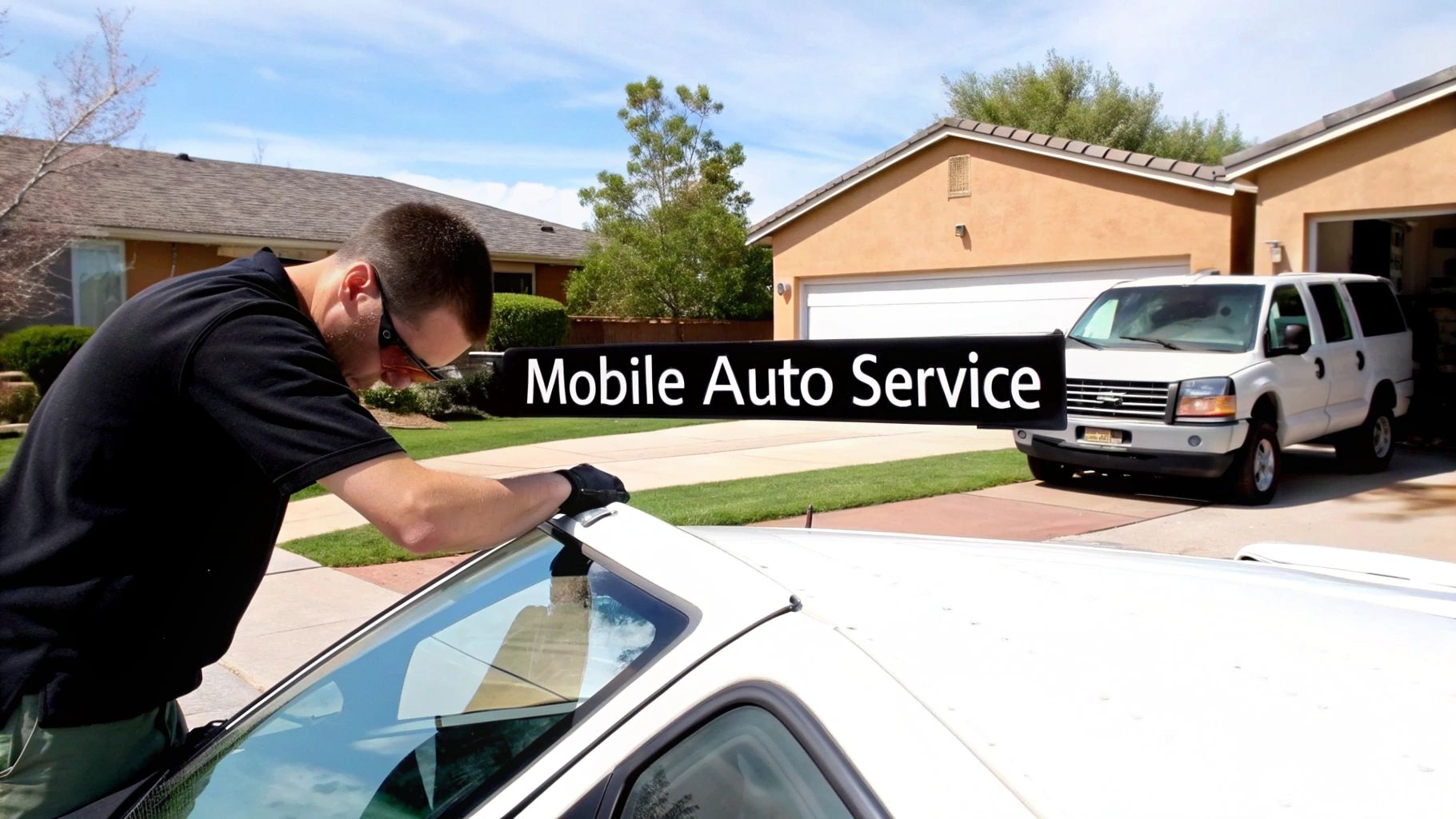
Having automotive glass installers come right to your driveway or office parking lot is a huge time-saver. No more killing half a day dropping your car off, bumming a ride, and waiting around. But the big question everyone asks is a good one: is a mobile repair just as safe and reliable as one done in a shop?
For any reputable company, the answer is an absolute yes. Think of their service van as a workshop on wheels. It’s stocked with the same professional tools, OEM-quality glass, and industry-grade urethane adhesives they'd use back at their main location. You're getting the same factory-safe seal, just without the hassle. The convenience factor is similar to other on-the-go auto solutions, like mobile car key replacement services, which also bring the workshop to you.
The only real variable isn't the quality of the technician's work—it's the environment. And that’s where a little help from you can make a huge difference.
Creating the Right Environment for a Mobile Install
A technician needs a decent workspace to do their job perfectly. It doesn't have to be a sterile operating room, but a few basics are non-negotiable for a safe, solid windshield replacement.
To set your technician up for success, they'll need:
Enough Room: They need space to fully open the car doors and walk around the vehicle carrying tools and a large, heavy piece of glass. A clear driveway or a couple of empty parking spots usually does the trick.
A Fairly Level Surface: Trying to set a windshield on a steep hill is a recipe for a bad seal. A level spot ensures the glass sits perfectly in the frame.
Shelter from the Weather: This is a big one. Rain, intense sun, or extreme cold can seriously mess with the adhesive that holds your windshield in place.
Why Weather Is a Dealbreaker
The weather is the single biggest reason a mobile appointment might need to be rescheduled. It has nothing to do with the technician's comfort—it’s all about the science behind a safe installation.
Urethane adhesive is incredibly sensitive to moisture and temperature. If it's raining, water can get into the bond and prevent the adhesive from sticking properly to the glass and the car's frame. This creates a weak point that could be catastrophic in a collision.
Likewise, very cold weather can dramatically slow down how long it takes for the urethane to cure, or "set." This pushes the "Safe Drive-Away Time" out, making it unpredictable and potentially dangerous. Professional automotive glass installers will always choose safety over speed. If the forecast looks bad, they'll work with you to reschedule or suggest bringing the car to their shop to get the job done right.
How to Vet and Choose the Right Auto Glass Installer
Picking an auto glass installer can feel like a toss-up, but going with the cheapest quote is a dangerous gamble. Your windshield isn't just a window; it's a critical safety component of your car. A shoddy installation can have catastrophic consequences, so you need to look past the price tag and dig into the details: credentials, materials, and overall professionalism.
You're not just hiring someone to swap out a piece of glass. You're entrusting them with your safety. These specialized technicians are a small but vital part of the massive U.S. automotive repair industry. While installation and maintenance jobs make up 50% of all employment in this sector, specialized glass techs account for only about 5% of that workforce. Yet, their precise work is the backbone of a $7.7 billion industry. You can discover more insights about this automotive industry breakdown on anythingresearch.com.
This just goes to show how crucial it is to vet your installer properly.
Look for Certified Professionals
The single most important thing you can do is check for certifications. It's the clearest sign that an installer is serious about safety and knows what they're doing. Think of it as the difference between a handyman and a licensed electrician—one follows a strict code for safety, and the other might be guessing.
Keep an eye out for these two gold-standard credentials:
AGSC Certification: Technicians certified by the Auto Glass Safety Council™ (AGSC) have passed some tough exams covering proper installation, safety standards, and material science. This isn't just some weekend course; it's proof of real expertise.
AGRSS™ Standard Adherence: The Auto Glass Replacement Safety Standard (AGRSS™) is the official rulebook for doing the job right. A shop that follows this standard is committed to using the correct materials and methods every single time, without fail.
A technician worth their salt will be proud of these credentials. If you don't spot them on their website or van, ask them directly. If they get dodgy or can't provide proof, that's a massive red flag.
Ask the Right Questions About Materials
Not all auto glass materials are made equal, and the products an installer chooses have a direct impact on your safety. The most important one is the urethane adhesive—that’s the industrial-strength glue holding the windshield to your car's frame. A few smart questions can tell you everything you need to know about a shop’s commitment to quality.
An installer's choice of urethane says a lot about their priorities. Premium, fast-curing urethanes cost more, but they ensure your vehicle is safe to drive much sooner. Someone who cheapens out on the glue is also cheapening out on your well-being.
Before you give them the green light, ask these questions:
"What brand of urethane do you use?" (You want to hear names like Sika, Dow, or 3M).
"What is the exact Minimum Drive-Away Time for that product?" A real pro will give you a specific answer, like "30 minutes" or "one hour." A vague "a few hours" isn't good enough.
This "drive-away time" is the minimum time needed for the urethane to cure enough to support the airbag in a collision. Driving your car before that time is up is a serious, and completely avoidable, risk.
Read Reviews and Verify Their Business Practices
Online reviews are a great way to get a feel for a company, but you have to read them with a critical eye. Look for patterns in what people are saying, not just one really great or really terrible comment. Consistent praise for professionalism, showing up on time, and leaving the car clean are all fantastic signs. You can see how much we value our customers' opinions by checking out our client reviews here.
Beyond what customers say, a well-run business is often a signal of quality work. Look for shops that are organized and easy to communicate with—companies that use effective call management solutions to stay on top of things are usually more buttoned-up all around. A business that invests in good customer service is far more likely to invest in top-tier training and materials, too.
Finally, never forget to confirm that the business is fully insured. Ask for proof of liability insurance. This is what protects you and your car if something accidentally goes wrong during the job. An uninsured installer is an unacceptable risk, no matter how low their price is.
Sorting Out Insurance and Caring for Your New Glass
Getting your new windshield installed is a huge relief, but the job isn't quite finished. Now comes the part that often feels like a hassle: handling the insurance claim and making sure you take care of the new glass properly so the seal sets up right. It might sound a bit tedious, but it's actually pretty simple when you know what to expect.
Most comprehensive auto insurance policies are surprisingly helpful when it comes to glass damage, especially for small chips. In many cases, insurers will waive your deductible completely for a windshield repair. Why? Because they'd much rather pay a small bill now to fix a chip than a much bigger one later if that chip cracks across the entire windshield. It's just smart preventative maintenance that saves everyone money in the long run.
For a full replacement, your comprehensive deductible will almost always come into play. But don't worry—a good auto glass shop makes even this part of the process a breeze.
Let Your Installer Handle the Insurance Hassle
Filing an insurance claim can feel like a part-time job, but seasoned automotive glass installers are pros at this. A great shop won't just hand you a bill; they'll step in and manage the entire claim directly with your insurance company.
Here’s what they’ll typically do for you:
Kick Off the Claim: They'll get the ball rolling by contacting your insurer and providing all the necessary details about the damage.
Handle the Paperwork: The shop takes care of submitting all the documentation, from the initial work order to the final invoice, so everything is filed correctly.
Confirm Your Coverage: They'll double-check your policy to see what's covered and tell you exactly what your out-of-pocket cost will be, if anything.
This hands-off approach is a lifesaver. All you really need to do is give them your policy number, and they handle the rest. No long phone calls with insurance agents, no confusing forms—just a quick and easy process to get you back behind the wheel.
Think of your installer as a translator between you and your insurance company. They speak the industry language of procedure codes and coverage limits, ensuring a smooth, accurate, and fast claims process so you don't have to.
Post-Replacement Care: Your Role in a Perfect Cure
Once the technician drives away, it’s your turn to play a small but crucial role. The powerful urethane adhesive that bonds your windshield to the car's frame needs time to cure properly. For the first 24 to 48 hours, following a few simple rules is non-negotiable for a safe, permanent seal.
Skipping these steps can seriously compromise the installation. You could end up with annoying wind noise, a leaky windshield, or worse—a complete failure of the glass in a collision.
Immediate Aftercare Dos and Don'ts:
Don't Drive Immediately: Your installer will give you a specific Safe Drive-Away Time (SDAT). Stick to it. This is a critical safety instruction.
Do Leave a Window Cracked: Crack a window about an inch. This simple trick prevents a sudden change in air pressure when you shut a door, which could otherwise put stress on the fresh, soft seal.
Don't Slam Doors: For the first day or so, be gentle. Slamming a door can create a jolt of air pressure inside the car that can weaken the new bond.
Don't Use a High-Pressure Car Wash: Steer clear of automatic car washes for at least two days. The high-pressure water jets can easily damage the still-curing urethane.
Do Remove Any Tape After 24 Hours: Installers often use a special retention tape to keep the moldings secure while the adhesive sets. You can safely peel this off after a full day has passed.
These little precautions make a huge difference. They ensure the urethane cures perfectly, locking the glass in place and restoring your car's structural integrity to what it was when it rolled off the factory floor.
Your Auto Glass Questions Answered
Even with a good handle on the process, you probably still have a few questions. That's completely normal. Let's walk through some of the most common things we get asked by drivers every day.
Getting clear, straightforward answers is the best way to feel confident about your auto glass service. Think of this as a quick guide to cover the most important safety and practical points before your appointment.
How Long Until I Can Drive My Car?
The actual installation is pretty quick—usually about an hour. But the real key to your safety is the waiting period after the new glass is in. We call this the Safe Drive-Away Time (SDAT).
This is the non-negotiable window of time the powerful urethane adhesive needs to cure. It has to be strong enough to keep your windshield in place and support the airbag if you were in an accident. Depending on the adhesive we use and the day's weather (temperature and humidity play a big role), this can be anywhere from 30 minutes to a few hours. Your technician will give you the exact time. Never, ever drive the car before the SDAT is up.
Think of the SDAT as a safety guarantee. Respecting this cure time is the single most important step you can take after a replacement to ensure the windshield performs as a critical safety device.
Will Filing a Glass Claim Raise My Insurance Premium?
This is a big one, and the answer is usually no. Most insurance companies classify auto glass damage under your policy's comprehensive coverage. These are typically seen as no-fault claims, so getting a repair or replacement does not lead to an increase in your premium.
In fact, many insurers will even waive your deductible if you're just getting a small chip repaired. Why? Because they'd much rather you fix a tiny problem now before it snakes into a huge crack that costs them (and you) a lot more for a full replacement. It’s always a good idea to double-check the specifics with your insurance agent, but you can generally file a glass claim with confidence.
What Is the Difference Between OEM and OEE Glass?
Knowing the lingo helps you understand exactly what you're getting. When it comes to auto glass, you'll mainly hear about two types: OEM and OEE.
OEM (Original Equipment Manufacturer): This is the exact same glass that was installed in your car on the assembly line. It’s made by the same company and even has your car brand’s logo on it.
OEE (Original Equipment Equivalent): This glass is made by a different manufacturer, but it's built to meet the very same strict standards for safety, quality, and fit as the OEM version.
Any reputable installer will use high-quality OEE or OEM glass. Anything less simply won't fit right and, more importantly, won't be safe.
At Auto Renu Auto Glass LLC, we believe in answering all your questions with honesty and expertise. For mobile windshield replacement, ADAS recalibration, or professional window tinting in the Bay Area, we bring dealership-quality service directly to you. Book your mobile service with Auto Renu Auto Glass LLC today!