Repair Long Crack in Windshield: repair long crack in windshield DIY Guide
Discover how to repair long crack in windshield with our expert guide. Compare DIY vs pro, costs, insurance impact, and prevention tips to decide.
Dec 12, 2025
generated
repair long crack in windshield, windshield crack repair, auto glass repair, long crack repair, windshield care
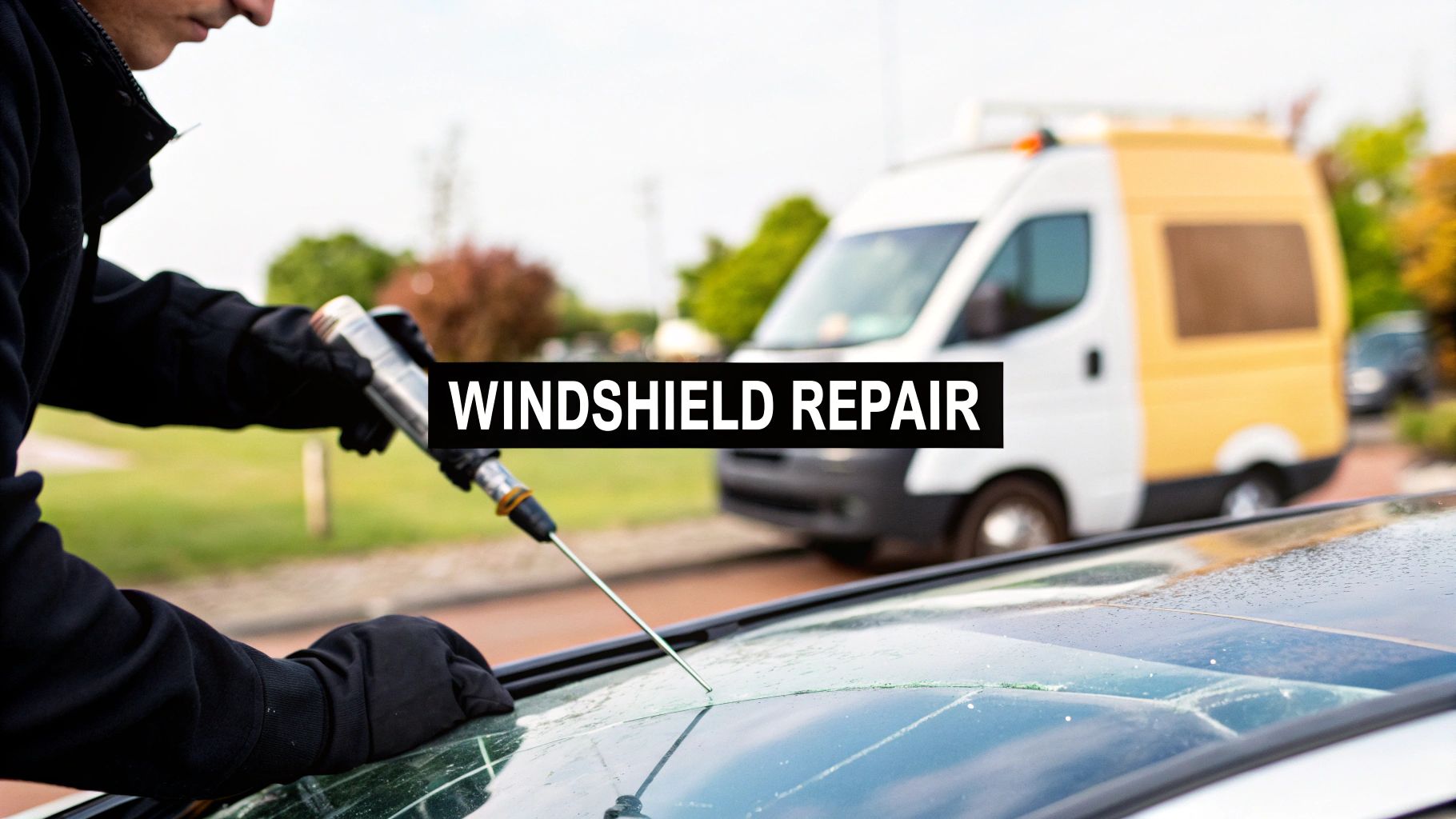
Seeing a long crack snake across your windshield is a heart-sinking moment. But it doesn't always mean you're on the hook for an expensive replacement. A surprising number of long cracks—even those up to 18 inches—can be professionally repaired, saving you a ton of hassle and money. The key is acting fast before dirt and grime settle in.
Assessing a Long Windshield Crack: What to Know First
That line staring back at you is more than just a visual distraction; it's a serious safety concern. Your windshield is a key structural component, providing up to 60% of your vehicle's strength in a rollover accident. A long crack seriously weakens that support system.
Before you jump to conclusions about needing a new windshield, let’s walk through a proper assessment. A few key details will tell you everything you need to know to make the right call.
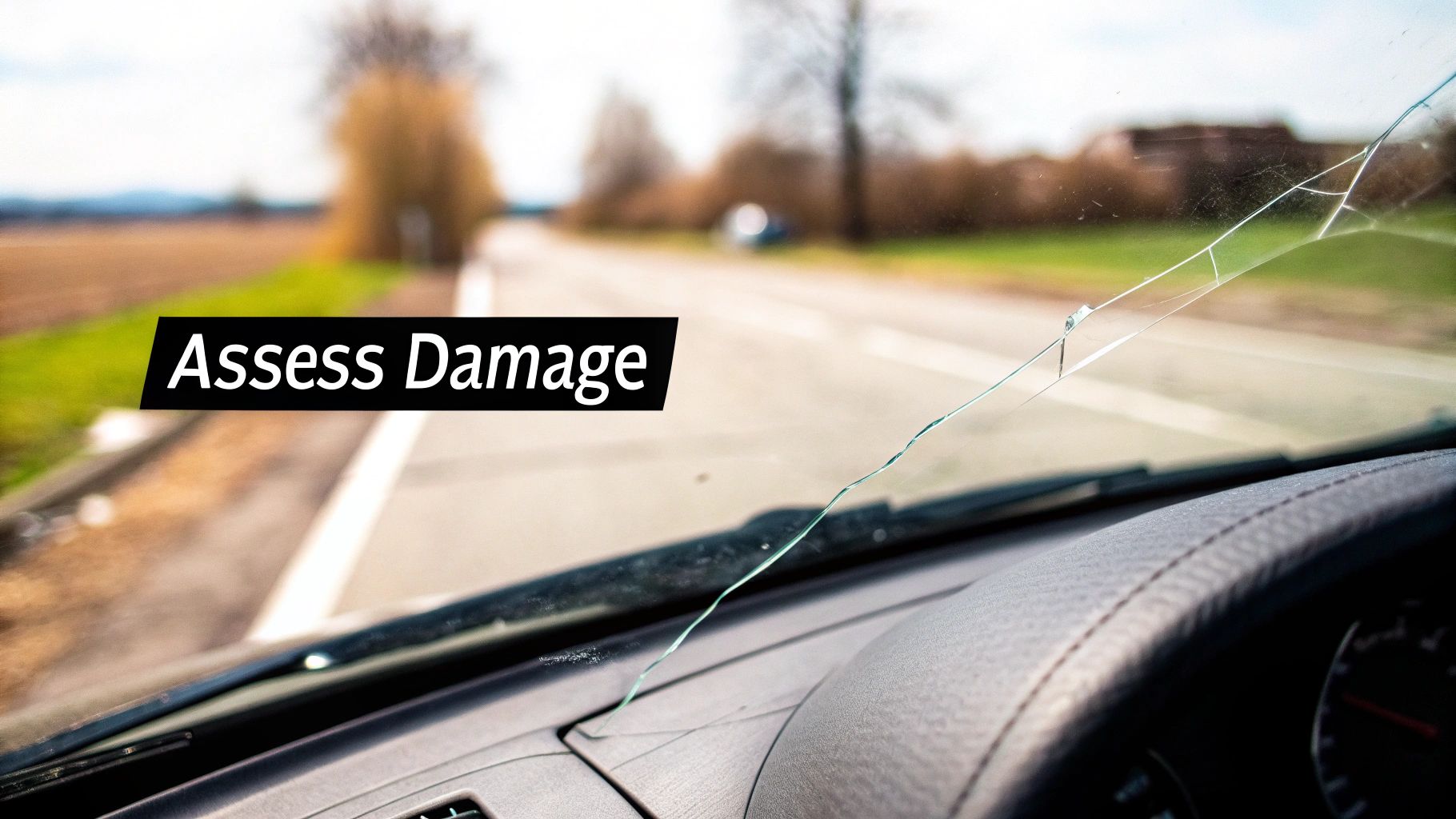
Forget the old "dollar bill rule"—that’s for tiny rock chips, not a crack that's decided to go for a journey. For a long, linear crack, two things matter most right away: where it is and what it looks like.
Crack Location: The position on the glass is a huge factor. If the crack runs all the way to the edge of the windshield, it’s a problem. That edge is a high-stress area, and a crack there will almost certainly keep spreading. Damage smack in the driver's line of sight is also a red flag, as even a perfect repair can leave a slight distortion.
Crack Type: Is it a single, clean line? Or is it a more chaotic pattern with little legs branching off, like a starburst? A clean, single line is always the best candidate for a successful repair.
This flowchart gives you a good visual guide for thinking through the repair vs. replacement decision.
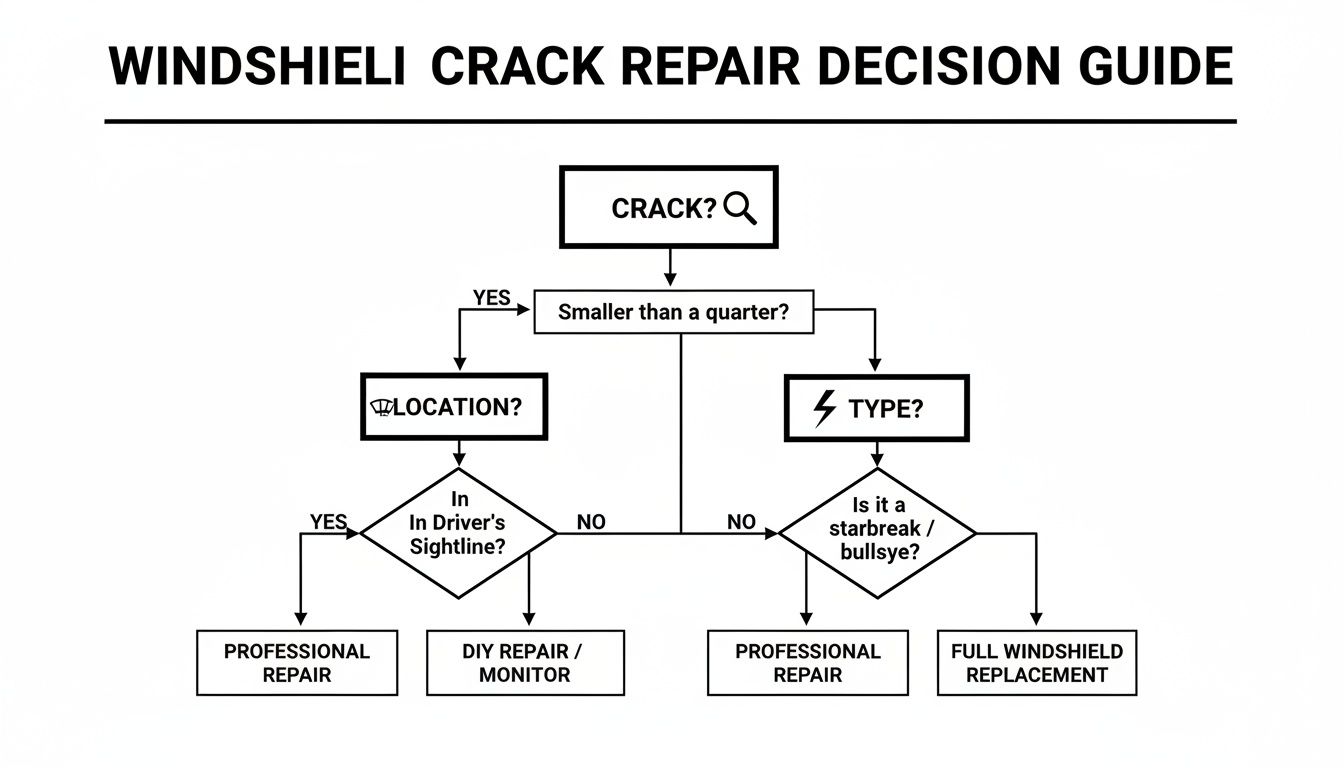
As you can see, it's never just about size. It's a combination of factors that determines the best course of action.
Why Time Is Not on Your Side
Think of a fresh crack as an open wound. The longer you leave it, the more dirt, moisture, and road grime will work their way deep inside the glass. This contamination is the enemy of a good repair, preventing the specialized resin from bonding correctly and leaving you with a weak, visible fix.
I see it all the time—drivers who wait a week to call. That delay is often the single biggest mistake. A clean, fresh crack can be filled so well that it becomes nearly invisible. A contaminated one? You're likely looking at a full replacement.
And it gets worse. Everyday driving is actively working against you. Hitting a pothole, temperature swings from a hot afternoon to a cool evening, or even just shutting your car door a bit too hard can send stress through the glass, encouraging that crack to grow. I've seen a six-inch crack turn into a twelve-inch monster overnight.
Evaluating the Crack's Length and Depth
While technology has come a long way, there are still limits. Generally, a single crack up to 18 inches long can be a good candidate for a professional repair. But the depth is just as important.
Your windshield is made of two layers of glass with a plastic interlayer. If the crack has gone through both layers, a replacement is the only safe option. You can do a quick check yourself: gently run your fingernail over the crack on the inside of the windshield. If you can feel a groove, the damage is too deep for a repair.
For a long crack over 6 inches, a technician using a modern, high-pressure injection system can often get a fantastic result, but only if they get to it within about 72 hours. Acting quickly can be the difference between a simple repair and a full replacement that could run anywhere from $300 to $1,500. It's a massive industry, with the North American windshield service market valued at over $4 billion annually, as detailed in this windshield service market report.
Quick Guide to Long Crack Repairability
Sometimes you just need a quick checklist. Use this table to get a feel for whether your windshield crack is a good candidate for repair or if you should start preparing for a replacement.
Factor | Good Candidate for Repair | Likely Needs Replacement |
|---|---|---|
Length | Under 18 inches (for a single line) | Over 18 inches or multiple long cracks |
Location | Away from the edges and out of the driver's direct line of sight | Reaches the edge of the windshield or obstructs the driver's view |
Type | A single, clean line or "bullseye" chip | Complex starbursts, multiple cracks, or crushed glass |
Depth | Damage is only on the outer layer of glass | Crack can be felt on the inside surface of the windshield |
Contamination | Crack is fresh, clean, and free of debris (under 72 hours old) | Crack is visibly dirty, full of moisture, or has been left for weeks |
This isn't a substitute for a professional opinion, but it gives you a solid starting point for understanding what you're dealing with. If your crack falls mostly in the "Good Candidate" column, your chances of a successful, money-saving repair are excellent.
DIY Kits vs. Professional Repair Services
So you've got a long, ugly crack staring back at you from your windshield. Your first thought might be to head to the auto parts store. You've seen those DIY repair kits on the shelf—they're cheap, they look simple, and they promise a quick fix. And for a tiny, fresh rock chip, they can sometimes be a decent temporary patch.
But when you need to repair a long crack in your windshield, you’re dealing with a completely different animal. This isn’t just a cosmetic issue; it's a structural failure in a critical piece of your car's safety equipment.
The Pro’s Edge: Tools and Technique Make All the Difference
Let's be clear: a professional repair isn't just a fancier version of a DIY kit. It's a fundamentally different process.
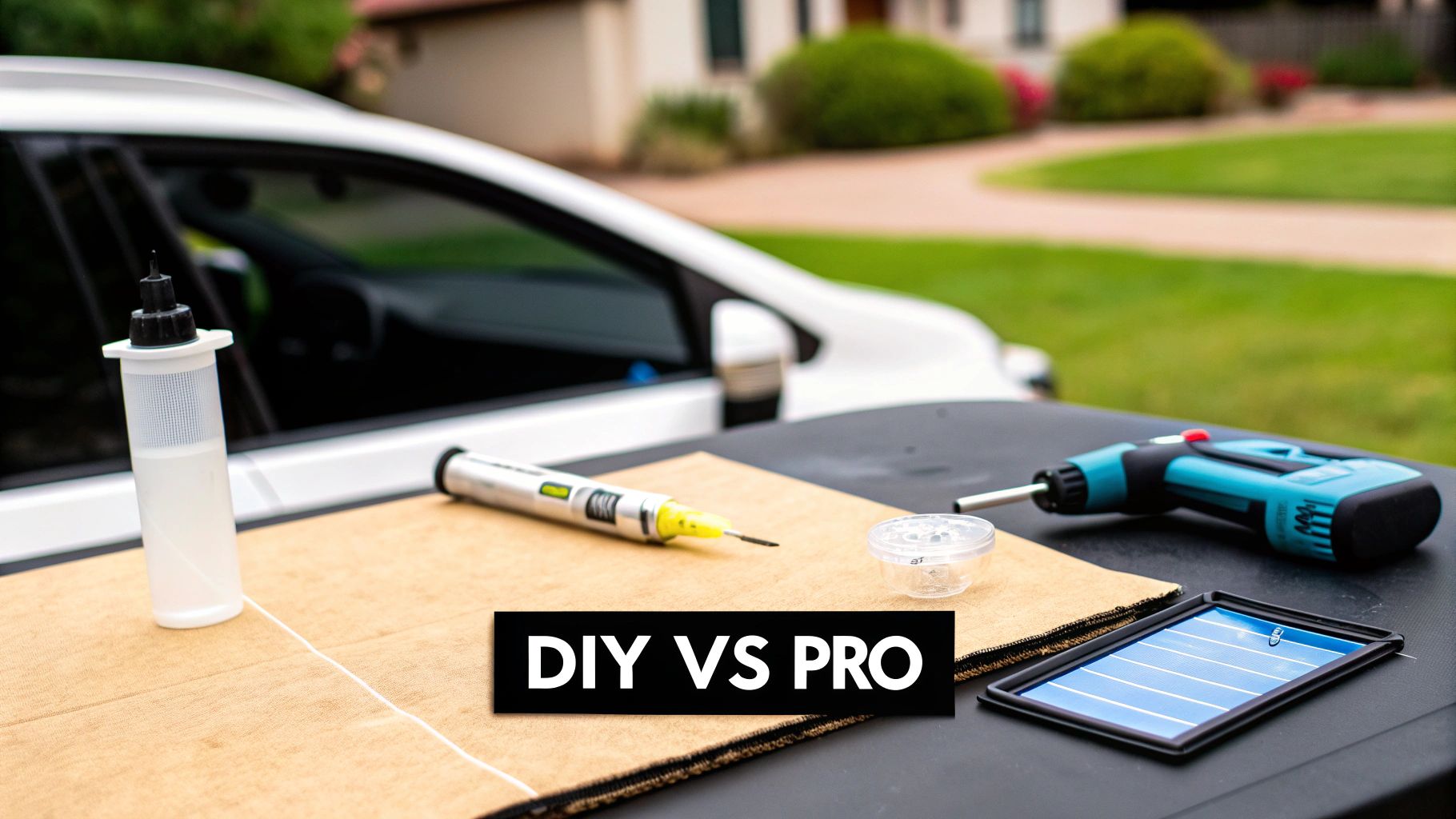
A store-bought kit gives you a small tube of resin and a basic applicator. You're essentially just dripping a glue-like substance into the crack and hoping for the best.
A professional technician, on the other hand, comes armed with specialized equipment. We use a vacuum injector that first sucks every bit of air and moisture out of the crack. This step is absolutely critical. Without it, you're trapping contaminants inside, which guarantees a weak repair that will fail.
Only after a vacuum is pulled do we inject a high-quality, lab-tested resin under pressure. This forces the resin into every microscopic fissure along the entire length of the crack, something a simple DIY applicator could never do. The final step is curing the repair with a specific wavelength of UV light, which hardens the resin instantly into a bond that’s often stronger than the glass around it.
A botched DIY repair on a long crack is often worse than doing nothing at all. You can easily trap air bubbles, use a low-grade resin that yellows, and make a future professional repair impossible. More often than not, it turns a fixable problem into a mandatory—and much more expensive—windshield replacement.
A Real-World Comparison
Picture this: a 10-inch crack is creeping across your passenger-side view.
The DIY Attempt: You try the kit. You can't get the resin to penetrate the tightest parts of the crack. The sun cures the surface, but deep inside, the resin is still liquid. The next time you hit a pothole or the temperature changes, that stress point gives way and the crack shoots another few inches. Now you have a messy-looking, failed repair that's even longer.
The Professional Fix: A technician shows up, properly cleans the area, and uses their equipment to vacuum, inject, and cure the damage. The structural integrity is restored, the crack is stopped dead in its tracks, and its appearance is typically reduced by 80-95%.
This isn't just about looks. Insurance data shows that drivers who file multiple glass claims can see their premiums jump by 15% on average. And since a long crack (over 12 inches) can reduce your field of vision by up to 20%, getting it fixed right is a matter of safety. You can see more on the automotive glass service market trends and why professional service is key.
So, Is There Ever a Place for a DIY Kit?
I'll be honest—yes, but the list is very short. A DIY kit might make sense in a couple of very specific scenarios:
For a tiny, new rock chip. If you have a bullseye smaller than a dime and it's not in your direct line of sight, a kit can act as a temporary plug to keep dirt out until you can get a pro to look at it.
As an emergency stop-gap. If a rock hits your windshield on a long road trip, hundreds of miles from a service center, using a kit might just keep it from spreading into a long crack before you get home.
For anything more, especially a crack that’s already started to run, the risk just isn’t worth the small upfront savings. The professional https://www.autorenu911.com/windshield-repair is almost always the smarter, safer, and ultimately more cost-effective choice.
What to Expect During a Professional Service
So, you've decided to call in a pro to repair a long crack in your windshield. Smart move. But what actually happens when the technician shows up? Knowing the process from start to finish not only demystifies the service but also helps you spot the difference between a high-quality job and a quick-and-dirty one.
Whether your windshield is getting a careful repair or a full-on replacement, a seasoned technician follows a very specific procedure. It’s all about ensuring your safety and making sure the fix lasts. Let's pull back the curtain on what you should expect.
The Anatomy of a Professional Crack Repair
Fixing a long crack isn't just about squirting some glue in and calling it a day. It’s a precise craft that combines specialized tools with a deep understanding of how glass behaves under stress. A certified technician's process is designed to restore the windshield's structural integrity.
Here's how it usually goes down:
Prep is Everything: First, the technician will meticulously clean the crack and the surrounding glass. Every bit of dirt, moisture, and road grime has to go. If not, the resin won't bond properly, and the repair is bound to fail. This step is non-negotiable.
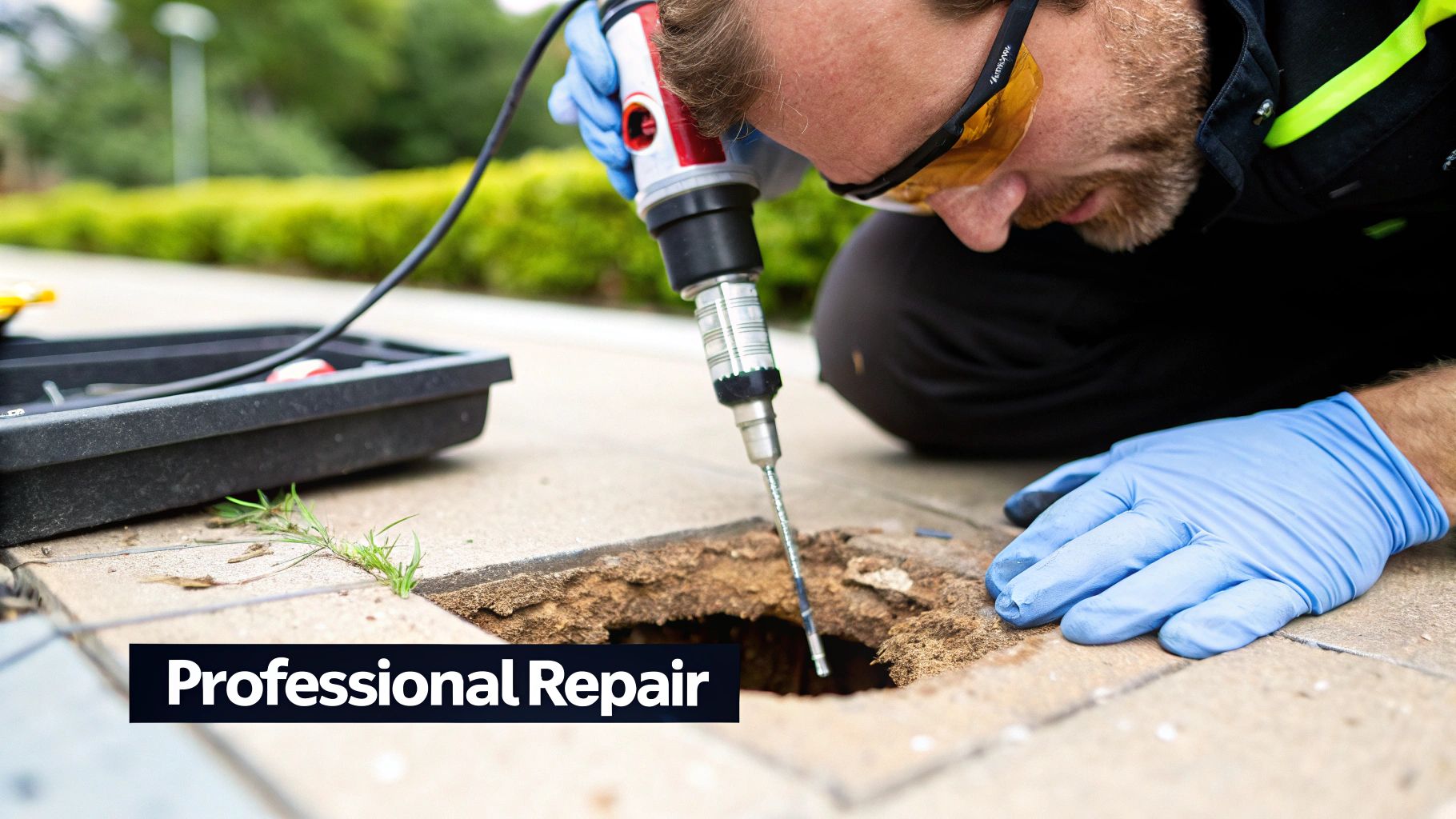
Stopping the Spread: To keep the crack from running any further during the repair, the tech will often drill a tiny, nearly invisible hole right at the tip. This little "bullseye" acts as a stop-gap and gives the resin a perfect entry point into the tightest part of the fissure.
With the prep work done, the real repair begins. Using a specialized injector, the technician creates a vacuum over the crack, pulling every last bit of air out. This creates a clean channel for the liquid acrylic resin, which is then forced in under high pressure to fill every nook and cranny.
To finish, a handheld UV light is used to cure and harden the resin. In just a few minutes, it creates a powerful bond that makes the windshield strong again.
When Replacement Is the Only Option
Sometimes, a crack is just too severe for a repair, and the only safe route is a full replacement. This is an entirely different beast, requiring just as much precision to ensure your vehicle’s safety systems are not compromised.
A true professional will begin by draping protective coverings over your car’s interior and exterior paint. They then carefully cut through the old urethane seal to remove the damaged windshield. Once it's out, the vehicle's frame gets a thorough cleaning to remove every trace of the old adhesive before being primed. This ensures the new seal will be completely watertight and secure.
A common mistake amateurs make is rushing the prep work on the vehicle frame. Any leftover adhesive or debris can create weak spots in the new seal, leading to leaks, wind noise, and a dangerously insecure windshield. A true professional spends as much time on preparation as they do on installation.
With the frame prepped, a line of powerful, industry-grade urethane adhesive is applied. The new windshield is then expertly lowered into place using guide tools for perfect alignment. Finally, the technician will clean up the new glass and reattach your rearview mirror, toll tags, and any other hardware.
The Critical Importance of Curing Time
After a replacement, you can't just hop in and drive off. That urethane adhesive needs time to cure and form a rock-solid, structural bond. Driving too soon can shift the glass, break the seal, and in a worst-case scenario, the windshield could detach in an accident.
Your technician will give you a specific Safe Drive-Away Time (SDAT). This is usually somewhere between 30 minutes to a few hours, depending on the adhesive and the weather. For your own safety, follow this instruction to the letter.
Choosing repair over replacement when possible is a smart financial move, especially as the global automotive glass replacement market is expected to grow from $35 billion in 2025 to a staggering $72.3 billion by 2034. On top of that, if your car has modern driver-assistance features, a replacement means you'll also need to get those systems recalibrated. You can learn more about that process in our guide on ADAS windshield calibration.
The Hidden Costs of Windshield Replacement
When you're staring at a long crack in your windshield, the first question that usually comes to mind is, "What's this going to cost me?" While replacing the whole thing might seem like the most thorough solution, it often comes with a surprising number of hidden costs, especially in modern cars. The days of windshields being simple pieces of glass are long behind us.
Today's windshields are essentially the nerve center for your vehicle's safety systems. They house the cameras and sensors for your Advanced Driver-Assistance Systems (ADAS), which manage critical functions you rely on every day.
Lane-Keeping Assist: That little nudge that keeps you from drifting.
Automatic Emergency Braking: The system that hits the brakes when a collision is imminent.
Adaptive Cruise Control: What keeps you a safe distance from the car ahead on the highway.
When a technician pulls out the old windshield, those meticulously placed systems get disturbed. That's why a simple replacement job suddenly gets a lot more complicated—and expensive.
Why ADAS Recalibration Is Non-Negotiable
Trying to save a few bucks by skipping the ADAS recalibration after a replacement isn't just cutting a corner; it's a massive safety risk. If a camera is off by even a single millimeter, your car could misjudge the lines on the road or the distance to the vehicle in front of you. This could mean your emergency braking system fails to engage when you need it most, or worse, engages when it shouldn't.
This isn't a rare occurrence, either. In 2022 alone, an estimated 3.8 million windshield replacements in the U.S. required ADAS recalibration. That added up to a staggering $959 million in extra maintenance costs for car owners nationwide. When you choose to repair a long crack instead of replacing the glass, you avoid this whole process, keeping your factory-calibrated safety systems untouched.
A windshield replacement on a modern car isn't complete until ADAS recalibration is done. An uncalibrated system can be more dangerous than having no system at all, as it gives a false sense of security.
If replacement is truly the only path forward, you absolutely must find a shop that is certified and equipped to handle this precise recalibration. Our team is fully trained to manage these complexities. You can learn about the specifics of our process right here: https://www.autorenu911.com/windshield-replacement.
Navigating Insurance Deductibles and Coverage
Insurance is another area where unexpected costs can pop up. It’s no secret that insurance companies would much rather you repair your windshield than replace it—it saves them a ton of money. To encourage this, they often waive the deductible entirely for a repair.
But for a full replacement? That’s a different story. Your deductible almost always comes into play. If you have a $500 deductible, you're paying that full amount out of your own pocket before your insurance kicks in a dime. A professional repair, on the other hand, could cost you absolutely nothing.
To give you a clearer picture, let's break down how these costs and insurance factors stack up.
Cost and Insurance Breakdown: Repair vs. Replacement
Consideration | Professional Repair | Full Replacement |
|---|---|---|
Out-of-Pocket Cost | Low, often $0 with insurance. | High, typically $250-$1,000+. |
Insurance Deductible | Usually waived by insurers. | Almost always applies. |
ADAS Recalibration Fee | N/A (system isn't disturbed). | Often an extra $250-$500+. |
Impact on Premiums | Unlikely to affect your rates. | Could be seen as a claim, potentially raising rates. |
As you can see, the financial argument for repairing a long crack is pretty compelling.
Before you make a final call, grab your phone and ask your insurance agent these three specific questions:
Is my deductible completely waived if I get my windshield repaired?
Does my policy cover the cost of ADAS recalibration if a replacement is needed?
Do I have a separate glass deductible, or does my standard comprehensive deductible apply?
Getting clear answers can save you from a major financial headache. And if your crack was the result of a nasty storm, this hailstorm insurance guide can offer some valuable tips for navigating your claim. Once you weigh all these hidden factors, it becomes obvious why repairing that long crack is often the smartest, most cost-effective move.
Caring for Your Windshield After a Repair
Getting that long, ugly crack in your windshield fixed is a great feeling. It’s not just about looks; it’s about restoring the structural integrity of your vehicle and getting your clear line of sight back. But don't race off just yet—the work isn't quite done.
The specialized resin used in the repair needs time to cure properly. The first 24 to 48 hours are absolutely critical. This is when the resin fully hardens and creates a powerful, lasting bond with the glass. How you treat your car during this brief window can make or break the repair's long-term success.
The First 48 Hours: Handle With Care
Think of the fresh repair as a healing wound on your car. It’s vulnerable and needs to be protected from unnecessary stress while it sets. Big swings in pressure or temperature can easily weaken the bond before it’s had a chance to reach its full strength.
To give your repair the best shot at lasting, just follow a few simple rules for the next couple of days:
Steer Clear of High-Pressure Car Washes: Those powerful water jets are the enemy of a fresh repair. They can force moisture into the still-curing resin, which is the last thing you want. If your car is desperate for a wash, stick to a gentle hand wash for now.
Don't Slam the Doors: It might seem unrelated, but slamming a car door sends a significant shockwave through the vehicle's frame, and that vibration travels right to the windshield. Close your doors gently to avoid putting any undue stress on the glass.
Park Smart: If you can, keep the car in a garage or at least in a shaded spot. Intense, direct sunlight can superheat the glass, and a sudden cold front can make it contract. The goal is to keep the temperature as stable as possible while the resin cures.
These are just small, temporary adjustments, but they pay huge dividends in the durability of the fix.
Long-Term Habits to Prevent the Next Crack
Once you're past that initial 48-hour curing period, the game shifts from protection to prevention. You've already been through the hassle of one long crack; you definitely don't want to do it again. The good news is that most windshield damage is avoidable with a bit of foresight and some good driving habits.
The single best thing you can do is maintain a safe following distance, especially on the highway or on gravel roads. Hanging back from big trucks and construction vehicles is your best defense against flying rocks and debris. It sounds simple, but it’s incredibly effective.
It's always cheaper and less of a headache to prevent a new crack than to fix one. Simple things, like swapping out old wiper blades or using your defroster correctly, are your best line of defense against future damage.
Also, be mindful of where you leave your car. Parking under trees with heavy, dead branches or right next to an active construction site is just asking for trouble. A little situational awareness goes a long way.
Seasonal Windshield Maintenance and Tips
Your windshield faces a different set of challenges with each season. Being proactive with your care can help you avoid any nasty surprises.
Winter Woes: Whatever you do, never pour hot water on an icy windshield. The sudden, extreme temperature shock is a classic way to cause a stress crack out of nowhere. Your best bet is to use your car’s defroster on a low-to-medium setting and just give it the time it needs to work its magic.
Summer Stress: The same principle applies in reverse on a blistering summer day. Avoid the temptation to blast the A/C on its coldest setting directly at the superheated glass. Let the cabin cool down a bit more gradually to prevent thermal shock, which can weaken the glass over time.
Don't forget about your wiper blades, either. Worn-out wipers with frayed rubber or exposed metal bits can easily etch fine scratches into your windshield. These scratches don't just obstruct your view; they create weak points where a chip or crack is far more likely to start. Plan on replacing your wipers every 6-12 months.
As cars get smarter, so do their windshields. The number of connected cars is expected to hit 765 million by 2025, and many of them will have advanced technology embedded directly into the glass. This trend makes high-quality, professional repairs more important than ever. For a deeper dive into these industry shifts, you can check out this windshield service industry report.
Got a Long Windshield Crack? We've Got Answers.
When a long crack snakes its way across your windshield, it’s natural to have a ton of questions. Can this even be fixed? Am I taking a big risk by driving? What’s it going to look like afterward? Getting straight answers is the first step to making a smart decision for your car and your budget.
Let’s tackle some of the most common worries drivers have when they’re staring down that intimidating line in their glass.
How Long Is Too Long for a Windshield Crack Repair?
This is usually the first thing everyone wants to know. While there isn't a single, magic number that applies to every situation, modern repair tech has come a very long way. A skilled technician can often successfully repair a single, clean crack up to 18 inches long—sometimes even longer.
But honestly, the length itself is often less important than the crack's specific condition and where it is on the glass.
Is it fresh? A brand-new crack is the perfect candidate for repair. An older one that’s been collecting dirt, moisture, and road debris is a much tougher job because the gunk prevents the repair resin from bonding correctly.
Where did it end? If the crack runs all the way to the edge of the windshield, that almost always means you're looking at a replacement. The edge is a high-stress point, and a crack reaching it has already compromised the glass's integrity.
The bottom line? If the damage is a clean line and you get it looked at quickly, the length might not be the dealbreaker you think it is.
Is It Safe to Drive with a Long Crack?
I'll be blunt: driving with a long crack in your windshield is a gamble you really shouldn't take. The danger works on two levels—it messes with your vision and, more seriously, it weakens the entire structure of your car.
First, there’s the obvious visibility issue. The crack itself can be a major distraction. When the sun hits it just right, or at night with oncoming headlights, it can create a blinding glare right in your line of sight. Throw in some rain, and that distorted view of the road becomes even more dangerous.
Here's what most people don't realize: your windshield provides up to 60% of your vehicle's structural strength in a rollover. A long crack drastically weakens that support. In a serious accident, it means the roof is far more likely to collapse. Your windshield is a critical safety component, and a long crack effectively takes it out of commission.
Putting off a repair isn’t just a cosmetic problem—it’s a serious safety risk.
Will a Repaired Crack Be Completely Invisible?
Let's set the right expectation here. The main goals of a professional repair are to restore the windshield's strength and stop the crack from spreading. While making it look better is a huge part of the process, a repaired crack will never be 100% invisible.
A high-quality repair from an experienced technician should make the damage about 80-95% less noticeable. From behind the wheel, you might see a faint, watery line or a tiny blemish that doesn't distract you. The final result really depends on how clean the crack was to begin with and the skill of the person doing the work.
Ultimately, you're paying for a safe, strong, and permanent solution. The fact that the crack nearly disappears is just the cherry on top, giving you a clear, unobstructed view of the road again.
When you need a fast, reliable, and professional opinion on your windshield damage, Auto Renu Auto Glass LLC comes to you. Our mobile service ensures you get expert advice and dealership-quality repairs right at your home or office. Don’t let a long crack compromise your safety—get it fixed right. Get a Professional Assessment from Auto Renu