A Guide to Car Glass Replacement
Your expert guide to car glass replacement. Learn the process, when to repair vs. replace, how ADAS recalibration works, and how to handle costs & insurance.
Nov 16, 2025
generated
car glass replacement, windshield replacement, auto glass service, ADAS recalibration
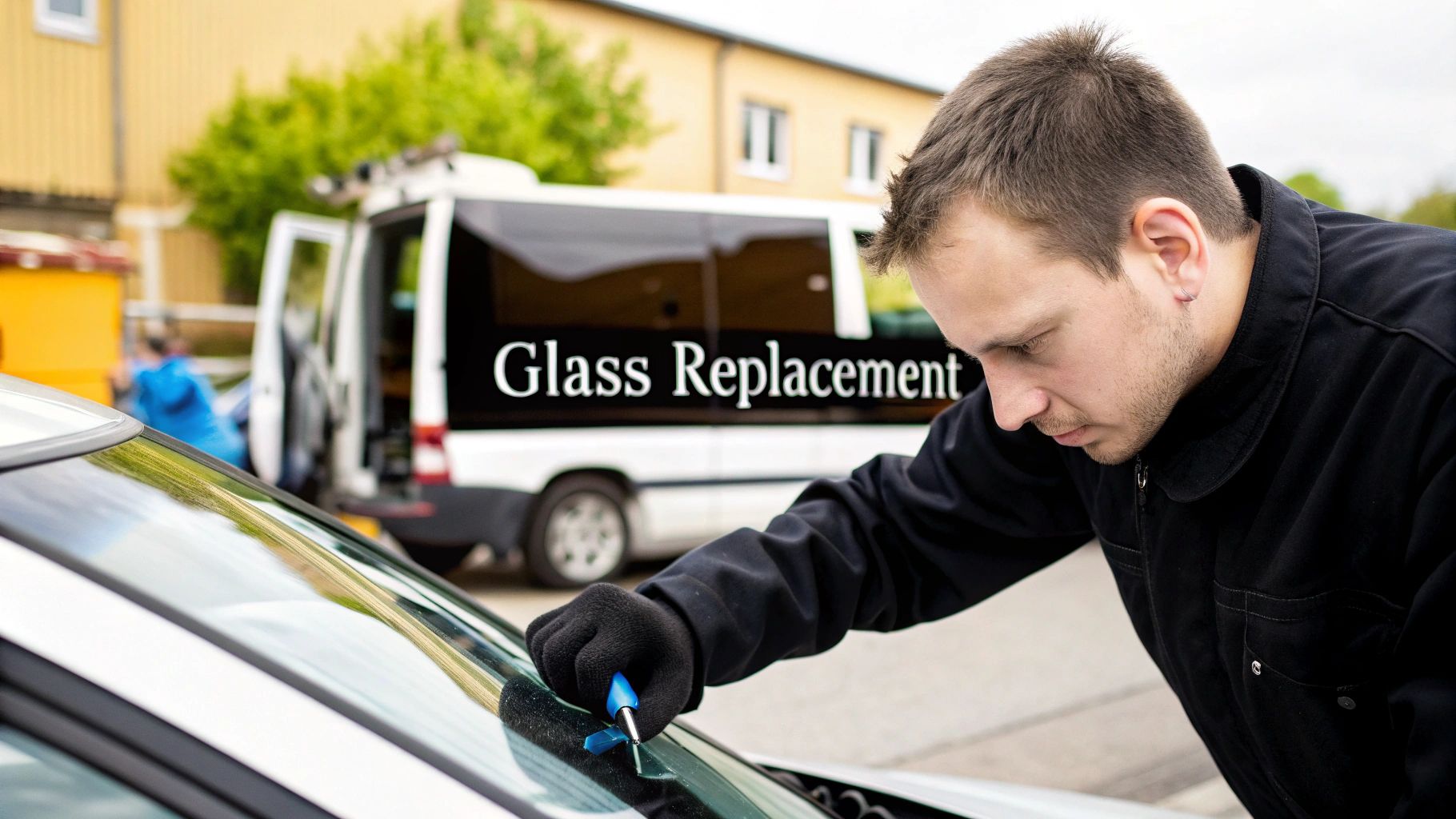
When a chip or crack in your car's glass is too severe for a simple repair, a full car glass replacement becomes necessary. This isn't just about swapping out a pane of glass; it's a crucial safety procedure that restores the structural integrity of your vehicle. A proper replacement ensures your car can protect you exactly as the manufacturer intended, supporting everything from airbag performance to rollover stability.
Understanding Car Glass and Its Importance
It’s easy to think of your car's glass as just a barrier against wind and rain. In reality, it’s an engineered shield and a key part of your car’s safety system. Your windshield, for example, is responsible for up to 60% of your vehicle's cabin strength in a rollover. A damaged or poorly installed windshield can’t provide that support, dramatically increasing the risk of the roof caving in during an accident.
It doesn’t stop there. The passenger-side airbag is designed to bounce off the windshield when it deploys. This provides the correct angle and support to cushion the passenger. If the glass is weak or gives way on impact, the airbag won't work as intended, which can lead to serious injuries.
Different Glass Types for Different Jobs
Your car doesn't just use one type of glass; it uses two specialized types of safety glass, each with a very specific role.
Laminated Glass: This is what your windshield is made of. It’s essentially a sandwich of two glass layers with a tough, clear vinyl sheet in the middle. If something hits it, the glass might crack, but that vinyl layer holds all the pieces together, preventing dangerous shards from flying into the cabin.
Tempered Glass: Your side and rear windows are typically made from tempered glass. It's created by heating glass and then cooling it very quickly, making it about four times stronger than standard glass. If it does break, it shatters into thousands of tiny, dull-edged pebbles instead of large, sharp pieces.
A compromised windshield isn't just a cosmetic flaw—it's a direct threat to your vehicle's safety cage. Professional car glass replacement restores this essential line of defense, ensuring your car is ready to protect you and your passengers in a collision.
Common Causes of Auto Glass Damage
Most auto glass damage comes from everyday driving hazards you can't always avoid. The most common culprits are rocks and road debris kicked up by other cars on the highway. Other frequent causes include branches falling during a storm, vandalism, or even sudden, extreme temperature shifts that can turn a tiny chip into a massive crack overnight. Knowing what can cause damage helps you understand why it's so important to get it checked out right away.
Quick Guide: Repair vs. Replacement
Not sure if that new chip needs a full replacement? This quick table can help you make an initial assessment. Of course, a professional evaluation is always the best way to be sure.
Damage Type | Recommended Action | Key Consideration |
|---|---|---|
Chip or Bullseye < 1" | Repair | Must be outside the driver's direct line of sight. |
Single Crack < 6" | Repair | If not at the edge of the windshield. |
Multiple Cracks | Replacement | Multiple points of failure weaken the glass. |
Crack in Line of Sight | Replacement | Impairs visibility and is a safety hazard. |
Edge Crack or Chip | Replacement | Compromises the seal and structural integrity. |
Ultimately, any damage that compromises the driver's vision or the structural edge of the glass almost always means it's time for a replacement. It’s the only way to guarantee your safety and the integrity of your vehicle.
Repair vs. Replacement: What Does Your Windshield Really Need?
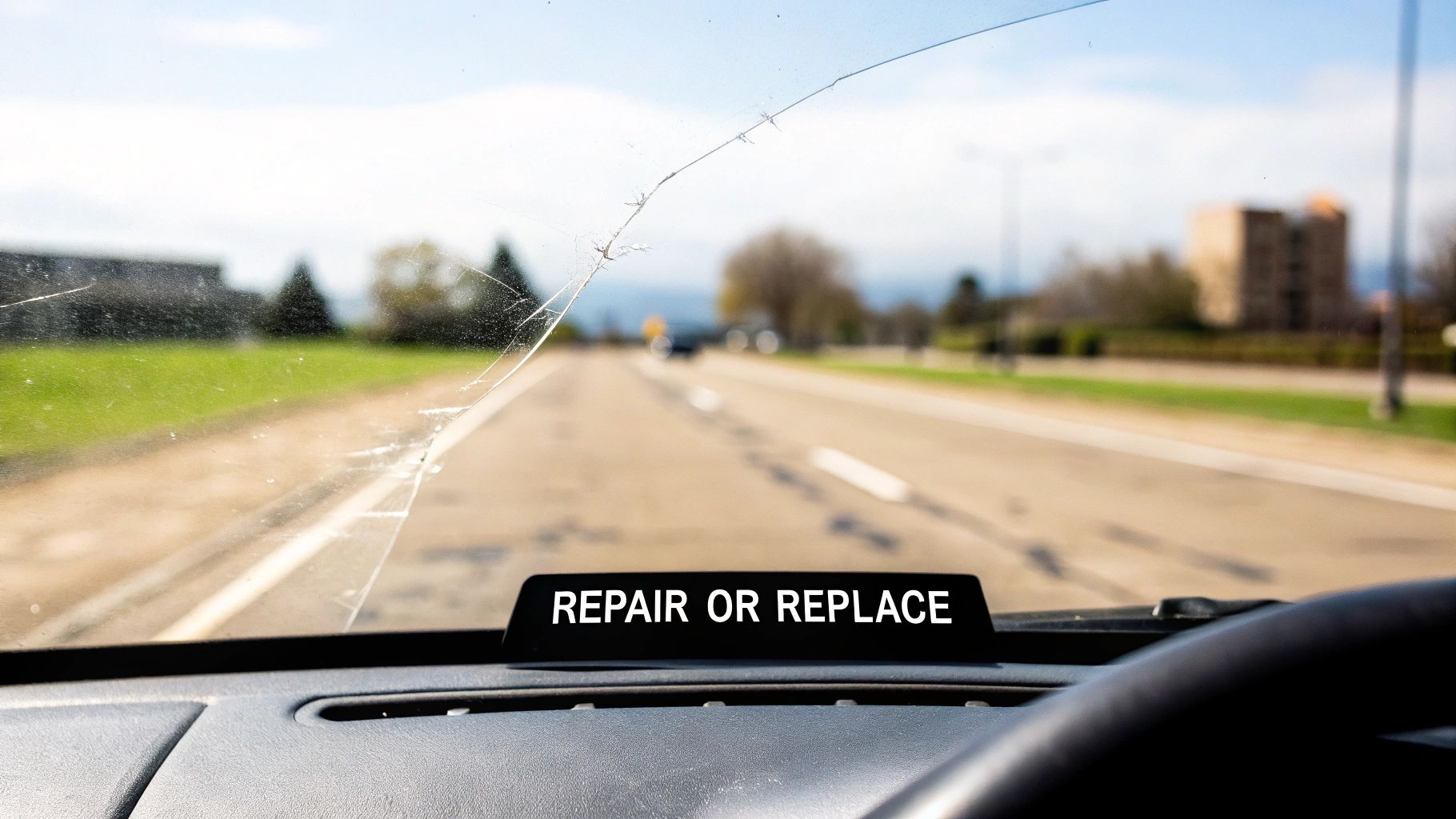
When you see that dreaded chip or crack on your windshield, the first question that pops into your head is always the same: "Can this be fixed, or do I need a whole new windshield?" It's a fair question, and the answer involves more than just the cost—it's about your safety on the road.
A professional technician doesn't just guess. We look at three key things: the damage's size, its location, and how deep it goes. This evaluation tells us whether a simple repair will do the trick or if a full replacement is necessary.
Think of a windshield repair like filling a tiny cavity. We inject a specialized resin into the chip, which then cures and hardens. This restores the glass's strength and, just as importantly, stops the damage from spreading. It's a fantastic solution for small, isolated dings.
But just like a tooth with a major fracture, some windshield damage is too severe for a simple filling. When the structural integrity is at risk, a full car glass replacement becomes the only safe, long-term fix.
The demand for these services is skyrocketing, with the global market projected to hit $5 billion by 2025. It’s no surprise, really. With more cars on the road and unpredictable weather, damage is more common than ever, making a professional assessment crucial. You can dive deeper into these market trends in this detailed industry report.
When Replacement Is the Only Option
While we can save many windshields with a high-quality repair, some situations are clear-cut. Certain types of damage are just too risky to patch up, making a full replacement non-negotiable. Knowing these red flags helps you understand why a technician makes a specific call. Safety is always the bottom line.
Here are the scenarios that almost always require a new windshield:
Damage in the Driver’s Line of Sight: Any chip or crack directly in the driver's field of view is a serious problem. Even the best repairs can leave a minor distortion, creating a dangerous distraction. We simply won't take that risk.
Cracks Longer Than a Dollar Bill: It’s a classic rule of thumb for a reason. Once a crack extends beyond about six inches, the windshield's structural integrity is already too compromised for a resin repair to be a reliable fix.
Damage Near the Edge: Chips and cracks that start at or run to the edge of the windshield are particularly nasty. They weaken the entire structure and can spread quickly with changes in temperature or road vibrations. Replacement is the only safe bet here.
Not All Glass Is Created Equal
The type of glass in your vehicle also plays a huge role. Your front windshield is made of laminated glass—two layers of glass with a vinyl sheet in between. That vinyl layer is what makes repairs possible; it gives the resin something to bond to and holds the glass together on impact.
Your side and rear windows, however, are made from tempered glass. This glass is engineered to shatter into thousands of small, pebble-like pieces when broken to prevent serious injury. Because it's designed to crumble, there's no way to repair it. If your side or rear window is damaged, it has to be replaced.
The goal is never just to fix a cosmetic blemish. It's to restore the windshield's ability to protect you in an accident. If a repair cannot guarantee that level of safety, a car glass replacement is the only responsible choice.
Making the right call keeps your vehicle's safety systems intact. For those smaller dings and chips, you can learn more about our process in this guide to professional windshield chip and crack repair.
A Look Inside the Car Glass Replacement Process
Getting a new windshield or car window isn't just about swapping out a piece of glass. A professional replacement is a precise, multi-step operation—think of it more like surgery for your car than a simple repair. Knowing what to expect from start to finish not only demystifies the service but also shows you why this is a job for a trained, certified technician. It’s a real blend of technical skill, specialized tools, and an almost obsessive attention to detail.
It all kicks off with a detailed pre-inspection. The technician will take a good look at the damage, check your car's interior and exterior for any existing issues, and double-check that the new glass is a perfect match for your vehicle’s make, model, and any special features like rain sensors or heating elements. This first step is all about making sure there are no surprises later on.
Next up, your car gets protected. The technician will carefully cover the seats, dashboard, and the paint and bodywork around the glass. This is just to make sure no debris or adhesive causes any accidental damage, keeping your car looking exactly as it did when you brought it in.
Getting the Old Glass Out and Prepping the Frame
With everything prepped and protected, the technician starts the delicate job of removing the old, damaged glass. They use specialized tools to carefully cut through the old urethane adhesive that seals the glass to the vehicle's frame. This has to be done with incredible precision to avoid scratching the paint or damaging the pinch weld—that’s the metal flange the glass sits on.
Once the old glass is out, the most critical part of the job begins: the cleanup. The technician meticulously scrapes and cleans the vehicle’s frame, getting rid of every last bit of the old adhesive, dirt, and grime. If any of that gunk gets left behind, the new seal won't bond properly, which can lead to leaks or a weak installation. It's just like prepping a wall before you paint; without a clean, smooth surface, the new coat just won't stick right.
A professional car glass replacement lives or dies by the quality of the prep work. Rushing this step or leaving old adhesive behind is the #1 cause of a failed installation. That can mean annoying wind noise, water leaks, or even a dangerously insecure windshield that won't hold up in a crash.
Installing the New Glass with Precision
With the frame perfectly clean, the technician applies a fresh bead of a high-quality urethane adhesive. This isn't your average glue. It's a powerful bonding agent specifically formulated for automotive glass, engineered to create a watertight seal that's as strong as the one from the factory. The bead has to be applied evenly and without any gaps to guarantee a perfect bond.
Finally, the new glass is carefully set into place. Using specialized suction cups for a secure grip, the technician lowers the glass onto the fresh adhesive, making sure it’s perfectly aligned. Once it's in position, they press it down firmly to create a solid initial bond. From there, any moldings, wipers, and sensors that were removed are reinstalled.
But the job isn't quite done. The adhesive needs time to cure. The technician will tell you the Safe Drive-Away Time (SDAT), which is the minimum time you need to wait before the adhesive is strong enough to meet federal safety standards. This can be anywhere from 30 to 90 minutes, depending on the type of urethane and the weather. Sticking to this timeline is absolutely critical for your safety—it ensures your new glass will perform exactly as it should if you're ever in an accident.
Why ADAS Recalibration Is Essential
https://www.youtube.com/embed/RhIrrpv6zLs
If your car is a recent model, its windshield is doing a whole lot more than just keeping the wind and rain out. It's now the central hub for your vehicle's most important safety features, known as Advanced Driver-Assistance Systems (ADAS).
These systems rely on a forward-facing camera, usually mounted right behind your rearview mirror. This camera is the "eye" that powers things like your automatic emergency braking, lane-keeping assist, and adaptive cruise control.
When we replace your windshield, that camera has to be detached from the old glass and mounted onto the new one. Think of it like a high-powered telescope—if it's misaligned by even a single millimeter, your view of the stars becomes completely distorted. For your car, that tiny shift can have huge consequences on the road.
A misaligned camera means your car might not "see" the world around it accurately. It could misjudge the distance to the car in front, fail to read lane markings correctly, or react a split-second too late in an emergency. This is why ADAS recalibration isn't just an upsell or an optional extra; it's a critical, non-negotiable step to guarantee your safety systems are working exactly as the manufacturer intended.
Static vs. Dynamic Recalibration Explained
Recalibration isn't a one-size-fits-all job. Professionals use two main methods, and the right one is dictated entirely by your vehicle's manufacturer. Getting this wrong is just as dangerous as skipping it.
Static Recalibration: This is done in a controlled shop setting. A technician places a highly specific target board in front of your car at a precise distance and height. Your car's computer then locks onto this target to reset the camera's baseline, giving it a perfect "zero point" to work from.
Dynamic Recalibration: This one happens out on the road. A technician drives your vehicle on clearly marked roads, maintaining a specific speed for a set amount of time. The camera actually recalibrates itself by reading the real-world lane markings, confirming its accuracy in live conditions.
Some cars need just one method, but many newer models require a combination of both to be fully and safely calibrated. A trained, certified technician will know exactly what your car needs to get its safety features back to factory specs.
Skipping recalibration is like trying to navigate with someone else's prescription glasses. You can technically see, but everything is a bit off, blurry, and fundamentally unreliable. When it comes to your car's safety, "a bit off" is never good enough.
The entire process for a modern windshield replacement is far more involved than just swapping out the glass, as you can see below.
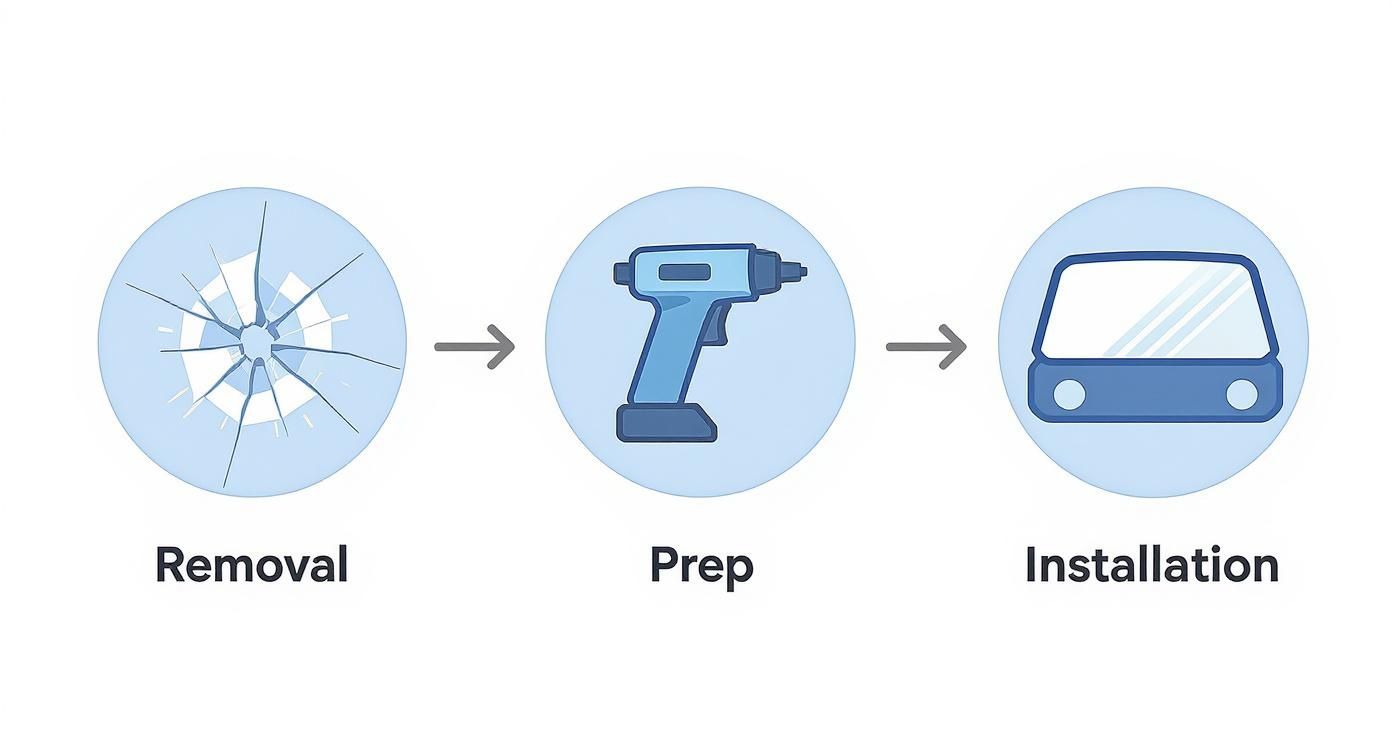
This graphic really drives home the point that the final steps, especially recalibration, are just as crucial as the physical installation of the new glass.
Common ADAS Features Requiring Recalibration
To give you a better idea of what's at stake, here’s a look at some common ADAS features that are directly tied to that windshield-mounted camera.
ADAS Feature | Function | Why Recalibration is Critical |
|---|---|---|
Lane Keeping Assist (LKA) | Gently steers the car to keep it centered in its lane. | If the camera is misaligned, it might not detect lane markings correctly, causing the car to drift or send false warnings. |
Forward Collision Warning (FCW) | Alerts the driver to an impending collision with a vehicle ahead. | An uncalibrated camera can misjudge the distance or speed of the car in front, leading to late warnings or no warning at all. |
Automatic Emergency Braking (AEB) | Automatically applies the brakes to prevent or mitigate a frontal crash. | This is the most critical. A tiny error in camera angle could mean the system fails to engage when you need it most. |
Adaptive Cruise Control (ACC) | Maintains a set following distance from the vehicle ahead. | The system might brake too aggressively or not soon enough if its perception of the distance to other cars is off. |
Traffic Sign Recognition | Identifies road signs like speed limits and displays them for the driver. | Incorrect camera alignment can lead to the system misreading signs, displaying wrong information and potentially confusing the driver. |
As you can see, ensuring these systems are perfectly calibrated isn't just about avoiding annoying dash lights—it's about making sure the features designed to protect you and your family can actually do their job.
The Growing Importance of Smart Windshields
The rise of ADAS has completely changed the auto glass world. The automotive windshield market is booming, largely because these advanced systems demand more complex glass and mandatory recalibration.
Ignoring this step after a car glass replacement can cause system malfunctions, trigger persistent warning lights on your dash, and, most importantly, lead to the failure of safety features right when you need them.
Making sure your technician is properly trained and equipped for recalibration is absolutely vital. To learn more, check out our in-depth article on what ADAS windshield calibration involves.
Talking Money: What Does a New Windshield Really Cost?
Let's face it, nobody gets excited about an unexpected car repair bill. When it comes to replacing your car's glass, figuring out the cost can feel like a guessing game. But it's not as mysterious as it seems. The final price tag is a direct reflection of your vehicle's specific needs—much like a custom part, the details matter.
The make and model of your car are the biggest starting points. A windshield for a brand-new luxury SUV with all the bells and whistles is simply going to cost more than one for a 15-year-old commuter sedan. Features baked right into the glass, like heating elements for those frosty mornings, special acoustic layers to keep road noise out, or integrated antennas, all add to the complexity and, therefore, the cost.
The Big Things That Shape Your Quote
Today, the single most important factor influencing the price is whether your car has Advanced Driver-Assistance Systems (ADAS). That little camera mounted by your rearview mirror is the brain behind features like lane-keeping assist and automatic emergency braking. After a new windshield is installed, that camera system must be recalibrated to factory specs. It’s a non-negotiable safety step, and it comes with its own service charge on top of the glass replacement itself.
Here’s a quick rundown of what we look at when building your quote:
Your Car's DNA: The make, model, and year are the foundation.
The "Smart" Glass: Does it have rain sensors, a heads-up display (HUD), or special solar tints?
ADAS Safety System: If recalibration is needed, it's a critical part of the job and the total cost.
Glass Type: You'll typically have a choice between OEM (Original Equipment Manufacturer) and OEE (Original Equipment Equivalent) glass. Both are high-quality, safe options, but the price can differ.
This trend toward more complex glass isn't slowing down. The market for aftermarket auto glass is expected to jump from USD 3.29 billion in 2025 to a massive USD 5.47 billion by 2034. It's all thanks to the incredible technology being built into modern vehicles. You can dig deeper into these automotive windshield market trends if you're curious.
How Your Insurance Can Handle the Bill
Here’s the good news: you probably won't have to pay for the whole thing yourself. Most auto insurance policies cover glass replacement under the comprehensive section. This is the part of your policy that handles damage from things other than a collision, like a rock hitting your windshield or a fallen tree branch.
When you file a claim, it's a pretty straightforward process. Your insurance provider confirms your coverage, and you just have to cover your deductible. For example, if the total replacement job costs $800 and your deductible is $250, you pay the $250, and your insurance takes care of the remaining $550. Simple as that.
At Auto Renu Auto Glass LLC, we take the headache out of insurance claims. We work with all major insurance companies every single day. Just give us your policy info, and we'll handle the rest—from verifying coverage to direct billing. Our goal is to make it totally painless for you.
To get the ball rolling, all you need is your policy number and a rough idea of when the damage happened. Any professional auto glass shop will ask for this right away. We can then get on the phone with your provider, confirm everything, and bill them directly. It means you don't get stuck in a maze of paperwork, and we can get you scheduled for a fix right away.
Choosing a Technician and Aftercare Tips
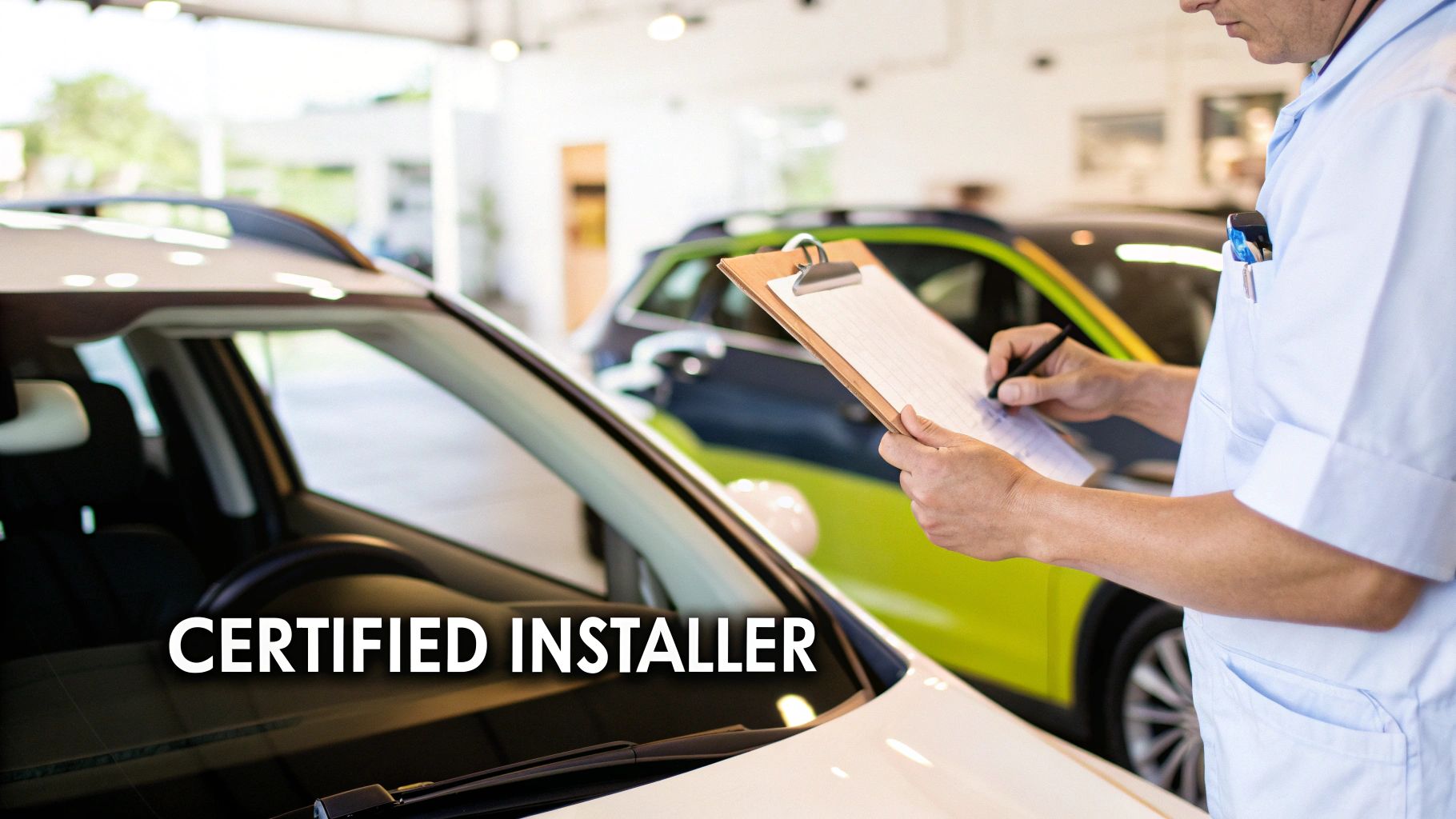
You’ve decided to replace your car glass, but there's one last crucial step: picking the right person for the job and knowing how to take care of their work afterward. Honestly, the quality of the installation is just as important as the quality of the glass itself. A great technician makes sure your car's safety features work as they should and protects your investment for the long haul.
This isn’t a decision to make based on price alone. You're trusting them with a critical part of your vehicle's structure. Their experience, the materials they use, and their professional credentials are what really count. A rushed or sloppy job can cause all sorts of problems down the road, from annoying wind noise and water leaks to the terrifying possibility of the windshield failing in an accident.
How to Identify a Qualified Technician
Finding an installer you can trust is a lot easier when you know what to look for. Think of it like a quick checklist to give you peace of mind. A true professional will have no problem answering your questions and showing you why they're the right choice.
A great starting point is to see what other people in the community are saying. Online reviews give you a real, unfiltered look at a company’s professionalism, reliability, and the quality of their work. Reading about your neighbors' experiences gives you a pretty clear picture of what to expect. You can see what our customers think by checking out our local auto glass service reviews.
Here are the key things to confirm before you book the job:
Certifications: Ask if their technicians are certified. A certification from an organization like the Auto Glass Safety Council™ (AGSC) is a big deal—it means they’ve been trained on the latest safety standards and proper installation techniques.
Quality of Materials: A reputable shop will only use OEM (Original Equipment Manufacturer) or OEE (Original Equipment Equivalent) glass. Both types meet strict federal safety standards. You just want to be sure they aren’t cutting corners with cheap, uncertified glass.
Workmanship Warranty: Anyone who stands by their work will offer a solid warranty. This should cover not just defects in the glass, but more importantly, any installation issues like leaks or excessive wind noise.
Choosing a certified technician isn't just about getting a clean installation; it's about ensuring the person working on your vehicle understands how the windshield integrates with your car's entire safety system, from airbag deployment to roof support.
Essential Aftercare for Your New Glass
Once the technician has packed up their tools, it’s your turn to make sure the job is a lasting success. The powerful urethane adhesive that bonds the glass to your car’s frame needs time to fully cure and create a permanent seal. Following a few simple rules right after the installation is absolutely critical.
The most important instruction you'll get is the Safe Drive-Away Time (SDAT). This is the absolute minimum amount of time you need to wait before driving, usually somewhere between 30 to 90 minutes. Driving off too soon can seriously compromise the seal before it's had a chance to set properly.
To protect your new glass, just follow these simple tips:
Leave a Window Cracked: For the first 24 hours, keep a window cracked open about an inch. This prevents a sudden change in air pressure when you shut a door, which could put stress on the fresh seal.
Avoid High-Pressure Car Washes: Hold off on any car washes for at least 24-48 hours, especially the high-pressure kind. The powerful water jets can easily damage the new adhesive and moldings.
Keep the Dash Clear: For the first day, don't place anything on your dashboard that might rest against the glass, like a sunshade or paperwork. This lets the seal cure without any outside pressure.
Be Gentle with Taping: If the technician used tape to hold the moldings down while the adhesive sets, leave it on for at least 24 hours. When you do take it off, peel it away carefully.
By following these simple guidelines, you’ll ensure your new car glass stays safe, clear, and secure for years to come.
Common Questions About Car Glass Replacement
Even with a good handle on the process, you probably still have a few lingering questions about what to expect on the day of your car glass replacement. Getting straight answers is the best way to feel confident, so let's tackle some of the most common things we hear from drivers.
How Long Does it All Take?
The first thing everyone wants to know is, "How long will my car be out of action?" The actual hands-on installation is quicker than most people think, usually wrapping up in about 60 to 90 minutes.
But the clock doesn't stop there. The most critical part is waiting for the powerful adhesive to cure, which we call the "Safe Drive-Away Time." This can be anywhere from 30 minutes to a couple of hours, and it really depends on the specific adhesive we use and the weather that day. If your car has modern safety features, the ADAS recalibration will add another 30 to 60 minutes on top of that.
Is a Replacement Windshield as Safe as the Original?
This is a big one, and rightly so. Will the new glass be as safe as the one that came from the factory? The answer is a resounding yes, but with one crucial caveat: the installation absolutely must be done by a certified technician using top-quality materials.
When we use either OEM (Original Equipment Manufacturer) or OEE (Original Equipment Equivalent) glass, the replacement meets or even exceeds federal safety standards. This isn't just about a clear view; it’s about preserving your car's structural integrity. A properly installed windshield is key for correct airbag deployment and protecting you and your family in a rollover. The technician’s skill is every bit as important as the glass itself.
What's the difference between OEM and OEE glass? Simple. OEM glass is made by the same company that made your car's original windshield. OEE glass is made by a different company but is certified to meet the exact same tough safety and quality standards. Both are fantastic, safe choices for a dependable replacement.
What About Bad Weather?
"Can you still replace my glass if it's raining?" We get this question all the time, especially since we do so much mobile work. The weather plays a huge role. Rain, extreme cold, or even intense humidity can interfere with the adhesive's ability to cure properly, and that's a risk we'll never take.
For our mobile car glass replacement services, we do need a covered space like a garage or carport if there’s any chance of rain. If the weather is just too severe to guarantee a perfect seal, we'll always reschedule. A flawless, leak-proof bond is non-negotiable. We'd rather do the job right for your long-term safety than rush it and compromise the quality.
For a professional and safe car glass replacement that comes directly to you, trust the experts. Contact Auto Renu Auto Glass LLC today for a free estimate and experience our reliable mobile service. Schedule your appointment at https://www.autorenu911.com.