Your Guide to Mobile Window Tinting Services
Discover the convenience of mobile window tinting services. This guide explains the process, film types, and how to choose a top provider for your vehicle.
Nov 15, 2025
generated
mobile window tinting services, car window tinting, automotive tinting, ceramic tint, vehicle tinting
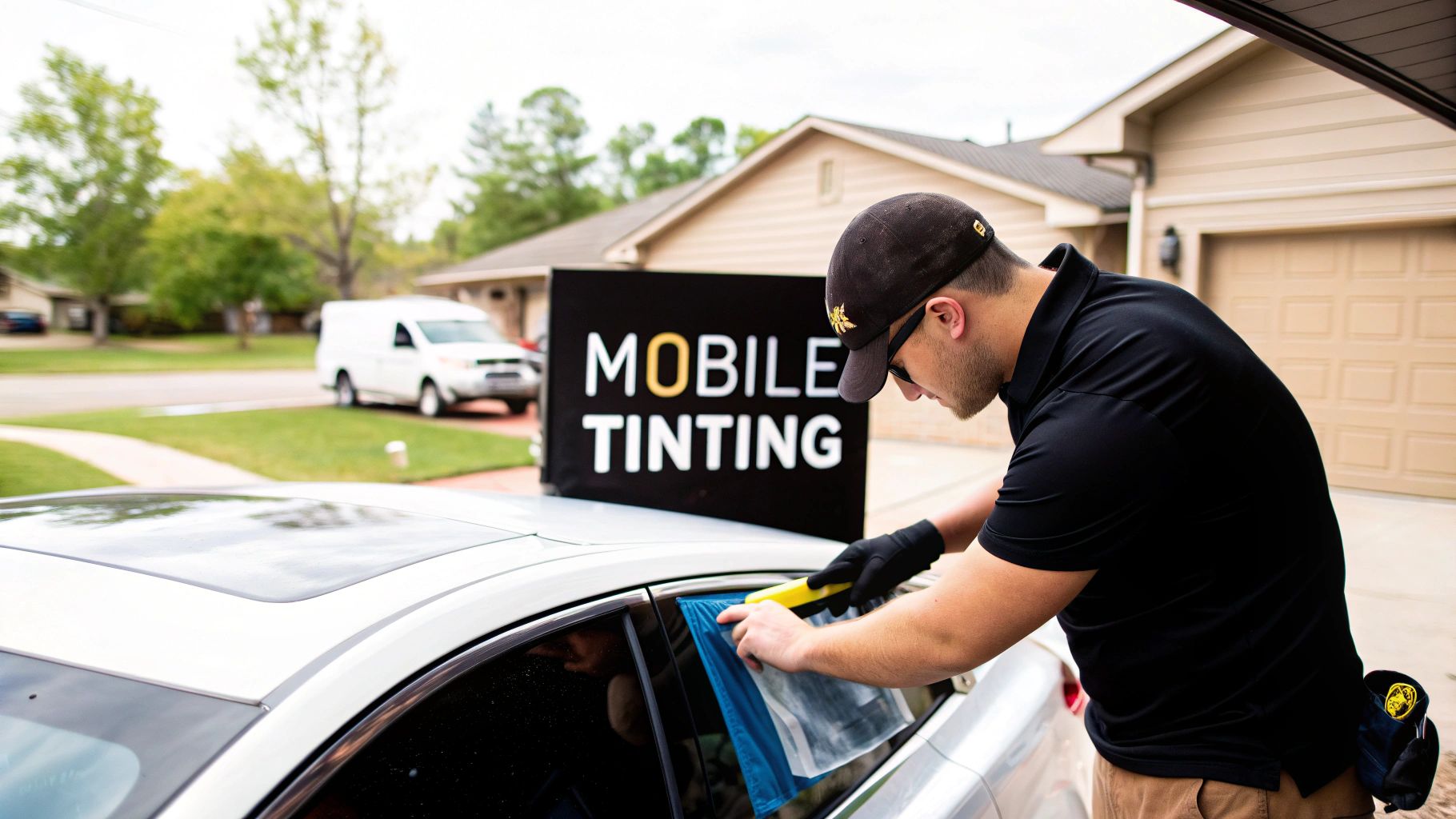
Let's be honest, nobody has time to spend half a day waiting around at a tint shop. Mobile window tinting cuts through the hassle by bringing the entire professional setup right to your doorstep, whether you're at home or at the office. It's about getting a top-tier service that works around your schedule, not forcing you to work around someone else's.
Why Mobile Tinting Is a Smarter Choice
Picture this: while you're wrapping up a meeting at work or just relaxing on your couch, a skilled technician is professionally tinting your car's windows right outside. That’s the simple, powerful idea behind mobile service. You don't have to kill a Saturday or burn a vacation day just for a car upgrade.
This model is built entirely around convenience. It erases the need to arrange rides, sit in a waiting room, or block out a huge chunk of your day. For busy people, it makes getting a valuable service feel completely effortless.
The Power of On-Site Expertise
One of the first questions people ask is, "Is the quality as good as a shop?" The answer is a resounding yes. A seasoned mobile technician arrives with everything needed to deliver the same clean, bubble-free finish you'd expect from a dedicated facility. They know how to work in different settings without compromising on the final result.
The perks of having an expert come to you are undeniable:
Ultimate Convenience: Your car gets tinted wherever it's parked. No travel, no waiting, no wasted time.
Personalized Service: You’re right there. You can ask questions, watch the process, and talk directly with the person doing the work.
Time Efficiency: The hours you would've spent driving are now yours to use for work, family, or anything else you'd rather be doing.
The real value of mobile window tinting isn’t just in the tint itself; it’s in getting your time back. You aren't just paying for a service—you're buying back a huge piece of your day.
More Than Just Convenience
While saving time is a massive plus, you're also getting all the other benefits that come with a professional tint job. Good quality film provides serious heat rejection, which keeps your car's interior much cooler on blistering summer days and means you won't have to blast the A/C as much.
Even better, the films we use block up to 99% of damaging UV rays. This is huge. It protects you and your passengers from sun exposure and stops your car's interior—the dashboard, leather seats, and door panels—from fading, cracking, and aging prematurely. It’s a smart investment in your comfort and your car’s resale value.
Curious if we come to you? It’s easy to check our different mobile tinting locations and find a service area nearby. This one simple upgrade provides a sleek, custom look while also adding a layer of privacy and security.
The Real Benefits of Tinting Your Car Windows
Most people see window tinting as a purely cosmetic upgrade—a quick way to give a car that sleek, high-end look. And while it definitely delivers on style, the real story is in the powerful, practical benefits that modern tint films bring to the table. It’s less of a style choice and more of a functional shield for your car, your belongings, and yourself.
There's a reason the demand for professional tinting is booming. The global automotive tinting film market was valued at around USD 7.59 billion and is expected to keep growing, all thanks to drivers wanting better protection and comfort. You can dig deeper into the future of the tinting industry on luminous-me.com. This isn't just a trend about looking good; it's about making your drive genuinely better.
A Powerful Shield Against UV Radiation
One of the single biggest advantages of getting your windows tinted professionally is its incredible ability to block harmful ultraviolet (UV) rays. Think of it like this: a high-quality film is engineered to block up to 99% of UV radiation. It’s basically a powerful, transparent sunscreen for your car and everyone inside it.
That constant sun exposure is what causes your dashboard, leather seats, and door panels to fade, crack, and look old before their time. By filtering out those damaging rays, tinting acts as a preservation tool, keeping your car’s interior looking newer for much longer and protecting its resale value. Even more importantly, it shields your skin from the cumulative effects of sun damage during your daily commute.
Superior Heat Rejection for a Cooler Cabin
Ever opened your car door on a hot day and felt like you were stepping into an oven? Window tint is the solution. It’s designed to reject a huge chunk of the sun's solar energy, especially with advanced materials like ceramic and nano-ceramic films.
So, how does it work? Imagine the film is embedded with microscopic particles that act like a bouncer for heat. They let visible light in but reflect infrared rays—the part of sunlight that actually generates heat—right back outside before they can bake your cabin.
This translates into some serious real-world perks:
Immediate Comfort: Your car stays noticeably cooler, making it far more pleasant to get in and drive away.
Reduced A/C Strain: With less heat to fight against, your air conditioning system doesn't have to blast on high all the time.
Improved Fuel Efficiency: When your A/C works less, it uses less power. Over time, that can lead to some real fuel savings.
A cooler car isn't just about comfort—it's about efficiency. By rejecting solar heat, quality tint reduces your reliance on air conditioning, saving fuel and reducing wear on your vehicle's systems.
Enhancing Privacy and Security
Beyond sun protection, tinted windows offer a valuable layer of privacy. That added seclusion can make your drive feel more personal and secure, shielding you from the prying eyes of other drivers or people on the street.
This privacy also pulls double duty as a security feature. We’ve all been guilty of leaving a bag, phone, or wallet in plain sight. Unfortunately, that’s an open invitation for a smash-and-grab. Tinted windows obscure the view into your vehicle, making it a far less interesting target for opportunistic thieves. If they can’t see what’s inside, they’re much more likely to just move on. It’s a simple, effective deterrent.
Choosing The Right Type of Window Tint Film
When you decide to get your windows tinted, the biggest choice you'll make isn't the shade of darkness—it's the type of film itself. Not all tints are created equal. Think of it like buying tires; you can get a basic, all-season set that just gets the job done, or you can invest in high-performance rubber that completely changes how your car feels on the road.
The right film comes down to a balance between your budget, the look you're after, and what you really need it to do. Are you just looking for a sleek, dark style, or is blocking that brutal summer heat your number one priority? Knowing the difference between the technologies will help you make a smart choice.
Dyed Film: The Budget-Friendly Stylist
Dyed window tint is the classic, most affordable option and a popular starting point for many drivers. It's made by adding a layer of dye to an adhesive film, which then absorbs solar heat. This is what creates that classic, dark look.
The main appeal of dyed film is aesthetics and privacy without breaking the bank. But, you get what you pay for. Its heat-blocking ability is pretty modest, and over time, years of sun exposure can cause the dye to fade to that infamous purple color. You might also see bubbling as the adhesive breaks down.
Metalized Film: The Reflective Protector
A step up from dyed films, metalized tints are infused with tiny metallic particles. These particles are fantastic at reflecting the sun's heat away from the car before it ever gets inside, making them a significant upgrade in performance over dyed films.
That metal layer also adds strength, making the film more durable and scratch-resistant. The big catch? Those same metal particles can play havoc with electronic signals. It's not uncommon for metalized films to interfere with your cell phone, GPS, and radio reception—a major drawback in today's connected world.
Carbon Film: The Modern Upgrade
Carbon film hits a real sweet spot, offering performance that blows past dyed and metalized films without the signal interference. Instead of metal, this film is made with microscopic carbon particles.
These carbon particles are excellent at blocking infrared light—the kind of light that makes your car feel like an oven. This means carbon film can reject a serious amount of heat while letting all your electronics work flawlessly. It also has a true black, matte finish that won't fade over time, keeping your car looking sharp for years.
Choosing the right film is about matching technology to your needs. A simple dyed film is great for basic privacy, but ceramic film is an investment in superior comfort and long-term protection without any compromises.
This hierarchy diagram visually breaks down the primary benefits you gain from window tinting, moving from comfort to crucial protection and security.
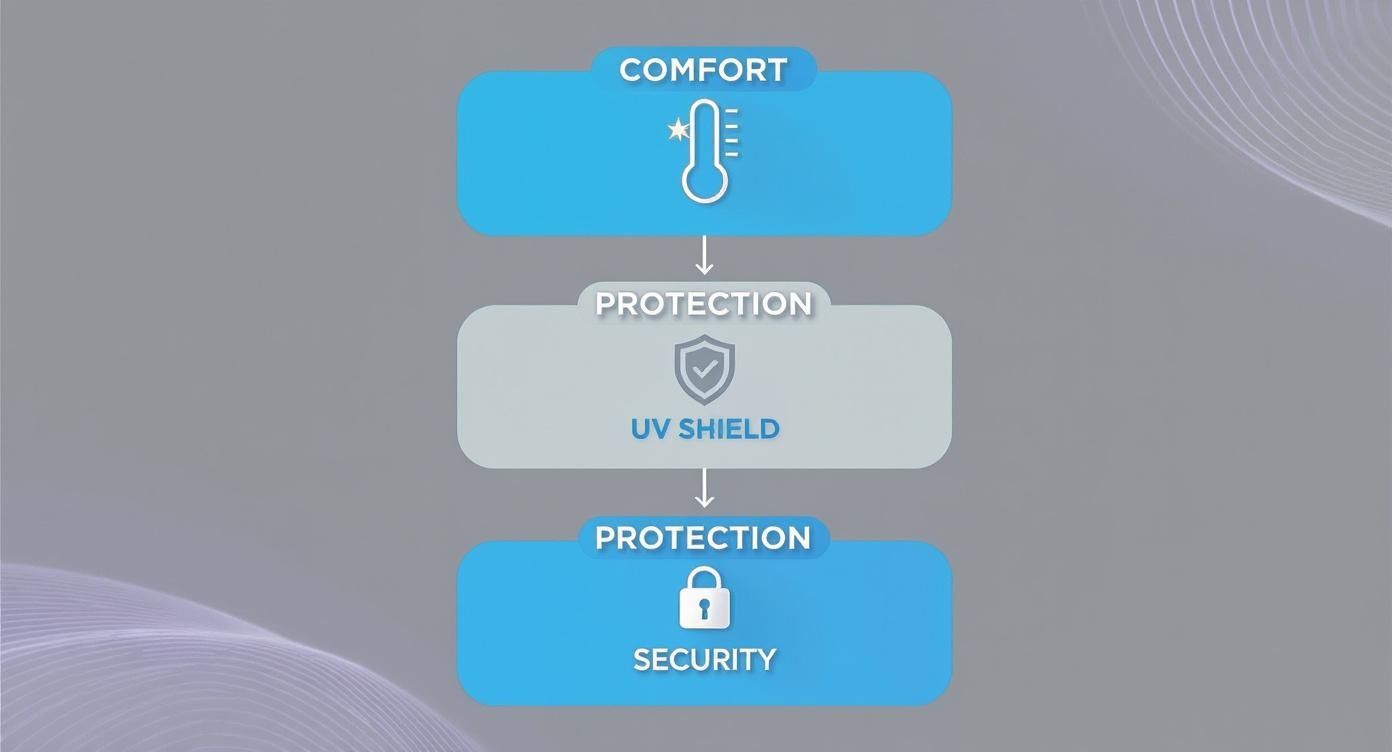
This visual shows how tint works on multiple levels. While all films offer some benefit, the more advanced films deliver exponentially better performance across the board, especially when it comes to UV protection and heat management.
Ceramic And Nano-Ceramic Film: The Premium Performer
Sitting at the very top of the tinting world are ceramic and nano-ceramic films. This is the gold standard, using advanced ceramic nanoparticles that are non-metallic and non-conductive. This technology allows them to deliver the absolute best performance possible.
Here's what makes ceramic film the undisputed king:
Exceptional Heat Rejection: Ceramic films can block up to 90% of infrared heat, which makes a massive difference in how cool your car stays.
Maximum UV Protection: They block over 99% of harmful UV rays, protecting your skin and preventing your car's interior from fading and cracking.
Crystal Clear Views: Despite their incredible performance, these films offer amazing clarity with no haze or distortion.
No Signal Interference: Since they're 100% metal-free, all your devices will work perfectly.
Comparison of Window Tint Film Types
To help you see the differences at a glance, here’s a quick breakdown of the most common film types.
Film Type | Key Feature | Heat Rejection | UV Protection | Clarity & Signal Interference | Average Cost |
|---|---|---|---|---|---|
Dyed Film | Most affordable, non-reflective appearance | Low | Good (~99%) | Good clarity, no interference | $ |
Metalized Film | Reflects heat with metallic particles | Medium-High | Excellent | Can interfere with electronic signals | $$ |
Carbon Film | Non-reflective, matte finish, fade-resistant | High | Excellent | Excellent clarity, no interference | $$$ |
Ceramic Film | Highest performance, non-conductive ceramic | Very High | Maximum (99%+) | Superior clarity, no interference | $$$$ |
As you can see, while dyed film is a good entry point, carbon and ceramic films represent a true investment in comfort and long-term value.
The automotive tinting film market is growing rapidly, largely driven by these high-tech films and evolving regulations. As technology improves, more drivers are choosing to invest in the superior protection that advanced films offer.
To figure out which film is the perfect fit for your car and your needs, check out our detailed guide on the professional window tint options we provide.
What to Expect During Your Mobile Tinting Appointment
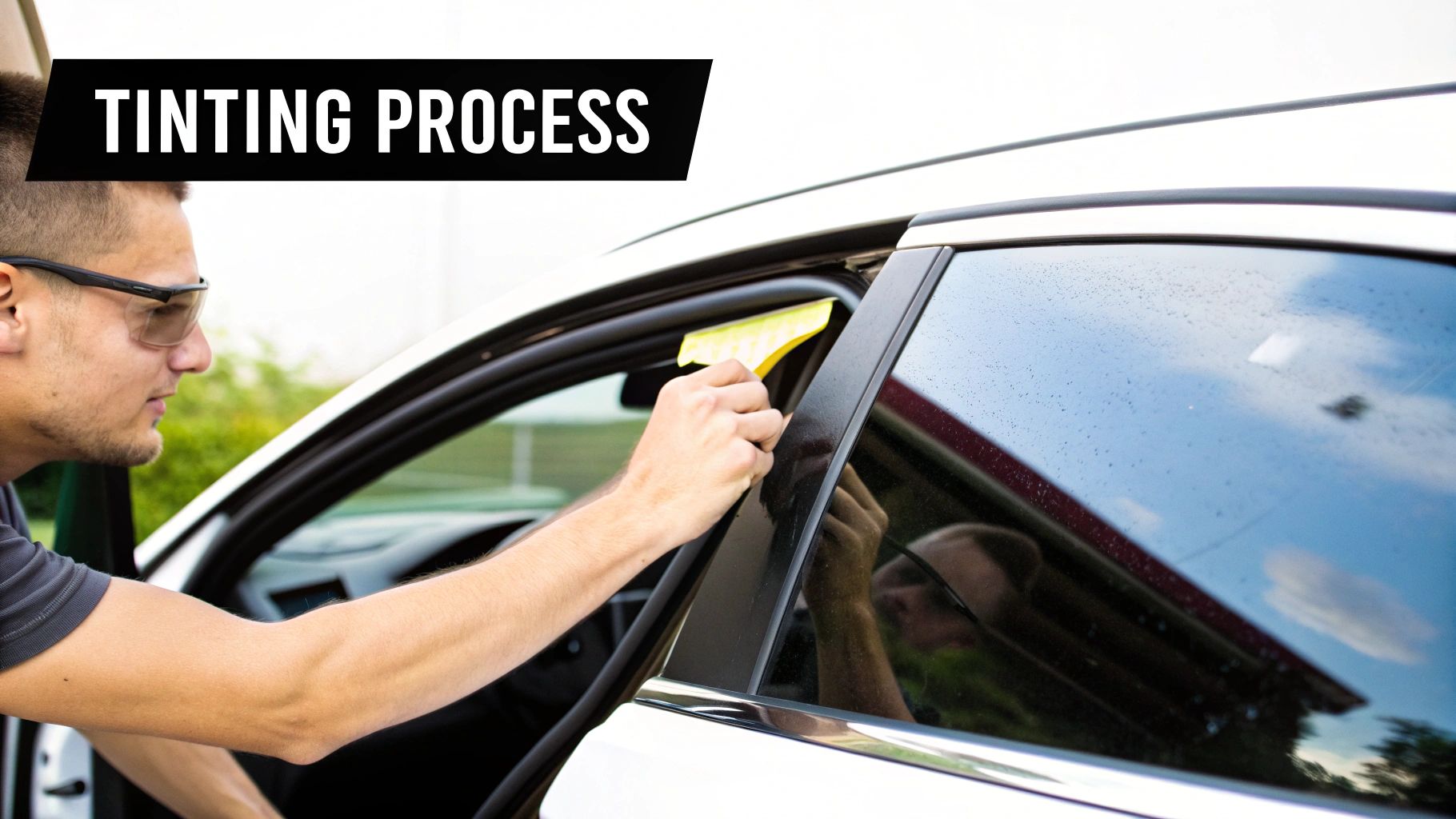
So, you've booked a mobile tinting service. The idea of a professional installer turning your driveway into a workshop might seem a little unusual. How do they really get that flawless, shop-quality finish without the actual shop? It comes down to a highly refined process—one that's organized, meticulous, and designed to transform your vehicle without messing up your day.
Let’s pull back the curtain on what actually happens when the technician shows up. Knowing the step-by-step process helps you understand what's going on and appreciate the craftsmanship involved. It’s a precise job that breaks down into three key phases: preparation, application, and the all-important curing period.
Stage 1: The Prep Work
The secret to a fantastic tint job isn't just the film; it's the glass underneath. The first thing your technician will do is give every window a deep, thorough cleaning, both inside and out. We're not talking about a simple spray and wipe. This is a detailed cleaning to get rid of every last bit of dust, grime, and oily residue.
Why all the fuss? Even one tiny speck of dust or a stray hair caught under the film creates a bubble that sticks out like a sore thumb—and it's permanent. Technicians use special cleaning solutions, squeegees, and even razor blades to get the glass perfectly smooth and surgically clean. This is the foundation for everything that follows.
Stage 2: Laying the Film
With the glass prepped and pristine, the real magic begins. This part is all about skill and precision. The technician will measure each window and then cut the tint film to the exact shape, either by hand or using a computer-guided plotter for a perfect fit.
Next, they'll grab a spray bottle with a "slip solution," which is basically a specific water-and-soap mixture. They spray this on both the window and the sticky side of the film. This solution is the key—it lets them slide the film around and position it perfectly without it grabbing onto the glass instantly. Once it's in just the right spot, they get to work with a set of squeegees, carefully pushing all the water out from between the film and the glass.
The squeegee technique is part art, part science. Every stroke is deliberate, forcing out air and water to create a strong, even bond. The goal is a crystal-clear finish with zero imperfections.
This process ensures the film adheres smoothly and creates a bond that’s built to last for years. It takes a steady hand and a ton of experience to get it right every time.
Stage 3: The Waiting Game (Curing)
Your technician has packed up and driven off, and your windows look amazing. But the job isn't quite done yet. Now comes the curing phase, where the adhesive behind the film needs time to fully dry and bond to the glass. This usually takes around three to five days, but it can take a bit longer if it's cold or humid outside.
During this crucial period, you have one job: protect the tint. Just follow these simple rules:
Don't roll down your windows. This is the number one rule. Lowering the windows too soon can make the film peel or bubble at the edges, completely ruining the job.
Don't worry about a little haze. You might see a slight fogginess or a few tiny water pockets. This is totally normal. It’s just the last bit of moisture evaporating, and it will disappear on its own as the film cures.
Hold off on cleaning. Wait at least a week before you wash the inside of your tinted windows. You don't want to risk disturbing the adhesive while it's still setting.
By understanding these three stages, you’ll know exactly what to expect from your mobile tinting appointment and how the pros achieve those incredible results right at your doorstep.
How to Find a Trusted Mobile Tinting Pro
Let's be clear: choosing the right mobile tinting service is every bit as important as picking the right film. You could have the most advanced ceramic tint in the world, but if it's installed by someone who cuts corners, you'll end up with a mess. A flawless, long-lasting finish is born from a technician's skill, meticulous attention to detail, and commitment to quality.
Finding a real professional means looking past a flashy website. You’re looking for an expert who uses premium materials, knows the local laws inside and out, and genuinely stands behind their work. That's how you protect your investment and ensure your vehicle looks incredible for years.
Check Their Reputation and Past Work
The first thing you should do when vetting any mobile tinter is see what their customers have to say. A long history of glowing feedback is one of the strongest signs you've found someone reliable who does great work.
Here’s what to look for:
Detailed Online Reviews: Don't just glance at the star rating. Dig into the actual reviews on sites like Google and Yelp. See what people are saying about the installer's professionalism, timeliness, and, most importantly, the final product.
A Strong Portfolio: Good installers are proud of their craft and love to show it off. Look for a gallery on their website or social media that features clear, close-up photos of their jobs.
Clear Communication: From the very first phone call or email, pay close attention to how they interact. A true pro will be happy to answer all your questions without making you feel pressured.
A great portfolio isn't just a collection of nice photos. It's proof of consistency. Look for a variety of vehicles and evidence of clean edges, no bubbles, and a flawless finish across all their work.
Ask About Film Brands and Warranties
Not all tint films are created equal, and a professional installer will only work with trusted, high-quality brands. You should never feel hesitant to ask which brands they carry—look for names like Llumar, 3M, or Xpel. These manufacturers are known for durability, color stability, and top-tier performance.
Just as important is the warranty. Think of a solid warranty as your safety net against potential issues like bubbling, peeling, or fading down the road.
Always ask these two critical questions:
Is there a manufacturer's warranty on the film itself? This covers any defects in the actual material.
Do you offer a lifetime workmanship warranty? This covers any problems that pop up because of the installation itself. A confident pro will always guarantee their work.
This dual-warranty approach gives you complete peace of mind, knowing you're covered on both the product and the service.
Verify Their Knowledge of State Laws
This part is absolutely non-negotiable. Every state has specific laws that regulate window tint, mostly centered on the Visible Light Transmission (VLT) percentage allowed on different windows. An installer who doesn't know these laws—or worse, ignores them—is putting you at risk for hefty fines and a failed vehicle inspection.
A true professional will be an expert on your local regulations. They should be able to walk you through the legal limits for your front side windows, rear side windows, and back windshield, helping you pick a film that looks fantastic while keeping you street-legal. If an installer seems fuzzy on the details or suggests an illegal tint level, that's a massive red flag.
The demand for mobile window tinting services is booming. The global window film market is projected to jump from USD 2.41 billion to USD 3.99 billion by 2032, with automotive use being a major driver. You can learn more about the window film market trends and projections to see just how big this industry is getting. This growth really underscores why it's so important to choose a skilled, reputable installer.
Once you find a pro who checks all these boxes, getting started is easy. You can request a free quote for mobile window tinting to get a clear picture of the cost for your specific vehicle and film choice.
Your Top Questions About Mobile Tinting, Answered
Thinking about getting your windows tinted? Smart move. But when you hear about a service that comes to you, it’s only natural to have a few questions. We get it. People want to know about the process, the rules, and how to protect their investment. Let's clear up some of the most common questions we hear every day.
How Long Will I Be Without My Car?
This is usually the first thing everyone asks, and for good reason! Your time is valuable. For a standard sedan, a professional mobile tinting job typically takes between 1.5 to 2.5 hours. That’s usually enough time for our technicians to prep the glass, apply the film perfectly, and do a final quality check.
Of course, that’s just a ballpark. A big SUV or a minivan with a lot more glass real estate is naturally going to take longer, maybe closer to 3 or 4 hours. The shape of your windows matters, too—complex curves can add a bit of time to the job.
The biggest variable? Old, failing tint. If we have to remove a previous tint job that’s bubbling or peeling, that’s a whole separate process. Stripping off the old film and scraping away all the leftover adhesive can easily add another 1 to 2 hours. We’ll always give you a solid time estimate when you book, so you know exactly what to expect.
What’s the Deal with Tint Laws?
This one is a biggie. You absolutely have to know the rules in your state. Window tint laws can be wildly different from one place to the next, and getting it wrong can mean a hefty ticket or a failed inspection. The laws are all about Visible Light Transmission (VLT), which is just a fancy way of saying how much light the tint allows through.
It gets even more specific. Most states have different rules for different windows. For example, you might be able to go much darker on your rear passenger windows and back windshield, but the rules for your front driver and passenger windows are almost always stricter. It's a safety thing—law enforcement needs to be able to see the driver.
Following your local tint laws isn't a suggestion—it’s a must. Any good mobile tinter will know the local regulations inside and out and will help you pick a shade that looks great and keeps you 100% legal.
While it’s ultimately your responsibility, a trustworthy installer is your best guide. They'll have the most up-to-date info and make sure you drive away with a legal, fantastic-looking tint job.
How Do I Take Care of My New Tint?
Great question! How you treat your windows in the first few days is critical for making the tint last a lifetime. The adhesive needs time to properly cure and bond to the glass, and you have to let it do its thing.
The number one rule: Do not roll down your windows for at least 3 to 5 days. No exceptions! Rolling them down too soon can snag the top edge of the film and cause it to lift or peel. The weather plays a role here—the film cures faster on a hot, sunny day and a bit slower when it's cool or rainy.
You might also notice a couple of weird things during this curing phase:
A hazy or cloudy look: Totally normal. It's just leftover moisture from the application solution, and it will disappear on its own as it evaporates.
Tiny water bubbles: You might see some small pockets of water. Don't touch them! Pushing on them will do more harm than good. They’ll go away on their own, I promise.
When it's time to clean, wait about a week. Then, only use a soft microfiber cloth and a cleaner that is 100% ammonia-free. Your standard Windex or other ammonia-based cleaners are the enemy of window tint—they'll break down the film over time, making it turn purple, get brittle, and peel.
Is a Mobile Service Going to Cost Me More?
It's a common assumption: convenience must cost extra, right? Not necessarily. When you really break it down, mobile window tinting is often very competitive with what you’d pay at a traditional shop, especially when you think about what your own time is worth.
Sure, some mobile pros might have a slightly higher price to cover their travel time and on-site setup. But you're saving on gas and, more importantly, the hours you’d waste driving to a shop, sitting in a waiting room, and driving back.
What really drives the price for any tint job are these factors:
The Film You Choose: A premium ceramic film with high heat rejection is always going to be more of an investment than a basic dyed film, no matter where it's installed.
The Size of Your Vehicle: A two-door coupe just has less glass than a big SUV, so it will require less material and less time.
The Warranty: A service that backs their work with a lifetime warranty on both the film and the installation is giving you a more valuable, long-term product.
The best thing you can do is get quotes from a top-rated mobile service and a local shop. Just make sure you’re comparing apples to apples—the same film quality, the same warranty, and the same level of expertise. You’ll probably find that having the pro come to you is an incredible value.
Ready to experience the ultimate convenience without sacrificing quality? At Auto Renu Auto Glass LLC, we bring expert window tinting directly to you, using premium films and a meticulous process to ensure a flawless finish every time. Transform your vehicle's comfort, privacy, and style on your schedule by visiting https://www.autorenu911.com to get your free quote today.