Finding Car Window Tinting Near Me in the Bay Area
Searching for "car window tinting near me" in the Bay Area? This guide covers CA laws, tint types, costs, and the convenience of mobile services.
Dec 9, 2025
generated
car window tinting near me, mobile car tinting, bay area tint laws, ceramic window tint, auto tinting
When you type "car window tinting near me" into a search bar, you're not just looking for a service. You're looking for an expert you can trust—someone who delivers quality work that's legally compliant, all with a level of convenience that fits your life. That's where a professional mobile service really shines, bringing top-tier materials and skill right to your driveway.
Why Your Local Tint Search Matters
Choosing the right window tinting service here in the Bay Area is a big deal. Think of it as an investment in your car's comfort, your privacy, and its overall value. A cheap or rushed job often ends in disaster—bubbling, peeling, and fading that looks terrible and forces you to pay all over again to have it stripped and redone.
Even worse, picking the wrong tint percentage can get you a "fix-it" ticket from law enforcement, which is a headache no one needs.
This guide will help you look past the basic search results and understand what a truly great local tinting experience feels like. We'll show you how to spot a genuine pro who knows the ins and outs of California's climate and, just as importantly, its specific tinting laws.
Key Factors for Bay Area Drivers
When you're comparing local installers, it's easy to get fixated on price, but that's only one piece of the puzzle. The intense sun and strict rules we have here make other factors far more critical. A top-notch mobile service like Auto Renu Auto Glass LLC is built to handle these local needs, blending deep expertise with the ultimate convenience. Curious if we come to you? Check our local service locations to see the full list.
To simplify your decision-making process, I've put together a table that breaks down exactly what you should be looking for in a local tinting service.
Key Factors for Choosing a Local Window Tinting Service
Factor | Why It Matters for Bay Area Drivers | What to Look For |
|---|---|---|
Legal Compliance | California has very specific laws on tint darkness (VLT). An illegal tint is a guaranteed way to get a costly ticket and be forced to remove it. | An installer who knows the state VLT requirements by heart and guarantees their films are compliant for your front, side, and rear windows. |
Film Quality | That relentless California sun demands a film that does more than just look dark. You need serious performance to block heat and 99% of UV rays, which saves your skin and stops your dashboard from cracking. | Look for shops offering premium ceramic or carbon films. These should come with a lifetime warranty that covers fading, bubbling, and peeling. |
Mobile Service | Let's be honest, your time is your most valuable asset. Spending hours driving to a shop and waiting around just isn't practical for most of us. | A true professional mobile service that can perform a flawless installation at your home or office, without you lifting a finger. |
Reputation & Reviews | A company's history says it all. Their track record is the clearest sign of the quality and service you can expect. | Dig into online reviews, check out photo galleries of their completed jobs, and look for genuine testimonials from people in your community. |
Focusing on these key areas will help you find a tinting partner who will do the job right the first time, giving you peace of mind and a car that looks and feels incredible.
The Real-World Perks of Professional Car Window Tinting
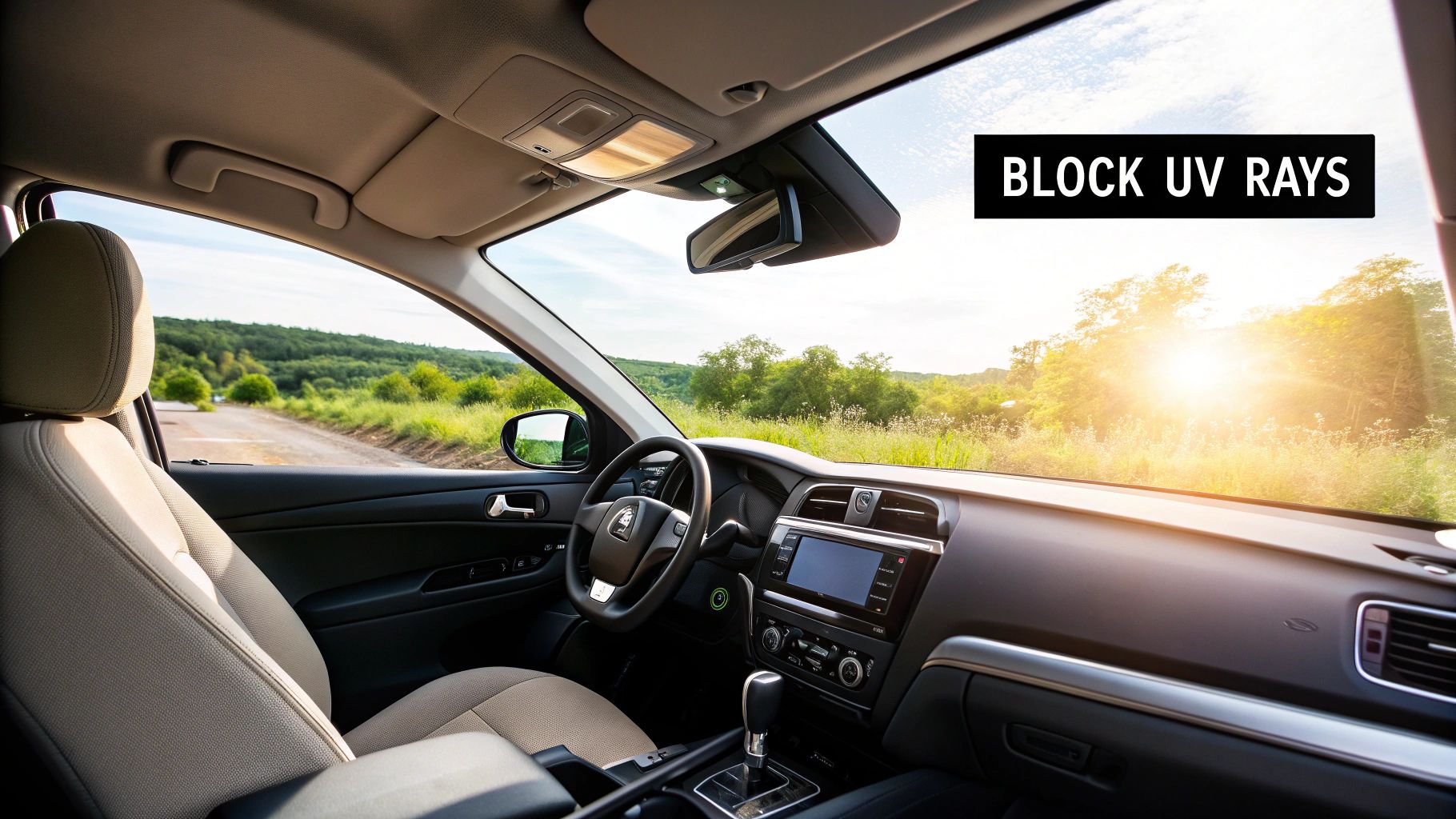
When you start searching for "car window tinting near me," it’s natural to think about the looks first. And sure, a quality tint job gives any vehicle a sharp, sleek appearance. But the true value of professional window tinting goes way beyond style—it’s one of the smartest functional upgrades you can make for your car.
Think of it like high-tech sunscreen, not just for you, but for your car's interior, too. Here in the Bay Area, we know how quickly a parked car can feel like an oven on a sunny day. A good tint acts as a powerful shield against that solar heat, dramatically cutting down how much warmth gets through the glass.
This isn't just about avoiding a scorching hot seat. By keeping your cabin cooler, your A/C doesn't have to blast on high just to keep things comfortable. For anyone driving an EV, that’s a huge deal—less A/C use can mean more miles out of your battery charge.
More Than Just a Cooler Ride
The benefits of a great tint job go far beyond just temperature. One of the most important things it does is protect you from the sun's invisible dangers.
Modern, professional-grade window films are designed to block over 99% of damaging ultraviolet (UV) rays. That's a massive shield protecting your skin on long drives and stopping the sun from fading, cracking, and ruining your dashboard, seats, and other interior surfaces.
This level of protection is a big reason why tinting is so popular. The global market for automotive tinting film hit USD 7.59 billion in 2024, with North America leading the way at 33.4% of the market. And it's no surprise that passenger cars dominate this trend, making up 65.7% of the demand. People want to protect their investment and make driving more enjoyable.
A Safer, More Secure Drive
Beyond sun protection, getting your windows tinted adds a few more layers of safety and security to your daily commute. The film itself actually enhances your windows in ways that address common driver concerns.
Slash That Blinding Glare We've all been there—hit with sudden, blinding glare from the sun or another car's headlights. It’s not just annoying; it's dangerous. Window tint dials down that harsh light, which means less squinting and a clearer view of the road ahead, day or night.
Keep Your Valuables Private Tinted windows make it much harder for prying eyes to see what’s inside your car. A laptop bag on the seat or a phone in the console becomes far less of a target for a smash-and-grab. That extra privacy gives you real peace of mind.
Hold Glass Together in an Accident If your window ever shatters, whether from an accident or a break-in, the tint film's strong adhesive helps hold the broken pieces together. This can prevent sharp glass shards from flying into the cabin and injuring you or your passengers.
In the end, investing in a professional tint is about improving your vehicle from every angle. From a cooler cabin to a safer driving experience, the benefits are undeniable. If you're curious about the different films we offer, you can learn more about our specific car window tint options and find the perfect fit for your car. It's an upgrade that pays you back every single day.
Choosing the Right Type of Window Tint Film
Walking into the world of car window tinting can feel like you’re suddenly expected to know a new language. You'll hear words like dyed, carbon, metallic, and ceramic thrown around, and it's easy to feel a little lost. But don't worry—picking the right film is a lot simpler than it sounds. It really just comes down to matching the right tech to your needs and what you want to spend.
Think of it like this: you wouldn't wear the same sunglasses for a quick drive to the store as you would for a full day of skiing. Each type of window tint is built for a different job. We'll start with the most straightforward option and work our way up to the high-performance films that are becoming the standard for tech-focused Bay Area drivers and especially EV owners. This way, you'll see exactly what you're paying for and why a better film might be the smartest long-term investment for your car.
Dyed Film: A Great Starting Point
Dyed window tint is what most people picture when they think of tint. It's the most common and budget-friendly choice out there. The film gets its dark, classic look from a layer of dye that absorbs the sun's heat, keeping some of it from getting into your car.
While it’s perfect for adding privacy and cutting down on glare, its ability to reject heat is pretty basic. The biggest drawback is that over time, the sun's harsh UV rays break down the dye. That's when you see that tell-tale purplish hue or bubbling on older tint jobs. It’s a solid entry-level choice, but it just doesn't have the staying power of more advanced films.
Carbon and Metallic Films: The Next Level Up
For drivers who want better performance without a huge price jump, carbon and metallic films are fantastic middle-ground options. They offer a serious upgrade over dyed film, but they work in completely different ways.
Carbon Film: This film is infused with tiny carbon particles. These particles are amazing at blocking infrared light, which is the part of the spectrum that makes you feel the heat. A good carbon film can block 40% or more of that heat, making your car feel much cooler. It also has a nice matte finish and, best of all, will never fade to purple.
Metallic Film: Just like the name says, this film uses microscopic metal particles to literally reflect heat away from your car, acting like a tiny mirror. It's incredibly durable and a real workhorse when it comes to heat rejection. But there’s a catch: those same metal particles can mess with your cell phone, GPS, and radio signals.
Because of this signal interference, metallic tint is usually a bad fit for modern, connected cars. The headache of a dropped call or a GPS that can't find its location just isn't worth it for most people, which is why they often look for a smarter, non-metallic alternative.
Ceramic Film: The Ultimate Performance Tint
Ceramic window tint is the top of the line in film technology, and it's what we recommend most often, especially for EV owners. Instead of dye, carbon, or metal, it uses non-conductive ceramic nanoparticles. You can't see them, but they are absolute powerhouses when it comes to stopping heat.
A quality ceramic film can block up to 99% of UV rays and an incredible 80-90% of infrared heat, and it does it all without interfering with any electronic signals. You get the absolute best cooling performance and keep your devices fully connected. It’s the clearest, most durable, and highest-performing film you can get, making it the easy choice if you're searching for the best car window tinting near me.
Thinking about what tint is best for your car can be tough, so here’s a quick breakdown to help you compare the most popular options side-by-side.
Comparing Popular Car Window Tint Films
Tint Type | Heat Rejection | UV Protection | Signal Interference | Longevity | Cost Level |
|---|---|---|---|---|---|
Dyed | Fair | Good (99%) | None | Fair (fades over time) | $ |
Carbon | Good | Excellent (99%) | None | Good (color stable) | $$ |
Metallic | Very Good | Excellent (99%) | High (blocks signals) | Excellent (very durable) | $$ |
Ceramic | Excellent | Excellent (99%) | None | Excellent (long-lasting) | $$$ |
Ultimately, the choice comes down to your priorities. While dyed film offers a basic solution, the long-term benefits of carbon and ceramic films—especially their superior heat rejection and durability—often make them a much smarter investment.
This move toward high-performance materials isn't just a hunch; it's a major trend. As people learn more about UV protection and want a more comfortable drive, advanced films are becoming the new standard. The boom in electric vehicles (EVs) has really pushed this forward, as EV owners look for any advantage to reduce A/C use and preserve their battery range. You can even check out more data on automotive film market trends and consumer preferences on FutureMarketInsights.com. For anyone with an EV, the energy savings from a top-tier ceramic tint make it a no-brainer.
Navigating California Window Tinting Laws
Getting your windows tinted is one of the best upgrades you can make for your car, but it’s not a free-for-all. You absolutely have to follow the law. California has some of the most specific and strictly enforced tinting regulations in the country, and ignoring them is a guaranteed way to get pulled over for a costly "fix-it" ticket.
When you're searching for "car window tinting near me," finding an installer who knows these local laws inside and out is just as critical as the quality of the film they use. A true professional won’t just slap on some tint; they’ll guide you to make sure your car looks fantastic while staying 100% street-legal on Bay Area roads.
Understanding VLT: The Language of Tint Law
The most important term you'll hear is Visible Light Transmission, or VLT. It sounds technical, but the concept is simple. VLT is just the percentage of visible light that can pass through both the window glass and the tint film combined. A lower VLT percentage means a darker tint.
California law is crystal clear about the VLT percentages allowed on different windows. Think of it as a set of rules for each section of your car, and each section has its own specific limit.
Key Takeaway: The law isn't about how dark a tint looks to your eye. It's about the precise percentage of light it lets through, which police can measure instantly with a special meter.
California Tint Laws: A Simple Breakdown
So, what are the actual rules? Here’s exactly what you need to know to stay compliant, based on California Vehicle Code (CVC) Section 26708. The standards are different for your front and back windows.
Windshield: You can have a non-reflective tint, but only on the top 4 inches of the glass.
Front Side Windows: This is the big one. The film on your front driver and passenger windows must allow at least 70% of light to pass through. This means you can't go very dark at all.
Back Side & Rear Windows: Good news here! For your rear side windows and the back windshield, you can go as dark as you want. The only catch is that if you tint your back window, you must have dual side mirrors.
While these icons show different types of film technology, the legality of any tint—whether it's dyed, carbon, or ceramic—always comes down to its VLT percentage, not the material it’s made of.
Don't Forget About Colors and Reflections
It's not just about darkness. California law also has strict rules about certain colors and how reflective the film can be, no matter the VLT.
The law explicitly bans any tint that is red, amber, or blue. On top of that, films that are overly reflective are also illegal. Your front and side windows cannot be more reflective than a standard, untinted window. This rule is all about safety, ensuring law enforcement can see into the vehicle.
Choosing a professional installer like Auto Renu Auto Glass LLC takes all the guesswork out of the equation. We only work with high-quality, compliant films and will help you pick a tint that gives you the heat rejection and privacy you want while sticking to every letter of California law. It’s the only way to protect your investment and drive with total peace of mind.
Why Mobile Tinting Is the Smart Choice
Let's be honest, the old way of getting your car windows tinted was a pain. You’d have to block off half your day, drive to a shop, leave your car for hours, and then figure out how to kill time until it was ready. For busy people in the Bay Area, that kind of inconvenience just doesn’t fly anymore.
Thankfully, there's a much smarter way to do things: mobile window tinting. The whole concept is flipped on its head. Instead of you driving to the tint shop, the pros come right to your doorstep.
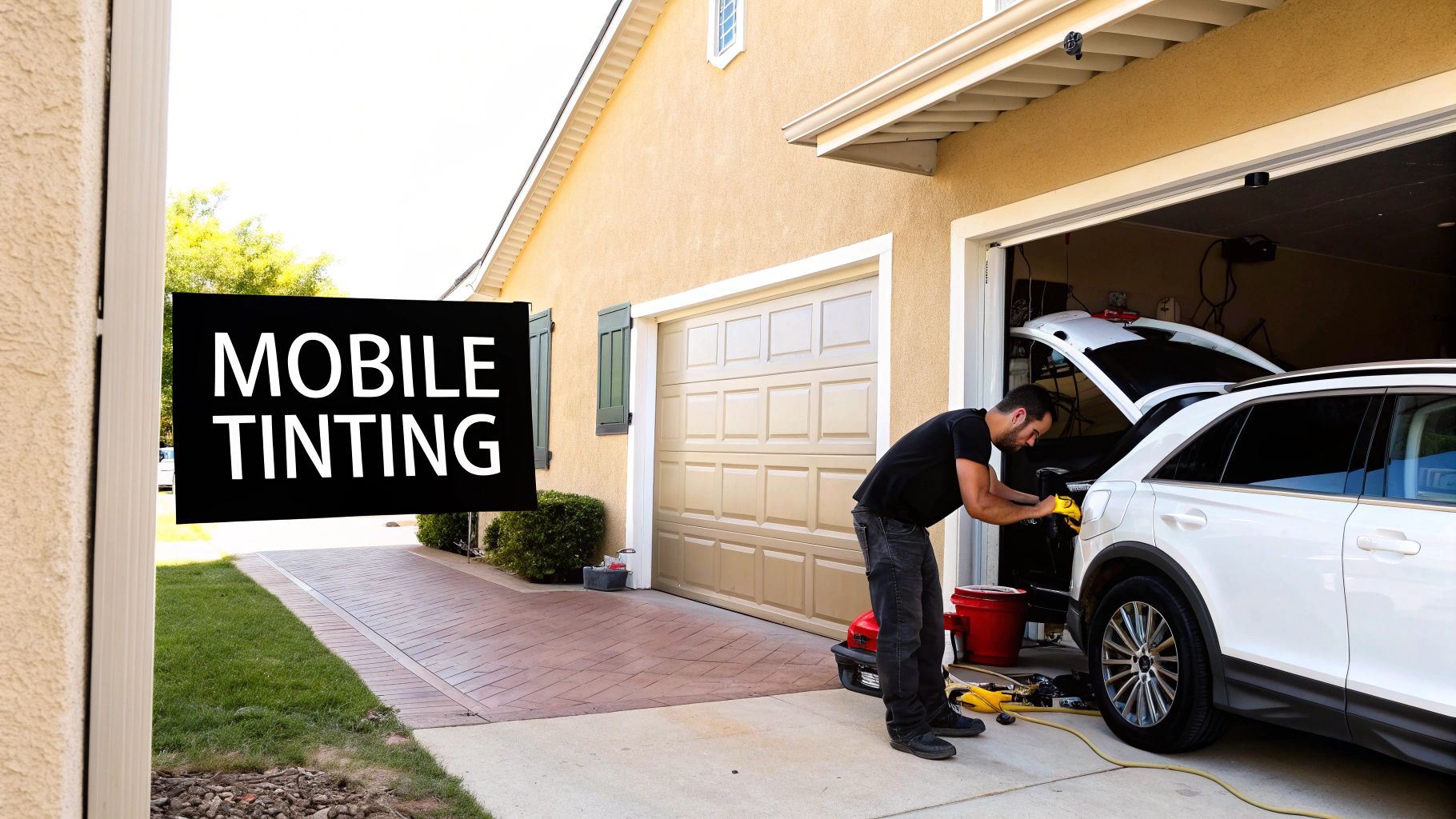
Picture this: a skilled technician pulls up to your home or office, fully equipped with everything needed to do a flawless, factory-quality job. They can work right in your garage, carport, or any clean, shaded spot. When you're searching for "car window tinting near me," this is the ultimate time-saver.
Convenience That Fits Your Schedule
The biggest win with mobile tinting is, without a doubt, the time you get back. Your car is essential, and losing it for an entire afternoon is a major hassle. With a mobile service, that problem completely vanishes.
You can carry on with your workday, hop on a conference call, or just hang out at home while an expert takes care of the installation. No more bumming rides or staring at the walls of a waiting room. The service works around your life, not the other way around.
The core idea is simple: professional tinting should adapt to your schedule, not force you to adapt to a shop’s. This customer-first approach is what makes modern mobile services so much better.
This model of bringing expert services directly to you isn't just for tinting. To get a feel for how it works in other areas, you can explore the convenience of mobile car detailing and see why it's a game-changer for car owners.
Quality Without Compromise
One of the first questions people ask is whether a mobile job can really be as good as one done in a shop. The answer is an emphatic yes. A seasoned mobile technician is a specialist who knows how to work in different settings and create the right conditions for a perfect application.
Here’s how a professional mobile setup guarantees top-notch results:
Controlled Environment: Experts know how to prep a space like a garage to minimize dust and wind—the two biggest enemies of a clean tint job.
Precision Tools: Mobile pros carry the same high-end equipment you'd find in any top-tier shop, from professional-grade heat guns to precision cutting tools.
Dedicated Attention: When a technician is at your location, their focus is 100% on your vehicle. There are no other cars or customers to distract them, which leads to incredible attention to detail.
The end result is a smooth, bubble-free finish that looks like it rolled right off the factory floor. You get the same premium, durable tint without any of the old-school hassle.
Opting for a mobile solution from a trusted provider like Auto Renu Auto Glass LLC isn't just about getting your windows tinted; it's about investing in a better, more efficient service. Ready to see just how easy it is? Get a custom price and book your appointment through our simple window tint quote request form.
What to Expect During and After Your Tinting Appointment
Getting your windows tinted is pretty straightforward, but knowing what's happening—and what you need to do afterward—makes all the difference. While our mobile service is all about convenience, the most critical part of the job actually begins after our technician drives away.
It all starts when you book a time that works for you. Our mobile installer comes right to your location, whether that’s your driveway or your office parking lot. The installation itself is quicker than most people think. A standard sedan usually takes about 2-3 hours, with larger SUVs or more complex jobs taking a bit longer.
Our tech will meticulously clean every window, cut the film with precision for a custom fit, and apply it with a special mounting solution. This solution lets them position the film perfectly and squeegee out any trapped air, which is the secret to that smooth, bubble-free look.
The All-Important Curing Phase
Once the film is on the glass, the real magic starts: curing. This is just a fancy word for drying. It’s the time it takes for the leftover moisture trapped between the film and the glass to evaporate, letting the adhesive form a permanent bond. Depending on the weather and the type of film, this can take anywhere from a few days to a couple of weeks.
During this time, you might see some things that look a little strange. Small water pockets or a slightly hazy, cloudy look are totally normal. It’s a lot like putting a screen protector on your phone—it sometimes needs a day or two for the little imperfections to settle out.
Whatever you do, resist the urge to poke, press, or "fix" these little spots. They are a temporary, natural part of the drying process and will disappear on their own, leaving you with a crystal-clear finish.
Trying to mess with them can easily damage the film for good. A little patience here goes a long way in protecting your investment.
Simple Aftercare for a Long-Lasting Look
Taking care of your new tint is easy, but a few simple rules, especially right at the beginning, will ensure it looks great for years to come. The wrong move can cause peeling, bubbling, or scratching.
Here’s all you need to remember:
Keep Your Windows Rolled Up: This is the big one. For at least 3-5 days after the installation, don't roll your windows down. Doing it too soon can snag the bottom edge of the film before it's fully stuck, causing it to peel right off.
Clean Gently: When it's time for a wash, stay away from harsh chemicals and anything abrasive. Ammonia-based cleaners (like regular Windex) are your tint's worst enemy, as they can eat away at the adhesive and film over time.
Use the Right Tools: The best cleaning method is the simplest: a soft microfiber cloth and a gentle mix of soap and water, or any cleaner specifically marked as "ammonia-free." That’s all it takes to keep your tint looking brand new.
By understanding the process and following these simple aftercare steps, you can feel confident that your search for "car window tinting near me" will end with a flawless result that adds style and protection to your vehicle for years.
Your Top Car Window Tinting Questions Answered
Even with all the benefits laid out, you probably still have a few practical questions. That’s completely normal. You want to be sure you're making the right call for your car, and getting straight answers is the best way to feel good about the decision.
We've heard just about every question in the book from Bay Area drivers, so we've put together answers to the most common ones we hear. Let's get into the nitty-gritty details.
How Much Does Car Window Tinting Cost in the Bay Area?
The price tag on a professional tint job can vary quite a bit, and it really boils down to two things: your car and the type of film you pick. It's simple geometry—a two-door coupe has a lot less glass than a full-size SUV, so the cost will naturally be lower.
The material you choose is the other big piece of the puzzle. A top-tier ceramic film, which is fantastic at blocking heat and won't mess with your cell signal, is going to be more of an investment than a quality carbon film. The only way to know for sure is to get a custom quote that's specific to your vehicle and your film preference.
Will Window Tint Damage My Rear Defroster Lines?
This is a huge one, and I get why people worry about it. But here’s the good news: when a skilled pro does the job, your defroster lines are perfectly safe. The idea that tint messes them up is a total myth.
An experienced installer knows exactly how to work around those delicate lines on your rear windshield. They use special techniques to lay the film down smoothly, ensuring it sticks perfectly without causing a single issue. Your defroster will work just like it did before, clearing up that morning fog without a problem.
A professional installation is the key here. The real risk of damaging those defroster lines comes from a DIY job or an inexperienced installer. Don't take that chance—always trust an expert.
How Long Does Professional Car Window Tint Last?
The lifespan of your tint really depends on two things: the quality of the film itself and the quality of the installation. If you go for a cheap, low-grade film, don't be surprised to see it start bubbling, peeling, or turning that ugly purple color in just a year or two.
On the other hand, high-quality films like the ones we use are built to last. They’re engineered to hold up for years and years without fading or failing. In fact, any reputable shop that stands by their work will offer a lifetime warranty that covers both the film and the installation. That’s how you know you’re getting a product that’s meant to last as long as you own your car.
Does Old Window Tint Need to Be Removed First?
Yes, 100%. If you have any old, damaged, or illegal tint on your windows, it has to come off before the new film goes on. Trying to put new tint over an old layer is a recipe for disaster—it will look terrible and fail almost immediately.
Getting old tint off is a tricky job. It requires the right tools and solvents to dissolve the adhesive without leaving a sticky mess or, worse, scratching your glass. It’s a painstaking process, and a DIY attempt can easily damage your windows or those defroster lines we just talked about. A professional service can handle the removal safely and make sure the glass is perfectly prepped for the new film.
Have a specific question about your car? The team at Auto Renu Auto Glass LLC is ready to help. Get a free, no-obligation quote and see just how convenient our mobile tinting service is by visiting us at https://www.autorenu911.com.