
Understanding the Real Cost of Auto Glass Replacement
What's the true cost of auto glass replacement? Our guide explains how vehicle type, glass, ADAS, and insurance impact your final bill so you can save money.
Jan 3, 2026
generated
cost of auto glass replacement, windshield replacement cost, adas recalibration, mobile auto glass, car window replacement
When you're staring at a cracked windshield, the first thing on your mind is almost always, "How much is this going to set me back?" The honest answer is: it depends.
For a basic car, you're likely looking at a cost somewhere between $250 and $750. But if you drive a luxury vehicle or one loaded with modern tech, that figure can easily jump past $1,000. The final price tag hinges on your vehicle's make and model, the specific type of glass required, and whether it's linked to any complex safety sensors that need recalibration.
Breaking Down the Typical Price Ranges
Let's get into the specifics. While there's no one-size-fits-all price, we can map out some general cost ranges to give you a clearer picture. Knowing these ballpark figures helps you set realistic expectations before you even start calling around for quotes.
The cost of replacing auto glass can swing pretty wildly depending on which window is broken and the kind of car you have. The windshield is almost always the most expensive piece to replace—it’s big, complex, and a key part of your car's structural safety. Side and rear windows are usually cheaper, but they can have their own costly features.
A Look at Different Glass Types
Here's a quick rundown of what you can generally expect to pay for the three main types of auto glass:
Windshield Replacement: This is the big one. For a standard sedan without any fancy features, you might pay between $250 and $450. But if your car has cameras and sensors for safety systems like lane-keep assist, that price can climb to $700 or more because the system must be professionally recalibrated.
Side Window Replacement: Replacing a door window is typically less of a hassle. Costs usually land between $200 and $450. The price can be influenced by things like factory tinting, the power window motor, and whether the glass is standard tempered or upgraded laminated glass.
Rear Window (Back Glass) Replacement: Your back glass is more complex than a side window, often featuring defrosting lines and sometimes built-in antennas. Because of this, you should expect to pay anywhere from $300 to $650 for a replacement.
Just remember, these are starting points. Your final bill will always be a mix of factors, including your specific vehicle, the glass features, and the labor rates in your local area.
To give you an even clearer idea, we've put together a table breaking down estimated costs by vehicle class. For a broader look at vehicle maintenance expenses, tools like an automotive repair estimator can also offer some useful context.
Estimated Auto Glass Replacement Cost Ranges
This table provides a quick overview of typical replacement costs based on the type of glass and common vehicle categories. Prices are estimates and can vary based on specific factors discussed in this guide.
Glass Type | Standard Vehicle (e.g., Honda Civic) | SUV/Truck (e.g., Ford F-150) | Luxury/EV (e.g., Tesla, Mercedes) |
|---|---|---|---|
Windshield | $250 – $450 | $350 – $600 | $700 – $1,500+ |
Side Window | $200 – $350 | $250 – $400 | $300 – $500+ |
Rear Window | $300 – $500 | $350 – $550 | $450 – $800+ |
As you can see, the jump from a standard car to a luxury or electric vehicle is significant, especially for windshields where advanced technology is most common.
What Really Drives Your Replacement Cost?
While knowing the average cost gives you a decent starting point, the final number on your invoice depends on a few critical variables. Getting a handle on these factors is the key to understanding any quote and avoiding any last-minute surprises. The price isn't just for a piece of glass; it's a blend of specific materials, integrated technology, and the skilled labor needed to put it all together.
Think of it like buying a new laptop. The base model has one price, but the final cost will change depending on whether you upgrade the processor, add more memory, or get a high-resolution screen. In the same way, the cost of auto glass replacement is built from the specific components that make up your vehicle's glass system.
The Type of Glass Matters a Lot
Not all auto glass is the same. The material and how it's made have a huge impact on both your safety and the final bill. Your vehicle actually uses two different kinds of safety glass, each designed for a specific job.
Laminated Glass: This is what your windshield is made of. It's constructed with two layers of glass that sandwich a thin layer of vinyl. If the windshield breaks, that vinyl layer does an incredible job of holding the sharp shards together, keeping them from flying into the car. This complex, multi-layer design makes it more expensive to manufacture and replace.
Tempered Glass: You'll typically find this on your side and rear windows. This glass goes through a special heat-treatment process that makes it much stronger than regular glass. If it does break, it shatters into thousands of tiny, pebble-like pieces that are far less likely to cause serious injury. It's usually the more affordable option of the two.
Advanced Driver-Assistance Systems (ADAS) Recalibration
If your car was built in the last ten years, it's almost guaranteed to have Advanced Driver-Assistance Systems, or ADAS. These are the high-tech safety features we've come to rely on—things like lane-keeping assist, adaptive cruise control, and automatic emergency braking. And they all depend on cameras mounted directly to your windshield.
When that windshield is replaced, the camera has to be removed and reinstalled. If it’s off by even a single millimeter, those critical safety systems can malfunction, either failing to spot a hazard or reacting at the wrong time. This is where ADAS recalibration becomes essential.
Think of recalibration like tuning a guitar. The camera is a precision instrument, and if it's not perfectly aligned to the manufacturer's exact specifications, the whole safety system is out of tune and simply won't work correctly. It's a non-negotiable step for safety, and it adds to the overall cost of the replacement.
This diagram helps visualize how a few key elements, like the specific glass and your vehicle's features, are major drivers of the final price.
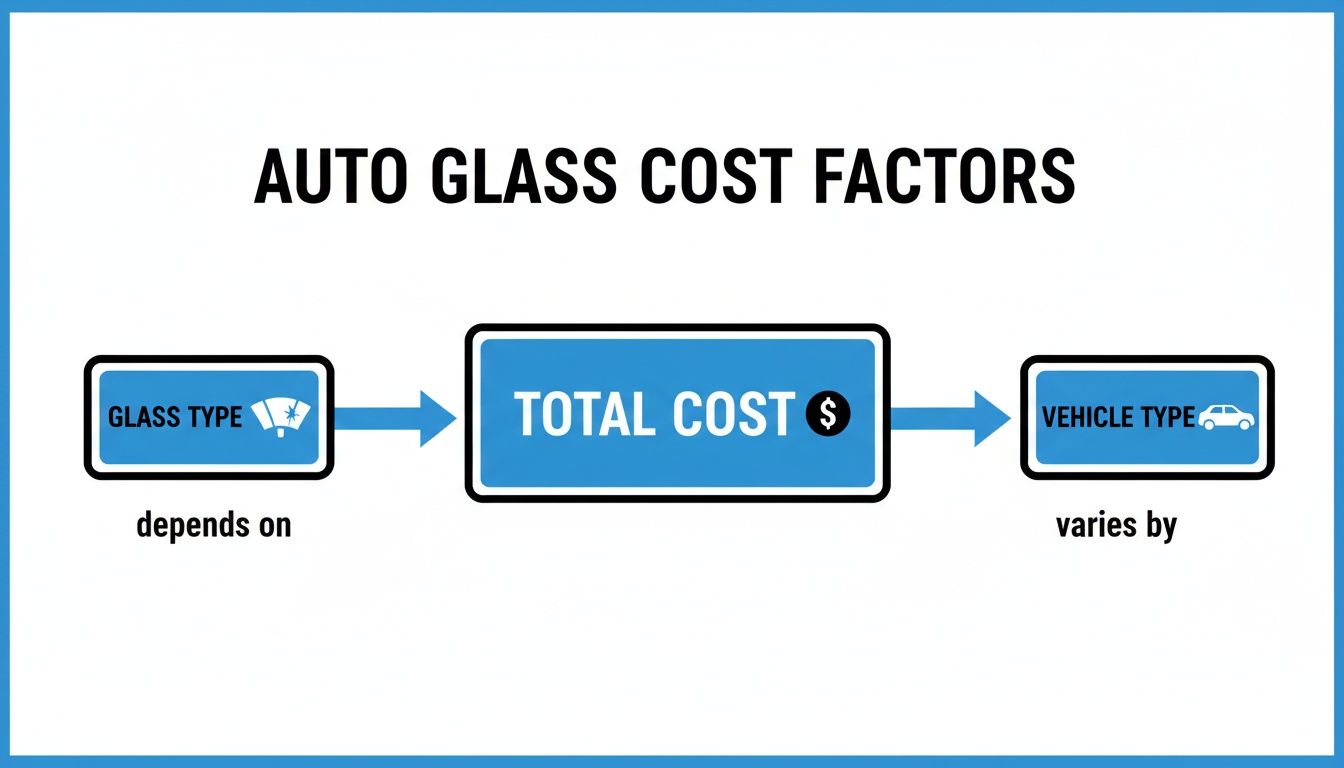
As you can see, the more complex the glass and the more tech-heavy the vehicle, the more you can expect the job to cost. If you want to dive deeper, check out our guide on the importance of ADAS calibration after windshield replacement.
Labor Costs and Technician Expertise
The glass itself is just one part of the story; the skill of the person installing it is just as crucial. Labor costs are a major factor in the final price, typically falling somewhere between $50 to $150 per hour. This rate can vary based on your location, the technician's experience, and how quickly you need the job done.
For example, side window replacements in the U.S. average $350 to $500 for passenger doors, though you might see prices as low as $150 before labor is even factored in. Things like window tint, built-in defrosters, and even whether you're in a city or a rural area can all affect that price.
A proper installation ensures a perfect, watertight seal that prevents leaks and annoying wind noise, all while maintaining the structural strength of your car. An experienced tech knows how to handle the delicate electronics and perform a precise ADAS recalibration, making sure your car is just as safe as the day it rolled off the assembly line. Paying for quality labor isn't just an expense—it's an investment in your safety.
Choosing Between OEM and Aftermarket Glass
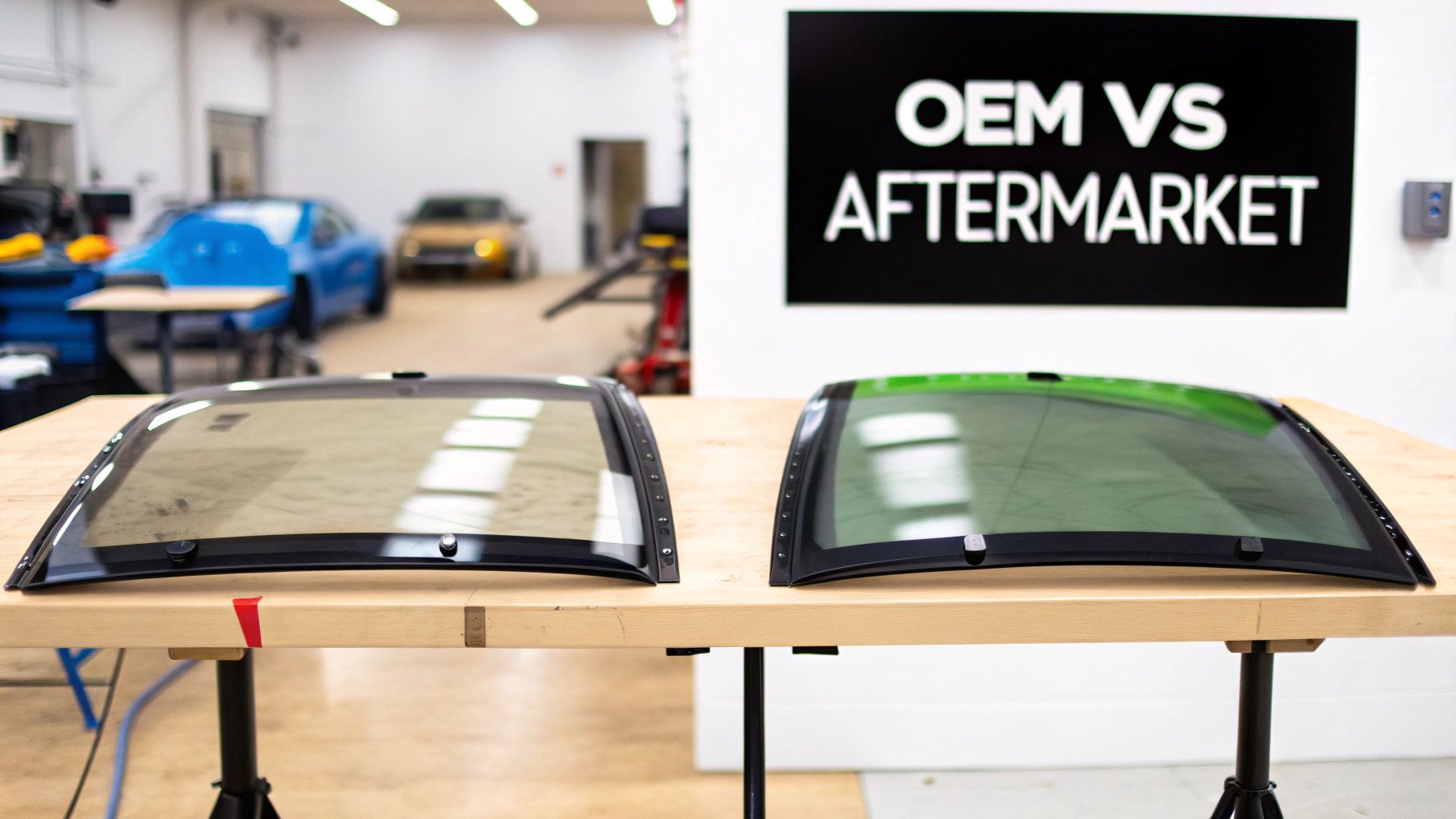
When your auto glass needs replacing, one of the biggest decisions you'll make is whether to go with Original Equipment Manufacturer (OEM) or aftermarket glass. It’s a choice that directly influences the cost of your auto glass replacement, the quality of the fit, and even how well your car's safety features work. Knowing the pros and cons of each will help you make a smart call.
Think of OEM glass as the identical twin of the glass your car had when it rolled off the assembly line. It’s made by the very same company, to the exact same specs—thickness, tint, logos, and sensor brackets are all a perfect match.
Aftermarket glass, on the other hand, is made by different companies. These manufacturers have to meet strict federal safety standards, but their products aren't created from the original mold. This is where you start balancing cost against a perfect match.
What Is OEM Glass?
Many people consider OEM glass the gold standard, and for good reason. Since it’s a direct replica of the original, it guarantees a perfect fit every single time. You don’t have to worry about slight differences in shape or size that could lead to wind noise or frustrating water leaks down the road.
This precision is absolutely essential for cars equipped with Advanced Driver-Assistance Systems (ADAS). The brackets for cameras and sensors are attached at the factory with pinpoint accuracy. Using OEM glass means those components will be mounted in the exact right spot, which makes the crucial recalibration process much smoother and more reliable.
For many leased vehicles or newer cars still under warranty, using OEM glass is often a requirement. Dealerships and lease agreements may specify that only original parts can be used for repairs to maintain the vehicle's integrity and value.
Understanding Aftermarket Glass
Aftermarket glass is the go-to budget-friendly alternative. Think of it like a generic versus a brand-name prescription—it does the same job and is approved for safety, but it comes from a different maker. Every piece of aftermarket glass must meet the same strict Department of Transportation safety standards as OEM glass, so you aren't compromising on fundamental protection.
The aftermarket glass industry is huge and continues to grow. In fact, some projections estimate the global auto glass market could hit $35.81 billion by 2030, fueled by drivers looking for high-quality, affordable options. This trend really speaks to the trust that both consumers and insurance companies have in reputable aftermarket brands. You can read more about these trends in the auto glass industry.
However, not all aftermarket glass is created equal. Quality can definitely vary from one brand to another. While the best aftermarket glass is virtually identical to OEM, some lower-quality options might have minor flaws in clarity or fit. This is why it’s so critical to work with a trusted installer who sources their glass from well-regarded suppliers.
Comparing OEM and Aftermarket Auto Glass
To help you see the differences more clearly, let's put OEM and high-quality aftermarket glass head-to-head. This table breaks down the key factors so you can decide what’s most important for you and your vehicle.
Feature | OEM Glass | Aftermarket Glass |
|---|---|---|
Cost | Typically higher; often 30-50% more expensive. | More affordable, offering significant savings. |
Fit and Finish | Guaranteed perfect fit, identical to the original glass. | High-quality brands offer an excellent fit, but minor variations can exist. |
ADAS Compatibility | Sensor brackets are pre-installed in the exact factory position. | Brackets are often installed by the technician, requiring precise placement. |
Source | Made by the same company that manufactured your vehicle's original glass. | Made by third-party companies specializing in replacement auto glass. |
Availability | Can sometimes require special ordering from the dealership, leading to delays. | Generally widely available and in stock for most common vehicle models. |
Warranty | Often backed by the vehicle manufacturer's warranty. | Comes with a warranty from the glass manufacturer and the installer. |
So, what's the right call? It really depends on your car, budget, and personal preference. If you’re driving a brand-new luxury SUV with a sophisticated ADAS setup, the peace of mind from an OEM windshield is likely worth the higher price. But for an older car without those advanced sensors, a top-tier aftermarket windshield can deliver the same safety and performance at a much friendlier cost.
How Insurance Can Cover Your Auto Glass Costs
Let's be honest, dealing with insurance can feel like a headache. But when you’re staring at a huge crack in your windshield, your policy can be your best friend, turning an unexpected bill for the cost of auto glass replacement into a much more manageable expense—or even a $0 out-of-pocket cost.
The key is knowing what your policy actually covers. Auto insurance isn't a one-size-fits-all product. It's a collection of different coverages, and only specific ones apply to glass damage. Figuring this out upfront makes the whole replacement process a lot less stressful.
Comprehensive Coverage: Your Key to Glass Claims
When a stray rock flies up on the highway or a hailstorm leaves its mark, it’s your comprehensive coverage that comes to the rescue. This part of your policy is built for damage that happens from things other than a collision. Think of it as your protection against the unpredictable: theft, falling branches, vandalism, and, you guessed it, flying road debris.
While comprehensive coverage is usually an add-on, it’s the standard way to handle most glass claims. If you have it, your insurer typically pays for the replacement after you cover your deductible. Some companies will even waive the deductible for small chip repairs, encouraging you to fix it before it spreads into a bigger, more expensive problem.
One common point of confusion is what happens in an actual car accident. If your windshield breaks because of a collision with another vehicle, that claim usually falls under your collision coverage, not comprehensive. It's always a good idea to clarify with your agent.
Navigating the Insurance Claims Process
You don't have to go it alone. Filing a glass claim is usually pretty straightforward, and most experienced auto glass shops—like Auto Renu Auto Glass LLC—work with insurance companies every day. We can often handle the communication and paperwork for you.
Here’s a quick look at how it generally works:
Check the Damage: First things first, see how bad it is. Is it a small chip that can be repaired, or does the whole thing need to be replaced? Snap a few clear pictures.
Call Your Insurer: Give your insurance company a call to report the damage. This is when you'll confirm your coverage, ask about your deductible, and see if they have any specific procedures.
Schedule Your Service: Now, pick a qualified technician. Remember, you have the right to choose your repair shop, so you can go with a company you trust. The shop will then verify your policy details with the insurer.
Pay Your Deductible: After the job is done, you’ll pay your deductible amount directly to the glass shop. Your insurance provider takes care of the rest of the bill.
Getting familiar with how to file an auto insurance claim ahead of time can make the conversation with your insurer much smoother.
Will a Glass Claim Raise Your Rates?
This is the big question on everyone's mind. The good news? A single glass claim almost never affects your premium. That's because comprehensive claims are for "no-fault" incidents—things that were completely out of your control. In fact, some states even have laws that prevent insurers from raising your rates for a not-at-fault windshield claim.
That said, filing several claims in a short time might cause your insurer to see you as a higher risk. If the total replacement cost is just a little over your deductible, it might make more sense to pay out-of-pocket and keep your claims history clean. For a deeper dive, check out our guide on when insurance covers windshield replacement to help you weigh your options.
The Shop That Comes to You: The Rise of Mobile Replacement
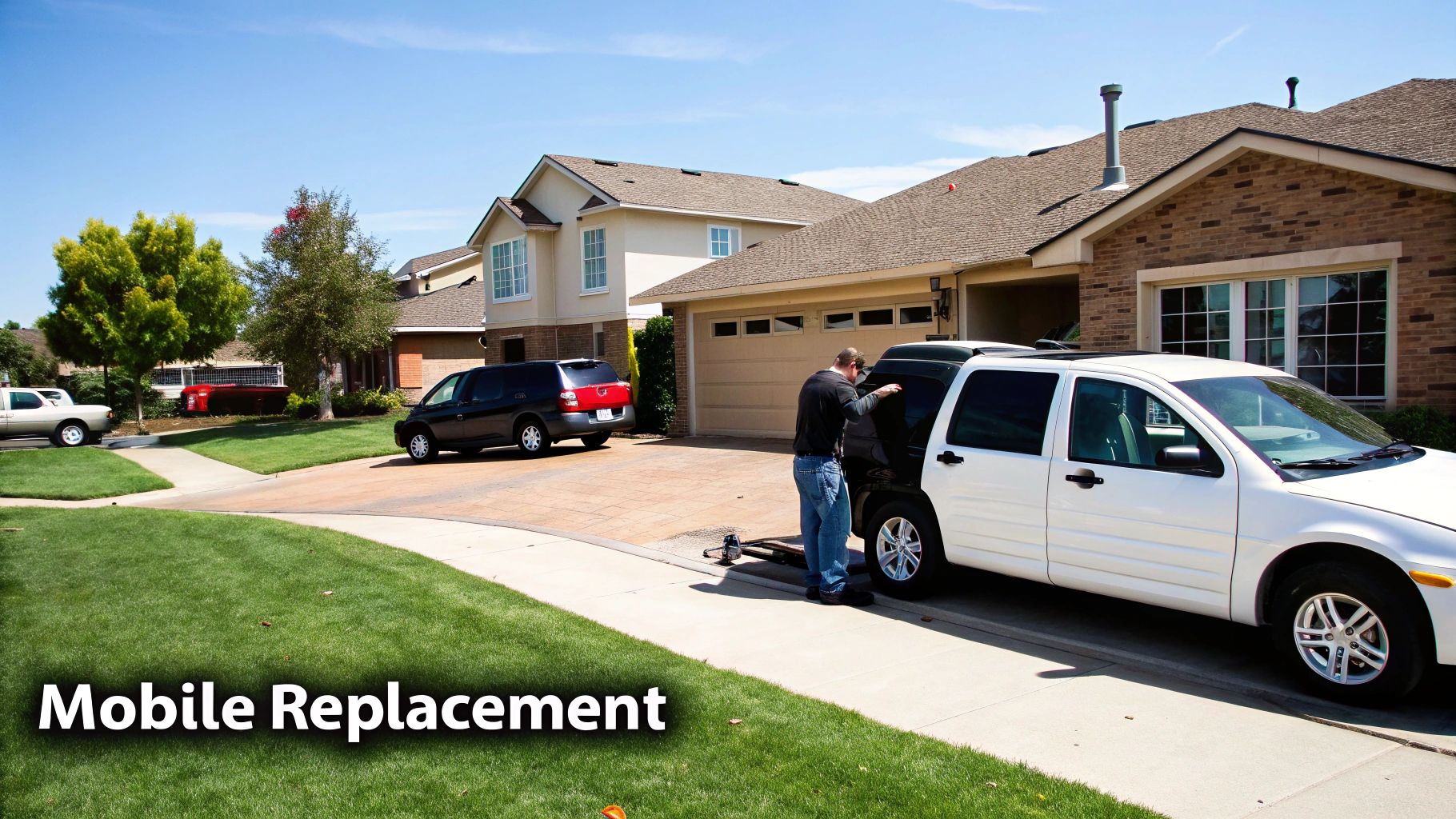
What if you didn't have to carve time out of your busy schedule to get your windshield fixed? Let's face it, dropping your car at a shop, arranging a ride, and waiting for hours is a major hassle. Mobile replacement services flip that script entirely by bringing the shop right to your doorstep.
Imagine getting your windshield replaced while you're at work, without ever leaving your desk. Or having a technician show up at your house on a Saturday morning so you don't miss a beat. That's the real magic of a mobile service—it works around your life, turning a disruptive chore into a simple appointment you barely have to think about.
This shift toward convenience is a huge driver of industry growth. The global automotive glass replacement market jumped from $31.79 billion in 2022 to $35.19 billion in 2023, and it's on track to hit $40.55 billion by 2025. That boom tells you one thing: people want reliable, efficient service that fits their modern lives. You can dig deeper into these global automotive market trends if you're curious.
Dealership Quality, Driveway Convenience
One of the biggest myths about mobile service is that you’re somehow sacrificing quality for convenience. Nothing could be further from the truth. A top-tier mobile technician arrives with the exact same tools, premium materials, and deep expertise you'd find in a high-end repair shop. Think of their van as a specialized workshop on wheels, fully equipped for any job.
This is especially true for today's complex luxury and high-tech vehicles. Whether you're driving a Tesla with a massive glass roof, a Mercedes with sound-dampening acoustic glass, or an Audi packed with sensors, a skilled mobile pro knows exactly how to handle it. They're trained to perform replacements to strict manufacturer standards while protecting your car's sensitive electronics and pristine interior.
The point isn't to cut corners; it's to cut out the overhead of a physical garage. That efficiency gets passed on to you in the form of convenience, while the high standards for safety, materials, and installation remain firmly in place.
On-the-Spot ADAS Recalibration
As we've covered, getting your ADAS safety systems recalibrated is non-negotiable after a windshield replacement. In the past, this was a two-step nightmare: get the glass replaced at one shop, then book a separate, time-sucking appointment at the dealership for the calibration.
Thankfully, those days are over. Leading mobile providers like Auto Renu Auto Glass LLC have the sophisticated equipment needed to perform a precise ADAS recalibration right there on-site. As soon as your new windshield is in, the technician plugs their diagnostic tools into your vehicle and perfectly realigns the cameras to factory specs.
This all-in-one approach is a game-changer:
You save a ton of time. It turns two appointments into one efficient visit.
Your safety is restored immediately. There's no period of driving with misaligned safety features. You're protected from the moment you get back behind the wheel.
The process is seamless. The same expert who installed the glass handles the calibration, ensuring everything is done correctly from start to finish.
What to Expect From a Mobile Appointment
Wondering how it all works? A mobile auto glass replacement is designed to be incredibly smooth and transparent, with zero disruption to your day.
Easy Booking: You schedule online or over the phone, giving your vehicle details and location. You'll get a clear, upfront quote on the cost of auto glass replacement.
Technician Arrives: The technician comes to you—at home, the office, wherever you are—at the agreed-upon time with the right glass and all the necessary tools.
Clean, Professional Installation: They'll carefully remove the old glass, then install the new windshield using industry-best practices and adhesives. They always use protective coverings to keep your car spotless.
On-Site Recalibration (If needed): If your vehicle is equipped with ADAS, the technician performs the recalibration right after the glass is installed.
Final Checks & Cleanup: Finally, they do a full quality inspection to make sure the seal is perfect and clean up any mess. Your vehicle is ready to go after the recommended adhesive curing time.
This on-demand model delivers expert work without the old-school hassle. It’s the perfect solution for anyone who values their time as much as their safety. If you're exploring your options, our detailed guide on mobile windshield replacement cost can give you an even clearer picture.
Your Top Questions About Auto Glass Costs, Answered
When you're dealing with a broken windshield, a lot of questions pop up. It's totally normal. To help you out, I've put together some straightforward answers to the questions we get asked the most. Think of this as the final piece of the puzzle, giving you the clarity you need to make the right call.
We'll cover everything from repair vs. replacement costs to how long you'll be without your car and what to expect with insurance. Let's clear up any lingering confusion.
Is It Cheaper to Repair or Replace a Windshield?
Hands down, repairing a small chip is always the cheaper route. A quick repair might set you back less than $100. A full replacement, on the other hand, can easily run from a few hundred dollars to well over a thousand, especially on newer vehicles.
Repairs are perfect for damage smaller than a dollar bill that isn't right in the driver's line of sight. But here's the catch: don't wait. A small chip can turn into a massive crack seemingly overnight thanks to road vibrations or a sudden temperature swing. That tiny, cheap fix can quickly become a mandatory—and much more expensive—replacement.
Here's a great tip: Most insurance companies will waive your comprehensive deductible for a windshield repair. That often means you pay $0 out-of-pocket, making it a no-brainer to get it fixed ASAP.
How Long Does Auto Glass Replacement Take?
The actual hands-on work of swapping out a windshield, side window, or back glass is pretty fast—usually between 60 and 90 minutes. But the job isn't done just because the glass is in. The special urethane adhesive that holds it in place needs time to cure properly to create a safe, structural seal.
This is what we in the industry call the safe drive-away time, and it’s non-negotiable for your safety. Depending on the adhesive we use and the humidity in the air, this curing period can add another 30 minutes to a couple of hours to the total appointment time.
If your car has modern safety features (ADAS), we'll also need to recalibrate the system, which tacks on another 30 to 60 minutes. The beauty of a professional mobile service is that we handle all of this right in your driveway, so you're not stuck waiting around in a shop.
Will a Glass Claim Increase My Insurance Premium?
This is a big one, and thankfully, the answer is usually no. In most situations, a single comprehensive claim for a broken windshield won't make your rates go up. That’s because these claims are considered "no-fault"—it’s not like you could have avoided that rock flying up from the highway.
In fact, some states have laws that specifically prohibit insurance companies from raising your rates after a not-at-fault glass claim.
However, filing a bunch of claims in a short time frame might get your policy flagged for a review. If the cost of auto glass replacement is just a little more than your deductible, it might be worth considering paying out-of-pocket to keep your claims record clean. When in doubt, a quick call to your insurance agent is always a smart move.
What Is ADAS Recalibration and Why Is It Necessary?
ADAS (Advanced Driver-Assistance Systems) is the technology behind your car's modern safety features—think lane-keep assist, automatic braking, and adaptive cruise control. These systems get their information from cameras and sensors, and the main camera is usually mounted right on your windshield.
When we replace the windshield, that camera's position is altered, even by a fraction of a millimeter. Recalibration is the process of realigning that camera and its sensors with factory precision, ensuring the whole system works exactly as the manufacturer intended.
Skipping this step is a huge safety risk. A misaligned camera can cause the system to misread the road, fail to brake in an emergency, or steer you incorrectly. It's a critical, mandatory part of any windshield replacement on a modern vehicle to ensure it's truly safe to drive again.
When you need a seamless, professional solution for your vehicle's glass, Auto Renu Auto Glass LLC delivers dealership-level quality directly to you. Schedule your mobile service today and let our experts handle the rest.