Is a Cracked Windshield Illegal? 5 Facts for Drivers
Is a cracked windshield illegal? Find out how laws, safety risks, and insurance coverage affect you. Learn when to repair or replace your windshield.
Nov 7, 2025
generated
cracked windshield illegal, windshield laws, auto glass safety, vehicle inspection, car maintenance
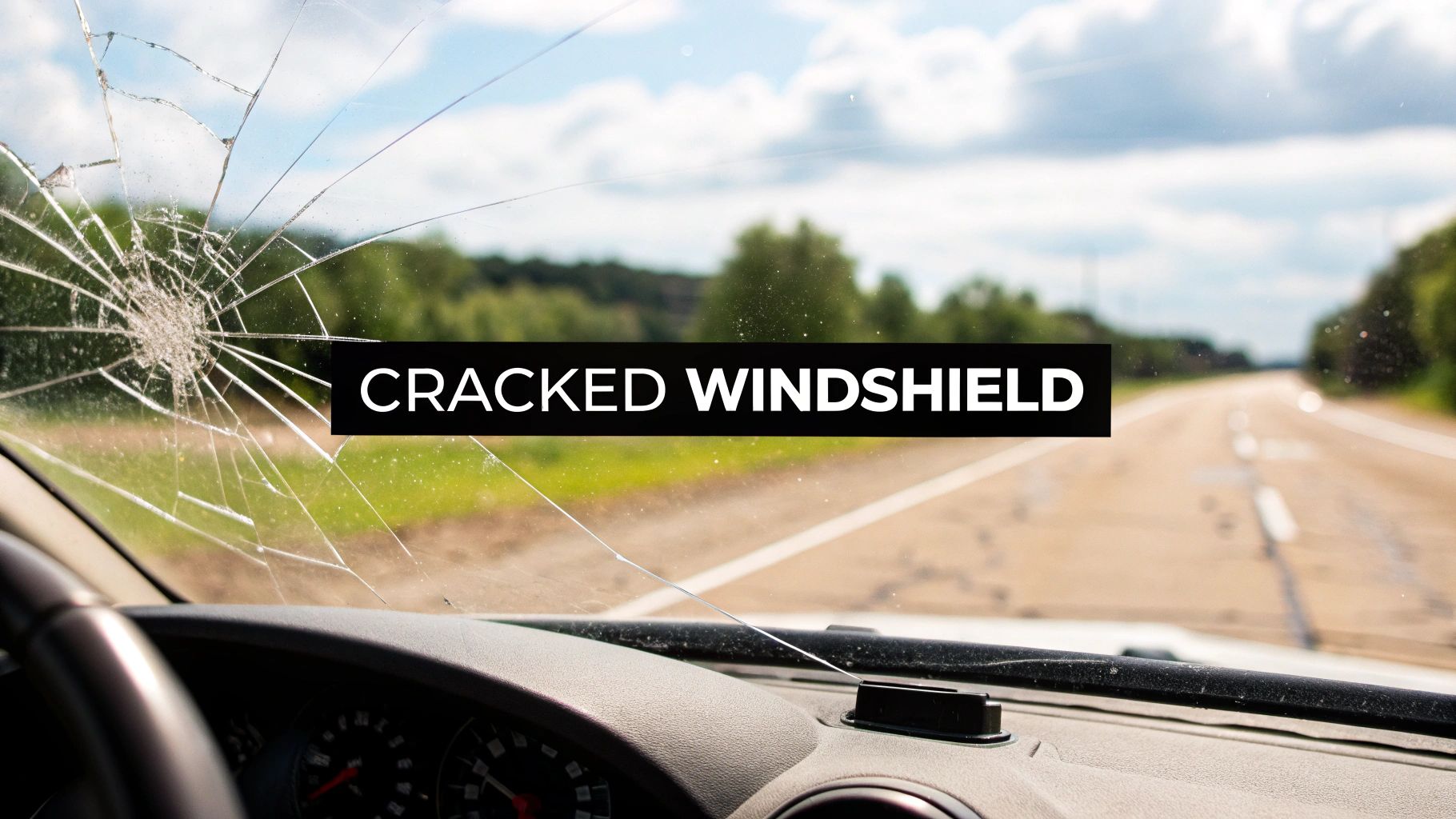
So, is it illegal to drive with a cracked windshield? The honest answer is... it depends. A tiny rock chip on the passenger side is probably no big deal. But a spiderweb crack running right through your field of view? That’s almost guaranteed to get you pulled over and handed a ticket.
When Does a Windshield Crack Become Illegal?
Think of it like this: your windshield is your window to the world when you're driving. A small smudge in the corner is just an annoyance, but a giant crack right in the middle makes it impossible to see clearly and safely. That’s exactly how law enforcement sees it.
There isn't one blanket federal law that covers every state. Instead, each state has its own rules, but they all boil down to the same three things: the size of the crack, its location, and how severe the damage is.
And this is a more common problem than you might think. Cracked windshields are one of the top reasons for auto insurance claims. A recent study found that a surprising 14% of cars on the road have a long crack in their windshield, with most of them starting right at the edge. You can dig into the specifics in this windshield damage report from Solution Now Law Firm.
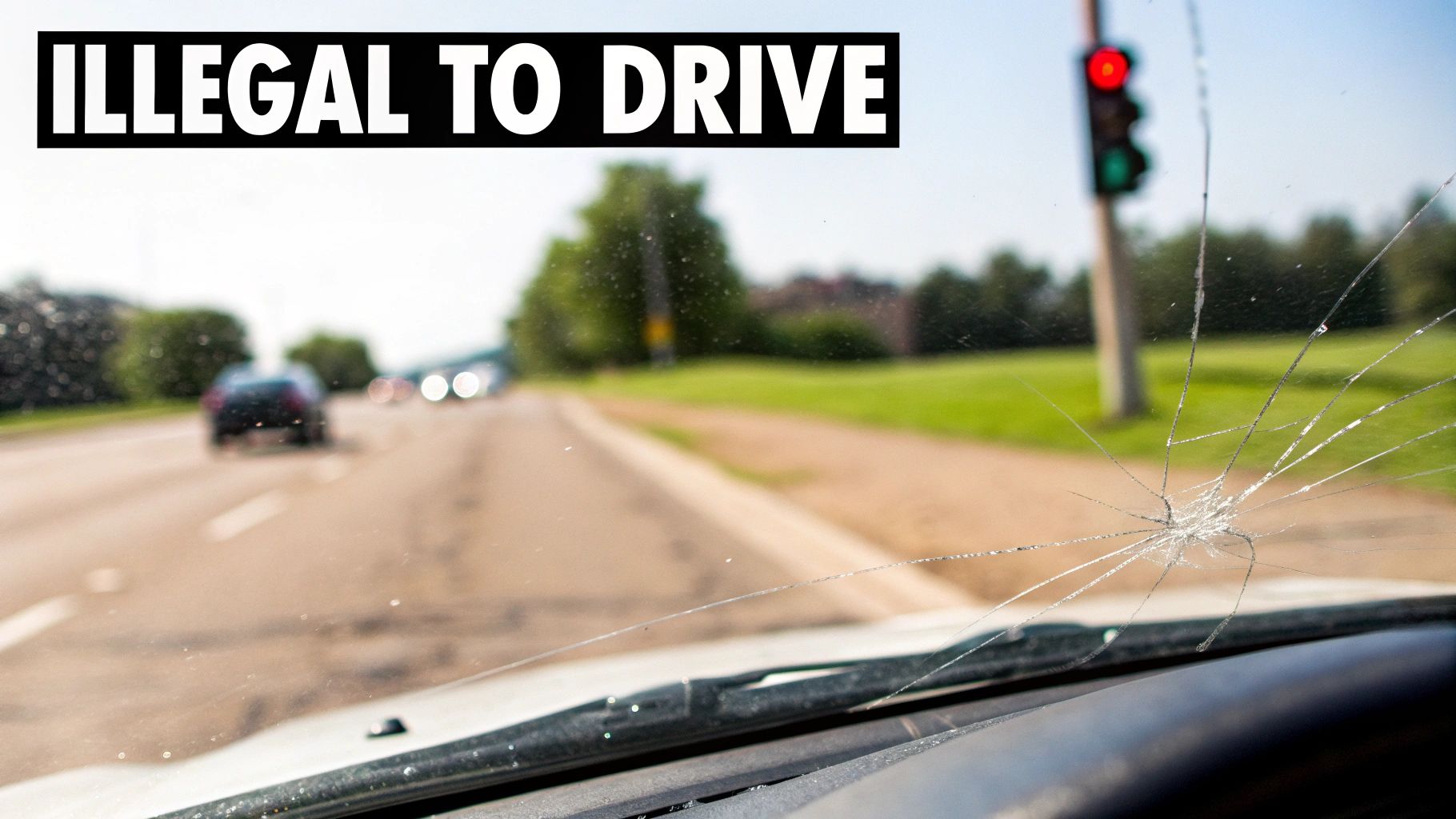
What Police Look For
If you're wondering whether your windshield is a legal liability, just put yourself in an officer's shoes during a traffic stop. Here's what they're trained to spot:
Driver's Line of Sight: This is the big one. Any chip, crack, or blemish that gets in the way of you seeing the road ahead is an immediate problem. This critical zone is often called the "acute area."
Crack Size and Type: A single hairline crack that's only an inch or two long might get a pass. But once you have a crack longer than a few inches or a "star break" (a chip with legs) bigger than a quarter, you're entering ticket territory.
Spreading Damage: Cracks have a nasty habit of growing. A crack that has started to spread across the glass isn't just a vision problem anymore—it's a structural one. Your windshield provides a surprising amount of strength to your car's frame, and a compromised one is a major safety risk.
To make it easier, here’s a quick guide that breaks down what’s usually considered acceptable versus what will likely get you in trouble.
Quick Guide to Windshield Crack Legality
This table sums up the main factors authorities consider when deciding if a cracked windshield violates the law.
Factor | Generally Acceptable | Potentially Illegal |
|---|---|---|
Size | Chips smaller than a quarter; cracks under 3 inches | Cracks longer than 3-6 inches; star breaks |
Location | Outside the driver's primary viewing area | Directly in the driver's line of sight |
Severity | Single, contained chip or small crack | Multiple cracks or damage that is spreading |
Ultimately, these are general guidelines. The best bet is always to check your specific state's vehicle code, but if the damage is noticeable and anywhere near your line of sight, it's wise to get it fixed sooner rather than later.
Navigating State and Local Windshield Laws
When it comes to driving with a cracked windshield, there’s no single, nationwide rule that gives you a simple yes or no. Instead, you're dealing with a patchwork of different state and local laws, which can feel a bit confusing. But here’s the thing: almost all of them boil down to one core principle—the driver must have a clear, unobstructed view of the road.
Think of it like this: there's a critical zone on your windshield called the Driver's Primary Viewing Area (DPVA). This is the big rectangle of glass right in front of you that your wipers clear. Any damage inside this box is going to get a lot more attention than a small chip way over on the passenger side.
Understanding the Driver's Line of Sight
While the exact rules change from state to state, the logic behind them doesn't. A police officer's main concern is whether that crack or chip is making it harder for you to see what's ahead. Some states are very specific, saying something like any crack longer than a dollar bill is an automatic ticket.
Other places are a bit vaguer, using language like "any obstruction to the driver's view." This gives an officer more room to make a judgment call right there on the side of the road. Because of this, what gets you a warning in one state might land you a fine just across the state line.
Key Takeaway: The location of the crack is just as important as its size. A tiny chip in your direct line of sight can be a bigger legal problem than a larger crack at the very edge of the glass.
How to Find Your Local Regulations
So, how do you figure out the specific rules for where you live? Your best bet is to go straight to the source: your state's Department of Motor Vehicles (DMV) or Department of Public Safety (DPS) website.
When you're searching online, try a few different phrases to get the best results:
"Your state" windshield laws
"Your state" vehicle inspection requirements
Windshield obstruction laws "your state"
This should lead you right to the official vehicle code that spells out what's allowed and what isn't. Knowing these rules is crucial for avoiding tickets and making sure you pass your annual inspection if your state has one.
If you're unsure, a local auto glass pro can tell you exactly what the law requires. For drivers in the Bay Area, you can get a clear assessment from a mobile auto glass specialist from Auto Renu who knows the local rules inside and out.
The Hidden Dangers of a Damaged Windshield
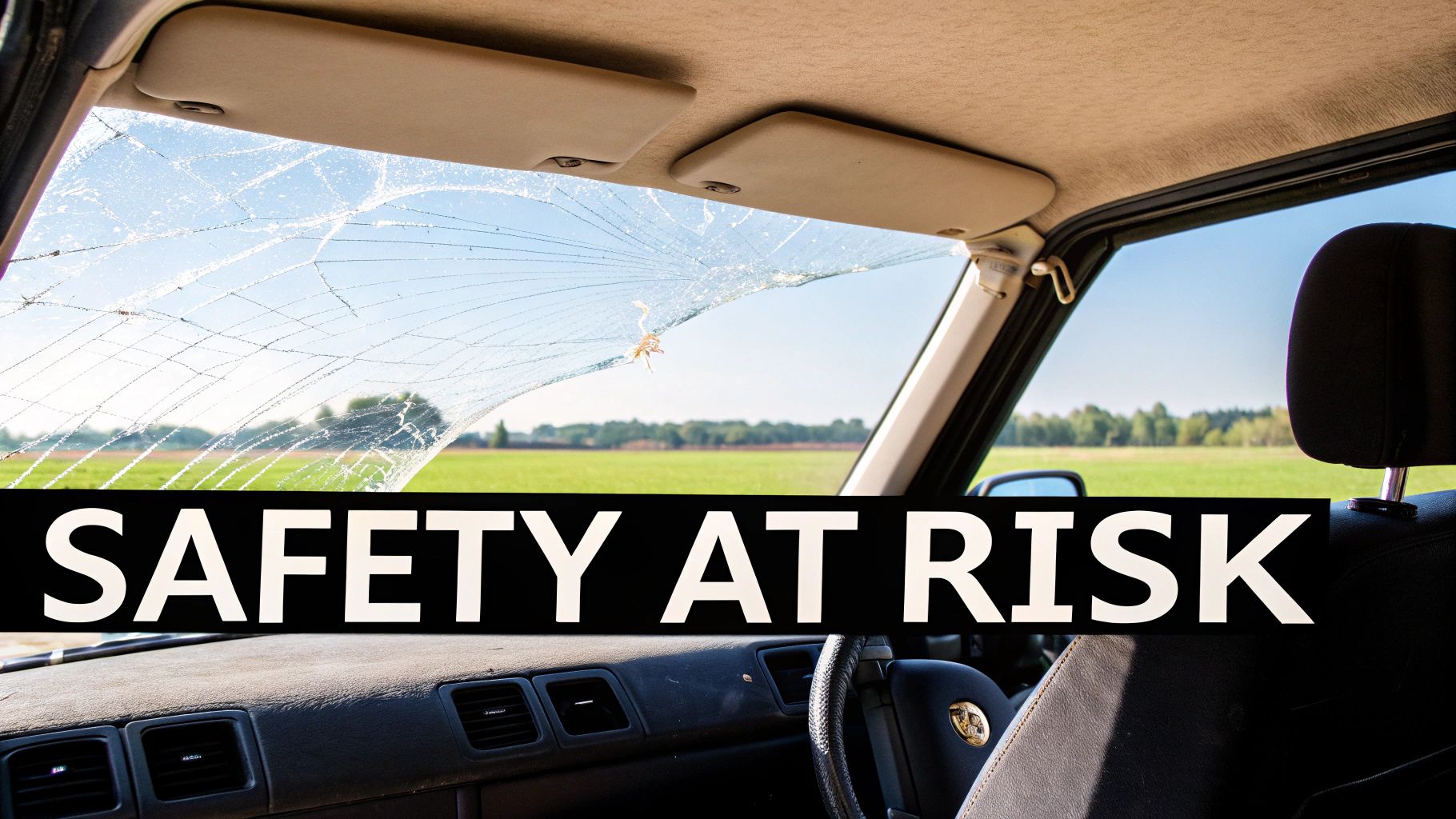
That crack in your windshield is more than just an annoying blemish or a potential traffic ticket. It’s a serious safety failure that puts you and your passengers at risk. While the law often focuses on whether the crack obstructs your view, the real dangers are hidden in plain sight.
Your windshield is a highly engineered safety component, and it's absolutely crucial to your car's structural support. Think of it like the keystone in an old stone archway—if you remove that central stone, the whole thing comes tumbling down. The same thing can happen to your car's frame in a crash if the windshield isn't sound.
Compromised Structural Integrity
Most drivers don't realize just how much their car's body relies on the windshield for strength. It isn't just a simple pane of glass to keep the wind and rain out; it’s a load-bearing part of the vehicle’s safety cage. This becomes especially important in two life-threatening situations.
Frontal Collisions: During a head-on impact, your windshield is designed to help transfer the massive forces of the crash down and away from the passenger cabin.
Rollover Accidents: In a rollover, the windshield plays a massive role in preventing the roof from crushing inwards, maintaining a survival space for everyone inside.
Believe it or not, the windshield provides about 45% of a vehicle's structural integrity in a head-on collision and an incredible 60% during a rollover. A crack, even a small one, weakens this support system and dramatically increases the risk of a roof collapse in a serious accident. For a deeper dive into these safety dynamics, check out the insights on windshield structural importance at Solution Now Law Firm.
Airbag Deployment and ADAS Failures
Beyond just holding the roof up, a solid windshield is critical for your car's other safety features to do their jobs. A compromised windshield can cause a cascade of failures when you need them most.
For starters, the passenger-side airbag is engineered to deploy upwards, using the windshield as a backboard to properly inflate toward the passenger. If the glass is cracked, it can shatter outward from the force of the airbag, causing it to deploy improperly and fail to protect the passenger.
A weakened windshield can mean the difference between an airbag saving a life and failing at the critical moment.
On top of that, modern cars are packed with technology. The cameras and sensors for your Advanced Driver-Assistance Systems (ADAS) are typically mounted right behind the windshield. Any damage to the glass can throw these sensitive instruments out of alignment, which can mess with critical safety features like automatic emergency braking or lane-keeping assist. To see just how important this connection is, take a look at our guide on ADAS windshield calibration.
A Look at Windshield Laws Around the World
It turns out, worrying about a cracked windshield isn't just something we do here. It’s a global safety issue, and while the specifics change from place to place, the core idea is remarkably consistent: if you can't see the road clearly, you shouldn't be driving. Looking at how other countries handle this really drives home how seriously this is taken everywhere.
Take our neighbors to the north, Canada. They manage windshield damage at the provincial level, so each territory has its own set of rules. But the one thing they all agree on is that if the damage gets in the way of the driver's vision, it’s a problem.
No matter where you are in the world, the underlying rule is the same: a compromised view is a risk no one should take. Whether it's a specific measurement on a ruler or a police officer's judgment call, the end goal is to make sure the driver has a safe, unobstructed view.
A Tale of Two Provinces
To see how this plays out in real life, let's look at two of Canada's biggest provinces. In Ontario, the Highway Traffic Act is a bit more general. It basically says it's illegal to drive if any damage to the windshield obstructs your vision. If you're caught, you could be looking at a fine of around $85.
British Columbia, on the other hand, gets more specific with its Motor Vehicle Act. There, an impairment is clearly defined as any single crack longer than 300 millimeters or a cluster of cracks that adds up to more than 150 millimeters. Get caught with that, and you could face a fine of about $70. You can dig deeper into these Canadian windshield safety laws and their implications if you're curious.
Hop across the globe to Australia, and you'll find the rules are even more straightforward. Down under, the states are united in banning any damage or obstruction that falls within the driver's primary line of sight. No ambiguity there.
This shared focus from different corners of the world shows this is about much more than just avoiding a fine. It’s a universal agreement that a clear, intact windshield is absolutely fundamental to road safety. Driving with damage isn't just a local legal gamble—it’s a violation of a safety standard recognized by authorities everywhere.
Repair or Replace? Making the Right Call
So, you've got a cracked windshield and you know it's a potential legal headache. What's the next step? You're basically looking at two options: a straightforward repair or a full-on replacement. The right choice really boils down to three things: the size, location, and type of damage you're dealing with.
Think of it this way: a tiny chip, maybe smaller than a quarter, is usually a perfect candidate for a quick repair. It's like patching a small hole in your favorite jeans. But if that damage is sitting right in your line of sight while you're driving, a replacement is almost always the only safe and legal answer.
When a Full Replacement is Unavoidable
Some damage just can't be patched up. Long cracks, deep chips that go through more than the top layer of glass, or any damage near the edge of the windshield are serious problems. They weaken the entire structure of the glass. Putting off a fix isn't just risking a ticket; it's a major safety gamble.
A compromised windshield can't do its job in a crash. It might fail to support the airbag when it deploys or shatter completely, putting you and your passengers at much greater risk. This is why getting it fixed quickly is a matter of both law and personal safety.
This infographic can help you quickly figure out if that crack or chip has crossed the line into illegal territory.
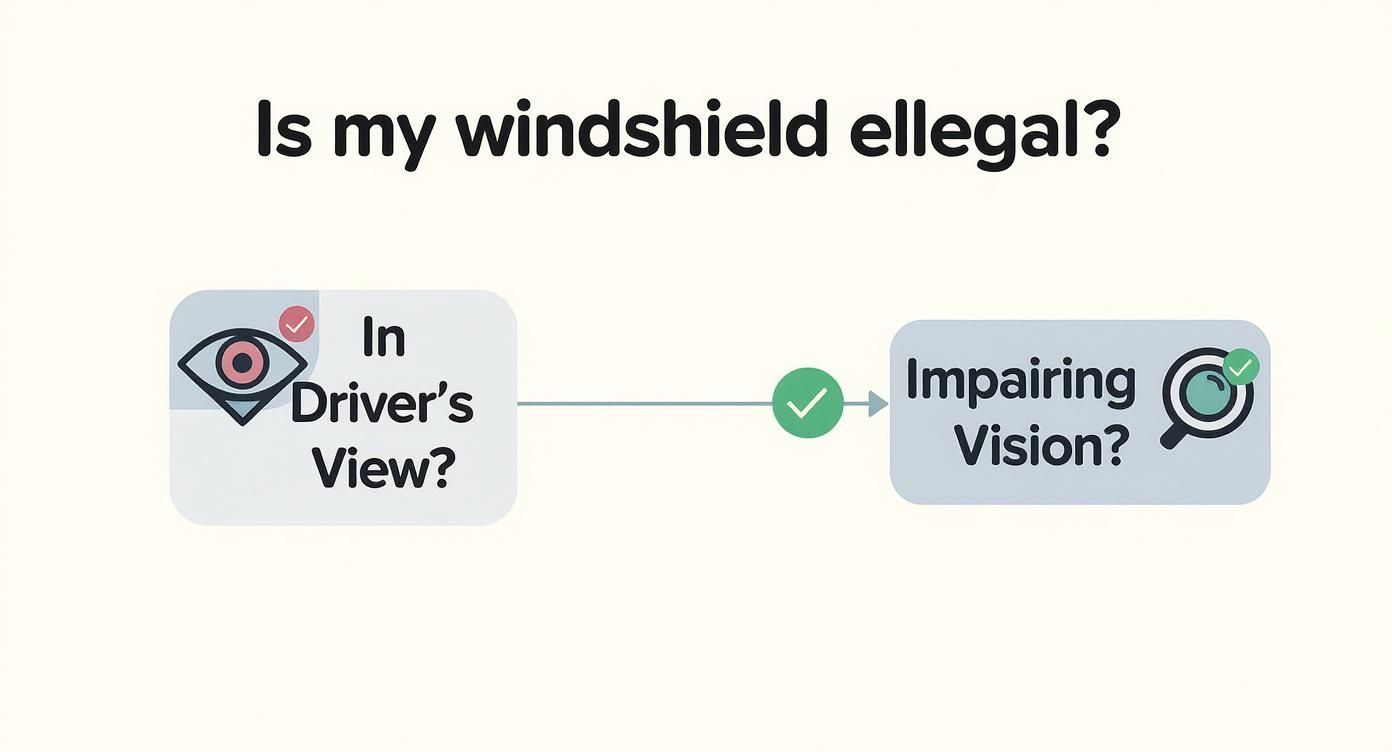
As you can see, any damage that gets in the way of your view immediately turns a small imperfection into a serious problem. When in doubt, getting a professional opinion is the smartest move. For a deeper look at the process, our guide to professional windshield repair services has all the details.
This isn't just a local issue, either. Safety standards around the world are just as strict. Australian laws, for example, are adamant about an unobstructed view because a compromised windshield offers far less protection in an accident. Many insurance providers will even waive the cost for chip repairs, since they know it's much cheaper than paying for a full replacement down the road.
Your Cracked Windshield Questions, Answered
Even with all the rules and safety warnings, you probably still have a few lingering questions. Let's dig into some of the most common things people ask when they spot that first dreaded chip or crack.
Does Car Insurance Pay for a Cracked Windshield?
More often than not, yes. If your auto policy includes comprehensive coverage, you're almost certainly covered for windshield repair or replacement.
In fact, many insurers will waive your deductible for a simple repair. They'd much rather pay a small fee to fix a chip now than shell out for a full windshield replacement down the line. It's a win-win.
Can a Tiny Chip Actually Get Bigger?
You bet it can. Think of that little chip as a weak spot in an otherwise solid piece of glass. The biggest enemy here is temperature change. When your car sits in the hot sun or endures a freezing night, the glass expands and contracts.
This constant stress puts pressure on that weak point, and a tiny chip can easily blossom into a long, spiderweb crack—sometimes overnight. Water seeping into the chip and freezing is another classic way a small problem becomes a big one.
A Quick Tip from the Pros: Never, ever ignore a small chip. It’s the starting line for most massive cracks. A quick repair is always your cheapest and easiest path to avoiding a full, time-consuming replacement.
Can a Cracked Windshield Make Me Fail My State Inspection?
This one really boils down to your state's specific rules and, crucially, where the damage is. A tiny chip off in a corner, well outside your line of sight, might get a pass.
But if that crack is right in the driver's main field of view, or it's longer than a few inches, you're almost guaranteed to fail. State inspectors are specifically looking for anything that blocks your vision or weakens the windshield's structural role in the car's safety. When people talk about a cracked windshield being illegal, this is often where it matters most—a failed inspection until you get it fixed.
Don't let a small chip become a major headache. For fast, reliable service that comes directly to you, trust the experts at Auto Renu Auto Glass LLC. Schedule your mobile repair or replacement today by visiting the Auto Renu Auto Glass LLC website.