How Long Does Window Tint Last? A Complete Guide
Wondering how long does window tint last? Our guide explores film types, key factors in longevity, and care tips to maximize the life of your car's tint.
Nov 6, 2025
generated
how long does window tint last, car window tint, tint lifespan, ceramic tint, window film care
When you're thinking about getting your car's windows tinted, one of the first questions that probably comes to mind is, "How long will it actually last?" It’s a fair question—you want to know your investment is worthwhile.
The short answer is, it really depends on the quality of the film you choose. A basic, professionally installed dyed tint might start showing its age in about 3-5 years, whereas a top-of-the-line ceramic film can easily go for more than a decade and still look great.
How Long You Can Expect Your Window Tint to Last
Think of window tint like a paint job for your car. You can get a quick, cheap spray that looks okay for a little while but soon starts to fade and chip. Or, you can invest in a professional, multi-layer application that stands up to the elements for years to come. The same principle applies here.
The lifespan varies quite a bit across the different types of film on the market.
Dyed films are the entry-level option and typically hold up for 3 to 5 years.
Carbon films are a solid mid-range choice, lasting up to 10 years.
Ceramic films are the gold standard, often lasting well over a decade with just a little care.
If you want to dig deeper into the specifics of each material, it's worth checking out more detailed insights on auto window tint.
This visual breakdown gives a great overview of what to expect from the most common tint materials.
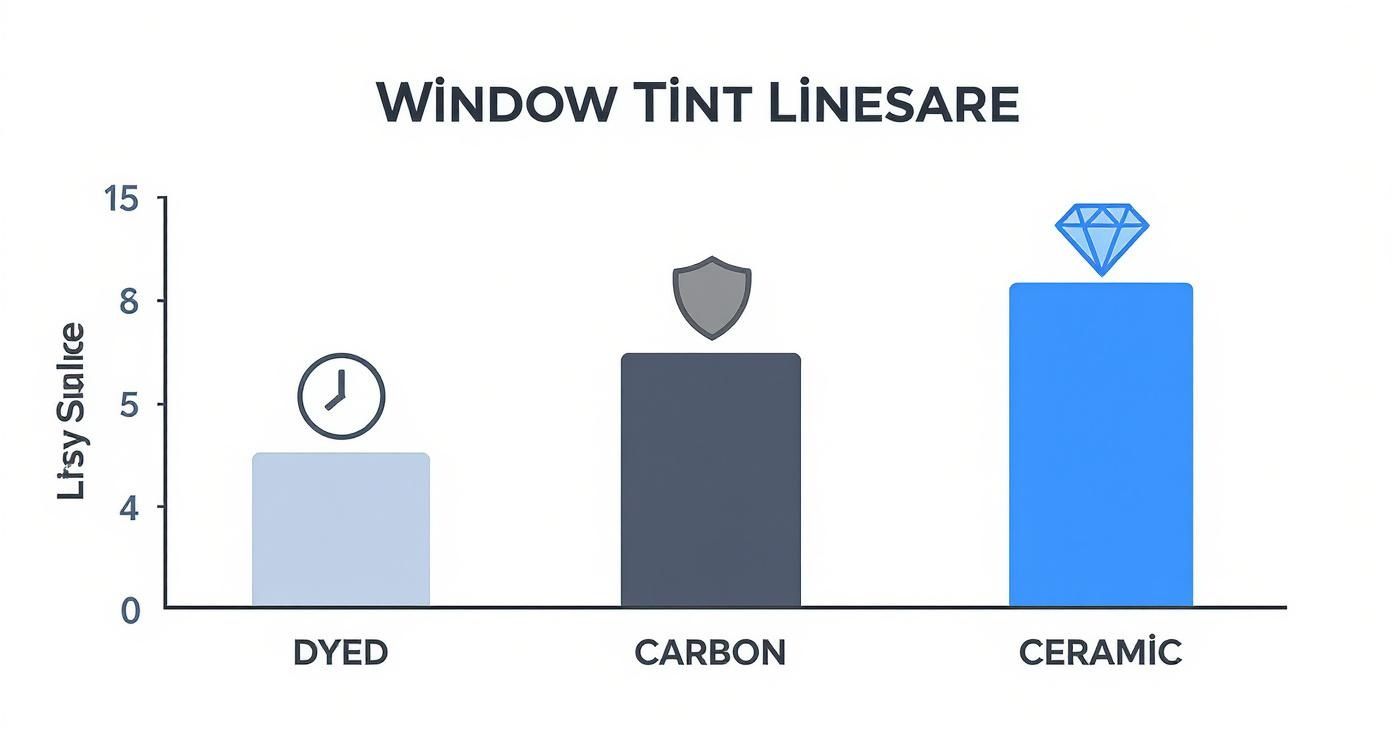
As you can see, the jump in durability from a standard dyed film to a premium ceramic one is massive. It all comes down to the technology baked into the film itself.
To make things even clearer, here’s a quick side-by-side comparison to help you weigh your options.
Window Tint Lifespan at a Glance by Film Type
This table provides a quick comparison of the most common types of window tint, their estimated lifespan, and key characteristics to help you make an informed choice.
Film Type | Estimated Lifespan | Key Feature |
|---|---|---|
Dyed Film | 3-5 Years | Most affordable option, provides privacy |
Carbon Film | Up to 10 Years | Blocks more heat, no signal interference |
Ceramic Film | 10+ Years | Superior heat rejection, maximum durability |
Ultimately, choosing the right film is a balance between your budget and how long you want the tint to perform at its best. While dyed film is easy on the wallet upfront, a carbon or ceramic option often provides better value over the life of your vehicle.
Understanding the Different Types of Window Tint
Before we can talk about how long window tint lasts, we need to get one thing straight: not all tint is created equal. The technology baked into the film itself is the biggest factor in its lifespan. Think of it like buying a tool—you can get a cheap, basic wrench or a high-end, professionally-rated one. Both might work at first, but only one is built to last.
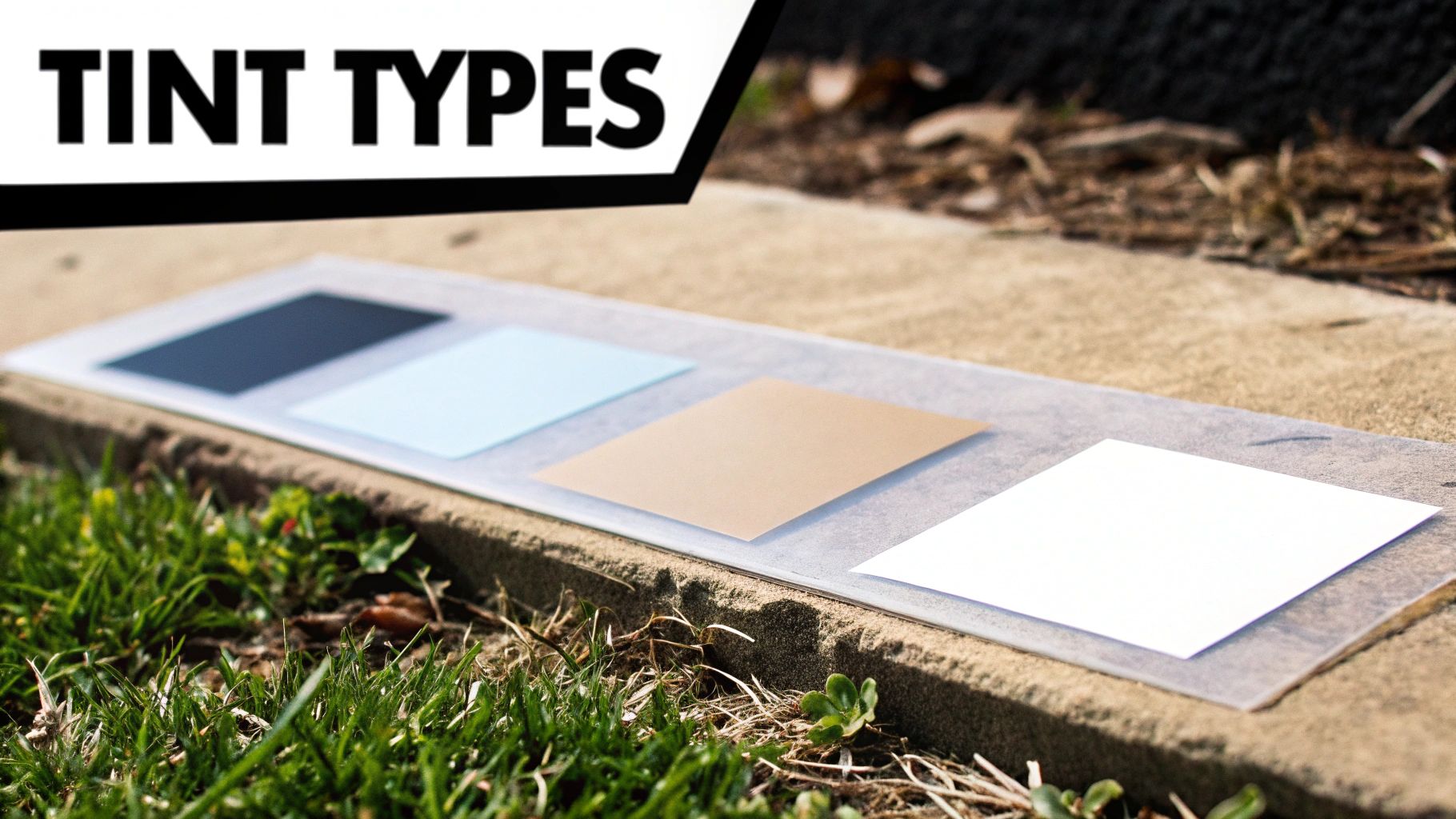
Let's dive into the four main types of window tint you'll come across. Each one is built differently, and that construction directly impacts how long it'll hold up on your car.
Dyed Window Film
Dyed tint is the entry-level option you'll see most often. It's the most affordable choice because its construction is simple: a layer of dye is squeezed between a protective top layer and the adhesive that sticks to your window. The dye is what absorbs the sun's heat, but its organic makeup is also its fatal flaw.
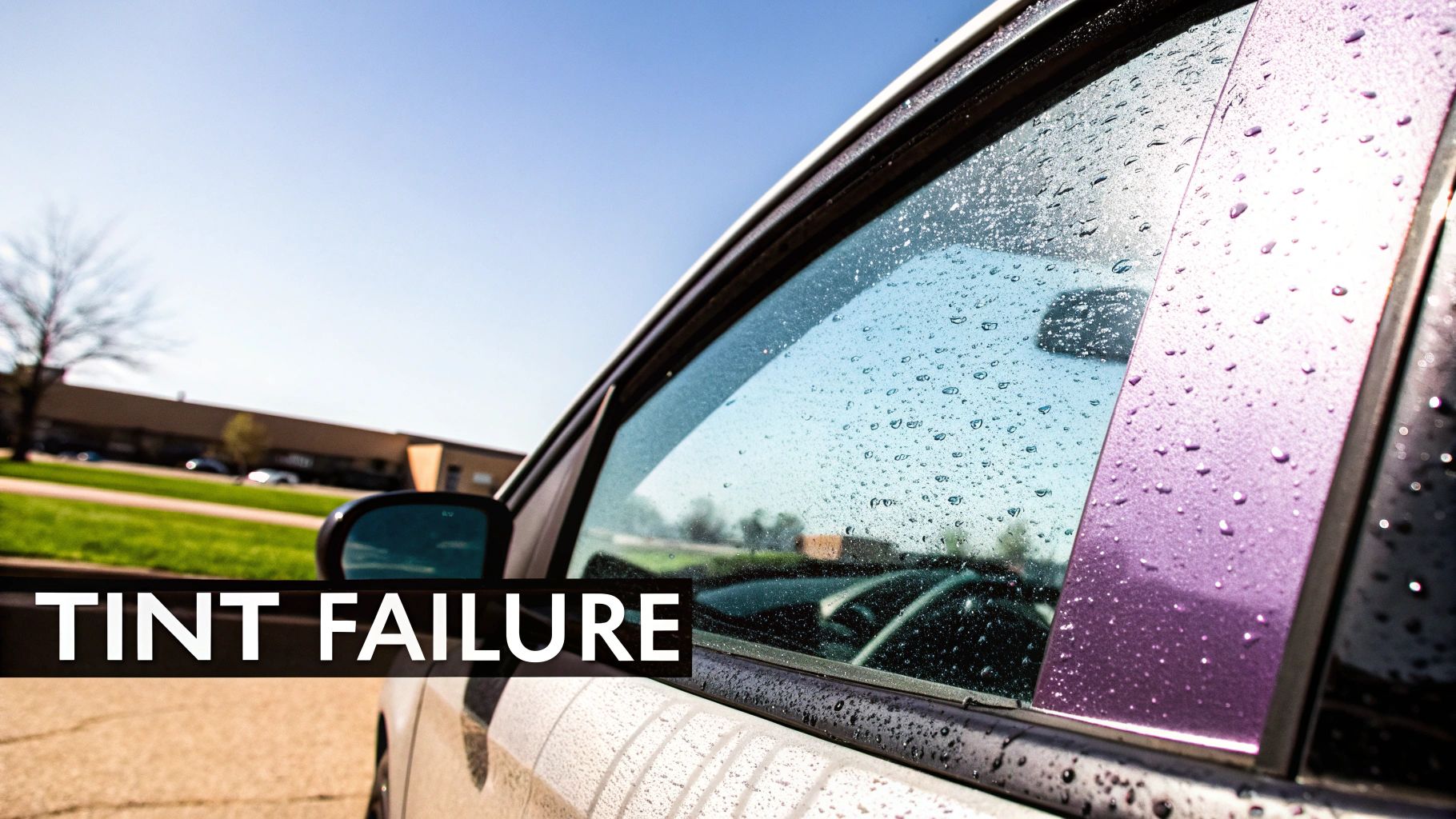
Just like a dark t-shirt left in the sun, the dye molecules break down under constant UV exposure. This is what causes that infamous purple, bubbled look you see on older cars. Dyed films typically only last about 3 to 5 years before they start to fail.
Once it turns purple, it's not just an eyesore—it's a clear sign the film is no longer doing its job.
Metalized and Carbon Films
Stepping up in quality, we have metalized and carbon films. These are a major leap forward in durability.
Metalized Films: These films have tiny metallic particles woven into them. Instead of just absorbing heat like a dyed film, they actually reflect it away from the window. The downside? All that metal can sometimes interfere with your cell phone, GPS, and radio signals.
Carbon Films: A fantastic middle-ground, carbon film uses carbon particles instead of metal. It delivers a rich, dark matte finish that won't fade over time. Best of all, it provides great heat rejection without messing with your electronic signals, making it a much better fit for modern cars.
Ceramic Window Film
At the very top of the food chain is ceramic film. This is the best technology you can get. It uses advanced ceramic nanoparticles that are fantastic at blocking heat and UV rays, all without needing dyes or metals.
Because there's no dye, it will never fade or turn purple. And because there's no metal, it's completely friendly to all your electronics. Ceramic tint is the peak of performance and durability, often lasting well over 10 years when properly cared for.
When you're ready to explore these premium options, you can find them when you schedule a mobile window tint service. It’s an investment that pays for itself in long-term comfort and protection.
Key Factors That Affect Window Tint Durability
So, you've picked a good quality film. That's a great start, but it's only half the battle. Several outside forces can either stretch your tint’s life to its maximum potential or cut it disappointingly short. It’s a lot like your car's paint—the quality matters, but where you park and how you care for it makes all the difference.
The environment your car spends its days in is a huge one. Relentless, direct sunlight and scorching heat are the biggest enemies of window film. The constant UV bombardment and high temperatures break down the film’s dyes and adhesive over time.
Think about it: a car baking in the Arizona sun day after day will put its tint through a much tougher trial than a car in a cooler, overcast climate.
The Impact of Installation Quality
You can buy the best ceramic film on the market, but if it's installed poorly, it’s not going to last. The quality of the installation is, without a doubt, one of the biggest factors in how long your tint will look good and perform well.
A true professional is meticulous. They'll deep-clean the glass, eliminate every last speck of dust, and apply the film with techniques that ensure a perfect, bubble-free bond. This is what separates a 5 to 15-year job from one that fails in under a year.
That professional touch prevents the classic signs of a bad tint job:
No Contamination: Trapped dirt and dust are the number one cause of those ugly little bubbles.
Proper Curing: A good installer knows how to let the adhesive set perfectly, pushing out all the air and moisture.
Clean Edges: This is crucial. A clean, sealed edge is what stops the tint from peeling up at the corners down the road.
A cheap, rushed job is just asking for trouble. You'll see bubbling, peeling, and discoloration in a matter of months, not years.
Your Maintenance and Cleaning Habits
Finally, how you treat your tint directly impacts its lifespan. The single biggest mistake we see people make is using the wrong cleaning products.
Never, ever use an ammonia-based cleaner (like Windex) on your tinted windows. Ammonia is incredibly harsh and attacks the film's materials and adhesive, causing it to dry out, turn brittle, and eventually fail. You’re essentially destroying it from the inside out.
Professional automotive window tints generally last between 5 and 15 years, but this lifespan depends heavily on climate and maintenance. Geographic location is a major factor, with high UV exposure and heat accelerating degradation. Discover more insights about tint durability from GarageSlick.
Telltale Signs Your Window Tint is Going Bad
Even the best window tint won't last forever. After years of battling intense sunlight and fluctuating temperatures, the film will eventually start to show its age. Spotting the early warning signs can help you decide when it's time for a replacement, keeping your car looking sharp and its interior protected.
So, how can you tell if your tint is on its last legs? A few key visual cues will let you know the film isn't doing its job anymore. Catching them early saves you the headache of dealing with a badly deteriorated film down the road.
The Dreaded Purple Haze
One of the most obvious red flags is a change in color. If your once-neutral tint has taken on a distinct purple glow, you're seeing a classic sign of film failure. This "purple haze" is a dead giveaway that the dyes in the film have broken down from constant UV exposure.
A purple tint isn't just a cosmetic issue. It means the film's ability to block heat and filter out harmful UV rays is toast, leaving you and your car's interior unprotected.
Bubbling and Blistering
Another unmistakable sign is the appearance of bubbles or blisters between the film and the glass. This happens when the adhesive holding the tint in place gives up, creating ugly air pockets that can seriously obstruct your view.
This problem usually points back to one of two culprits:
Cheap Adhesive: Lower-grade films often use adhesives that can't handle the constant expansion and contraction from heat.
Botched Installation: If the installer didn't prep the glass properly, tiny bits of dust and debris can compromise the adhesive from day one.
Peeling, Cracking, and Fading
Finally, check the edges of the film. If you see it starting to lift or peel away from the glass, the adhesive bond is officially broken. Over time, the film can also become brittle, leading to fine cracks or a faded, washed-out look that does your car no favors. These are all clear indicators that the tint has reached the end of the line and needs to be professionally replaced.
How to Properly Care for Your Window Tint
Getting a quality window tint is a smart move, but how you treat it afterward is what really counts. Good maintenance is simple, yet it's the secret to getting the most out of your investment for years to come. The first few days are absolutely crucial.
Your new tint needs time for the adhesive to fully dry and bond to the glass—this is called curing. For about 3 to 5 days, you have one job: don't roll down the windows. Resisting the urge gives the film the uninterrupted time it needs to set perfectly, preventing any nasty peeling or shifting.
Cleaning Do's and Don'ts
Once the tint has cured, keeping it looking pristine is easy. The most important thing to remember is that what you clean it with matters. A lot. Using the wrong stuff can cause permanent damage, but a few simple guidelines will keep you on the right track.
Here’s what you need to know for a safe clean:
DO use a cleaner that is specifically ammonia-free. Ammonia is the enemy—it attacks the film's adhesive and will make it brittle over time.
DO use a soft microfiber cloth. This is non-negotiable. Anything else can leave behind tiny scratches that build up and make the film look hazy.
DON'T even think about using abrasive tools. That means no scrapers, rough sponges, or even paper towels.
DON'T grab any old glass cleaner. Products like Windex contain ammonia and will absolutely destroy your tint.
Maintenance directly impacts longevity; regular cleaning with specialized, ammonia-free products and soft cloths helps preserve the film’s integrity. When properly cared for, professional tints can easily exceed a decade. Find out more about preserving your tint on GarageSlick.
Beyond cleaning, think about where you park. If you can, choose a shady spot or a garage. Less direct, relentless sun exposure means less UV radiation hitting your tint, which goes a long way in extending its life. These small habits really do add up, ensuring your tint looks great for the long haul.
Decoding Window Tint Warranties
When you're shopping for window tint, a strong warranty isn't just a piece of paper—it’s your best signal of a quality film and a confident installer. Most reputable manufacturers stand behind their premium carbon and ceramic films with lifetime warranties, but there’s a key detail: that warranty is usually only valid when the film is installed by an authorized dealer.
Think of it as your safety net against product failure.
Of course, it's always smart to read the fine print. These warranties are designed to protect you from manufacturing defects, so if the film ever bubbles, peels, cracks, or turns that dreaded shade of purple, you're covered. What they do not cover is accidental damage—things like a scratch from your keys or a gouge from sliding a piece of cargo.
Manufacturer vs. Installer Warranty
It's also crucial to understand that you're usually dealing with two different kinds of coverage, and each one protects a different part of your investment.
Manufacturer’s Warranty: This covers the physical film itself. It’s the manufacturer's promise that their product won’t fail due to a defect.
Installer’s Warranty: This is all about the labor. It covers the quality of the installation, protecting you from issues that arise from a poor application.
While automotive tints often come with impressive lifetime warranties, residential applications work a bit differently. A standard home window tint might last around 5 years, but you can find premium films that push that lifespan to 10 years or more. For more details, you can read about home window tint durability from SolarWorks Atlanta.
Understanding both types of warranties ensures you're fully protected from every angle. Seeing what others have to say in our customer reviews can also highlight just how important a high-quality installation really is.
Common Questions About Window Tint Longevity
Even with all the details, a few specific questions always seem to come up when we talk about how long a tint job will really last. Let's tackle them head-on so you know exactly what you're getting for your money.
Can I Make Cheap Window Tint Last Longer?
Honestly, not really. While you can certainly take great care of a cheap, dyed window film—parking in the shade, using the right cleaners—you’re only delaying the inevitable. The dye used in these budget films is simply not designed to stand up to years of UV abuse. Sooner or later, it will break down and give you that dreaded purple, bubbly look.
The only way to get a tint that truly lasts is to start with a better product. Investing in a quality carbon or ceramic film from the get-go is the real secret to longevity.
Does Tint Darkness Affect Its Lifespan?
This is a great question, but the answer is no. A dark 5% "limo tint" will last just as long as a much lighter 50% film, as long as they are from the same product family.
What matters isn't the shade; it's the quality of the film's construction. The real factors are the type of material used (dye, carbon, or ceramic) and the strength of the adhesive holding it all together.
The global window film market is booming for a reason. It's projected to hit nearly $2.9 billion by 2027 as more people demand high-performance tints that actually last. You can read more about the growing window tint market at SolarWorks Atlanta.
For most drivers, paying a bit more upfront for a ceramic tint is one of the smartest investments you can make in your vehicle. It not only performs better but often lasts well over 10 years, saving you the headache and cost of a replacement down the road. If you're ready for an upgrade that stands the test of time, you can request a window tint quote to see your options.
Ready to upgrade with a tint that lasts? Contact Auto Renu Auto Glass LLC today for a free estimate and professional installation. Visit us at https://www.autorenu911.com.