How Does Window Tinting Work Your Complete Guide
Discover how does window tinting work with our guide on solar control science, film types, and installation. Learn the benefits of automotive window tint.
Nov 5, 2025
generated
how does window tinting work, window film technology, automotive window tint, ceramic tint guide, car tinting
At its core, window tint is a sophisticated filter for your car's glass. A specialized film is applied to the windows, and its job is to be very selective about which parts of the sun's rays get to come inside. It’s designed to block the heat-generating infrared rays and the damaging ultraviolet (UV) rays while letting a certain amount of visible light through. The end result? A cooler, more comfortable, and safer ride.
Unpacking the Science of Solar Control
To really get how window tinting works, it helps to think of sunlight as a package deal made up of three different things. The untreated glass on your car pretty much lets the entire package flood your interior. A quality tint film, on the other hand, acts like a bouncer at a club—it decides who gets in and who gets turned away.
This is a great visual breakdown of the three key components of solar energy that a good tint film is designed to manage.
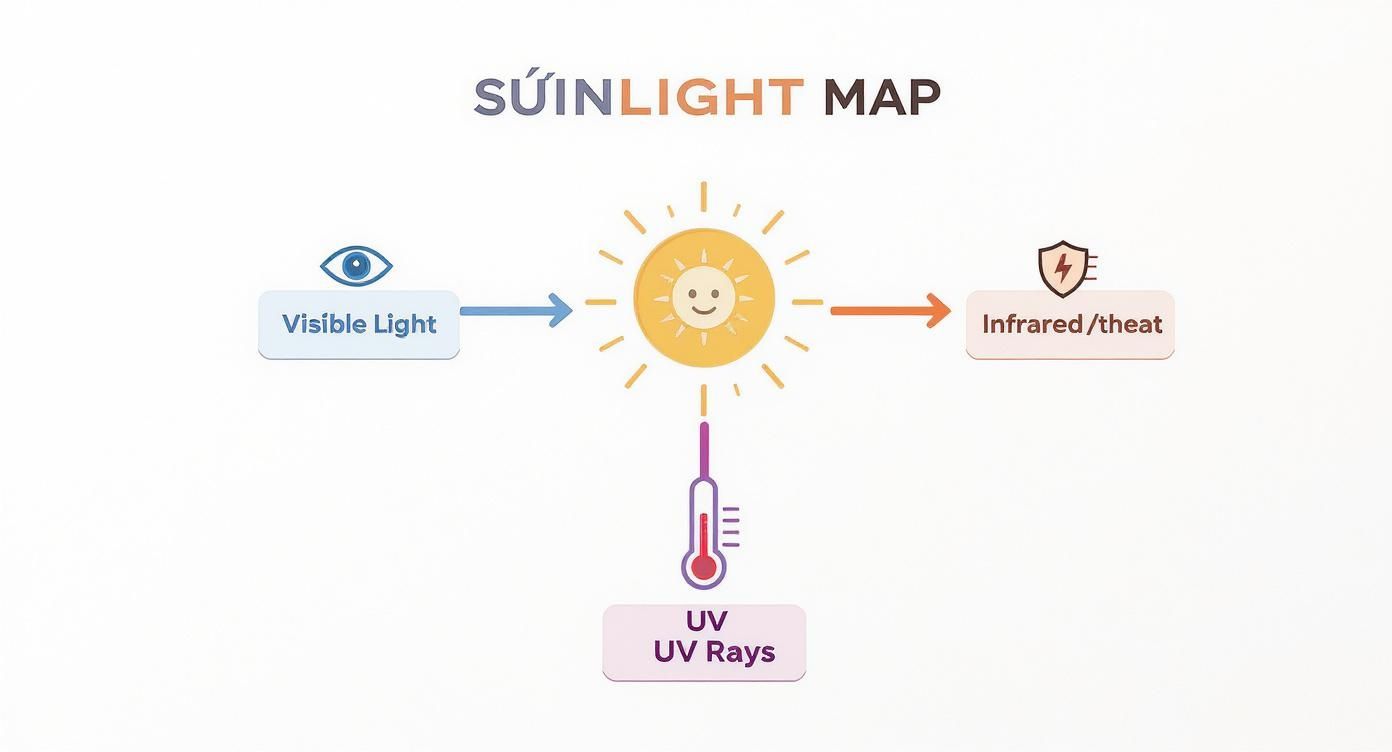
As the graphic shows, sunlight is a mix of visible light, infrared radiation, and UV rays. Each one affects your driving experience in a different way, and modern tint technology is engineered to tackle each part of that spectrum specifically.
The Three Components of Sunlight
The whole point of window tint is to effectively manage these three elements:
Visible Light: This is simply the light we can see. Tint films are often categorized by their Visible Light Transmission (VLT), which is just a percentage of how much visible light makes it through the film. The lower the VLT number, the darker the tint will appear.
Infrared Radiation (IR): You can't see it, but you can definitely feel it. This is the part of the solar spectrum that we experience as heat. High-performance tints are specifically built to reject a huge chunk of these IR rays, which is the secret to keeping your car from feeling like an oven on a hot day.
Ultraviolet (UV) Rays: These are the invisible, high-energy rays responsible for sunburns. They’re also the main culprit behind a faded, cracked dashboard and damaged upholstery. Thankfully, virtually all modern window films are exceptional at blocking these harmful rays.
Let's break down exactly how the film deals with each of these solar energy components.
How Tint Film Manages Solar Energy
Solar Energy Component | What It Is | How Tint Film Manages It |
|---|---|---|
Visible Light | The light we see with our eyes. | It is controlled by the film's VLT (Visible Light Transmission) percentage. Lower VLT means a darker tint and less glare. |
Infrared (IR) Radiation | The part of the solar spectrum we feel as heat. | High-quality films reflect or absorb a significant amount of IR rays, which is what keeps the car's interior cool. |
Ultraviolet (UV) Rays | Invisible, high-energy rays that cause sun damage. | Modern films are designed to block up to 99% of UV rays, protecting both your skin and your car's interior from fading and cracking. |
As you can see, the film works through a combination of reflection and absorption to completely change how your car's glass handles the sun.
It's not just about making the windows dark. It's about sophisticated, selective management of light and heat.
Top-tier films, like ceramic tints, are embedded with non-metallic nano-ceramic particles that can block up to 99% of UV rays and cut down solar heat by more than 50%. This isn't just a minor improvement; this technology can lower the temperature inside your car by over 30°F, making you more comfortable and easing the strain on your air conditioner.
This level of clarity and performance is especially important in newer vehicles, where windshields are often tied into complex safety features. To make sure these systems work as they should after any glass work, you can check out our guide on ADAS windshield calibration.
The Evolution of Window Tint Technology
The high-performance window films we take for granted today didn't just appear out of nowhere. They're the product of decades of trial, error, and some serious leaps in material science. The story really kicks off back in the 1960s with the first widely available option: dyed film.
This early tech was pretty basic. It was essentially just layers of dye designed to absorb sunlight, making the glass darker. It did a decent job with privacy and cutting down glare, but it came with some major downsides. These first-generation tints were terrible at blocking heat and famous for their short lifespan—often bubbling up and fading to that unmistakable purple color you still see on old beaters.
The Rise of Metalized Films
To solve the heat problem, the industry rolled out metalized tints in the 1980s. This was a huge step up. These films had microscopic metallic particles embedded in them that acted like tiny mirrors, bouncing heat away from the car before it ever got inside.
Suddenly, window tint was great at keeping cars cool. But this new technology brought its own unique headache. Those same metallic particles that were so good at reflecting heat also wreaked havoc on electronic signals. We're talking spotty radio reception, unreliable GPS, and dropped calls on early cell phones.
Each new generation of window tint was developed to solve the core weakness of the previous one, pushing the industry toward a solution that offered performance without compromise.
The search was on for a material that could block heat just as well as metal, but without scrambling all your electronics.
A New Era of Carbon and Ceramic Tints
The next breakthrough came with the invention of carbon window films. Instead of metal, these films used carbon particles woven into the polyester. This was a game-changer. It delivered fantastic heat rejection and a sleek matte finish, all without the signal interference that plagued the metalized options.
Building on that momentum, the industry finally landed on the cutting-edge technology we have today: nano-ceramic films. These films are infused with tiny ceramic particles that are both non-metallic and non-conductive. They are absolute champs at blocking the infrared heat you feel and the UV radiation that damages your interior, and they do it without messing with a single electronic device.
The journey from basic dyed films in the 1960s to modern nano-ceramic options shows a constant drive for perfection. Today's best ceramic tints can block over 99% of UV rays and reject up to 70% of solar heat—a level of performance those early car owners could only dream of. If you're curious, you can dive deeper into the full story of tint advancements.
This relentless innovation is how window tinting works so effectively today, offering a powerful combination of durability, clarity, and solar protection.
Comparing the Different Types of Window Tint
Now that you have a solid grasp of how window tint works, it's time to dig into the fun part: picking the right film for your car. This isn't a one-size-fits-all situation. The films out there vary wildly in what they're made of, how they perform, and what they cost.
Think of it like buying a jacket. A simple windbreaker is great for a cool day, but you'll want something with advanced insulation for a blizzard. Window tints are the same—each type is engineered for a different purpose.
The four main players you'll encounter are Dyed, Metalized, Carbon, and Ceramic films. Each represents a different level of technology, offering a unique mix of pros and cons. Let's break them down so you can figure out which one makes the most sense for you.
Dyed Window Film: The Entry-Level Option
Dyed film is the classic, most budget-friendly tint on the market. It's made by adding a layer of dye to an adhesive film, which is then applied to the window. Its main job is to absorb sunlight, which darkens the glass to give you that tinted look and cut down on annoying glare.
The trade-off for its low price is performance and longevity. Dyed film offers the least amount of heat and UV protection. Worse, that dye breaks down with constant sun exposure, eventually fading into that dreaded purple color you've probably seen on older cars. It’s a decent starting point if aesthetics on a tight budget is your only goal, but don't expect top-tier performance.
Metalized and Carbon Films: The Mid-Range Performers
The next step up the ladder is metalized film. This type has microscopic metallic particles woven into the film. These tiny particles act like a shield, reflecting heat before it can even enter your car. This makes it a huge improvement over dyed film for heat rejection and UV blocking. The big drawback? Those same metal particles can mess with your radio, GPS, and cell phone reception.
This is where carbon film comes in. It was engineered to solve the signal interference problem. Instead of metal, it uses nano-sized carbon particles to absorb and dissipate heat. You get fantastic heat rejection and a sleek, matte finish with zero signal disruption. Carbon films are also much more durable and won't fade like dyed films.
Choosing the right tint means balancing your budget with your performance goals. While dyed film offers a quick aesthetic fix, carbon and ceramic films provide a long-term investment in comfort and protection.
Ceramic Window Film: The Premium Choice
At the very top of the food chain, you'll find ceramic film. This is the most advanced tinting technology available today. It uses non-metallic, non-conductive nano-ceramic particles that are absolute superstars at blocking heat. They're specifically designed to target and reject infrared radiation—the part of the solar spectrum that makes you feel hot.
What's incredible about ceramic tint is that it provides the highest level of heat rejection, UV protection, and glare reduction without having to be limo-dark. You can get a virtually clear film that blocks more heat than a dark dyed film. It’s also incredibly durable and will never fade. While it's the most expensive option, the superior comfort and protection make it the go-to choice for enthusiasts who demand the best.
To help you see how these films stack up, let's put them head-to-head.
Window Tint Film Comparison Guide
Here’s a simple breakdown to help you compare the key features of each film at a glance. Think about what matters most to you—whether it's cost, performance, or longevity—and use this guide to narrow down your options.
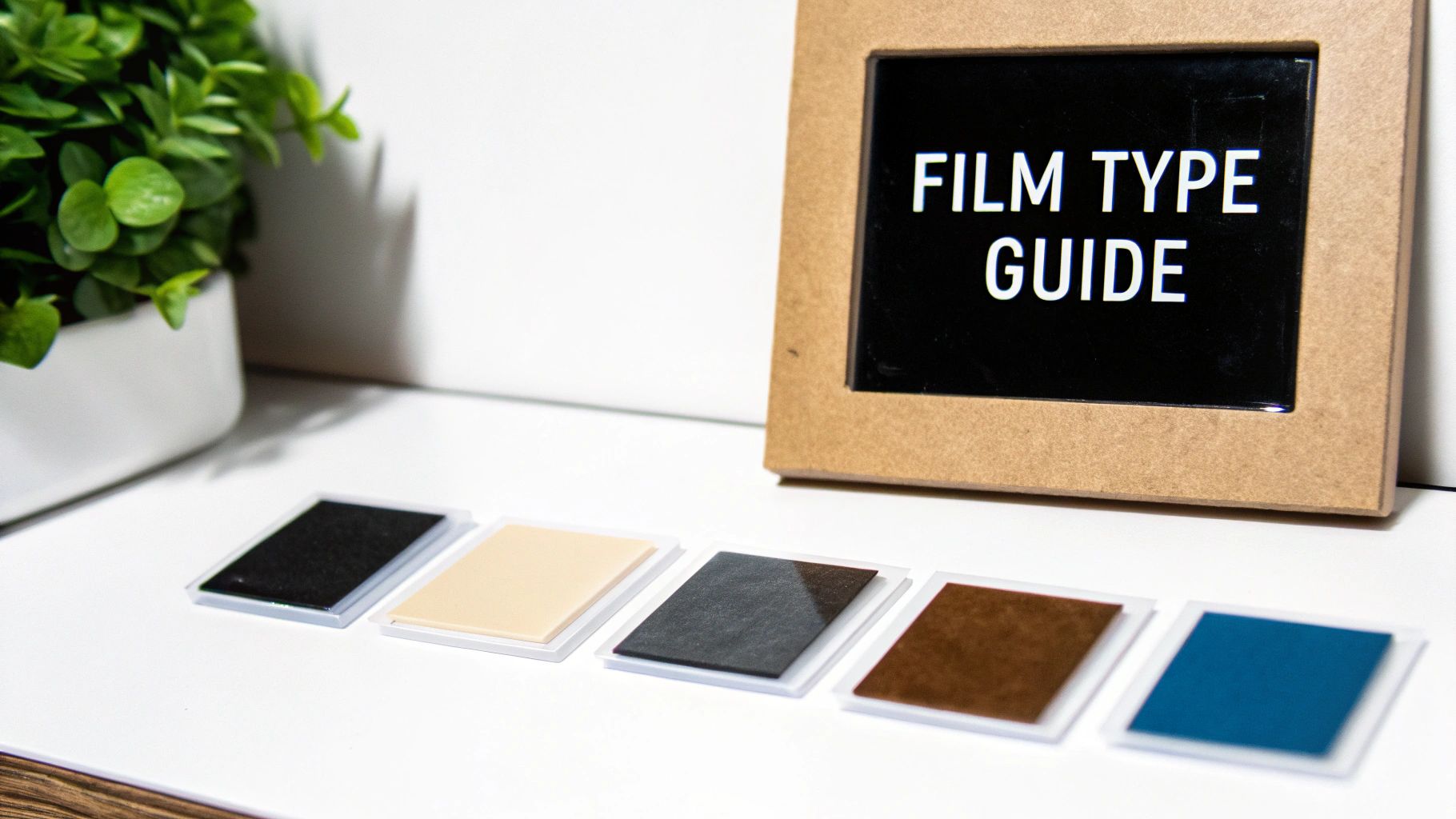
Feature | Dyed Film | Metalized Film | Carbon Film | Ceramic Film |
|---|---|---|---|---|
Heat Rejection | Low | Good | Very Good | Excellent |
UV Protection | Good | Excellent | Excellent | Excellent (up to 99%) |
Glare Reduction | Good | Very Good | Excellent | Excellent |
Signal Interference | No | Yes | No | No |
Durability | Low (fades over time) | Good | Very Good | Excellent |
Price | $ | $$ | $$$ | $$$$ |
Ultimately, the best film is the one that fits both your budget and your expectations for comfort and protection. Whether you go for a basic dyed film or invest in a high-performance ceramic, you're making a solid upgrade to your vehicle.
Understanding the Professional Installation Process
Even the best window film on the market is worthless without a skilled installer. The real magic of how window tint works comes down to the technician's hands-on expertise and an almost obsessive attention to detail. It takes precision at every single step to transform a simple roll of film into a flawless, seamless part of your car.
It all starts with a step that absolutely cannot be rushed: meticulous cleaning. Your installer will deep-clean the inside of the glass, getting rid of every last speck of dust, grime, or oily residue. This isn't just a quick wipe-down with a paper towel; it's a crucial prep stage to ensure the film's adhesive can form a perfect, bubble-free bond. Even a single trapped hair or piece of dust will stand out like a sore thumb later.
Preparing and Applying the Film
Once the glass is spotless, it's time to cut the film. Many top-tier shops now use computer-guided plotters that cut the material to the exact specifications of your car’s make and model. This digital precision means you get a perfect fit every time—no gaps, no crooked lines, just clean edges that look like they came straight from the factory.
Next, the installer wets both the glass and the film's adhesive side with a special application solution. This little bit of liquid is the secret sauce that allows them to slide the film into the perfect position on the inside of the window.
The installation process is a craft that blends technology with technique. A skilled technician ensures that the film not only performs its best but also looks like it came straight from the factory.
With the film positioned just right, the real artistry begins. Using a series of specialized squeegees, the technician methodically works from the center out, pushing every drop of application solution and every tiny air bubble from under the film. This requires a practiced hand and consistent pressure to create that smooth, crystal-clear finish.
The Critical Curing Phase
The job isn't quite done when the squeegees are put away. The final, and arguably most important, part of the process is curing. Over the next few days to a week, the last bits of moisture trapped under the film will evaporate, allowing the pressure-sensitive adhesive to fully bond with the glass. It’s absolutely critical that you don't roll your windows down during this period, or you risk peeling the edges right off.
This painstaking process is exactly why professional installation is worth every penny. Of course, a perfect tint job can only be applied to good glass. If your windows have deep scratches or chips, you'll want to get those fixed first. For more serious damage, learning about professional windshield replacement is a good idea to ensure your new tint has a flawless foundation to stick to.
Untangling Window Tint Laws and VLT Percentages
https://www.youtube.com/embed/bCKiX-vZif4
Before you jump into picking the perfect shade for your car, there's a crucial hurdle you need to clear: the law. A super-dark tint might look incredible, but it could also earn you a pricey ticket if it runs afoul of your local regulations. Every state has its own very specific rules about how dark your windows can be.
This is where you'll run into a key term: Visible Light Transmission, or VLT. It’s the universal measurement for tint darkness, and thankfully, it’s a pretty simple idea. VLT is just the percentage of visible light that can pass through the window film and glass.
The way the numbers work can be a little counterintuitive at first. Just remember this: the lower the VLT percentage, the darker the tint. A 5% VLT film, for instance, is what most people call "limo tint" because it's nearly black. On the flip side, a 70% VLT film is so light you might not even notice it's there.
Cracking the Code on State VLT Limits
It's not as simple as picking one number and running with it. State laws get granular, often setting different limits for different windows on the very same car. The goal is always to make sure the driver has a clear, safe view of the road.
You'll almost always find different VLT rules for these three areas:
Front Side Windows: These have the tightest restrictions. States want you to have a high VLT (lighter tint) here so you can clearly see your side mirrors and so other drivers or police can see you.
Rear Side Windows: The rules usually loosen up here. You can often go much darker to give passengers privacy and shade.
Rear Windshield: Similar to the back side windows, the law generally allows for darker tints on the rear glass.
Because these rules can change dramatically just by crossing a state line, you absolutely have to check your local laws before you buy anything. What's legal in Texas might get you pulled over instantly in California.
Knowing your local VLT laws isn't optional. Any good professional installer will be up-to-date on the current regulations and can steer you toward a choice that looks great and keeps you on the right side of the law.
It’s Not Just About Darkness: Other Legal Rules
While VLT is the main event, the law often has opinions on other things, too. For example, many states specifically ban highly reflective or mirrored tints. The reason is simple: they can create a blinding, dangerous glare for other drivers.
You might also find rules against certain colors, especially on the front windows. Red and amber films are often illegal because they can be mistaken for emergency lights. A professional who knows their stuff won't just understand the physics of tint; they'll be a walking encyclopedia of local laws, making sure your upgrade is both stylish and 100% legal.
The Real-World Benefits of Tinting Your Windows
Sure, tinted windows give a car that sleek, custom look, but the real magic is in the practical benefits you'll feel every time you get behind the wheel. The most immediate improvement is a massive drop in solar heat. A quality window film is engineered to block a huge chunk of infrared radiation—that's the stuff you actually feel as heat.
What does that mean for you? Your car’s cabin stays remarkably cooler, even on the hottest summer days. Your AC won't have to blast on full just to keep up, which not only saves a little fuel but also reduces the wear and tear on your vehicle's systems over the long haul.
Health and Interior Protection
Think of window tint as a powerful sunscreen for both you and your car's interior. It’s not just about shade; modern films are designed to block up to 99% of harmful ultraviolet (UV) rays.
This is a game-changer for a couple of big reasons:
Protecting Your Skin: All those hours spent driving add up to a lot of sun exposure. Tint drastically cuts down on the UV radiation hitting your skin, which is a smart move for your long-term health.
Preserving Your Interior: UV rays are the number one enemy of your car's interior. They’re what cause dashboards to crack and upholstery to fade. Tint acts like a shield, keeping everything inside looking fresh and new for years to come.
Honestly, it’s one of the best investments you can make for your vehicle's longevity and your own well-being.
The benefits of window tinting go far beyond aesthetics. It’s a functional upgrade that enhances safety, preserves your car's interior, and makes every drive more comfortable and secure.
Enhanced Safety and Privacy
Tinting your windows also adds a surprising layer of safety and security. By cutting down on blinding sun and headlight glare, the film actually improves your visibility and reduces eye fatigue, making you a sharper, safer driver. On top of that, the darkened glass adds privacy, keeping prying eyes off any valuables you might have in the car.
Here's something most people don't think about: in an accident, the film's adhesive can help hold shattered glass together. This significantly reduces the risk of injury from flying glass fragments. It's this all-around combination of comfort, protection, and safety that makes tinting such a worthwhile upgrade. You can see what other drivers think by checking out our customer testimonials and reading about their own experiences.
Your Window Tinting Questions, Answered
Even after you understand the science, some practical questions always pop up. Let's tackle some of the most common things people ask right after getting their windows tinted so you know exactly what to expect.
A big one is about the "curing" time. Don't be alarmed if you see a bit of haziness or even tiny water bubbles under the film right after installation. This is a completely normal part of the process. It’s just the leftover moisture from the application slowly evaporating as the film’s adhesive creates a permanent bond with your glass.
How long does this take? It can be anywhere from a few days to a few weeks, mostly depending on the film you chose and the local weather. The most important thing to remember during this time is to keep your windows rolled up—this gives the tint a chance to set properly without peeling at the edges.
How to Care for Your New Tint
Keeping your tint looking great for years is surprisingly simple, but it does require a little know-how.
Once the film is fully cured, you'll want to clean it correctly to avoid damage. The number one rule? Stay away from ammonia.
Avoid ammonia-based cleaners: Common household products like Windex are a no-go. Ammonia can slowly eat away at the film's adhesive and degrade the protective coatings over time.
Use a soft cloth: Your best bet is a soft microfiber towel paired with a simple mix of soap and water. If you prefer a spray, just make sure it's a dedicated, ammonia-free glass cleaner.
It's that easy. A little bit of proper care ensures your window tint stays flawless, protecting you and your car's interior for the long haul.