Your Guide to Fast Front Window Repair
Need a front window repair? Learn to assess damage, handle insurance, and choose the right service. Get clear, actionable steps for a stress-free fix.
Sep 23, 2025
generated
front window repair, windshield repair, auto glass, chip repair, mobile car repair
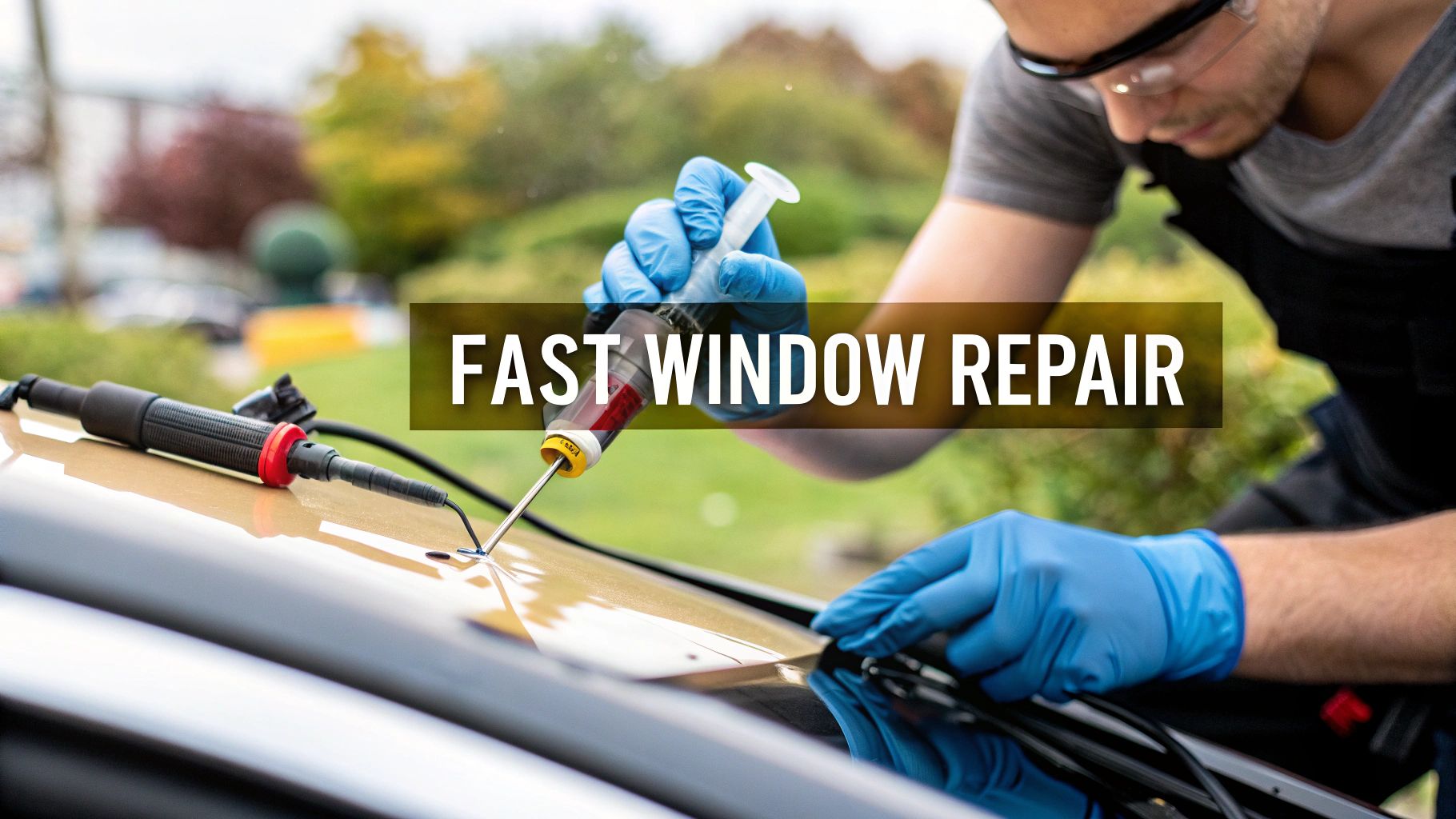
So, you've got a chip in your windshield. The big question is always the same: is this a quick fix, or am I looking at a whole new piece of glass? Honestly, it boils down to three things: the size of the damage, what kind of damage it is, and exactly where it’s located.
A tiny chip way over on the passenger side is usually a good candidate for a simple repair. But if you're dealing with a crack that's starting to spread or any damage right in your line of sight, that almost always means it's time for a full replacement.
Repair or Full Replacement: Making the Call
That moment you spot a new crack can be frustrating, but figuring out what to do next is pretty straightforward. As technicians, we have a few go-to methods to size up the situation quickly. You might have heard of the "dollar bill test"—if you can cover the chip or crack with a dollar bill, it’s a good sign that we can probably repair it.
But size is only part of the story. Where the damage is located is just as critical. Even a tiny chip dead center in the driver's view is a serious safety hazard. A repair in that spot can leave a slight distortion, which is the last thing you want in your direct line of sight. For that reason, we’d almost certainly recommend a full replacement.
Damage near the edge of the windshield is another red flag. A chip or crack there can weaken the entire structure of the glass, making a simple repair a risky, short-term solution.
The image below gives you a great visual breakdown of how we evaluate these factors to decide between a repair and a replacement.
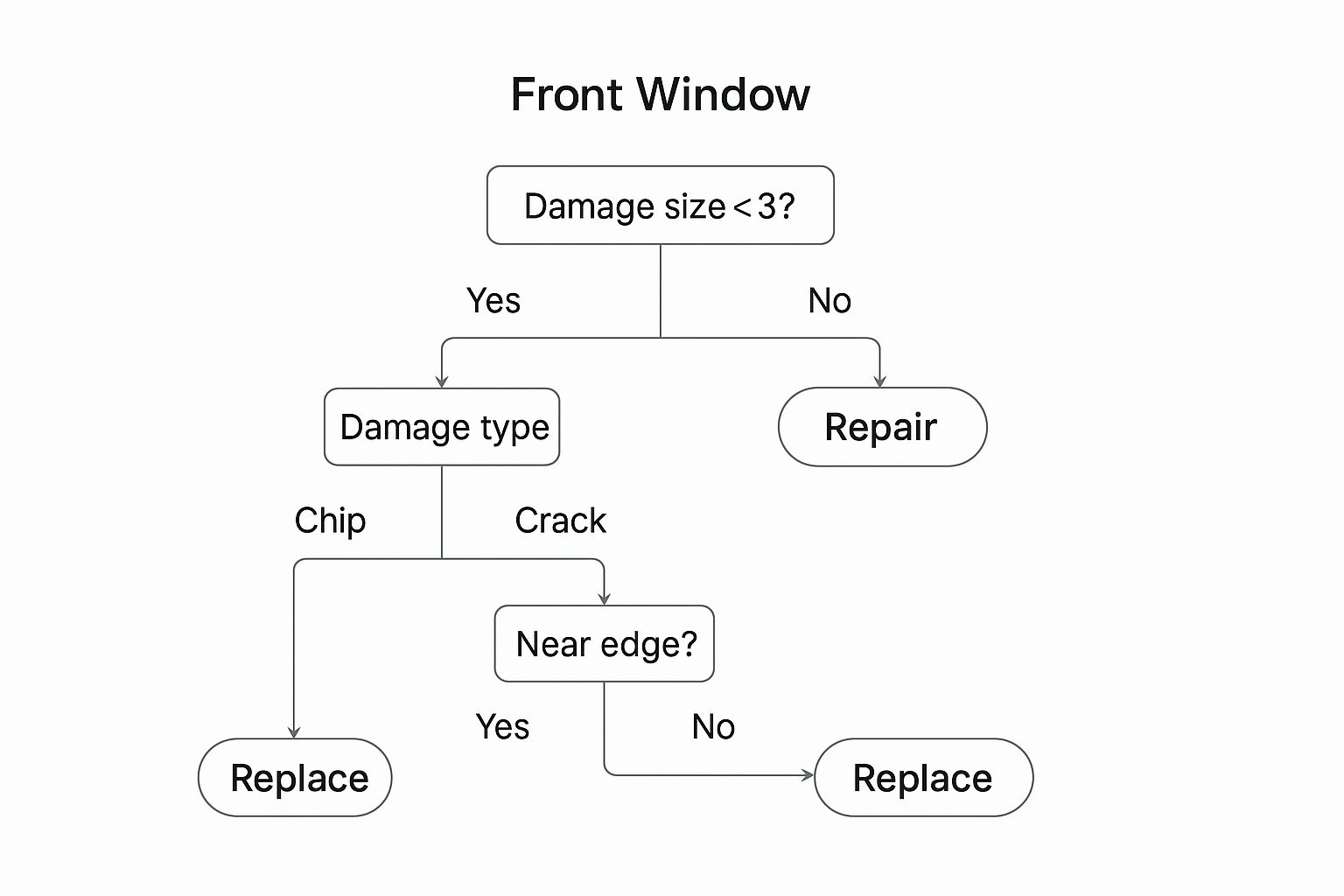
As you can see, a few different issues can quickly point to needing a new windshield altogether.
To make it even easier, here's a quick reference table I often share with customers to help them get a feel for what their windshield needs.
Repair vs Replacement Quick Assessment Guide
Damage Type | Size Guideline | Location Concern | Likely Solution |
|---|---|---|---|
Chip / Bullseye | Smaller than a quarter | Away from driver's direct view | Repair |
Star Break | Smaller than a quarter | Away from edges & driver's view | Repair |
Small Crack | Shorter than 6 inches | Not in driver's view or on the edge | Repair |
Long Crack | Longer than 6 inches | Any location | Replacement |
Edge Damage | Any size | Within 2 inches of the windshield edge | Replacement |
Driver's View | Any size | Directly in the driver's line of sight | Replacement |
This table is a great starting point, but a professional assessment is always the best way to be sure.
The ADAS Complication: When New Tech Changes the Game
If you have a newer vehicle, there’s another layer to this: your Advanced Driver-Assistance Systems (ADAS). These are the brains behind features like lane-keeping assist and automatic emergency braking, and their cameras are often mounted right on the windshield.
A small crack can throw off these highly sensitive cameras and sensors. This means you don't just need new glass; you also need a precise recalibration of the ADAS system to ensure your safety features work exactly as they should. This is a huge reason why understanding the ins and outs of a full windshield replacement is so crucial for modern car owners.
Your windshield is one of the most important safety features in your car. With today's technology, it's become even more integral. The demand for precise repairs and replacements that account for embedded sensors has grown, adding new layers of complexity and cost to the process.
This shift isn't just about convenience; it's driven by major advancements in auto tech and stricter safety standards. The windshield is no longer just a barrier against wind and rain—it’s a central hub for your car's safety network.
What to Expect From a Mobile Windshield Repair
Let's face it, the biggest reason most of us put off fixing a windshield chip is the hassle. Who has time to drop their car at a shop and wait? This is where mobile front window repair completely changes the game. Instead of you going to the shop, a certified technician comes right to your driveway or office parking lot. It’s all about getting the job done right, without derailing your day.
The process usually kicks off with a quick phone call. You’ll describe the chip or crack, and that initial chat gives the technician everything they need to know. They can then show up with the right tools and the specific high-quality resin needed for your particular type of damage.
Getting Ready for the Technician
A little bit of prep work on your end can make the whole repair go that much smoother and faster. The main thing is to make sure the technician has a safe and accessible place to work. A spot in your driveway, a designated parking space at work, or even a quiet side street works perfectly.
Here are a few simple things to keep in mind:
Mind the Weather: If there’s rain in the forecast, the technician will need a covered spot like a garage or carport. Any moisture getting into the chip can ruin the repair.
Give Them Some Room: The tech needs enough space to open their doors and lay out their equipment, so try not to park them in a super tight spot.
A successful mobile repair is a team effort. When you provide a good workspace, you're helping the technician do their best work, ensuring a solid, safe repair that gets you back on the road with confidence.
Once they arrive, you can just hand over the keys and get back to your day. They’ll handle the rest. This kind of on-the-go service is a staple for modern auto glass shops, and you can explore various mobile auto glass repair locations to see just how convenient it is.
Before you know it, typically in about 30-60 minutes, the repair is complete and your windshield is secure again.
A Look Inside the Repair Process
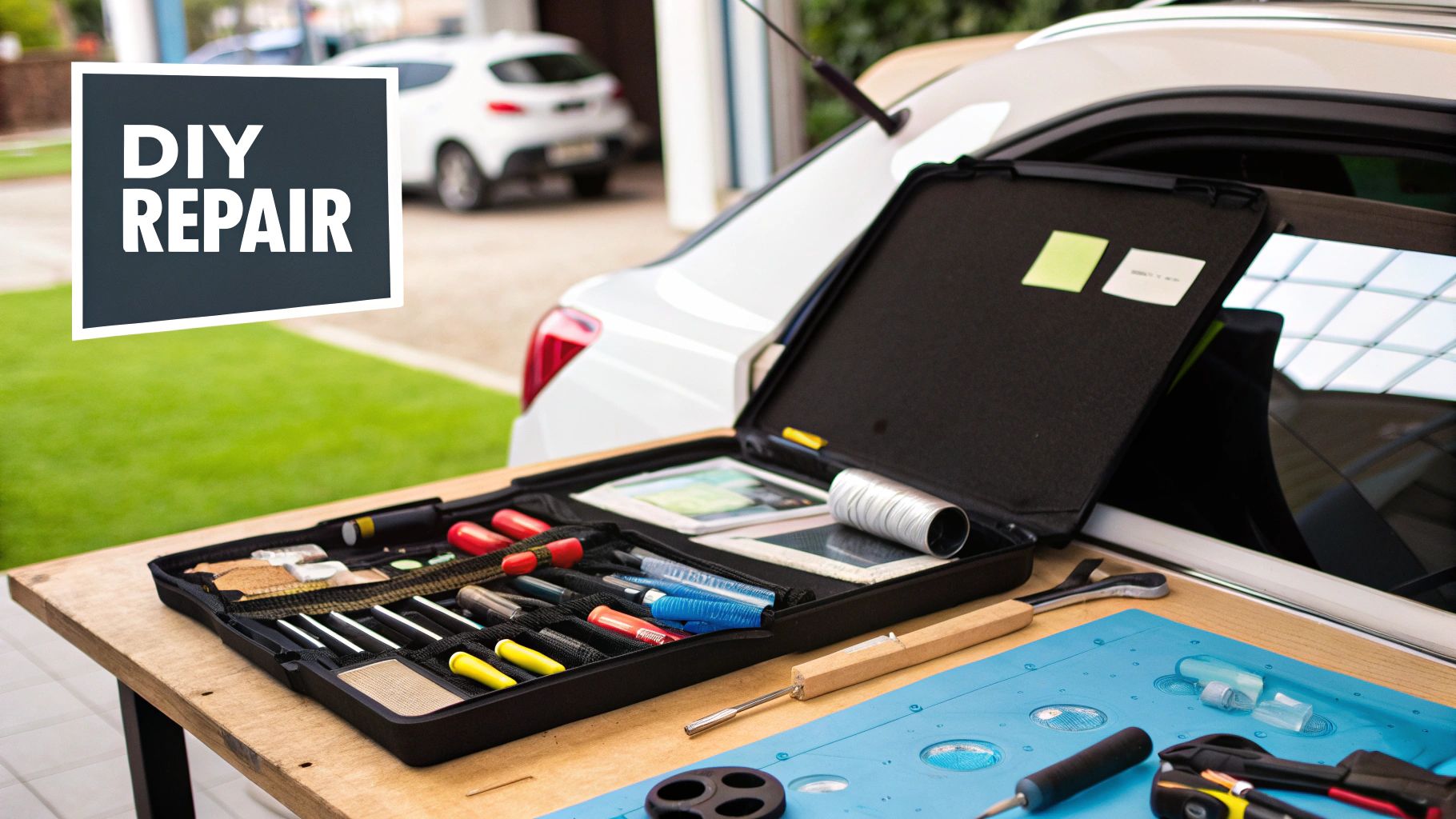
A professional front window repair isn't just about squirting some glue into a crack and calling it a day. It’s a meticulous craft that blends technique with technology to restore your windshield's strength and clarity.
The entire process starts with a deep clean. Your technician will painstakingly remove every speck of dust, glass fragment, and moisture from the damaged spot. This step is absolutely critical—any leftover debris can compromise the repair and cause it to fail later on.
Creating a Perfect Seal
Once the area is spotless, the technician will place a specialized tool directly over the chip. This device creates a strong vacuum, pulling every last bit of air out of the tiny, spiderweb-like cracks branching off from the main impact point. Getting the air out is non-negotiable for a successful repair.
With the vacuum established, a high-quality, crystal-clear resin is injected into the break. The pressure change immediately draws the liquid resin deep into the void, filling every microscopic fissure. This is where the real magic happens, as the resin fills the gaps that were weakening your windshield and distorting your view.
Curing and Finalizing the Repair
After the resin has completely filled the damaged area, it's time to lock it in place. Your technician will use a powerful ultraviolet (UV) light to cure the resin, hardening it in just a few minutes. This creates an incredibly strong bond, making the repaired section as tough—and often tougher—than the original glass.
A professional repair aims to restore at least 80% of your windshield's original structural integrity. This not only prevents the chip or crack from spreading but also dramatically improves clarity, making the damage nearly invisible from just a few feet away.
To finish, the technician scrapes off any excess resin and gives the spot a final polish. The whole thing, from start to finish, usually takes less than an hour.
For most vehicles, that's the end of the story. But if you drive a newer car with advanced safety features, there's one more consideration. To understand if your car's cameras need recalibrating after a repair, check out our guide on ADAS windshield calibration.
Using Insurance for Your Windshield Repair
https://www.youtube.com/embed/U3ufWqx3lbE
Dealing with insurance can feel like a chore, but for a front window repair, it's usually a surprisingly painless process. Most auto policies include comprehensive coverage, which is designed for exactly this kind of thing—damage from road debris, falling branches, or other non-collision events.
What many drivers don't know is that your insurance company wants you to repair the chip before it turns into a crack. It’s much cheaper for them than a full replacement, and it preserves the original factory seal on your windshield, which is a big deal for your car's structural safety.
The No-Deductible Perk for Repairs
Here's the best part: because they prefer a repair, most insurance carriers will waive your deductible if the damage is small enough to be fixed. That means getting that annoying chip repaired could cost you absolutely nothing. It’s a classic win-win situation.
This perk usually vanishes if the damage is too severe for a repair. If you need a full replacement, you'll almost certainly have to pay your comprehensive deductible, which is often $250, $500, or even higher.
Don't just assume what your policy covers. A quick call to your agent or a glance at your policy documents will give you the answer. Knowing this upfront takes all the guesswork and stress out of the situation.
Filing a Claim The Easy Way
Getting the claim started is simple. Most experienced auto glass shops—including us—are set up to handle all the paperwork for you. We deal with all the major insurance providers every single day.
To get the ball rolling, all we typically need is:
Your insurance policy number
The date the damage happened
Your vehicle's year, make, and model
With just that little bit of info, we can contact your provider, confirm your coverage, and bill them directly. You can just get on with your day while we take care of the details.
Keep in mind that as vehicle technology has gotten more complex, so have auto glass costs. It's also worth knowing that multiple claims can sometimes affect your rates. You can get a better sense of these trends by looking at some recent auto glass industry statistics.
Keeping Your Windshield Strong After a Repair

So, your front window repair is done and your view of the road is crystal clear again. That's great, but the job isn't quite finished. To make sure that repair lasts, a little aftercare is crucial, especially in the first day or two.
The resin that was injected into the chip needs time to properly cure and create a permanent bond with the glass. This is the most critical phase.
During this curing period, you’ll want to avoid a few specific things. First, hold off on washing your car for at least 24 hours. A high-pressure wash, in particular, can put way too much stress on the fresh repair. It's also a good idea to avoid slamming your doors—that sudden vibration and change in cabin pressure can subtly affect the resin as it sets.
Long-Term Windshield Care Habits
After that initial 24-hour window, you can shift your focus to long-term habits that will protect your investment and help prevent new chips and cracks from forming. Think of it as simple, preventative maintenance.
Your windshield is more than just a piece of glass; it's a critical safety component of your vehicle. The global automotive front windshield market is even projected to hit USD 32.5 billion by 2035, which really underscores its importance. If you're interested, you can read more about the growth of the automotive windshield market.
Here are a few simple practices that make a world of difference:
Keep Your Distance: This is the big one. Most chips come from rocks and debris kicked up by trucks and other cars. Leaving a safe following distance gives that debris a chance to hit the pavement instead of your glass.
Check Your Wiper Blades: Worn-out, gritty wiper blades don't just streak—they can actually scratch your windshield over time. I recommend checking them every six months and swapping them out if they feel brittle or leave marks.
Use the Right Cleaner: Steer clear of household glass cleaners that contain ammonia. Ammonia can damage any window tint you might have and can even degrade the repair resin over the long haul. Stick to a quality, ammonia-free automotive glass cleaner.
By taking these small, proactive steps, you’re not just protecting the repair you just had done. You're maintaining the overall clarity and structural integrity of your windshield, which is a key part of staying safe on the road.
Answering Your Front Window Repair Questions
Even after you’ve decided to get your windshield fixed, a few questions might still be bouncing around in your head. That's completely normal. Getting clear on the details helps you feel confident you're making the best decision for your car. Let's tackle some of the most common questions we get from drivers just like you.
Most people first want to know how long the job will take. The good news is, it's fast. A professional can usually fix a standard rock chip or small crack in about 30 to 60 minutes. It's so efficient that you're typically good to drive away as soon as the technician is done.
What Will My Windshield Look Like After?
The next big question is always about the final look. Will the damage be totally gone? The main purpose of a repair is to restore your windshield's strength and stop the chip or crack from spreading. While the repair makes a huge difference visually, it won't make the damage 100% invisible.
The goal of a professional front window repair is to restore clarity by up to 95%. You'll likely be left with a very small, clear spot that is far less distracting than the original chip, ensuring your view remains unobstructed.
Think of that tiny, leftover blemish as proof that the resin has done its job, bonding with the glass and making everything solid again.
Is It Safe to Drive with a Damaged Windshield?
Finally, let's get serious and talk about safety. If you have a small chip that's not directly in your line of sight, you're generally okay for a little while, but you really shouldn't put it off. Simple things like a change in temperature or hitting a pothole can turn that tiny chip into a massive crack in an instant.
A large crack, on the other hand, is a different story—it's a major safety risk. Your windshield is a critical part of your car's structure, providing up to 60% of its cabin strength in a rollover. A weakened windshield can even mess with how your airbags deploy. Driving with a big crack isn't just a bad idea; it’s often illegal if it blocks your view.
At Auto Renu Auto Glass LLC, we're all about making your life easier and safer with expert mobile repairs that come right to your doorstep. Don't let that chip turn into a costly replacement. Contact us today for a fast, reliable front window repair.
Article created using Outrank