Finding Windshield Replacement Near Me A Simple Guide
Searching for 'windshield replacement near me'? Our guide explains the process, costs, insurance, and how to find a trusted local auto glass service.
Sep 22, 2025
generated
windshield replacement near me, auto glass repair, mobile windshield service, adas calibration, car windshield cost
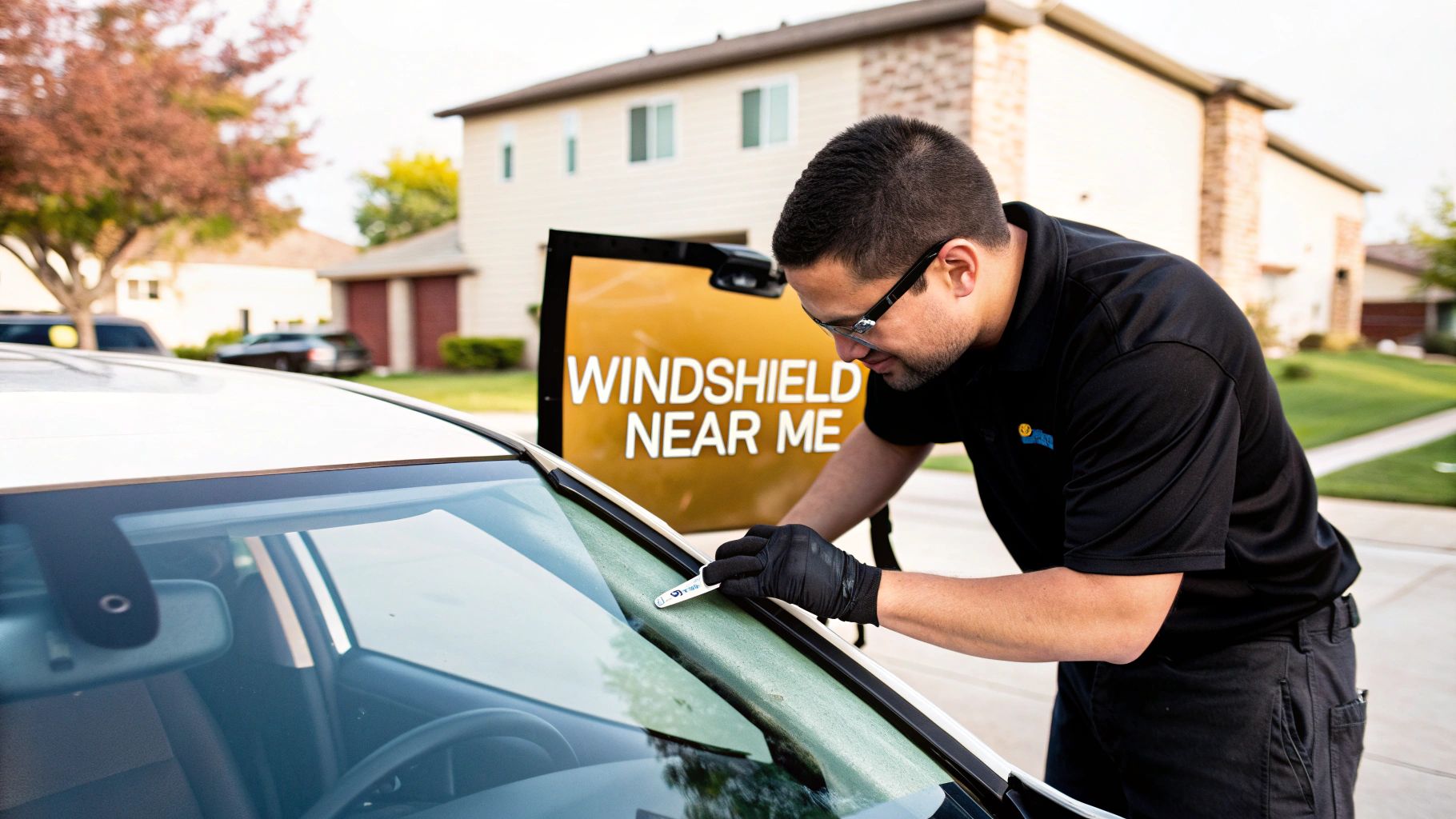
That crack staring back at you from your windshield isn't just a cosmetic flaw. It's a serious safety hazard. Many people don't realize this, but your windshield provides up to 60% of your vehicle's structural strength in a rollover accident. It’s also crucial for making sure your airbags deploy correctly. That's why finding a professional for "windshield replacement near me" needs to be a top priority.
Why Your Windshield Is More Than Just Glass
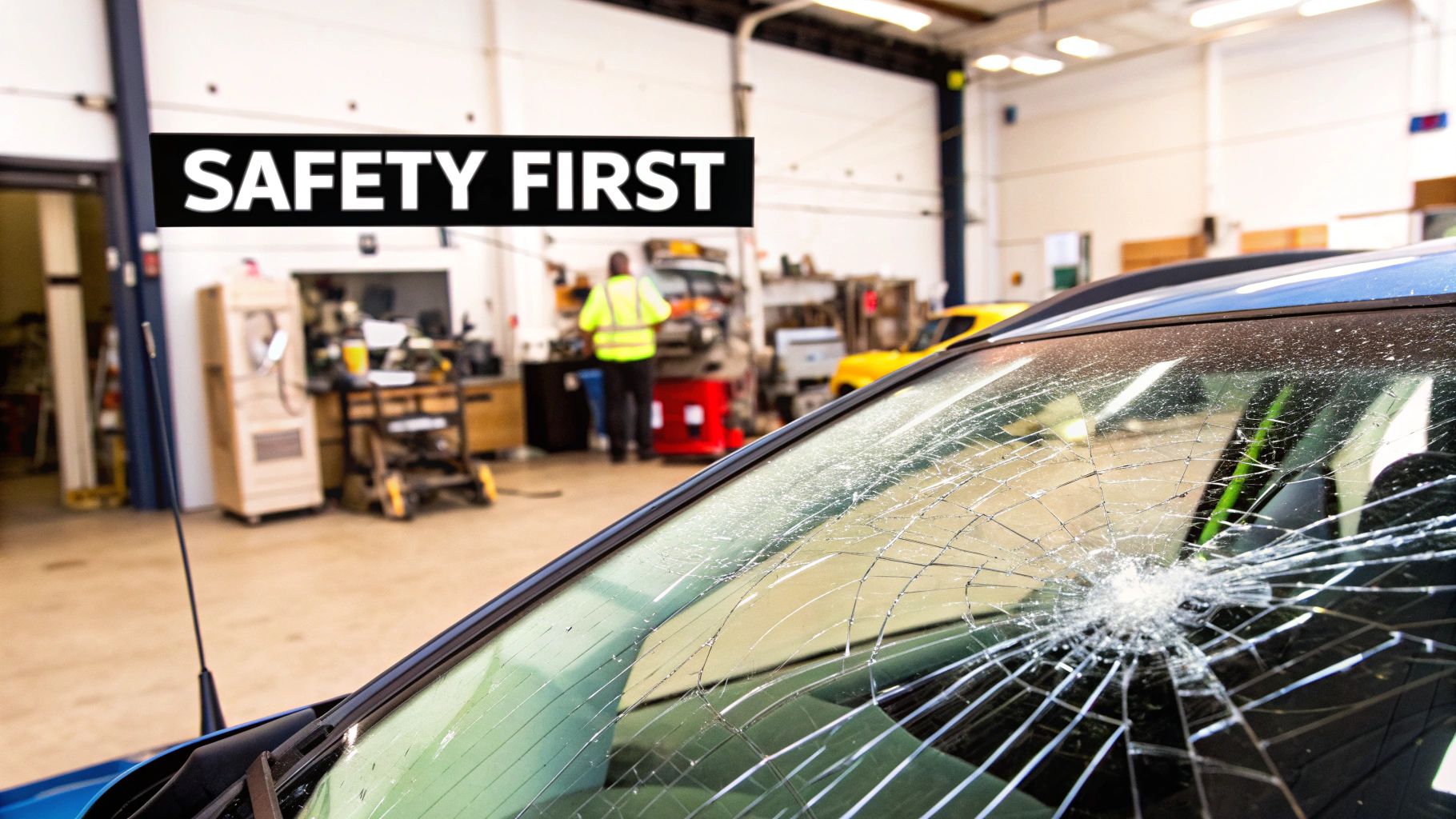
It’s easy to think of a windshield as just a barrier to keep wind and rain out. But in reality, it’s a highly engineered piece of safety equipment. Think of it as the keystone in an arch; it locks the entire structure together and helps keep the roof from caving in during a serious collision.
This is exactly why even a tiny chip can escalate into a major problem. A compromised windshield might not be strong enough for the passenger-side airbag to properly deploy. That airbag is designed to bounce off the glass to protect the person in the seat. Putting off a replacement is a gamble you don't want to take with your safety.
The Rise of Mobile Convenience
The good news? Getting this critical service done has never been more straightforward. The demand for hassle-free solutions has led to a boom in mobile windshield replacement, where a certified technician comes right to your driveway or office parking lot. No more taking a day off work or trying to find a ride from the auto shop.
This convenience factor is a huge driver behind the U.S. automotive glass market, which is expected to reach $3.1 billion by 2025—a 2.5% jump from 2024. As cars stay on the road longer, more drivers are looking for fast and reliable ways to handle these repairs.
Your vehicle's windshield is a key structural component. A small chip can compromise the entire safety system, making prompt attention from a qualified technician essential for your protection on the road.
Now, if the damage is pretty minor, you might not need a whole new windshield. Small chips and cracks can often be fixed with a much simpler process. It helps to understand the difference between a full replacement and a simple windshield repair to figure out what your car actually needs. This guide will walk you through everything, from figuring out the cost to picking a trustworthy local pro.
What to Expect During a Mobile Windshield Replacement
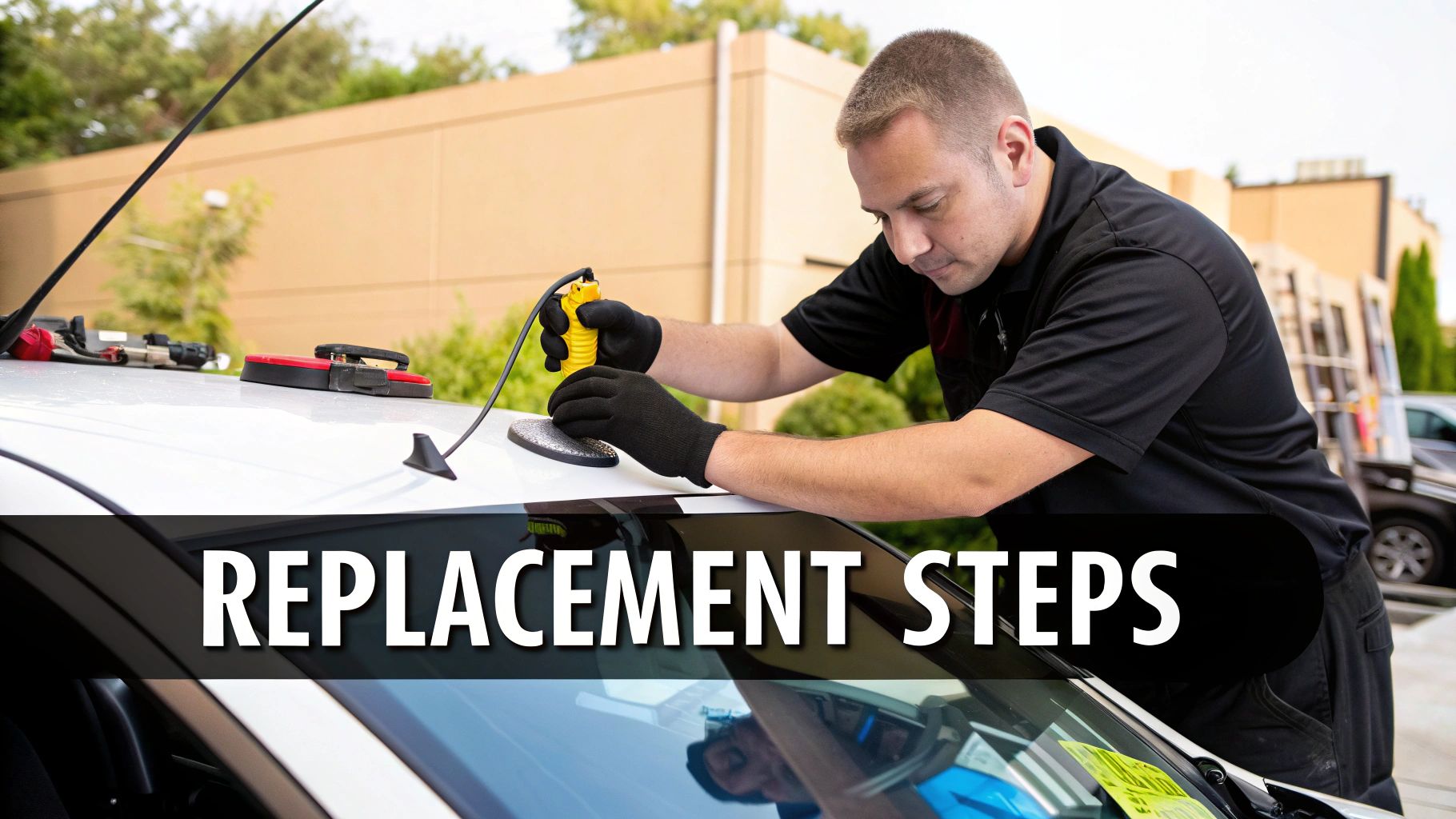
So, you’ve scheduled a mobile windshield replacement. What actually happens when the van pulls up to your home or office? Think of it less like a simple repair and more like a carefully executed surgery for your car. The entire process is designed to be efficient, precise, and get you back on the road without compromising an ounce of safety.
Knowing the steps involved demystifies the service and really highlights why having a seasoned professional handle your "windshield replacement near me" is so crucial. It’s not just about swapping out a piece of glass; it’s about restoring a key safety component of your vehicle.
Initial Inspection and Vehicle Preparation
First things first, the technician isn't just going to start ripping out the old glass. They'll begin with a thorough pre-inspection of your vehicle. This means carefully looking over the damage to confirm a full replacement is the right call and documenting the car's current condition—noting any existing scratches or dings on the paint near the windshield. It’s a simple step that protects both you and the shop.
Once the inspection is done, they’ll prep your car. This involves laying down protective coverings on your hood, fenders, and dashboard. You don’t want any stray adhesive or a dropped tool messing up your paint or interior. They'll also carefully disconnect things like your windshield wipers and any sensors attached to the glass.
Removing the Damaged Windshield
This is where the real expertise shines. Using specialized tools, the technician will carefully cut through the old urethane seal holding the broken windshield in place. It's a delicate process because the goal is to remove the glass without damaging the pinch weld—that’s the metal frame of your car where the windshield actually sits.
A clean, straight pinch weld is non-negotiable for a safe installation. If that frame gets bent or scratched, the new windshield might not seal properly. That can lead to frustrating wind noise, water leaks, or worse, a failure in an accident. The technician works their way around the entire edge of the glass until it can be lifted out safely.
Preparing the Frame and Applying New Adhesive
With the old windshield gone, the pinch weld gets some serious attention. The tech will meticulously scrape off every last bit of the old urethane, clean the frame thoroughly, and then apply a special primer. This primer is key because it ensures the new adhesive forms an unbreakable bond with the car's body.
The adhesive itself is a marvel of engineering. It's a high-strength polyurethane specifically designed for automotive use. This isn't just glue; it's a structural component that helps keep your roof from collapsing in a rollover and ensures your airbags deploy correctly.
Next, the technician lays a fresh, even bead of the new urethane adhesive onto the primed frame. Consistency is everything here. A perfect bead means a perfect, watertight seal that will last for years.
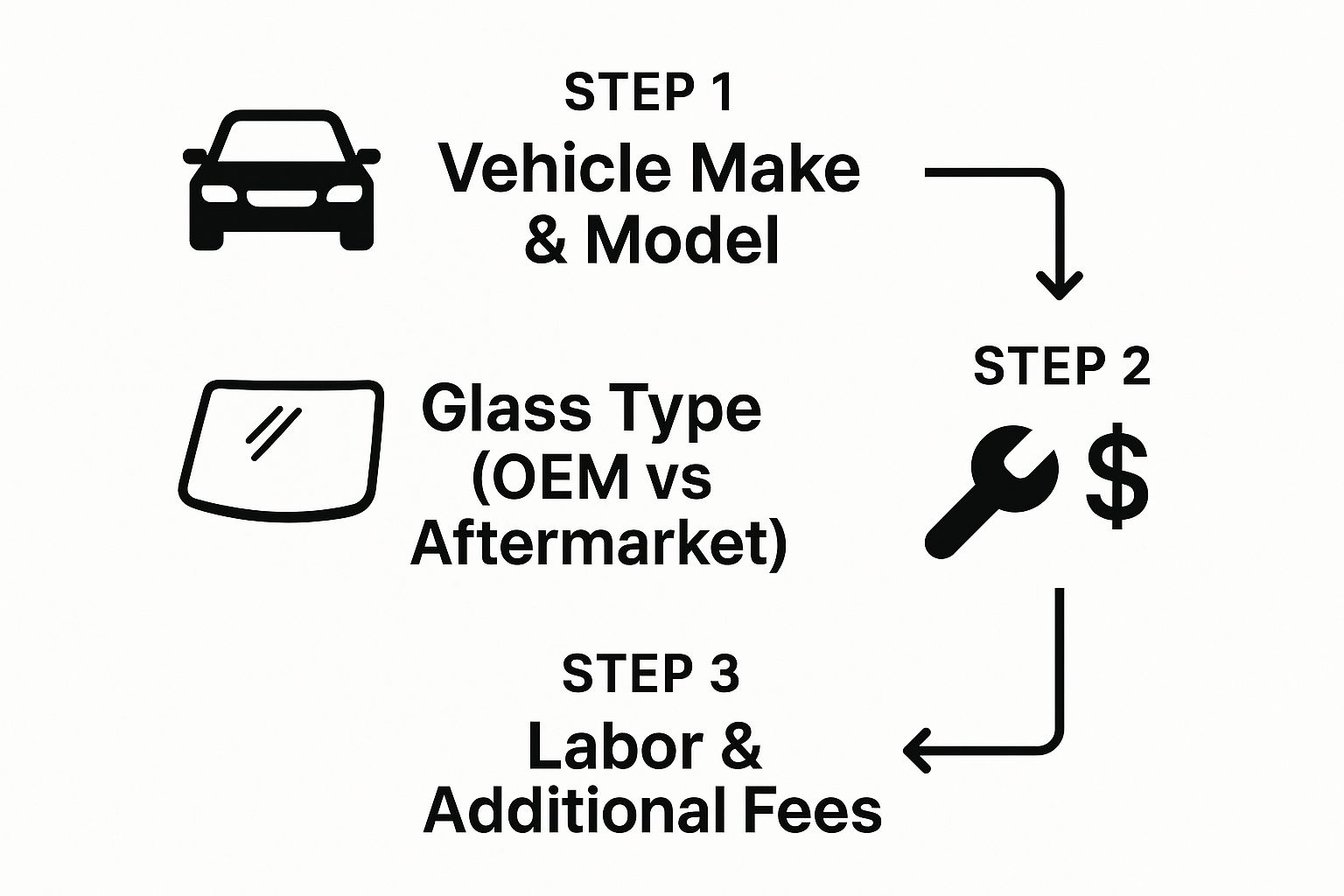
As you can see, the final cost isn't just about the glass. The price reflects your vehicle's features, the type of glass required, and the skilled labor needed to do the job right.
Setting the New Glass and Finalizing the Job
Now for the main event. Using heavy-duty suction cups, the technician and often a partner will carefully lift the new windshield and place it perfectly onto the adhesive bead. They'll gently press it into place, making sure the alignment is exact before reconnecting any sensors or the rearview mirror.
Once the new glass is secure, they'll clean up the work area, reattach your wiper blades, and give your new windshield a final polish. But the job isn't quite done yet.
The last thing the technician will do is give you the Safe Drive-Away Time (SDAT). This is the absolute minimum time you need to wait before driving. It allows the new adhesive to cure enough to meet federal safety standards, which can take anywhere from 30 minutes to a few hours, depending on the adhesive used and the day's weather. Heeding this advice is critical for your safety.
Breaking Down Your Windshield Replacement Cost
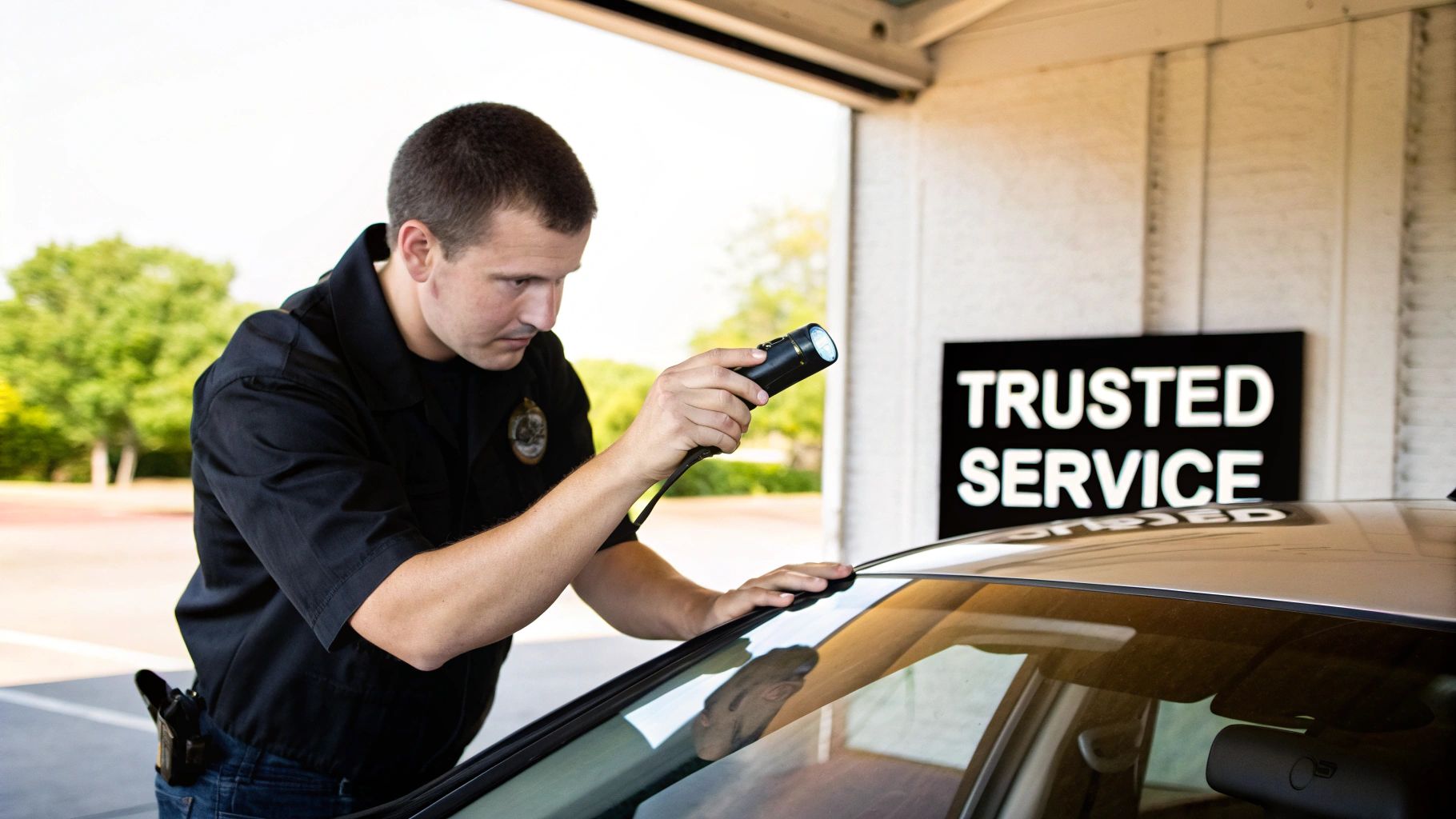
Let's get straight to the big question on everyone's mind: "How much is this going to set me back?" When you start looking up "windshield replacement near me," you’ll quickly notice that the prices can be all over the map. There’s a good reason for that, and it's not just about the new piece of glass.
The final bill is a detailed calculation based on your car's specific make and model, the technology built into it, and the type of materials used. Think of it less like buying a standard part off the shelf and more like getting a custom suit tailored. The fabric is just the starting point; the real cost comes from the custom fit, the added features, and the expert craftsmanship needed to get it just right.
Your Vehicle Is the Starting Point
At its core, the biggest price driver is your car’s make, model, and year. It’s a simple case of supply and demand. A windshield for a common vehicle, like a Honda Civic, is manufactured in huge quantities, making it much more affordable to source. On the other hand, glass for a luxury Mercedes-Benz or a niche sports car is produced in smaller batches, which naturally drives up the cost.
Older cars also tend to have simpler windshield designs. They’re often just a straightforward piece of curved glass without all the bells and whistles of modern vehicles. This makes both the glass and the installation process less complex, saving you money.
The Hidden Tech in Your Glass
These days, a windshield is so much more than just a barrier against wind and rain. It’s actually a high-tech platform that’s critical to your car's safety and convenience features. Every sensor or special coating embedded in the glass adds another layer of complexity and, you guessed it, cost.
Some of the most common technologies that bump up the price include:
Rain Sensors: These little gadgets automatically turn on your wipers. The new glass needs a precise mounting bracket for this sensor to work properly.
Heads-Up Displays (HUDs): If your car projects speed or navigation onto the glass, it requires a special, more expensive windshield with a unique reflective film.
Heating Elements: Those tiny, barely visible wires that quickly defrost your windshield in the winter? They’re built right into the glass.
Acoustic Interlayers: Some windshields have an extra layer of sound-dampening vinyl to give you a quieter ride by reducing road and wind noise.
The more tech your car has, the more sophisticated—and expensive—the replacement glass will be. It's crucial to use a windshield that matches your car's original features so everything continues to work as intended.
The price of a new windshield is a combination of several different elements. The table below breaks down the key factors so you can see exactly where your money is going when you get a quote.
Key Factors That Influence Windshield Replacement Costs | ||
|---|---|---|
Cost Factor | Description | Impact on Price |
Vehicle Make, Model, and Year | Luxury, rare, or classic cars have more expensive glass than common, mass-produced vehicles. | High |
OEM vs. Aftermarket Glass | Original Equipment Manufacturer (OEM) glass is identical to the factory original, while aftermarket glass is a more affordable equivalent. | Medium to High |
Embedded Technology | Features like rain sensors, heating elements, HUDs, and acoustic layers require specialized, costlier glass. | Medium to High |
ADAS Recalibration | The mandatory process of realigning cameras and sensors attached to the windshield after replacement. | Medium |
Labor Costs | The price for a certified technician's time and expertise to perform the replacement safely. | Medium |
Understanding these components helps demystify the final price and ensures you're making an informed decision about your repair.
OEM vs. Aftermarket Glass: A Key Decision
Another big fork in the road is the type of glass you choose. You’ll typically be offered two main options: OEM or aftermarket (sometimes called OEE).
OEM (Original Equipment Manufacturer): This is the real deal. It’s made by the same company that supplied the windshield to your car's manufacturer. It’s a perfect match in every way—thickness, tint, shape, and sensor mounts.
OEE (Original Equipment Equivalent): Also known as aftermarket glass, this is made by a different company. It's designed to meet the same strict safety and performance standards as OEM glass but usually comes at a lower price point.
While OEE glass is often a great way to save a few bucks, it’s vital to use a brand with a solid reputation. For cars with Advanced Driver-Assistance Systems (ADAS), many automakers insist on using OEM glass to ensure the cameras and sensors perform flawlessly.
Labor and Recalibration: The Final Pieces
The glass itself is just one part of the puzzle. You’re also paying for the skilled labor of a certified technician. This isn’t a simple DIY job; they follow strict procedures to remove the old, damaged windshield and install the new one to ensure a perfect, safe seal.
Finally, there's recalibration. If your car has ADAS features like lane-keeping assist or automatic emergency braking, its forward-facing camera must be recalibrated after the new windshield goes in. This is an absolutely essential safety step to make sure those systems can accurately "see" the road. It adds to the total cost, but it’s non-negotiable for your safety.
These technological advancements are a major reason the industry is expanding. In fact, the global automotive windshield market is projected to grow from $32.21 billion in 2024 to an estimated $62.53 billion by 2035. If you're interested, you can read the full research about these automotive market trends.
Making Your Insurance Work For You
Let's be honest, the words "insurance claim" can make anyone's shoulders tense up. Most of us immediately picture long phone calls, endless paperwork, and confusing jargon. But when it comes to getting a windshield replaced, you might be surprised at how painless the process can be.
Your auto insurance is there for a reason—to protect you from those unexpected, costly curveballs life throws your way. A cracked windshield is a perfect example of this. The trick is knowing how to make your policy work for you, and it's often much simpler than you think.
Comprehensive Coverage and Your Deductible
The part of your policy that comes into play here is called comprehensive coverage. This is your protection against all the non-collision stuff, like theft, falling tree branches, or storm damage. Since a rogue rock flying up from the highway isn't technically a car accident, the damage falls right into this category.
Now, let's talk about the deductible. That's the amount you have to pay out of your own pocket before your insurance company steps in. For example, if your windshield replacement costs $800 and your comprehensive deductible is $500, you’d pay the $500 and your insurance would handle the remaining $300.
But here’s where auto glass has a unique twist. Because a clear, undamaged windshield is so crucial for your safety, many insurance companies and state laws have made it incredibly easy to get it fixed.
A lot of drivers don't realize their comprehensive coverage often has a separate, much lower deductible just for glass damage. In some states, that deductible is waived completely.
This is a complete game-changer. It means you might have a $500 deductible for a major fender-bender but a $0 or $50 deductible for a brand-new windshield. The first step to saving money is simply checking the fine print of your policy.
The Claims Process Demystified
You don't need to brace yourself for a complicated ordeal. In fact, any reputable auto glass company will handle the heavy lifting for you, making the whole experience feel surprisingly seamless.
Here's how it usually plays out:
Call the Glass Shop First: This might sound backward, but don't call your insurance agent. Start with a trusted local glass provider. These shops work with insurance companies day in and day out and know exactly how to get a claim approved fast.
Provide a Few Details: You'll just need to give the shop your insurance policy number and explain what happened to the windshield. From there, they take over, contacting your insurance provider on your behalf.
Get Quick Approval: Most of the time, the claim is verified and approved right over the phone in just a few minutes. The shop gets the green light they need to do the work.
Schedule the Job: With the insurance part squared away, all you have to do is book your mobile windshield replacement. The shop bills your insurance company directly for the cost of the job.
This direct-billing process is a huge plus. It means you don't have to pay the full cost out of pocket and then wait around to get reimbursed. You just cover your deductible (if you even have one), and the pros handle the rest.
State-Specific Laws and Zero Deductible Coverage
Some states have gone even further to promote driver safety. Places like Florida, Kentucky, and South Carolina have specific laws that require insurance companies to waive the comprehensive deductible for windshield replacement.
This is often called "zero deductible" or "full glass" coverage. If you live in one of these states and have comprehensive insurance, your new windshield could be 100% free to you. It's a fantastic perk designed to make sure drivers never have to put off a critical safety repair because of cost.
Even if your state doesn't have such a law, many insurance carriers offer full glass coverage as a cheap add-on to your policy. It's always worth asking your agent about it—a few extra bucks a month could save you hundreds later on.
Don't Forget This Critical Step: ADAS Recalibration
If your car was made in the last few years, it's likely packed with safety features you rely on every day. We're talking about lane-keeping assist that nudges you back into line, forward collision warnings that beep when you get too close, and even automatic emergency braking. These life-saving technologies are all part of your vehicle's Advanced Driver-Assistance Systems (ADAS).
Think of ADAS as your digital co-pilot, and its eyes are a small camera mounted right behind your rearview mirror. This camera constantly scans the road, feeding critical data to your car's brain.
When a technician replaces your windshield, the new glass can ever so slightly alter the camera's position—sometimes by less than a millimeter. You'd never notice it, but for your car, it’s like trying to navigate with a bad prescription. Suddenly, its whole perception of the world is off.
This is exactly why ADAS recalibration is so important. It's the process of re-aiming and re-tuning that camera to the new windshield, ensuring it sees the road ahead with perfect accuracy. Skipping this step isn't just a minor oversight; it's a major safety risk. It could cause your car to misread lane lines, misjudge the distance of the car in front of you, or fail to brake in an emergency.
Static vs. Dynamic: What’s the Difference?
Recalibration isn't a one-size-fits-all job. Depending on your car's make and model, the technician will use one of two methods to get the job done right.
Static Recalibration: This happens in a controlled shop setting. The technician sets up a specific target board in front of your car at a precise distance and height. The car's computer then locks onto this target to perfectly align the camera's view. It's like an eye exam for your car.
Dynamic Recalibration: Just like it sounds, this one happens on the move. A technician hooks up a diagnostic tool and takes your car for a drive on clearly marked roads. During the drive, the camera recalibrates itself by identifying real-world lane markings and other road features.
Some vehicles actually need both a static and a dynamic recalibration to be perfectly dialed in. A properly certified technician will know exactly what your car's manufacturer requires. To get a better handle on the nuts and bolts, you can learn more about ADAS windshield calibration in our detailed article.
Why You Can’t Afford to Skip It
The rise of ADAS is reshaping the entire auto glass industry. Projections show the global market for replacement windshields is set to hit around $15 billion USD by 2025, with much of that growth driven by the need for specialized glass that works with these complex camera systems. You can discover more insights about the replacement glass market on archivemarketresearch.com.
This boom underscores just how essential these systems have become. Neglecting to recalibrate your ADAS after a windshield replacement isn't just cutting a corner—it's actively disabling the very features that are there to protect you and your family.
An ADAS camera that's off by just a single degree could fail to spot a pedestrian or another vehicle at a critical moment. The system might brake too late—or not at all.
When you're vetting a mobile glass service, this is the most important question to ask. Be direct: "Are you equipped and certified to perform an ADAS recalibration on my specific vehicle?" A trustworthy provider will be completely transparent about this process and include it as a non-negotiable part of the service and quote.
How to Choose a Trusted Local Professional
So, you understand the technical side of things. Now comes the most important part: finding the right person for the job. Searching for "windshield replacement near me" will give you a ton of options, but picking a truly qualified technician is what guarantees a safe, long-lasting installation.
Think of it this way: you wouldn't let a first-aid volunteer perform surgery. Both might stop the bleeding, but only a surgeon has the training, tools, and expertise to ensure the job is done right and won't cause problems down the road. A properly installed windshield is a critical safety feature of your car, so taking a few minutes to vet your options is time well spent.
Key Quality Signals to Look For
When you're looking at local companies, a few things should jump out as immediate signs of quality. The big one is technician certification. Look for shops that employ technicians certified by the Auto Glass Safety Council™ (AGSC). This is the gold standard in our industry, and it means the tech has passed serious exams on the latest safety protocols, materials, and installation techniques.
Of course, any legitimate business will also be fully licensed and insured. Don't be shy about asking for proof of their liability insurance. This is what protects you and your vehicle if something unexpected happens during the replacement. If a company hesitates to show you this, consider it a major red flag.
A pro's dedication to quality shines through in the materials they choose. Ask pointed questions about the adhesive they use and the warranty they offer. The answers will quickly separate the experts from the amateurs.
Get into the weeds a bit. Ask them specifically what brand and type of urethane adhesive they use. A top-tier provider will use OEM-approved adhesives that are engineered for maximum strength and a fast, safe cure time. Finally, a solid warranty tells you they stand behind their work. A trustworthy shop won't just cover the glass against defects; they'll also guarantee their labor against leaks or that annoying wind noise.
A Checklist For Choosing Your Windshield Replacement Provider
Here’s a quick-reference checklist to help you vet and select a qualified auto glass technician in your area.
Qualification Check | What to Ask or Look For | Why It Matters |
|---|---|---|
Technician Certification | "Are your technicians certified by the Auto Glass Safety Council™ (AGSC)?" | This is the highest standard, ensuring they're trained on current safety protocols and installation methods. |
Insurance | "Can I see proof of your business liability insurance?" | This protects you and your vehicle from any accidental damage during the service. |
Quality of Materials | "What brand of urethane adhesive do you use?" | Top-quality, OEM-approved adhesives are crucial for a strong, safe bond that cures correctly. |
Warranty | "What does your warranty cover and for how long?" | Look for a comprehensive warranty that covers both the glass and the workmanship (leaks, wind noise). |
ADAS Recalibration | "Are you equipped to perform ADAS recalibration after the replacement?" | If your car has modern safety features, this is a non-negotiable step to ensure they function correctly. |
Online Reviews | Read recent customer reviews on Google, Yelp, or other platforms. | Look for consistent patterns of professionalism, punctuality, and positive outcomes, not just a high star rating. |
Using this checklist gives you a simple but powerful framework to make sure you're hiring a true professional.
Reading Reviews and Making the Final Call
Online reviews are your window into a company's real-world performance. But don't just glance at the star rating. Dig into the comments and look for patterns. Do customers consistently mention the technician's professionalism, how clean they left the vehicle, or that they showed up on time? These are the hallmarks of a well-managed business that respects its clients.
Once you’ve done your homework, you’ll feel much more confident in your decision. If you're looking for a great place to start, you can always check our list of certified Auto Renu service locations to find a vetted professional near you. By following this guide—checking certifications, asking about materials, and reading reviews—you can be sure you’re choosing a provider who will restore your vehicle’s safety with skill and integrity.
Got Questions About Mobile Windshield Replacement? We've Got Answers.
Even after walking through the process, costs, and insurance, you probably still have a few things on your mind. It's totally normal. When you're searching for "windshield replacement near me," the small details are often the ones that can make or break your day.
Let's clear up some of the most common questions we hear from drivers. Think of this as the final once-over before you book your appointment, so you can feel completely confident about the process.
How Long Does a Mobile Windshield Replacement Actually Take?
The hands-on part is faster than most people think. A skilled technician can typically get the old windshield out and the new one in within about 60 to 90 minutes. They’re trained to be efficient—removing the damaged glass, cleaning the frame, and setting the new windshield just right.
But the most important part of the job happens after the technician packs up their tools. The special adhesive used to bond the glass to your car's frame needs time to cure. This is what we call the Safe Drive-Away Time (SDAT), and it's non-negotiable for your safety. Depending on the adhesive and factors like temperature and humidity, this could be anywhere from 30 minutes to a couple of hours. Your tech will give you a specific time to wait.
Don't treat the Safe Drive-Away Time as a mere suggestion. It's a critical safety step. Driving too early can weaken the seal, causing leaks, wind noise, or worse—the windshield might not hold up properly in a collision.
What if it's Raining or Freezing Outside?
Yes, we can often work in less-than-perfect weather, but with a few important ground rules. If it’s raining, the technician absolutely needs a covered area to work in, like a garage, carport, or even a parking garage. Moisture is the enemy of a good seal; if any water gets on the frame, the adhesive won't bond correctly, and the installation will fail.
For cold weather, we have a solution. Technicians use special fast-curing urethane adhesives formulated to perform well in lower temperatures. However, if the weather is truly extreme—think a torrential downpour with no cover or dangerously icy conditions—the best and safest call is to either reschedule the mobile service or bring your car into a shop.
Will a New Windshield Hurt My Car's Value?
Not at all. A professional windshield replacement using high-quality glass will not lower your car's resale value. In fact, it does the exact opposite.
A big, sprawling crack is a huge red flag for potential buyers and will definitely hurt your asking price. Fixing it properly shows you've maintained the vehicle's structural and safety integrity. Just be sure to hang onto the receipt and any warranty paperwork from the installation. That documentation is solid proof of a quality repair, which is always a plus when it's time to sell.
When you need a reliable and professional service that comes directly to you, trust the experts at Auto Renu Auto Glass LLC. We handle everything from the installation to the insurance paperwork, ensuring a safe and seamless experience. Schedule your mobile windshield replacement today
Article created using Outrank