How long does car tint last: Longevity, care tips, and replacement guidance
Discover how long does car tint last and what affects its lifespan. Get care tips and know when to replace to protect your investment.
Jan 23, 2026
generated
how long does car tint last, car tint lifespan, window tint care, ceramic tint, auto glass tinting
How long your car's window tint will last really comes down to what it's made of. A basic, budget-friendly dyed tint might give you a few good years, but a top-of-the-line ceramic film can easily last for over a decade and often for the entire life of your vehicle.
What Determines Your Car Tint's Lifespan
Think of it like buying paint for your house. You can get the cheap stuff that looks good for a season or two before it starts to chip and fade, or you can invest in a premium paint that stands up to the elements for years. Window film works the same way. The materials and technology packed into that thin layer make all the difference in its durability.
But the film itself is only half the story. A perfect installation is just as critical. I’ve seen expensive, high-quality film fail in a year because it was installed poorly, with gaps and bubbles that let moisture and dirt creep in. On the flip side, even a basic film can last longer than expected when applied by a skilled professional.
So, when we talk about how long tint lasts, it’s not one single thing. It’s a mix of a few key factors working together:
The Type of Tint Film: This sets the baseline potential for longevity.
The Quality of Installation: A professional job is non-negotiable for durability.
Sunlight and UV Exposure: The more sun your car sees, the harder the tint has to work.
Proper Care and Maintenance: Using the wrong chemicals can ruin a tint job fast.
To give you a clearer picture, let's start with a quick comparison of the main players in the tint world. This table breaks down what you can generally expect from each type of film before we get into the nitty-gritty of what makes them tick and how to care for them.
Car Tint Lifespan at a Glance
This is a quick cheat sheet for the typical lifespan and defining features of the most common types of automotive window tint you'll find on the market.
Tint Type | Average Lifespan | Key Characteristic |
|---|---|---|
Dyed Tint | 3–5 Years | The most affordable option, but it's known for fading and turning purple over time. |
Metalized Tint | 5–8 Years | A solid mid-range choice that reflects heat well but can sometimes interfere with phone and GPS signals. |
Carbon Tint | Up to 10 Years | Offers a true, deep black look that won't fade and doesn't mess with your electronics. |
Ceramic Tint | 10–15+ Years | The best you can get. It provides maximum heat and UV protection without any downsides and lasts the longest. |
As you can see, you get what you pay for. A higher initial investment in a quality film like carbon or ceramic pays off with years of extra performance and durability.
Comparing Tint Types and Their Durability
Not all window tints are created equal. The type of film you choose is, without a doubt, the biggest factor in determining how long your tint will actually last. Think of it like buying paint for your house—you can get the cheap stuff that looks okay for a year or two before it starts to fade and peel, or you can invest in a premium product that will stand up to the elements for a decade or more.
The technology baked into the film itself is what separates the short-term solutions from the long-term investments. So, let's walk through the four main types you'll encounter, from the most basic to the top-of-the-line.
Dyed Tint: The Entry-Level Option
Dyed window tint is the most common and budget-friendly film out there. It’s pretty simple technology: a layer of dye is squeezed between a protective topcoat and the adhesive that sticks to your glass. Its main job is to absorb the sun's heat, which is what gives your windows that classic, dark tinted look.
The problem? That dye is its Achilles' heel. Constant exposure to UV rays breaks down the dye particles over time. You’ve probably seen the result on older cars—the tint starts fading and eventually turns that weird, bubbly purple.
Key Takeaway: While dyed tint is easy on the wallet upfront, its lifespan is the shortest of the bunch. You can realistically expect it to last 3 to 5 years before it starts looking rough.
This chart really puts the lifespan difference into perspective.
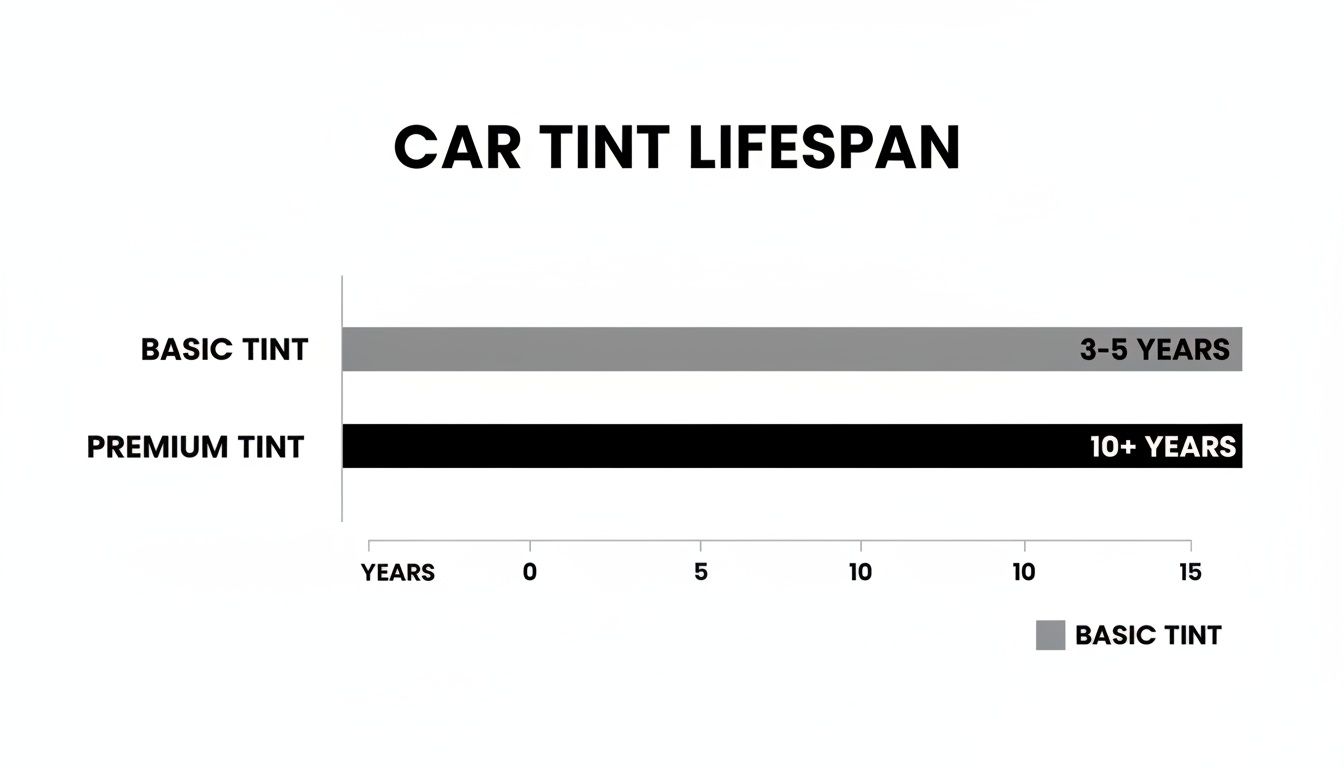
It’s clear that stepping up to a premium film can easily double, or even triple, how long your tint stays looking and performing great.
Metalized Tint: A Step Up in Durability
Metalized tint takes things up a notch by embedding tiny metallic particles right into the film. Instead of just absorbing heat like a dyed film, these particles actually reflect the sun’s rays away from your car. This makes it much better at heat rejection and also strengthens the film against fading.
It’s a more durable and longer-lasting option than dyed tint, for sure. But it comes with a modern-day catch. Those same metal particles can play havoc with electronic signals, meaning your radio reception, GPS, and even your cell phone signal can get spotty. If you want to get into the nitty-gritty, you can learn more about how window tinting works in our detailed guide.
Carbon Tint: The Modern Standard
Carbon tint was engineered specifically to solve the signal-blocking problem of metalized films. It uses microscopic carbon particles instead of metal. This gives you a true, deep matte-black look that’s fantastic at blocking infrared light—the kind of light that really heats up your car's interior.
The best part? Because there’s no dye, carbon tint will not fade over time. It holds its color and performance for years, offering a great balance of durability, looks, and UV protection. It’s a solid choice that will easily last up to 10 years, making it a go-to for most drivers.
Ceramic Tint: The Ultimate in Performance and Longevity
At the very top of the food chain is ceramic tint. This is the most advanced technology you can get, using non-metallic, non-conductive ceramic particles to reject heat and UV rays. It delivers the absolute best performance without any of the compromises of the other film types.
Ceramic tint simply wins in every category:
Maximum Heat Rejection: It’s the undisputed champion at blocking infrared heat.
Superior UV Protection: It blocks over 99% of damaging UV rays, protecting both you and your car's interior.
Crystal Clear Views: You get all that protection without sacrificing visibility.
No Signal Interference: It’s completely friendly to all your electronic devices.
Thanks to its incredibly robust construction, a high-quality ceramic tint is the answer for anyone who wants their tint to last. We're talking 10 to 15 years, or even longer. In fact, studies have shown that while basic films degrade quickly, premium ceramic films can retain about 90% of their original performance well past the eight-year mark. It’s a true set-it-and-forget-it solution.
What Makes or Breaks Your Tint's Lifespan
Picking a top-tier ceramic or carbon film is a great start, but that's only half the battle. Think of it like buying a performance sports car—you wouldn't put cheap gas in it or let an amateur work on the engine. The same principle applies here. Several key factors can either protect your investment for years to come or send it to an early grave.
Knowing what these factors are puts you in the driver's seat, allowing you to get the absolute most out of your new tint.
The Quality of the Installation
You could have the best film on the market, but it’ll fail in a heartbeat with a shoddy installation. This is why professional installation is non-negotiable. A pro knows how to prep the glass, handle the film, and lay it perfectly flat, avoiding the tiny specks of dust, air bubbles, and peeling edges that are the hallmark of a DIY job. Those little mistakes aren't just ugly; they're failure points waiting to happen.
A true professional installation always involves:
A deep clean of the glass to get rid of every last bit of dust and oil.
Cutting the film with precision to match the exact curves of your windows.
Using specialized tools and techniques for a flawless, smooth finish.
Advising on proper curing time, which is critical for the adhesive to form a permanent bond.
Cutting corners here is basically throwing money away, no matter how much you spent on the film itself.
Sun Exposure and Climate Conditions
If window tint has one mortal enemy, it’s the sun. Day after day, UV rays and intense heat work to break down the film’s dyes, adhesives, and protective layers. This relentless assault is what causes that dreaded purple fading, discoloration, and bubbling. Naturally, where you live makes a huge difference.
Constant exposure to sunlight, rain, and temperature fluctuations accelerates window tint degradation, meaning vehicles in harsh climates experience faster deterioration. Environmental factors and proper care can extend durability by 50% or more, which is why smart habits make such a difference. Learn more about how the environment affects tint longevity.
The easiest win? Park in a garage or under some shade whenever you can. It’s a simple habit that drastically cuts down on direct UV exposure and can easily add years to the life of your tint.
Cleaning and Chemical Exposure
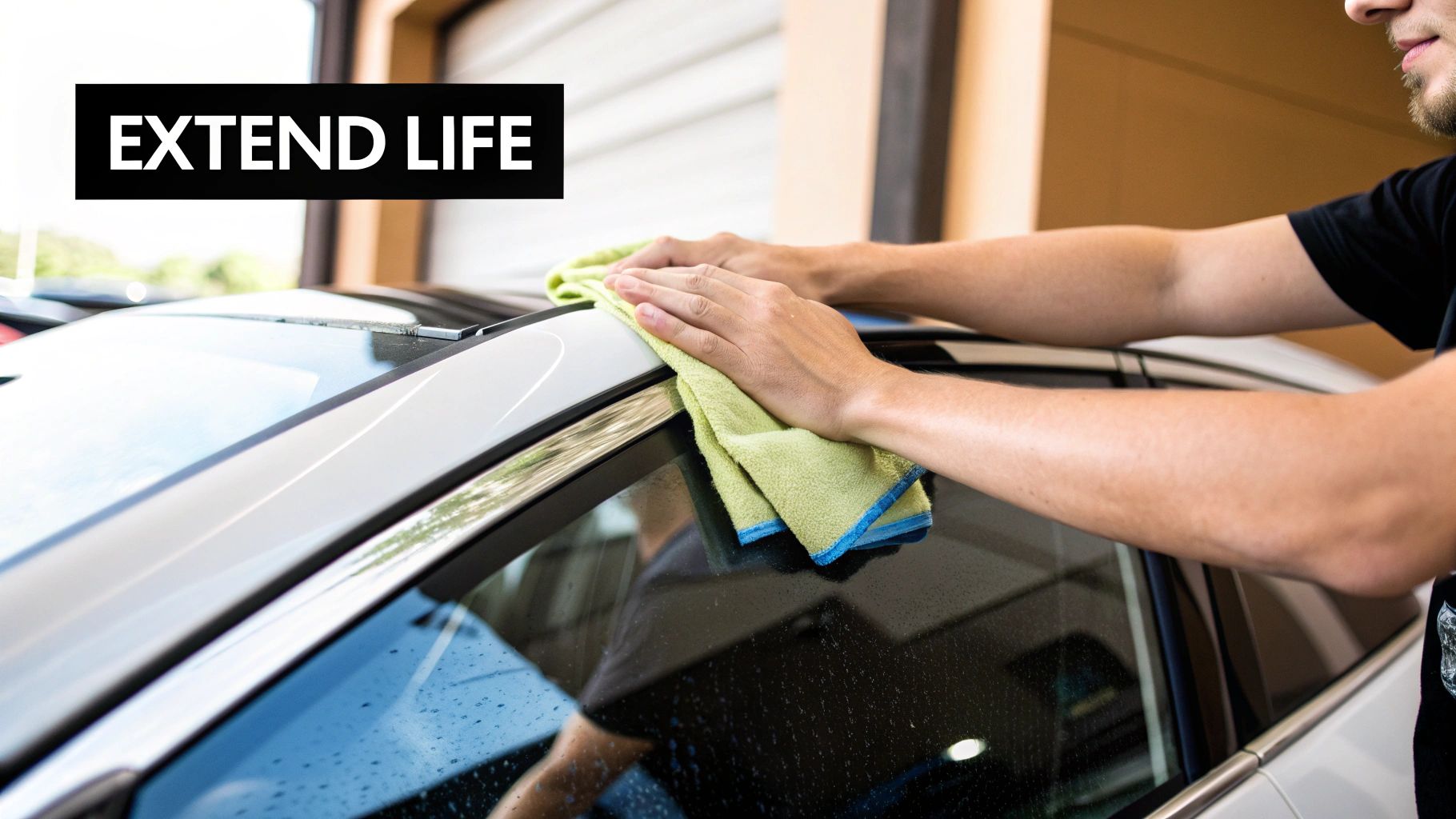
How you clean your tinted windows is just as important as how they were installed. While modern films come with a scratch-resistant coating, it isn't bulletproof. The wrong cleaner or a rough towel can do some serious, permanent damage.
The rules here are straightforward but crucial. First and foremost, never use any glass cleaner that contains ammonia. Ammonia eats away at the film's adhesive over time, causing it to get cloudy and eventually fail. Likewise, stay away from abrasive stuff like paper towels or scrubbing sponges—they'll leave behind a web of fine scratches that ruin the tint’s clarity.
For safe and effective cleaning, just stick to these simple rules:
Do use a soft microfiber cloth for cleaning and drying. It's gentle on the film.
Do stick with an ammonia-free cleaner or a simple mix of mild soap and water.
Don't ever use abrasive tools, harsh chemicals, or anything sharp near the tint.
Don't roll your windows down for at least 3-5 days after installation. The film needs time to cure and fully adhere to the glass.
Telltale Signs Your Car Tint Needs Replacing
Even the best ceramic tint on the market has a lifespan. After years of battling the sun, rain, and road grime, the film will eventually start to show its age. Spotting these warning signs early is key to getting it replaced before it becomes a bigger headache or a safety issue.
Think of it as your car's way of telling you it’s time for a refresh. Knowing what to look for can save you from poor visibility and the hassle of scraping off a severely degraded film later on. These visual cues mean the tint's protective qualities are gone, and a replacement is needed.
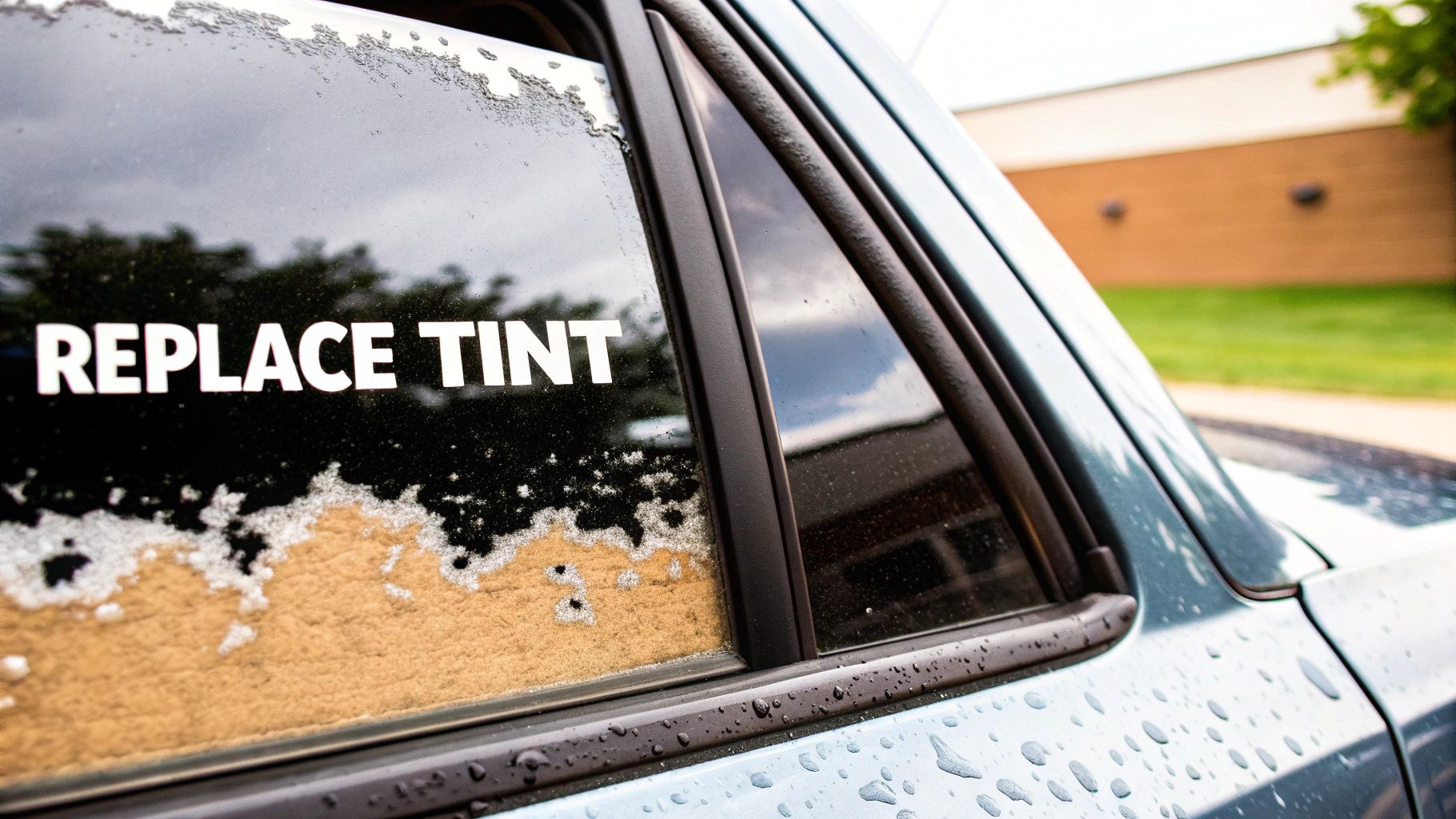
The Dreaded Purple Haze
One of the most obvious red flags is when your tint starts turning purple. This "purple haze" is the classic calling card of a cheap or very old dyed film giving up the ghost. The dyes used in these budget films simply aren't stable enough to withstand years of UV abuse, causing them to fade and change color.
When your windows go purple, it's more than just an aesthetic problem. It’s a sure sign the film has stopped blocking harmful UV rays, leaving both you and your car's interior exposed. This is a non-negotiable signal that it's time for a replacement.
Bubbling and Blistering
We’ve all seen it: a car with huge, ugly bubbles trapped under the window tint. This is a dead giveaway that the adhesive holding the film to the glass has failed. When that bond breaks down, air and moisture get trapped, creating those unsightly pockets.
So, what causes this?
Low-Quality Film: Cheaper adhesives simply can't handle the intense heat inside a car and break down quickly.
Poor Installation: A shoddy application job can trap contaminants or air, which later expand into bubbles.
Old Age: After enduring thousands of heat cycles over many years, even the best adhesives eventually wear out.
These bubbles don’t just look bad; they can create massive blind spots, turning a simple lane change into a dangerous maneuver.
Important Note: It's normal to see a few tiny water pockets right after installation. These should vanish as the tint cures. We're talking about the large, persistent, air-filled bubbles that show up weeks, months, or even years down the road. That’s a sign of failure.
Peeling and Curling Edges
Another clear indicator is when the tint starts to peel or curl away from the edges of the glass. This usually starts in the corners or along the top edge of a window that rolls up and down, where it sees the most friction.
Once an edge lifts, it's a slippery slope. Dirt, dust, and moisture can now sneak underneath, which just speeds up the failure of the rest of the film.
Scratches and Cloudiness
Finally, take a close look at the film itself. If it has a hazy, cloudy appearance or is covered in scratches, it’s past its prime. Scratches often come from using the wrong cleaning tools or even just loading sharp-edged items into your car. The cloudy look, however, usually points to the layers of the film or the adhesive breaking down internally.
Both problems compromise your view of the road, making it harder and less safe to drive, especially at night or in bad weather.
Why Quality Tint Is a Smarter Investment
When you start shopping for window tint, it’s tempting to just look at the price tag and go with the cheapest quote you can find. I get it. But from my experience, that initial "deal" almost always turns into a bigger, more expensive headache down the road.
Think of it this way: choosing a high-quality film isn't just a purchase. It's an investment in your car's comfort, its value, and your own peace of mind. A cheap, basic dyed film might look okay for a little while, but you’ll probably be paying to have it scraped off and replaced every few years. That removal process isn't free, and the costs add up fast, turning that "bargain" into a recurring bill.
The Math of a One-Time Investment
Let's break down how this usually plays out. We can look at two very common scenarios to see how a quality tint job more than pays for itself.
Scenario A (The Budget Route): You spend $150 on a basic dyed film. It looks decent for about three years, then it starts to bubble up and turn that classic, ugly shade of purple. To fix it, you pay a professional $100 to scrape off the old mess and another $150 for a new tint job. Over nine years, you've spent $650 and had to deal with the whole process three separate times.
Scenario B (The Quality Route): You invest $450 upfront in a premium ceramic tint. This one comes with a lifetime warranty and holds its color and performance for a decade or more. Your total cost over that same nine-year period? Still just $450, and you've had zero hassles.
Automotive window tint has come a long way. The modern ceramic films we use today can easily last for 10 to 15 years, which is a massive leap from older technologies. Compare that to budget dyed tints, which often fail in just 3 to 5 years. A quality ceramic film truly gives you three to five times the lifespan.
More Than Just Financial Savings
The return you get on good tint goes way beyond just the dollars and cents. A superior film delivers real, tangible benefits from the moment you drive away.
Premium ceramic tints, for example, are incredible at rejecting heat. This keeps your car significantly cooler on hot days, which means your AC doesn't have to work nearly as hard. On top of that, they block over 99% of harmful UV rays, protecting your dashboard, seats, and interior trim from cracking and fading over time.
There’s a safety aspect, too. Quality film helps hold shattered glass together in an accident, which can prevent serious injuries. It also makes it harder for prying eyes to see what’s inside your car, which can deter a smash-and-grab thief and enhance your car's overall security.
Ultimately, that initial investment ensures you get the absolute best performance for how long your car tint will last. If you're ready to see the difference for yourself, you can learn more by exploring our mobile window tint services.
Common Questions About Car Tint Longevity
After breaking down the different types of tint and how to care for them, there are always a few specific questions that come up. Getting straight answers to these is key to making a smart decision for your car and making sure your investment pays off for years.
Let's dig into some of the most common things people ask after getting their windows tinted.
Can You Apply New Tint Over Old Tint?
I get this question all the time, and the answer is a hard no. Sticking a new layer of film over old, failing tint is just asking for trouble.
Think about it like this: you wouldn't put a new screen protector on your phone without taking off the old, cracked one first, right? It’s the same principle. The new film just won't stick properly to the unstable, damaged surface of the old tint.
Trying to take this shortcut will only lead to a mess of bubbles, peeling edges, and trapped dirt. The only right way to do it is to have the old tint professionally stripped off. That means carefully removing the old film and all its adhesive, leaving the glass perfectly clean for a flawless new application. It’s a step you simply can't skip if you want a professional, long-lasting result.
What Does a Lifetime Warranty Really Cover?
"Lifetime warranty" sounds like it covers everything, but it’s really important to read the fine print. These warranties are there to protect you from defects in the film from the manufacturer, not from everyday accidents or wear and tear.
So, what does a typical lifetime warranty actually cover? Usually, it's things like:
Bubbling and Blistering: This means the adhesive failed.
Peeling and Curling: A clear sign the film isn't properly bonded to the glass.
Cracking or Demetallizing: This is a surefire sign of a flaw in the film itself.
Fading or Turning Purple: High-quality films are warrantied against major color changes.
It's just as important to know what isn't covered. Your warranty won't help you with scratches from your keys, damage from harsh cleaning chemicals, nicks from an accident, or just the general scuffs that happen over time.
When Can I Roll Down My Windows After Tinting?
This one requires a little patience. After your windows are tinted, you need to wait at least three to five days before rolling them down. This waiting game is called the curing time. It’s the critical period when the tint’s adhesive is chemically bonding to the glass.
During these first few days, you might notice some small water pockets or a slightly hazy look. Don't panic—this is totally normal. It's just the last bits of moisture from the installation evaporating. If you roll your windows down too soon, the edge of the film is still soft and can easily get caught, causing it to peel up and ruin the whole job. The same goes for washing your car; give it a few days to set before you head to the car wash. And don't forget, local laws can dictate what kind of tint you can get; you can read more about that in our guide to car window tinting laws in California.
Ready to invest in a tint that lasts? The team at Auto Renu Auto Glass LLC brings professional, high-quality mobile window tinting directly to you. We use premium films and expert techniques to ensure a flawless finish that stands the test of time. https://www.autorenu911.com