
How Long to Replace Windshield? Quick Timeline & Tips
Curious about how long to replace windshield? Discover the full process, including prep, calibration, and safe drive-away time for a quick fix.
Sep 28, 2025
generated
how long to replace windshield, windshield replacement time, auto glass repair, safe drive away time, adas calibration
So, your windshield is cracked and you need it replaced. The big question on your mind is probably, "How long is this going to take?" It's a fair question—you've got places to be.
The hands-on part of the job, where the technician is actually swapping out the old glass for the new, is surprisingly fast. Most experienced pros can get it done in about 60 to 90 minutes.
But here's the crucial part most people don't realize: the job isn't finished when the new glass is in. The real waiting game is for the powerful adhesive to cure. This is what we in the industry call the "safe drive-away time," and it's non-negotiable for your safety.
A Quick Guide to Windshield Replacement Time
Getting your car back on the road safely involves a few distinct steps. It’s not just about popping out the old glass and putting in the new one. Think of it as a methodical process where each stage builds on the last to ensure your vehicle's structural integrity is fully restored.
Let's break down what a typical replacement timeline looks like, from the moment the technician starts to when you can confidently get back behind the wheel.
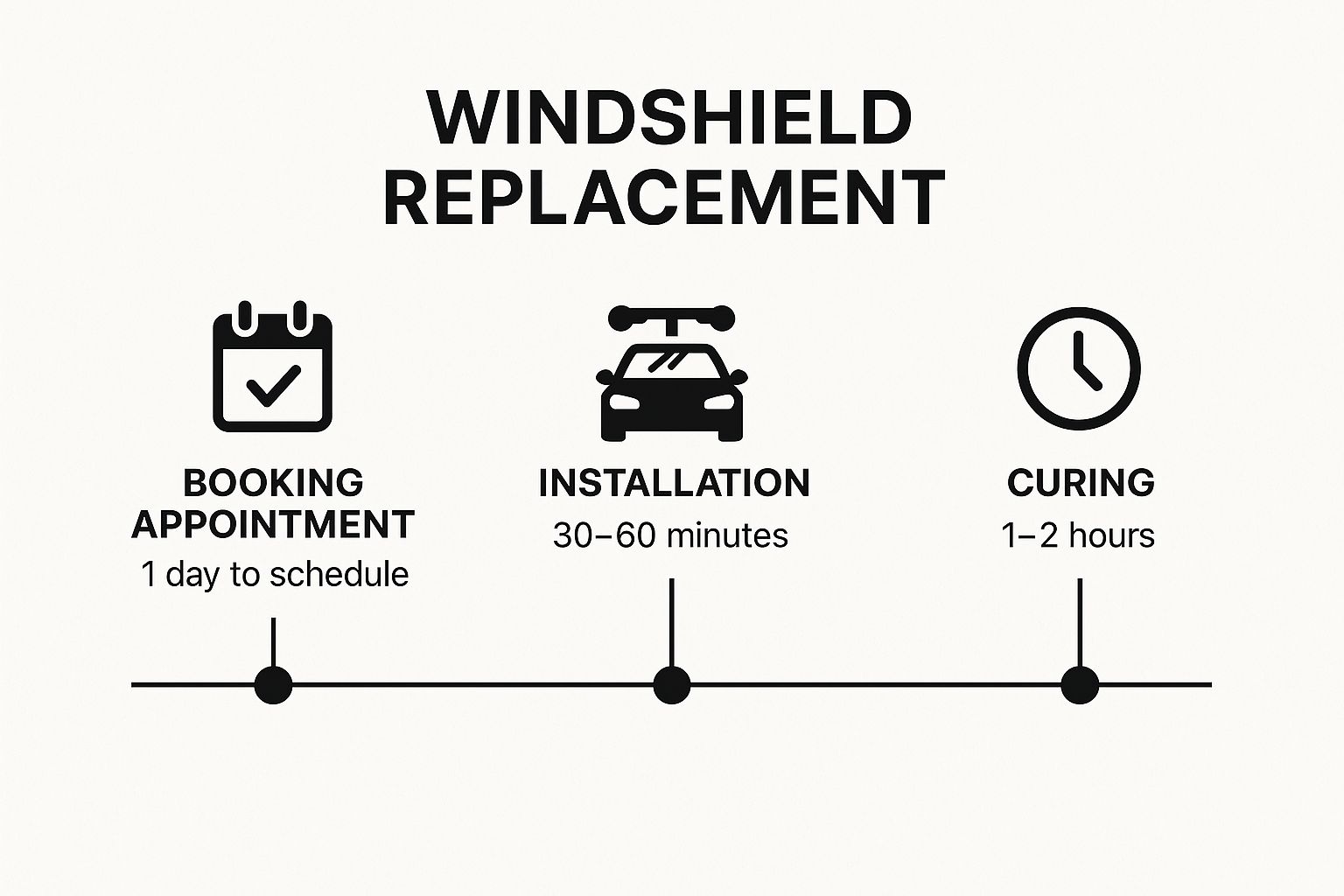
As you can see, the physical installation is just one piece of the puzzle. That waiting period afterward is everything.
To give you an even clearer picture, here’s a simple table outlining each phase of the process.
Windshield Replacement Timeline Breakdown
Stage | Typical Duration | What's Happening |
|---|---|---|
Preparation | 15-20 minutes | The technician inspects the vehicle, protects the interior/exterior, and removes moldings and trim. |
Old Windshield Removal | 15-20 minutes | The old adhesive seal is carefully cut, and the damaged windshield is safely removed from the frame. |
Frame & New Glass Prep | 15-25 minutes | The vehicle's frame is cleaned of old adhesive, and a new primer/activator is applied. The new glass is also prepped. |
Adhesive Application & Installation | 15-25 minutes | A bead of specialized urethane adhesive is applied to the frame, and the new windshield is set precisely in place. |
Safe Drive-Away Time (Curing) | 1-3 hours | The car must remain stationary while the adhesive cures to a strength that can withstand an accident and airbag deployment. |
This breakdown shows why you can't just drive off immediately. That curing time is when the magic happens, bonding the glass to your car's frame.
The most overlooked part of the process is the Safe Drive-Away Time (SDAT). This is the minimum time required for the adhesive to harden sufficiently to protect you in an accident. Rushing this step compromises everything.
Of course, this is a general guide. Several things can change the timeline. Plus, not every bit of damage calls for a full replacement. A small chip might be a simple fix. If you're curious about the difference, you can learn more by checking out our guide on professional windshield repair. Knowing your options will help you understand exactly what to expect.
A Step-by-Step Look at the Windshield Replacement Process
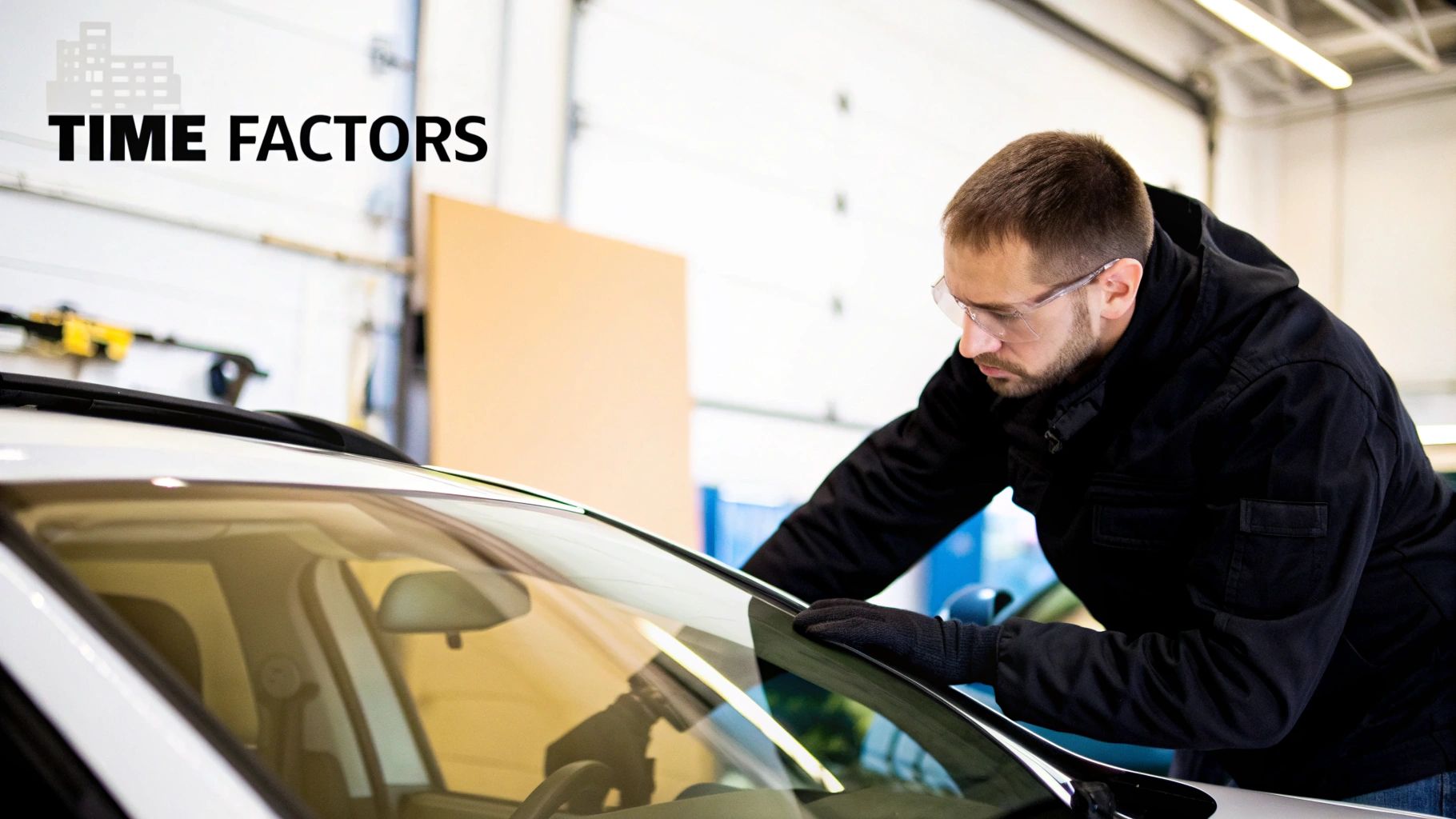
When you understand what actually goes into replacing a windshield, the timeframe starts to make a lot more sense. This isn't just about swapping out a piece of glass; it's a precise, multi-step procedure where every detail is focused on your safety.
First, the technician gets your car ready. They’ll carefully cover the interior and the paint around the windshield to protect it from any stray adhesive or accidental slips. Then, they remove anything attached to the glass, like your wipers, moldings, and the cowl panel at the base of the windshield.
Cutting Out the Old Windshield
With everything prepped, it's time to take out the old, damaged glass. Using specialized tools, the technician carefully cuts through the tough urethane adhesive that forms the seal around the windshield's edge.
Once the old seal is broken, they use large suction cups to safely lift the old glass away. This step requires a steady hand—one wrong move could scratch the car’s frame, and a deep scratch in the metal can eventually lead to rust.
Prepping the Frame for a Perfect Bond
This is probably the most critical part of the entire job. The technician has to scrape away every last trace of the old urethane from the vehicle’s pinch weld (the metal frame where the glass sits). This is often called the “full cut-out method.”
Why is this so important? Think about trying to put a new piece of tape on a dusty, uneven surface. It just won't stick right. Leaving any old adhesive behind will weaken the bond of the new windshield.
A clean, residue-free frame is the foundation for a secure bond. Rushing this step is a recipe for disaster, often leading to leaks, wind noise, and seal failure down the road.
After the frame is perfectly clean, it's treated with a special primer. This primer is the key that helps the new urethane adhesive grab onto the metal and create an incredibly strong, permanent bond.
Finally, the tech lays down a fresh, even bead of high-quality urethane. The new windshield is then carefully lowered and set into place, creating a watertight seal that restores the structural integrity of your vehicle.
Key Factors That Influence Replacement Time
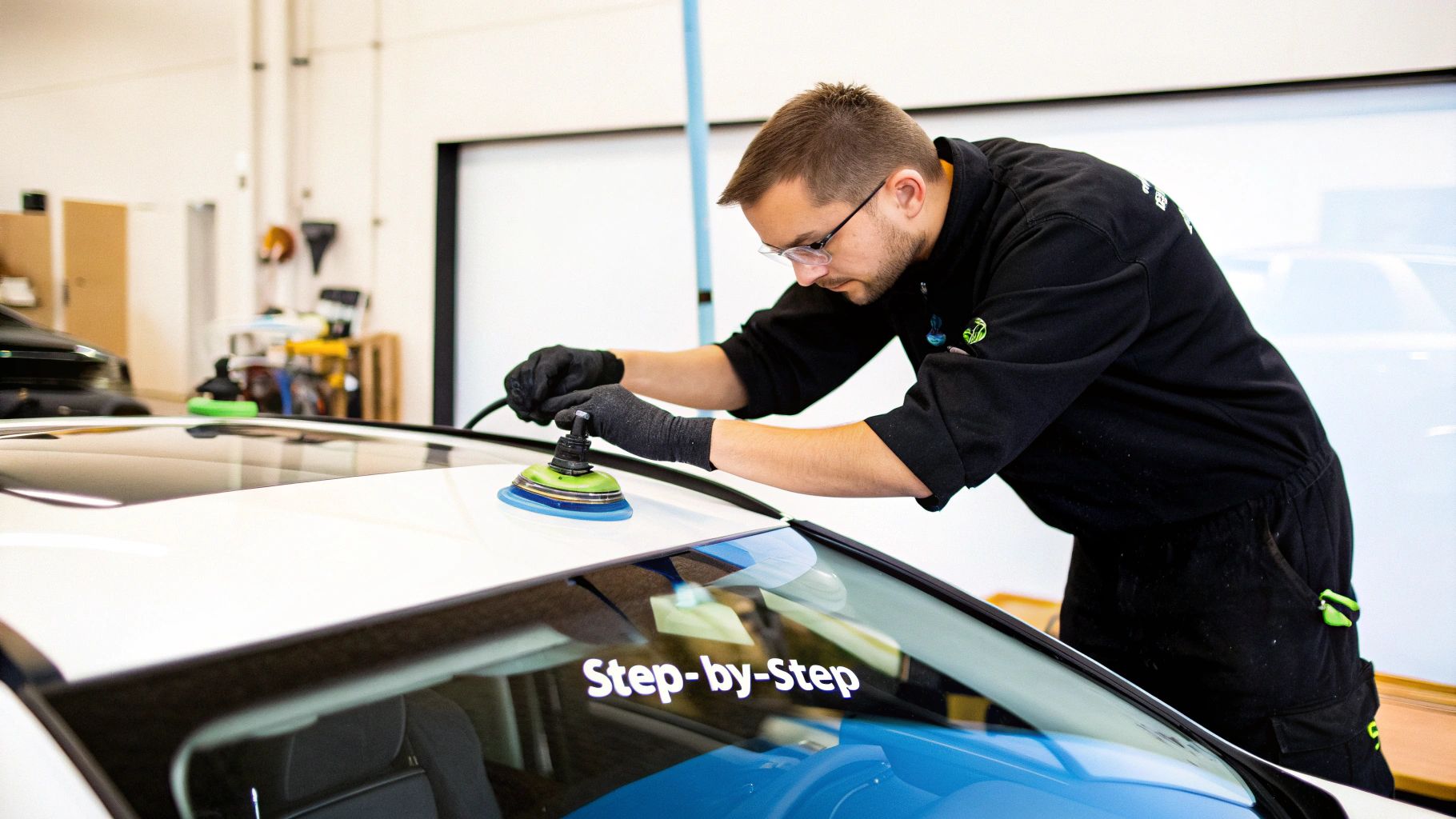
So, you understand the basic process. But why did your neighbor’s windshield swap only take an hour and a half, while the shop quoted you for half the day? The answer is simple: every car is different, and those differences can have a huge impact on the timeline.
Think of it this way. Replacing the glass on an old, basic sedan is like changing a lightbulb—pretty straightforward. But doing the same job on a new SUV loaded with tech is more like performing surgery. It demands precision, specialized tools, and a whole lot more time.
Vehicle Make, Model, and Age
The age and specific model of your car are two of the biggest factors right off the bat. On an older car, a technician might discover hidden rust around the windshield frame once the old glass is out. That rust has to be properly treated before the new windshield goes in, or you’re just asking for leaks and a weak seal down the road.
On the flip side, a brand-new luxury vehicle might not have rust, but it will have intricate trim pieces, delicate moldings, and a web of sensors that all need to be carefully removed and reinstalled. Each step adds precious minutes to the job.
The Impact of ADAS Recalibration
By far the biggest time-sink in modern windshield replacement is the Advanced Driver-Assistance Systems (ADAS). This is the tech that powers all those incredible safety features we now rely on, like:
Lane-Keeping Assist: Nudges you back into your lane if you start to drift.
Automatic Emergency Braking: Hits the brakes for you to help avoid a collision.
Adaptive Cruise Control: Automatically adjusts your speed to keep a safe distance from traffic.
The cameras and sensors for these systems are often mounted directly to the windshield. When you get new glass, they have to be recalibrated with painstaking precision to make sure they're "seeing" the road correctly. This isn’t just a suggestion; it's a critical safety requirement.
Think of skipping an ADAS recalibration like getting a new pair of glasses with someone else's prescription. You can see, but everything is off, and that's more dangerous than not wearing them at all.
This technology has completely changed the game. A standard windshield installation might take about 60 minutes, but the ADAS recalibration can easily add another 30 minutes to several hours, all depending on the car. Recent industry reports on windshield service market trends confirm just how much this has extended service times.
Special Glass Features
Finally, the type of glass itself plays a role. A standard, clear windshield is one thing. But many cars today come with specialized glass that requires extra work.
We're talking about features like built-in heating elements for quick defrosting, special acoustic layers for a quieter ride, or embedded antennas. If your car has a heads-up display (HUD) that projects your speed onto the glass, that's another layer of complexity. Each feature needs to be handled and connected correctly, adding more time to ensure the job is done right.
What Is Safe Drive-Away Time?
So, the technician has finished, the new glass looks perfect, and they’re handing you the keys. You're good to go, right?
Not so fast. This is where the most critical waiting period begins, and it's called the Safe Drive-Away Time (SDAT). Think of it as a non-negotiable safety step.
The powerful urethane adhesive that holds your windshield in place is a lot like freshly poured concrete. It might look solid on the surface, but it needs time to cure and develop its full, rock-solid strength. Driving away too soon is a serious gamble with your safety.
Waiting for the adhesive to cure ensures your new windshield can perform its critical safety functions in an accident. It's a key part of your car's structural integrity and provides the firm backstop your airbags need to deploy properly and protect you.
What Affects the Curing Process?
So, how long do you actually have to wait? Your technician will give you a specific time, but it's typically based on three main factors.
The Adhesive Itself: Most modern auto glass shops use fast-curing adhesives to get you back on the road sooner, but even the quickest ones need at least an hour to set properly.
Temperature: Urethane cures much faster in warm, dry weather. If it’s cold out, the chemical process slows down, meaning you'll have to wait longer.
Humidity: A little bit of moisture in the air actually helps the adhesive cure. But on extremely humid or very dry days, the process can be thrown off.
The most important takeaway is this: your vehicle cannot move for the entire recommended SDAT. This isn't just about being patient; it's about ensuring the windshield is properly bonded to your car and can protect you.
For most passenger cars, the entire job—including this crucial curing time—usually takes between 1 to 2 hours. The demand for fast, safe replacements is a big deal, which you can see in trends across the global automotive windshield market at Fortune Business Insights.
Keep in mind, this timeline can get longer. If your vehicle has modern safety features, it will likely need an ADAS recalibration after the windshield is replaced. You can learn more about this complex but vital process in our guide to ADAS windshield calibration.
Mobile vs. In-Shop Service: How Location Affects Your Time
When it's time to replace your windshield, you've got two main choices: head to a repair shop or have a mobile technician come to you. This decision isn't just about convenience—it can have a real impact on how long the job takes and the quality of the final result.
Mobile service is undeniably convenient. Who wouldn't want a technician to handle the repair in their driveway or office parking lot? But there's a catch: the weather. Rain, high humidity, and extreme hot or cold temperatures can ruin the urethane adhesive's ability to cure, which could mean a leaky or unsafe windshield seal.
The In-Shop Advantage: A Controlled Environment
Taking your car to a professional shop takes weather completely out of the equation. This controlled setting is the secret to a perfect, permanent bond every single time. A dedicated service bay is clean, dry, and kept at just the right temperature for the adhesive to work its magic.
This is even more important for modern vehicles packed with tech.
Many cars today have Advanced Driver-Assistance Systems (ADAS), and recalibrating these systems is a precise science. It often requires specialized, stationary equipment and a perfectly level floor that only a professional shop can guarantee. Trying to do this on an uneven driveway can throw the whole system out of whack.
Ultimately, the best choice depends on your situation. While the convenience of mobile service has certainly helped drivers get back on the road faster, other factors like local demand and technician availability also come into play. You can see how these variables shape the broader automotive windshield market.
When you're weighing your options, think about your car's technology and the local weather. If you want expert advice on the best route for your specific vehicle, check out the different service locations and options available to ensure a safe, top-quality replacement. An in-shop visit might require a bit more planning, but the peace of mind is often worth it.
Aftercare Instructions for Your New Windshield
Once the technician hands you back your keys, your job begins. The special adhesive holding your new windshield needs time to cure properly, and what you do in the first 24 to 48 hours makes all the difference. Think of it like letting cement set—you wouldn't walk on it right away, and your new windshield needs that same initial period of care.
Taking a few simple precautions ensures the urethane adhesive forms a permanent, watertight bond. This isn't just about keeping rain out; it's about preserving the structural integrity of your vehicle for the long haul.
Do's and Don'ts for the First 48 Hours
To help your new windshield settle in perfectly, just follow these simple guidelines.
Go Easy on the Doors: Slamming a car door creates a sudden, powerful puff of air pressure inside the car. That jolt can push against the fresh seal from the inside, potentially creating a weak spot.
Crack a Window: Leaving a window open just an inch or so is a great pro-tip. It allows the pressure inside and outside the car to equalize, putting less stress on the new adhesive.
Avoid High-Pressure Car Washes: The powerful jets of water at a car wash are the enemy of a fresh windshield seal. Hold off on any car washes for at least two days to give the urethane time to fully harden.
Keep Your Dashboard Clear: Don't place sunshades, papers, or any other items on the dashboard where they might press against the bottom of the new glass.
The golden rule here is to be gentle. For the first day or two, every big bump, jolt, or sudden pressure change can affect how well that seal cures for the long term.
After your technician gives you the green light on timing, you can peel off any tape that was used to hold the glass in place. It’s just there as a temporary clamp while the adhesive does its initial bonding.
Common Questions About Windshield Replacement
Getting a new windshield often brings up a handful of questions, and that's perfectly normal. Most people are surprised to learn that the time it takes isn't just about swapping out the glass. Let's walk through the most common things drivers ask.
Can I Drive My Car Right After the New Windshield Is In?
This is a big one, and the answer is a firm no. You'll need to wait for what we call the "safe drive-away time," which is typically at least one hour after the installation is finished.
The reason is simple: the incredibly strong urethane adhesive that holds your windshield in place needs time to cure and bond properly. Hitting the road too soon can cause the seal to fail, which is a major safety issue. A weak seal compromises your vehicle's structural stability and can prevent your airbags from deploying correctly in a crash.
Do I Really Need to Recalibrate My Car's Safety Systems?
If your car has Advanced Driver-Assistance Systems (ADAS), then yes, recalibration is absolutely essential. It's not an optional add-on.
Think about it this way: the cameras and sensors for features like automatic emergency braking or lane departure warnings are mounted directly on your windshield. Even a tiny, millimeter-sized difference in the position of the new glass can throw off their calculations. Skipping recalibration means those critical safety features could fail when you need them most.
We often get asked why we can't replace a windshield in the rain. Urethane adhesive and moisture are enemies. Any water on the vehicle's frame will prevent a solid bond, leading to a weak seal that can cause leaks, wind noise, and a dangerously insecure windshield.
At Auto Renu Auto Glass LLC, we're committed to doing the job right, which includes precise installations and giving you clear, straightforward aftercare instructions. If you have more questions or need a fast, reliable windshield replacement in the Bay Area, get your free estimate today.