How Much Is a Windshield Replacement? Complete Cost Guide
Discover how much is a windshield replacement by exploring a clear cost breakdown, key factors, and tips to save.
Oct 31, 2025
generated
how much is a windshield replacement, windshield replacement cost, auto glass repair, adas calibration, car maintenance
"So, how much is a new windshield going to set me back?" It's one of the first questions we hear, and the honest answer is: it depends. For a typical car, you're generally looking at a range of $250 to $500. But for a luxury vehicle or one packed with modern safety tech, that number can easily climb past $1,000.
The final price tag really comes down to your specific vehicle's make, model, and the technology built right into the glass.
Your Quick Guide to Windshield Replacement Costs
Trying to nail down the exact cost of a windshield replacement can be tricky because there's no one-size-fits-all price. Think of it like buying new tires—what you'd pay for a small sedan is worlds apart from the cost for a heavy-duty pickup truck. It's the same principle with auto glass.
A few key things will shape the final quote you receive. The biggest drivers are your car’s class and the specific type of glass it needs. For instance, a compact car like a Honda Civic will almost always be less expensive to work on than a big SUV like a Ford Explorer, which has a much larger and more complex piece of glass. You can dive deeper into what influences these prices in this detailed car advice article from Kelley Blue Book.
Estimated Windshield Replacement Cost by Vehicle Type
To give you a better ballpark idea, let's look at some common vehicle types. The table below breaks down the estimated costs for both standard windshields and those with Advanced Driver-Assistance Systems (ADAS), which require a special recalibration process after installation.
Vehicle Type | Standard Windshield (Estimate) | ADAS Windshield (Estimate) |
|---|---|---|
Compact Sedan | $250 – $400 | $500 – $900 |
Mid-Size SUV | $300 – $500 | $600 – $1,200 |
Luxury Vehicle | $500 – $800 | $1,000 – $1,800+ |
Pickup Truck | $350 – $550 | $700 – $1,300 |
Important Note: Remember, these are just estimates. The only surefire way to know the exact cost for your car is to get a personalized quote. A professional at Auto Renu Auto Glass LLC can assess your vehicle's specific requirements and give you a precise figure.
Keep in mind that a full replacement isn't always the only answer. If you've just got a small chip or a minor crack, you might be a candidate for a simple fix. You can learn more about when a repair is possible by checking out our guide to professional windshield repair services.
What Really Drives Your Replacement Price
Asking "how much is a windshield replacement" is a bit like asking how much a pizza costs. A plain cheese pizza has a set price, right? But the final bill looks a lot different once you start piling on premium toppings. Your car’s windshield is exactly the same—the base glass has one price, but all the special features and the type of glass you choose can change the total pretty dramatically.
The most obvious factor is your vehicle’s make and model. A windshield for a common sedan, like a Toyota Camry, is usually going to be easier on the wallet than one for a high-end SUV or a specialty sports car. It really comes down to the size of the glass, its specific curvature, and simple supply and demand. Bigger vehicles need more glass, and less common models mean fewer windshields are produced, which naturally bumps up the price.
But the car itself is just the starting point. The real cost comes from the "toppings"—the technology built right into the glass.
The Type of Glass Matters
One of the first big decisions you'll make is whether to go with OEM or aftermarket glass. This choice alone has a huge impact on the final price, so it's important to know what you're getting.
Original Equipment Manufacturer (OEM) Glass: Think of this as the top-shelf option. OEM glass is made by the very same company that manufactured the original windshield for your car. That means you get a perfect fit, the exact same thickness, and a color that matches flawlessly. It's the best quality you can get, but it definitely comes with a premium price tag.
Aftermarket Glass: This is sometimes called OEE, or Original Equipment Equivalent. It’s made by third-party companies, and while it has to meet federal safety standards, the quality and fit can sometimes be a mixed bag. A high-quality aftermarket glass can be a fantastic way to save some money, but you absolutely want to stick with a reputable brand to avoid any annoying issues down the road.
For newer cars, especially those loaded with advanced safety systems, sticking with OEM glass is usually the smartest move. It just gives you peace of mind that all the tech will work exactly as it was designed to.
Your choice between OEM and aftermarket glass is one of the biggest levers affecting the final cost. While an aftermarket windshield can save you money upfront, OEM offers a quality and fit guarantee that many drivers find is worth the investment.
Features Embedded in Your Windshield
Windshields aren't just simple panes of glass anymore. They've become high-tech command centers for your vehicle, and every piece of technology packed into them adds to the complexity and cost of a replacement.
Here are just a few of the common features that can bump up your final bill:
Rain Sensors: These little gadgets automatically turn on your wipers the second they sense rain.
Heated Windshields: A network of tiny, almost invisible wires embedded in the glass helps melt ice and snow in a flash.
Acoustic Glass: This is a special type of glass with an extra sound-dampening layer inside, designed to keep road and wind noise out of your cabin.
Heads-Up Display (HUD): This feature projects key information, like your speed, right onto the windshield. It requires specially treated glass to make the projection clear and readable.
Each of these systems requires a very specific windshield to function correctly. A technician can't just slap a basic piece of glass on a car that has these features. The more tech your car is equipped with, the more specialized—and yes, more expensive—the replacement glass will be. This is exactly why we can't give a real quote without knowing the specific details of your vehicle.
The Hidden Cost of ADAS Recalibration
So, you have a newer car with all the bells and whistles—lane-keeping assist, automatic emergency braking, that sort of thing? If so, the answer to "how much is a windshield replacement?" just got a little more involved. Those high-tech safety features are part of what's called Advanced Driver-Assistance Systems (ADAS), and they work using cameras and sensors often mounted right on your windshield.
When we replace the glass, we have to make sure those systems are recalibrated with pinpoint accuracy. Think of it like a professional photographer setting up their camera on a tripod. If the camera is tilted even slightly, the entire shot will be crooked. The ADAS camera is the same way; it must be perfectly realigned to see the road exactly as the car's manufacturer designed it to. Without that crucial step, your safety features could fail when you need them most.
This infographic gives you a good visual breakdown of how the final cost is calculated, from the car you drive to the specific features in the glass.
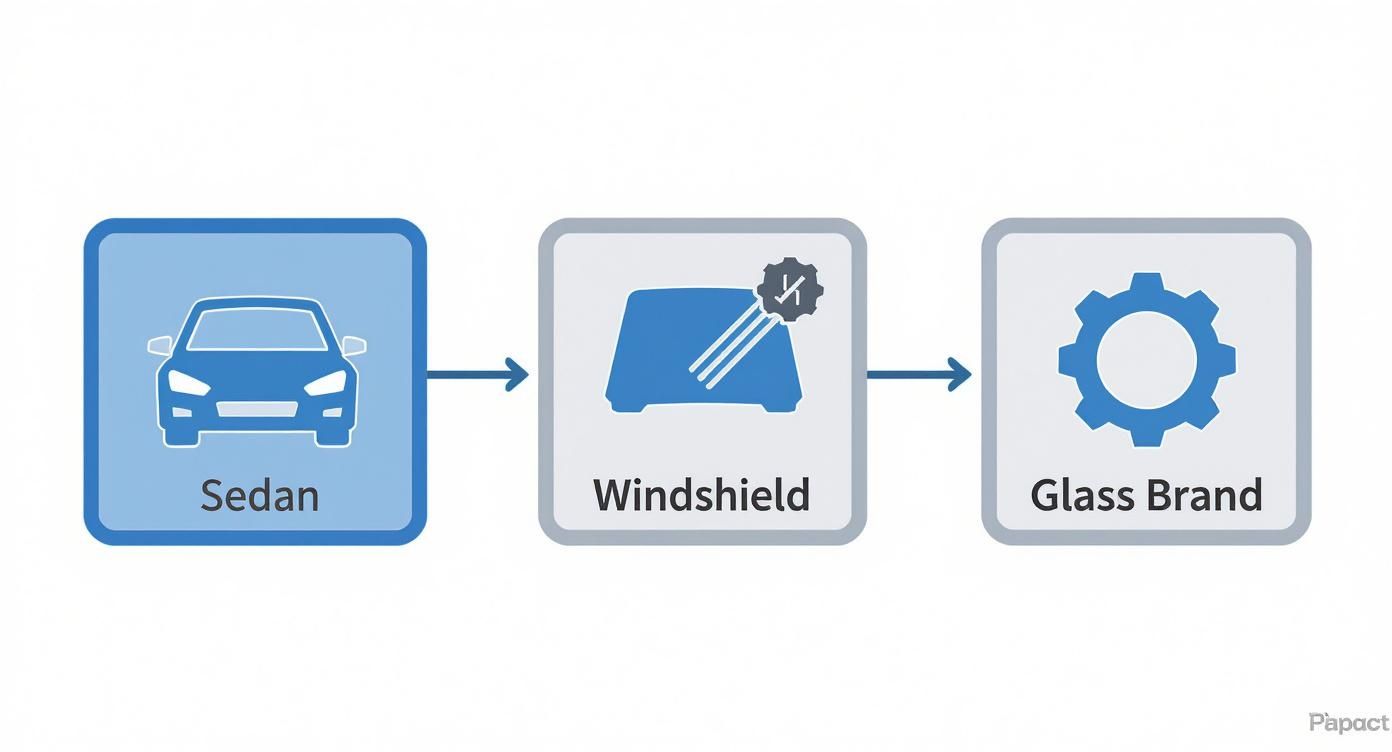
As you can see, the vehicle type is just the beginning. Features like ADAS add a whole other layer of complexity and, consequently, cost.
Why Recalibration Adds to the Cost
Recalibration isn't just flipping a switch; it’s a highly technical procedure that requires specialized gear and technicians who know exactly what they're doing. This is the part of the job that often adds a significant, and sometimes surprising, amount to the final bill. And it's becoming more and more common. The market for ADAS calibration was valued at $959 million in 2022 and is expected to explode to $14.9 billion by 2028. You can read more about how automotive windshield technology is advancing to see just how fast this tech is evolving.
Our technicians typically use one of two methods to get your car's systems back in perfect working order:
Static Recalibration: This is done inside our shop in a controlled environment. We use specific targets and patterns placed at exact distances from your vehicle to realign the camera's field of view.
Dynamic Recalibration: This method involves taking the vehicle for a drive on well-marked roads at a set speed. The car's computer uses the actual road markings to recalibrate itself in a real-world setting.
In some cases, a car might need both a static and a dynamic calibration to ensure everything is functioning safely and correctly.
Trying to save a few bucks by skipping ADAS recalibration is a massive gamble with your safety. An improperly aimed camera could cause your lane-keeping feature to steer you into another lane or your emergency brake to activate too late—or not at all.
Is This Step Really Necessary?
Yes, 100%. A camera that's misaligned by just a single degree might not sound like a big deal, but that tiny error can cause the system to misjudge distances by several feet down the road. That could be the difference between stopping safely and a serious accident.
Because the stakes are so high, recalibration is a non-negotiable part of any windshield replacement on a modern vehicle. Here at Auto Renu Auto Glass LLC, our certified technicians have the proper tools and training to make sure your ADAS works exactly as it was designed to. To learn more about this process, take a look at our guide on the importance of ADAS windshield calibration.
Using Insurance to Cover Your Windshield
https://www.youtube.com/embed/QBeRCMCVo1U
That sinking feeling you get when a rock chips your windshield is often followed by another worry: the cost. But here's the good news—you probably won't have to foot the entire bill yourself. Your auto insurance can be a huge help, but you need to know what kind of coverage you have to make the most of it.
For most drivers, the key is comprehensive coverage. This is the part of your policy that handles damage from things other than a collision. We're talking about rogue rocks on the freeway, falling tree limbs, hail—basically, all the common culprits that take out windshields.
Understanding Your Coverage and Deductible
When you use your comprehensive coverage, you’ll usually have a deductible. Think of the deductible as your share of the cost before the insurance company steps in.
Let’s say your windshield replacement is $800 and your deductible is $500. You'd pay the first $500, and your insurance would handle the remaining $300. It’s pretty straightforward.
However, some policies have special provisions for glass that can save you a lot of money.
Full Glass Coverage: This is an optional feature you can add to your policy. If you have it, your insurance company often waives the deductible for glass damage, meaning your out-of-pocket cost could be $0.
Zero-Deductible States: If you live in a state like Florida, Kentucky, or South Carolina, you're in luck. State laws there require insurers to waive the deductible for windshield replacement if you have comprehensive coverage.
Learning the ropes of the claims process can feel a bit overwhelming, but this guide on how to file an auto insurance claim is a fantastic resource that walks you through it. Here at Auto Renu Auto Glass LLC, we work with all the major insurance providers every single day. We know the process inside and out and can help make it completely painless for you.
One of the biggest questions we get is, "Will this make my rates go up?" Generally, a single windshield claim won't impact your premiums. That's because it's filed under comprehensive coverage and is almost always considered a "no-fault" incident.
How to File Your Claim
Getting the ball rolling on a claim is usually simple. Just grab your policy number and have the details ready about when and how the damage happened. When you call your insurance company, they'll confirm your coverage and tell you what to do next.
Many insurers have a network of "preferred" auto glass shops, and we're proud to be on those lists. While you can choose your own shop, working with a trusted partner like Auto Renu Auto Glass LLC makes everything easier. We handle the paperwork and communicate directly with your insurance company, so you don't have to.
Why a Quality Installation Is a Non-Negotiable
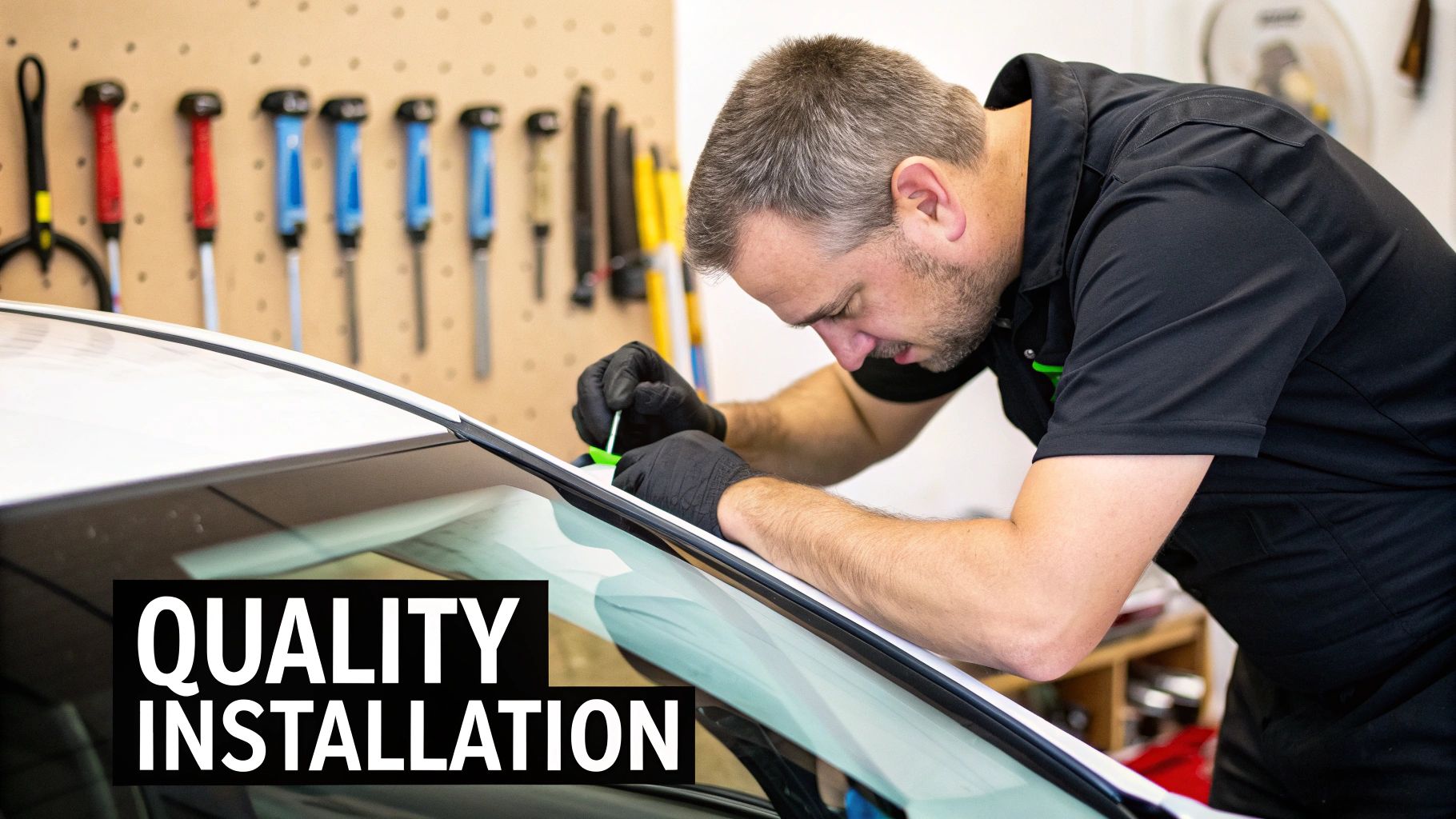
When you're getting quotes for a windshield replacement, it's tempting to just look at the bottom line. But you’re not just paying for a piece of glass—you're paying for the expertise and materials that protect you and your family.
Chasing the lowest price can easily become the most expensive mistake you ever make.
Your windshield is far more than just a barrier against wind and rain; it's a core part of your vehicle's structural integrity. In a serious rollover accident, your windshield provides up to 60% of your vehicle's cabin strength, preventing the roof from caving in.
A poorly installed windshield compromises that entire safety system. It's also vital for your airbags to work correctly. The passenger-side airbag, for instance, often bounces off the windshield to deploy properly and cushion the occupant. If the glass isn't secure, the airbag can't do its job.
The Anatomy of a Safe Installation
A professional installation is a meticulous process, not a simple swap. Every single step, from preparing the vehicle’s frame to choosing the right adhesive, is critical. A reputable shop like Auto Renu Auto Glass LLC doesn't cut corners on these fundamentals.
So, what does a truly safe installation look like?
Certified Technicians: You need a pro who knows what they're doing. Certified technicians have the training to understand the unique demands of different vehicle makes and models, and they stick to proven industry standards.
High-Quality Adhesives: The special glue holding your windshield in place, called urethane, is everything. Using a cheap, low-grade adhesive is like building a brick wall with mud instead of mortar. It simply won't hold under pressure.
Proper Curing Time: After the new glass is in, the urethane needs time to cure and form an unbreakable bond. This is called the "Safe Drive-Away Time," and it’s not a suggestion. Rushing this step means your windshield could literally pop out in a collision.
Choosing the cheapest quote might save you a little cash upfront, but it could cost you everything in an accident. A quality installation isn't an upsell; it's the bare minimum for ensuring your car’s safety features work as engineered.
Ultimately, investing in a proper installation from a trusted professional is an investment in your own safety and peace of mind. It's really that simple.
Getting an Accurate Quote for Your Vehicle
Alright, let's get down to the brass tacks: finding out exactly what your windshield replacement will cost. Getting a precise, no-surprise quote is actually pretty simple, but it all hinges on one key piece of information.
The most important thing your auto glass shop needs is your car's Vehicle Identification Number (VIN).
Think of the VIN as your car's unique fingerprint. It's a 17-digit code that tells a technician everything they need to know about your specific vehicle. From the exact size and tint of the glass to whether it has rain sensors or advanced safety cameras, the VIN eliminates all the guesswork. Handing over the VIN ensures the quote you get is for the correct part, which is the best way to avoid nasty surprises and delays down the road.
The world of auto glass is getting more complex every year. In fact, the global market for advanced auto glass is projected to hit $31.89 billion in 2024, thanks to all these new tech innovations. You can read more about this expanding automotive market to see just why matching the right glass to your vehicle has become so critical.
Once you have your VIN, the rest is easy. It allows a shop to give you a fast, accurate quote that truly accounts for your vehicle’s specific features, which means total transparency from the start.
Ready to get a clear, personalized estimate? The easiest way to solve your windshield problem is to reach out directly. You can contact Auto Renu Auto Glass LLC directly with your VIN, and we'll get you a quote you can count on.
Got Questions About Windshield Replacement? We've Got Answers
Even after breaking down all the cost factors, you probably still have a few questions rolling around in your head. That's completely normal. Let's tackle some of the most common ones we hear from drivers every day so you can feel confident about what's next.
Should I Repair or Replace My Windshield?
This is the big one, and the answer almost always comes down to the size and location of the damage.
Think of it this way: a tiny rock chip is like a small cavity in a tooth. You can get a simple filling (a repair) and be on your way. But if you let it go, it can crack the whole tooth, and then you're looking at a crown (a replacement).
Generally, if the damage is smaller than a dollar bill and not directly in your line of sight, a repair is a great, cost-effective option. But if you're dealing with a long crack—especially one that's starting to spread—or if the damage obstructs your view of the road, replacement is really the only safe choice. A professional technician can look at it and tell you definitively what's best.
How Long Will This Actually Take?
The hands-on part of swapping out the glass is quicker than most people think, usually about 60 to 90 minutes.
The real waiting game isn't the installation; it's the curing. We use an incredibly strong urethane adhesive to bond the new windshield to your car's frame. This stuff needs time to set properly to create an airtight, watertight seal that’s strong enough to do its job.
This crucial waiting period is called the Safe Drive-Away Time (SDAT). It can range from an hour to several hours, depending on the adhesive we use and even the weather that day. Your technician will give you a specific time, so you know exactly when it’s safe to hit the road.
Please don't rush this step! That adhesive is a critical safety component. It helps keep the roof from collapsing in a rollover and provides the backstop your airbags need to deploy correctly. A little patience goes a long way toward keeping you safe.
Will a New Windshield Void My Car's Warranty?
This is a very common concern, but let me put your mind at ease. As long as the work is done by a reputable shop using high-quality glass and adhesives that meet industry standards, your new windshield will not void your vehicle's warranty.
The only way you'd run into trouble is if a shoddy installation caused a secondary problem, like a water leak that shorted out some electronics. That’s why choosing a certified, professional installer who guarantees their work is so important. It protects you, your car, and your warranty.
Feeling more prepared to tackle that damaged windshield? The team at Auto Renu Auto Glass LLC is ready to help with a clear, honest quote and the expert service you deserve.
Get your free, no-obligation estimate today at https://www.autorenu911.com.