
Mobile Windshield Replacement Service Explained
Discover how a mobile windshield replacement service works, from the step-by-step process and insurance claims to ADAS recalibration. Get expert tips.
Nov 1, 2025
generated
mobile windshield replacement, auto glass repair, ADAS recalibration, windshield insurance, car safety
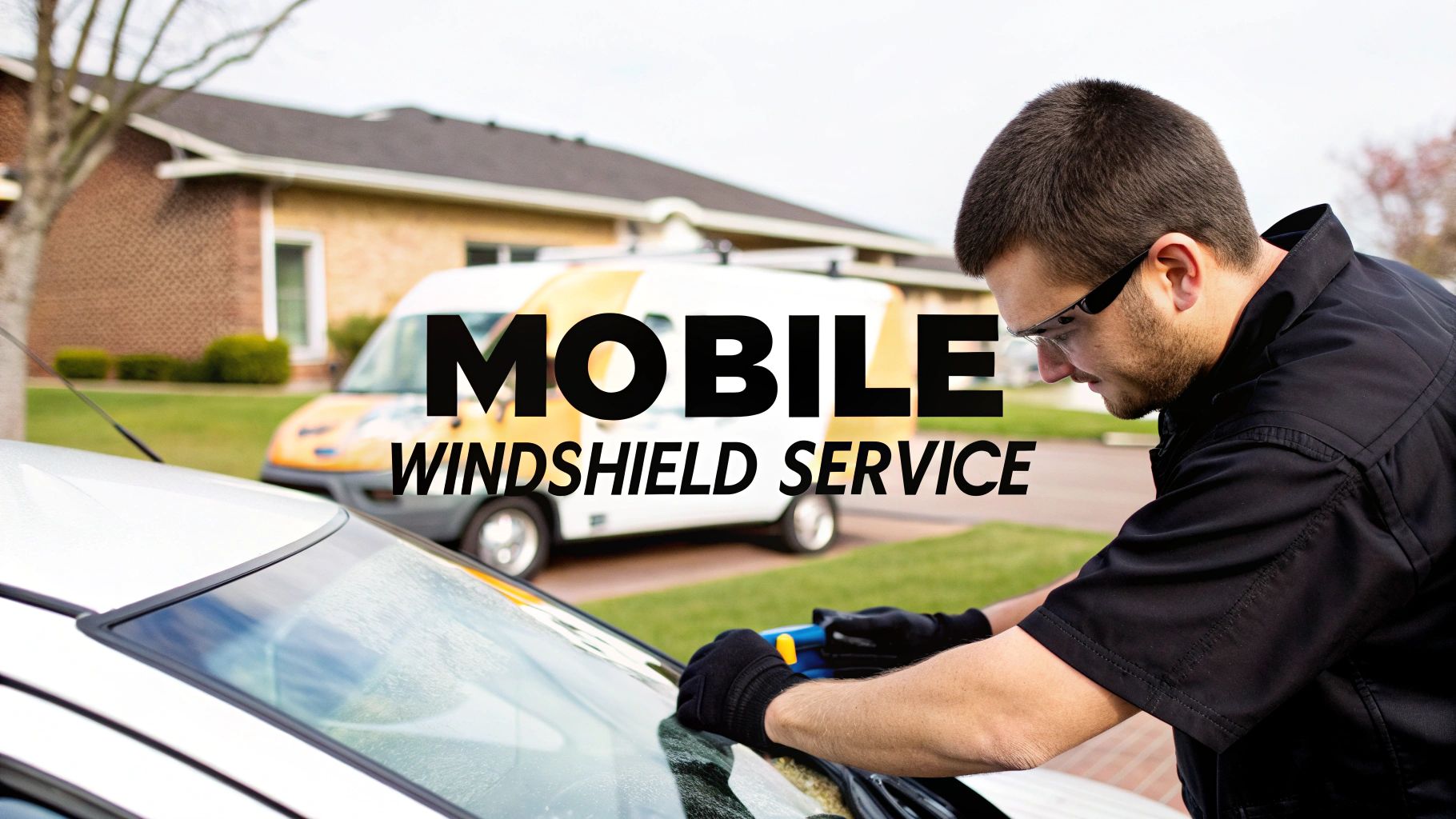
A mobile windshield replacement service is exactly what it sounds like: a certified technician comes to you—wherever you are—to replace your damaged windshield. Think of it as a repair shop on wheels, bringing all the necessary tools and a brand-new windshield right to your home, office, or even the gym parking lot.
This on-demand service is a game-changer. It means you don't have to carve out a huge chunk of your day to drive to a shop and sit in a waiting room. The entire job gets done on-site, saving you a ton of time and hassle.
Convenience Delivered Directly to Your Driveway
Picture this: it's a busy Tuesday morning, and you spot a huge crack spreading across your windshield. The old way of doing things meant calling a shop, finding an appointment that works, driving over, and then figuring out what to do for the next few hours. Mobile windshield replacement flips that entire process around, putting your schedule first.
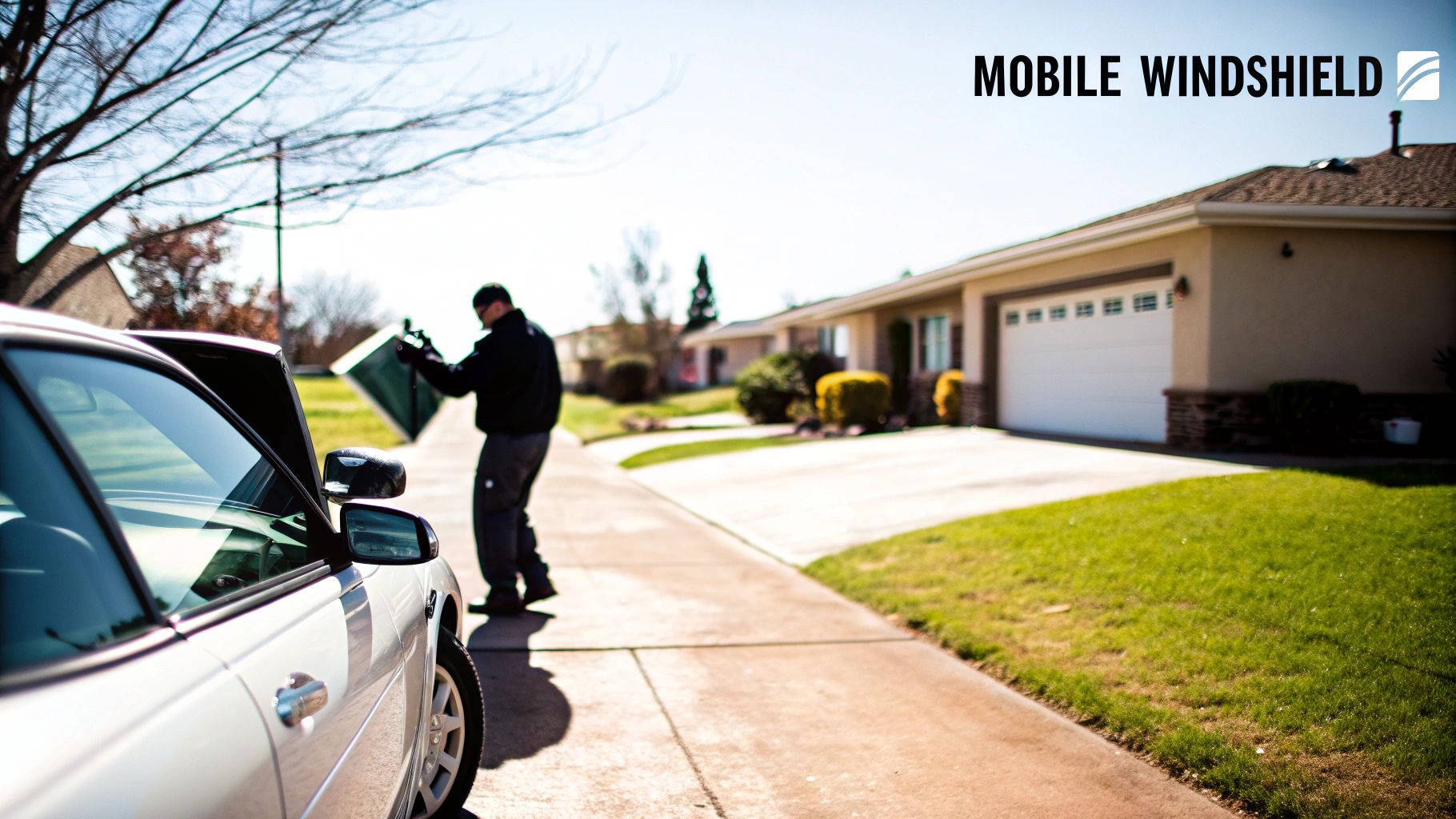
The technician shows up with everything needed to do the job right—a high-quality replacement windshield, specialized tools, and the right adhesives. This isn't just about making things easier; it's about fitting a necessary repair into your life without skipping a beat. The work can get done while you're on a conference call or taking care of things around the house.
The biggest win here is obvious: you save valuable time and avoid logistical headaches. Instead of building your day around a repair appointment, the appointment fits neatly into your day. It’s a modern, customer-first approach that has quickly become the go-to for busy drivers.
A mobile service transforms a potentially day-long ordeal into a simple, two-hour appointment that doesn't require you to change your plans or leave your location.
To really see the difference, it helps to put the two options side-by-side.
Mobile Service vs In-Shop Replacement At a Glance
Let's break down the key differences between having a technician come to you versus taking your car into a traditional repair shop.
Feature | Mobile Windshield Service | Traditional In-Shop Service |
|---|---|---|
Location | Service at your home, office, or any convenient spot. | You must drive your vehicle to the repair facility. |
Time Commitment | Minimal disruption; work is done while you wait elsewhere. | Requires travel time plus waiting at the shop. |
Scheduling | Highly flexible, often with same-day or next-day options. | Limited by shop hours and existing appointment backlogs. |
Cost | Typically the same as in-shop; no extra fees for travel. | Standard pricing based on vehicle and glass type. |
Ultimately, both methods get the job done. The real choice comes down to what you value more: the controlled environment of a shop or the unmatched convenience of having the service come directly to you.
A Look at the Mobile Replacement Process, From Start to Finish
So, what really happens when the mobile technician pulls up to your home or office? It's a fascinating mix of precision and skill, all happening right there in your driveway. This isn't just about swapping out glass; it's about restoring a crucial piece of your car's safety system.
The whole thing is surprisingly efficient. Let’s break down exactly what the technician does, from the moment they arrive to the final all-clear.
Prepping Your Vehicle for Surgery
First things first, the technician gets your car ready. This step is all about protecting your vehicle and making sure the job goes smoothly.
Protective Coverings: Think of it like a dentist putting a bib on you. The tech will lay down special drapes over your hood, fenders, and dashboard to shield everything from tools, stray adhesive, and glass fragments.
Component Removal: Anything attached to the windshield—like your rearview mirror, wiper arms, and registration stickers—is carefully removed. Don't worry, they'll be put back on the new glass later.
This prep work ensures that the only thing changing is the broken windshield.
Removing the Damaged Windshield
Once your car is prepped, it's time for the old, damaged glass to come out. Using specialized tools, the technician carefully cuts through the powerful urethane seal holding the windshield to the car's frame. This requires a steady hand to avoid scratching the "pinch weld," which is the metal body panel the glass sits on.
After the seal is broken, the old windshield is lifted out and set aside. The tech then meticulously cleans the pinch weld, scraping off every last bit of old adhesive. A clean surface is absolutely essential for creating a strong, leak-proof bond with the new glass. You can find out more about the details of our windshield replacement service and why we take these steps so seriously.
The urethane adhesive isn't just glue; it's a structural component. It bonds the glass directly to the car's frame, providing up to 60% of the vehicle's structural strength in a rollover. That's why a perfect seal is non-negotiable.
Installing the New Glass and Curing
Now for the main event. The technician applies a fresh, even bead of high-grade urethane adhesive directly onto the pinch weld. The new windshield is then expertly guided into place with large suction cups. Once it's perfectly aligned, the rearview mirror and other components are reattached.
But the job isn't done yet. The adhesive needs time to cure. While it sets up pretty quickly, the urethane needs a bit of time to harden and form that factory-strong bond. The technician will give you a specific "safe drive-away time," which is usually just 30 to 60 minutes. This meticulous work is part of a huge industry; the global windshield replacement market was valued at around $15 billion in 2025 and is expected to climb to nearly $23 billion by 2033. You can read more about this expanding market and its growth drivers on marketreportanalytics.com.
Understanding ADAS Recalibration for Modern Cars
Not too long ago, a windshield was just a piece of glass that kept the wind and rain out. Today, it’s the nerve center for your car’s most important safety technology. Think of it as the 'eyes' for your vehicle’s Advanced Driver-Assistance Systems (ADAS)—the high-tech brains behind the features that actively protect you on the road.
When you have a mobile windshield replacement, making sure these systems are working perfectly isn't just a good idea; it's absolutely critical for your safety.
Why Your Windshield Is Your Car's Eyes
Your car's ADAS features are like a second set of eyes, always on the lookout. Things like lane-keeping assist, automatic emergency braking, and adaptive cruise control all depend on cameras and sensors mounted directly on your windshield to read the world around you.
Even if a new windshield looks identical, tiny, almost imperceptible differences in its shape or placement can throw off the camera's angle. We're talking about a shift as small as a single millimeter, but that tiny change can be the difference between your car spotting a pedestrian in time or failing to react at all.
Recalibration is how we fix this. It’s the process of realigning the ADAS camera to the manufacturer's exact specifications. Think of it like getting a new pair of glasses—the prescription has to be perfect for you to see clearly. Without that precise alignment, your car's safety decisions will be based on a blurry, inaccurate picture.
This isn't just a niche feature anymore. It's quickly becoming the standard. In fact, it's predicted that by 2025, over 80% of new vehicles in the U.S. will have at least one ADAS feature. This boom has fueled a massive demand for proper calibration, with the market expected to hit $14.9 billion globally by 2028. You can find more fascinating numbers in these auto glass industry statistics on verysmoothautoglass.com.
The Two Types of Recalibration
When it's time to recalibrate, technicians use one of two main methods. The right one isn't a matter of choice; it's dictated by your vehicle's manufacturer.
Static Recalibration: This is a precision job done in a controlled shop setting. A technician sets up a specific target board in front of the vehicle and uses specialized tools to align the camera perfectly to it.
Dynamic Recalibration: This method actually involves driving the car. A technician will take the vehicle out on well-marked roads at specific speeds, allowing the car’s computer to use the real-world lane markings to recalibrate itself as it moves.
Some cars are a bit more complex and require a combination of both static and dynamic methods to get the job done right. A true professional will know exactly what your car needs and will ensure it's performed to spec. This step is simply not negotiable if you want your car's safety features restored. For a more detailed look, check out our guide on ADAS windshield calibration.
The infographic below walks through the entire mobile replacement process, from the initial prep work to the final curing of the adhesive.
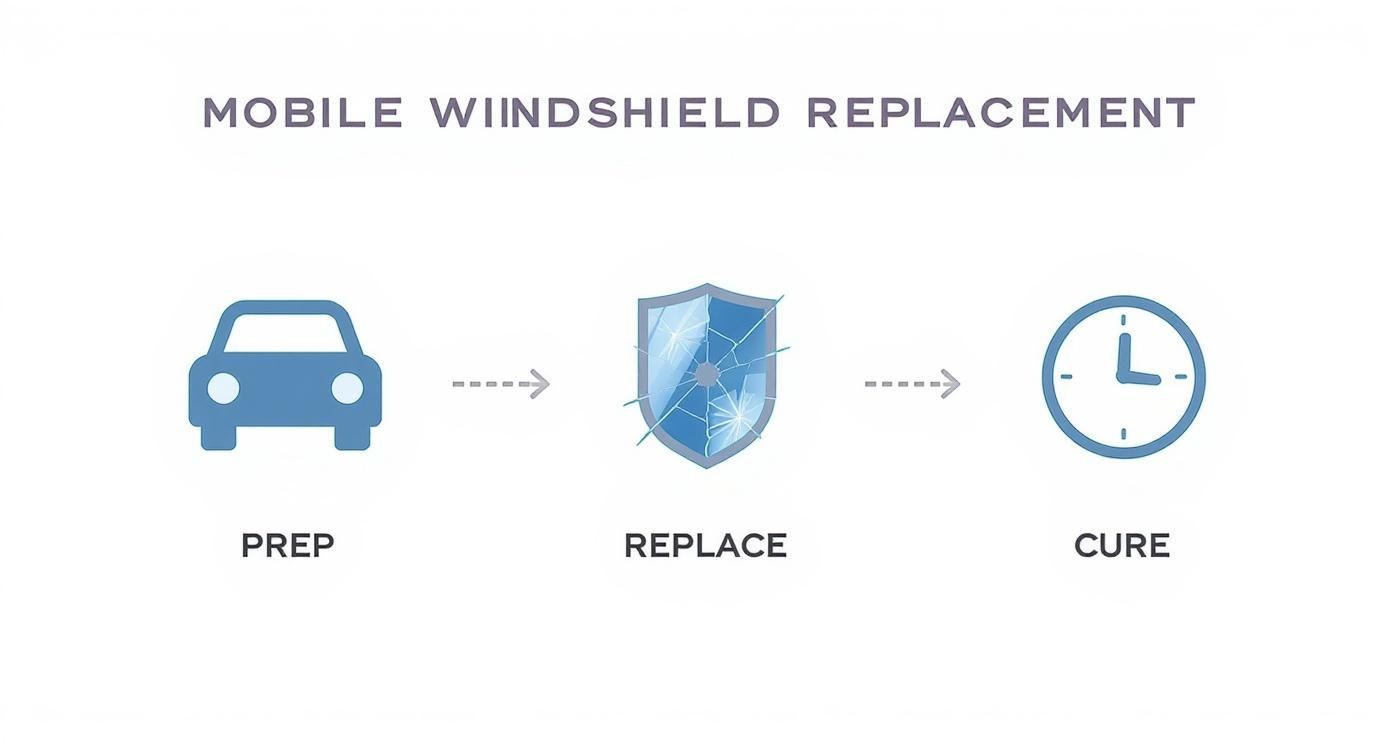
As you can see, the process is a series of precise, deliberate actions. Recalibration is the final and most crucial step to ensure your vehicle is not just repaired, but fully restored to its original safety standards.
Making Insurance Claims Simple and Stress-Free
Finding a crack in your windshield is bad enough. The thought of dealing with insurance paperwork on top of it can feel like a huge headache, but it really doesn't have to be that way. When you work with a mobile windshield replacement service, you'll often find they make the whole insurance process surprisingly simple by handling the toughest parts for you.
It all comes down to understanding your coverage and letting the pros do what they do best.
Most of the time, a new windshield is paid for by the comprehensive coverage in your auto policy. This is the part of your insurance that covers damage from things other than a collision—think a stray rock on the highway, hail, or a fallen tree branch. Before your insurance kicks in, though, you'll need to pay your deductible, which is the set amount you pay out-of-pocket for any claim.
For instance, if the total replacement costs $500 and your policy has a $250 deductible, you'd pay the first $250. Your insurance company would then cover the remaining $250. Of course, if your deductible is higher than the replacement cost, it sometimes makes more sense to just pay for the new glass yourself.
Letting the Professionals Handle the Paperwork
Here's where choosing a great mobile service really pays off: they are experts at navigating the insurance maze. Instead of you getting stuck on hold, a reputable company will manage the entire claim directly with your insurer.
This means they'll be the ones to contact your agent, submit the required forms, and bill the insurance company for its share of the cost. All you really have to do is give them your policy details.
This direct-billing approach takes you out of the middle, transforming what could be a frustrating back-and-forth into a smooth, hands-off experience. The technicians know exactly what information insurance companies need and how to document the damage properly to get your claim approved without delay.
To get the ball rolling, just have a few key details ready when you make the call:
Your Insurance Company and Policy Number: This is the first thing they’ll ask for to start the claim.
The Date the Damage Occurred: Don't worry if you don't know the exact moment; a close estimate works just fine.
Your Vehicle Identification Number (VIN): You can find this on a small metal plate on the driver's side dashboard, right at the bottom of the windshield.
Once you provide that information, your mobile glass technician can take it from there. They'll get the claim filed and the new windshield approved, letting you get on with your day. It’s this kind of convenience that makes a mobile windshield replacement service such a practical choice from start to finish.
How to Choose the Right Mobile Service
When you need a mobile windshield replacement service, it's tempting to focus on who can do it fastest and cheapest. But not all services are the same, and making the right choice is critical for your car's safety and structural integrity. Looking past the lowest price tag for real signs of quality and professionalism is a must.
Think of it this way: you wouldn't hire the cheapest contractor to work on your home's foundation without checking their qualifications first, right? The same logic applies here. A shoddy windshield installation can seriously compromise airbag deployment and even the roof's stability during a rollover accident.
When you're vetting companies, it helps to apply the same principles you would when understanding what to look for in a mobile car service in general. The best providers always blend genuine expertise with top-tier materials.
Technician Training and Certifications
The most crucial element in any windshield replacement is the person doing the work. A solid mobile windshield replacement service invests in its people, which means they employ certified professionals. Don't be shy about asking for their credentials.
A big one to look for is certification from the Auto Glass Safety Council (AGSC). This is the organization that sets the industry standard for safe installations. An AGSC-certified technician has passed exams and proven they know the right way to do things, from using the correct adhesive to avoiding contamination that could weaken the bond.
Choosing a certified technician isn't just about peace of mind; it's confirmation that the person working on your vehicle is committed to upholding the highest safety standards in the industry.
Materials and Warranty Protections
The best technician in the world can't make up for cheap materials. The glass and adhesive are just as vital as the installation technique itself. A professional service will be upfront about what they use.
Here’s what you should be asking about:
OEM-Quality Glass: The glass should meet or exceed the standards of your car's Original Equipment Manufacturer (OEM). This is the only way to guarantee a perfect fit and maintain the vehicle's safety ratings.
High-Grade Adhesives: Ask specifically about the urethane adhesive. Modern formulas create a powerful, lasting bond and allow for a much quicker safe drive-away time.
Lifetime Warranty: Any company that's confident in its work will back it up. A lifetime warranty that covers leaks and defects in both materials and workmanship for as long as you own the car is the gold standard.
Checklist for Selecting a Quality Provider
Sorting through different providers can feel overwhelming. This quick checklist can help you compare your options and ask the right questions to ensure you're getting a safe, high-quality installation.
Quality Checkpoint | What to Ask or Look For | Why It Matters |
|---|---|---|
Technician Certification | Are your technicians AGSC certified? | Confirms they adhere to national safety standards for installation. |
Glass Quality | Do you use OEM or OEE (Original Equipment Equivalent) glass? | Ensures the glass fits perfectly and meets your car's safety specs. |
Adhesive Type | What kind of urethane do you use and what is the safe drive-away time? | High-quality adhesive creates a strong, durable bond crucial for safety. |
Written Warranty | Do you offer a lifetime warranty on materials and workmanship? | A strong warranty shows the company stands behind its service. |
Insurance Handling | Can you file the claim directly with my insurance company? | Saves you from paperwork and potential out-of-pocket hassles. |
ADAS Recalibration | Are you equipped to perform on-site ADAS recalibration? | This is non-negotiable for ensuring your safety systems work correctly. |
Online Reviews | What do recent customer reviews on Google or Yelp say? | Provides real-world insight into the company's reliability and service. |
Taking a few minutes to run through these points will pay off in the long run.
Finally, one last critical point: if your vehicle has ADAS features, you absolutely must confirm the company has the right equipment and training to perform on-site ADAS recalibration. This step is not optional. Making a well-informed choice ensures your windshield replacement is not only convenient but, most importantly, safe for many miles to come.
Caring for Your New Windshield
Once our mobile technician drives away, your part in the process begins. The specialized adhesive holding your new windshield needs time to cure—to fully harden and create that permanent, watertight seal. Think of it like letting glue dry on a critical repair; you wouldn't want to put stress on it right away.
Following a few simple aftercare steps, especially in the first 24 to 48 hours, is the single best thing you can do to protect the installation. This ensures the adhesive bond is rock-solid and the structural integrity of your vehicle is fully restored.
Immediate Aftercare Dos and Don'ts
For the first day or two, you just need to be a little gentle with your vehicle. These easy guidelines prevent any unnecessary strain on the fresh urethane adhesive as it works its magic.
Don't Touch the Tape: Our technician applies retention tape for a reason—it holds the windshield perfectly in place while the seal sets. Please leave it on for at least 24 hours.
Crack a Window: Keep one of your side windows open just an inch or so. This simple trick equalizes the air pressure when you shut a door, preventing the new seal from being pushed or stressed.
Easy on the Road: For the first day, try to avoid slamming doors or driving over bumpy roads and potholes. Sharp impacts and vibrations can interfere with the curing process.
No Car Washes Yet: Hold off on taking your car through an automatic car wash for at least 48 hours. The high-pressure water jets can be too aggressive for a fresh seal.
Long-Term Windshield Maintenance
After the adhesive has fully cured, a little preventative maintenance can make a huge difference. Small rock chips, for instance, can often be fixed before they splinter into large cracks that demand a whole new windshield. If you spot any minor damage, looking into a professional windshield repair can save you a lot of hassle and money down the line.
The goal of aftercare is simple: give the adhesive the undisturbed time it needs to create an unbreakable bond, fully restoring your vehicle's safety cage.
Keeping your glass clean is a given, but don't forget about your wipers. Routinely maintaining your wiper blades is crucial for clear vision and preventing scratches on your new glass. Worn-out wipers can drag debris across the surface, causing permanent damage. A few good habits will protect your investment and keep your new windshield performing perfectly for years to come.
Your Top Questions Answered
When you're dealing with a cracked windshield, you've got questions, and that's completely normal. Understanding how a mobile windshield replacement works can give you real peace of mind. Let's walk through some of the most common things people ask.
How Long Will I Be Without My Car?
This is usually the first question on everyone's mind, and the good news is, it's faster than you might think. The hands-on work—carefully removing the old glass and setting the new windshield—typically takes a skilled technician about 60 to 90 minutes.
But the clock doesn't stop there. The most important part of the process is letting the adhesive cure. We call this the safe drive-away time. This powerful urethane needs to set properly to ensure your windshield will perform as it should in an accident. This waiting period is usually another 30 to 60 minutes, depending on the weather and the type of adhesive used.
What Happens if the Weather is Bad?
Mother Nature can be unpredictable, but a little rain doesn't always have to derail your appointment. We can't work in the open during active rain or snow because moisture is the enemy of a strong adhesive seal. It can lead to leaks and a weak bond, which is a major safety issue.
The key to a safe installation is a dry workspace. If you have a garage, a carport, or even a covered parking structure, we can get the job done right on schedule, no matter what the weather is doing.
Cold weather can also make the adhesive cure more slowly. In those situations, our technicians use special fast-curing adhesives designed for colder temperatures to ensure a solid, factory-quality bond.
Does a Mobile Service Cost More Than Going to a Shop?
It’s a common myth that you pay extra for the convenience of a mobile service, but that's simply not the case. For most vehicles, the cost of a mobile windshield replacement is exactly the same as driving to a traditional auto glass shop.
Reputable companies see on-site service as a core part of their offering, not an up-charge. Your final price is based on the specifics of your vehicle—things like the make and model, the type of glass, and whether your car is equipped with ADAS cameras that need recalibration. The convenience is just part of the great service.
Ready for a windshield replacement that fits your schedule, not the other way around? At Auto Renu Auto Glass LLC, we bring the expertise right to your doorstep. Get your free, no-pressure quote today and discover just how simple getting back on the road safely can be. Schedule your mobile service now at https://www.autorenu911.com.