
How Much Is Windshield Repair Unlocking the Real Costs
Asking how much is windshield repair? This guide breaks down the real costs, factors influencing price, and when insurance covers it to help you budget.
Jan 16, 2026
generated
how much is windshield repair, windshield repair cost, auto glass repair cost, car maintenance, mobile auto glass
That dreaded thwack of a rock hitting your windshield is a sound every driver hates. Your first thought probably jumps straight to your wallet. So, how much are we talking about?
Generally, a simple windshield chip repair will set you back somewhere between $50 and $150. On the other hand, a full replacement is a much bigger deal, with costs starting around $300 and easily climbing to over $1,000. Getting that small chip fixed right away is one of the smartest, most cost-effective moves you can make for your car.
Breaking Down Windshield Repair Costs
The best way to think about how much windshield repair is is to see it as a preventative fix. It’s like patching a tiny leak in a roof before it turns into a massive, ceiling-collapsing disaster. That small patch costs next to nothing compared to the nightmare of a full roof replacement.
It’s the same logic here. A quick resin injection into a chip is a minor expense, but it stops that damage from branching out into a huge crack that demands a brand-new windshield.
This isn’t just about saving money, either. Repairing the glass keeps your windshield's original factory seal intact. That seal is a critical part of your car’s structural strength and ensures your airbags deploy correctly in a crash.
A Clear Cost Comparison
Let's really put the numbers side-by-side. As we mentioned, a chip repair usually falls in the $50 to $150 range. A full replacement? That's typically $300 to $1,000 or even more. By acting fast, drivers can save up to 80%. Digging into the latest auto glass service trends really shows how much of a difference early action makes.
That massive price gap is exactly why you shouldn't wait.
To give you a clearer picture, this table breaks down the typical costs for common windshield services compared to the much higher expense of a full replacement.
Windshield Repair vs Replacement Average Cost Comparison
Service Type | Typical Cost Range | Best For |
|---|---|---|
Single Chip Repair | $50 - $150 | Small, circular damage (bullseye, star) smaller than a quarter. |
Multiple Chip Repair | $75 - $200 | Two to three small chips that can be addressed in one service. |
Long Crack Repair | $100 - $250 | Simple cracks under 6-12 inches, depending on the technician. |
Full Windshield Replacement | $300 - $1,000+ | Large cracks, damage in the driver's line of sight, or complex breaks. |
While these are ballpark figures, they drive home one simple point: repair is always the more affordable option when it's on the table.
The Key Factors That Determine Your Repair Bill
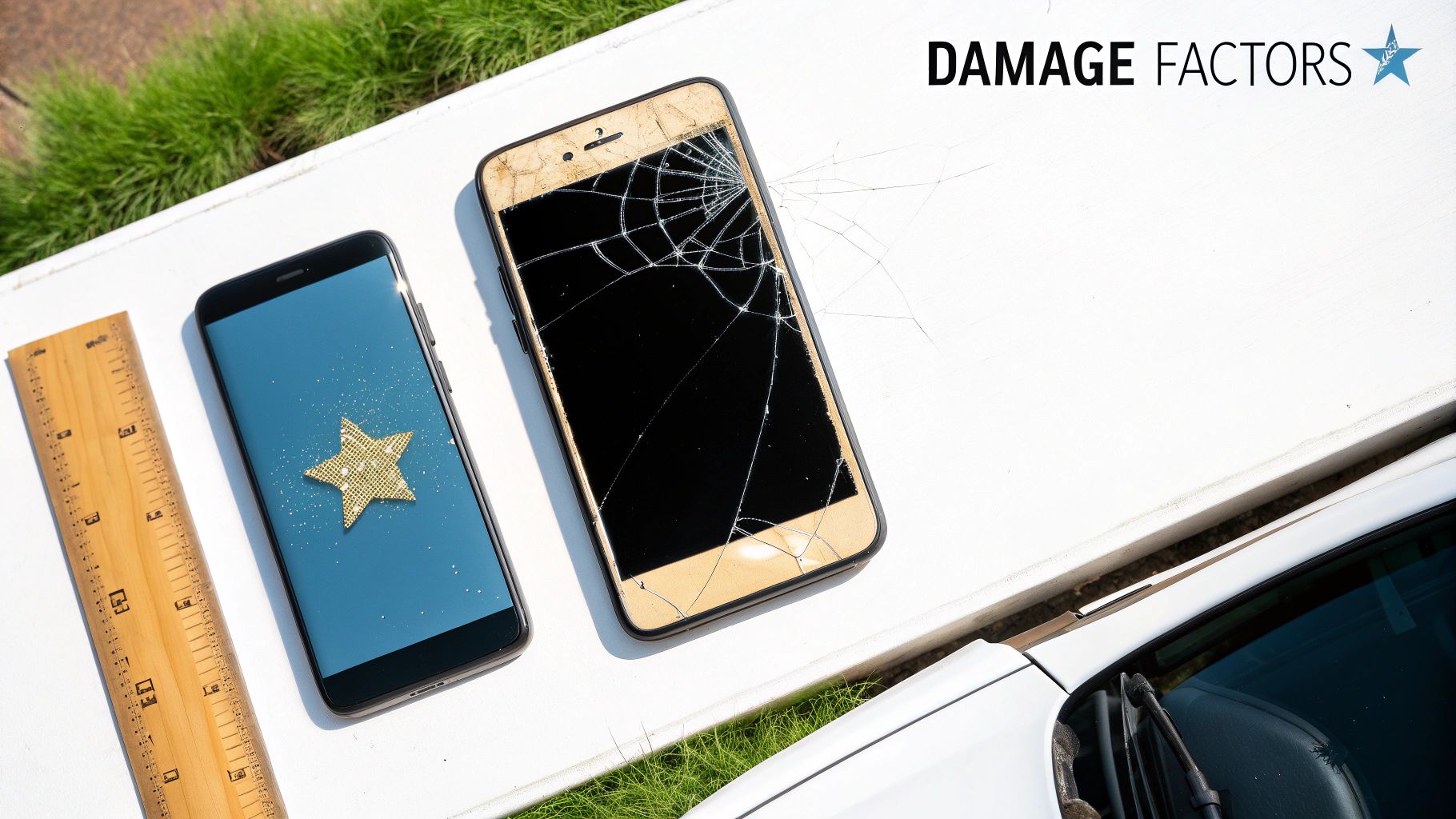
Ever wonder why your buddy paid $75 to fix a chip, but your quote came back at $150? The price isn't just a number pulled out of thin air. It’s directly tied to the specifics of the damage, your car, and even where the repair happens. No two rock chips are created equal, and several key variables will shape the final cost.
Think of it like a cracked phone screen. A single, hairline crack is a pretty simple fix. But a screen that’s shattered into a spiderweb of cracks? That’s a whole different ballgame requiring more time, materials, and skill. Your windshield works the same way. Knowing what goes into a quote helps you understand the price you're given.
Damage Size and Type
The biggest price driver, without a doubt, is the damage itself. A tiny, clean bullseye chip is the bread and butter of windshield repair—it’s the easiest and cheapest fix. The technician can inject the resin cleanly, and the whole process is quick and straightforward.
Things get more complicated from there. A "star break," which has little legs shooting out from the impact point, needs a much more careful approach to make sure the resin fills every single fissure. Then you have "combination breaks," which are a messy mix of a bullseye and a star, making them even trickier and more expensive to repair correctly.
The complexity of the damage, not just its size, is a primary driver of cost. A small but intricate star break often requires more labor and precision than a larger, simpler chip.
Got more than one chip? That'll bump up the price, too. Most shops will give you a break on the second or third chip fixed in the same visit, but each extra repair point will naturally add to the final tally.
Location of the Damage
Where that pesky chip decided to land is almost as important as its size. If it's over on the passenger side, far from the edge, it's usually a simple job. The technician has plenty of room to work and doesn't have to stress about optical perfection in a critical viewing area.
But if that rock hit you right in the driver's line of sight, the game changes completely.
Driver's Line of Sight: A repair in this zone has to be flawless. Any distortion could be a major safety hazard, so the technician needs to bring their A-game. That extra skill and precision often mean a higher cost, and some shops will even insist on a full replacement for safety's sake.
Edge Repairs: Chips and cracks near the edge of the windshield are bad news for its structural integrity. These are tough repairs because the glass is under more stress at the edges, increasing the risk that the crack could spread during the fix.
Sensor and Camera Areas: If the damage is sitting right over a rain sensor, light sensor, or one of the cameras for your car’s safety systems (ADAS), the repair gets delicate. The technician has to be extremely careful that the resin doesn't interfere with those systems, adding another layer of complexity to the job.
At the end of the day, a safe and crystal-clear repair is the goal. A good technician will always put your safety first, and the damage location is a huge part of figuring out the right fix and the final answer to how much is windshield repair.
Why Your Vehicle Model Impacts Repair Costs
It wasn't that long ago that a windshield was just a simple piece of curved glass. Today, it’s a high-tech nerve center for your car's most important safety features. This massive leap in technology is the main reason why the make and model of your car can drastically change the answer to "how much will this repair cost?"
If you drive a newer vehicle, particularly from brands like Tesla, Mercedes, or Subaru, your windshield is doing a whole lot more than just blocking the wind. It's the mounting point for a sophisticated suite of cameras and sensors that are constantly scanning the road.
The Rise of ADAS Technology
These components are all part of your car’s Advanced Driver-Assistance Systems (ADAS). This is the technology that makes modern driving so much safer and more convenient, powering features you probably use every day.
Lane-Keeping Assist: Tiny cameras read the lane markings to help you stay centered.
Automatic Emergency Braking: Forward-facing sensors detect a potential crash and can hit the brakes for you.
Adaptive Cruise Control: Your car automatically keeps a safe following distance from the vehicle ahead.
Because these critical systems are attached directly to the windshield, any repair—even for a small chip—demands an extra level of care and precision. The technician has to work around this sensitive equipment without disrupting it.
Why Recalibration Is Essential (and Costly)
The biggest cost driver with ADAS-equipped cars is recalibration. Think of the ADAS camera like a perfectly aimed telescope. If its angle shifts by even a single millimeter, its view of the road is completely thrown off. A chip repair or a full replacement can slightly alter the position of the glass, which is enough to mess up the camera’s perspective.
Recalibration is the process of precisely realigning your ADAS cameras and sensors back to the manufacturer's exact specifications. It’s not optional—it’s the only way to ensure your safety systems work correctly.
This isn’t something you can eyeball. It requires specialized equipment and trained technicians to get it right. Skipping this step is dangerous; it could mean your automatic braking doesn't engage in time or your lane-keeping assist nudges you into another car.
The growing complexity of our cars is pushing up repair costs across the board. In the U.S., the average collision repair bill hit $5,038 in 2022, a number inflated by the need to service and recalibrate advanced systems. You can read more about how advanced tech influences repair costs.
So while your tech-heavy vehicle might come with a higher repair bill, that extra cost ensures the safety features you count on are actually ready to protect you and your family when it matters most.
Choosing Between Mobile Service and In-Shop Repair
When your windshield gets a chip, one of the first questions you'll have is where to get it fixed. Do you need to block out half your day to drive to a shop, or can the technician come to you? The choice between an in-shop visit and a mobile repair really just comes down to what you value most: convenience and your time.
For a lot of people, a mobile service sounds almost too good to be true, like a luxury add-on. But it’s become incredibly practical and is built for the reality of our busy lives. Instead of you having to rearrange your day around the repair, the repair simply fits into your day. It turns a frustrating errand into a background task.
The True Value of Convenience
Picture this: you're wrapping up a meeting at work, and while you were busy, a technician was fixing that star-shaped chip in your windshield right out in the company parking lot. By the time you head out for lunch, your car is good to go. You didn't have to burn PTO, fight traffic, or flip through old magazines in a waiting room.
That’s the real magic of mobile windshield repair. It completely erases all the hidden time-sinks of a traditional shop appointment.
No Travel Time: You're not spending money on gas or wasting minutes driving back and forth.
Zero Waiting: The work gets done while you’re being productive at the office or relaxing at home.
Ultimate Flexibility: You pick the time and place that works for your schedule, not the other way around.
The real cost of a repair isn't just the final invoice—it's also the value of your time. Mobile service respects that, making it a hugely efficient choice for anyone with a packed calendar.
Comparing Cost and Practicality
So, does all that convenience come with a hefty price tag? You might be surprised. The cost difference between mobile and in-shop service is often minimal, and in many cases, there's no difference at all. Many modern auto glass companies, including us, have made mobile service a core part of their business because they know it’s what customers actually need.
When you think about the time you save and the productivity you don't lose, mobile repair often ends up being the smarter financial choice. If you want to dig deeper into how the service works, check out our guide on finding a trustworthy mobile windshield repair near me.
Ultimately, the decision is about taking back your time and making car maintenance fit your life, not disrupt it.
How Insurance Can Cover Your Windshield Repair
Here's one of the best-kept secrets in the auto world: fixing that annoying chip in your windshield might not cost you a dime. A lot of drivers don't realize their comprehensive insurance coverage is set up for exactly this, often covering the entire repair cost without you ever touching your deductible.
Sounds too good to be true, right? Well, it makes perfect sense when you look at it from the insurance company's perspective. They know that a small, ignored chip is just a crack waiting to happen. A little stress from a pothole or a sudden temperature change, and that tiny chip can spiderweb across your entire windshield, leading to a much more expensive full replacement.
Think of it this way: your insurer would much rather pay a $100 repair bill today than a $1,000 replacement bill next month. By waiving your deductible for simple repairs, they give you a great reason to get it fixed before it becomes a huge problem. It’s a win-win.
To Claim or Not to Claim
Getting a "free" repair is a no-brainer, but it's smart to think about the bigger picture. Every time you file a claim, even a small one that costs you nothing, it gets logged in your insurance history. A single glass claim is no big deal and is unlikely to impact your rates.
However, several claims in a short amount of time can start to look like a pattern to your provider. Filing multiple glass claims can hike insurance premiums by 15% over three years, which is why many savvy car owners opt for preventative mobile repairs out-of-pocket. If a repair is affordable, paying for it yourself can be the better long-term strategy to keep your record clean and your premiums from creeping up.
For a deeper dive into this topic, you can learn more about how insurance covers windshield replacement in our detailed guide.
Understanding Your Policy Specifics
Every policy is a little different, so it's always a good idea to check your specific coverage before you make the call. A quick glance at your documents or a five-minute chat with your agent can save you from any surprises.
Here’s what you need to look for:
Comprehensive Coverage: This is the part of your policy that handles damage that isn't from a collision, which is exactly where windshields fall.
Glass Deductible: Some policies, and even some states, have a separate, lower deductible just for glass. Better yet, many waive the deductible completely for repairs (but not for full replacements).
Knowing these two details ahead of time puts you in control. For those in the UK, the specifics of how claims are handled are tied to local regulations; exploring UK car insurance types and legalities can give you a clearer picture of that process. Having this knowledge empowers you to navigate the claims process with confidence.
Deciding When to Repair Instead of Replace
So, you've got a rock chip staring back at you. Is it a quick, simple fix, or is it a sign you need a whole new windshield? Making the right call here is about more than just the upfront cost—it's about safety and keeping your car structurally sound.
Glass technicians don't just guess. We follow clear industry standards to figure this out, boiling it down to three key things: the size of the damage, its location, and how deep it goes. Knowing what we look for helps you understand why we might recommend a full replacement over a repair. It's not about an upsell; it's about making sure your car is safe to drive.
This handy decision tree shows how things like insurance can factor into the equation.
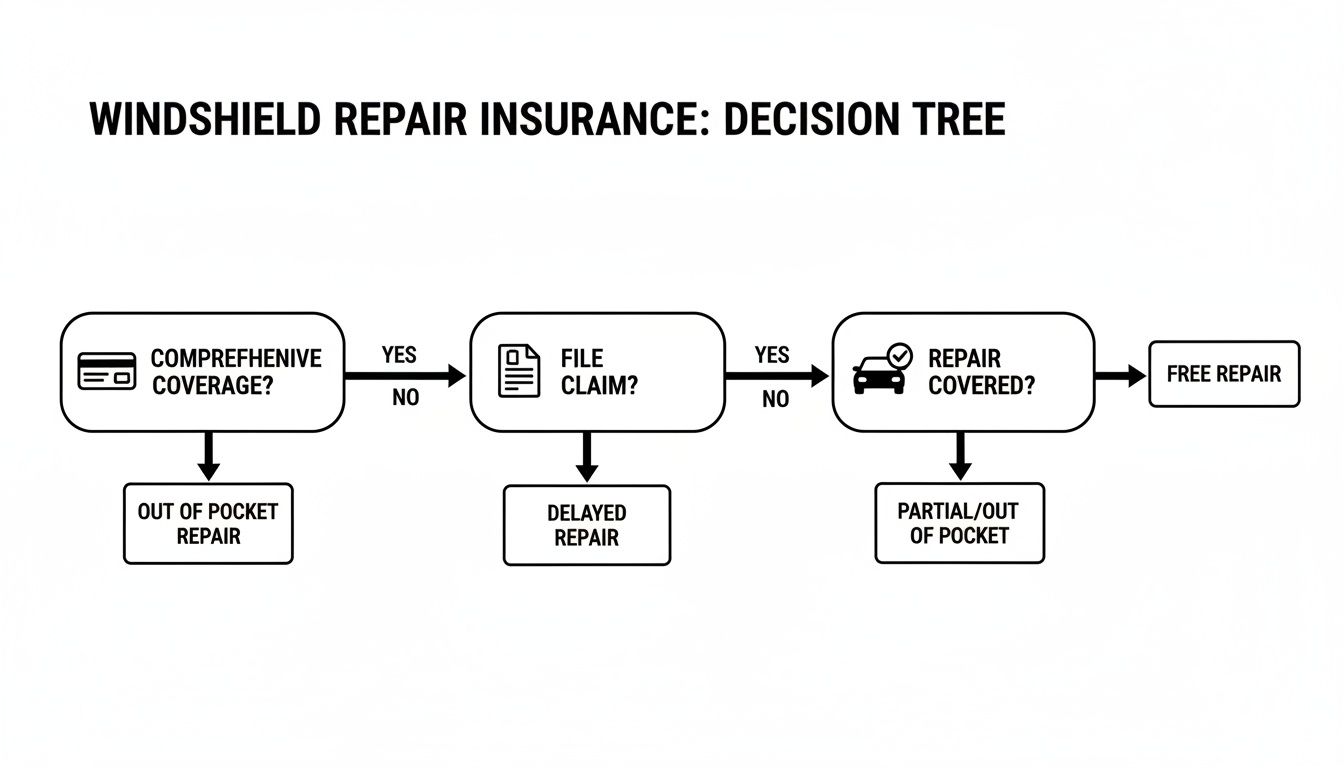
As you can see, having the right coverage often makes the decision a lot simpler, sometimes even covering the entire cost of a repair.
Assessing the Damage Size
The first thing we check is size. It's the most straightforward test.
A good rule of thumb we use in the shop is the "dollar bill test." If a crack is shorter than a dollar bill (that's about six inches), it’s usually a great candidate for a repair. For simple chips, if you can cover it with a quarter, we can almost always fix it.
Once the damage gets bigger than that, you're looking at a serious weak spot in the glass. Trying to fill a long crack won't restore the windshield's strength, and it often leaves a noticeable blemish. At that point, replacement is really the only safe way to go.
Evaluating the Damage Location
Where that chip or crack is located is just as critical as its size. The spot it's in tells us if a repair can be done without affecting your ability to drive safely.
Driver's Line of Sight: Any blemish directly in your main field of view is a major problem. Even the best repair can leave a tiny distortion that acts like a permanent distraction. It’s just not worth the risk, so we’ll almost always recommend a replacement.
Edge Cracks: A crack that starts at or runs to the very edge of the windshield is bad news. It's already messed with the windshield's seal and structural bond. These cracks are known for spreading no matter what you do, making replacement a must.
Over ADAS Sensors: If the damage is sitting right over the cameras or sensors for your car’s safety features (like automatic braking), that’s another big red flag. A repair could easily interfere with how those systems "see" the road, so a new windshield is needed to ensure they work correctly.
A windshield does two main jobs: give you a crystal-clear view of the road and help hold up the roof in a rollover. If damage gets in the way of either of those things, replacement is the only responsible choice.
When the damage is just too much for a simple fix, your next step is to understand the cost to replace a windshield. Knowing these guidelines ahead of time helps you know what to expect when you talk to a technician and feel good about the solution they recommend.
A Few More Questions We Hear All the Time
Even after breaking down all the cost factors, you probably still have a couple of questions rattling around. That's completely normal. Here are the straight-up answers to a few of the most common things people ask us about windshield repairs.
Can a Really Long Crack Be Repaired?
The short answer is: maybe, but probably not. While the resins we use today are incredible and can technically handle cracks up to 12-14 inches, that's pushing the limit. The reality is, most experienced technicians will draw the line at about six inches and recommend a full replacement.
Why? Two big reasons. First, the longer a crack sits, the more dirt and moisture get inside, making a clean, strong repair much harder. Second, even a perfect repair on a long crack can leave a slight distortion, and if that's in your direct line of sight, it’s a safety hazard.
Will a DIY Repair Kit Actually Work?
Honestly, those DIY kits you see at the auto parts store are more of a band-aid than a real fix. They can be a cheap, temporary solution for a tiny, fresh chip, but they just can't compete with a professional job.
We use specialized tools to create a vacuum over the chip, which pulls the air and moisture out before injecting a high-strength resin under pressure. This process creates a bond that’s nearly invisible and far more durable. Plus, if a DIY repair goes wrong, it can often make it impossible for us to fix it properly later.
How Long Does a Chip Repair Take?
You’ll be surprised how fast it is. A professional chip repair is a quick and efficient process. From the moment we start cleaning the damaged spot to the final step of curing the resin with a UV light, we can have a single chip fixed in about 20-30 minutes. You can be safely back on your way in less time than a lunch break.
Don't let a small chip turn into a major expense. The experts at Auto Renu Auto Glass LLC offer fast, reliable mobile repair services that come directly to you. Schedule your convenient repair online today!