Clear Your View How to Prevent Windshield Fogging
Tired of a foggy windshield? Learn how to prevent windshield fogging with expert tips for immediate fixes and long-term solutions for a safer drive.
Sep 30, 2025
generated
how to prevent windshield fogging, defog windshield, car maintenance, driving safety, window fog

Before we dive into the settings and buttons, let's get one thing straight: preventing windshield fog is all about managing the balance between temperature and humidity inside your car versus outside. It's a simple tug-of-war.
The quickest fix is usually your climate control. If the fog is on the inside, hit the defroster button and make sure the A/C is on—this pulls moisture out of the air fast. If the fog is on the outside, a quick swipe of your wipers and a slight tweak to your A/C temperature will usually do the trick.
Understanding Why Your Windshield Fogs Up
That frustrating film blocking your view is just basic physics at play. Fog appears whenever the windshield's surface temperature drops below the dew point of the air touching it. Simple as that. Once you really get that concept, you can stop blindly pressing buttons and start clearing your glass in seconds.
Quick Guide to Windshield Fog
Not sure where to start? This table is your go-to reference for identifying and tackling fog based on where it appears.
Fog Location | When It Happens | The Cause | Quickest Fix |
|---|---|---|---|
Inside | Cold, damp weather | Warm, moist cabin air hits a cold windshield. | Turn on defroster, engage A/C, crack a window. |
Outside | Hot, humid weather | Cold, A/C-chilled windshield meets warm, moist air. | Use wipers, then slightly warm up your A/C. |
This little cheat sheet can save you a lot of guesswork when you're in a hurry to get going.
Winter vs. Summer Fogging
The season is your biggest clue as to what's going on.
Interior Fog (The Winter Problem): Think about a cold day. The air inside your car is warm and full of moisture from your breath, your wet coat, maybe even the coffee in your cup holder. When that air hits your ice-cold windshield, the moisture instantly condenses, creating a layer of fog on the inside.
Exterior Fog (The Summer Annoyance): Now picture a hot, sticky summer day. You've got the A/C blasting to stay cool, which makes your windshield's glass chilly. When the humid air outside comes into contact with that cold surface, it condenses on the exterior. It's the same effect you see on a glass of iced tea.
Understanding where the fog is—inside or out—is the first and most critical step. It tells you exactly why it's happening, so you know whether to warm things up, cool them down, or dry out the air. That's how you get a clear view in moments.
The Role of a Clean Windshield
This is one of those tips that sounds too simple to be true, but it works. A dirty windshield is a fog magnet.
All that dust, grime, and oil from fingerprints creates a textured surface. These tiny particles give water vapor the perfect little spots to grab onto and form condensation. Keeping the inside of your glass spotlessly clean makes a huge difference.
It’s a proactive step that, combined with upgrades like professional mobile window tint services, not only improves visibility but also helps regulate cabin temperatures. You're not just cleaning; you're creating a smooth, fog-resistant surface.
Using Your Car's Climate Controls Like a Pro
When fog suddenly creeps across your windshield mid-drive, you don’t have time for a science lesson. You just need it gone, fast. Knowing exactly which buttons to press on your climate control panel is the secret to clearing your view in seconds, but a surprising number of drivers get it wrong.
The right combination of settings depends entirely on whether the fog is on the inside or the outside of your glass. Guessing can actually make the fog worse, so let's break down the right moves for each scenario.
Tackling Interior Fog on Cold, Damp Days
That familiar milky film on the inside of your windshield on a chilly morning? That's condensation from the warm, moist air inside your car hitting the cold glass. Your mission is to dry out that cabin air as quickly as possible.
First, crank the defroster fan to its highest setting. Make sure the vents are aimed directly at the windshield to get air moving across the glass immediately.
Now for the counter-intuitive part: press the A/C button. Yes, even when it's cold. Your car's air conditioning system is also its most powerful dehumidifier, and it will pull moisture from the air far more effectively than heat alone.
Finally, check your air recirculation button—the one with the U-turn arrow symbol. Make sure it's off. You need to draw in the colder, less humid air from outside, not just keep recycling the damp air that's already causing the problem.
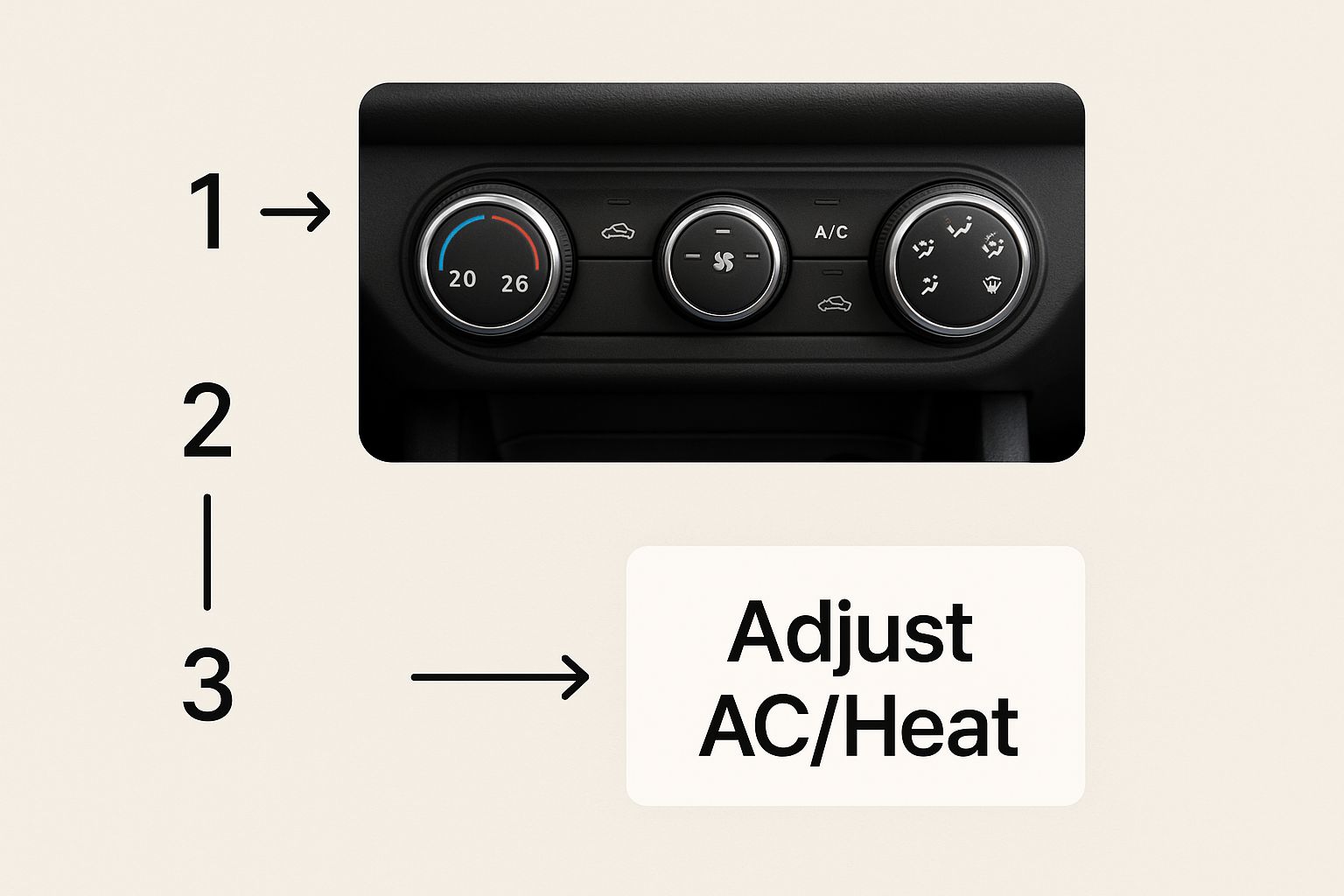
This simple combination—defrost on high, A/C on, and fresh air coming in—is the fastest way to fight interior fog.
Clearing Exterior Fog on Hot, Humid Days
Ever been driving on a sweltering summer day with the A/C blasting, only to have the outside of your windshield fog up? This happens for the opposite reason. The cold glass from your A/C causes moisture in the hot, humid outdoor air to condense on the exterior.
The immediate fix is easy: turn on your windshield wipers. One or two swipes will clear it instantly, but it’s only a temporary solution.
To stop it from coming right back, you need to warm up the glass just a bit. The goal is to bring the windshield's surface temperature closer to the outside air temperature.
Key Takeaway: You don't have to shut the A/C off completely and start sweating. Just turn the temperature dial up a few degrees. This slight adjustment is usually enough to stop the condensation from forming on the outside, all without making your drive uncomfortable. It’s a small tweak that makes a huge difference.
Long-Term Strategies to Keep Fog from Forming
Winning the battle against a foggy windshield is more about playing good defense than constantly reacting to the problem. While your climate controls are a great quick fix, a few smart habits can create a fog-resistant environment inside your car, meaning you'll be reaching for that defroster button a lot less often.
Start With a Squeaky-Clean Windshield
The most effective long-term strategy starts with something simple: a deep clean. You might not see it, but over time, the inside of your windshield builds up a thin, grimy film from dust, oils from your hands, and even vapors from the plastics in your dashboard. Moisture just loves to cling to this gunk, giving it the perfect surface to form condensation.
Giving the glass a thorough cleaning with a quality automotive glass cleaner and a fresh microfiber towel strips that film right off. This leaves a super-smooth surface where it's much harder for water vapor to get a foothold. If you find yourself fighting streaks that just won’t go away, it might point to a deeper issue with the glass itself. In that case, getting a professional opinion on your windshield repair needs is a good idea.
Create a Fog-Repelling Barrier
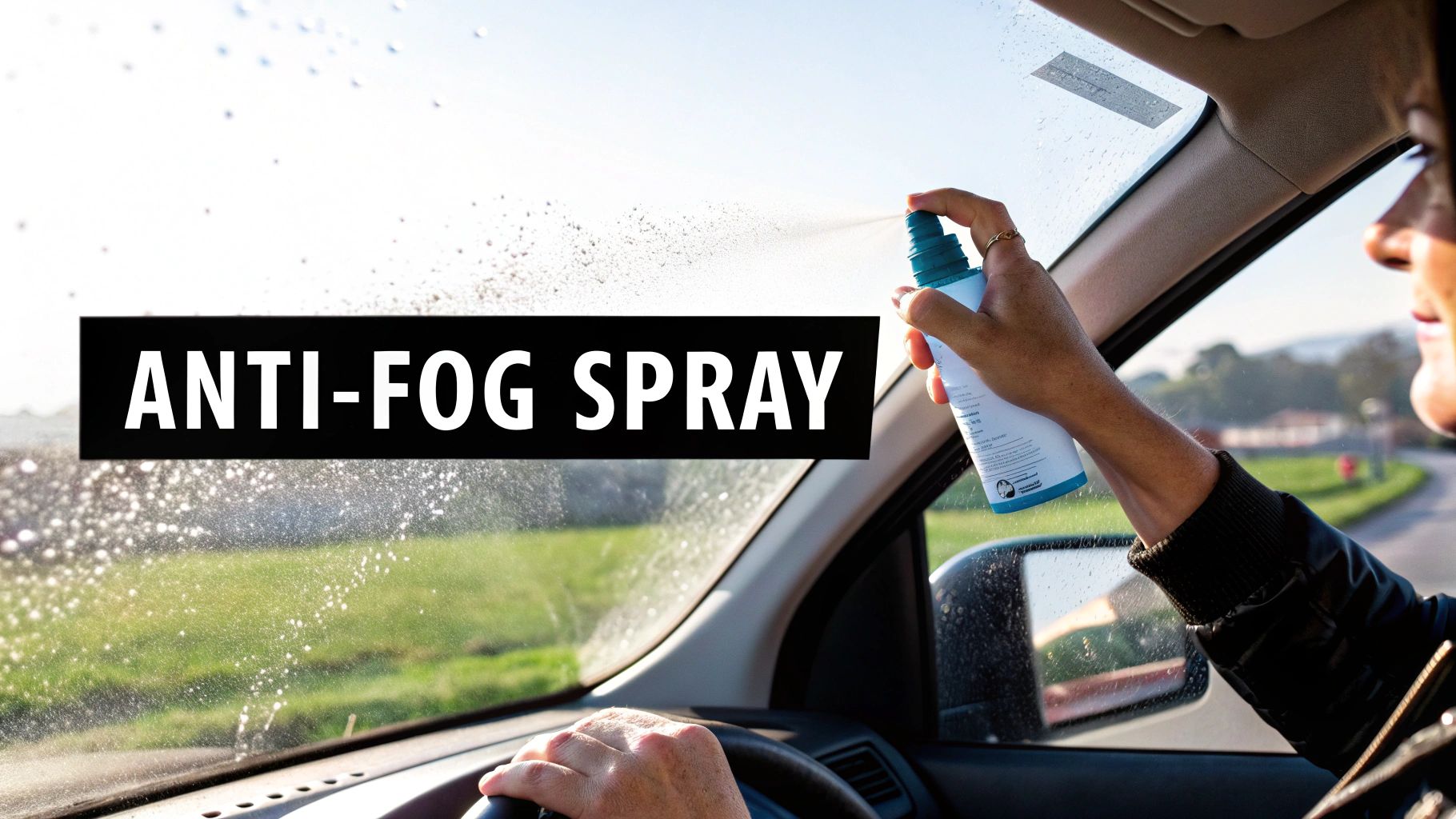
Once your windshield is clean, you can take it a step further by applying a treatment that actively fights fog. Most of these products work by creating a hydrophilic—or water-attracting—layer on the glass. It sounds counterintuitive, but instead of letting moisture bead up into those tiny, vision-blocking droplets, it forces the water to spread out into an invisible, transparent sheet.
You’ve got a lot of options here, from easy-to-use sprays to pre-treated wipes. They're surprisingly effective and can last for weeks. For the best results, just follow a few simple rules:
Always start clean. Apply the product to a freshly cleaned and completely dry windshield.
Use the right tool. Don't grab an old, dirty rag. Use a dedicated, clean applicator or a fresh microfiber towel.
Buff it out. The goal is a perfectly clear finish. Follow the product’s instructions, which usually means spraying a light mist and then buffing with a dry cloth until every last streak has vanished.
The technology behind this is a big deal. The global market for anti-fog additives was already valued at USD 2.05 billion in 2024 and is on track to hit USD 2.90 billion by 2032. This isn't just about consumer sprays; it shows a massive industry focus on making glass safer by design. You can dig deeper into the automotive glass additive market trends on Data Bridge Market Research.
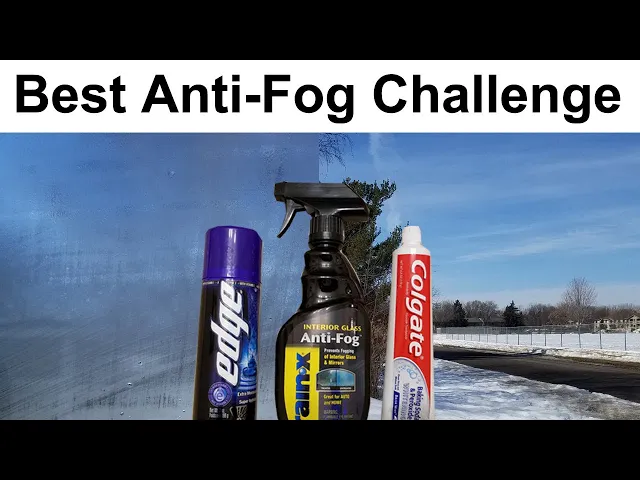
A Surprising DIY Trick: In a pinch? Grab some classic foamy shaving cream (not the gel kind). Put a small dab on a cloth, wipe a thin layer across the inside of your windshield, and then use a separate clean, dry cloth to buff it all off until the glass is crystal clear. The soap residue leaves behind a transparent film that works wonders at stopping fog.
Control the Moisture Inside Your Car
Finally, one of the biggest factors is the overall humidity inside your car. Keeping the cabin as dry as possible is a huge part of the solution.
Make a habit of shaking off snowy boots or wet umbrellas before you get in. Don't leave damp towels or sweaty gym clothes balled up on the floor. Every little bit of moisture you introduce will eventually end up on your windows.
For some extra help, you can even toss a reusable moisture absorber under a seat. Something as simple as a sock filled with silica cat litter works great. These passively pull moisture right out of the air, helping you maintain a drier interior and making all your other preventative efforts that much more effective.
Tired of constantly fiddling with your car's climate control just to see out the front? If you're looking for a more permanent fix than just blasting the defroster, modern automotive tech has some impressive answers.
Exploring Advanced Anti-Fog Automotive Tech
For drivers who want a "set-it-and-forget-it" approach to a clear windshield, professionally applied treatments are the way to go. Forget those temporary sprays. We're talking about durable, long-lasting coatings and films designed to keep your glass clear for the long haul.

So, how do they work? These professional applications bond a super-thin, transparent layer to the inside of your windshield. The magic is in the material—it's hydrophilic, which means it loves water.
Instead of letting moisture condense into thousands of tiny, light-scattering droplets (that's what fog is), the coating forces the water to spread out into a completely invisible sheet. Your view stays crystal clear, no matter the weather outside.
Is a Professional Coating Worth It?
While they cost more upfront than a DIY spray from the auto parts store, these treatments can last for years. That makes them a genuinely practical investment, especially if you live somewhere with cold winters or high humidity.
The demand for these long-term solutions is growing fast. The global market for anti-fog films and sheets was valued at an estimated USD 3.8 billion in 2024 and is projected to keep climbing. You can see the full breakdown on the antifog films and sheets market on Grandview Research. It’s clear this technology is here to stay.
More than just convenience, these advanced materials are a huge boost to road safety. When your visibility is never compromised, you’re a safer driver.
It's also worth remembering that modern cars rely heavily on advanced driver-assistance systems (ADAS), which use cameras and sensors mounted directly behind the windshield. For these safety features to work properly, a consistently clear view is absolutely essential.
This is why professional installation is so important. Applying a film or coating yourself could interfere with these sensitive electronics. You can learn more about the crucial process of ADAS windshield calibration in our detailed guide.
As car technology pushes forward, having clear glass is becoming less of a simple convenience and more of a core safety requirement. Don't be surprised to see these powerful anti-fog solutions become a standard feature on new cars, not just a luxury upgrade.
Common Defogging Mistakes to Avoid
When your windshield suddenly fogs over, it's natural to panic and react quickly. But some of the most common "fixes" people try can actually make the problem worse, setting you up for a frustrating cycle of fog that just won't quit.
The absolute first instinct for many is to wipe the glass with their hand or sleeve. It seems to work for a second, but you’re smearing oils and dirt from your skin all over the glass. This leaves a greasy, streaky film that gives moisture a perfect surface to cling to, making the next round of fog even more stubborn.
Misusing Your Car's Climate Controls
Beyond the hand-wipe, a lot of drivers unintentionally sabotage their defogging efforts with the climate control system itself. The number one culprit? Leaving the air recirculation button on.
You know the one—it has the little icon of a car with a U-turn arrow inside. When that light is on, your car is just recycling the same stale, humid air from everyone's breath and any damp coats or floor mats. You're literally trapping the problem inside. To clear the fog, you need to turn that off and pull in fresh, drier air from the outside.
Another classic mistake is just blasting hot air at the windshield and hoping for the best. It feels like it should work, but it often fails to address the core issue: humidity.
Crucial Tip: Hot air can hold more moisture, but it doesn't get rid of it. Without turning on your A/C to act as a dehumidifier, you're often just making warmer fog. That’s why using your A/C compressor—even in the dead of winter—is the secret weapon for clearing a foggy windshield fast.
Steering clear of these simple but critical errors will help you use your car’s systems the right way and keep your visibility crystal clear.
Answering Your Lingering Windshield Fog Questions
Even when you know the basics, some situations can make you second-guess your approach. Let's tackle some of the most common questions drivers have about keeping their windshields crystal clear.
Why Does My Windshield Fog Up When It’s Not Raining?
Foggy glass is a battle between temperature and humidity, and rain is only one part of the equation.
On a perfectly clear but cold day, the moisture from your own breath is often enough to condense the second it hits the frigid glass. The opposite happens on a hot, humid summer day. Your A/C cools the windshield from the inside, causing moisture in the soupy air outside to condense on the exterior surface.
This is precisely why preventative treatments are gaining so much ground. The global anti-fog coatings market was valued at over USD 1.12 billion in 2024 and is projected to hit USD 1.85 billion by 2033. These products create a surface that moisture just can't cling to, keeping your view clear no matter what. You can get more details about the anti-fog coatings market on fortunebusinessinsights.com.
Hot Air or Cold Air: What's Better for Defogging?
The fastest way to clear interior fog is to use a combination of both.
When it's cold out, you'll want to blast hot air at the windshield to raise the temperature of the glass above the dew point. But here's the crucial part: you must have the A/C on at the same time. Your car's A/C is an incredibly effective dehumidifier, and yanking the moisture out of the air is what actually solves the problem for good.
Think of it as a one-two punch: The heat helps evaporate the existing fog, while the A/C removes that evaporated moisture from the cabin so it can't fog up again. Using only heat is a slow and often losing battle.
My Rear Window Is Foggy Too. Do I Do the Same Thing?
Yes and no. The cause is the same—moisture condensing on a cooler surface—but the tool you use is different.
Your rear window has its own dedicated defroster, those little horizontal lines you see in the glass. These are actually tiny heating elements. When you press the rear defrost button (the one with the rectangular symbol), they warm up and evaporate moisture directly from the glass. It's far more efficient than trying to clear it with airflow.
How Can I Stop My Face Mask from Fogging Up the Windshield?
This is a common issue, and the fix is all in the fit. You need to stop your warm breath from escaping upwards.
Make sure your mask fits snugly over the bridge of your nose. If your mask has a flexible metal strip, pinch it tightly to create a seal. This forces your breath to vent downwards or out the sides, away from your windshield and glasses. A poor seal is almost always the culprit.