How to Clean Windshield Without Streaks – Pro Tips for a Crystal Clear View
Discover how to clean windshield without streaks. Expert tips and simple tools to achieve a spotless, streak-free finish every time.
Oct 1, 2025
generated
clean windshield without streaks, streak-free windshield, car detailing, auto glass cleaning, DIY car care
Let's be honest, that annoying glare on your windshield is more than just an eyesore—it's a genuine safety hazard. Getting that perfectly clear, streak-free view isn't magic. It really just comes down to having the right tools on hand—specifically two microfiber towels and a quality ammonia-free cleaner—and using a proven technique.
Once you nail this simple process, you’ll have crystal-clear visibility, no matter what the road or weather throws at you.
Why a Streak-Free Windshield Is a Non-Negotiable
We’ve all been there. You're driving, and the light hits your windshield just right, revealing a frustrating haze that scatters light everywhere. This creates a dangerous glare, whether it's from the low sun in the morning or the headlights of oncoming traffic at night. This isn't just about looks; it's about giving yourself enough time to react.
Think about driving straight into a sunrise or navigating a rain-slicked road after dark. In those moments when visibility is already poor, streaks and smudges can easily hide a pedestrian or another car. A truly clean windshield doesn't just make the drive more pleasant—it sharpens your ability to spot and anticipate hazards.
The whole process boils down to a few key things:
Using the Right Gear: The biggest culprits behind a streaky finish are common shortcuts like using paper towels or a generic all-purpose cleaner.
Mastering the Technique: There's a method to the madness. Wiping in a specific pattern for both the inside and outside of the glass makes all the difference.
Understanding the Cause: Ever notice that stubborn film on the inside of the glass? That's often from the plastics in your car's interior off-gassing, and it needs a specific approach to be removed completely.
Clear vision is the main goal, but there's another critical reason to keep your windshield spotless. Modern cars often have Advanced Driver Assistance Systems (ADAS) that rely on cameras mounted right behind the glass. These sensors power features like lane-keeping assist and automatic emergency braking. Any smudges or haze can interfere with their view, potentially making these safety systems less accurate. For a deeper dive, you can learn more about the importance of properly calibrated windshields for these systems in our guide.
Key Takeaway: A clear windshield is one of the most fundamental and impactful safety features on your vehicle. Taking just a few extra minutes to clean it the right way prevents dangerous glare and helps ensure your car's advanced safety systems can do their job properly.
Assembling Your Streak-Free Cleaning Kit
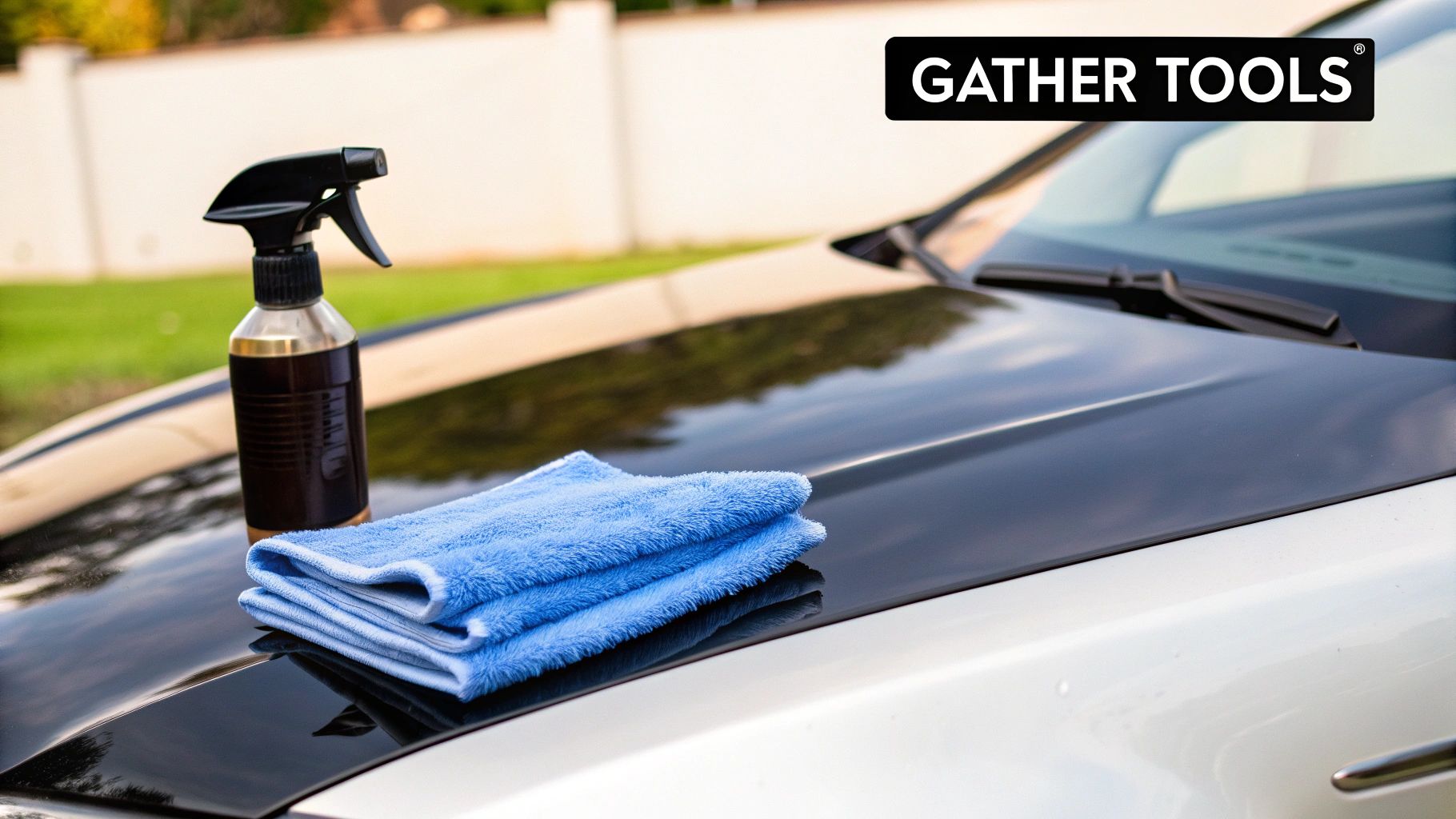
If you're still reaching for an old t-shirt and a roll of paper towels, it's time for an upgrade. The real secret to a professional, streak-free windshield isn’t about spending a ton of money—it's about having the right tools for the job. Putting together a dedicated kit is easy and makes all the difference.
The absolute workhorses of your kit will be two high-quality microfiber towels. I highly recommend a waffle-weave texture made specifically for glass. This design is incredible at grabbing dirt and soaking up every last drop of moisture without leaving lint behind.
You'll dedicate one towel for cleaning and the second, completely dry towel for the final buff. This two-towel method is non-negotiable for a perfect finish.
Picking the Right Cleaner
When it comes to the cleaner itself, one rule stands above all others: go ammonia-free. Ammonia is harsh stuff. It can dry out and damage the plastics on your dashboard and, even worse, it will slowly destroy your window tint, leading to bubbling and discoloration.
If you want to keep your tint looking great for years, avoiding ammonia is key. You can find more tips on this in our guide to proper [https://www.autorenu911.com/window-tint].
The shift toward safer products isn't just a trend; it's a massive industry movement. The global market for windshield cleaning concentrates hit around $2.5 billion in 2025, a number that's only expected to climb as more drivers seek out better solutions.
Pro Tip: Want a great DIY cleaner? Just mix one part white vinegar with one part distilled water in a spray bottle. The key here is using distilled water. It's free of the minerals found in tap water that are notorious for leaving behind those stubborn white spots and residue.
Whether you go with a professional-grade cleaner or your own homemade mix, the winning combination is always an ammonia-free liquid and a pair of clean microfiber towels. This simple setup is the foundation for getting that perfectly clear, streak-free windshield every single time.
Essential vs. Optional Windshield Cleaning Tools
To make it even clearer, let's break down what you absolutely need versus what's nice to have. Having the essentials on hand is all it takes to get started, but the optional items can definitely make the job easier and give you even better results.
Tool | Category | Why It's Recommended |
|---|---|---|
Microfiber Towels (x2) | Essential | One for cleaning, one for drying/buffing. Waffle-weave is best for glass. |
Ammonia-Free Cleaner | Essential | Protects your car's interior plastics and window tint from damage. |
Spray Bottle | Essential | For even application of cleaner, especially if you're using a DIY solution. |
Clay Bar | Optional | Removes embedded contaminants like tree sap or paint overspray from the exterior. |
Glass Sealant | Optional | Creates a hydrophobic layer that repels water, making future cleaning easier. |
Ultimately, your kit can be as simple or as comprehensive as you like. The most important thing is to have the basics covered—that’s what truly separates a frustrating, streaky mess from a crystal-clear view of the road ahead.
Getting the Exterior Glass Just Right
Now that you have your gear in hand, let's move on to the exterior glass. This is where the magic happens, and I'm going to walk you through the two-towel method that pros swear by. It’s a simple technique, but it’s the secret to a finish that looks like the glass isn't even there.
First things first: get your car out of the direct sun. I can't stress this enough. If you try to clean your windshield when it's hot, the cleaner will evaporate before you can even wipe it, leaving a streaky mess. A cool, shaded spot is your best friend here.
Putting the Two-Towel Method to Work
Grab your primary microfiber towel—this will be your "wet" towel. Give one half of the windshield a light spritz with your glass cleaner. A little trick I've learned is that if the glass feels even slightly warm, spray the cleaner onto your towel instead of directly on the windshield. This gives you more control and prevents it from drying too fast.
Now, wipe that section down with firm, overlapping vertical strokes. Once that side is done, move to the other half of the windshield and wipe it using horizontal strokes. This is a brilliant little hack. If you spot a streak later on, you'll know instantly if it's on the outside (from the vertical wipe) or the inside.
Don't pause here. Immediately pick up your second, bone-dry microfiber towel and get to buffing. Go over the entire windshield until it’s completely dry and crystal clear. The goal is to remove all moisture before the cleaning solution has a chance to air-dry and leave residue behind.
This image breaks down the process visually.
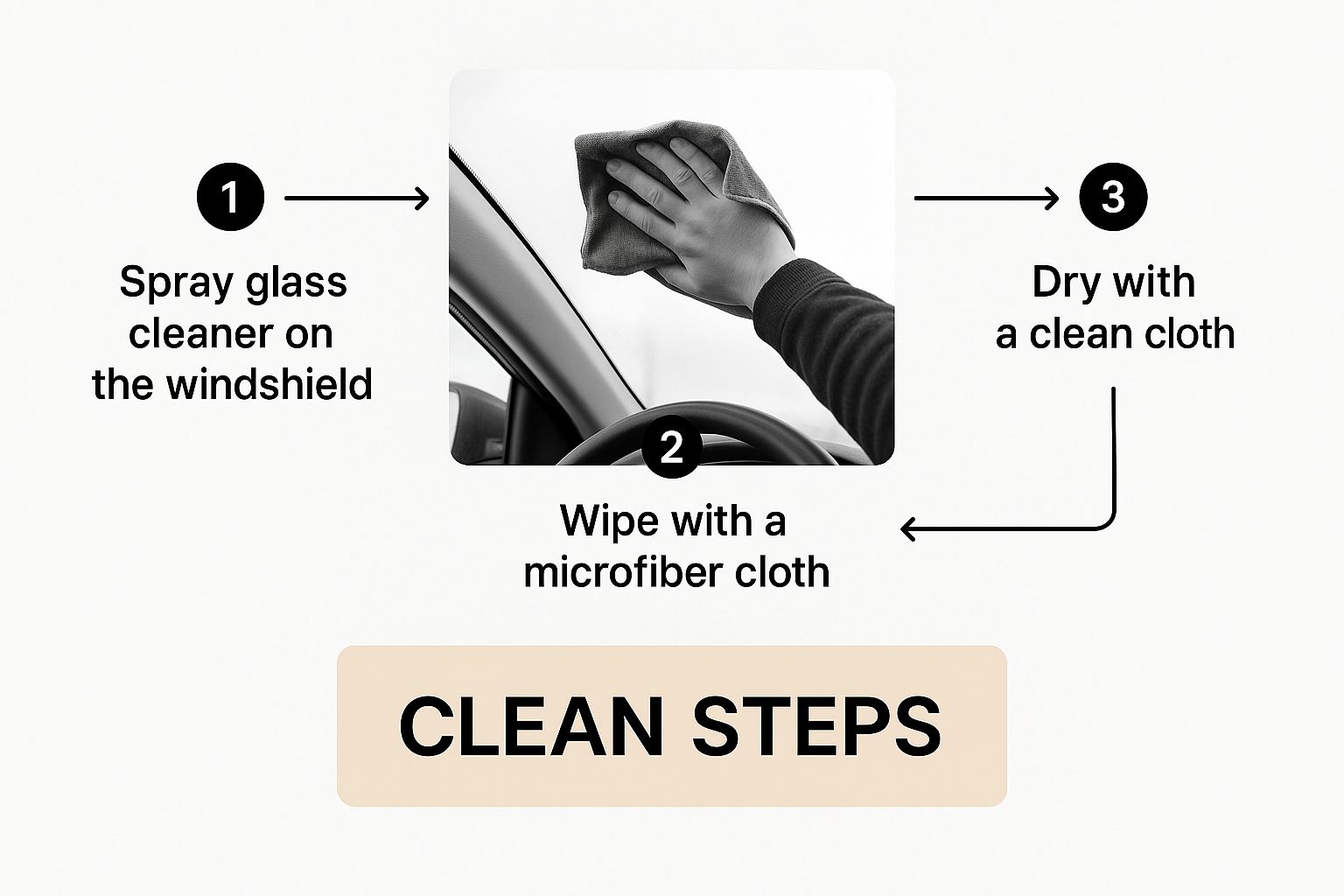
Seeing it laid out like this really helps drive home how each step flows into the next for that perfect, streak-free shine.
The Final Touch: Wiper Blades
So many people nail the glass cleaning but forget one crucial part: the wiper blades. If your wipers are dirty, the very first time you use them, they'll just drag a fresh layer of grime across your beautifully cleaned windshield. It's heartbreaking.
Pro Tip: Take a clean cloth, dampen it with a bit of rubbing alcohol, and just run it down the rubber edge of each blade. You'll probably be shocked by the amount of black gunk that comes off.
This small step makes all the difference in keeping your view clear for longer. Of course, perfect cleaning can't fix physical damage. If you've got chips or cracks in your line of sight, that's more than a cleaning issue—it's a safety hazard. Your best bet is to look into a professional windshield repair to get it sorted out properly.
Tackling That Stubborn Interior Film
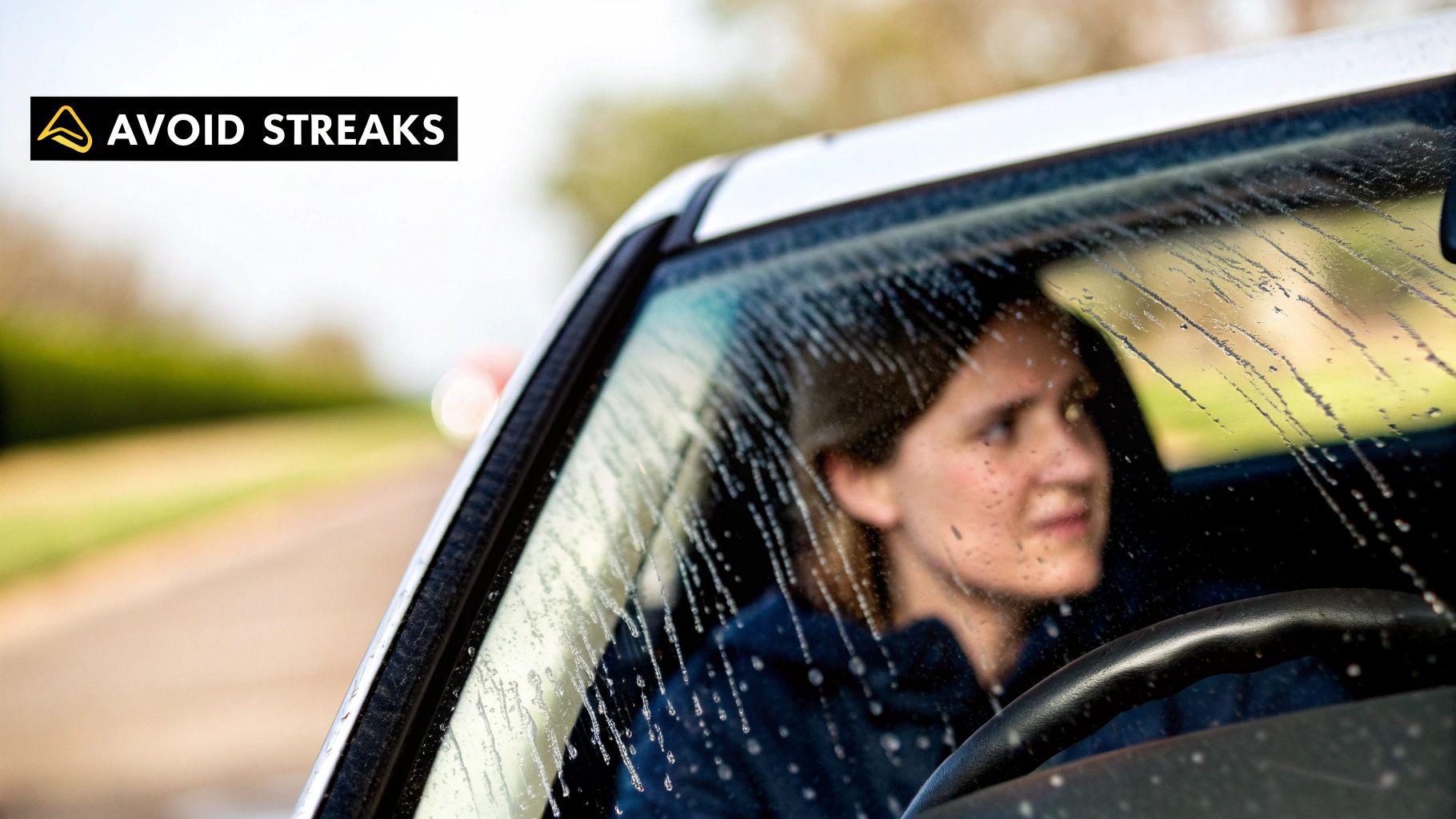
Let's face it, the inside of the windshield is usually the real beast. A stubborn, greasy film seems to materialize from thin air, creating a blinding glare the second sunlight or headlights hit it. What you're seeing is the result of off-gassing—a process where the vinyl and plastics in your dashboard slowly release chemicals that settle on the glass, mixing with dust and moisture.
Getting this gunk off without making a bigger mess on your dash requires a specific game plan.
Getting the Right Angle
First things first, get yourself into a better position. Trying to clean the windshield from the driver's seat is a frustrating exercise in wrestling with the steering wheel. Hop over to the passenger side. You’ll have way more leverage and a much clearer shot at the entire surface, especially those tricky corners.
Here’s the golden rule for interior glass: spray the cleaner onto your microfiber towel, never directly onto the windshield. This one small change prevents overspray from dripping down and potentially damaging the electronics or finish on your dashboard. A light spritz on the cloth is plenty.
This emphasis on doing the job right is a big deal for drivers. The market for quality windshield cleaners was already valued at $1.8 billion in 2023 and is expected to climb to nearly $2.9 billion by 2032. It just goes to show how much people care about safe, clear visibility. You can see the full breakdown in this detailed windshield cleaner industry report.
The Secret to a Streak-Free Finish
With your lightly dampened towel, wipe the glass using firm, overlapping circular motions. This technique is much better at breaking down and lifting that oily film than just swiping back and forth.
Don't let it air dry. As soon as you've wiped down the whole surface, grab your second, perfectly clean and dry microfiber towel. Immediately buff the glass until every bit of moisture and haze is gone. This final buff is what gives you that invisible, crystal-clear result.
Pro Tip: For that awkward spot where the glass meets the dashboard, try this trick. Use the back of your hand to press the towel firmly into the crevice. It gives you just the right pressure to clean every last inch for a truly professional look.
Getting It Right: Pro Tips and Common Pitfalls
Knowing the right way to clean your windshield is only half the battle. The real trick is knowing what not to do. I’ve seen countless people with the best products end up with a streaky mess because of a few simple, avoidable mistakes.
One of the biggest culprits? Cleaning your car in direct sunlight. It feels like a great idea on a beautiful day, but the sun’s heat causes your glass cleaner to evaporate almost instantly. This leaves behind a sticky residue before you even have a chance to wipe it off, creating the very streaks you’re trying to prevent. Always find some shade or wait for a cooler part of the day.
Another mistake I see all the time is using a dirty towel. If you grab a microfiber cloth that’s already caked with grime, you’re not cleaning anything—you’re just spreading old dirt around. Always, and I mean always, start with fresh, clean towels. You’ll need at least two: one for cleaning and one for the final buff.
Fine-Tuning Your Technique
Sometimes, a standard wash just won't cut it, especially when you're dealing with stubborn stuff like tree sap or that nasty, oily road film on the exterior. This is where a clay bar becomes your secret weapon.
After you've washed the car but before you apply glass cleaner, gently glide a lubricated clay bar across the windshield. You’ll literally feel the surface change from gritty to glass-smooth as the clay pulls out all those tiny, embedded contaminants.
Pro Tip: If you're mixing your own cleaning solution, distilled water is a must. Tap water is full of minerals, and once it dries, it leaves behind those frustrating white spots and film. Using distilled water completely avoids this problem.
Finally, don't neglect your wiper blades! They accumulate a surprising amount of gunk. A quick wipe-down with a cloth dampened with a little rubbing alcohol will do the trick. Cleaning them prevents that old grime from being smeared right back across your perfectly clear windshield the first time you use them.
These little details are what make the difference between a so-so job and a professional-quality finish. It's this pursuit of a flawless result that has pushed the industry forward, leading to better ammonia-free and quick-drying formulas. You can dig deeper into the trends driving the glass cleaner market on kbvresearch.com.
Tackling Your Toughest Windshield Cleaning Questions
Even when you follow all the right steps, a few nagging issues can still pop up. Getting to the root of these common problems is the final step to achieving that flawless, invisible-glass look. Let's dig into the questions I hear most often.
Can I Use Windex on My Car Windshield?
I know it's tempting to reach for that blue bottle under the sink, but please don't. The vast majority of household glass cleaners, including Windex, are formulated with ammonia.
While ammonia works fine on your home windows, it’s a real menace to your car’s interior. It can make window tint bubble up and peel over time. It also has a nasty habit of drying out and damaging the rubber seals and plastic trim that frame your windshield.
Your best bet is to always use a dedicated, ammonia-free automotive glass cleaner. It’s designed specifically for these materials and won't cause any long-term harm.
Why Do I Still Get Streaks With Microfiber Towels?
This is easily the most common frustration I hear about. You bought the right towels, you’re using the right cleaner... so what gives? It almost always boils down to one of three things:
Your towels are contaminated. Fabric softener is the number one enemy of microfiber. It leaves a coating that clogs the tiny fibers, killing their absorbency and leaving a greasy film on the glass. Always wash your auto towels by themselves, with no softeners.
You're using way too much cleaner. More is not better here. All you need is a light mist. When you soak the glass, it’s nearly impossible to wipe it all away before it starts to evaporate, and that residue is what causes streaks.
Your "dry" towel isn't actually dry. The final buffing towel needs to be bone dry. If it's even a little damp from a previous window, it can't pick up the last bit of moisture. It just pushes it around, creating a streaky mess.
I always tell people that the secret to a streak-free windshield is as much about what you don't do. Resisting the urge to overspray cleaner and grabbing a truly fresh, dry towel for that final buff are game-changers.
How Often Should I Clean My Windshield?
For safety and just plain better driving, aim to clean the outside of your windshield about once a week, or anytime it gets caked with bugs, dirt, and road grime.
The inside doesn’t need it as often—every two to four weeks is usually plenty. The key is to stay ahead of that hazy film that builds up from off-gassing vinyl and your own breath. Cleaning it regularly keeps that film thin and easy to wipe away, making the job much faster each time.
At Auto Renu Auto Glass LLC, we know a clear view is non-negotiable for safe driving. If you're dealing with damage that cleaning can't fix, like a stubborn chip or a spreading crack, don't put it off. Visit us online to get a free estimate for fast, professional auto glass repair or replacement.