On Site Car Window Replacement The Complete Guide
Discover the convenience of on site car window replacement. Our guide explains the process, costs, and what to expect from mobile auto glass repair.
Oct 2, 2025
generated
on site car window replacement, mobile auto glass repair, car window replacement, automotive glass, windshield repair
Imagine your car window is suddenly shattered. Your first thought probably isn't, "Great, now I have to figure out how to drive this to a shop." On site car window replacement completely changes the game by bringing the repair shop directly to you. A certified technician shows up wherever you are—at home, at the office, you name it—and handles the entire replacement on the spot.
It’s the perfect blend of professional-grade work and ultimate convenience, getting you back on the road safely without derailing your entire day.
Why Choose On Site Car Window Replacement?
Let's paint a familiar picture: you're heading out for the day and discover a spiderweb of cracks across your windshield or a completely shattered side window. The old-school solution involved a whole song and dance—carefully driving a damaged, unsafe car to a repair shop, killing hours in a waiting room, and basically writing off a huge chunk of your day.
On site car window replacement flips that entire frustrating experience on its head. Instead of you working around the repair, the repair works around you. This modern approach delivers a few key benefits that make it the go-to choice for most drivers today.
The Core Advantages of Mobile Service
The biggest win here is unmatched convenience. Seriously. A mobile technician can meet you in your driveway while you're on a work call or in the company parking lot while you're in a meeting. This incredible flexibility means no more lost work hours or wasted personal time sitting in a sterile lobby.
Then there's the safety aspect, which you can't overstate. Driving with a badly damaged window isn't just uncomfortable; it's genuinely dangerous. A compromised windshield can affect your vehicle's structural integrity in a crash, and a shattered side window leaves you exposed. A mobile service completely removes that risk by letting your car stay put until it's 100% fixed and safe.
Finally, you can't beat the speed. Most on-site jobs are wrapped up in about an hour. What used to be a day-long ordeal becomes a minor, manageable blip on your radar.
Think of it like this: an on site car window replacement is the difference between ordering pizza delivery and having to go to the restaurant, place your order, wait for it to cook, and then drive it home yourself. Both get you pizza, but one fits seamlessly into your life.
On Site vs In-Shop Replacement At a Glance
So, how does coming to you really stack up against going to them? Here's a quick breakdown that highlights the key differences.
Feature | On Site Replacement | In-Shop Replacement |
|---|---|---|
Location | Comes to your home, work, etc. | You must drive to their location. |
Convenience | Maximum. No disruption to your day. | Low. Requires travel and waiting. |
Safety | High. Avoids driving a damaged car. | Lower. Requires driving an unsafe vehicle. |
Time | 1-2 hours on average. | 2-4 hours or more (including travel). |
Cost | Often the same, no extra mobile fee. | Standard industry pricing. |
Quality | Identical professional-grade materials. | Professional-grade materials. |
While a shop has its place, it's clear that for most everyday situations, the on-site model offers a smarter, more efficient path to getting your car fixed.
Quality and Expertise Delivered to Your Doorstep
One of the first questions people ask is, "Is the quality as good as a brick-and-mortar shop?" It’s a fair question, but the answer is a resounding yes.
Any reputable mobile service uses the exact same high-quality materials you'd find in a top-tier shop, including OEM (Original Equipment Manufacturer) or OEE (Original Equipment Equivalent) glass and industry-leading adhesives. Their technicians are certified professionals who bring a fully equipped workshop right in their van.
They follow the same strict installation standards to ensure a perfect, factory-quality seal. You're not getting a shortcut; you're getting a more intelligent, customer-first service model that delivers identical results without the hassle.
Understanding The Mobile Replacement Process
Ever wondered what really happens when the mobile glass van pulls up? It’s not just about swapping out a piece of glass. The on site car window replacement process is a well-oiled machine, combining technical skill and precision to get you safely back on the road.
Let's pull back the curtain and walk through the entire process, from the moment the technician arrives to when they hand you back the keys. Knowing what’s involved will help you appreciate the craftsmanship that goes into a safe, professional job.
The Initial Assessment and Vehicle Prep
First things first, a good technician doesn't just start ripping out the old glass. They begin with a thorough prep phase—this is the foundation for a flawless replacement.
Confirming the Glass: The tech will double-check that the new glass is an exact match for your car's make, model, and year. They’ll look for any special features like rain sensors, heating elements, or specific tints. The right glass is non-negotiable.
Protecting Your Vehicle: Next, they’ll lay down protective coverings on your hood, dashboard, and seats. This is a crucial step to prevent any stray adhesive or tools from scratching your paint or damaging the interior.
Assessing the Damage: A final look at the broken window helps the technician map out the best removal strategy, ensuring the vehicle’s frame isn't damaged in the process.
This initial stage is all about attention to detail. It's a clear sign you’re dealing with a professional who respects your vehicle.
Safe Removal of the Damaged Glass
With the car prepped and protected, it's time to carefully remove the compromised window. This isn't a job for brute force. It's a delicate operation requiring specialized tools to slice through the tough urethane adhesive holding the glass in place.
The technician will meticulously cut around the window's edge, freeing it from the vehicle’s frame, known as the pinch weld. They take extreme care not to scratch the paint here. If it's a shattered side window, the job involves removing the interior door panel to get inside and vacuum out every last shard of glass.
A clean removal is paramount. Any leftover adhesive or glass fragments on the pinch weld can ruin the new seal, leading to frustrating leaks, wind noise, or even a total installation failure later on.
Preparing the Frame for a Perfect Bond
Once the old glass is out, the most critical part of the job begins: preparing the frame. The technician thoroughly cleans the pinch weld, scraping away every bit of the old urethane. This creates a perfectly clean, smooth surface for the new adhesive to grip.
Next, a special primer is applied directly to the pinch weld. This isn't just paint; it serves two vital roles. It prevents rust from forming on any exposed metal and acts as a chemical promoter, helping the new urethane form an unbreakable, factory-strong bond. This is the bedrock of a safe and secure on site car window replacement. To see just how critical this step is for your car's front glass, you can learn more about professional windshield replacement and its safety standards.
This quick visual breaks down the key stages of the process.
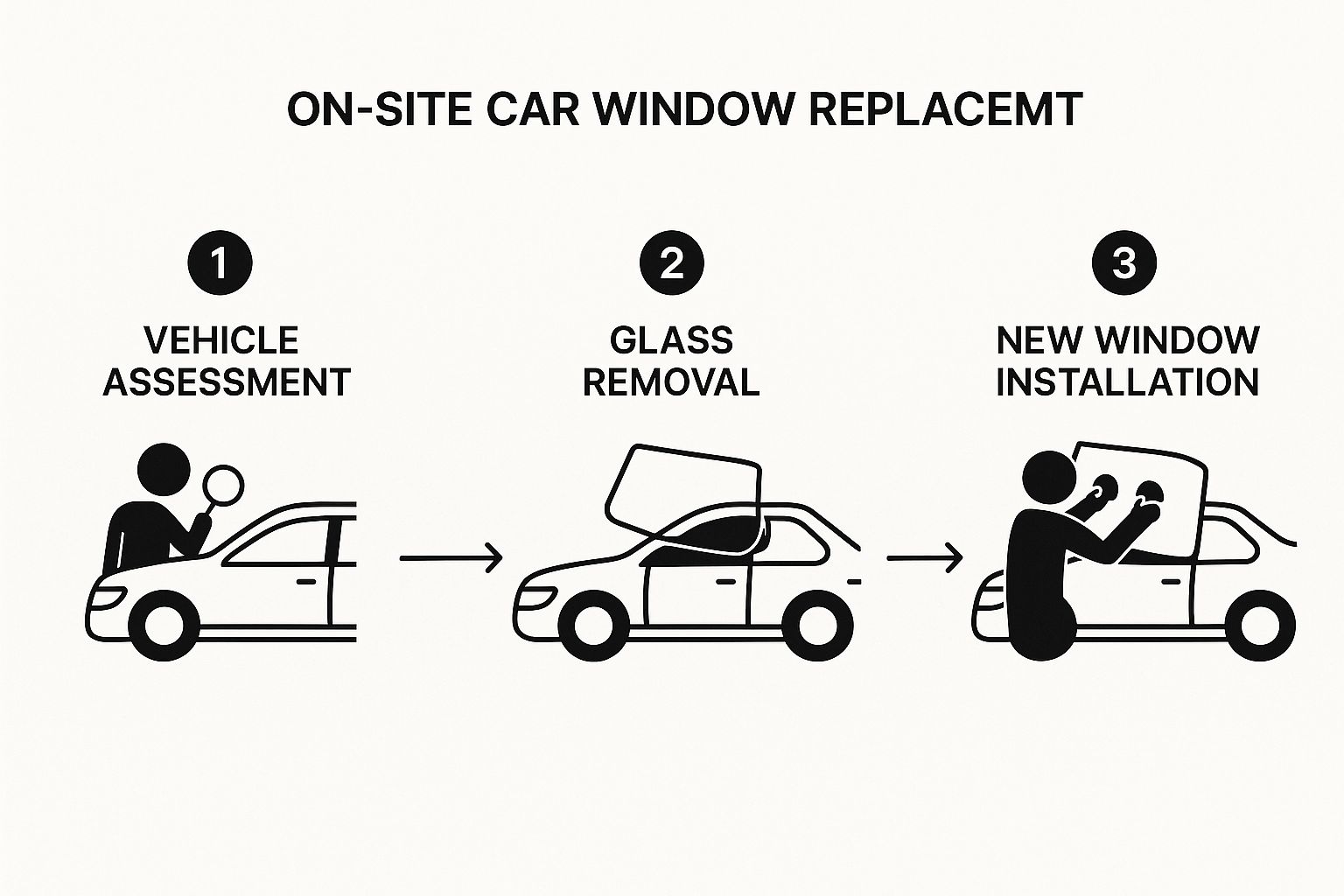
As you can see, it’s a logical flow. Each step is built on the one before it, all aiming for a perfect, safe result.
Meticulous Installation of the New Window
Now for the main event. A new, thick bead of high-quality urethane adhesive is skillfully applied to the primed frame. A seasoned technician lays down a consistent, uniform bead—no gaps, no weak spots.
Using heavy-duty suction cups, the new glass is carefully lowered into position and set perfectly onto the fresh adhesive. Gentle, even pressure is applied to ensure the glass seats correctly for a complete, watertight seal.
Finally, the tech cleans up any excess adhesive and reinstalls any moldings or trim. The result is a seamless fit that looks like it just rolled off the factory line, fully restoring your vehicle's safety and structural integrity.
What Determines Your Replacement Cost
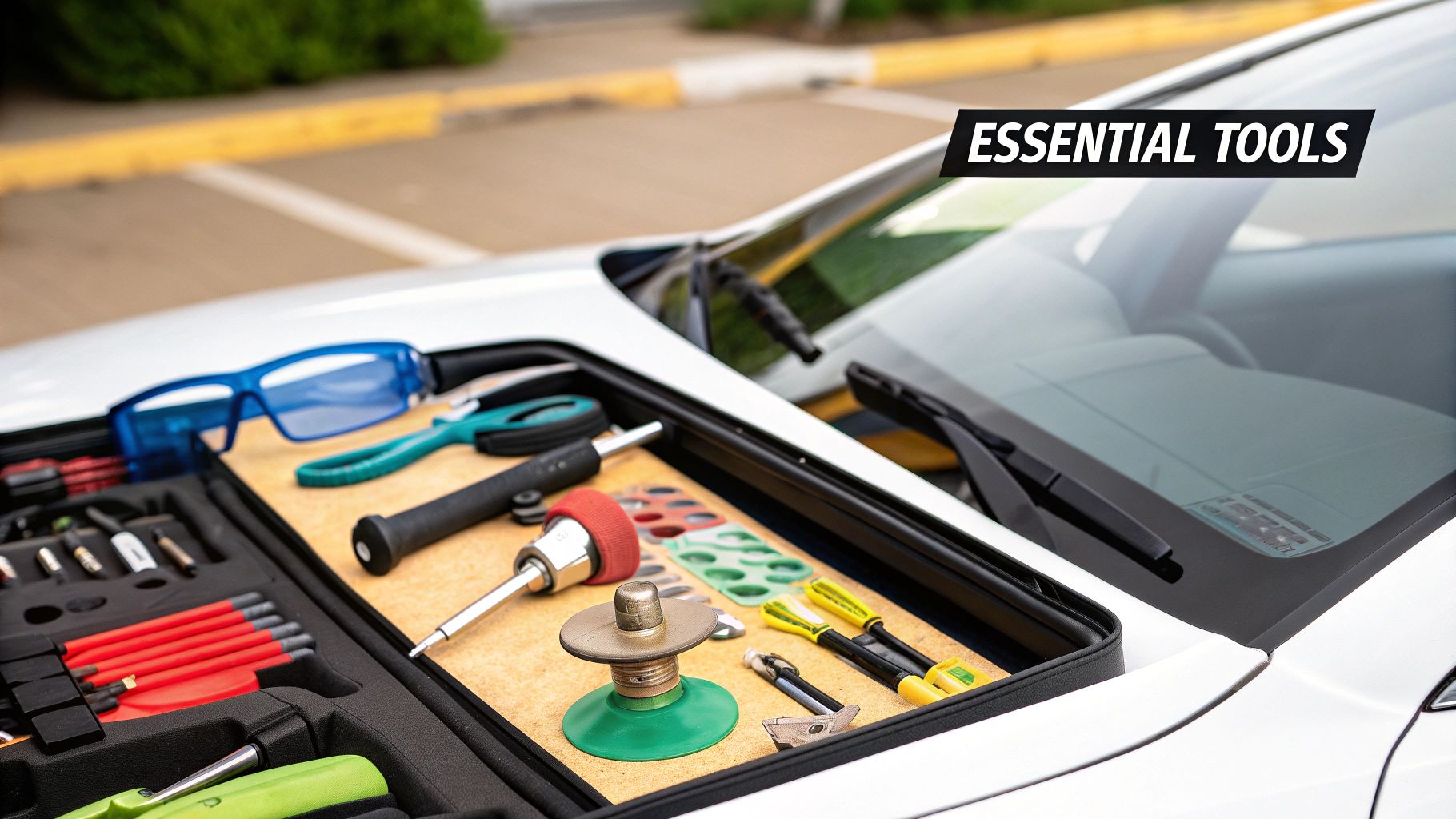
Getting a straight answer on the cost of an on site car window replacement can feel a bit like trying to nail jello to a wall. There's a good reason for that: the price for a new windshield on a Ford F-150 is almost never the same as a side window for a Honda Civic. It's not an arbitrary number pulled out of thin air; the final bill is a direct reflection of your specific vehicle and all the tech packed into it.
Think of it this way: ordering a custom-tailored suit is a different experience—and price point—than buying one off the rack. Both get the job done, but the materials, fit, and features involved are worlds apart. Your car’s glass works the same way.
Glass Type and Vehicle Model
First and foremost, the biggest factors are the kind of glass you need and the car it's going into. A windshield, for instance, is made from laminated safety glass. That’s a sophisticated sandwich of two glass layers with a tough vinyl sheet in the middle, making it far more complex and costly to produce than the tempered glass used for side and rear windows.
Your car’s make and model matter a great deal, too. High-end brands like Mercedes-Benz or BMW often use special acoustic glass to quiet down road noise or feature unique curvatures that are more expensive to manufacture. On the other hand, a popular car like a Toyota Camry will usually have more affordable and readily available glass, simply because there are millions of them on the road.
This complexity is driving major growth in the automotive glass market, which covers on site car window replacement. Valued at roughly $25 billion in 2025, the industry is expected to climb to $36.6 billion by 2032. This surge is largely thanks to all the new tech in vehicles, especially EVs, which often require specialized glass and expert-level installation. You can find more details on the growing automotive glass market at Persistence Market Research.
Advanced Features Embedded in the Glass
These days, a car window is often more of a high-tech hub than a simple piece of glass. If your windshield does more than just keep the wind out of your face, your replacement cost will reflect that. All that integrated technology requires careful handling and makes the glass itself much pricier.
Here are a few common features that bump up the cost:
Rain Sensors: These little gadgets automatically turn on your wipers the second they detect moisture.
Heated Windshields: Look closely, and you might see tiny wires embedded in the glass that rapidly defrost and de-ice the surface.
Heads-Up Displays (HUD): These require special coatings on the glass to properly project information like your speed into your line of sight.
Built-in Antennas: Many cars have their radio, GPS, or other antennas integrated right into the glass panels.
Any of these features mean you're not just getting glass; you're getting a precisely engineered component. It’s a huge leap from the simple glass plates in older vehicles, and it has a direct impact on your quote.
The Critical Cost of ADAS Calibration
This might be the most important—and most frequently overlooked—cost factor in modern window replacement: ADAS (Advanced Driver-Assistance Systems) calibration. If your car has features like lane-keeping assist, adaptive cruise control, or automatic emergency braking, chances are its forward-facing camera is mounted right on the windshield.
When we replace the windshield, that camera has to be detached and then reinstalled. If its position is off by even a single millimeter, the whole system can fail, making your safety features completely unreliable. This isn't an upsell; recalibration is a non-negotiable safety procedure.
The process requires specialized, high-tech equipment to make sure the camera is aligned perfectly and functioning exactly to the manufacturer's specifications. It definitely adds to the final bill, but it's an absolutely essential step to ensure your car's most important safety systems are ready to protect you and your passengers on the road.
How To Navigate Your Insurance Claim
Let's be honest: dealing with insurance after your car window shatters can feel more stressful than the damage itself. But here's some good news. When it comes to an on site car window replacement, the process is usually much less of a headache than you'd expect, especially with a good mobile glass company in your corner. Your policy is likely already set up for this exact kind of thing.
Think of your insurance policy as a toolbox. You've got tools for major collisions, but you also have one specifically for things like this. That tool is your comprehensive coverage, and it acts as a safety net for damage that isn't from a car crash—like a rogue rock on the freeway, a break-in, or storm debris. This part of your policy is designed to get you back on the road without a lot of hassle.
Understanding Your Coverage and Deductible
To make the process go smoothly, you just need to get familiar with two key terms: comprehensive coverage and your deductible. As we just covered, comprehensive is what pays for non-collision damage, and auto glass almost always falls squarely into this bucket.
Your deductible is simply the amount you pay out-of-pocket before your insurance policy steps in to cover the rest. For instance, if the total replacement cost is $750 and your deductible is $250, you'll pay the first $250, and your insurance company will take care of the remaining $500. Some states even mandate "full glass coverage" or "zero deductible" options, so it's always a good idea to double-check your policy.
A good mobile glass technician can usually help you figure out your coverage and deductible before they even start working. That way, you know exactly what to expect and won’t get hit with any surprise bills.
Filing the Claim Step by Step
Kicking off an insurance claim for glass damage is simpler than most people realize. Every policy has its quirks, but the basic steps are pretty much the same everywhere.
Get Your Info Ready: Before you pick up the phone, grab your insurance policy number and your car's basic details (make, model, year, and VIN). It also helps to know the date the damage happened.
Contact Your Insurer (or Let Us Do It): You have two options here. You can call the claims hotline yourself, or you can let your mobile auto glass company do it for you. Many top-tier providers, like Auto Renu, will just start a three-way call with you and your insurer to get everything approved on the spot.
Describe What Happened: You'll need to explain how the damage occurred—was it a rock chip that spread, a falling branch, or something else? This helps the agent process the claim correctly under your comprehensive plan.
Going this route means you spend less time on hold and get a green light for the repair much faster.
Letting Your Glass Provider Handle the Paperwork
Now for the best part of using an experienced mobile service: they handle all the annoying paperwork. Once your claim gets the thumbs-up, a professional on site car window replacement company will bill your insurance provider directly. This is a huge weight off your shoulders.
You don’t have to fork over the full amount and wait weeks for a reimbursement check to show up. The shop takes care of the invoicing and communication with the insurer. All you're responsible for is your deductible (if you have one). This direct billing model is the industry standard for a reason—it makes the whole experience seamless and efficient for you.
Preparing Your Car for the Technician
A great on-site window replacement is a team effort. Your technician brings the tools and the know-how, but you play a key role in making sure the job goes off without a hitch. Think of it as prepping a worksite—a few minutes of your time can make the whole process faster, safer, and more efficient.
By clearing the way, you allow the technician to focus on what they do best: giving you a perfect, factory-quality installation. It’s a simple step that pays off big time.
Choose the Right Location
The "on-site" part of the service is all about convenience, but where the work happens really matters. The technician needs a good amount of space to move around and do their job properly.
Here’s what makes for a perfect spot:
Plenty of Room: The tech will need to open your car doors all the way without bumping into anything. A driveway, a spacious parking spot, or even a quiet street usually works great.
A Flat Surface: Parking on level ground is non-negotiable. It ensures the new glass sits perfectly flush in its frame, which is crucial for a watertight and secure seal.
Cover from the Elements: This one is a bonus, but a great one. A garage or carport is ideal, especially if it's raining or blazing hot. A controlled environment helps the adhesive cure just right.
A Simple Checklist Before Arrival
Once you've picked a good spot, there are just a couple more things you can do. These quick steps make a huge difference and let the technician get right to work.
Think of the work area like a surgeon’s operating table. Keeping it clear of personal items protects your stuff and removes any obstacles, allowing the technician to focus entirely on the delicate repair work.
Here’s what you can do in just a few minutes:
Clear Out the Car: Grab any valuables, loose change, papers, or other items from the dashboard, seats, and floor. This is especially important around the window being replaced. It keeps your things clean and gives the tech a clear space to work in.
Make Sure It's Unlocked: The technician needs to get inside your car to protect the interior during the replacement. For a side window, they'll also have to remove the interior door panel. Just leave it unlocked or have your keys handy.
Have Your Info Ready: It’s a good idea to have your insurance card or claim number nearby. Most of this is handled beforehand, but having it on hand can clear up any last-minute questions in seconds.
Ticking off these simple boxes helps ensure your on-site car window replacement is a smooth, professional experience that gets you safely back on the road with no fuss.
What To Do After The Replacement Is Finished
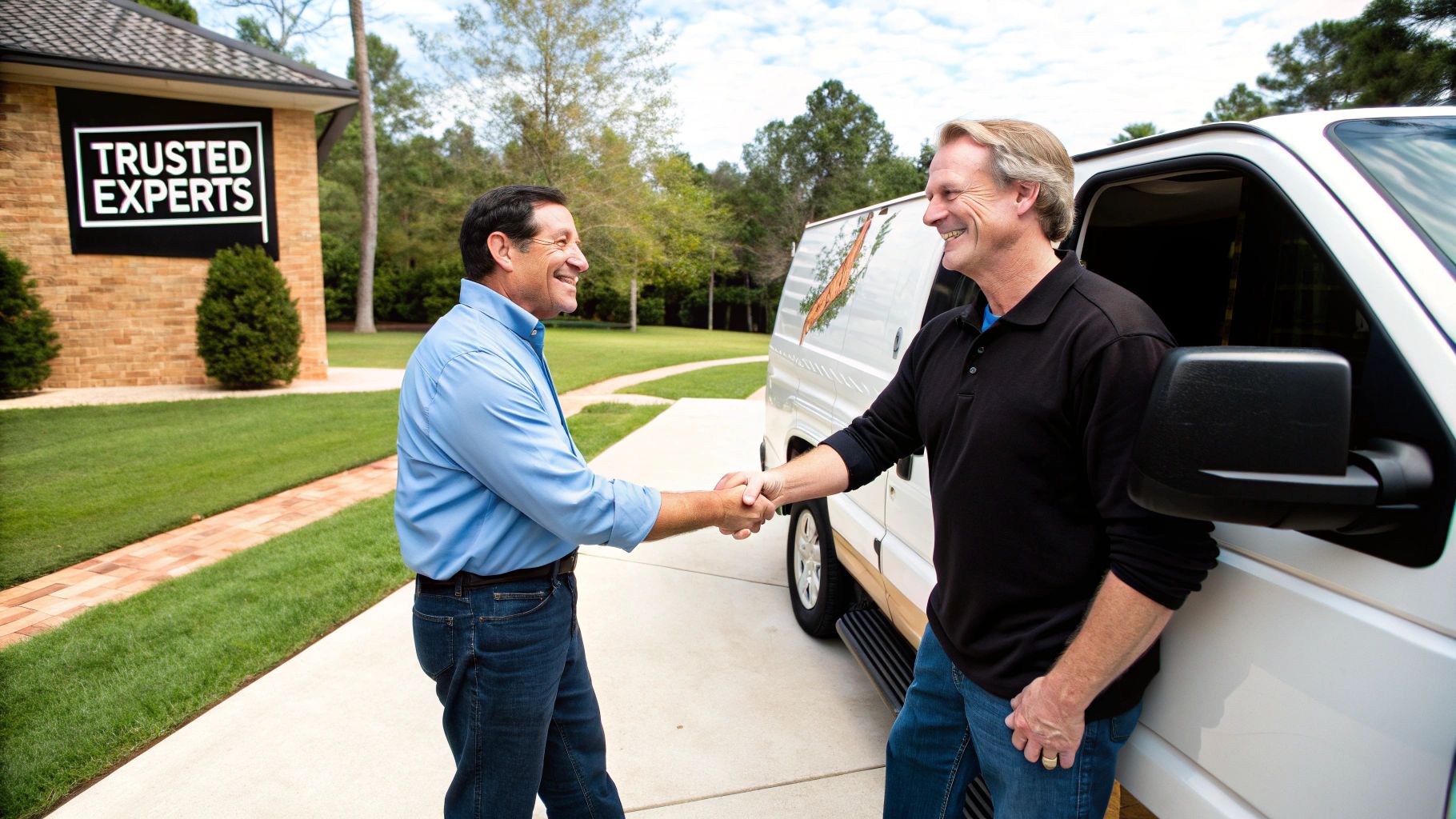
The technician has packed up, your car looks great again, and the van is pulling away. It feels like the job is done, but the on site car window replacement process isn't quite finished. Those next 24 to 48 hours are absolutely crucial. This is the curing period, where the powerful adhesive sets and creates the permanent, watertight bond that keeps your window secure.
Think of that urethane adhesive like freshly poured concrete. It might look solid on the surface, but it's still hardening underneath. How you treat your car during this window directly impacts the long-term safety and durability of the installation. A few simple precautions ensure that "foundation" sets perfectly.
The Dos and Don'ts For The First 48 Hours
Your technician probably left a few strips of retention tape along the edges of the new glass. It might not look pretty, but it's doing an important job. The tape acts like a temporary clamp, holding the window perfectly in place while the adhesive cures. Leave it on for at least 24 hours before you carefully peel it off.
Here are a few more critical rules of thumb to protect your new glass:
Don't Slam the Doors: This is the big one. Slamming a door creates a sudden burst of air pressure inside your car. This pressure pushes outwards on the fresh seal and can easily break the bond. Be gentle with your doors for a day or two.
Avoid High-Pressure Car Washes: Those powerful water jets at an automatic car wash are the enemy of a fresh seal. They can blast water into the still-curing urethane, which is a surefire way to cause a leak down the road. Wait at least 48 hours. If you must wash your car, do it gently by hand.
Leave a Window Cracked: It helps to leave a different window cracked open just an inch. This simple trick equalizes the air pressure between the inside and outside of the car, reducing stress on the new seal, especially on a hot, sunny day.
Inspecting The Final Workmanship
Once the curing period is over, give the installation a good look. A professional job should be seamless. The glass itself should be crystal clear with no distortions. Check the black molding around the edge—it should be smooth and even, with no gaps or globs of excess adhesive.
Next, it’s time for a test drive. Turn the radio off and listen. Do you hear any whistling or new wind noise at higher speeds? That’s a tell-tale sign of a small gap in the seal. A quality installation should be just as quiet as the original factory glass.
A workmanship warranty is your long-term safety net. Reputable installers stand behind their work, offering guarantees against leaks, wind noise, or defects in the installation. This gives you peace of mind that your investment is protected.
Finally, remember that if your car has modern safety features, aftercare is only part of the equation. Any cameras attached to your windshield must be recalibrated to function correctly after a replacement. You can learn more about this critical step in our guide to ADAS windshield calibration. Following these tips ensures your new window will serve you well for years to come.
Your Top Questions About On-Site Replacement, Answered
Even when you know the basics, it's normal to have a few more questions before you schedule an on-site window replacement. After all, you’re inviting a professional to work on your car at your home or office, and you want to be sure you know exactly what to expect. Let's tackle some of the most common things people ask.
One of the first questions is always about time. How long will this actually take? The great news is that mobile service is designed for speed and convenience.
A typical side window job is surprisingly quick—often done in as little as 45 minutes. A more involved windshield replacement usually takes about 60 to 90 minutes. This efficiency means you can get back to your life without a huge interruption.
That quick turnaround is one of the biggest draws of choosing a mobile technician over driving to a traditional shop.
Is a Mobile Replacement as Good as an In-Shop Job?
This is the big one, and probably the most important question we get. The answer is a resounding yes. A professional mobile auto glass service isn't about cutting corners; it's about bringing the entire workshop to your doorstep.
Our certified technicians use the exact same high-quality materials you'd find at a top-tier physical shop. We're talking OEM (Original Equipment Manufacturer) or OEE (Original Equipment Equivalent) glass and the strongest industrial-grade adhesives. The van is essentially a rolling workshop, stocked with all the specialized tools needed to do the job right. You get the same expertise and materials, just without the hassle of rearranging your day.
Of course, a full replacement is for significant damage. For smaller chips or cracks, you might have other options. You can dive deeper into the differences in our guide to professional windshield repair.
Can the Technician Work in Bad Weather?
Life happens, rain or shine. A professional mobile glass service is built to adapt. Our technicians are well-prepared to handle less-than-perfect weather to make sure the installation quality is never compromised.
If it's raining, they can often work under a portable awning or inside your garage or carport. The key is to keep the vehicle's frame and the new adhesive bond completely dry. In very cold weather, we use special fast-curing adhesives designed to bond securely even in lower temperatures. These pro-grade materials and smart techniques ensure the seal on your new window is just as strong and weatherproof, no matter what the sky looks like. The technician always assesses the conditions on-site to guarantee a safe, effective, and lasting replacement.
Ready for a hassle-free solution to your broken car window? Let Auto Renu Auto Glass LLC bring the expertise directly to you. Request your free, no-obligation estimate today!