A Guide to Windshield Replacement at Home
Discover how windshield replacement at home works. This guide covers scheduling, preparation, and what to expect from a mobile auto glass service.
Oct 3, 2025
generated
windshield replacement at home, mobile auto glass, windshield repair, at home auto service, car glass replacement
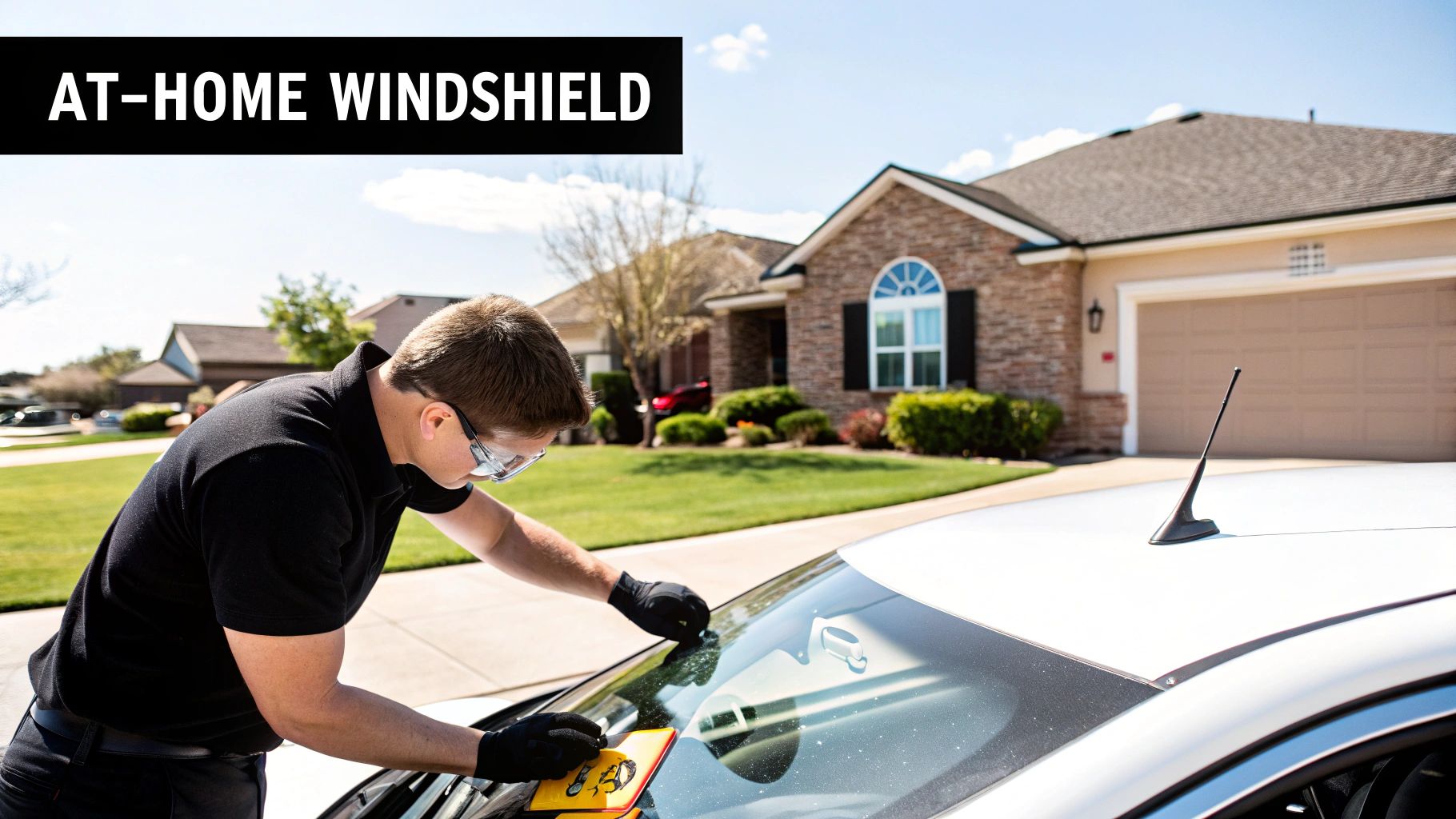
When you opt for a windshield replacement at home, a certified technician comes right to your location—be it your driveway, your office parking lot, or wherever is most convenient. This mobile approach completely cuts out the trip to a repair shop, saving you a ton of time and hassle without compromising on the professional quality you'd get at a traditional garage.
The Real Benefits of Mobile Windshield Replacement
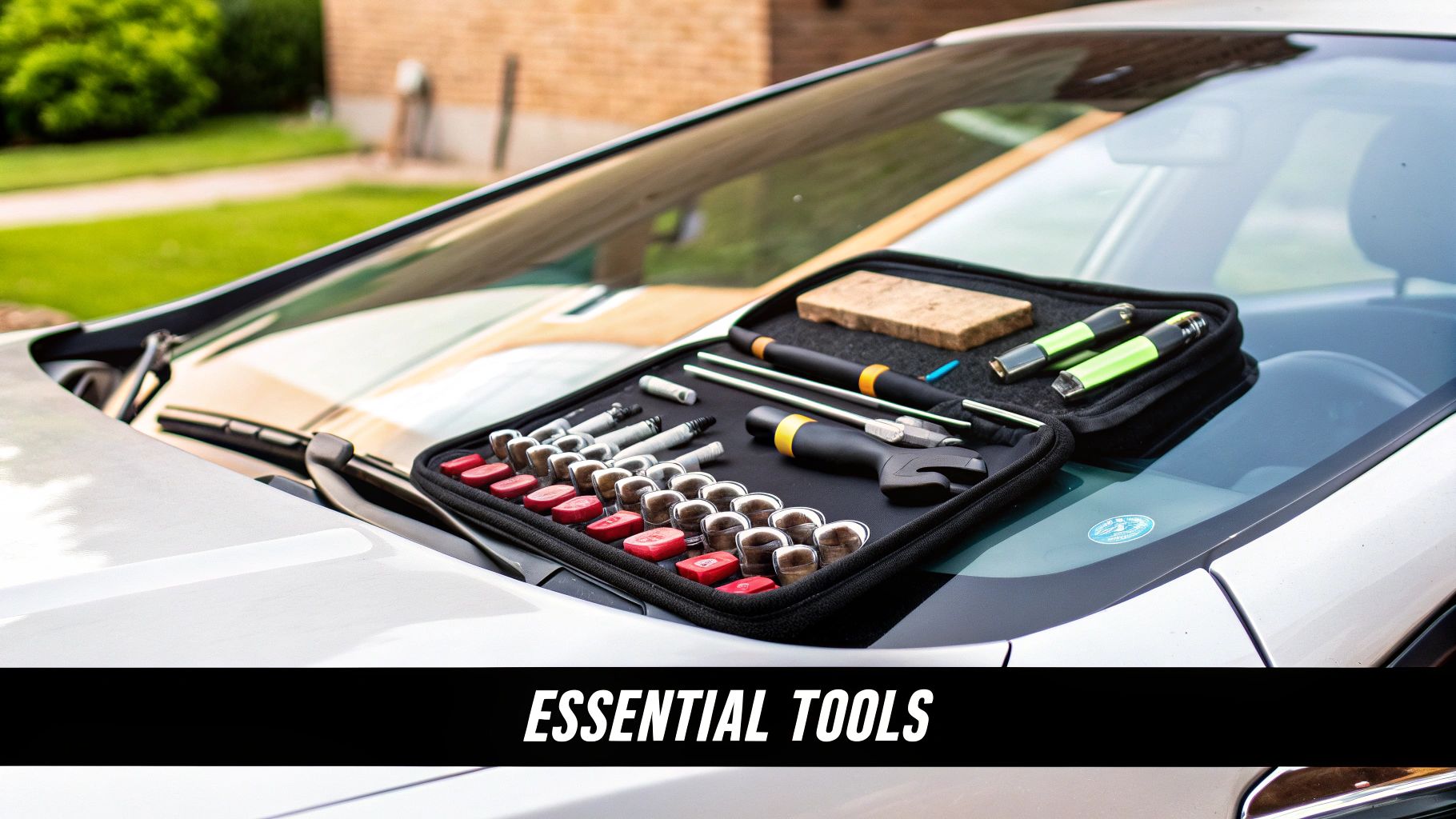
Choosing a mobile service is really about reclaiming your day. Instead of carving out a few hours to drive to a shop, drop off your car, and wait around (or arrange for a ride), the repair happens on your turf. You can keep working from home, take care of things around the house, or just relax while the pros handle the installation.
The auto glass industry has definitely shifted to meet this demand for convenience. The auto windshield repair service market in the United States was valued at around $8.2 billion in 2024, and mobile services are a huge part of that growth. This isn't just a niche offering anymore; it's what people expect. You can read more about the auto glass market trends and see for yourself why mobile service is becoming the new standard.
Beyond Simple Convenience
Sure, saving a trip to the shop is a massive plus, but the advantages of an at-home replacement go deeper than that. A mobile service brings several key benefits to the table, making it a genuinely smart and safe choice.
You Don't Have to Drive an Unsafe Vehicle: A cracked or shattered windshield compromises your car's structural integrity. Mobile service means you avoid driving a vehicle that isn't safe.
A Better Curing Environment: Your driveway or garage is a controlled space. This allows the powerful adhesive used to set the new windshield to cure properly, away from the immediate vibrations and stress of road travel.
More Personalized Attention: It’s just you and the technician. They can walk you through the process, show you the materials they're using, and answer your questions without the noise and distractions of a busy service bay.
To break it down even further, here's a quick comparison of what you can expect from each service model.
Mobile vs. In-Shop: A Quick Comparison
While both options get the job done, they offer very different experiences. The right choice often comes down to your personal schedule, comfort level, and priorities.
Feature | At-Home Service | In-Shop Service |
|---|---|---|
Convenience | High. Technician comes to your location. | Low. Requires travel and waiting. |
Scheduling | Flexible. Fits into your daily routine. | Rigid. Based on shop's availability. |
Time Commitment | Minimal. Just hand over the keys. | Significant. Driving, waiting, and return. |
Quality & Materials | Identical. Uses OEM-grade glass and adhesive. | Identical. Same professional standards. |
Cost | Often the same. Covered by insurance. | Often the same. Covered by insurance. |
Ultimately, both paths lead to a professionally installed windshield. The real difference is how much of your own time and energy you have to spend to get there.
The biggest misconception is that mobile service is a lesser-quality option. The truth is, certified mobile technicians use the exact same OEM-grade glass and industrial adhesives as their in-shop counterparts. The tools, the training, and the safety standards are identical.
At the end of the day, a windshield replacement at home delivers professional, reliable results right in your driveway. You're getting the same top-tier installation and peace of mind, just without all the logistical headaches. For most busy car owners today, it’s simply the smarter way to go.
Finding the Right Mobile Technician for the Job
When your windshield needs replacing, finding a technician you can trust to come to your home is half the battle. There’s no shortage of options out there, from big national brands to the local one-van shop. The trick is sifting through them to find a real pro. Convenience is great, but it can’t come at the expense of safety and quality.
The explosion in at-home services is a direct result of the booming auto glass market, and you can even explore the growth of the mobile auto glass market to see just how popular this option has become.
Your focus should be on finding a technician who is certified, insured, and has a solid track record. Look for companies that openly advertise their technicians' certifications. A big one to watch for is the Auto Glass Replacement Safety Standard (AGRSS). This isn't just a fancy badge; it means they're committed to following industry-best practices for a safe, secure installation.
Next, do a little digging into their reputation. Read recent online reviews, but look past the star rating. You're searching for patterns. Do customers consistently mention that the tech was on time, professional, and did clean work? That’s a good sign. Also, make sure the company has full liability insurance. It’s a crucial safety net that protects your vehicle while it's being worked on. If you're in the Bay Area, you can find our certified pros at any of our Auto Renu service locations.
How to Get an Accurate Quote
To avoid the frustration of a surprise bill, you'll want to have a few key details about your car handy before you even pick up the phone. This helps the company give you a precise quote right from the start.
Your Vehicle's Basics: The year, make, and model.
The VIN: Grab your Vehicle Identification Number. It's usually on a little plate on the driver's side of the dashboard, visible through the windshield.
Windshield Features: This is a big one. Let them know about any technology attached to the glass, like rain sensors, lane-departure cameras, or heads-up display projectors.
A good quote isn't just a number. It should break down the costs for the glass, the labor, and any recalibration needed for your safety systems. Always ask what isn't included to avoid any misunderstandings.
Speaking of safety systems, make sure you ask if the quote includes the recalibration of your Advanced Driver-Assistance Systems (ADAS). On almost any modern car, this is an absolutely essential step. A new windshield can throw off the alignment of critical cameras and sensors, and recalibration ensures they work exactly as they should to keep you safe.
Getting Ready for Your At-Home Appointment
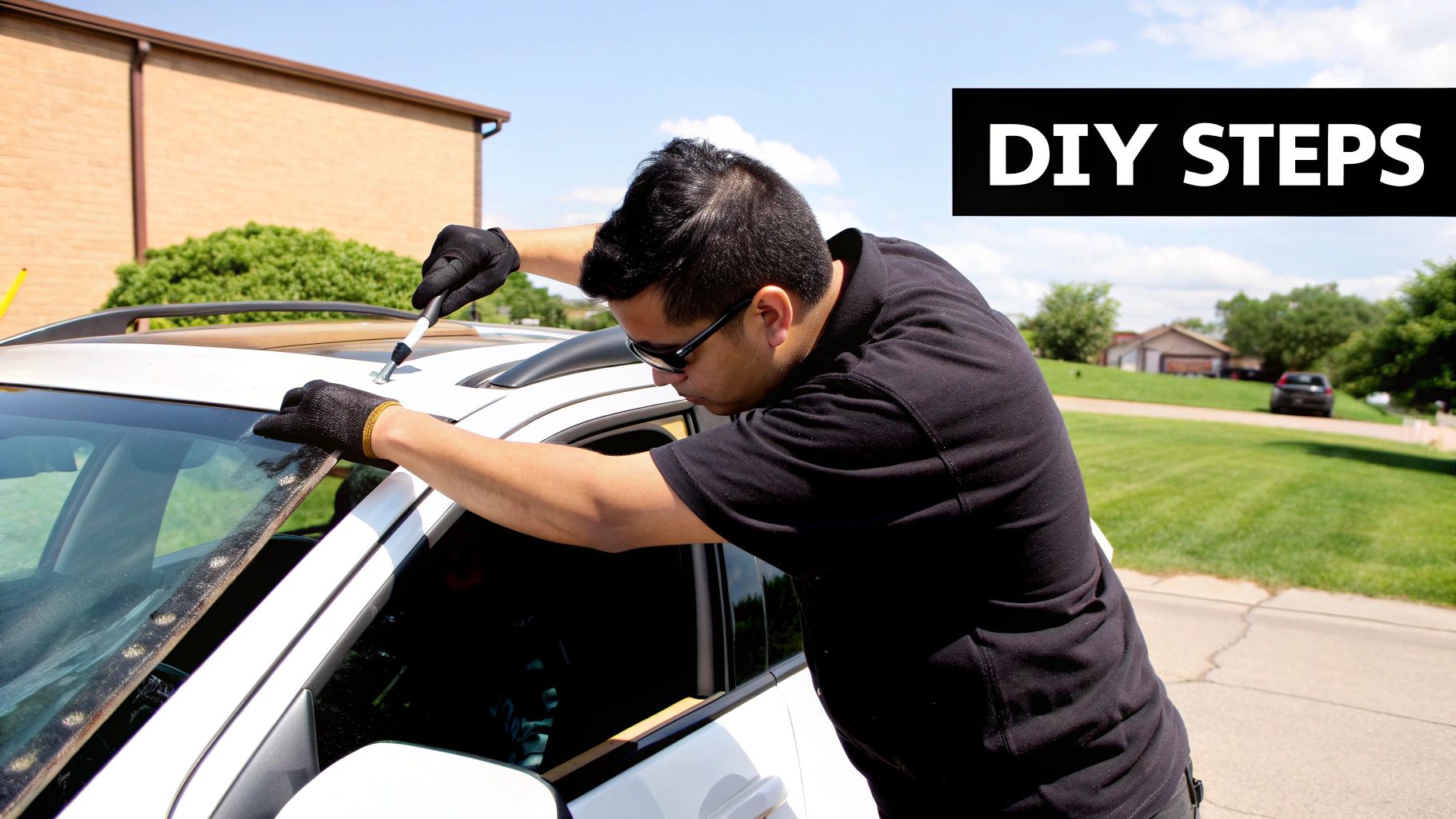
A bit of prep work on your part can make a world of difference for your mobile windshield replacement. When you take a few minutes to get your car ready, you’re helping the technician do their best work quickly and efficiently. These small steps ensure the new adhesive cures perfectly, giving you a secure, long-lasting installation.
First up, clear out the area around the windshield, both inside and out. Pop off any phone mounts, dash cams, or anything else sitting on your dashboard. You'll also want to carefully remove any parking permits or toll tags from the old glass so you can reattach them later.
Next, think about where the technician will be working. They need plenty of room to open the car doors and manage their tools. Parking on a flat, level surface is also crucial, as it helps the new glass settle into the frame just right.
Creating the Ideal Workspace
Giving the technician a good environment to work in is key to a flawless result. Think of it as setting the stage for a successful repair.
Make Some Room: The technician will need about three to four feet of clear space around the entire car, especially around the front doors and hood.
Find a Flat Spot: A level driveway or a flat section of the street is ideal. This prevents the new windshield from shifting while the adhesive cures.
Keep It Clear: For safety's sake, it’s best to keep kids and pets inside and away from the work area while the technician is there.
Weather is a bigger factor than most people realize. Rain can ruin the new seal, and extreme cold can prevent the urethane adhesive from curing correctly. If the forecast looks iffy, having a garage, carport, or other covered space ready can be a real appointment-saver.
Taking just a few minutes for these simple things really does contribute to a safer, higher-quality windshield installation.
What to Expect When the Technician Arrives
So, you’ve scheduled your at-home windshield replacement. What actually happens when the technician's van pulls up? It's a surprisingly precise operation that skilled professionals have down to a science.
First things first, they won't just jump right in. A good technician always starts with a pre-installation inspection. They'll double-check they have the exact right piece of glass for your car’s make and model. They'll also walk around the vehicle, looking for any dings, scratches, or rust near the windshield that could complicate the job. They’ll then carefully cover your car’s hood, fenders, and interior dashboard to keep everything clean and protected.
Getting the Old Glass Out and Prepping the Frame
This is where the real work begins. The technician will use specialized tools to carefully cut through the thick, black urethane adhesive holding your old windshield in place. It’s a delicate process—they have to be incredibly careful not to scratch the paint or bend the metal frame underneath, which is called the pinch weld.
Once the old, damaged glass is removed, the most crucial part of the entire job starts: preparing that frame. The technician meticulously scrapes off every last bit of the old urethane and cleans the pinch weld until it’s spotless. Then, they apply a special primer.
This cleaning and priming step is everything. A poorly prepped frame means the new adhesive won't bond correctly. That can lead to annoying wind noise, water leaks, and, in a worst-case scenario, the windshield could fail to stay in place during an accident. It's a non-negotiable step for a safe installation.
Setting the New Windshield and Final Checks
With the frame perfectly prepped, the technician lays down a fresh, even bead of high-strength urethane adhesive. Using large suction cups, they then lift the new windshield and expertly set it into place, making sure the fit is perfect down to the millimeter.
The infographic below highlights some of the immediate checks a technician performs to ensure a solid, leak-proof seal right after the glass is set.
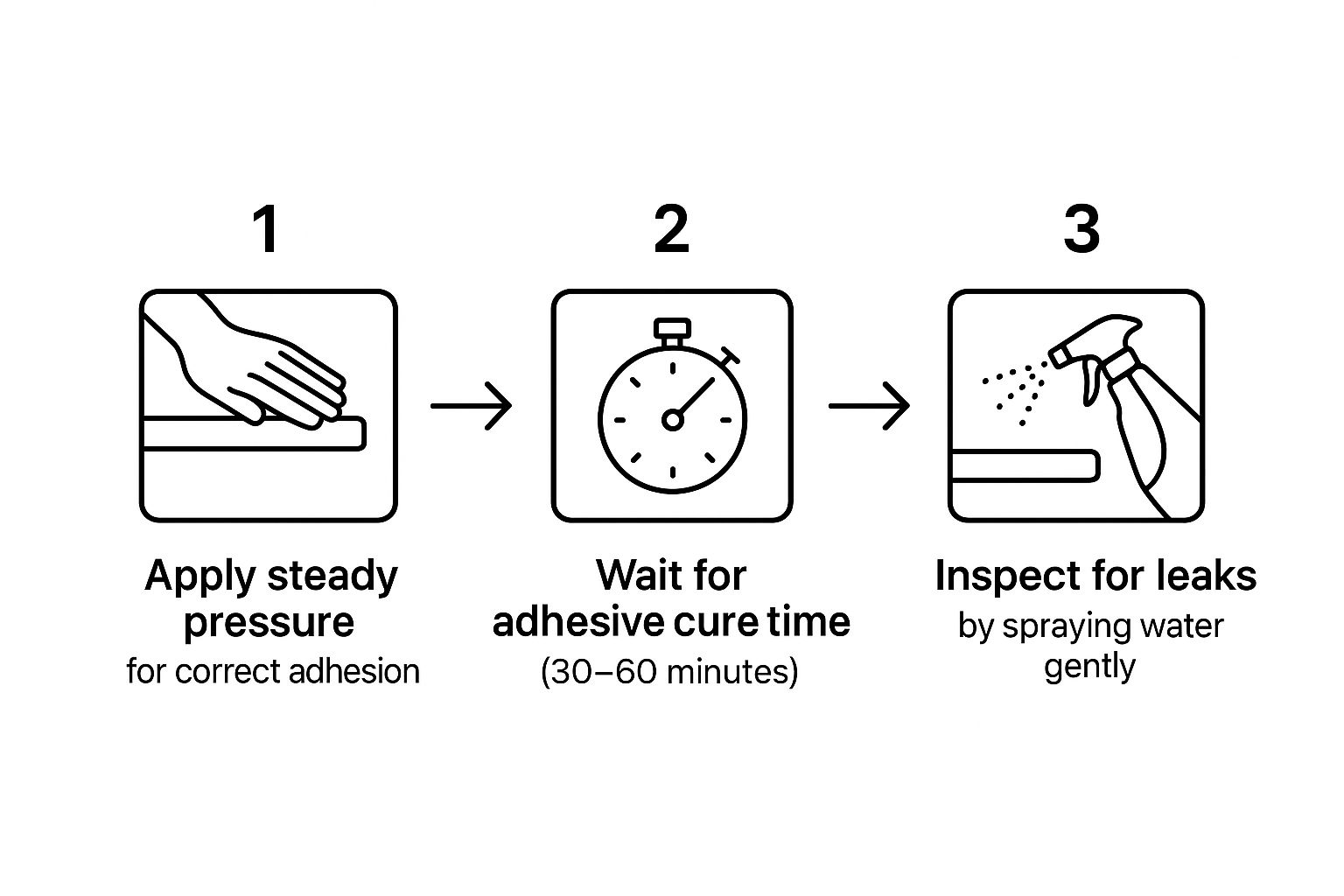
But the job isn’t quite done, especially if you drive a newer car. For vehicles equipped with Advanced Driver-Assistance Systems (ADAS), there's one more critical step: recalibration.
The forward-facing cameras that manage features like automatic braking or lane-keeping assist are often mounted to the windshield. Swapping the glass means these systems need to be recalibrated to factory specs. Skipping this can render some of your car's most important safety systems unreliable or completely inoperable.
You can learn more about this entire process in our complete guide to windshield replacement.
What to Do After Your New Windshield Is Installed
Once our technician packs up and leaves, your job begins. The new glass is in place, but that heavy-duty urethane adhesive needs time to work its magic and form a permanent, watertight bond. What you do in the next 24 to 48 hours is just as important as the installation itself.
Your tech will give you a "safe drive-away time," which is usually somewhere between 30 and 90 minutes. This isn't a suggestion—it's the minimum time the adhesive needs to cure enough to meet federal safety standards. Don't get behind the wheel until that time has passed.
Easy Steps for a Perfect Cure
You’ll notice some tape along the edges of the new glass holding the moldings down. This is called retention tape, and it’s there for a crucial reason: to keep everything perfectly aligned while the urethane sets.
Don't Touch the Tape: Resist the urge to peel that tape off. It needs to stay put for a full 24 hours to ensure the moldings don't shift and break the seal.
Postpone the Car Wash: Hold off on any car washes for at least two or three days. High-pressure water jets, in particular, can blast the fresh seal and cause major problems down the road.
Crack a Window: For the first day, leave one of the windows cracked open about an inch. When you shut a car door, it creates a quick burst of air pressure inside the cabin. A slightly open window relieves that pressure so it doesn't push outward on your new windshield.
From my experience, rushing the aftercare is the number one cause of annoying wind noise and water leaks. Giving that adhesive the full time it needs to cure isn't just a good idea—it protects your investment and ensures the windshield can do its job as a structural part of your car.
Following these simple rules will make all the difference. And if your car is equipped with modern safety systems, keep in mind that a solid cure is just the first step. To learn about the final, crucial part of the process, check out our guide on understanding ADAS windshield calibration.
Got Questions About Mobile Windshield Service? We've Got Answers
It's smart to have a few questions before you book a mobile windshield replacement. After all, it's a critical safety component of your vehicle. Let's walk through some of the most common things people ask, so you can feel totally comfortable having the work done right in your driveway.
How Long Will My Car Be Out of Commission?
This is probably the number one question we get, and the answer is usually less time than you'd think. The hands-on work—removing the damaged glass, prepping the frame, and perfectly setting the new windshield—typically takes our technicians about 60 to 90 minutes.
But here's the crucial part: the job isn't finished when we pack up our tools. The special adhesive needs time to cure and form a strong, watertight bond. This is called the safe drive-away time, and it's non-negotiable for your safety. You'll need to let your vehicle sit for another 30 to 90 minutes before it’s safe to drive.
So, from start to finish, you should plan for your car to be stationary for about two to three hours.
Will My Insurance Cover a Mobile Replacement?
Absolutely. In almost every situation, your comprehensive auto insurance policy will cover a windshield replacement at home the exact same way it would cover one done in a traditional shop. Insurers don't distinguish between the two because the quality standards are identical.
To make things easy, just have your policy number handy when you schedule the service. A good auto glass company will handle the claim directly with your insurance provider, so you don't have to deal with the paperwork. The only thing you'll be responsible for is your comprehensive deductible, if your policy has one.
We hear this concern a lot: is the quality really the same? The answer is a resounding yes. Our certified technicians follow the exact same stringent Auto Glass Replacement Safety Standard (AGRSS) protocols whether they're in a shop or at your home. We use the same OEM-grade glass and industrial-strength adhesives. Convenience never, ever comes at the expense of safety or quality.
Ready for a hassle-free repair? Auto Renu Auto Glass LLC brings certified technicians and top-quality materials directly to you. Get your free, no-obligation quote today!