How to Protect Windshield from Rocks: A Practical Guide
how to protect windshield from rocks: Learn protective films, smart driving tips, and what to do after an impact.
Jan 21, 2026
generated
how to protect windshield from rocks, windshield protection film, rock chip prevention, auto glass care, windshield maintenance
That sound is unmistakable, isn't it? The sharp, sickening thwack of a rock hitting your windshield. Every driver knows it, and every driver dreads it. The best way to deal with rock chips is to stop them from happening in the first place, which means blending smarter driving habits with some physical protection for your glass.
This isn't just about avoiding a cosmetic flaw; it's about shifting your mindset from damage control to damage prevention.
The Real Cost of a Flying Rock
That little impact is more than just an annoyance. It’s the start of a crack waiting to happen, a problem that compromises your car’s structural integrity and, ultimately, your safety on the road.
Most people are surprised to learn that the windshield provides up to 60% of a vehicle's cabin strength during a rollover. It's also designed to ensure your airbags deploy correctly in a crash. A chip or crack weakens that critical line of defense.
Why Prevention Is Smarter Than Repair
Putting off a small chip repair is a risky bet. A sudden temperature change, hitting a pothole, or even slamming your car door can turn a tiny nick into a spiderweb of cracks that creep across your entire windshield.
What could have been a quick, affordable fix suddenly becomes a full, expensive replacement. Understanding the typical auto glass chip repair cost really drives home the value of being proactive. This isn't just about convenience; it’s about safety and saving yourself a few hundred dollars (or more).
Think this won't happen to you? For every million vehicles on the road, more than 300,000 experience rock chips or breaks each year. Those numbers make it pretty clear that knowing how to protect your windshield is a skill every driver needs.
A flying rock doesn't care if your car is fresh off the lot or a high-mileage workhorse. The physics are simple: a tiny pebble at highway speed has more than enough energy to do serious damage.
The goal is to stop that impact before it even happens. By recognizing the main culprits—from gravel kicked up by dump trucks to loose debris on rural roads—you can start building a defensive strategy that keeps your glass clear and intact.
Your Best Defense Against Windshield Damage
Beyond just changing how you drive, the most effective way to protect your windshield from rocks is to put up a physical barrier. These are add-ons designed specifically to take the hit, absorbing or deflecting the energy from flying debris before it ever has a chance to cause damage.
The top-tier solution here is windshield protection film. It’s essentially a super-tough, heavy-duty screen protector for your car’s glass. A professional applies this nearly invisible layer of thermoplastic urethane to the outside of your windshield, where it acts as a sacrificial shield. When a rock makes impact, the film’s unique material disperses the force across a wider area. This prevents the impact from focusing on a single point, which is what causes a chip or crack to form.
Good quality films are optically clear, so they won't mess with your vision or interfere with any of the Advanced Driver-Assistance Systems (ADAS) cameras that modern cars have mounted behind the glass. You'll definitely want a professional to install it to get that seamless, bubble-free look, but the peace of mind it provides on the highway is well worth the investment.
Expanding Your Protective Toolkit
While a good film is the undisputed champ for stopping direct hits, a few other accessories play a big part in reducing your overall risk. They work by managing the space around your vehicle, cutting down on the amount of junk that even gets a chance to fly at your windshield.
It’s smart to consider these practical additions:
High-Quality Mud Flaps: These do more than just keep your car clean. Properly installed mud flaps on all four wheels drastically cut down on the gravel and small stones your own tires launch into the air. This not only protects your car but also helps out the drivers behind you.
Bug and Debris Deflectors: You've probably seen these mounted on the front of a truck's hood. They're designed to change the airflow over your vehicle just enough to push smaller pebbles, bugs, and other light debris up and over the windshield instead of straight into it.
The diagram below really puts the risks of windshield damage into perspective, showing why these protective measures are so important.
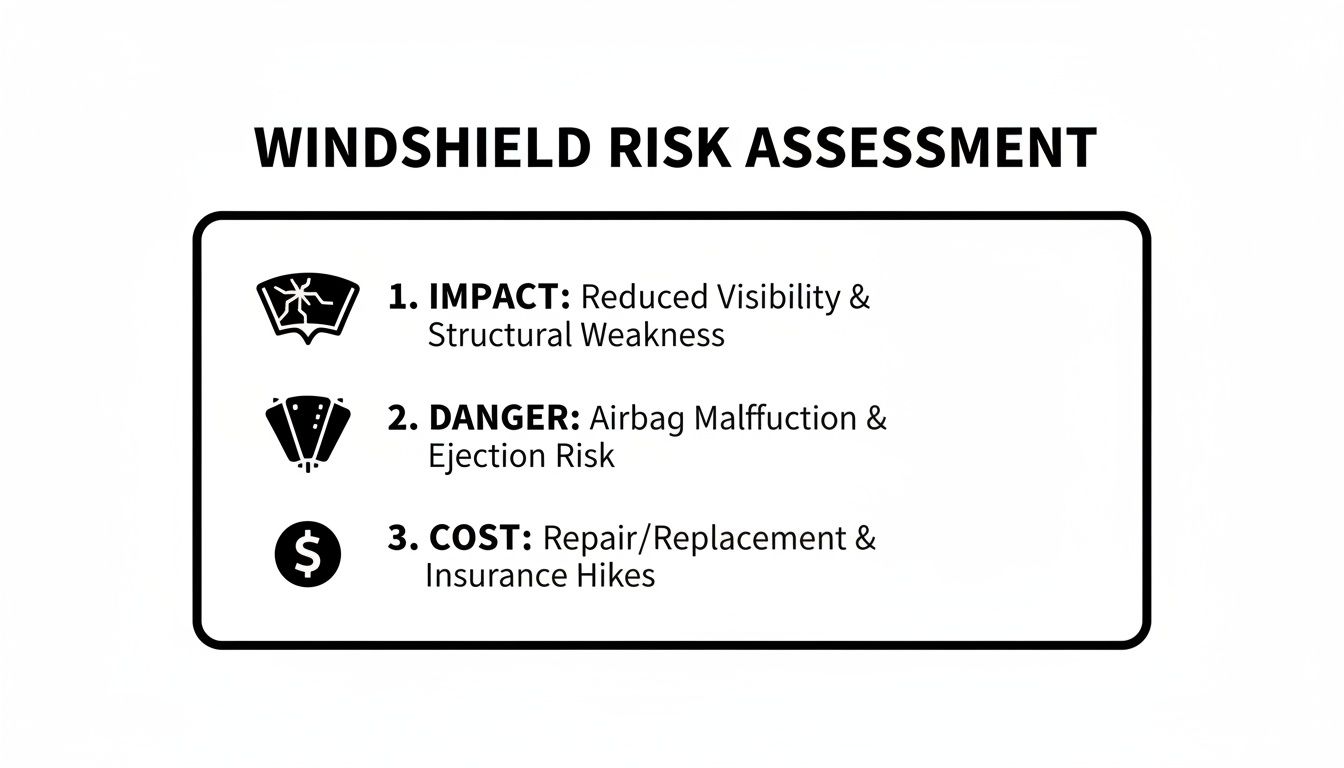
As you can see, it's a chain reaction: a physical impact can compromise the structural integrity of your vehicle, creating a safety hazard and leading to some hefty repair or replacement costs.
Making the Right Choice for Your Vehicle
Picking the right physical protection really comes down to how you drive, where you drive, and what your budget looks like. Each of these options offers a different degree of defense.
The goal isn't just to add accessories; it's to create a layered defense system. A protection film handles direct hits, while mud flaps and deflectors reduce the total number of projectiles your windshield has to face.
This multi-pronged approach is always going to be the most effective strategy. For a deeper dive into all the ways you can care for your auto glass long-term, our complete guide on how to prevent windshield cracks has you covered.
Comparing Windshield Protection Methods
To help you decide what's best for you, we've put together a quick comparison of the most common physical protection options. This table breaks down their effectiveness, typical cost, and who they're best suited for.
Protection Method | Effectiveness | Average Cost | Best For |
|---|---|---|---|
Windshield Protection Film | Very High | $400 - $800 | Daily highway commuters and drivers in areas with frequent road construction. |
Mud Flaps | Moderate | $50 - $200 | Vehicles that often travel on gravel or poorly maintained roads. |
Bug/Debris Deflector | Low to Moderate | $75 - $150 | Drivers looking for an extra layer of defense against smaller, lighter debris. |
Ultimately, investing in these physical barriers is all about taking control. Instead of just waiting for damage to happen and reacting to it, you’re actively preventing it. That saves you time, money, and the headache of dealing with a dangerous and unexpected crack.
Driving Smarter to Avoid Rock Chips

While physical barriers are great, the absolute best way to protect your windshield is by changing the way you drive. It’s your first and most effective line of defense. Becoming a more conscious driver can drastically cut down on your risk of getting hit by flying debris, turning a stressful commute into a much safer trip for your auto glass.
This isn't just about not tailgating; it's about developing a strategic awareness of the road around you. After all, the most common source of rock chips is the tires of the car or truck right in front of you. This is especially true for big rigs—dump trucks, gravel haulers, and semis have massive, deep-treaded tires that are practically designed to launch loose stones right at your car.
Master Your Following Distance
You’ve probably heard of the "two-second rule," and while it's a good start, it's not nearly enough when you're trailing a potential rock-thrower. Instead, make the four-second rule your new standard.
It’s easy to practice. Just pick a fixed object up ahead, like a sign or an overpass. When the vehicle in front passes it, start counting—"one-one-thousand, two-one-thousand..." You shouldn't reach that same spot before you get to four.
That extra space is crucial. It gives rocks and other debris enough time to lose momentum and fall to the pavement before they can make it to your windshield. I consider this non-negotiable whenever I'm behind a truck that looks like it just left a construction site or quarry.
Your goal is to create space. More space equals more time for gravity to do its job, pulling rocks and debris safely down to the pavement instead of into your glass.
Honestly, this one simple adjustment is the single most effective habit you can adopt to keep your windshield safe.
Choose Your Lane Wisely
On a multi-lane highway, where you are matters. Experience shows that the center lanes are generally the safest place to be.
The far-right lane tends to be a collection zone for all sorts of debris kicked up by cars entering and exiting the freeway. On the other hand, the far-left "fast" lane often has vehicles moving at higher speeds, which kicks up road debris with a lot more force.
Think of the shoulders and breakdown lanes as "debris corridors" where tire scraps, loose gravel, and other hazards pile up. By keeping yourself a lane or two away, you create a natural buffer that significantly lowers your risk of an impact. If you see a convoy of construction trucks up ahead in the right lane, make your move to the center or left lane long before you get close.
Navigate High-Risk Zones with Caution
Some areas are just magnets for rock chips. Driving through them requires you to be extra alert and, frankly, to ease up on the gas pedal.
Construction Zones: These are obvious minefields of loose gravel, dirt, and other materials. Always obey the reduced speed limits. Driving slower not only gives you more reaction time but also dramatically lessens the force of any debris that does get airborne.
Unpaved and Gravel Roads: This one’s a no-brainer. High speeds on loose surfaces will blast your own car's undercarriage and shower the poor soul behind you with stones. Slow way down.
Freshly Paved Roads: Be wary of roads that have just been re-chipped or sealed. Loose aggregate can sit on the surface for days, waiting to be kicked up. Treat these zones just like a gravel road and give everyone plenty of room.
By simply recognizing these high-risk areas and adjusting your driving, you can actively avoid the very situations that lead to most windshield damage. It’s all about driving smarter.
That dreaded thwack of a rock hitting your windshield is a sound every driver hates. It’s startling, and your first instinct might be to ignore it and hope for the best. But what you do in the moments right after that impact can make all the difference.
Taking the right steps immediately can be the key to a simple, inexpensive repair versus a full, costly windshield replacement.
First thing's first: don't panic. Find a safe spot to pull over as soon as you can—a shoulder, the next exit, or a quiet parking lot will do. Flip on your hazards and get out of the flow of traffic. You need to inspect the damage up close before it has a chance to get worse.
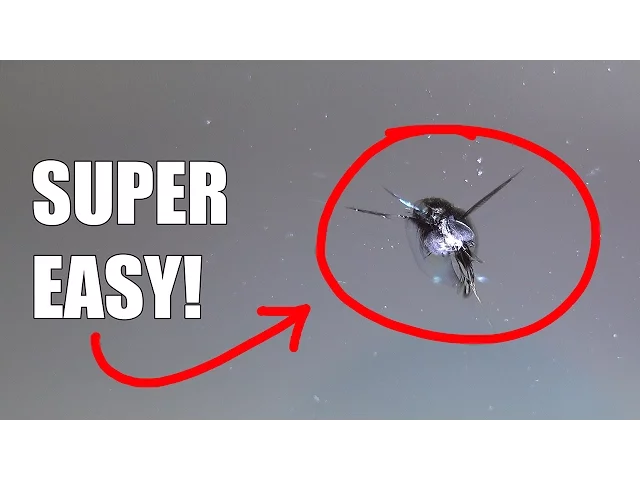
Once you’re safely stopped, take a close look at the point of impact. What kind of chip are you dealing with? Is it a small, round bullseye? Or does it have little legs branching out from the center, like a star break? Understanding the type of damage helps you know how urgently you need to act.
Stabilize the Chip to Stop it From Spreading
Your number one priority is to keep contaminants out. If dirt, moisture, or even washer fluid gets into that tiny crack, it can ruin the chances of a clean, effective repair. It can also cause the damage to spread much faster. The goal is to cover the chip and keep it pristine.
A couple of simple items from your glove box can be a real lifesaver here:
A Windshield Repair Patch: These are basically small, clear stickers made for this exact situation. Tossing a pack in your glove compartment is one of the smartest things you can do.
Clear Packing Tape: If you don't have a patch, a small piece of clear tape is the next best thing. Just make sure the glass is completely dry before you stick it on, otherwise, it won't seal properly.
This is purely a temporary measure. You're not fixing the chip; you're just protecting it. Keeping the area clean and dry gives a professional technician the best possible surface to work on for a successful repair.
A clean, sealed chip has a much higher chance of being repaired to the point where it's nearly invisible. A contaminated chip almost always leads to a more noticeable repair or a full replacement.
The need to act quickly isn't just a suggestion. In the U.S., nearly 30% of all car insurance claims each year are for windshield damage. It’s a massive issue for drivers. While 66% of these incidents start as minor chips, a whopping 34% spread into larger cracks that require a full windshield replacement, sending the cost skyrocketing.
By taking these immediate steps, you can save yourself a lot of time, money, and hassle down the road. For a more detailed walkthrough, our guide on how to repair a windshield chip has even more great advice. Acting fast is your best defense.
Making the Call: Repair or Replace?
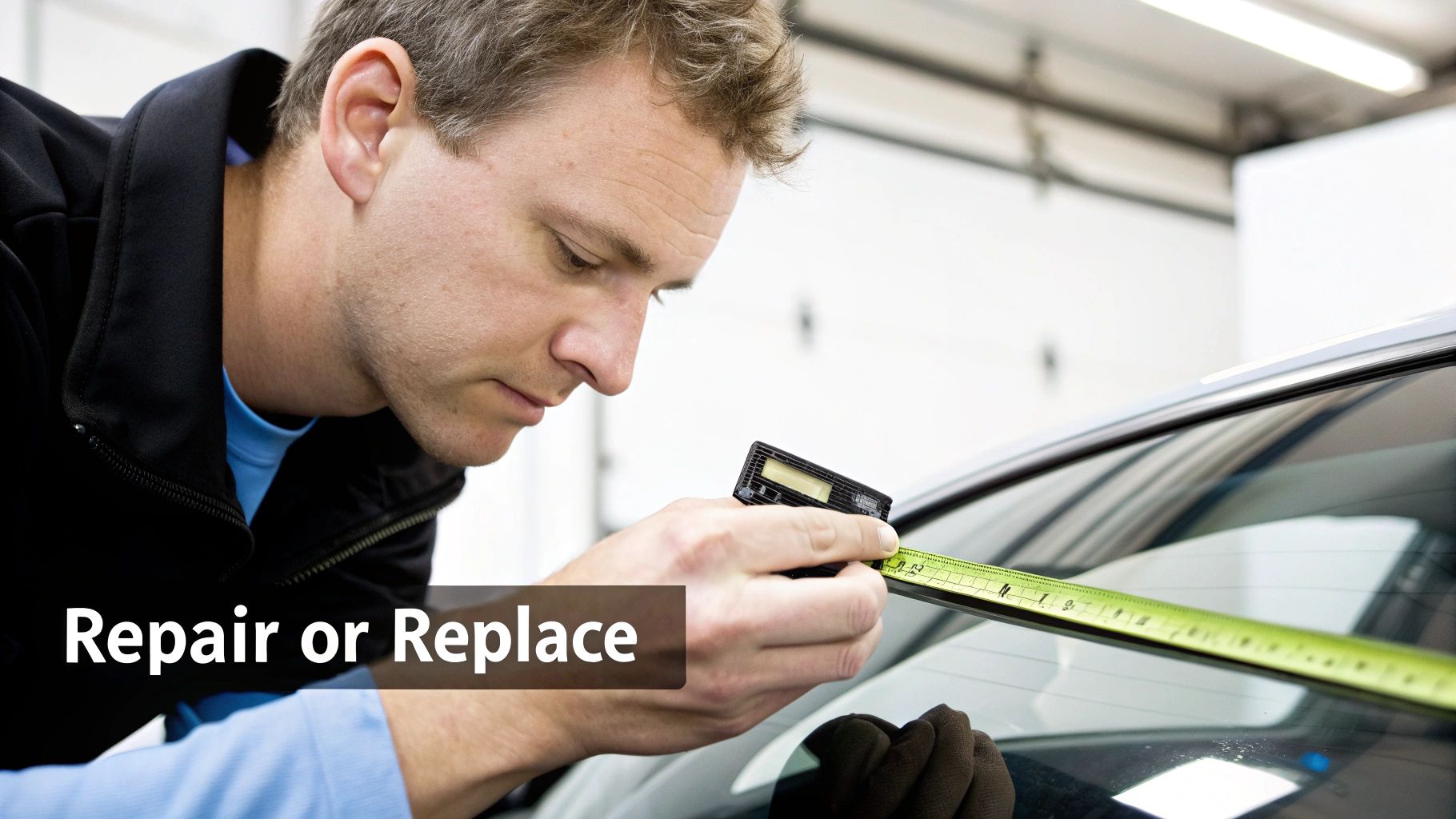
When a rock smacks your windshield, that dreaded thwack is immediately followed by a single question: can this be fixed, or am I looking at a whole new windshield? The answer isn't always cut and dry. It takes a quick assessment of the chip's size, its exact location, and the type of damage you're dealing with.
Knowing what to look for will help you make a smart, safe, and cost-effective decision. A small bullseye chip might be an easy fix, but other factors can quickly put it in the "replacement" category. Getting this wrong isn't just about money—it’s about safety. Your windshield is a key part of your car’s structural integrity.
Gauging the Damage Size
The first thing to check is the size of the impact. This is something you can easily do yourself before even picking up the phone.
As auto glass technicians, we have a quick rule of thumb we often share with customers: the dollar bill test. If you can cover the entire damaged area—including any tiny cracks spreading out from the center—with a dollar bill, it’s almost always repairable. This generally covers chips and cracks up to about an inch long. Anything bigger, and you’re likely looking at a replacement to ensure the glass is structurally sound again.
It's a simple gut check that gives you a pretty good idea of where you stand.
Why Location Is a Deal Breaker
Here’s where it gets a little more complex. The location of the chip is just as important as its size, sometimes even more so. A tiny, otherwise perfect candidate for repair can be instantly disqualified if it’s in the wrong spot.
There are three key "no-go" zones to look for:
The Driver's Direct Line of Sight: Any chip, no matter how small, right in the driver's view is a serious problem. Even a high-quality resin repair can leave a slight distortion or haze that can be distracting, especially at night or in the rain. For safety, this is almost always a non-negotiable replacement.
Too Close to the Edge: Damage within two or three inches of the windshield's edge is a major red flag. This area is under constant stress from the vehicle's frame, and a chip here can easily spread from normal driving vibrations or temperature swings.
Over an ADAS Camera: Modern vehicles are packed with safety tech, and the cameras for Advanced Driver-Assistance Systems (ADAS) are often mounted right behind the windshield. A chip or repair in this area can obstruct the camera’s view, potentially causing critical safety features like automatic emergency braking to fail.
A tiny, repairable chip in the middle of the passenger side is an inconvenience. That exact same chip in the driver’s line of sight or near the edge becomes a safety hazard that demands a different solution.
The Dangers of Waiting
If you have a repairable chip, the worst thing you can do is put it off. That small, stable-looking chip is a ticking time bomb. It’s a weak point in the glass, and it's constantly being stressed by road vibrations and temperature changes.
Just think about it: going from a cool, air-conditioned car into the blazing summer heat causes the glass to expand, which can be enough to turn that little chip into a long crack. The same goes for hitting an unexpected pothole. That jolt can send a shockwave through the glass, instantly turning a $100 repair into a $500+ replacement.
Knowing these factors helps you understand what an auto glass professional is looking for. You'll be able to have a confident conversation and know why they're recommending a certain fix. Of course, learning how to protect windshield from rocks in the first place is the best strategy, but knowing how to react when damage happens is a close second.
Windshield Protection: Your Questions Answered
Even when you're doing everything right, you'll still have questions about keeping your windshield safe from rocks. It's totally normal. Let's tackle some of the most common ones I hear from drivers.
How Long Does Windshield Protection Film Last?
This is a big one. You're making an investment, and you want to know what you're getting for your money. Generally, a quality windshield protection film should give you about 18 to 24 months of solid protection.
Now, that lifespan isn't set in stone. Your local environment is the biggest factor. Living in a place with intense sun and UV rays will wear down the film’s layers more quickly. Similarly, if your daily commute involves a lot of gravel or sandy roads, the constant grit getting caught under your wiper blades will eventually grind down the film's tough outer layer.
Will a Protection Film Mess with My Car's Safety Sensors?
Great question, and the answer is no—as long as it's a high-quality film installed by a pro. These films are engineered to be completely optically clear, so they won't distort what the cameras and sensors for your Advanced Driver-Assistance Systems (ADAS) see.
This is absolutely critical for any modern car. Think about it: features like lane-keep assist, automatic emergency braking, and adaptive cruise control all depend on that perfectly clear view. A proper installation means all that tech keeps working just as the manufacturer intended. You get the protection without any compromises.
The Bottom Line: A quality film is an investment in both your windshield and your safety. It shields the glass from damage without interfering with the ADAS features that keep you safe.
Is It Really Worth the Money?
Let's run the numbers. A full windshield replacement today, especially on a newer vehicle loaded with ADAS tech, can easily set you back anywhere from $500 to over $1,800. That's because the system needs a precise recalibration afterward. Even a "simple" chip repair can cost around $100, and there's always a risk it could spread later.
Compare that to the cost of a windshield protection film, which usually lands somewhere between $400 and $800. If that film prevents just one replacement over its two-year life, it's already paid for itself. You're essentially turning a potential high-cost, unexpected emergency into a manageable, proactive expense.
Can I Just Install Windshield Film Myself?
I know the DIY route can be tempting, but this is one of those jobs best left to a professional. Applying these films isn't like putting on a screen protector. It's a technical process that involves carefully heat-shrinking the film to match the unique, complex curve of your windshield.
Without the proper tools and a lot of practice, you're almost guaranteed to end up with air bubbles, ugly creases, and a poor fit. That doesn't just look bad; it seriously hurts the film's ability to do its job. A professional installer ensures you get a flawless, invisible application that performs exactly as it should from day one.
At Auto Renu Auto Glass LLC, we’ve seen how quickly a tiny rock chip can escalate into a major headache and a big bill. Our mobile auto glass experts are ready to help, whether you need a fast chip repair or a full windshield replacement and ADAS recalibration. Contact us today for reliable service that comes right to your door.