Decoding Mobile Windshield Replacement Cost
Understand every factor of your mobile windshield replacement cost. This guide breaks down pricing, insurance, and how to get the best value for your service.
Oct 8, 2025
generated
mobile windshield replacement cost, windshield cost, adas calibration, auto glass insurance, car maintenance
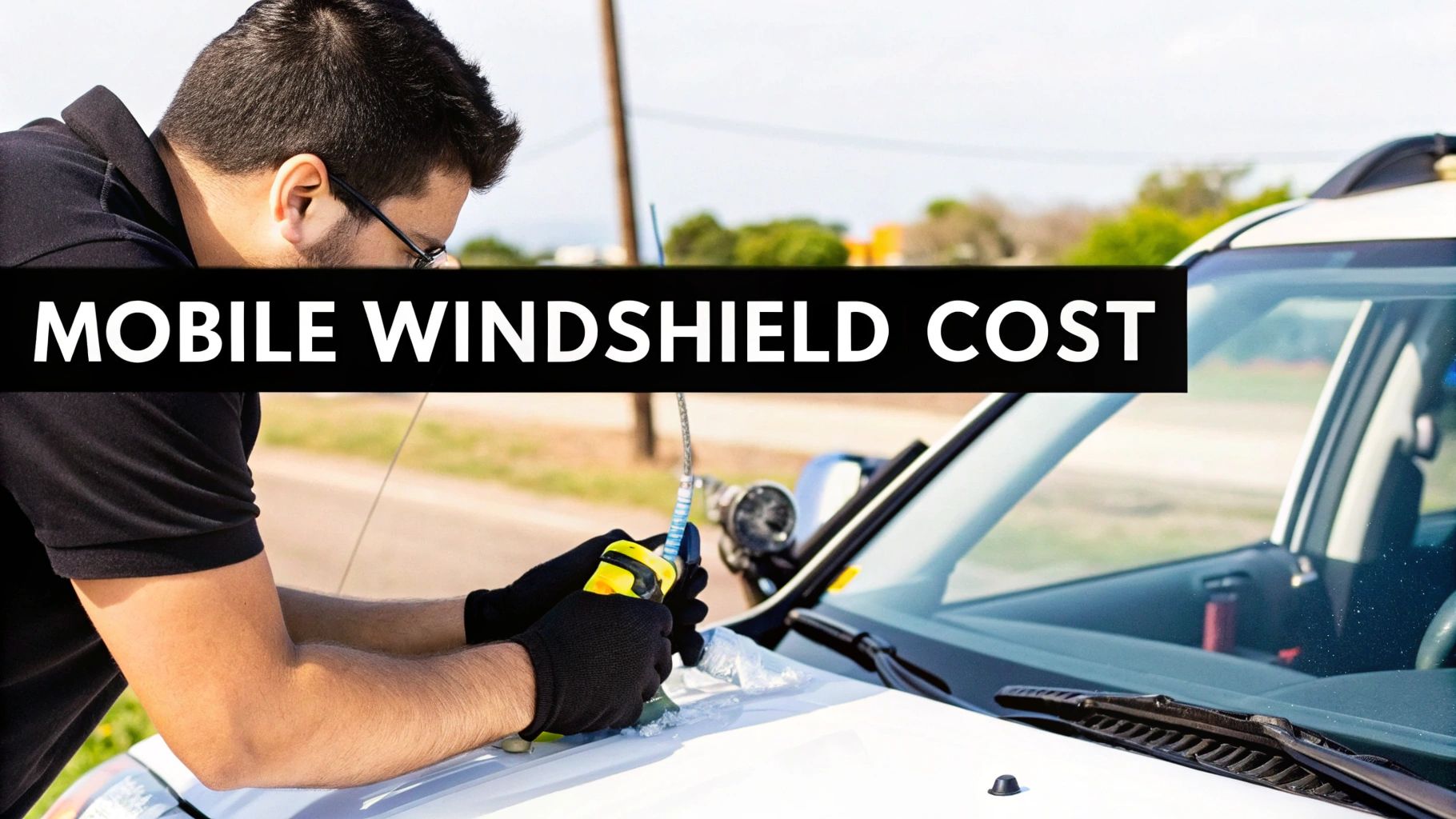
When that small chip spiderwebs into a full-blown crack across your windshield, the last thing you want is to lose half your day sitting in a repair shop. That's where mobile service comes in, and it's a game-changer. But what does that convenience cost?
On average, a mobile windshield replacement will likely run you somewhere between $250 and $500. Of course, that's just a ballpark figure. The final price really boils down to your specific vehicle—its make, model, and just how much tech is packed into that piece of glass.
What to Expect for Mobile Windshield Replacement Cost
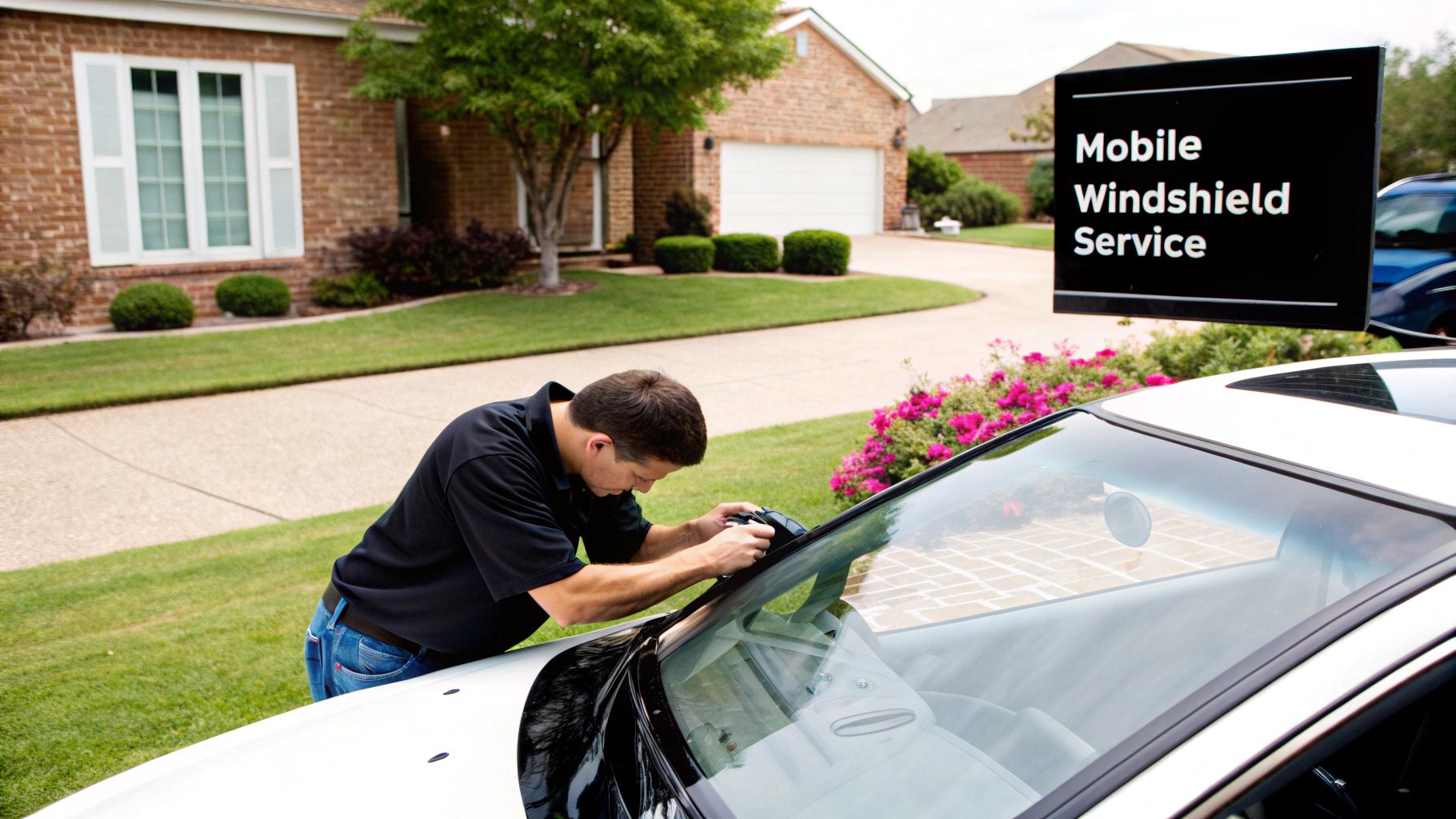
The appeal of mobile windshield replacement is simple: the shop comes to you. Whether you're at home or stuck at the office, a technician arrives with everything needed to get the job done right on the spot. No need to shuffle your schedule or arrange for a ride.
You are paying a small premium for that convenience, though. The extra cost helps cover the technician's travel time, fuel, and the overhead of maintaining a fully equipped mobile service van. Generally, you can expect a mobile replacement to cost between $200 and $400, whereas driving to a shop might save you a few bucks, often landing between $150 and $300.
Cost Estimates by Vehicle Type
So, what will your car cost? It really depends on what you're driving. Replacing the windshield on a straightforward sedan without any fancy sensors is going to be on the lower end of that scale. On the other hand, a modern SUV or a luxury car loaded with integrated technology will naturally be more expensive.
The single biggest factor after the vehicle type is the presence of Advanced Driver-Assistance Systems (ADAS). If your car has features like lane-keeping assist or automatic braking, the windshield replacement will require a special recalibration, which adds to the final bill.
To help you get a better handle on potential costs, we've put together a quick breakdown. Remember, these are just estimates, and the best way to know for sure is to get a specific quote. For a deeper dive into our services, you can find more on our windshield replacement page.
Estimated Mobile Windshield Replacement Cost by Vehicle Type
This table provides a quick look at the average cost ranges for mobile windshield replacement based on common vehicle categories, helping readers set realistic expectations.
Vehicle Type | Estimated Cost Range (Without ADAS) | Key Considerations |
|---|---|---|
Standard Sedan | $250 – $375 | This category includes common models with basic glass and minimal features. |
SUV / Crossover | $300 – $450 | Larger glass and more complex curves can increase both material and labor costs. |
Luxury Vehicle | $450 – $800+ | Features like acoustic glass, heated elements, or heads-up displays drive the price up. |
As you can see, the type of car you drive sets the baseline. From there, any special features or advanced technology will add to the total cost.
The Hidden Cost: ADAS Recalibration
Not too long ago, a windshield was just a piece of glass. Now, it’s the nerve center for your car's most important safety features. We're talking about the Advanced Driver-Assistance Systems (ADAS), which use cameras and sensors mounted directly to your windshield to see the road.
These systems are the brains behind features like automatic emergency braking, lane-keeping assist, and adaptive cruise control. When you replace a windshield, the new glass might sit just a fraction of a millimeter differently than the old one. It sounds like nothing, but to a sensitive camera, it’s like putting on someone else's prescription glasses—the world becomes blurry and distorted.
This is precisely why ADAS recalibration is an absolutely critical step after any replacement. The process essentially "re-teaches" your car’s cameras where to look, making sure they can accurately judge distances and read road lines. Skipping it is a massive gamble with your safety. Your emergency brake might not see a stopped car, or your lane assist could steer you into trouble.
Why Does Recalibration Cost Extra?
Recalibration isn’t a simple tune-up. It's a highly technical procedure that demands specialized tools and a technician who knows exactly what they're doing. It involves setting up precise targets in front of your car and using sophisticated diagnostic software to reset the camera's view to the original factory settings. This added layer of service is a major reason why windshield replacements on newer cars cost more.
This technology has completely transformed the auto glass world. In fact, the ADAS calibration market was valued at a staggering $959 million in 2022 and is only expected to grow, showing just how standard these systems have become. You can expect this service to add anywhere from $100 to $200 or more to your final bill. For more details on this market trend, check out the analysis from Research and Markets.
Here's the bottom line: Recalibration isn't an optional add-on. It's a non-negotiable safety procedure. A camera that’s even slightly off can make life-saving technology useless or, even worse, dangerously unpredictable.
What Stops Working if You Skip It?
So, which specific features are at risk without proper recalibration? The list is longer than you might think and is constantly growing. For a deep dive into the tech, take a look at our guide on what ADAS windshield calibration involves.
Here are some of the most common ADAS features that rely on a perfectly calibrated camera:
Automatic Emergency Braking (AEB): Your car's first line of defense in preventing a front-end collision.
Lane Departure Warning (LDW): The system that alerts you when you start drifting out of your lane.
Lane Keeping Assist (LKA): The feature that actively nudges you back into your lane.
Adaptive Cruise Control (ACC): Automatically adjusts your speed to maintain a safe distance from the car ahead.
Traffic Sign Recognition: Reads speed limit and other road signs to keep you informed.
Making sure these systems are working perfectly isn't just an expense—it's an investment in your safety and the safety of everyone else on the road.
What Goes Into Your Windshield Replacement Quote?
Ever gotten a quote for a windshield replacement and wondered why the price seems all over the map? It's a common feeling. Two cars that look similar on the outside can have wildly different replacement costs, and it’s not because shops are pulling numbers out of thin air. The final price is a direct reflection of your vehicle's specific technology, the type of glass you choose, and a few other key factors.
Think of it like getting a custom suit made. The base fabric has a price, but the final cost depends on the cut, the stitching, the type of buttons, and the tailor's expertise. It's the same with your windshield. A basic piece of glass for an older car is the starting point, but all the integrated tech and special features are what really shape the final quote.
This graphic breaks down the main components that we look at when building your estimate.
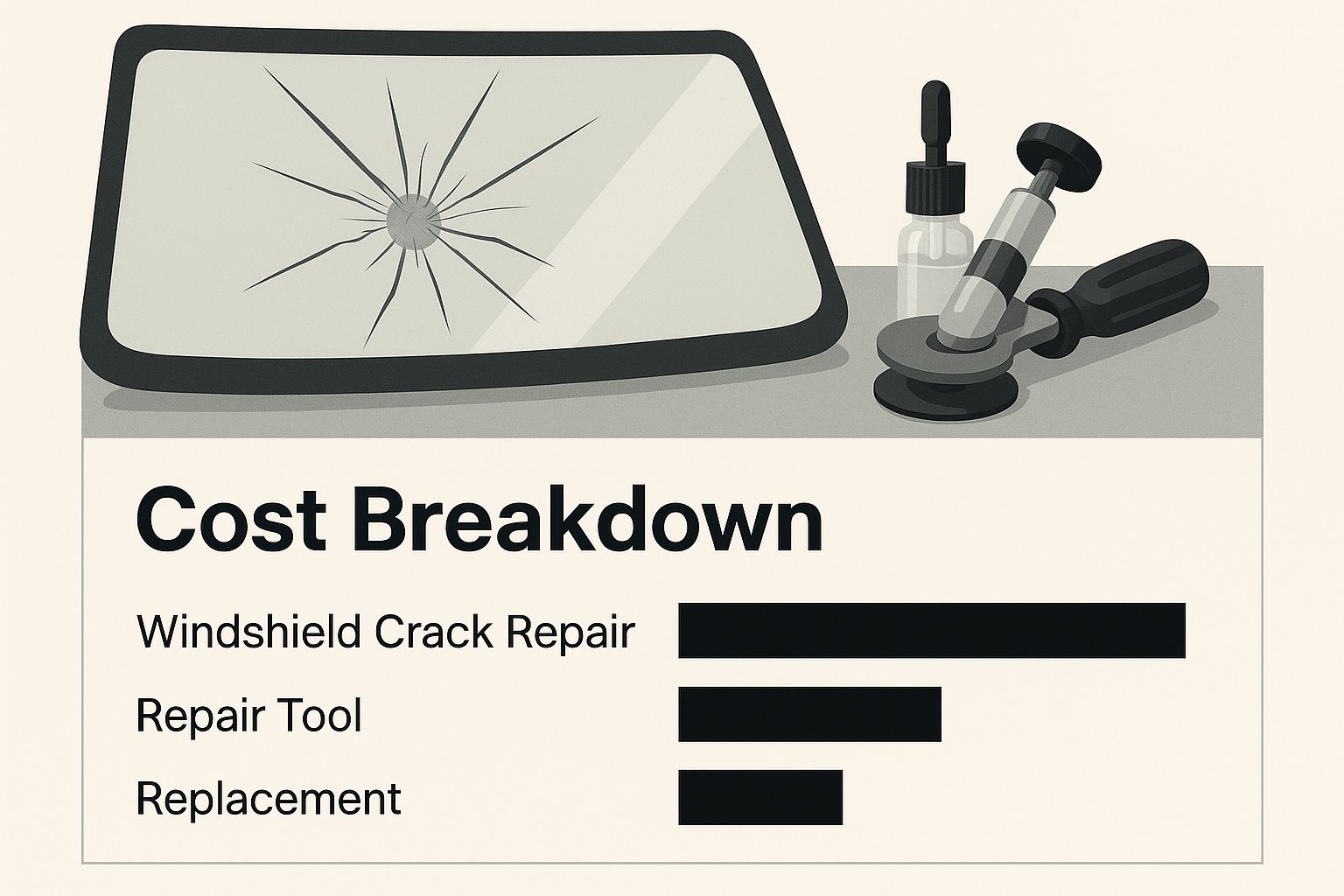
As you can see, what you drive and the technology built into it are easily the biggest pieces of the pricing puzzle.
Your Vehicle's Make, Model, and Year
First things first: your car. The single biggest driver of cost is the vehicle itself. A windshield for a mass-produced 2012 Honda Civic is going to be far more affordable and easier to source than one for a brand-new 2022 Mercedes-Benz S-Class. It's a simple matter of scale and complexity.
Luxury brands and newer models often have larger, more intricate windshields with unique curves and dimensions that are just more expensive to produce. For instance, a Ford F-150 has a huge piece of glass that takes more effort to handle and install compared to a compact car. A Tesla Model 3, on the other hand, requires glass with very specific properties and coatings. These design differences directly influence both the material cost and the labor involved.
The Big Decision: OEM vs. Aftermarket Glass
Next, you'll need to choose the type of glass. This is a critical decision that impacts both price and performance. The two main options are Original Equipment Manufacturer (OEM) and aftermarket glass, which is also known as Original Equipment Equivalent (OEE).
OEM Glass: This is the real deal—the exact same glass your car was built with at the factory. It’s made by the same company that supplies the automaker, fits perfectly, and even has the car manufacturer's logo stamped on it.
Aftermarket (OEE) Glass: This glass is made by different companies. While it must meet federal safety standards, there can be tiny differences in thickness, clarity, or how it curves. It's a perfectly safe, budget-friendly alternative.
Deciding between OEM and aftermarket glass is a classic trade-off between cost and guaranteed compatibility. The table below lays out the key differences to help you make an informed choice.
OEM vs. Aftermarket (OEE) Glass Comparison
Feature | OEM Glass | Aftermarket (OEE) Glass |
|---|---|---|
Manufacturer | Made by the same company that supplied the auto factory. | Made by a third-party manufacturer. |
Fit and Quality | Guaranteed to be an exact match in every specification. | Designed to match OEM specs, but minor variations can exist. |
Markings | Includes the vehicle manufacturer's logo (e.g., Ford, Toyota). | Does not have the vehicle manufacturer's logo. |
Cost | Typically 30% to 50% more expensive. | More affordable and offers significant savings. |
ADAS Compatibility | The gold standard for ensuring flawless recalibration. | Generally works well, but OEM is often recommended for complex systems. |
Opting for OEM glass will almost always increase your material cost by 30% to 50% compared to a high-quality aftermarket version. While aftermarket glass is a great way to save money, we find that OEM is the surest bet for a perfect ADAS recalibration and for keeping your vehicle exactly as it was designed.
Ultimately, the right choice depends on your budget, your vehicle's age, and its technology.
Special Features and Local Labor Rates
Finally, the "premium toppings" of your windshield will add to the bottom line. Modern vehicles pack a surprising amount of technology directly into the glass. If your car has any of these, expect the cost to reflect it:
Heated wiper areas for melting ice and snow
Rain sensors that automatically turn on your wipers
Heads-Up Displays (HUD) that project speed and navigation onto your view
Acoustic interlayers designed to keep road noise out of the cabin
On top of all that, local labor rates here in the Bay Area play a role in the final price. Knowing about these factors gives you the power to look at any quote and understand exactly what you’re paying for—and why.
How Your Insurance Can Drastically Lower the Cost
Staring at a big, unexpected repair bill is nobody's idea of a good time. The good news? Your auto insurance is often the ticket to slashing that mobile windshield replacement cost. Many drivers don't realize that a broken windshield isn't treated like a typical fender bender.
Instead of being a collision claim, a new windshield almost always falls under your comprehensive insurance. This is the part of your policy that covers damage from things other than an accident—think theft, falling tree branches, or that rogue rock that just flew up and left its mark.
It All Comes Down to Your Deductible
The single most important factor here is your deductible. That's the amount you have to pay yourself before your insurance company starts chipping in.
Let’s say the total replacement cost is $800 and your comprehensive deductible is $500. In this case, you'd pay the first $500, and your insurance provider would handle the remaining $300. Simple enough.
But here’s where it gets interesting. Many insurance policies have a special carve-out just for auto glass. Some offer a separate, much lower glass deductible, while others have a zero-deductible glass coverage option. This is a total game-changer, potentially bringing your out-of-pocket cost down to absolutely zero.
Pro Tip: Before you schedule anything, make a quick call to your insurance agent. Ask them this exact question: "Do I have a separate or zero deductible for auto glass replacement under my comprehensive coverage?" Getting that answer upfront can easily save you hundreds of dollars.
The Million-Dollar Question: Will a Claim Raise My Rates?
This is the fear that stops so many people from even trying to use their insurance. For glass claims, though, it's almost always a non-issue.
Why? Because a rock hitting your windshield is considered a "no-fault" incident. Insurers see it as bad luck, not bad driving, so they don't penalize you for it like they would for an accident you caused. Filing a single glass claim is extremely unlikely to have any effect on your premiums.
Ready to make the call? Here's what to have on hand to make the process smooth:
Your Policy Number: The fastest way for them to find your information.
Date of Damage: Just an approximate date of when the damage happened.
Vehicle Information: Your car's year, make, model, and VIN.
Once you have a claim number, a professional mobile service like Auto Renu Auto Glass can often take it from there. We'll work directly with your insurance company for billing, making the entire process painless for you. It’s the easiest way to get back on the road safely without taking a major financial hit.
What's Happening Globally Can Hike Up Your Local Repair Bill
It might seem strange, but the final price on your windshield replacement quote isn't just about local labor rates or the car you drive. There are much bigger economic forces at play, creating ripples that eventually find their way to your wallet.
Think of it like the price of your morning coffee. A bad harvest or shipping delays in South America can suddenly make that latte here in the Bay Area a little more expensive. The auto glass world works in a very similar way; it's deeply tied into global supply chains, and when something gets disrupted overseas, we feel the effects right here.
The Ever-Increasing Cost of Raw Materials
At its heart, a windshield is made from pretty basic stuff: sand (silica) and soda ash. You'd think that would keep costs stable, but the prices for these raw materials can swing wildly. That volatility, paired with the massive amount of energy needed to actually manufacture the glass, has been pushing prices up for both original factory (OEM) and aftermarket suppliers.
So, a spike in global energy prices doesn't just stay on the news—it can literally add dollars to your local repair bill. If you're curious about the nitty-gritty of the industry, you can get a deeper look into the automotive windshield market on Factmr.com.
And it's not just about the raw ingredients. Major world events, from new trade policies to natural disasters hitting manufacturing centers, can throw the whole supply and demand equation off-kilter. A single major glass factory shutting down overseas can create a shortage of specific windshield models, driving up the price for everyone who needs one.
How Policies Half a World Away Affect Your Car
You wouldn't think government policies thousands of miles away would matter, but they do. New environmental regulations, for instance, can force manufacturers to change how they make glass. While great for the planet, these changes often increase production costs, and that increase gets passed all the way down the line to you.
Even programs designed to get old cars off the road can have an impact. When a country starts a big "scrappage" program, it changes what's in demand. Suddenly, there’s less need for older windshield models but way more pressure on the supply chain to produce the newer, more complex glass for modern vehicles.
The big takeaway here is that your windshield replacement cost is part of a massive economic web. It’s influenced by everything from the price of sand to international environmental policies, showing just how connected our world really is.
At the end of the day, these global factors set a baseline cost that your local auto glass shop has to start with. They have to absorb these ever-changing expenses, and that's naturally reflected in the final quote you get. Understanding this bigger picture helps make sense of why prices can shift, even for the exact same job on the exact same car.
Smart Strategies to Save on Your Replacement
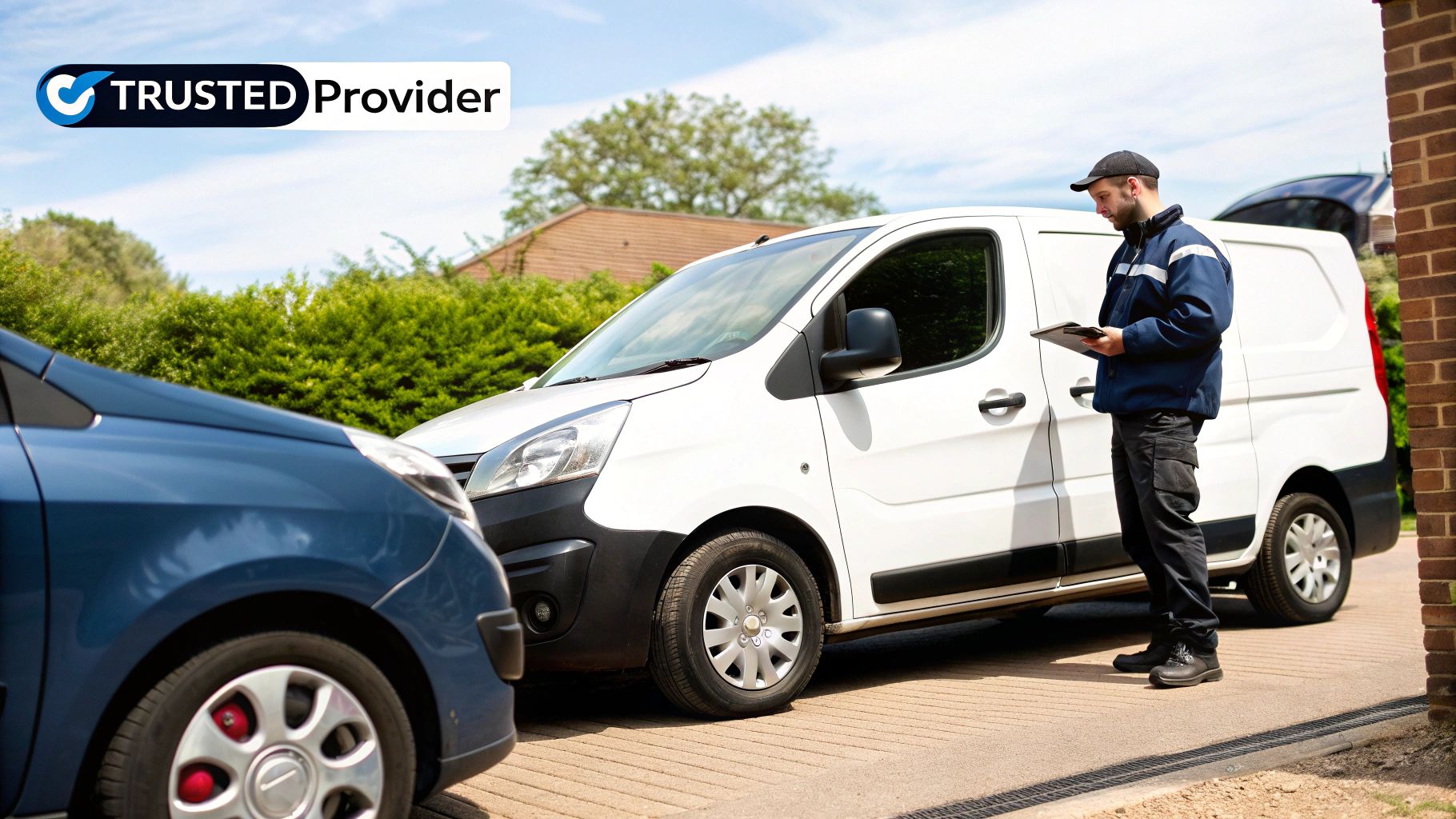
Knowing what drives the cost of a mobile windshield replacement is half the battle. Now, let’s get into the practical side of things—how to actually lower that final bill without ever cutting corners on safety. A few savvy moves can make a real difference to your wallet.
The single most effective thing you can do is get multiple quotes. Seriously, don't just accept the first price you're given. Reach out to at least three different reputable mobile services and have them price out the job for your specific vehicle. This simple step puts you in the driver's seat and gives you a clear picture of the fair market rate.
Ask the Right Questions Before You Book
Once you have a technician on the phone, a few smart questions can uncover hidden savings. Being an informed customer is your best defense against surprise fees and inflated invoices.
Here’s what to ask:
Inquire About Aftermarket Glass: Ask them directly if they offer high-quality aftermarket glass, also known as OEE (Original Equipment Equivalent). As we've discussed, it’s a perfectly safe and reliable alternative to pricey OEM glass and can easily slash material costs by 30% to 50%.
Confirm All Fees Upfront: Don't settle for a vague estimate. Ask for a detailed, all-inclusive quote. A great way to phrase it is, "Does this price cover everything—labor, materials, the mobile service fee, and any ADAS recalibration needed?" This simple question prevents nasty surprises when the bill comes.
Pro Tip: Before you even start calling for quotes, pull out your insurance policy. A quick call to your agent can clarify your glass coverage. Many policies include a zero-deductible or low-deductible option that could mean your out-of-pocket cost is minimal, or even nothing at all.
Finally, take a closer look at the damage. If you're dealing with a small chip (think smaller than a quarter) or a short crack under six inches, a repair might be on the table. A mobile windshield repair is a fraction of the cost of a full replacement, it's just as safe, and it stops the damage dead in its tracks. Always ask the technician if a repair is a viable option for your specific situation.
A Few Final Questions
Even after getting the details, you probably have a few more questions rattling around. That's completely normal. Getting straight answers is the best way to feel confident about your mobile windshield replacement, so let's tackle the most common ones we hear from Bay Area drivers.
Is Mobile Service More Expensive?
You can expect to pay a bit more for a mobile service, but not by much. Typically, the convenience fee runs between $50 to $100 on top of the standard replacement cost. This small premium covers the technician's travel time and the specialized equipment needed to perform a shop-quality job at your location.
Think of it this way: you're paying for the convenience of not losing half your day. For most people, skipping the drive to a shop and the long wait makes the extra cost a worthwhile investment.
Will This Make My Insurance Rates Go Up?
It’s highly unlikely. Most insurance providers categorize windshield replacement as a no-fault comprehensive claim. A stray rock hitting your glass isn't the same as an at-fault accident, so insurers see it as a random, unavoidable event.
Filing a single glass claim almost never affects your premiums. Still, it's always smart to give your insurance agent a quick call just to confirm how your specific policy handles it.
Is ADAS Recalibration Really Necessary?
Yes, 100%. This isn't an upsell; it's a critical safety procedure. Your car's Advanced Driver-Assistance Systems (ADAS) use cameras mounted directly on the windshield to power features like automatic emergency braking and lane-keeping assist.
When we install a new windshield, the camera's angle can be thrown off by less than a millimeter—enough to make the system unreliable or dangerously inaccurate. Recalibration resets everything to factory specifications, ensuring those life-saving features are ready when you need them most. It's a non-negotiable step for any modern vehicle.
Of course, if the damage is minor, you might not need a full replacement at all. To see if a simpler fix is an option, check out our guide on windshield repair versus replacement.
Ready for a clear view and a safe drive? At Auto Renu Auto Glass LLC, we bring expert mobile service right to your doorstep. Get your free, no-obligation quote today!