A Practical Guide to Repair a Windshield
Learn when you should repair a windshield yourself versus calling a pro. Our guide covers chip repair, costs, insurance, and finding a qualified technician.
Feb 10, 2026
generated
repair a windshield, windshield chip repair, DIY auto glass, ADAS calibration, auto glass services
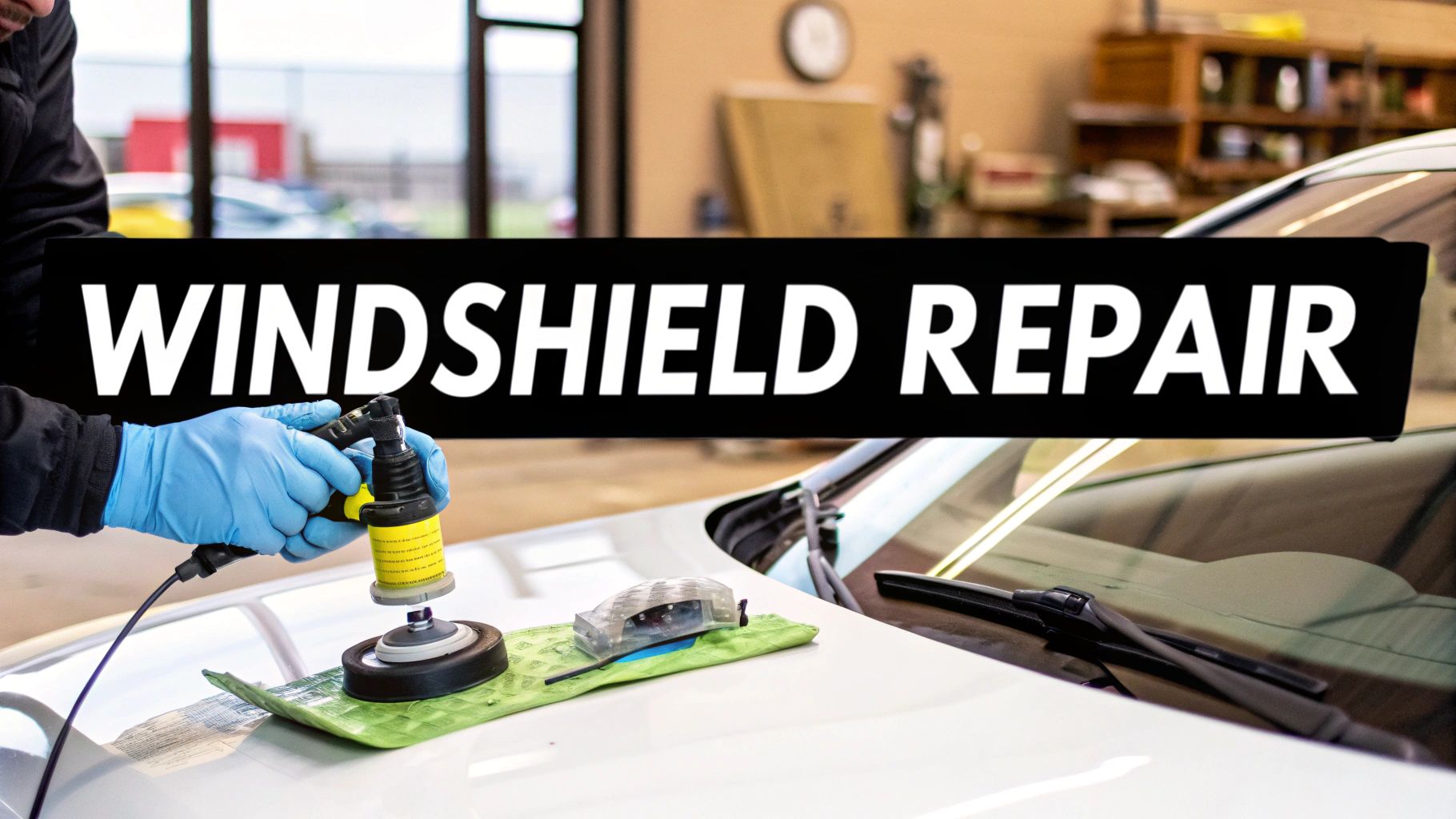
That little rock chip staring back at you from your windshield is more than just a visual pest—it's a weak spot. The good news is, you can often repair a windshield on your own if the damage is small, saving yourself a few hundred dollars and restoring the glass's structural strength.
Deciding Between Windshield Repair and Replacement
Putting off a small chip repair is a risky game. A sudden temperature drop, a bumpy road, or even slamming your car door can turn that minor flaw into a massive crack that can’t be fixed. The trick is to check out the damage right away to figure out if you're looking at a quick DIY job or a necessary replacement.
Knowing what kind of damage you're dealing with is the first step toward making the right call.
Damage Size and Type
The size, depth, and shape of the damage tell you almost everything you need to know. A simple, round chip, often called a bullseye, is the perfect candidate for a home repair. You might also see a few other common types:
Star Break: This one has small cracks shooting out from the middle of the impact.
Combination Break: It’s a messy mix of a bullseye and a star break.
Half Moon: A semi-circular chip that’s usually pretty straightforward to fix.
Generally, if a chip is smaller than a quarter and any cracks stemming from it are shorter than a dollar bill, you can probably repair it. Anything bigger is a different story; it compromises the safety of the glass and almost always means a full replacement is in order.
For a deeper dive, you can learn more about when to replace a windshield in our detailed guide.
This flowchart gives you a quick visual on whether to repair or replace your windshield.
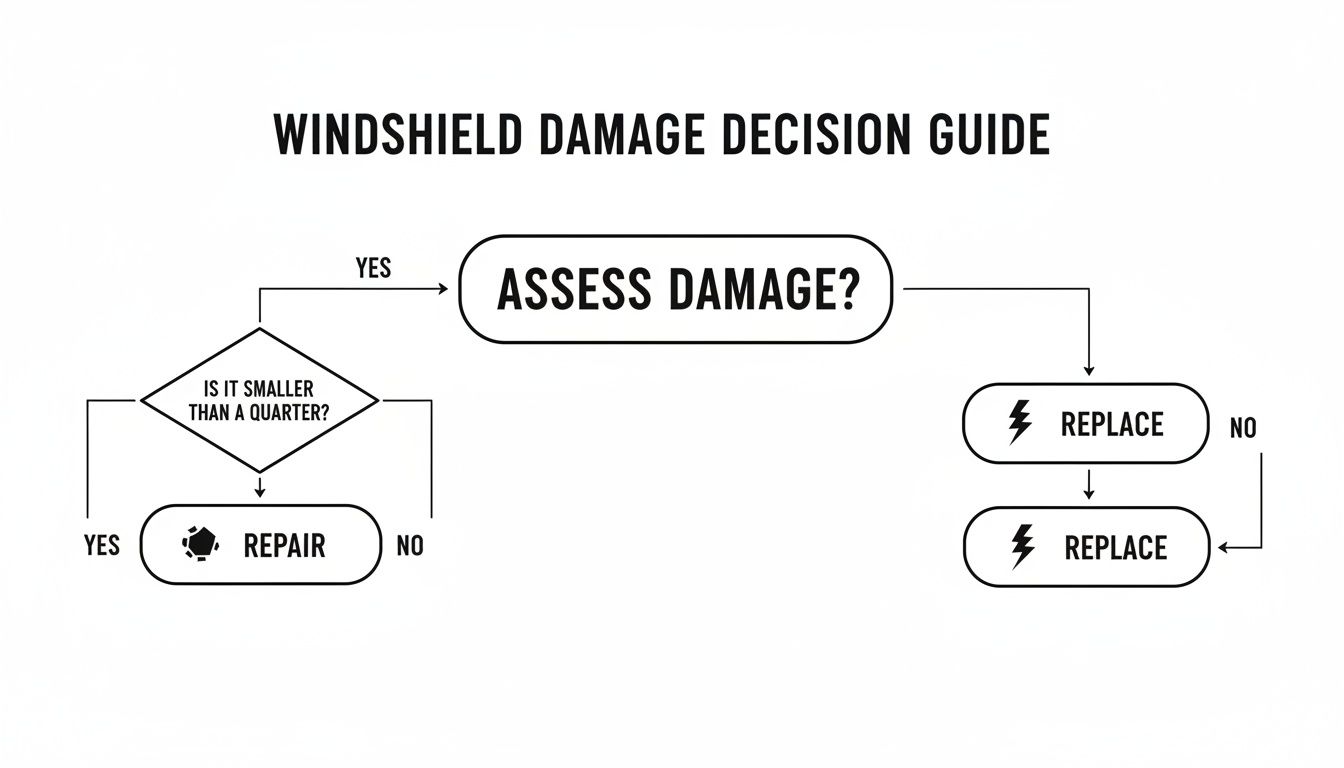
As you can see, smaller, contained damage usually points to a simple repair, while larger, spreading cracks mean it's time for a new windshield.
Damage Assessment Guide: Repair vs. Replace
To make things even clearer, here’s a quick reference table. Use it to help you decide on the best course of action for your windshield.
Damage Type & Size | Recommended Action | Reasoning |
|---|---|---|
Bullseye Chip < 1-inch diameter | Repair | Small, contained damage that can be easily filled with resin to restore strength and clarity. |
Star Break < 1.25 inches total | Repair | The radiating cracks can be filled, preventing them from spreading further across the glass. |
Crack < 6 inches long | Repair | A single, short crack can often be stopped and sealed before it grows. |
Damage in Driver's View | Replace | A repair can leave a minor distortion, creating a dangerous blind spot for the driver. |
Damage on Edge of Glass | Replace | Damage within 2-3 inches of the windshield edge compromises the structural integrity needed for safety. |
Multiple Chips/Cracks | Replace | Too many weak points make the windshield unreliable and difficult to repair effectively. |
This table isn't exhaustive, but it covers the most common scenarios you'll encounter. When in doubt, it's always smart to get a professional opinion.
Location of the Damage
Where the rock hit is just as critical as the size of the chip. If the damage is smack in the middle of the driver's line of sight, pretty much any pro will tell you to get a replacement. Even a perfect repair can leave behind a slight distortion that could mess with your view of the road.
You also want to avoid repairs if the damage is too close to the edge of the windshield. A chip or crack within two to three inches of the perimeter can weaken the entire structure, which is crucial for airbag deployment and supporting the roof in a rollover.
This is a common headache for drivers. The U.S. auto windshield repair industry is on track to become an $8.9 billion market by 2026, with some estimates suggesting that one in seven vehicles will need a fix each year. It just goes to show you're not alone when you hear that dreaded "thwack" on the highway.
Handling a DIY Windshield Chip Repair
For small chips, a good quality DIY kit can be a surprisingly solid and cost-effective fix. If you catch it early, you can often handle the repair yourself in under an hour, saving a good chunk of money and, more importantly, stopping that little chip from turning into a massive crack that requires a full windshield replacement.
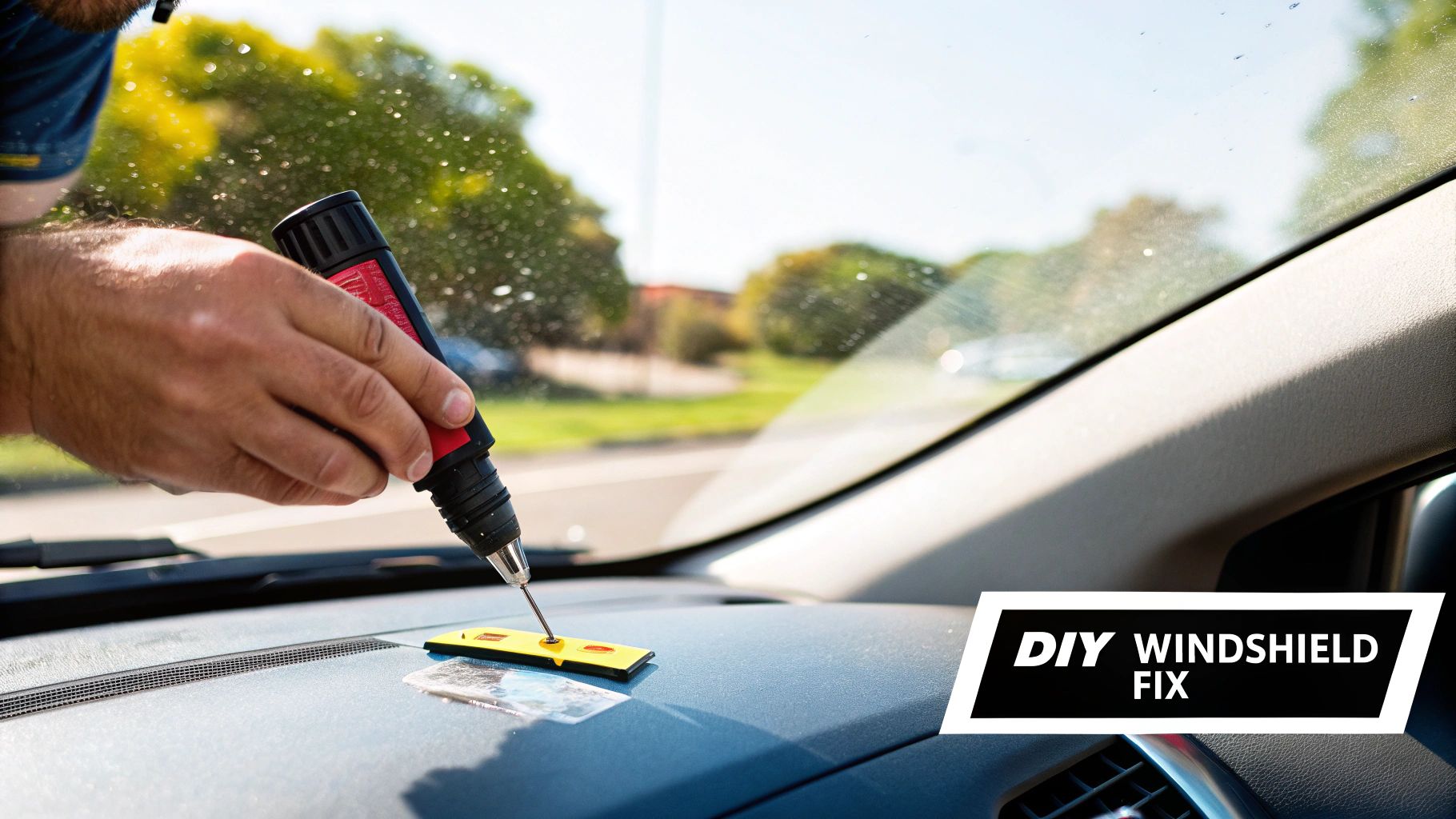
Think about it: you get off the highway and spot that tell-tale bullseye from a stray rock. That's the moment to act. Most DIY kits give you everything you'll need—the repair resin, an applicator tool, and a curing strip.
Preparing the Damaged Area
Honestly, this is the most critical part of the whole job. If the surface isn't perfectly clean and dry, the resin just won't bond correctly, and the repair will fail.
Start by gently digging out any tiny, loose glass fragments from the chip's center. The tip of a pushpin or a fresh razor blade works perfectly for this.
Next, give the area a thorough cleaning with some rubbing alcohol on a clean microfiber cloth. You’ll want to skip the Windex or other household glass cleaners for this; many of them leave behind residues that can mess with the resin's adhesion. The goal here is a spotless surface with no dust, moisture, or grime.
Applying the Repair Resin
Once the glass is prepped, you're ready for the resin. The applicator tool that comes in the kit is designed to create a tight vacuum seal right over the chip. This little device is clever—it first sucks all the air out of the break and then injects the clear resin deep into every microscopic crack.
Just follow the kit's instructions to position the applicator over the damage. After you've added the resin, you'll use the plunger to create that vacuum and then apply pressure, forcing the resin into the chip. This is the magic step that makes the damage seem to disappear.
Here's a pro tip from years of experience: always do this part in the shade. If you try to apply the resin in direct sunlight, it will start to cure before it has a chance to seep into the entire chip, trapping air pockets and weakening the repair.
After the resin has filled the void and you've removed the applicator, you might want a bit more detail. For a deeper dive into the specific techniques, you can explore our full guide on the topic: https://www.autorenu911.com/blog/diy-windshield-repair.
Curing and Finishing Touches
With the chip completely filled, you'll place the provided curing strip over the still-wet resin. This little plastic square keeps the resin flat and smooth while it hardens. Now, it’s time for some sun.
Move your car out into direct sunlight. The UV rays are what actually harden, or "cure," the resin, creating a permanent, strong bond with the glass. On a bright day, this typically takes about 15-20 minutes.
Be Patient: Don't get ahead of yourself and rush the curing time. If it doesn't get enough UV exposure, the repair won't last.
The Final Scrape: Once it’s fully hardened, take a new razor blade, hold it at a 45-degree angle, and carefully scrape off the excess resin from the windshield's surface.
Polish and Inspect: A quick wipe-down with a clean cloth is all you need to finish. The surface should feel perfectly smooth, and the chip will be nearly invisible.
By getting this done, you've not only saved your windshield's integrity but also dodged a much bigger and more expensive problem down the road.
Knowing When to Call a Mobile Glass Professional
A DIY kit can be a real lifesaver for small rock chips, but there are times when you absolutely need to leave it to the pros. It's not just about getting a better-looking repair; it's about the safety and structural integrity of your vehicle. Trying to fix the wrong kind of damage yourself can easily lead to a failed repair, forcing a much more expensive replacement down the road.
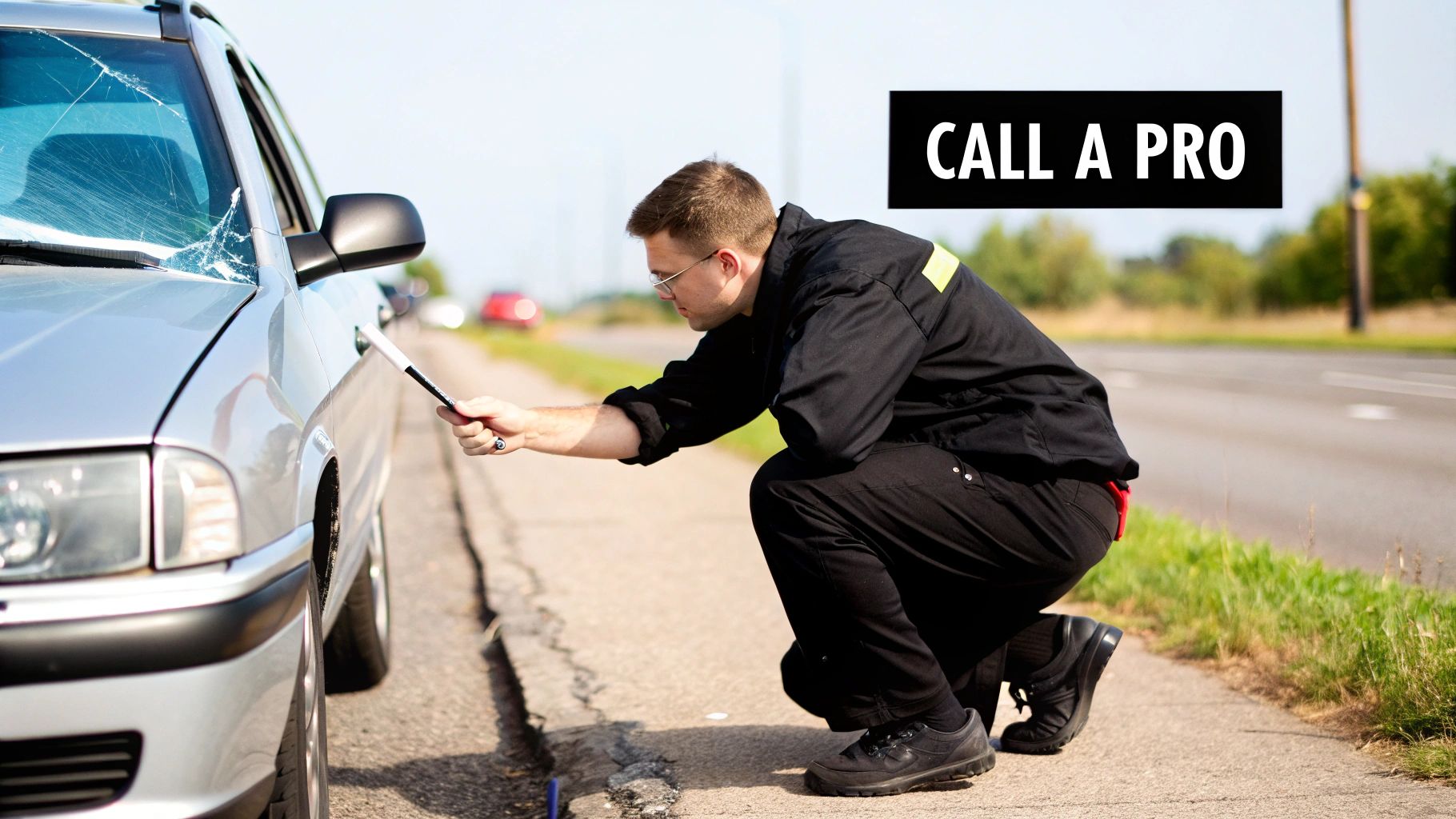
Think of certain types of damage as clear stop signs. These aren't just suggestions—they are critical boundaries that separate a quick fix from a genuine safety risk.
Red Flags for DIY Repair
If you see any of these issues on your windshield, it’s time to put the DIY kit away and call a mobile auto glass specialist. A professional assessment is the only way to guarantee a safe, permanent solution.
It’s in Your Line of Sight: Any damage, no matter how small, directly in the driver’s field of vision is a deal-breaker. Even a perfect resin repair can leave behind a slight distortion, creating a dangerous distraction when you're on the road.
The Crack is Getting Long: That tiny chip you ignored can spiderweb into a long crack surprisingly fast. As a rule of thumb, if a crack is longer than a dollar bill (about six inches), the windshield's stability is likely compromised. At that point, replacement is the only safe bet.
The Damage is Too Close to the Edge: The perimeter of your windshield is a critical structural area. Any chip or crack within two to three inches of the edge can seriously weaken the glass. This compromises its ability to support the roof in a rollover and can even affect how your airbags deploy.
A seasoned technician will spot these high-risk situations instantly. They know exactly how damage impacts laminated safety glass and can save you from wasting time and money on a repair that was never going to hold up.
The ADAS Recalibration Requirement
Modern cars bring a whole new level of complexity to the table. If your vehicle has Advanced Driver-Assistance Systems (ADAS)—think lane-keeping assist, adaptive cruise control, or automatic braking—a windshield replacement becomes a highly technical job.
These systems depend on cameras and sensors that are mounted directly to the windshield. When a new one goes in, those components must be recalibrated with precision to function as intended. This isn't something you can do at home; it requires specialized equipment and know-how to ensure your car’s safety features work correctly. If you skip this step, they might not work at all, or worse, they could malfunction when you need them most.
The importance of this process is reflected in the market itself. The ADAS calibration market in the U.S. hit $959 million in 2022, tied to the 3.8 million windshield replacements that needed this alignment. This is why calling a mobile pro like Auto Renu for a timely chip repair is so smart—it can prevent a minor issue from turning into a full replacement that could run anywhere from $300 to $1,500. You can explore more data on smart windshield technologies to see how fast this service is growing.
Navigating Windshield Repair Costs and Insurance
Dealing with a cracked or chipped windshield is frustrating enough without a surprise bill. Let's break down the real-world costs and how your insurance can make the whole process surprisingly painless.
When you're looking at a small chip, you have two main paths. A DIY repair kit from an auto parts store will set you back about $20 to $30. It's the cheapest route, for sure. But if you want a pro to handle it, a mobile repair service typically charges between $75 and $150. You're paying for their experience and commercial-grade resin, which usually gives you a stronger, nearly invisible repair.
Here's the secret weapon many drivers forget: your insurance policy. Most comprehensive auto policies will cover the full cost of a chip repair, often without you paying a dime out of pocket.
Think about it from the insurer's perspective. They'd much rather pay for a quick $100 repair today than a $500+ replacement down the road when that tiny chip turns into a massive crack. It's a win-win: they save money, and you get a fixed windshield for free.
Working With Your Insurance Company
Before you pick up the phone to book a repair, your first call should be to your insurance agent or a quick look at your policy online. Your goal is to confirm you have comprehensive coverage and understand the specifics of your glass policy.
I always recommend asking these questions directly:
Does my comprehensive coverage include windshield chip repairs?
Is my deductible waived for a repair (it often is)?
Can I choose my own auto glass shop, or do I have to use one of your preferred partners?
Will a glass repair claim count against me or raise my rates? (For a simple repair, the answer is almost always no.)
Knowing the answers puts you in the driver's seat. For a deeper dive, our guide on how insurance covers windshield replacement and repairs has all the details. Even better, a good mobile glass company like Auto Renu will handle the insurance shuffle for you. They call your provider, verify everything, and bill them directly. You just schedule the appointment.
When Costs and Coverage Get Complicated
It's pretty rare, but sometimes you and your insurance company might not see eye-to-eye on the cost of a repair, especially for more complex jobs. If you ever find yourself in a dispute over the estimate, it’s helpful to know about the appraisal clause in auto insurance.
This clause is essentially a built-in dispute resolution tool. It provides a formal process for settling disagreements on value without heading to court. Understanding these little details in your policy helps you stand up for yourself and make sure you get the quality work your vehicle deserves. When you know how to use your insurance benefits, that necessary windshield repair can be far more affordable than you think—and often, completely free.
How to Choose the Right Mobile Repair Specialist
When a rock chip turns into a real problem, calling a mobile repair specialist seems like the easiest fix. It is. But that convenience can come with a hidden cost if you hire the wrong person.
You’re not just paying for a service; you're trusting someone with a component that’s crucial to your car's safety and structural integrity. A botched repair can fail within days, leaving you right back where you started—or worse, facing a full replacement. So, how do you sort the pros from the pretenders?
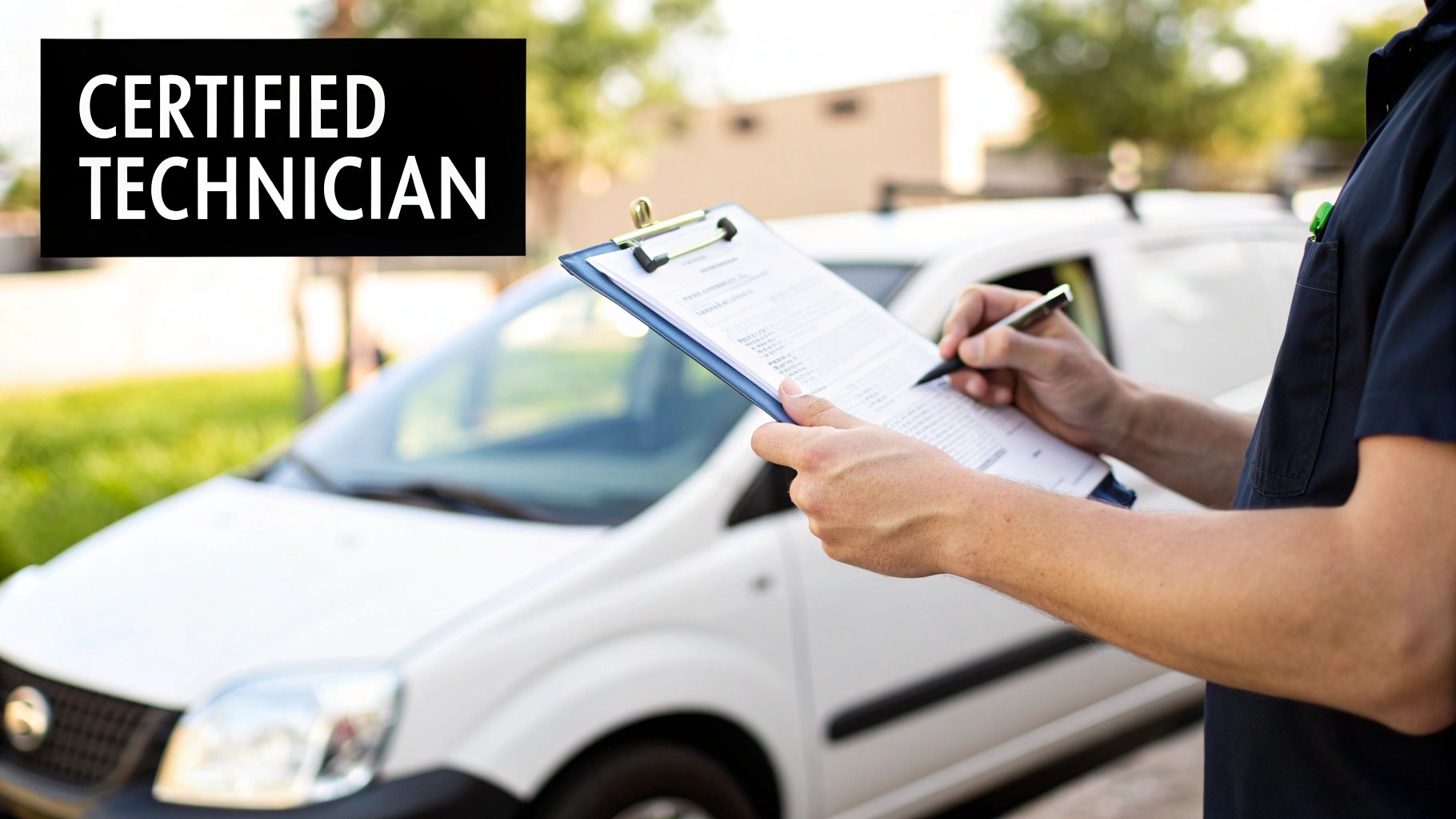
It really comes down to doing a little homework before you book the appointment. A few pointed questions can save you a world of trouble.
Certifications and Insurance Are Non-Negotiable
First things first, you need to know who you're dealing with. Look for technicians certified by the Auto Glass Safety Council (AGSC). This isn't just a fancy credential; it means they’ve been trained on the industry’s best practices for safety and quality. They know the right procedures, the right materials, and why it all matters.
Equally important is insurance. A professional operation will always carry comprehensive liability insurance to protect your vehicle while it's in their hands. If someone hesitates to show you proof of their certification or insurance, that's your cue to walk away.
Ask About the Materials They Use
The quality of the repair is only as good as the materials going into it. If you're getting a full replacement, you'll want to ask if they use Original Equipment Manufacturer (OEM) glass. This is the same glass your car had when it rolled off the assembly line, ensuring a perfect fit and function. High-quality Original Equipment Equivalent (OEE) glass is another solid option, but you should know what you’re paying for.
For chip repairs, it’s all about the resin. The stuff professionals use is light-years ahead of the resin in those DIY kits. It’s stronger, cures clearer, and creates a much more durable, nearly invisible bond.
A trustworthy specialist will be transparent about the materials they use. If a company is evasive about their glass sources or the type of resin they use, consider it a major red flag.
Dig Into Their Warranty and Experience
A warranty is a company’s promise to stand behind its work. Reputable mobile glass services will offer a lifetime warranty that covers defects in their workmanship or materials. This tells you they’re confident in what they do and are committed to getting it right.
Experience with your specific vehicle is also a huge factor. A windshield on a 15-year-old pickup is a different beast than one on a new Tesla or Mercedes. Modern cars often have cameras and sensors for Advanced Driver-Assistance Systems (ADAS) embedded in the windshield. A technician needs to know how to handle these systems and perform a proper ADAS recalibration after a replacement.
Companies like Auto Renu Auto Glass LLC have the specialized training needed for these complex jobs, ensuring your car’s safety features work exactly as they should.
Choosing the right person to repair your windshield isn't complicated. By vetting their credentials and asking the right questions, you can find a true professional who will get you back on the road safely.
To help you out, here’s a quick checklist you can run through when you’re on the phone with a potential company.
Vetting a Mobile Auto Glass Professional
Checklist Item | Why It Matters | What to Ask |
|---|---|---|
AGSC Certification | Ensures the technician is trained on current safety standards and best practices. | "Are your technicians certified by the Auto Glass Safety Council?" |
Proof of Insurance | Protects your vehicle from any accidental damage during the repair process. | "Can you provide proof of your business liability insurance?" |
Material Quality | Determines the durability, clarity, and fit of the repair or replacement. | "Do you use OEM or OEE glass? What kind of resin do you use for chip repairs?" |
Lifetime Warranty | A sign of a company that stands behind its workmanship and materials. | "What kind of warranty do you offer on your repairs and installations?" |
ADAS Recalibration | Critical for ensuring safety systems function correctly after a replacement. | "Are you equipped to perform ADAS recalibration for my [Car Make/Model]?" |
Experience with Your Vehicle | Confirms they can handle any specific complexities of your car's make and model. | "How much experience do you have working on vehicles like mine?" |
Taking a few minutes to run through these points will give you the confidence that you’re hiring a qualified expert, not just the first person who shows up in search results.
Got Questions? We’ve Got Answers.
When it comes to windshield repair, a few questions always seem to pop up. Knowing the answers ahead of time can save you a lot of hassle and help you feel confident you're making the right call for your car. Let's clear up some of the most common ones we hear from drivers.
How Long Does a Pro Chip Repair Take?
One of the best things about professional chip repair is that it’s incredibly quick. You won't be stuck waiting around all day. A good technician can get the whole job done—from prepping the area to curing the resin—in about 30 to 60 minutes.
The best part? You can usually drive your car right away. It's a simple fix that fits into almost any schedule, which is perfect for stopping a small chip from turning into a big, expensive crack.
The speed and convenience of a professional repair are a huge part of its appeal. It's about getting an expert fix with minimal disruption to your day.
Will My Insurance Rates Go Up for a Repair?
This is a big one for a lot of people, and the answer is almost always a relief: No, filing a claim for a chip repair will not raise your insurance rates. Insurers actually prefer you get it fixed.
Think of it from their perspective—they’d much rather cover the small cost of a repair now than shell out for a full windshield replacement later. In fact, many comprehensive insurance policies will waive your deductible for chip repairs, meaning it costs you absolutely nothing. It’s always smart to double-check with your provider, but these are typically considered "no-fault" claims that don't work against you.
Can a Windshield Be Repaired in Any Weather?
Weather is a surprisingly huge factor. Rain, or even just high humidity, is the enemy of a good repair. If any moisture gets trapped in that chip, the resin won't bond properly, and the fix is pretty much guaranteed to fail.
Extreme heat or cold can also mess with how the resin cures. This is where calling a professional mobile service really pays off. A pro technician knows how to handle these conditions, often working in a garage or using special equipment to create a dry, controlled environment for a lasting repair.
What Is ADAS Recalibration and Why Is It So Important?
If your car has features like lane-keep assist or automatic emergency braking, it’s equipped with an Advanced Driver-Assistance System (ADAS). These systems use cameras and sensors that are often mounted directly onto your windshield.
When a windshield is replaced, those cameras and sensors have to be perfectly realigned to the manufacturer's exact specifications. That process is called ADAS recalibration. If the alignment is off by even a fraction of an inch, those critical safety features could fail when you need them most. It’s not just a recommendation; for any modern car with these features, it’s an absolutely essential safety procedure after a replacement.
When you need to repair a windshield and want it done right the first time, turn to the experts. At Auto Renu Auto Glass LLC, we bring fast, reliable mobile service to you and handle all the insurance paperwork. Schedule your expert repair today.