
A Pro's Guide to Repair Chips in Windshield
Learn how to repair chips in windshield with our guide. Discover when to DIY, when to call a pro, and how to navigate costs and insurance for a lasting fix.
Jan 10, 2026
generated
repair chips in windshield, windshield chip repair, diy auto glass, mobile windshield repair, auto glass maintenance
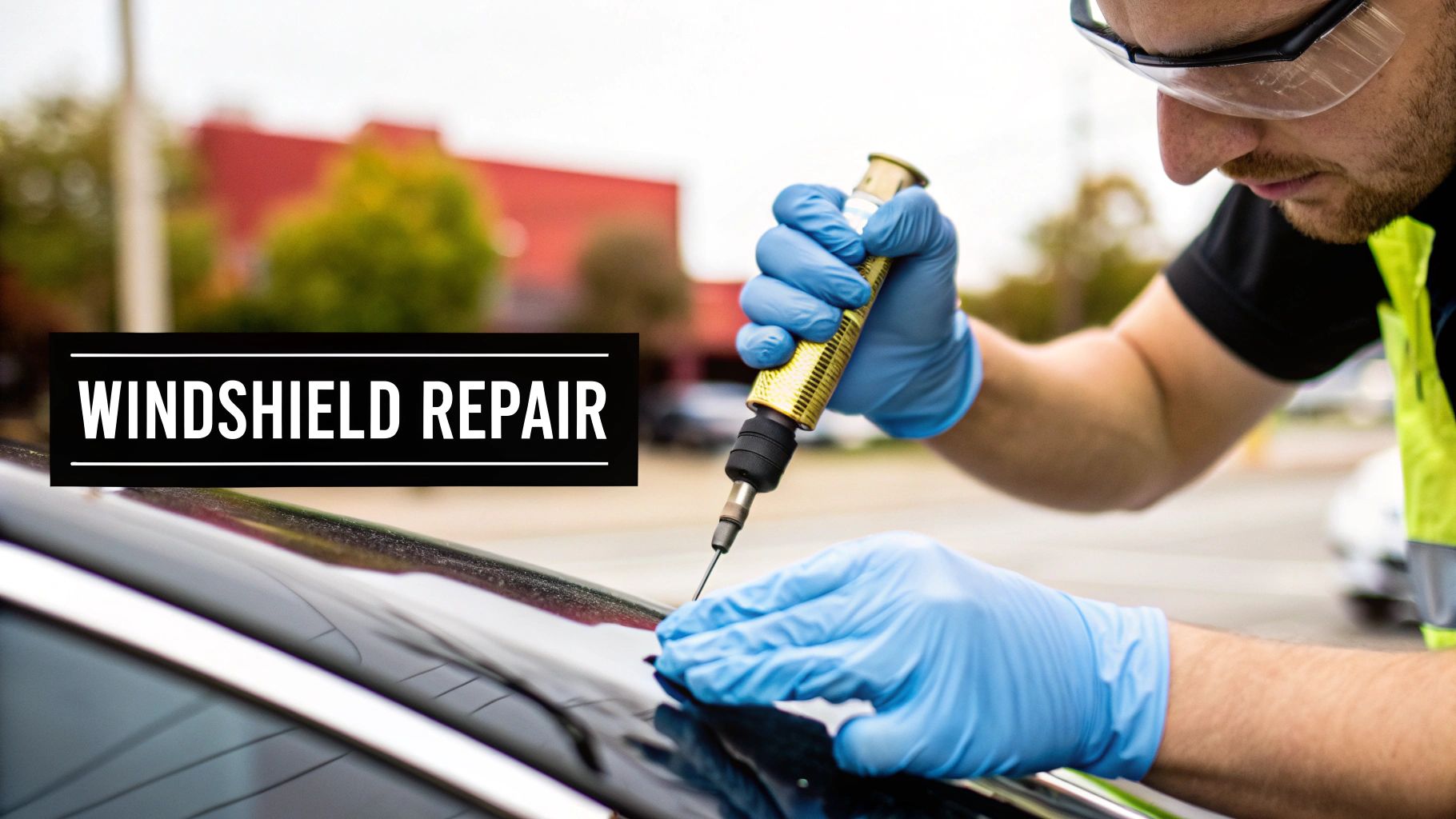
You’ve seen it happen. That tiny ping as a rock flies up from the truck ahead, leaving a small, infuriating mark on your windshield. It’s tempting to just shrug it off, but that little chip is more like a ticking time bomb than a minor cosmetic flaw. Ignoring it is a gamble, because the daily stress of driving and sudden temperature changes can turn that easy fix into a full, costly windshield replacement before you know it.
Acting fast isn't just about looks—it's about saving yourself a major headache and a lot of money down the line.
Why That Little Chip Is a Big Deal

It’s easy to write off that tiny ding from a stray piece of gravel, but the risk is very real. Your windshield does a lot more than just keep the wind and rain out; it’s a crucial piece of your car's safety system. Believe it or not, in a rollover accident, the windshield provides up to 60% of the structural support for the roof, stopping it from caving in. A chip creates a weak spot in that support system, a point of failure waiting to happen.
Think about your daily drive. Every bump, pothole, and uneven patch of road sends vibrations through your car's frame and, you guessed it, the windshield. This constant flexing puts pressure on the damaged area, encouraging a small bullseye or star break to spread into a long, spidery crack when you least expect it.
Weather Is Not Your Friend
Temperature swings are a chipped windshield’s worst enemy. Blasting the AC on a scorching summer day creates a massive temperature difference between the inner and outer layers of the glass. That thermal stress is often the tipping point that transforms a simple chip into an unfixable crack. The same thing happens in reverse when you crank up the defroster on a frosty morning.
A small chip is a simple problem with a simple solution. A long crack is a complex problem that almost always requires a full, expensive replacement.
The Real Cost of Procrastination
Putting off the decision to repair chips in windshield glass will almost certainly hit you in the wallet. Modern vehicles are packed with technology, and windshields are no exception. Many cars now come with Advanced Driver-Assistance Systems (ADAS), which rely on cameras and sensors mounted right on the glass.
If that chip spreads and you suddenly need a full replacement, the job isn’t over when the new glass is installed. The ADAS system has to be professionally recalibrated, a precise process that can tack on hundreds of dollars to your final bill. It’s no surprise that the global market for windshield chip repair is valued at over USD 1.38 billion; it's a reflection of how vital this small, proactive repair is for drivers everywhere. You can dig into the numbers and see the industry's financial impact in recent market analyses.
Assessing the Damage: Can It Be Fixed?
Before you rush out to buy a DIY kit or call a pro, you need to play detective with your windshield. A quick, honest assessment of the damage can save you a ton of time and money down the road. Figuring out exactly what you're dealing with—the type of chip, its size, and where it is—is the critical first step.
Not all rock chips are created equal. You might see a bullseye, which looks like a small, dark circle where the rock hit. Or maybe it's a star break, with little cracks shooting out from the impact point. Sometimes, you get a nasty combination break that's a bit of both. As you might guess, a simple bullseye is usually the easiest to fix, while those star breaks can be more unpredictable.
Knowing the Limits: Size and Location Matter
Here’s a classic trick from the auto glass world: the "dollar bill test." If you can cover the entire damaged spot, cracks and all, with a dollar bill, you're probably in good shape for a repair.
Most professional technicians can confidently repair chips up to the size of a quarter and single cracks up to six inches long. Anything bigger than that starts to seriously threaten the structural integrity of your windshield, and at that point, replacement becomes the only safe bet.
Where the chip is located is just as important as how big it is. If it's smack in the driver's line of sight, that's a problem. Even the best repair can leave a tiny distortion, and that's the last thing you want distracting you on the highway. Damage that's too close to the edge of the windshield is also bad news—that area is under a lot of stress, and a small chip can quickly turn into a massive crack.
A successful repair hinges on three things: the size, the location, and the depth of the damage. Misjudge any of these, and you could end up with a botched DIY job or a windshield that’s no longer safe.
Getting to Know Your Chip
The specific type of chip you have makes a big difference in whether it can be filled properly. Each one presents a unique challenge for the repair resin to get in there, fill the void, and bond correctly. To get a better handle on what you're looking at, take a look at this guide on the common types of windshield damage. It’ll help you match what’s on your glass to the industry terms.
Finally, think about depth. Your windshield isn't just one piece of glass; it's two layers laminated together with a plastic interlayer (PVB) for safety. A repair only works if the damage is just on the outer layer. If you can run your finger over the chip on the inside of the car and feel it, the damage is too deep. That's an automatic replacement, no questions asked.
Windshield Chip Repairability Checklist
To make things even simpler, here's a quick reference table. Use this to quickly gauge whether you should be thinking "repair" or "replace."
Damage Characteristic | Likely Repairable | May Require Replacement |
|---|---|---|
Size of Chip | Smaller than a quarter | Larger than a quarter |
Length of Crack | Single crack under 6 inches | Cracks longer than 6 inches |
Location | Outside the driver's direct view | Directly in the driver's line of sight |
Edge Proximity | At least 2 inches from the edge | Closer than 2 inches to the edge |
Depth | Only on the outer layer of glass | Penetrates to the inner layer |
If you can check off all the boxes in the "Likely Repairable" column, chances are a professional repair will be a fast, effective, and safe solution for your windshield.
The DIY Approach to Windshield Chip Repair
Thinking about tackling that windshield chip yourself? It's tempting. A DIY kit looks like a quick, cheap fix, and for a very specific type of damage, it can be. These kits are everywhere, and they all work on the same principle: you inject a clear resin into the chip to fill the void, restore structural integrity, and make the damage less noticeable.
The basic idea is simple enough. You start by meticulously cleaning any dust or tiny glass shards out of the impact point. A sharp pin or the very tip of a razor blade works well for this—you need to get in there and gently clear the path for the resin to flow. After that, you'll set up the injector rig right over the chip, creating a tight seal so you can push the resin deep into every part of the break. This part requires a steady hand and a bit of patience.
Preparing for a Successful Repair
Where you do the repair matters more than most people think. The biggest rookie mistake I see is trying to fix a chip in direct sunlight. The resin is cured by UV light, and if it hardens too fast, it won't have time to seep into all the microscopic cracks. You’ll end up with a weak, ugly repair. Always, always work in a shady spot or inside your garage.
Just as important is making sure the glass is perfectly clean and dry. Any lingering moisture, dirt, or even leftover window cleaner will get trapped under the resin, messing up the bond and leaving you with a cloudy spot that could fail down the road. A quick wipe with some rubbing alcohol on a clean microfiber cloth is your best bet to prep the surface.
A DIY repair is only as good as your prep work. Rushing the cleaning or working in the wrong environment can turn a simple fix into a permanent blemish on your windshield.
It's no surprise that these kits are so popular. The global market for windshield repair kits is projected to jump from USD 1.5 billion to nearly USD 2.5 billion by 2034. Personal vehicles account for over half of that demand, which just shows how many drivers are out there dealing with this exact problem. For a deeper dive, you can check out the numbers in this industry report.
Setting Realistic Expectations
Here's the honest truth about DIY kits: they can work pretty well on a small, simple bullseye chip. But that's about it. They just don't have the power to properly fill the legs of a more complex star break or a combination chip.
Even worse, a botched DIY attempt can make the damage look terrible and can actually prevent a professional from being able to fix it correctly later. If you've already tried a kit and the result isn't what you hoped for, our guide on DIY windshield repair has some good advice on what to do next.
This flowchart is a great way to quickly see if a DIY kit is even an option for the chip you're dealing with.
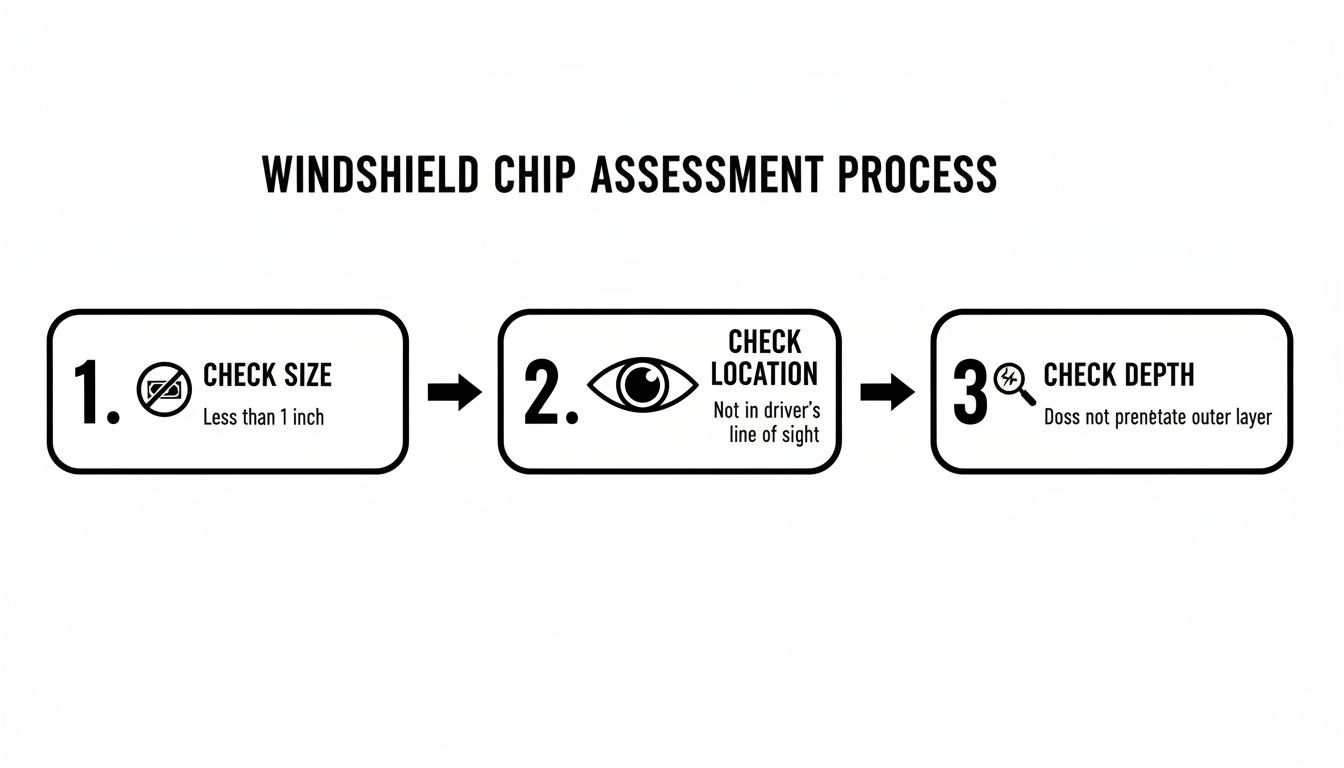
As you can see, the size, location, and depth of the chip are the three deal-breakers. If the damage you have fails any one of these checks, it's almost certainly not a good candidate for an at-home fix.
When It's Time to Call in a Professional
While a DIY kit from the auto parts store can seem like a quick, easy fix, there are definitely times when calling a professional isn't just a suggestion—it’s essential for your safety. Some types of damage are just too severe for a simple over-the-counter kit and really need the skilled hands of a trained technician.
Think about where the chip is located. If that damage is right in your line of sight, a DIY repair might leave behind a slight haze or distortion. That tiny imperfection can become a massive, dangerous distraction when you're driving. A pro has the right tools and years of experience to make the repair as unnoticeable as possible, but even they will often recommend a full replacement if the damage could obstruct your view.
The size and type of damage are huge factors, too. Is the chip bigger than a quarter? Does it have long cracks shooting out from the center? That’s way too complex for a basic resin kit. In those cases, you need a professional to make sure the windshield’s structural integrity is actually restored, not just patched over.
The Tools and Techniques Make All the Difference
The real advantage a professional brings is their equipment. A technician doesn't just squeeze some resin into the chip and hope for the best. They use a specialized injector tool to create a powerful vacuum right over the impact point. This is a critical step because it pulls every last bit of air and moisture out of those tiny, microscopic cracks—something a DIY kit just can't do.
Once that vacuum is created, the professional-grade resin is injected under high pressure, allowing it to get deep into every crevice for a complete bond with the glass. Then, it’s cured with a special UV light to create a bond that’s incredibly strong and nearly invisible. The whole point isn’t just to fill a hole; it’s to make the glass structurally sound again.
A professional doesn't just patch the damage; they perform a surgical procedure on your glass. This restores its strength, ensuring it can properly support the roof in a rollover and allow airbags to deploy correctly.
When you're looking for a professional, good communication is key. Many top-tier companies use dedicated glass repair answering services to make sure they never miss a call, even when their technicians are out on a job.
Why a Quality Repair Is Smarter Than a Quick Fix
Choosing a professional to repair chips in windshield glass is a smart investment in your safety and your vehicle's long-term health. From a cost and risk perspective, a solid chip repair offers incredible value. Industry stats show that professional repairs successfully stop a chip from spreading in about 70% of cases. On the other hand, cheap DIY kits have a much lower success rate, often failing and forcing you to get a follow-up service or a full replacement anyway.
Think about these deal-breaker scenarios where calling a pro is non-negotiable:
Multiple Chips: If you're dealing with two or more chips, their combined effect can seriously weaken the entire windshield.
Complex Cracks: Anything beyond a simple, clean bullseye—like a star break with long, spidering legs—needs an expert’s touch.
Damage Near the Edge: A chip within two inches of the windshield's edge is a ticking time bomb. It’s almost guaranteed to spread and needs immediate, professional repair.
Ultimately, a mobile service like Auto Renu Auto Glass LLC brings dealership-level quality right to your home or office. You get a permanent, safe, and crystal-clear repair that a little bottle from the store simply can't deliver.
Navigating Insurance and Repair Costs
So, you've got a rock chip. The first question that probably pops into your head is, "Great, how much is this going to cost me?" You might be pleasantly surprised to learn the answer could be nothing at all.
Many drivers don't realize that their comprehensive auto insurance policy is set up to handle exactly this kind of problem. In fact, most insurers will cover the full cost to repair chips in windshield glass and even waive your deductible.
Why would they do that? It's simple math for them. They'd much rather pay for a quick, affordable repair today than have to shell out for a full windshield replacement down the road. Fixing that small chip now stops a huge crack from forming later, saving them—and you—a major headache and a much bigger bill.
Understanding Your Coverage
Before you do anything else, it's smart to take a quick look at your insurance policy. Pull it up online or give your agent a call. You're looking for "comprehensive coverage" and any specific details on "glass repair."
When you talk to your agent, get straight to the point. Here’s what you need to ask:
Does my comprehensive plan cover windshield chip repairs?
Is my deductible waived for a repair? (This is the key question!)
Can I choose my own auto glass shop, or do I have to use one from your approved network?
Getting these answers upfront means you'll know exactly what to expect and can take full advantage of the benefits you're already paying for.
The Out-of-Pocket Cost Comparison
What if you don't have comprehensive coverage, or you'd just rather pay for it yourself? Even then, getting a professional repair is the smartest financial move you can make. Having a mobile service like ours fix the chip is a fraction of the cost of a full replacement.
Paying for a professional chip repair isn't just an expense; it's an investment in avoiding a much larger one. You're preserving the original factory-installed windshield and its perfect seal, which is always the best-case scenario for your vehicle's safety and value.
For a more detailed look at the numbers, check out our guide on the cost to repair a chipped windshield.
When you compare the minor cost of a professional fix against the hefty price of a brand-new windshield—especially if your car has modern ADAS safety systems that need costly recalibration—the choice is clear. A timely repair is always the right call.
Your Top Windshield Repair Questions, Answered
It's one thing to know the steps, but it's another to feel completely confident about the process. Even with a plan, you probably have a few nagging questions about fixing that chip in your windshield. That’s perfectly normal.
Let's walk through some of the most common concerns we hear from drivers every day. We'll clear up any lingering confusion so you know exactly what to do, whether you're looking at a tiny bullseye or weighing your options after a rock kicked up on the highway.
How Long Does a Professional Repair Actually Take?
You'll be happy to hear that professional chip repair is incredibly quick. Most of the time, a skilled technician can have the entire job done in about 30 minutes or less. It's one of the main reasons people opt for a pro.
The best part? You can drive your car immediately afterward. The special resin used in the repair is cured with a UV light, which hardens it almost instantly and creates a solid bond. This means you can get it fixed in your driveway or on your lunch break without skipping a beat.
Will the Chip Be Completely Invisible After It's Repaired?
This is a big one, and it's important to have the right expectations. The main reason to repair a chip is to restore the strength of your windshield and stop a crack from spreading. The cosmetic improvement is a fantastic bonus, but it's secondary.
A top-notch repair will make the chip 80-95% less noticeable, but it probably won't disappear completely. You might still see a very faint mark where the impact happened if you're looking for it up close. From a normal driving position, though, a good repair is often practically invisible.
The purpose of a repair isn't perfection; it's prevention. A nearly invisible fix that stops a crack from forming is always a win over a full windshield replacement.
Is It Really That Bad to Drive with a Chipped Windshield?
Look, driving for a short time with a tiny chip is usually fine, but you don't want to ignore it for long. That chip is now the weakest point in your windshield, and your windshield is a critical part of your car's structural safety system.
Every pothole you hit or sharp turn you take puts stress on the glass. Even something as simple as blasting the AC on a hot day can cause a sudden temperature change, turning that little chip into a long, unfixable crack. Getting it repaired quickly is always the safest and smartest move.
What If It Starts Raining on My Chip?
Rain definitely throws a wrench in the works. When water gets into the chip, it often carries tiny bits of dirt and road grime with it. That contamination can prevent the repair resin from properly bonding to the glass, which can result in a weak or cloudy-looking fix.
If it rains, don't panic. The key is that the chip needs to be bone-dry before any repair can happen. A professional has the right tools to carefully dry out the damaged area to ensure the resin cures perfectly. Just don't let it stay wet for days, as that moisture can accelerate the cracking process.
When you need a fast, reliable, and professional solution, Auto Renu Auto Glass LLC delivers dealership-quality repairs right to your location. Don't let a small chip turn into a big problem—schedule your mobile repair today!