
Your Guide to Windshield Repair Mobile Service
Discover how a windshield repair mobile service saves you time with on-site fixes. Learn about costs, insurance, and choosing a certified technician.
Dec 6, 2025
generated
windshield repair mobile service, mobile auto glass, windshield chip repair, ADAS calibration, on-site auto glass
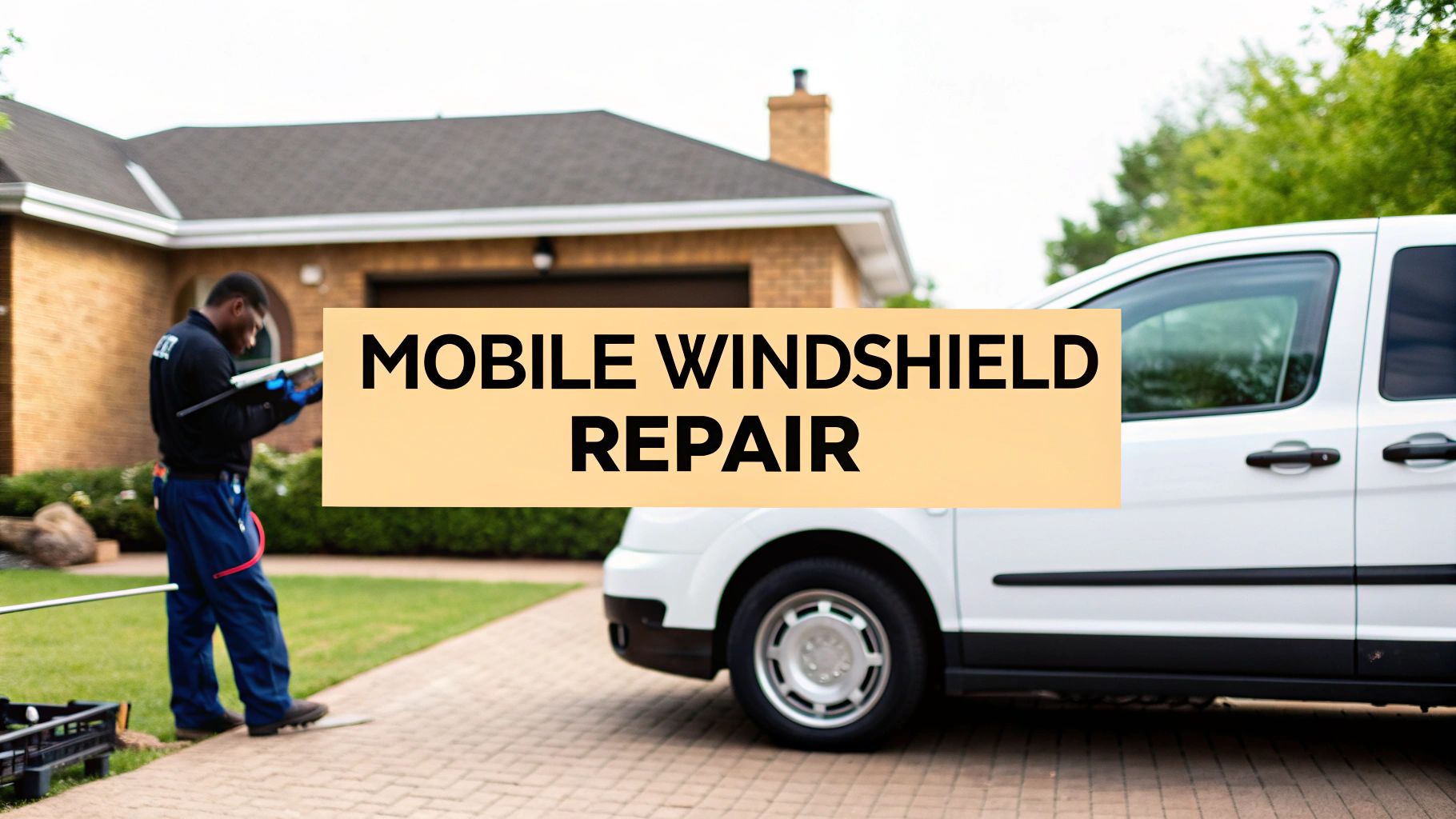
Ever had a rock chip your windshield and immediately thought, "Great, there goes my afternoon"? That's where mobile windshield repair completely changes the game. Instead of you driving to a shop, a fully equipped auto glass expert comes directly to you—at home, at work, wherever you happen to be. It turns what used to be a major hassle into a simple appointment that fits into your day.
How Mobile Windshield Repair Brings the Shop to You
Think of it as having an auto glass shop on wheels. The whole idea is to stop that annoying rock chip from disrupting your life. Rather than you blocking off time to drive to a garage, a technician pulls up to your location and gets the job done right there.
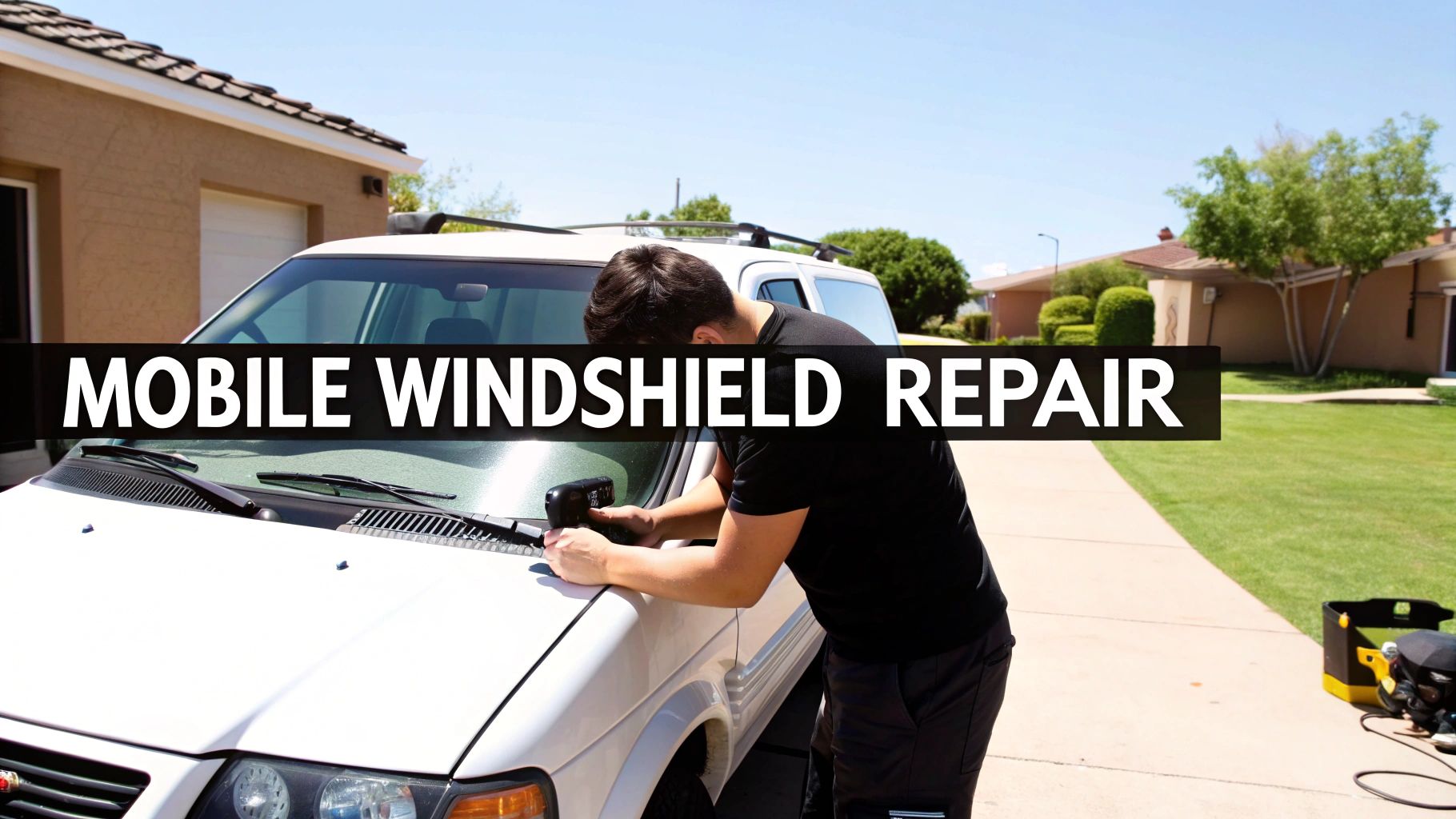
This simple shift makes a world of difference. A professional technician arrives in a van packed with everything they need for a top-notch repair—specialized resins, injectors, UV curing lights, and even diagnostic tools for newer cars. You can stay on that conference call or keep an eye on the kids while your windshield is being fixed in the driveway.
The Real Advantage: Convenience Meets Quality
The biggest win here is getting your time back. The old way of doing things meant you had to:
Take time off work or rearrange your day.
Drive across town, often with a crack in your line of sight.
Sit around in a waiting room or figure out a ride home.
Mobile service flips that script entirely. The technician works around your schedule, not the other way around. This convenience isn't just a gimmick; it's a huge reason the auto windshield repair services sector has grown into an $8.3 billion industry.
In fact, one recent survey found that 80% of customers who used a mobile service were highly satisfied, specifically because of the time they saved. You can learn more about the rise of mobile auto glass repair and see just how much it has impacted the industry.
This on-demand approach isn't just a passing trend. It's a direct response to how we live today. We all value our time, and mobile repair respects that by delivering expert service without the logistical nightmare of a traditional shop visit. It's just a smarter, more efficient way to keep your vehicle safe.
Why Mobile Repair Is a Smarter Choice for Your Schedule
Let's face it, time is the one thing we can't get more of. So when a rock chips your windshield, the old-school repair process feels like a time thief. It forces you to stop everything, drive across town to a shop, and just... wait. A windshield repair mobile service flips that script entirely, letting you get a critical safety fix without ever hitting pause on your day.
Think about it. You're a busy professional with a huge presentation in the afternoon, and you spot a fresh chip in your glass. The old way meant you’d be scrambling, trying to reschedule appointments or sacrificing your lunch break. The new way? You make a quick phone call. A technician shows up and fixes your windshield right in the office parking lot while you’re inside crushing your final prep.
This isn’t just about making things easier; it’s about making them work for your life. For a parent juggling school pickups and soccer practice, a mobile repair means the car gets fixed in the driveway while the kids are inside. The repair becomes a background task, not a day-ruining event.
Turning Wasted Time into Productive Time
The real magic of a mobile service is that it erases all the travel and waiting that comes with a traditional shop visit. Instead of killing an hour or more in a bland waiting room, you can keep working, relax at home, or run errands. It’s a complete shift in how we should think about car care.
Here’s what bringing the repair to you actually looks like:
No Travel, No Hassle: Forget about wasting gas or driving with a damaged windshield. A technician comes directly to your location, whether that's your house, your office, or even the gym parking lot.
Zero Waiting Room Purgatory: Your day keeps moving forward. The repair happens while you’re already doing something else, so your productivity never takes a hit.
Scheduling That Works for You: Mobile services are designed to fit your calendar. Technicians can often squeeze in same-day appointments, fitting into small time slots that would be impossible with a trip to a shop.
This "go anywhere, work everywhere" model is a huge part of what makes the service so effective. To dig deeper into the broader benefits of mobile access in field services, you can see how this on-demand approach is changing the game in all sorts of industries, not just auto glass.
Convenience Is Also a Safety Feature
Putting off a windshield repair because you’re “too busy” is a gamble you don’t want to take. That tiny chip is a weak spot. Everyday driving vibrations, sudden temperature swings, or hitting one good pothole can turn that small blemish into a massive crack that obstructs your view.
A mobile service removes the single biggest reason people delay repairs: it's a pain. By making the fix completely effortless, it encourages you to get it done right away. That’s not just convenient—it's crucial for your car's structural safety and your own visibility.
This on-demand model is a big reason why the global windshield repair market is expected to hit $15 billion by 2025. This growth is fueled by people like you, who expect services to adapt to their busy lives. Getting a small chip fixed in under an hour, right where you are, prevents it from turning into an expensive, full-blown replacement.
When you get down to it, choosing a windshield repair mobile service isn’t a luxury. It’s simply a smart, practical decision that respects your time, saves you a ton of hassle, and makes keeping your vehicle safe easier than ever.
Repair or Replace? Making the Right Call for Your Windshield
The moment you spot a chip or crack in your windshield, one big question pops into your head: can this be fixed, or am I looking at a total replacement? Making the right choice isn't just about cost—it's about safety. The answer really boils down to three things: the size of the damage, where it is, and what kind of break it is.
Think of it this way: a small rock chip is like a paper cut. Annoying, but easily patched up. A long, spreading crack, on the other hand, is more like a broken bone; it compromises the entire structure. A trained windshield repair mobile service technician knows exactly what to look for, but understanding their playbook helps you know what to expect.
The Three Pillars of Damage Assessment
When a technician looks at your windshield, they aren't just eyeballing it. They follow clear, industry-standard guidelines to see if a repair will hold up and keep you safe. These rules all circle back to the damage's size, location, and specific type.
Here’s a quick rundown of what they're evaluating:
Size Matters Most: The classic rule of thumb is the "dollar bill test." If a chip or a bull's-eye break is smaller than a quarter (that's about one inch), it's usually a great candidate for repair. For a single, straight crack, anything shorter than six inches can often be fixed.
Location is Critical: Damage right in the driver's line of sight is a big deal. Even a flawless repair can leave a tiny bit of distortion, and you don't want anything obstructing your view of the road. Because of this, most pros will lean toward a full replacement if the damage is in that critical viewing area.
The Type of Break: Not all chips are created equal. A simple, clean bull's-eye is the easiest to fill. A "star break," with little legs cracking out from the impact point, is more complex. Combination breaks—a mix of a chip and small cracks—can also be tricky and might be too unstable for a reliable repair.
This flowchart gives you a simple visual of how a tech might walk through the decision-making process for your vehicle.
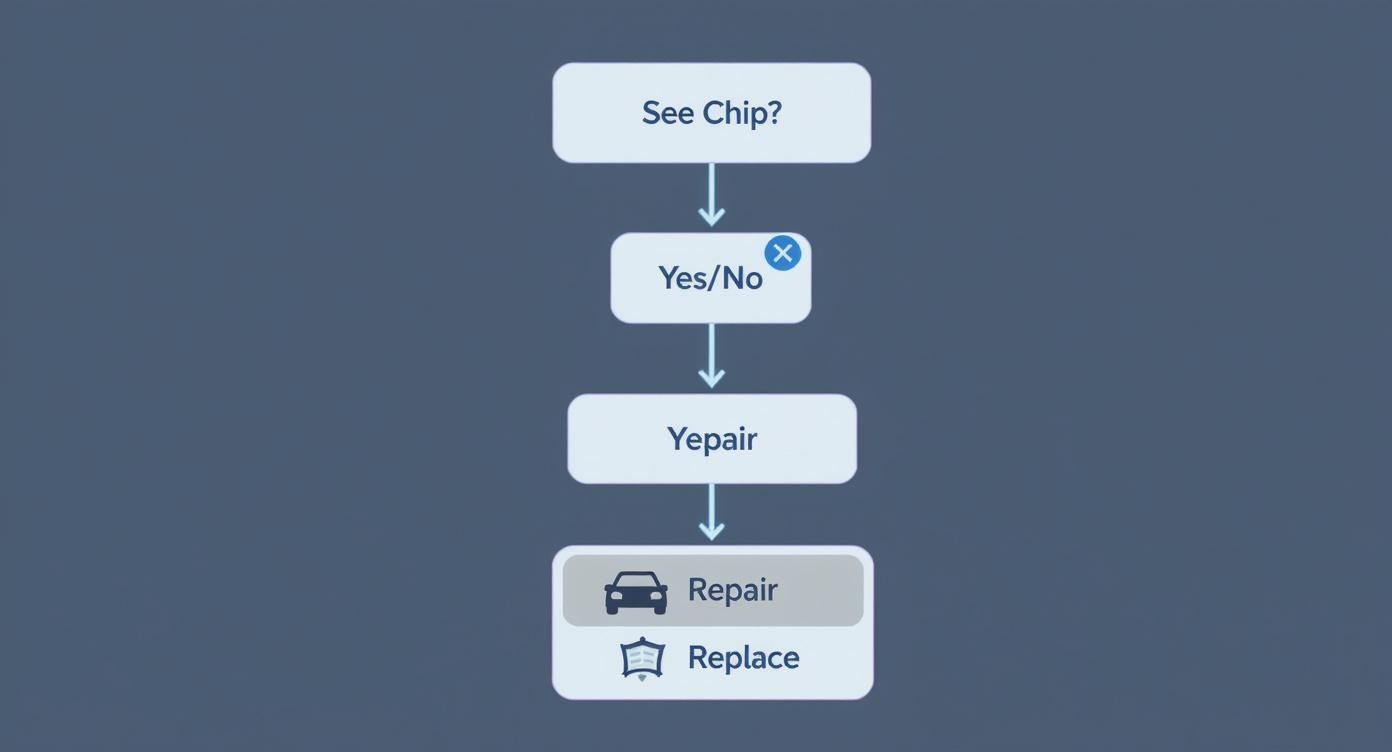
As you can see, it's a straightforward evaluation. A few simple questions about the damage lead to a clear recommendation for either a repair or a full replacement.
Why Your Windshield's Integrity Is Non-Negotiable
It's always tempting to go for the cheaper repair, but your windshield is so much more than a pane of glass. It’s a crucial safety feature, providing up to 60% of your car's structural strength in a rollover.
A compromised windshield can buckle during a crash, seriously jeopardizing the safety of everyone inside. This is why any good technician will always prioritize safety. If a repair can't bring the glass back to its original strength, replacement is the only responsible choice.
Your windshield also plays a key role in making sure your airbags work correctly. In a head-on collision, the passenger-side airbag is designed to bounce off the windshield as it deploys. A cracked or weakened windshield can shatter on impact, causing the airbag to deploy improperly and making it far less effective.
When Replacement Becomes a Certainty
While many smaller dings can be handled with a simple repair, some situations are clear-cut and will always require a new windshield. If you're ever in doubt, get a professional opinion, but the following are almost always a one-way ticket to a replacement.
Here are the tell-tale signs you need more than a quick fix:
The Crack is Too Long: Any crack that has spread beyond six inches has likely already weakened the entire windshield beyond a safe repair point.
The Damage is at the Edge: Chips and cracks near the edge of the glass are notorious for spreading fast. They can also compromise the seal holding the windshield to your car's frame.
The Damage Penetrates Both Layers: Your windshield is a sandwich of two layers of glass with a plastic interlayer. If the damage goes all the way through to the inside, it can't be repaired.
Ultimately, a qualified technician will make the final call. If a full replacement is what's needed, it’s good to know what that entails. You can learn more about what a professional windshield replacement service involves and why getting it done right is so important for your safety.
Why Your New Windshield Needs More Than Just Installation
If you drive a newer car, it’s probably loaded with safety tech. We're talking about features like lane-keeping assist, adaptive cruise control, and automatic emergency braking. These are all part of your car’s Advanced Driver-Assistance Systems (ADAS), and they’re designed to be an extra set of eyes on the road.
What most people don’t know is that those "eyes"—the cameras and sensors that make it all work—are often mounted directly to the windshield. This simple fact turns a routine windshield replacement into a pretty sophisticated, high-tech job.
When a technician installs a new windshield, the placement of that glass can be off by the tiniest fraction of an inch compared to the old one. Even a single millimeter of difference is enough to completely throw off the ADAS camera's view of the world.
Think of it like this: if you get a new pair of prescription glasses and the lenses aren't perfectly aligned with your pupils, your vision will be off. It's the exact same principle for your car. The ADAS camera needs to be recalibrated to see the road clearly and make those split-second safety decisions you're counting on.
Recalibration Isn't a Suggestion—It's a Necessity
Let's be clear: skipping the ADAS recalibration after replacing your windshield is a huge gamble with your safety. A system that hasn't been properly reset can fail when you need it most. Worse, it could react incorrectly. A camera that’s misaligned by just one degree might misjudge the distance to the car in front of you, causing your automatic brakes to engage too late or not at all.
This isn’t just our opinion; it's a non-negotiable requirement from virtually every car manufacturer out there. It’s also important to point out that this is only necessary after a full replacement. If you're just getting a small chip filled by a windshield repair mobile service, the glass isn't being removed, so the camera's alignment stays put and no recalibration is needed.
A vehicle’s safety systems are only as reliable as their calibration. Failing to recalibrate the ADAS after a windshield replacement is like flying a plane with an inaccurate compass—it may seem fine at first, but it can lead to dangerous errors when you need it most.
How We Bring High-Tech Calibration to You
Not long ago, getting an ADAS recalibration meant a separate, time-consuming trip to the dealership after your windshield was replaced. Thankfully, that’s not the case anymore. Leading mobile service providers, like us, have invested in the right technology to do it all at once. Our technicians bring advanced calibration equipment right to you, turning your driveway into a modern service bay.
The industry has really shifted. In the U.S. alone, the market for ADAS calibrations soared to $959 million in 2022, with an estimated 3.8 million windshield replacements requiring this service. This has turned mobile windshield jobs from simple glass swaps into complex technical procedures that demand specialized training and tools.
To perform a successful mobile calibration, we just need a few things from your location:
A Level Surface: The vehicle has to be on flat, even ground for the camera angles to be set correctly.
Decent Weather: Rain and strong winds can interfere with the sensitive calibration targets and equipment.
A Bit of Space: Our technicians need a good amount of clear space in front of your vehicle to set up their targets.
This means you no longer have to sacrifice safety for convenience. A professional windshield repair mobile service can deliver a complete, dealership-quality replacement and recalibration right where you are. To get a better handle on the process, take a look at our detailed guide on what ADAS windshield calibration involves and why it’s so critical.
Dealing with Costs and Insurance Claims
Let's get right to it: money. When your windshield gets damaged, one of the first things you're probably thinking about is the cost. The good news is that calling a windshield repair mobile service is usually much easier on your wallet than you might expect, especially if you have the right insurance.
There’s a huge difference in price between a simple repair and a full-blown replacement. Fixing a rock chip is a quick, inexpensive procedure that keeps your original windshield intact. A replacement, on the other hand, means paying for new glass, more intensive labor, and potentially ADAS recalibration—all of which adds up to a much bigger bill. This is precisely why your insurance company often prefers you get that chip fixed ASAP.
The Best-Kept Secret in Car Insurance
Here's something a surprising number of drivers don't know: if your policy includes comprehensive coverage, you can most likely get that windshield chip repaired for $0 out of pocket. That's right. The majority of major insurance carriers will waive your deductible for a repair.
Why do they do this? It's simple economics for them. Paying for a small repair now—maybe $100 or so—is a drop in the bucket compared to shelling out for a full windshield replacement later, which can easily cost from $400 to over $1,000 on newer cars.
By covering 100% of a repair, insurance companies are just making a smart business move. They're encouraging you to fix a minor issue before it cracks out and becomes a massive, expensive claim. It’s a genuine win-win situation: your windshield is restored to its full strength at no cost to you, and the insurer avoids a much larger payout down the road.
This policy makes getting a repair a total no-brainer. It removes any reason to put it off, helping you stay on top of your vehicle's safety without hesitation.
How to File an Insurance Claim Without the Headache
The idea of filing an insurance claim can make anyone groan, but for windshield repair, it’s remarkably painless. In fact, any reputable mobile repair service will handle almost all of the work for you.
Here’s what the process typically looks like:
Have Your Info Ready: Before you make the call, just grab your insurance policy number and your vehicle details (year, make, model, and VIN). It's also helpful to know roughly when the damage happened.
Call Your Mobile Repair Service First: This is the pro tip. Don't call your insurance agent—call us. Let us know you want to use your insurance, and we'll take it from there. We talk to insurance companies all day long.
We Take Care of the Paperwork: Our team will contact your insurance provider, confirm your coverage details, and handle all the required documentation. You won't have to sit on hold or try to decipher confusing forms.
Schedule the Fix: As soon as the claim gets the green light (which is often immediate for repairs), the only thing left to do is book the appointment. We’ll come to you and fix the windshield.
We’ve designed it to be a one-call process. You tell us about the damage, and we manage the insurance side of things. It’s all about getting your windshield fixed quickly and professionally without adding any administrative hassle to your day.
Choosing a High-Quality Mobile Service Provider
Given how convenient mobile auto glass repair is, it’s no surprise that plenty of companies are vying for your business. But here’s the thing: not every windshield repair mobile service is created equal. The skill of the technician, the quality of their materials, and their dedication to safety can vary wildly from one company to the next.
Picking the right provider isn't just about getting a quick fix. It’s about protecting your vehicle’s structural integrity and ensuring its advanced safety systems work correctly. Honestly, making a smart choice here is as much about your safety on the road as it is about your car.
The Non-Negotiables of a Trustworthy Provider
When you're sizing up a mobile repair company, a few things should be absolute deal-breakers. These are the core elements that separate a true professional from a risky gamble.
A top-notch provider will be upfront about their qualifications. If you feel like you’re on a scavenger hunt for this information or if they get cagey when you ask, that’s a huge red flag.
Here's what you should insist on:
Certified Technicians: The technicians should be certified by a reputable group like the Auto Glass Safety Council™ (AGSC). This certification isn’t just a piece of paper; it means they’re trained on the most current safety standards and repair methods.
High-Quality Materials: Ask them point-blank if they use OEM-grade (Original Equipment Manufacturer) glass and resins. These materials are engineered to match the exact strength, clarity, and specifications of the windshield your car had when it rolled off the assembly line.
Lifetime Warranty: A company that’s confident in its work will back it up. A lifetime warranty on their workmanship gives you peace of mind, protecting you from any potential leaks, defects, or other issues down the road.
Key Questions to Ask Before You Book
Once you've covered the basics, a few specific questions can tell you a lot about a provider’s professionalism and depth of knowledge. Their answers will give you a gut feeling about the kind of service you’re about to receive.
Your windshield is a critical safety component. Asking pointed questions about materials and processes isn't being difficult—it's being a responsible vehicle owner. A professional will welcome these questions and answer them confidently.
Here are the questions that will help you lock in your decision:
"What kind of resin will you use for the repair?" A good answer involves a high-viscosity, industry-leading resin. This is what creates a durable, clear repair that actually restores the windshield's strength.
"How do you handle ADAS recalibration for replacements?" If you’re getting a full replacement, they need a clear, manufacturer-approved process for mobile ADAS recalibration. They should be able to explain it to you in simple terms.
"Will you handle the insurance claim for me?" A seasoned pro will take the insurance paperwork off your plate. This saves you a massive headache of phone calls and forms.
Use this simple checklist to compare different mobile repair companies. It's an easy way to make sure you're getting safe, high-quality work from a provider you can trust.
Checklist for Choosing Your Mobile Repair Provider
Evaluation Criterion | What to Look For | Why It Matters |
|---|---|---|
Technician Certification | AGSC certification or equivalent. Ask to see proof! | Ensures the technician is trained in current safety standards and proper installation techniques. |
Material Quality | Use of OEM-grade glass and high-quality resins. | Guarantees the repair or replacement meets your vehicle's original safety and performance specs. |
Warranty | A clear, written lifetime warranty on workmanship. | Protects you from defects, leaks, or installation errors, showing the company stands by its work. |
ADAS Expertise | A clear, documented process for ADAS recalibration. | Crucial for ensuring your vehicle's advanced safety features (like lane assist) function correctly. |
Insurance Handling | Willingness to work directly with your insurance provider. | Saves you time and hassle, streamlining the claims process from start to finish. |
Customer Reviews | Consistently positive reviews on Google, Yelp, or industry sites. | Real-world feedback gives you insight into their reliability, professionalism, and service quality. |
Taking a few minutes to run through these points can save you from a bad experience and ensure your vehicle is in good hands.
Red Flags to Watch Out For
Knowing what to look for is half the battle; knowing what to avoid is the other half. Some operators use high-pressure sales tactics or cut corners on materials to boost their profits, which can put you at risk.
Be skeptical of anyone who approaches you unsolicited in a parking lot—that's not how reputable companies typically find business. Furthermore, good communication is key. Many top-tier companies invest in professional answering services for glass repair businesses to ensure you always get a clear, helpful response. If you have any questions at all, please don't hesitate to contact our expert team.
Still Have Questions About Mobile Windshield Repair?
It makes perfect sense to have a few questions before you book a mobile windshield repair. After all, your car is a big deal, and you want to be sure you're making the right call. We get these questions all the time, so we’ve put together some straightforward answers to help you schedule with confidence.
Let's clear up some of the most common uncertainties so you know exactly what to expect.
Can You Fix My Windshield in Bad Weather?
This is a great question, and the honest answer is, it's tricky. For a rock chip repair to be permanent, the special resin we use needs to cure in a dry environment. Rain, snow, and even heavy humidity can sneak moisture into the chip, which can seriously weaken the final repair.
Likewise, freezing temperatures can mess with how the resin sets. Any good technician will put a high-quality, lasting repair ahead of a quick one.
Light Drizzle: No problem. Our technicians often work under a portable canopy to keep the work area perfectly dry.
Heavy Rain or Snow: In this situation, it's best to reschedule for a clearer day. If you have a garage or a covered parking spot, we can get the job done there.
Freezing Cold: When it's near freezing, we'll usually suggest waiting for the temperature to climb. This ensures the repair cures properly and will hold up for the long haul.
How Long Will I Be Stuck Waiting?
Hardly any time at all! This is one of the best parts of mobile service. A standard rock chip repair is surprisingly fast—we're typically in and out in 30 to 60 minutes. The process is down to a science, and once we cure the resin with a UV light, your car is ready to drive immediately.
A full windshield replacement takes a little more time, usually about 60 to 90 minutes. The key difference is waiting for the heavy-duty adhesive to set. Your technician will give you a specific "Safe Drive Away Time," which could be anywhere from 30 minutes to a couple of hours, depending on the adhesive and weather.
The real goal of a windshield repair isn't to make the damage invisible. It's to restore the structural strength of the glass and, most importantly, stop that tiny chip from turning into a giant crack. Think of it like setting a broken bone—the priority is strength and safety, not making the scar disappear.
Will I Still Be Able to See the Chip After It's Repaired?
A professional repair does wonders for the appearance, but it probably won't make the chip vanish completely. You can expect the blemish to clear up by 80% to 95%, which is a huge improvement.
What you’ll likely see is a faint, small mark where the rock first hit. It’s best to think of it as a tiny scar that tells you the glass is strong and secure again. The crucial takeaway is that your windshield's structural integrity is back to 100%.
What Happens if the Repair Fails or the Crack Gets Bigger?
Any mobile repair service worth its salt will stand behind its work with a solid guarantee. Always look for a company that offers a lifetime warranty on their repairs. This is the ultimate sign of confidence in their skills and the materials they use.
If, for some reason, the original chip starts to spread after the job is done, a reputable company will make it right. Usually, this means they’ll credit the full amount you paid for the repair toward the cost of a new windshield. Just be sure to ask about the warranty specifics before you book.
Ready for a fix that comes to you? The expert technicians at Auto Renu Auto Glass LLC bring top-quality repairs and replacements right to your doorstep. Schedule your mobile service online or give us a call for a free estimate today.