driving with cracked windshield: Is it safe and legal to drive?
driving with cracked windshield: understand safety, laws, and insurance implications to know when to fix.
Dec 7, 2025
generated
driving with cracked windshield, cracked windshield laws, windshield repair, auto glass safety, car maintenance
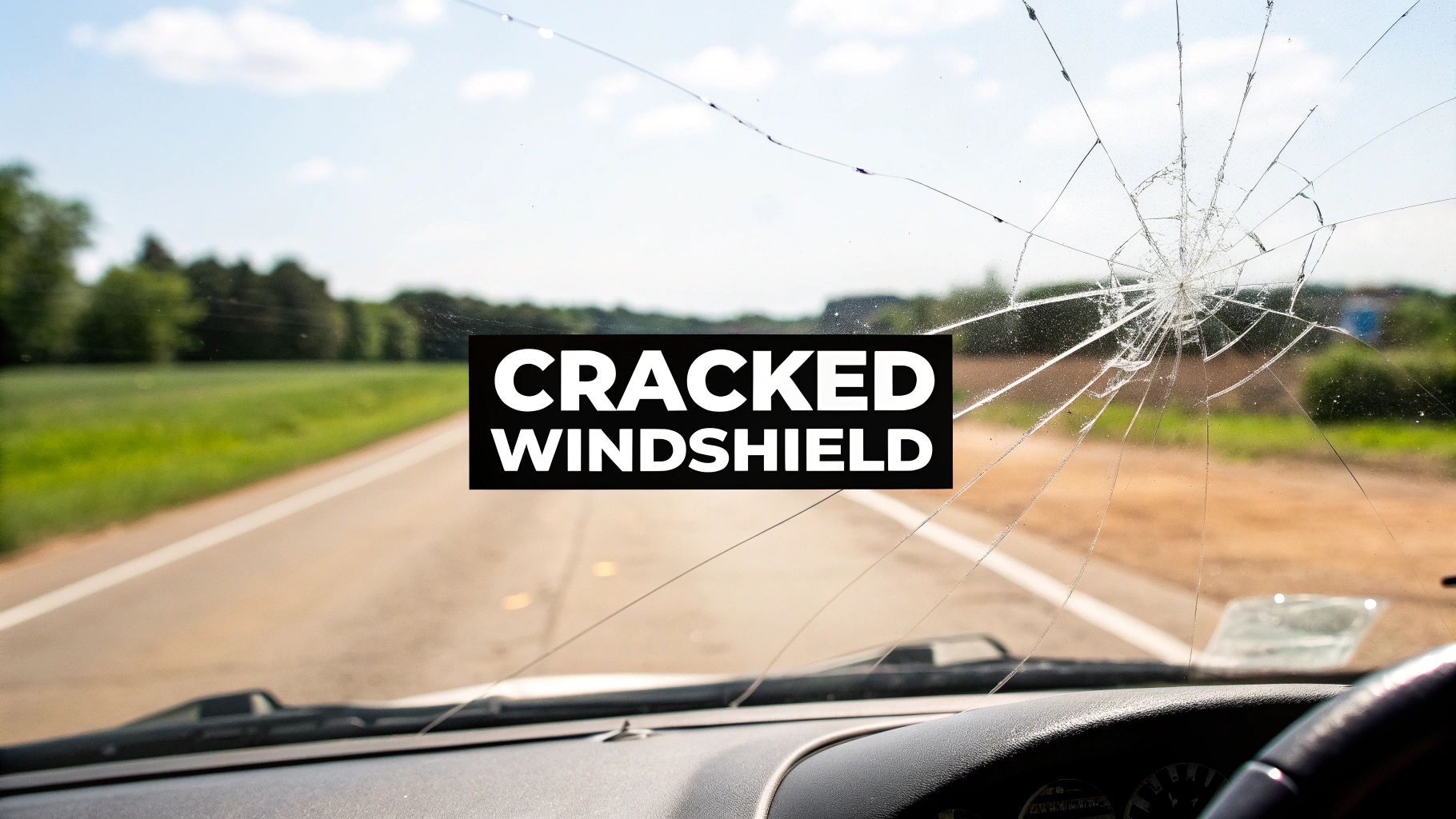
Let's cut right to the chase: driving around with a cracked windshield is a bad idea. It might look like a simple cosmetic issue, but that crack is a major weak point in one of your car's most critical safety components. Your windshield is much more than just a piece of glass—it's a core part of your vehicle's structural skeleton.
The Hidden Dangers of a Cracked Windshield
Think of your windshield as the cornerstone of your car's cabin. It provides a huge amount of structural support, especially in a rollover accident where it helps prevent the roof from caving in. When that cornerstone is cracked, the whole structure gets wobbly. This isn't just theory; it's a dangerous reality that can have devastating consequences in a crash.
A compromised windshield can cripple your car's built-in safety systems in a few key ways. The biggest risk, by far, is the loss of structural stability. In a serious wreck, particularly a rollover, a solid, intact windshield is absolutely vital for keeping the roof from crushing the people inside.
An intact windshield is a foundational safety feature. Ignoring a crack is like ignoring a weak link in a chain—you never know when it will fail under pressure, leading to catastrophic results.
How a Crack Weakens Your Vehicle's Defenses
The danger doesn't stop with roof support, either. Ever wonder how the passenger-side airbag works? It's designed to blast upwards and bounce off the windshield to properly cushion the passenger. If that windshield is cracked, it can shatter on impact from the airbag, causing it to deploy incorrectly and fail at its one job: protecting your passenger.
On top of that, a weakened windshield dramatically increases the risk of being thrown from the vehicle during a major collision. The glass is specifically designed to keep everyone safely inside, but a large crack makes it far more likely to fail under the force of an impact.
The structural role of your windshield is not something to underestimate. For the over 222 million licensed drivers in the United States, that sheet of glass provides up to 60% of the vehicle's structural strength in a rollover and 45% in a front-end collision. That makes even a small crack a serious safety issue. You can discover more insights about windshield safety on glass.net. Getting that damage fixed is the only way to ensure your car can protect you the way it was engineered to.
Let's break down the risks into a simple framework.
Quick Risk Assessment for a Cracked Windshield
This table gives you a quick snapshot of the main risks—safety, legal, and financial—that you're dealing with when you drive with a damaged windshield.
Risk Category | Potential Consequence | Severity Level |
|---|---|---|
Safety | Reduced structural integrity in a rollover; improper airbag deployment; driver ejection. | High |
Legal | Traffic tickets and fines; failed vehicle inspections. | Medium |
Financial | A small chip turning into a full replacement; potential insurance claim denial. | Medium |
As you can see, what starts as a small crack can quickly spiral into much bigger problems. It's not just about avoiding a ticket; it's about making sure your car's most important safety features are ready to work when you need them most.
Decoding the Damage on Your Windshield
Not all windshield damage is created equal. A tiny chip is a world away from a crack that snakes across your line of sight, and understanding the difference is key to making a safe, smart decision.
Think of it like being a detective for your own car. A small, circular bull's-eye looks like a tiny crater, usually from a direct hit by a small stone. A star break, with little legs branching out from the middle, tells a story of a slightly more complex impact. If you catch these early, a technician can often inject a special resin to restore the glass's strength. Quick and easy.
Common Crack Types and What They Mean
But then there are the more serious culprits. The most common—and often most dangerous—cracks are the ones that start near the edge of the glass. We call these edge cracks.
It might surprise you to learn that around 14% of vehicles on the road have a long crack, and a whopping 79% of those are edge cracks. The perimeter of your windshield is under constant tension from how it's made and installed, making it a natural weak point. A small impact there can quickly bloom into a long, creeping crack that spreads right across the pane. In fact, this specific type of damage is behind 70-80% of all windshield replacement claims, which shows you just how common it is. You can dig into more of these windshield damage statistics on ultrabond.com.
A windshield crack is more than just an ugly flaw; it's a fracture in your car's structural armor. The type and location of the damage dictate whether you're looking at a simple fix or a critical safety failure waiting to happen.
The infographic below really drives home how a compromised windshield can lead to three major safety failures in a crash.
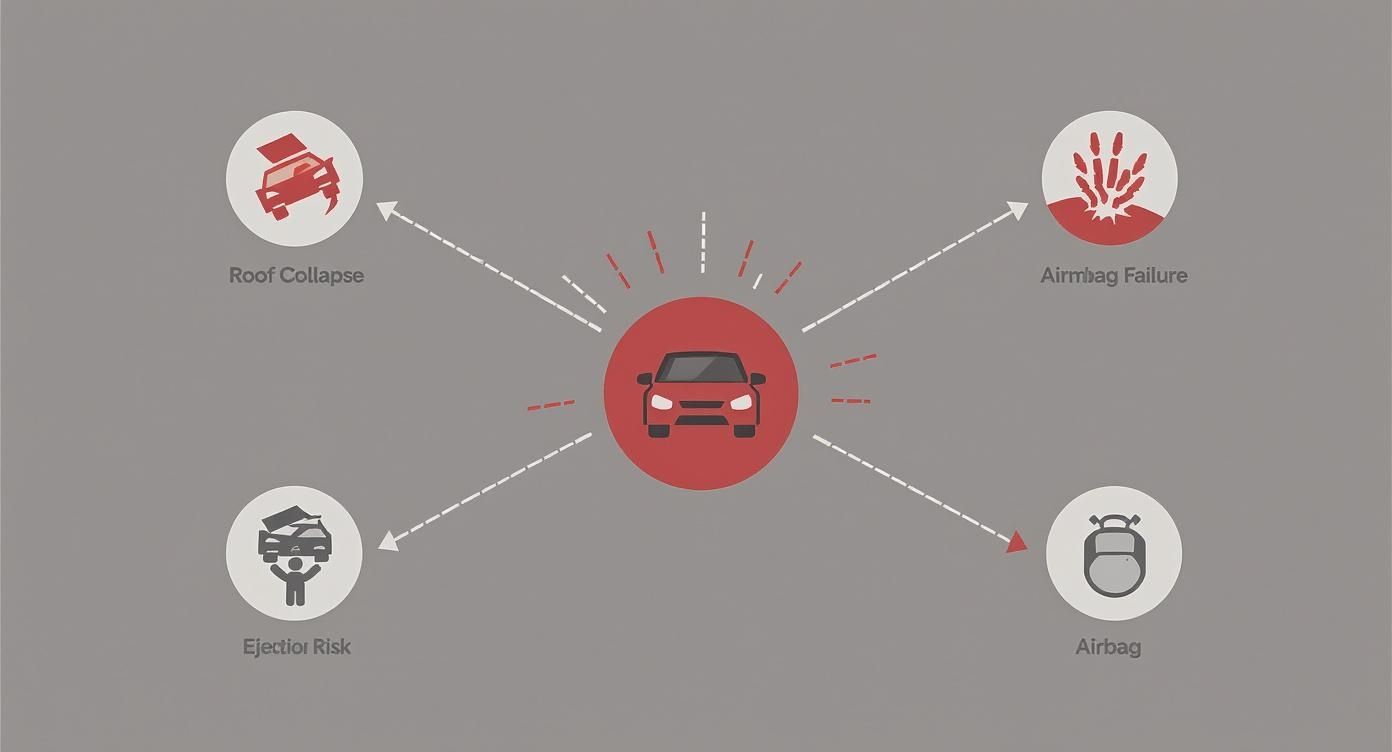
As you can see, a weak windshield dramatically increases the risk of the roof caving in, the airbags not deploying correctly, and even passengers being ejected from the vehicle during an accident.
Assessing the Severity of the Crack
Knowing the type of crack is just the first piece of the puzzle. Its size and location are just as crucial in figuring out what to do next.
A good rule of thumb I’ve always used is the "dollar bill test." If the entire chip or crack can be covered by a dollar bill, there's a good chance it can be repaired.
But location is the real deal-breaker. Any damage, no matter how small, that sits directly in the driver's line of sight is a serious hazard. This area is so important that it's sometimes called the ADAS keep-out zone, which is where your car's advanced safety system cameras are mounted. A crack there doesn't just block your view—it can throw off these vital systems.
Likewise, any crack that has already reached the edge of the windshield almost always means you'll need a full replacement. At that point, the structural integrity of the glass is shot. Driving around in these situations isn't just risky; it's a genuine gamble with your safety.
Navigating Cracked Windshield Laws by State
It often comes as a shock, but that tiny crack you’ve been ignoring can absolutely get you a traffic ticket. When it comes to driving with a cracked windshield, there’s no single, nationwide rule. Instead, what we have is a confusing patchwork of regulations that changes dramatically the moment you cross a state line.
The one thing all these laws have in common is their goal: making sure the driver has a clear, unobstructed view of the road. The tricky part is how each state decides what an "obstruction" actually is. Some laws are incredibly specific, while others are pretty vague, leaving it up to the officer who pulls you over.
State-Specific Legal Differences
Let's look at how different this can be. In a state like Texas, you won't find a law that says "cracked windshields are illegal." But, they do have a law against anything blocking the driver's view, and a spiderweb crack definitely fits that description. You could also easily fail your annual state inspection for the same reason.
Other states don't leave much room for interpretation. Their rules are often much more direct.
Size-Based Rules: Many states get out the measuring tape. They might have rules saying any crack longer than a dollar bill is against the law.
Location-Based Rules: This is the big one. Almost every state has strict rules about damage right in the driver's line of sight, specifically the area your wipers clear. Any crack there is a problem.
Combined Damage: Some laws also look at the total picture. A windshield peppered with multiple small chips might be considered just as dangerous as one long crack.
The legal landscape for a cracked windshield is less about a single national standard and more about local interpretations of safety. What's a warning in one state could be a costly ticket in another, making it crucial to understand the rules where you drive.
This isn't just an issue in the United States, either. Most countries around the world focus on driver visibility. For instance, in Canada, British Columbia might fine you for a crack over 300 millimeters, while neighboring Alberta just uses a general "clear view of the road" standard. You can find more details about these international regulations on bestsellingcarsblog.com.
At the end of the day, driving with a crack is a gamble, legally speaking. If you do get cited, you’ll be faced with deciding whether to contest a traffic ticket or just paying up. The smartest and safest move is always to get the damage fixed as soon as you can.
How Cracks Interfere With Modern Car Safety Tech
Your car’s windshield is so much more than a simple piece of glass these days. It's actually a key part of your vehicle's brain. Many of the high-tech safety features we now take for granted see the world through a camera mounted right on the windshield—a system called ADAS, or Advanced Driver-Assistance Systems.
Think of that ADAS camera as your car's set of eyes. It’s constantly watching the road, feeding information to features like automatic emergency braking, lane-keeping assist, and adaptive cruise control. A clean, clear windshield is like a perfect pair of glasses for this system, giving it a totally undistorted view of what's ahead.

How a Crack Blinds Your Car
So, what happens when you're driving with a cracked windshield? That crack becomes like a deep scratch right across the lens of those glasses. It bends, blocks, and distorts light, sending bad information to the ADAS computer. Even a tiny chip can create a blind spot, while a long crack can trick the system into misreading lane lines or misjudging the distance to the car in front of you.
This kind of interference can make your car's safety features act erratically or just stop working altogether.
Lane-Keep Assist: If a crack runs over a lane marker, the camera might not "see" it, causing the system to shut off without you even knowing.
Automatic Emergency Braking: The system could completely miss a stopped car or a pedestrian in its path, taking away one of your vehicle's most critical life-saving functions.
Adaptive Cruise Control: Skewed visual data might cause the system to get the speed and distance of the car you're following wrong.
A crack basically turns your car's sophisticated safety net into an unpredictable liability. You can no longer count on these features to work when it matters most.
The Non-Negotiable Step of Recalibration
Because the camera's alignment is so incredibly precise, you can't just swap out the windshield and call it a day. Even a millimeter's difference in the new glass or how it's installed can throw the whole ADAS system out of whack. This is exactly why recalibration is mandatory after any windshield replacement.
Recalibration is the process of realigning the ADAS camera with surgical precision, making sure it sees the world exactly as the automaker designed it to. Without this step, your safety features are running on bad data, which is arguably more dangerous than not having them at all.
This isn't a DIY job or something for an untrained mechanic. It requires specialized equipment and expertise to get the system perfectly dialed in. To be certain your safety features are back to factory-perfect condition, it's crucial to understand the details of ADAS windshield calibration and why a professional is non-negotiable. Making sure your car's tech works right is just as important as fixing the glass itself.
Handling Your Windshield Insurance Claim
That sinking feeling when you spot a crack in your windshield is usually followed by one big question: Who's paying for this? The good news is, your auto insurance probably has you covered. Navigating the claims process can feel a little intimidating, but once you know the steps, it’s surprisingly straightforward.
The key is understanding your policy. Windshield damage typically falls under your comprehensive coverage, which is designed for non-collision incidents like a rock kicked up from the highway or a branch falling during a storm. Some drivers also have full glass coverage, a fantastic add-on that often waives the deductible for glass repair or replacement, meaning you pay nothing out of pocket.
Steps to Filing a Successful Claim
Getting your claim approved quickly is all about giving your insurer clear and accurate information. Just follow these simple steps to get the ball rolling.
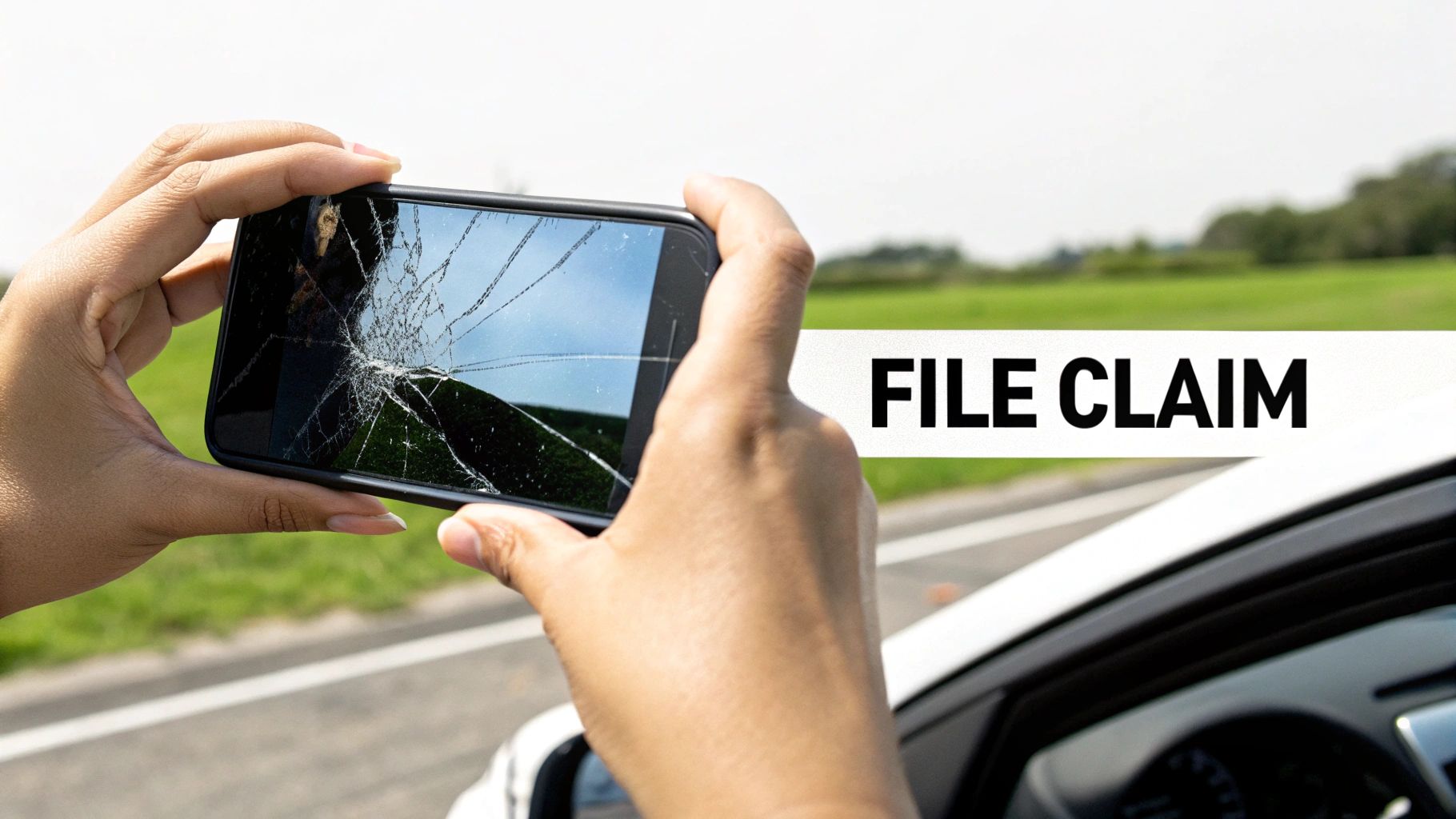
Document Everything: The moment you notice the damage, grab your phone. Take clear photos of the crack from different angles, both inside and outside the car. Jot down when and how it happened.
Review Your Policy: Before you call, pull up your insurance info online or find your paper documents. You're looking for your comprehensive or glass coverage details and, most importantly, your deductible amount.
Contact Your Insurer: With your policy number and photos handy, call the claims department or start the process through their app or website.
Schedule the Service: Most insurance companies have a list of pre-approved glass shops. You can pick one of theirs for a seamless process or choose your own trusted technician.
If you've never filed a claim before, getting a general idea of how to report an accident to insurance can make you feel a lot more comfortable, as many of the basic principles are the same.
A lot of drivers worry that a glass claim will make their rates go up. But in most cases, a single comprehensive claim for a cracked windshield is a no-fault incident and won’t affect your premium.
It's always smart to do a little math first. If the cost of a full windshield replacement is just a bit more than your deductible, it might make more sense to pay for it yourself. For example, if your deductible is $500 and a new windshield costs $650, filing a claim for just $150 might not be worth it in the long run. Always compare the two before making the call.
Your Action Plan for a Damaged Windshield
Okay, so you understand the risks. Now what? Knowing the dangers of a cracked windshield is one thing, but taking the right steps is what actually keeps you safe on the road. Let’s walk through exactly what to do, whether you've got a tiny chip or a crack that’s starting to spread.
Your first move is to figure out what you're dealing with. A good rule of thumb is the "dollar bill" test. If the chip or crack is smaller than a dollar bill and isn't directly in your line of sight, you can probably get it repaired. If it's bigger than that or blocking your view, you’re almost certainly looking at a full replacement.
The biggest mistake you can make is waiting. A small chip is an easy, inexpensive fix. But with a little help from road vibrations or a sudden temperature swing, that tiny chip can quickly spiderweb across your windshield, forcing a much more expensive replacement.
Next Steps: Repair or Replace?
Once you have a handle on the damage, it's time to call in a professional. The path you take really depends on the size and location of the crack.
For Small Chips and Cracks: The most convenient option is usually a mobile repair service. A technician can meet you at your home or office and inject a specialized resin into the chip. The whole process often takes less than an hour and restores the strength of the glass.
For Larger Cracks or Damage Near the Edge: In these cases, a full windshield replacement is non-negotiable. This is a more involved job, but it’s essential for restoring the structural integrity of your vehicle and keeping you safe.
Finalizing the Fix
If you have a newer car, there's one more crucial step after the glass is taken care of. Any vehicle equipped with Advanced Driver-Assistance Systems (ADAS) must have its cameras and sensors recalibrated after a windshield replacement. This is the only way to ensure your lane-keeping assist, automatic emergency braking, and other safety features are working properly.
Following this plan takes the guesswork out of the process. For a completely hassle-free solution, professional mobile services bring the expertise right to your driveway. You can learn more about convenient options for windshield repair that come to you, getting your car safe, legal, and back on the road without any extra stress.
Frequently Asked Questions
Still have questions about that crack in your windshield? You're not the only one. Let's clear up some of the most common things drivers worry about when their glass gets damaged.
Can I Just Ignore a Small Chip?
It’s tempting, I know. You see that tiny little chip and think, "It's no big deal." But ignoring it is a real gamble. That little chip is a structural weak point, and all it takes is a good bump from a pothole or a sudden temperature shift to make it spread into a long, nasty crack.
Think of it like a tiny snag in a sweater. At first, it's nothing. But pull the wrong thread, and suddenly you've got a line running all the way down. Getting a chip fixed is a quick, inexpensive repair. Waiting almost always means you'll end up needing a full—and much more expensive—windshield replacement.
How Do Temperature Changes Affect a Crack?
Drastic temperature changes are a cracked windshield's worst enemy. Picture this: it’s a frosty morning, and you blast the defroster. The inside of the glass heats up and expands rapidly, while the outside is still freezing cold. That creates a ton of stress right along the crack line, often forcing it to spread.
The same thing happens in reverse on a scorching summer day when you crank up the A/C. This thermal stress is one of the biggest reasons people find that a tiny, manageable crack has turned into a huge problem seemingly overnight.
A small chip or crack is an unpredictable structural flaw. Extreme temperatures create immense pressure on the glass, making it highly likely that minor damage will spread without warning, compromising the entire windshield.
What Should I Do If My Windshield Cracks on a Road Trip?
Hearing that loud thwack from a rock on the highway is unnerving, especially when you're far from home. First thing's first: pull over somewhere safe and take a look. If the damage is small and isn't blocking your view, you can probably keep going. A piece of clear packing tape over the chip can be a good temporary fix to keep out dirt and moisture until you can get to a pro.
However, if the crack is large, actively spreading, or right in your line of sight, your safety comes first. It's simply not worth the risk to keep driving. Your best bet is to find the nearest auto glass shop for an expert opinion. Many have mobile services and can come right to you, getting you back on the road safely.
At Auto Renu Auto Glass LLC, we take the hassle out of windshield damage with our mobile repair and replacement services. Get a free quote and schedule your appointment today!