
best way to defrost windshield: Fast & Safe Tips
Discover the best way to defrost windshield fast and safely. Learn proven methods, quick hacks, and avoid costly mistakes with our winter car care guide.
Nov 27, 2025
generated
defrost windshield, winter car care, de-icing tips, windshield safety, best way to defrost windshield
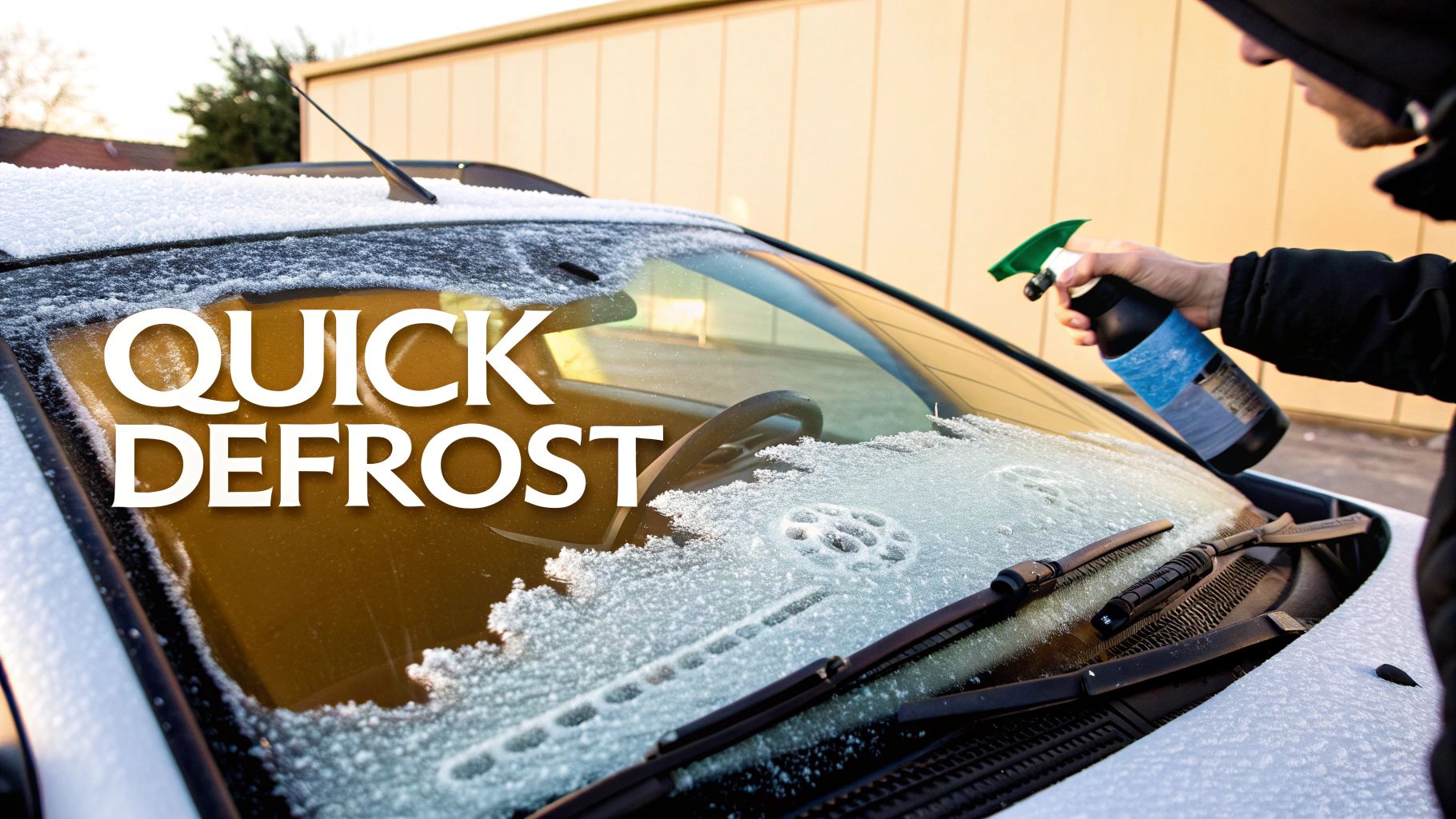
The fastest, safest way to clear a frosted windshield is to let your car do the heavy lifting. The trick is to use the climate control system in a specific order: crank the temperature to its highest setting, switch on the A/C to suck out any humidity, and aim the airflow directly at the defrost vents. This one-two punch of dry, warm air melts ice from the inside out without you having to freeze your fingers off.
Your Quickest Path to a Clear Windshield
Nothing throws a wrench in your morning routine quite like a windshield coated in a thick layer of ice, especially when the clock is ticking. Your first instinct might be to find something—anything—to scrape it with, but the best tool for the job is already built into your dashboard. The secret isn't just about blasting heat; it's about getting the moisture out of your car first.
This diagram shows the simple, three-part process that gets your windshield clear in record time.
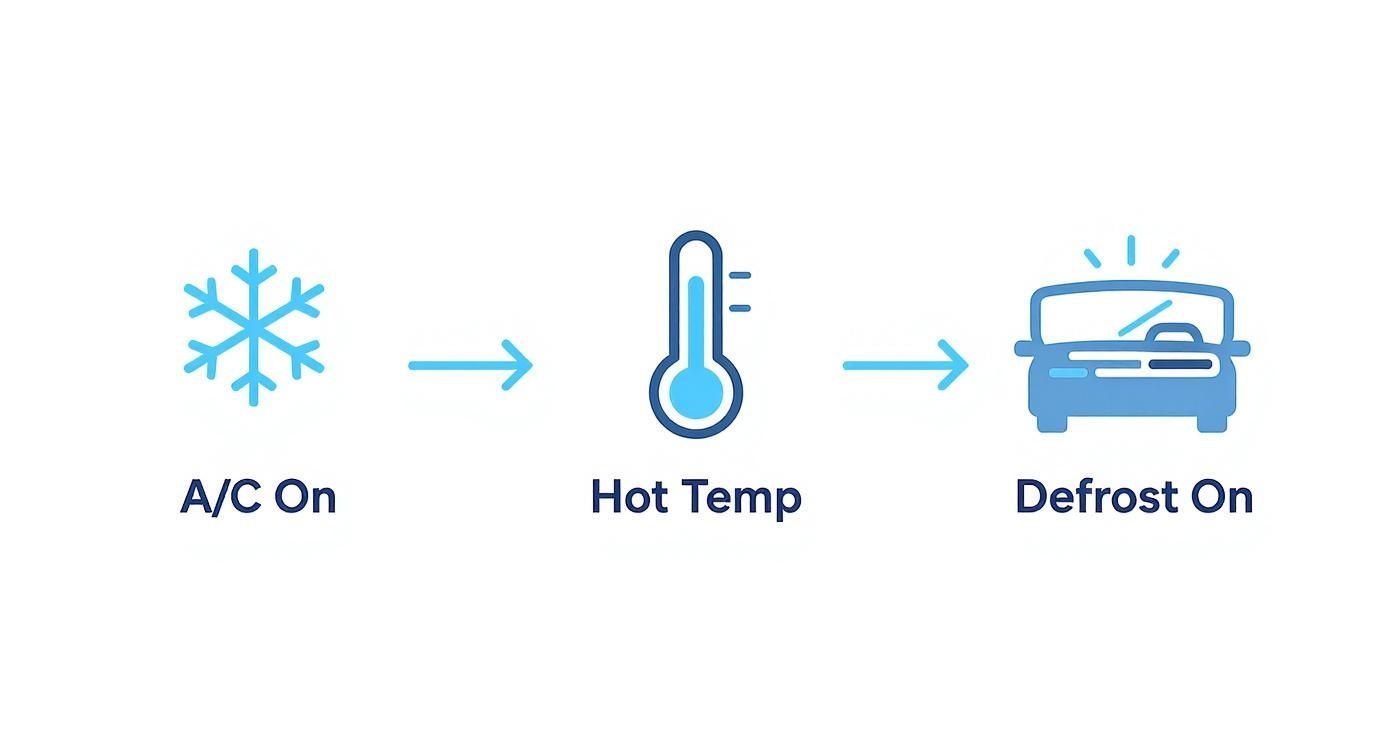
It’s all about making the A/C, the heater, and the defrost function work together as a team.
Why This Method Works So Well
Turning on the air conditioning in the dead of winter sounds completely backward, I know. But it's actually the most important part of the process. Your A/C system is an incredible dehumidifier, and it will immediately start pulling dampness from the cabin air. This is crucial because it stops new condensation from fogging up the inside of the glass as soon as the warm air starts to hit it.
The real problem isn't just the ice on the outside; it's the moisture on the inside. By using both the A/C and the heat, you're fighting the battle on two fronts, which dramatically speeds up how quickly you can see and drive away safely.
To show just how effective this is, we can look at a quick comparison between the right way and the more common (and slower) mistakes people make.
Fastest Defrost Method vs Common Mistakes
This table breaks down the optimal technique against what many people try to do, highlighting why one is so much faster and safer.
Action | Optimal Method (Fast & Safe) | Common Mistake (Slow & Risky) |
|---|---|---|
Air Control | Turn on A/C to dehumidify the cabin air first. | Leave A/C off, trapping moisture inside. |
Temperature | Set heat to maximum to warm the glass from within. | Start with cold or lukewarm air, slowing the process. |
Airflow | Direct air to the defrost vents immediately. | Use floor or face vents, not targeting the glass. |
Outcome | Clear visibility in minutes, no new fog. | Slow melting, constant re-fogging on the inside. |
As you can see, the optimal method is a coordinated effort, not just a single action.
This isn't just anecdotal advice, either. A study using computational fluid dynamics confirmed that using the air conditioning to demist the glass was significantly more effective than just using heat. The researchers were able to get a completely clear windshield in just six minutes this way.
Following this sequence isn't just faster; it's also the best thing you can do for your auto glass. Forget about scraping with a credit card or, worse, pouring hot water on the windshield. Using your car's climate system prevents scratches and eliminates the risk of thermal shock—that sudden temperature change that can easily lead to a long, ugly crack.
Using Your Car's Climate Controls Like a Pro
Everyone knows the basic drill: crank the heat, hit the defrost button, and wait. But if you want to clear that windshield fast, you need to understand what’s actually happening on your dashboard. Many drivers don't realize they're accidentally working against themselves by overlooking a few key settings.
Fresh Air is Your Secret Weapon
The biggest mistake I see people make is leaving the air recirculation button on. It seems logical, right? Keep the cold air out. But when you’re trying to fight condensation and frost, it’s the worst thing you can do.
Recirculating the air just cycles the humid air from inside the cabin—full of moisture from your own breath—right back onto the cold glass. This can actually make the interior fogging worse.
Instead, you want to switch your system to pull in fresh air from the outside. Even on a frigid day, the outside air is much drier than the air inside your car. Your heater warms up that dry air and blows it onto the windshield, which actively removes moisture and melts ice far more effectively.
Fine-Tuning the Airflow for a Quicker Clear
Your car likely has dedicated buttons for the front and rear defrost, and it’s important to know they work differently. The front defroster blasts air from your climate system, while the rear one uses a grid of tiny electrical wires in the glass to heat it directly.
Pro Tip: Don't neglect your rear window. Hit that rear defrost button as soon as you start the car. Because it uses an electric element, it starts working almost instantly, long before your engine has had a chance to warm up.
Automakers have put a ton of engineering into getting this right. They use advanced tech like Computational Fluid Dynamics (CFD) to simulate and perfect how air flows over the glass. It’s not just a simple fan anymore. This kind of optimization can make a huge difference—some research has shown that CFD-designed vents can cut ice melting times by about 50%. One study found that a properly engineered system cleared a windshield in roughly 15 minutes, while a standard one took 30. You can learn more about these defrost system developments and see how they help get you moving faster.
Putting It All Together for Maximum Effect
So, what does this look like in practice on a cold morning?
You get in, start the car, and immediately set the foundation: A/C on (to dry the air), temperature to full heat, and fan directed to the defrost vents.
Then, add these quick pro-level adjustments:
Double-check that recirculation is turned off. You need that fresh, dry air from outside.
Hit the rear defroster button so your back window can clear at the same time.
By using your car’s climate controls this way, you’re doing more than just heating the glass. You’re actively managing both temperature and humidity to get a perfectly clear, safe view in record time—often without ever needing an ice scraper.
Manual De-Icing Tools That Actually Work
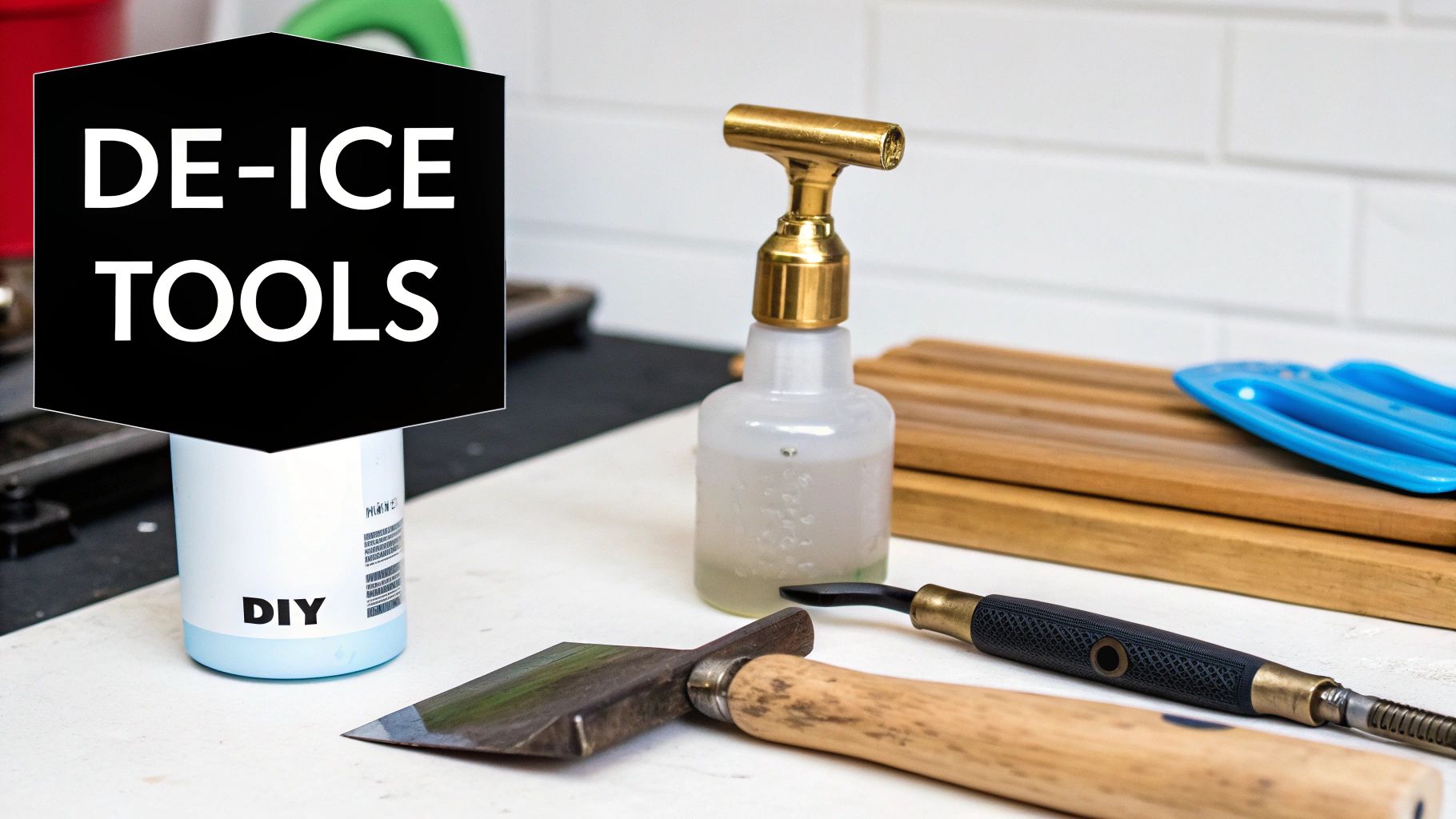
Sometimes, your car’s defroster just can’t keep up, especially when you’re staring at a solid sheet of ice. This is when having the right manual tools on hand makes all the difference. It's the secret to getting on your way quickly without the frustration.
When that layer of ice is too thick for warm air to handle, a good ice scraper is your best friend. And I don't mean those flimsy plastic ones that snap in the cold. You definitely don’t want to be that person trying to use a credit card—that’s an easy way to scratch your glass.
A solid scraper should have two sides: a tough, claw-like edge to break up the thickest ice, and a flat blade to clear away the slush and frost. From my experience, the best ones have a brass blade. Brass is softer than glass, so it won't scratch the surface, but it's much tougher than ice, slicing right through it.
Beyond the Basic Scraper
If you live where winters are truly brutal, a simple hand scraper might not cut it. Luckily, there are some great upgrades out there that can make the job a whole lot easier.
Heated Ice Scrapers: These plug right into your car’s 12V outlet. A small heating element warms the blade, melting the ice as you scrape. They are fantastic for that stubborn, bonded ice that seems glued to the glass.
Scrapers with Integrated Brushes: A long-handled tool with a brush on one end and a scraper on the other is a must-have. You can sweep all the heavy snow off the car before you even start tackling the windshield ice.
Having the right tool means you apply less force, reducing the risk of accidentally chipping or scratching your windshield. It’s an investment in both your time and the longevity of your auto glass.
Look for a tool with a long, comfortable handle. It’ll save your back and keep your knuckles from scraping against the cold car. The goal is to work smarter, not harder.
The Power of a DIY De-Icing Spray
While a scraper does the heavy lifting, a liquid de-icer can start melting the ice on contact, which means way less scraping for you. And you don't need to buy a fancy commercial spray—you can make a surprisingly effective one with stuff you probably already have at home.
The go-to recipe is a simple mix of rubbing alcohol and water. Isopropyl alcohol has a freezing point around -128°F (or -89°C), so it melts ice almost instantly and helps stop it from refreezing while you work.
A good DIY de-icer spray is simple to make and can be a real game-changer on icy mornings. Here are a couple of popular recipes and the best ways to use them safely.
DIY De-Icer Spray Recipes and Safety
Recipe | Ingredients & Ratio | Application Method | Safety Notes |
|---|---|---|---|
Alcohol De-Icer | Two parts 70% isopropyl (rubbing) alcohol to one part lukewarm water. | Mix in a spray bottle. Spray it generously over the icy windshield and watch the ice start to dissolve. | Try to avoid spraying it directly on your car's paint. Over time, too much alcohol exposure can damage the clear coat. |
Vinegar Preventative | Three parts white vinegar to one part water. | Spray a thin mist on the glass the night before a frost is expected. This can help prevent ice from forming in the first place. | Vinegar is acidic, so be sure to wipe any overspray off your paint and rubber seals to prevent damage. |
When you combine a good scraper with a homemade de-icing spray, you have a powerful duo that can defeat even the most stubborn ice. It's the perfect strategy for those mornings when your car's heater is still getting up to speed.
What Not to Do: Common Mistakes That Can Crack Your Windshield
It’s a frozen morning, you’re late, and your windshield is a solid sheet of ice. The temptation to take a shortcut is real, but a moment of haste can easily lead to a costly repair bill. Some of the most common de-icing "hacks" are not just a bad idea—they're downright destructive to your auto glass.
The absolute worst offender? Hot water. Throwing hot or even boiling water on a frozen windshield causes a violent, uneven expansion of the glass. This is a classic case of thermal shock, a phenomenon that puts so much stress on the glass it often cracks instantly.
And don't think lukewarm water is a safe bet. Even a moderate temperature difference can be enough to turn a tiny, invisible chip into a spiderweb crack that races across your line of sight. It's a risk that's simply not worth taking.
The Problem With Improper Tools
When you can't find your ice scraper, it’s easy to grab the next best thing. But that "next best thing"—be it your house keys, a metal spatula from the kitchen, or a trusty credit card—is a recipe for disaster.
Using makeshift tools is a surefire way to cause permanent damage.
Metal objects, like keys or spatulas, will gouge and scratch the glass surface. These aren't just ugly marks; they compromise your visibility for good.
Plastic cards aren't much better. They can snap in the cold, and their hard edges will create fine scratches over time, especially if there's any grit on the glass.
These little scratches do more than just look bad. They create weak points in the windshield's structure, making it far more likely to crack from a future stone chip or another cold snap. For extra protection against impacts and stress, some people even opt to reinforce their glass with products like car window security film.
Don't Forget the Other Parts of Your Car
Your focus might be on the glass, but a bad defrosting strategy can damage other components, too. A classic mistake is trying to use your windshield wipers as a brute-force ice removal tool.
If your wiper blades are frozen solid to the windshield, forcing them on puts an incredible strain on the wiper motor. You're far more likely to blow a fuse or burn out the motor entirely than you are to clear the ice. This turns a simple weather issue into a mechanical repair.
Another dangerous shortcut is only clearing a tiny "peephole" to see through. Driving without a completely clear view from all your windows is just plain unsafe. Take the extra minute to clear your side and rear windows, too.
Ultimately, if a de-icing shortcut backfires and leaves you with a crack, don't just ignore it and hope for the best. That small chip or line can easily spread, weakening the entire structure of the windshield and compromising your safety. When that happens, a professional windshield replacement is the only way to get back on the road safely.
How to Prevent Ice From Forming in the First Place
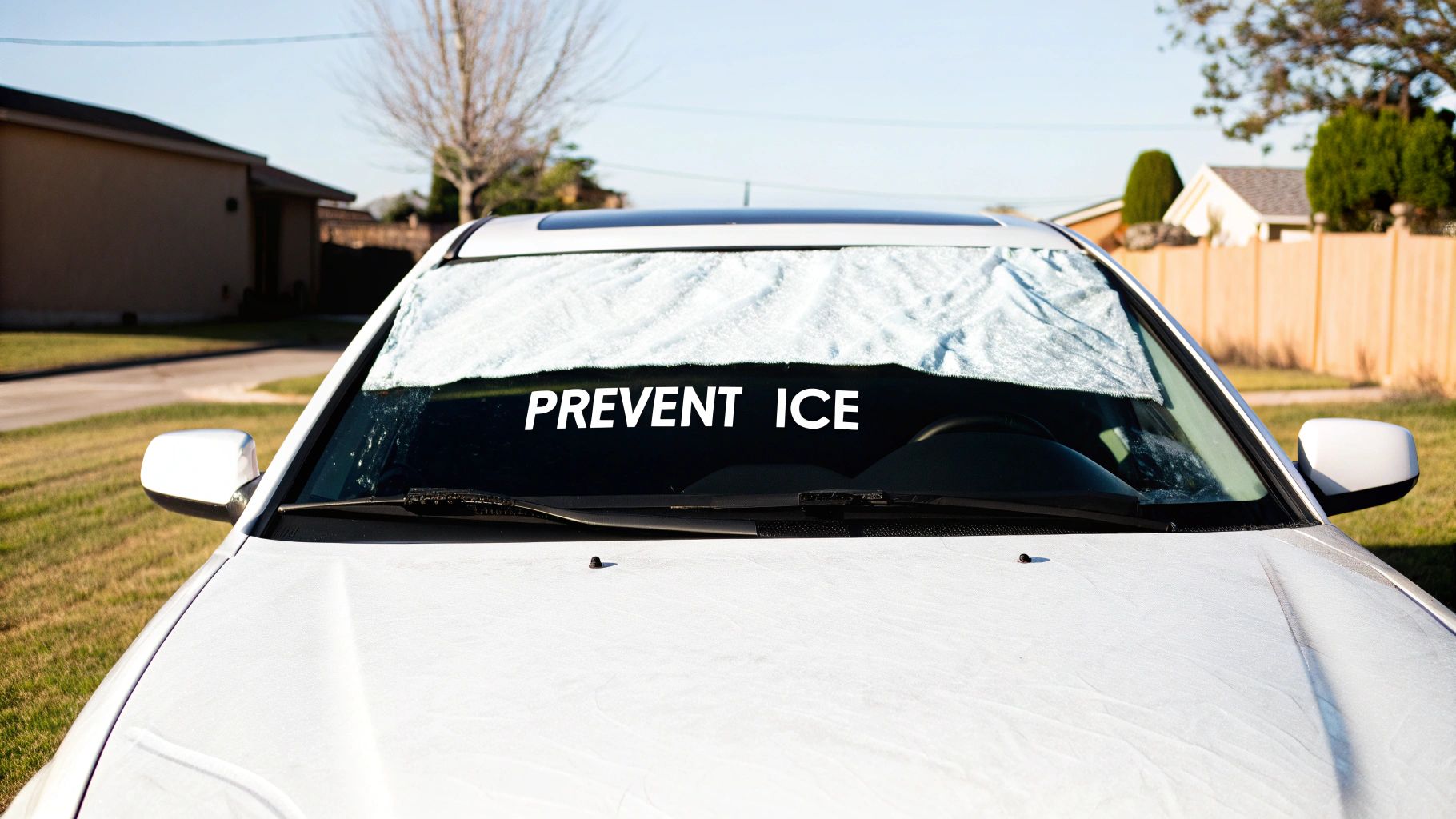
While it's great to know how to defrost a windshield quickly, the real pro move is stopping the ice from ever taking hold. A little planning the night before can save you a ton of time and frustration on a frigid morning. Honestly, the best way to deal with an iced-over windshield is to not have one at all.
The easiest approach is to simply create a physical barrier between your glass and the frosty air. You can find professional windshield covers designed for this exact purpose—they fit securely with straps or magnets and do a fantastic job.
But you don’t need anything fancy. If you're in a pinch, plenty of things around the house will work just as well. An old towel, a folded-up bedsheet, or even a couple of rubber floor mats can keep your windshield clear. The trick is to lay them across the glass and tuck the ends into the doors to keep them from blowing away overnight. In the morning, just pull off the cover, and the frost comes right with it.
Simple Solutions to Keep Ice at Bay
Beyond using a cover, you can treat the glass itself to make it a terrible place for ice to form. This little trick works wonders, especially when you know a cold snap is on its way.
A classic DIY solution is a simple mix of three parts white vinegar to one part water. Just pour it into a spray bottle and give your windshield and windows a light misting the night before a freeze. The acetic acid in the vinegar lowers the freezing point of water, which makes it much harder for ice to get a grip on the glass.
A word of caution, though: vinegar is acidic. Be careful to avoid spraying it on your car’s paint or any of the rubber seals, as it can cause damage over time. It’s an effective method, just aim well!
The whole point of prevention is to stop moisture from settling and freezing directly on the glass. Whether you block it with a cover or treat it with a spray, you're tackling the problem before it even starts.
Strategic Parking for an Easier Morning
Believe it or not, where you park your car can make a real difference. If you have the flexibility, a little forethought can turn the sun into your personal de-icing assistant.
Whenever you can, try parking your car so it faces east. As the sun rises, its first rays will hit your windshield directly and begin melting any frost or light ice for you. It won't clear a thick sheet from a winter storm, but on a typical frosty morning, it can give you a massive head start.
These simple habits are the ultimate winter life hacks. By covering your glass, treating it with a solution, or just parking smart, you’ve already won the battle against morning ice.
When It’s Time to Call in the Pros for Your Windshield
Defrosting your windshield is a normal part of any winter morning, but it can also put a spotlight on underlying problems. You might notice a tiny new chip or crack that wasn’t there yesterday, starkly outlined by the frost. It's tempting to ignore these little flaws, but that's a gamble. The rapid temperature shifts from defrosting put a lot of stress on the glass, which can easily turn a small chip into a spiderweb of cracks literally overnight.
If you spot a rock chip, the best thing you can do is get it looked at right away. A quick, professional fix can often stop the damage in its tracks and save you from needing a whole new windshield. You can see how the experts handle these kinds of fixes and learn more about windshield repair services.
Looking Beyond the Glass for a Deeper Problem
Sometimes, the issue isn't with the glass itself but with your car's internal systems. Is your windshield constantly fogging up on the inside, no matter what you do? If running the A/C on the fresh air setting doesn't clear it up, you might be dealing with a leaky heater core.
This part of your car circulates hot coolant to heat the cabin. A leak can pump moist antifreeze vapor into the air, causing that stubborn, greasy film of condensation on your interior glass that just won't go away. For tackling that kind of stubborn residue and getting your glass truly clean after a long winter, specialized glass cleaning services can make a world of difference.
Expert Tip: A windshield that’s always foggy on the inside is more than just a nuisance. Think of it as your car sending up a flare—it's a warning sign that your climate control system needs a professional diagnosis to keep you safe and your car running right.
Finally, if the damage is bad enough to require a full windshield replacement, the job doesn’t end once the new glass is in. So many modern cars have Advanced Driver-Assistance Systems (ADAS), with cameras and sensors mounted directly on the windshield. These systems control crucial safety features like lane-keeping assist and emergency braking.
After any windshield replacement, getting a professional ADAS recalibration isn’t just a good idea—it’s mandatory. Skipping this step means your car's most important safety features could fail when you need them most. So, if your morning defrost routine reveals damage, don’t wait. It’s time to call an expert.
Your Top Windshield Defrosting Questions, Answered
Even when you know the ropes, a particularly icy morning can throw you a curveball. Let’s tackle some of the most common questions we hear from drivers so you can face any frozen windshield with confidence.
Can I Get Away With Using Lukewarm Water?
It's a common thought: if boiling water is bad, maybe lukewarm is okay? The short answer is no. You should avoid putting any water on an icy windshield.
The real enemy here is thermal shock. It’s not just about extreme heat; it’s about any sudden, uneven temperature change. Glass expands and contracts with temperature, and even a moderate difference between the water and the frozen glass can create enough stress to turn a tiny, invisible stone chip into a massive crack. The risk just isn't worth it.
How Long Does My Car Really Need to Warm Up?
Forget what you might have heard about idling for 10-15 minutes. Modern cars are built differently and are far more efficient.
All you really need is about 30 to 60 seconds to get the engine's fluids circulating. The most effective way to warm up the engine itself is to start driving gently. Use that first minute to get your defrost system running, scrape any thick ice, and then get on your way.
The real goal is to get warm, dry air blowing across the inside of the windshield. Letting your car idle for ages just burns gas and doesn't make the defroster work much faster.
Is That DIY Vinegar Spray Trick Actually Safe for My Car?
You’ve probably seen this online tip: a three-parts-vinegar-to-one-part-water solution sprayed on your windshield the night before can help prevent a light frost. And it can work.
But there’s a catch—vinegar is acidic. If you get it on your car’s paint, chrome trim, or rubber seals, it can cause damage over time. It’s a decent preventative measure for very light frost, but it’s not a heavy-duty de-icer for a solid sheet of ice.
Keep in mind that today’s windshields are more than just glass; they often house the cameras for your car’s advanced safety systems. To understand why professional care is so vital, check out our guide on ADAS windshield calibration, which explains how these systems are tied to your auto glass.
If your morning defrost routine reveals a chip or a crack that wasn't there before, don't let it spread. The expert mobile team at Auto Renu Auto Glass LLC comes right to your home or office for fast, professional windshield repair and replacement. Visit us at https://www.autorenu911.com to get your free quote and schedule service today.