Your Guide to Quick Chip in Windshield Repair
Discover how to handle a chip in windshield repair. This guide covers immediate actions, DIY risks, professional costs, and when a replacement is unavoidable.
Jan 1, 2026
generated
chip in windshield repair, windshield chip repair, auto glass repair, diy windshield repair, car maintenance
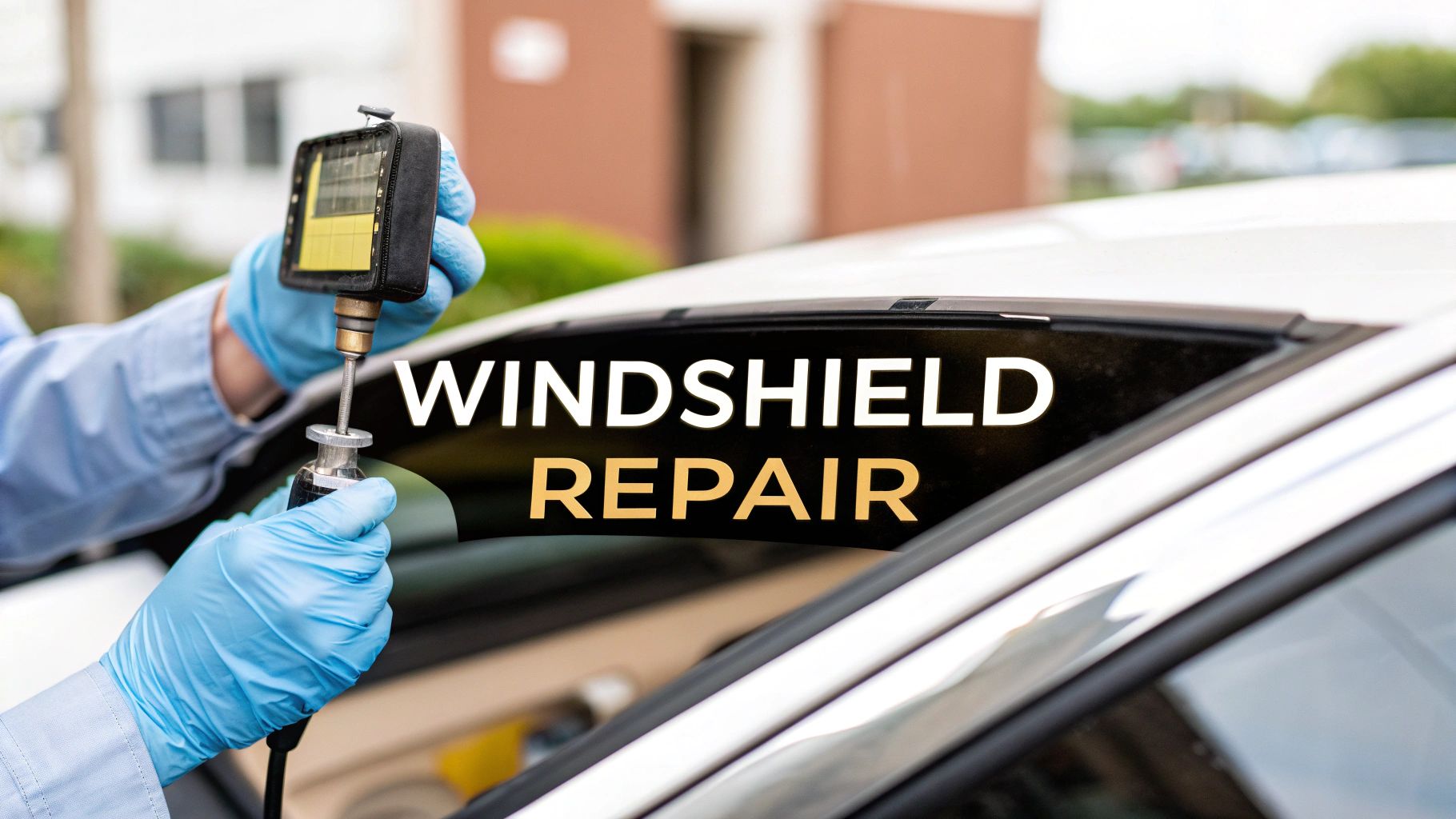
That sickening crack sound of a rock hitting your windshield is something every driver dreads. What you do in that first hour can make all the difference, often determining whether you're looking at a quick, inexpensive repair or a full, costly replacement. Think of it as first aid for your auto glass.
What to Do Right After Your Windshield Gets Chipped
The second you spot that new star, bullseye, or combo break in your glass, your mission is simple: keep it clean, dry, and stable. Dirt, road grime, and even car wash soap are the enemies of a good repair. If they work their way into the tiny fissures of the chip, the repair resin can't bond properly, which can lead to a weak fix or a more noticeable scar down the road.
To help you remember exactly what to do when that rock hits, here's a quick reference guide.
Immediate Action Plan for a New Windshield Chip
Action to Take | Why It's Critical | Pro Tip |
|---|---|---|
Cover the Chip | Prevents dirt, debris, and moisture from contaminating the break, ensuring the resin can bond effectively. | Use a piece of clear packing tape. Avoid duct tape or other tapes that leave a sticky, hard-to-clean residue. |
Avoid Temperature Extremes | Sudden temperature shifts (like blasting the AC on a hot day or the defroster on a cold one) cause the glass to expand or contract, turning a small chip into a long crack. | If you have to use climate control, apply it gradually. Let the cabin temperature adjust slowly rather than hitting it with a blast of hot or cold air. |
Drive Gently | Slamming doors, hitting potholes, or driving on bumpy roads sends vibrations through the vehicle that can easily cause the chip to spread. | Take it easy for a day or two. Your windshield—and your wallet—will thank you for the gentle handling until you can get it fixed. |
Schedule a Repair ASAP | The longer you wait, the higher the risk of the chip spreading or becoming too contaminated for a successful repair. | Don't put it off. Most mobile repair services can come to your home or office, making the process incredibly convenient. |
Following these steps buys you precious time and dramatically increases the chances of a clean, strong, and nearly invisible repair.
Cover the Damage Right Away
Your very first move should be to get that chip covered. Don't just grab any old tape from your junk drawer. Clear packing tape is perfect because it creates a great seal without leaving behind a gummy mess for the technician to clean off. Just tear off a small piece and place it right over the impact point.
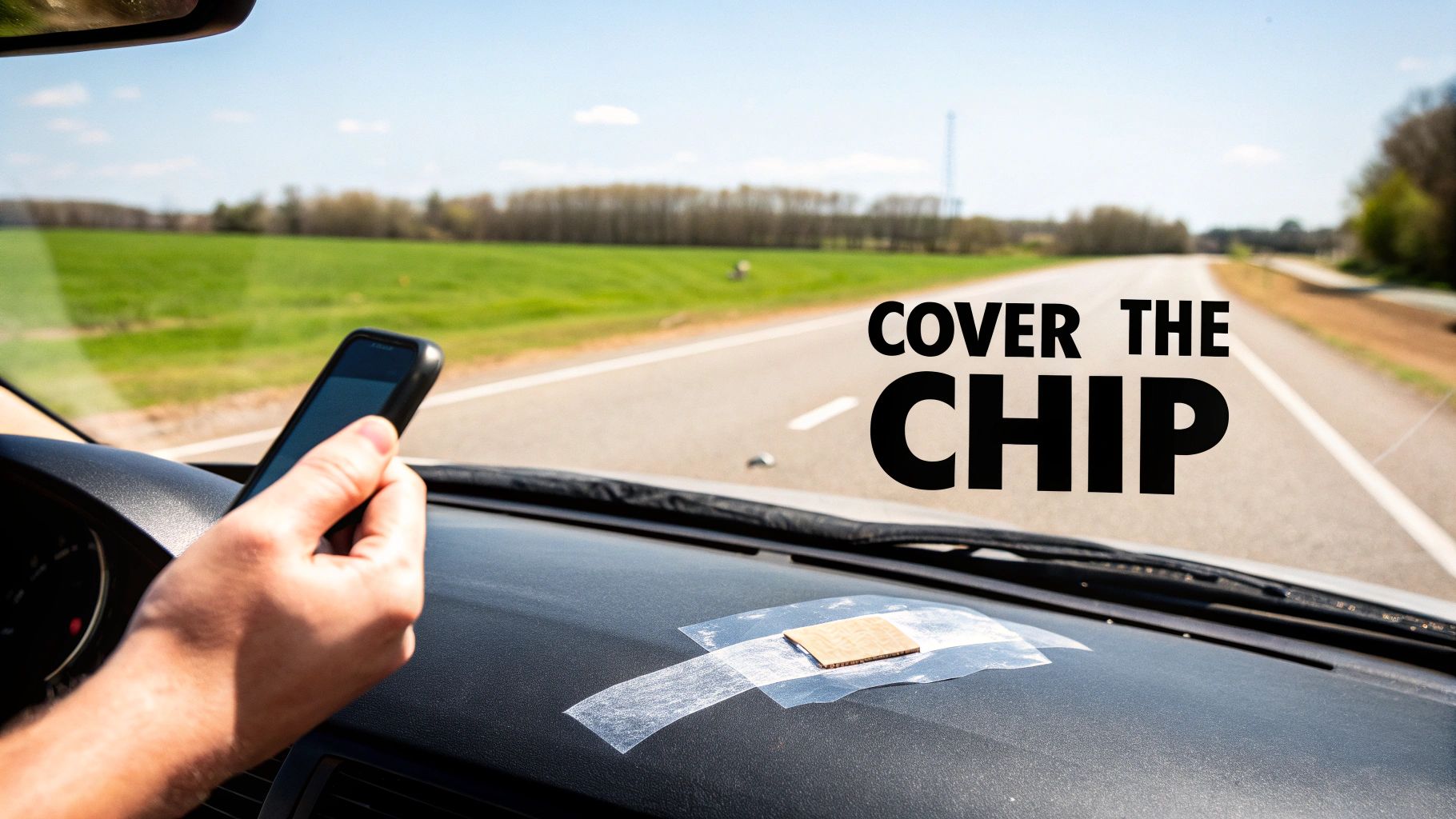
This simple step acts as a temporary shield, protecting the fragile, fractured glass from the elements until you can get a professional out to look at it.
My Two Cents: I tell everyone to keep a small roll of clear packing tape in their glove box. It sounds silly until you need it. Being able to protect a chip seconds after it happens is the single best thing you can do to ensure a perfect repair.
Don't Let It Spread
Next up, you have to be mindful of anything that puts stress on the glass. The biggest culprits are sudden, extreme temperature changes. Hitting the defroster on high on a frosty morning or blasting the A/C when your car has been baking in the sun puts enormous pressure on the windshield. That’s how a tiny chip suddenly spiderwebs into a foot-long crack.
It's also a good idea to avoid slamming car doors or taking potholes at full speed. Those vibrations and jolts can be just enough to make the damage worse.
Get It Looked at by a Pro
While it’s tempting to just "watch it" for a few days, getting a repair scheduled quickly is key, especially if you're driving on busy roads where more debris is a constant threat. Chip repairs are a huge part of the auto glass business for one reason: they stop small problems from becoming big, expensive ones.
Industry data actually shows that 74% of cracks are 14 inches or shorter, which are often the result of an ignored chip. You can see how these figures influence the market by checking out these windshield repair market trends. Getting an expert opinion right away is the best way to make sure you’re taking the right—and most cost-effective—course of action.
Should You Try a DIY Windshield Repair Kit?
So, you've got a fresh chip in your windshield. The first thought for many is to run to the nearest auto parts store and grab one of those sub-$20 DIY repair kits. The box makes it look simple enough, and hey, who doesn't want to save a few bucks?
If you're dealing with a tiny, straightforward bullseye chip on an older car you don't plan on keeping forever, a DIY kit might seem like a decent enough patch job. But honestly, that's a big "if." The reality of a solid, lasting chip in windshield repair is a bit more involved than what a small plastic gadget and a tube of resin can deliver. The biggest gamble you take with these kits is a botched repair, because there are no do-overs.
The Problem with Most DIY Repairs
What really separates a professional job from a DIY attempt is the process. A pro uses a specialized tool that first creates a powerful vacuum over the chip. This is a critical step because it sucks every last bit of air and moisture out of the microscopic cracks. Only after the vacuum is pulled is the resin injected under high pressure, forcing it deep into every crevice.
Your average DIY kit just can't do that. It relies on you pushing a plunger by hand.
This approach almost always traps tiny air bubbles inside the break. Those bubbles cause two huge problems:
They create a weak spot. If the resin can't get everywhere, it can't fully bond with the glass. You're left with a hidden weakness that's just waiting to spread into a full-blown crack.
They look bad. The trapped air catches the light differently, leaving you with a permanent cloudy or spotty blemish that's often more distracting than the original chip was.
And here’s the kicker: once that resin cures, it’s there for good. A professional can't go back in, clean out the poorly-cured resin, and fix it properly. You get one shot at a clean, nearly invisible repair, and a botched DIY job wastes it.
I've seen it countless times—a driver tries a DIY fix on a small star break. It looks okay for a week, but after one cold night, they come out to find a foot-long crack spiderwebbing out from their "repaired" spot. The temperature change was all it took to exploit the weak point left by trapped air.
Professional Gear vs. The Kit in a Box
It’s really like comparing a first-aid bandage to surgical stitches. One is a temporary cover-up, while the other is designed to properly heal the damage. The difference in equipment tells the whole story.
Feature | DIY Windshield Repair Kit | Professional Technician's Tools |
|---|---|---|
Resin Injection | A simple plastic syringe or plunger relying on thumb power. | A stainless steel, calibrated injector that creates a vacuum before forcing resin into the break under high pressure. |
Resin Quality | A basic, all-purpose acrylic resin. It often has a lower viscosity that struggles to fill hairline cracks and can yellow over time. | High-quality, lab-formulated resin with superior clarity and strength, designed to match the optical properties of glass. |
Curing Method | Relies on natural sunlight, which can be slow and inconsistent, leading to a weak or incomplete cure. | A portable, high-intensity UV lamp that cures the resin in seconds, ensuring a rock-solid bond every time, rain or shine. |
When it comes right down to it, paying for a professional repair is more than just fixing a piece of glass. It’s an investment in your safety and your car's integrity. While a DIY kit might save you a little cash upfront, the very real risk of a failed repair turning into a full windshield replacement makes calling a pro the smarter, safer bet almost every time.
What to Expect from a Professional Mobile Repair
Choosing a professional mobile service for that chip in your windshield is a massive relief. It turns a potential day-ruiner into something you barely need to schedule. Instead of carving out time to drive to a shop and wait, the technician comes right to your driveway or even your office parking lot. It’s a huge convenience that’s hard to overstate.
The whole on-demand auto service world has exploded, and mobile glass repair is a big piece of that pie. The market for these on-demand home services, including mobile repairs, is valued at a whopping USD 1.42 billion in 2024. Rock chip repairs alone account for a massive USD 1.38 billion of that figure. A lot of that growth is happening here in North America, which holds 36.8% of the market, as more people realize that a pro job is far better than a risky DIY attempt. You can dig into the numbers in this detailed windshield service market report.
When the Technician Arrives
Once the mobile tech pulls up, the whole operation is incredibly streamlined. They'll start by thoroughly cleaning the impact point, getting rid of any tiny glass fragments or road grime that could mess up the repair. This cleaning and prep stage is non-negotiable for a strong, permanent fix.
This flowchart gives you a good visual of the decision-making process and what to expect from both DIY and professional repair paths.
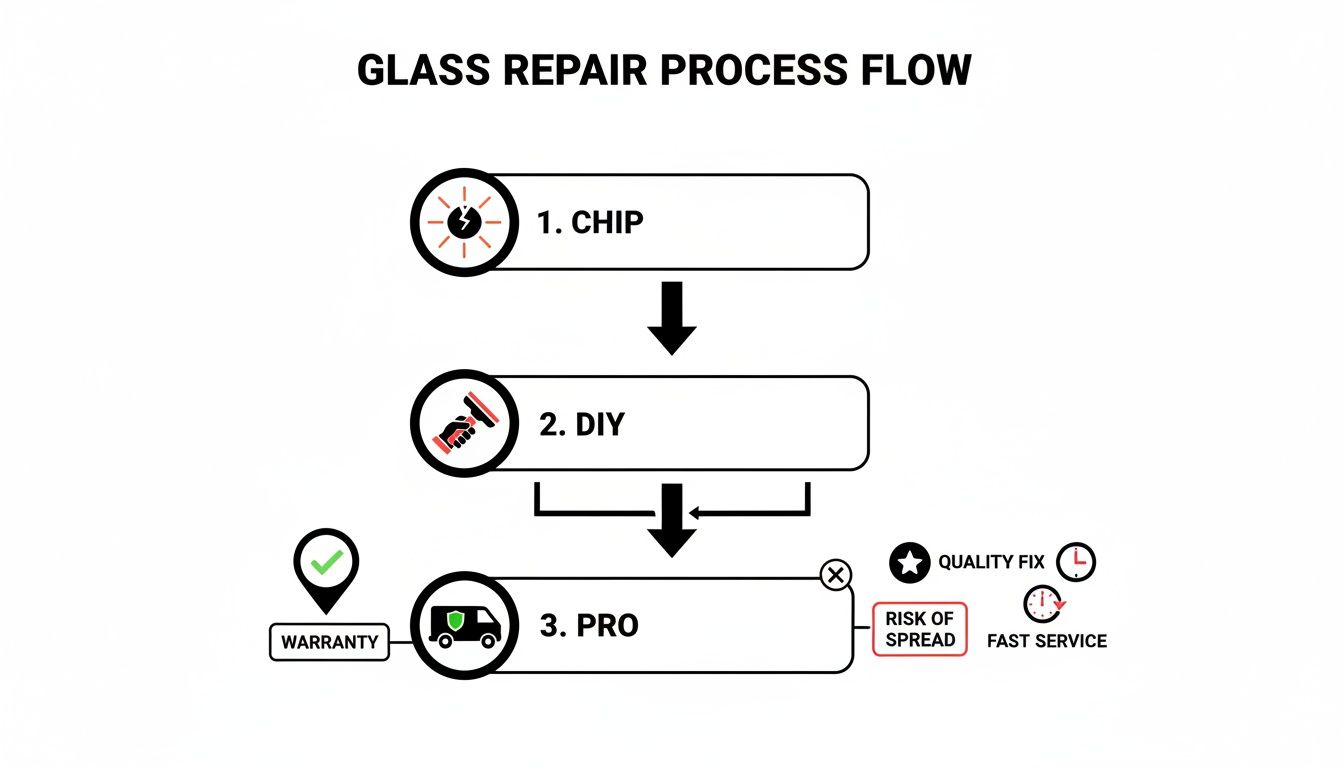
As you can see, going with a pro typically leads to a high-quality repair backed by a warranty, whereas the DIY route can be a gamble, often ending with the damage spreading anyway.
The Repair Process, Demystified
Next, the tech will mount a specialized injector tool right over the chip. This isn't just a simple plastic syringe like you'd find in a store-bought kit. This professional-grade equipment creates a powerful vacuum, pulling every last bit of air and moisture out of the crack. This step is the real secret sauce that makes professional repairs nearly invisible and far superior to DIY jobs.
After creating the vacuum, the technician carefully injects a high-quality, optically clear resin under pressure. This forces the resin into every microscopic fissure of the break, ensuring the entire void is filled completely.
To finish, they place a special UV light over the fresh resin. This light cures and hardens the polymer in about a minute, instantly restoring the structural integrity of your windshield.
The Bottom Line: The entire professional repair is faster than you might think. From the moment the tech arrives to when you’re good to go, it’s usually less than 30 minutes. The end result is a windshield that’s safe and strong again, with the original blemish becoming up to 95% less visible.
This efficiency means you can get right back to your day with no downtime. If you're curious about the exact timing, we break it all down in our guide on how long a windshield repair takes. Ultimately, the expert approach gives you a reliable, long-term solution that protects your visibility and your vehicle's safety.
Knowing When to Repair vs. Replace Your Windshield
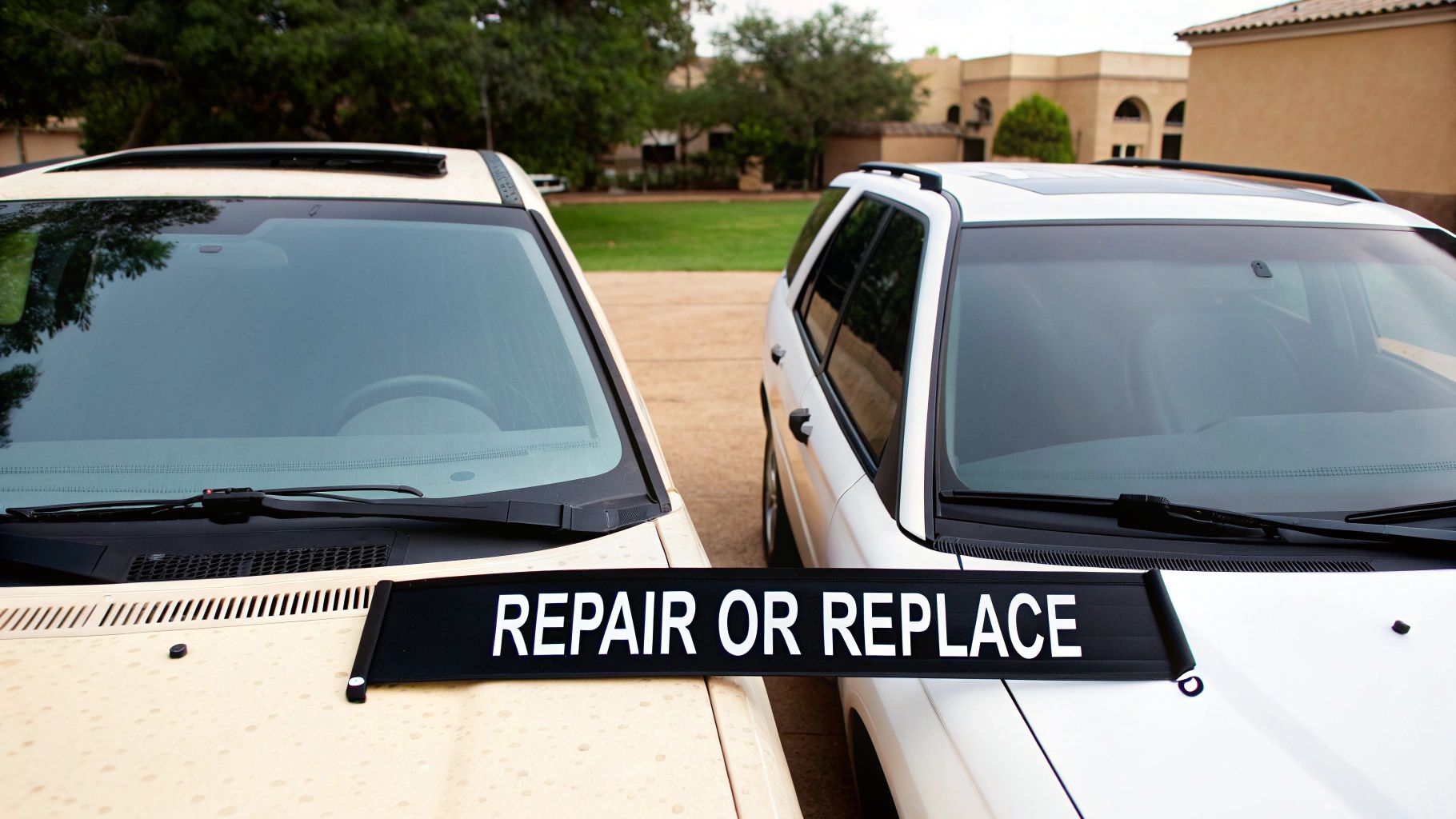
While a professional chip in windshield repair is an amazingly effective and budget-friendly fix, it's not a magic wand for every situation. Figuring out when you can get away with a simple repair versus needing a full replacement is key—both for your safety and your bank account. The decision really boils down to three things: the size of the damage, where it is on the glass, and what kind of chip or crack you're dealing with.
The numbers tell a pretty clear story. While the global market for windshield replacements hit a staggering USD 29.74 billion in 2023, the cost for an individual driver is what really matters. A typical chip repair might set you back less than $100, but a full replacement can easily run from $400 to over $1,500. That's a huge difference. For anyone managing a fleet of vehicles, the stats are even more compelling: catching chips early can stop 90% of edge cracks from ever forming. You can dive deeper into these automotive glass market dynamics if you're interested.
Size and Type of Damage
You’ve probably heard the old rule: if the chip is smaller than a quarter, you can fix it. That's still a decent guideline, but the type of damage is just as important. A clean "bullseye" or a small "star break" is the perfect candidate for a solid, nearly invisible repair.
But things get trickier with more complex damage:
Long Cracks: Once a chip starts to run and creates a crack longer than a dollar bill (that's about six inches), a replacement is almost always the only safe path forward.
Combination Breaks: If the damage looks shattered or has multiple "legs" spreading out, the glass is structurally compromised. It's tough for the repair resin to fill every tiny fissure completely and restore strength.
Deep Pits: Sometimes, a rock doesn't just chip the glass—it gouges out a piece. If there's a significant chunk missing from that outer layer, resin alone can't restore the windshield's integrity.
Location on the Windshield
Where that chip landed is just as critical as its size. A small, simple bullseye in the middle of the passenger's side? That’s an easy, straightforward job. But move that exact same chip to a different spot, and the whole game changes.
Any chip or crack, regardless of size, that sits directly in the driver's line of sight almost always means you need a new windshield. Even the most flawless repair leaves a slight distortion, and that tiny imperfection is all it takes to distract a driver and compromise safety.
Another no-go zone is the very edge of the windshield. Any damage within two to three inches of the border is a major red flag. This area is under constant stress from the vehicle's frame flexing and vibrating. A repair here is far more likely to fail and spider out into a massive crack.
Deciding between repair and replacement can be confusing, so here’s a quick-reference table to help you make a fast assessment.
Quick Guide: Repair or Replace Your Windshield
Damage Characteristic | Usually Repairable | Likely Requires Replacement |
|---|---|---|
Size | Smaller than a quarter | Larger than a quarter / Crack longer than 6 inches |
Type | Bullseye, small star, minor combination | Complex combination break, deep pit, multiple cracks |
Location | Outside the driver's line of sight | Directly in the driver's line of sight |
Placement | More than 3 inches from any edge | Within 2-3 inches of the windshield's edge |
Impact Point | Damage to the outer layer of glass only | Damage penetrates both layers of glass |
This table is a great starting point, but always get a professional opinion if you're unsure. A technician can spot structural weaknesses you might miss.
The ADAS Complication
Modern cars throw another wrench into the works. If your vehicle has an Advanced Driver-Assistance System (ADAS), your windshield is far more than just a piece of glass. It's an integral part of your car's safety tech.
Cameras for features like lane-keeping assist and automatic emergency braking are mounted right on the windshield. If you need a replacement, the job isn't done when the new glass is in. The system must go through a precise recalibration process to ensure the cameras are aimed perfectly and can read the road ahead. Skipping this step is a huge risk—it can cause critical safety features to malfunction right when you need them most. This makes getting a professional assessment absolutely non-negotiable for newer vehicles.
Understanding the Costs and Insurance Coverage
Alright, let's talk about the bottom line: what’s this going to cost? The good news is that a professional chip in windshield repair is surprisingly affordable. Think of it as a small investment now to sidestep a much bigger, more expensive headache later.
If you're paying out-of-pocket, a mobile repair service will typically charge between $70 to $130 for the first chip. That's it. For that modest fee, you're restoring the structural integrity of your windshield and stopping a crack in its tracks.
Now, compare that to a full windshield replacement. That bill can easily run from $400 to over $1,500, especially if your car is loaded with modern safety systems that need recalibration. When you look at the numbers, getting a chip fixed fast just makes sense.
Will My Insurance Cover This?
Now for even better news—there's a solid chance you won't have to pay anything at all. Most insurance companies would much rather cover a small, proactive repair today than foot the bill for a massive replacement claim tomorrow.
This is why, if you have comprehensive coverage on your auto policy, most insurers will waive your deductible for a windshield chip repair. For you, that means the service is often completely free.
Why would they do this? It's simple math for them. A $100 repair bill today prevents a potential $1,000 replacement claim down the road, not to mention the extra costs for ADAS recalibration.
What do you need to do? First, double-check that you have comprehensive coverage. A quick call to your agent or a peek at your policy online will confirm it.
A great mobile glass company, like Auto Renu, can usually handle the entire insurance claim for you. They work directly with the insurance providers, so all you have to do is give them your policy info and pick a time for the repair.
Making the Call to Your Insurer
When you reach out to your insurance company, have your policy number and your car's basic info (year, make, and model) ready to go. Just let them know you have a small chip you want to get repaired before it spreads.
Your agent will verify your coverage and walk you through the next steps, which usually just means pointing you to an approved repair service. For a deeper dive into the claims process, our guide on how insurance covers windshield replacement breaks everything down.
After the technician works their magic, they'll bill your insurance company directly. It’s also a good idea to understand the paperwork you get, like the difference between an invoice and a receipt, so you have clear records. Using your insurance is hands-down the smartest way to deal with a chip—it saves you money while protecting one of your vehicle's most critical safety features.
Got Questions About Windshield Chip Repair?
It's totally normal to have a few questions, even when you know a professional fix is the right move. Getting a handle on the details can help you know what to expect and give you some peace of mind. Let's walk through some of the most common things drivers ask about getting that annoying chip taken care of.
Will the Chip Vanish Completely?
This is probably the number one question on everyone's mind. The honest answer? Probably not 100%. A top-notch professional repair makes the damage 80-95% less visible, which is a huge improvement. But the real goal here is structural, not just cosmetic. We're restoring the strength of the glass to stop that little chip from turning into a massive crack.
You'll likely be left with a tiny blemish, something you'll only notice if you're looking for it. The final look really depends on the chip itself. A brand-new, clean bullseye chip is going to repair much better than a complex star break that’s been sitting there for a few weeks collecting road grime.
If you're curious about what kind of damage you're dealing with, our guide on the common types of windshield damage is a great resource.
What’s the Downtime After a Repair?
People often worry they'll have to leave their car sitting for hours. But one of the best parts about a modern chip repair is how fast it is. You can literally drive your car away the moment the technician is finished.
How? We use a high-quality resin that gets injected into the chip and then instantly cured with a special UV light. This creates a permanent, rock-solid bond in just a few minutes.
While your car is road-ready immediately, it's a smart idea to hold off on a high-pressure car wash for at least 24 hours. Just give that resin a little extra time to fully settle and you'll ensure the repair is as durable as possible.
Key Takeaway: Think of it this way: the structural fix is immediate, but the cosmetic result can vary. The main reason for a chip repair is safety—it keeps your windshield intact. A nearly invisible finish is a fantastic bonus.
Will a Chip Repair Affect My Car's Safety Systems?
This is an excellent question, especially with all the tech in new cars. For the vast majority of repairs, the answer is no. As long as the chip isn't directly in front of the Advanced Driver-Assistance Systems (ADAS) camera, a proper chip in windshield repair won't interfere with anything.
The repair process restores clarity and strength without ever taking the windshield off the car, so those carefully calibrated cameras are never disturbed.
Now, if the damage is bad enough that the whole windshield needs to be replaced, that's a different story. In that case, an ADAS recalibration is absolutely required. This ensures safety features like lane-keep assist and automatic emergency braking work perfectly. Any good technician will spot this and tell you exactly what needs to happen.
When a rock leaves its mark on your windshield, don't wait for it to spread. The expert mobile technicians at Auto Renu Auto Glass LLC come directly to you, providing fast, professional chip repairs that restore your windshield's strength and clarity. We handle the insurance paperwork and get you back on the road safely in under an hour. Schedule your convenient mobile service today at https://www.autorenu911.com.