How Long to Wait After Windshield Replacement: Quick Guide
Wondering how long to wait after windshield replacement? Learn safe curing steps, when to drive, and tips to avoid leaks in this concise guide.
Nov 22, 2025
generated
windshield replacement wait time, safe drive away time, auto glass repair, adas recalibration, car maintenance tips
So, you just got a new windshield. The big question on everyone's mind is always the same: "How long until I can drive my car?"
The quick answer is you're probably looking at a wait time of 30 to 90 minutes. This is what we in the industry call the Safe Drive-Away Time (SDAT). It's the bare minimum for the powerful adhesive to set enough to hold the glass securely in place. But—and this is a big but—that's not the end of the story. The adhesive needs much longer to cure completely, usually a full 24 hours or more.
Understanding Your Windshield Replacement Drive Away Time
Getting the timing right after a windshield replacement isn't just about convenience; it’s about safety. That sheet of glass is a critical structural component of your car. It provides up to 60% of the cabin's strength in a rollover and ensures your airbags deploy correctly. If you drive off too soon, you're compromising that entire safety system.
To make it simple, here’s a quick visual breakdown of what to expect.
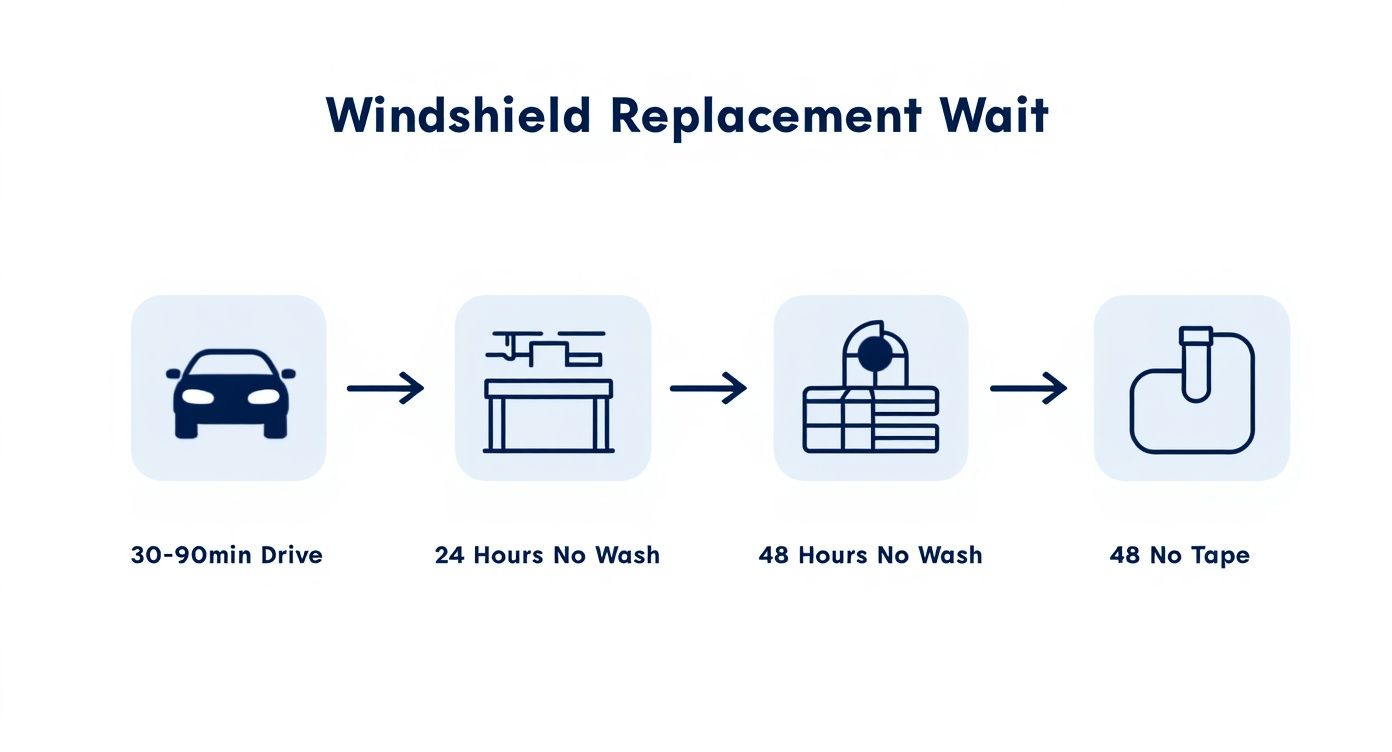
This chart helps you see the difference between when you can start driving and when you can get back to normal activities like hitting the car wash.
For a clearer picture, here’s a table that breaks down the crucial waiting periods and what they mean for you.
Windshield Replacement Wait Times At a Glance
Wait Time | What It Means | Allowed Activities |
|---|---|---|
First 30–90 Minutes | Safe Drive-Away Time (SDAT): The adhesive has set enough for safe, gentle driving. | Drive home carefully. Avoid highways, bumps, and hard braking. |
First 24 Hours | Initial Curing Period: The urethane is still hardening and is vulnerable to stress. | Gentle driving is okay. Do not slam doors or use a pressure car wash. Keep windows slightly cracked. |
24–48 Hours | Substantial Cure: The adhesive bond is much stronger but not yet at 100% strength. | Most normal driving is fine. You can now remove any retention tape. Still avoid high-pressure car washes. |
After 48–72 Hours | Full Cure: The urethane has reached maximum strength and integrity. | Your vehicle is back to normal. You can wash it, use defrosters, and drive without restrictions. |
This timeline should give you a solid idea of what to expect, but remember, your installer's advice is the final word.
How Safe Drive Away Time Has Changed
Things have come a long way. Back in the '80s, you’d have been told to leave your car parked for a full 24 hours. Thanks to huge advancements in urethane technology, we can get you back on the road much faster. In fact, a 2018 global survey of auto glass shops found that 78% of them now advise a drive-away time of just one to two hours. That’s a massive improvement.
Expert Tip: Your technician's advice is gold. They know the specific adhesive they used and how the local temperature and humidity will affect its cure time. Always listen to their instructions over any generic guide.
What Happens During the Curing Process
That initial 30-90 minute window is just the beginning. The adhesive continues to cure and gain strength for the next 24 to 48 hours. During this time, the bond is still susceptible to pressure changes (like slamming a door) and moisture. That's why following all the "do's and don'ts" is so critical—it ensures the new glass forms a permanent, watertight seal with your car's frame, protecting its structural integrity for the long haul.
What Can Change Your Wait Time?
Ever wonder why your technician says you can drive off in 45 minutes, but your friend had to wait two hours for their car last winter? It's not a one-size-fits-all situation. Several key factors come into play, and understanding them helps you see why your installer’s specific instructions are so crucial.
The single biggest variable is the adhesive itself. Modern urethane technology is pretty amazing. While standard adhesives are workhorses, many shops now use specialized "fast-cure" urethanes. These are engineered to reach a safe drive-away strength much more quickly, sometimes in as little as 30 minutes under ideal conditions. A professional installer will always choose the right product for your vehicle, the day's weather, and your schedule.
How Weather Plays a Role in Curing Times
Beyond the type of adhesive, the weather is the ultimate wild card. Urethane cures by pulling moisture from the air, a chemical reaction that’s very sensitive to both temperature and humidity. These two things can dramatically speed up or slow down how long you have to wait.
A replacement done on a hot, dry afternoon in Phoenix will cure much faster than one performed on a cold, damp day in Portland. It's just chemistry. When temperatures dip below 10°C (50°F), the curing time for a standard urethane can stretch out by up to 50%. On the flip side, warm and dry conditions (above 25°C or 77°F) can help that same adhesive form a safe bond in just 30–60 minutes. Humidity is also a factor; high humidity (above 70%) can actually slow the process by an average of 20–30%. If you're curious about the science, you can find a lot of great information on how weather impacts windshield safety from glass industry experts.
Real-World Impact: An installer might confidently give you a 45-minute drive-away time on a sunny 80°F day. But on a chilly, rainy 45°F morning, they might extend that to 90 minutes or more. They aren't trying to waste your time—they're making sure the adhesive bond is absolutely secure.
Your Vehicle's Design Matters, Too
Believe it or not, your vehicle's specific design also has a say in the safe drive-away time. Certain features can add complexity to the job and influence the overall process.
Vehicle Size and Weight: A massive windshield on a heavy-duty truck or a large SUV needs a stronger initial bond to support its weight and size. This can sometimes mean waiting just a little bit longer.
ADAS Features: If your car is equipped with Advanced Driver Assistance Systems (ADAS), like lane-keep assist or adaptive cruise control, the technician will need to recalibrate the cameras. While this adds to your total appointment time, it doesn't directly change the adhesive cure time itself. It's just another crucial step in the process.
Unique Body Frames: Some cars have funky frame or molding designs that require a more precise touch and extra setting time to guarantee a perfect, leak-proof seal.
At the end of the day, the time your technician gives you is a carefully calculated figure. They're factoring in the specific urethane they used, the current temperature and humidity, and your car's unique quirks. Trusting their final recommendation is the most important thing you can do to ensure your new windshield is safe, secure, and ready to protect you for years to come.
The First 24 Hours: Crucial Care for Your New Windshield
https://www.youtube.com/embed/FGkY85WaeNY
Alright, your technician has given you the green light to drive away, but this next part is all on you. The first 24 hours after a windshield replacement are absolutely critical. Think of it this way: the urethane adhesive that holds your windshield in place is like freshly poured concrete. It's solid enough to hold its ground, but it's still curing and vulnerable.
How you handle your car during this window directly affects the final seal. Getting it right means avoiding annoying leaks, wind noise, and other problems down the road. A little care now prevents a lot of headaches later.
Treat Your Vehicle Gently
One of the easiest ways to mess up a new installation? Slamming the car door. It’s an everyday action, but it creates a sudden jolt of air pressure inside your car. That pressure has to go somewhere, and it pushes outward against your new, still-settling windshield. That tiny "pop" of air can be enough to compromise the fresh seal.
The fix is simple: close your doors gently for a day or two. Even better, crack a window just an inch before you shut the door. This little trick gives the air a place to escape, protecting the new adhesive from that sudden pressure spike.
You’ll also want to avoid rough roads if you can. Potholes, speed bumps, and gravel roads create vibrations that travel right through your vehicle’s frame. Those vibrations can ever so slightly shift the glass before the urethane has a chance to fully harden and grab on for good. Stick to smooth pavement for the first day.
Your Immediate Post-Replacement Checklist
It's easy to forget the little things in the rush of getting back on the road. Here’s a straightforward list of what you absolutely should—and shouldn't—do in that initial period.
What to AVOID for the first 24-48 hours:
High-Pressure Car Washes: This is non-negotiable. The powerful jets at an automatic car wash can blast away the fresh seal before it has a chance to set. You need to wait at least 48 hours, and honestly, a gentle hand wash is a much safer bet for its first cleaning.
Peeling Off the Tape: Your installer probably put some retention tape along the edges of the glass. It’s not just for looks—it’s holding the windshield in its precise position while the adhesive cures. Leave that tape on for a full 24 hours, or for whatever specific time your technician advised.
Using Sunshades or Dash Covers: For the first day, avoid putting anything on your dashboard that might press against the glass from the inside. Even the light pressure from a sunshade can be enough to interfere with the seal.
The initial curing phase is your responsibility. Simple precautions like avoiding a car wash and not slamming doors are essential for ensuring the urethane creates a permanent, watertight bond that protects your vehicle's structural integrity.
Of course, even after a perfect installation, a new rock chip can happen anytime. Acting fast is key. Knowing when a simple windshield repair is possible can save you the cost and hassle of another full replacement, helping you keep your glass in top shape for years.
How ADAS Recalibration Affects Your Appointment
If your car is packed with modern safety features like lane-keeping assist, forward collision warnings, or adaptive cruise control, then replacing the windshield is a bit more involved than just swapping out the glass. Those features aren't magic; they rely on a sophisticated camera and sensor system, often mounted right at the top of your windshield. This whole setup is your Advanced Driver Assistance System (ADAS), and it acts as your car's eyes on the road.
When a new windshield goes in, even a tiny shift—we're talking as little as one millimeter—can throw that camera's perspective completely off. Suddenly, the systems you count on to keep you safe might not work as they should, or worse, they could react unpredictably. That’s why ADAS recalibration isn't an optional add-on; it's an absolutely essential final step for any modern vehicle.
Adding Time to Your Service
So, what does this mean for your appointment time? It means you'll need to be a little more patient. Once the new glass is in and the adhesive starts its job, the technician's work isn't done. They'll hook up specialized diagnostic tools to your car to meticulously realign the ADAS camera, ensuring it sees the world exactly as the manufacturer intended. This is a precision job that can't be rushed.
This recalibration process can add anywhere from 30 to 90 minutes to the total service time. A simple windshield swap that used to take an hour or two can now easily stretch to three hours or more. Given that a staggering 68% of new vehicles sold in major markets in 2022 came with ADAS, this is quickly becoming the new normal for windshield replacements.
Key Takeaway: Think of recalibration like getting a new pair of prescription glasses. The lenses might be perfect, but if they aren't aligned correctly in the frames, you won't be able to see clearly. Skipping this step leaves your car's safety features dangerously unreliable.
Why It's a Vital Part of the Process
A proper recalibration makes sure your car's safety net is intact before you drive off. Without it, you're rolling the dice on whether these critical systems will perform correctly.
Here’s what could go wrong:
Lane Departure Warnings might miss the lines on the road or give false alerts.
Automatic Emergency Braking could fail to see an obstacle or slam on the brakes for no reason.
Adaptive Cruise Control might misjudge the distance to the car in front of you.
This is why the calibration service is a crucial part of the total wait time before your car is genuinely 100% ready for the road. To get a better sense of how this technology works, you can dive deeper into the specifics of ADAS windshield calibration in our detailed guide. Always double-check that your chosen installer has the right equipment and training to do the job right.
Key Questions to Ask Your Glass Installer
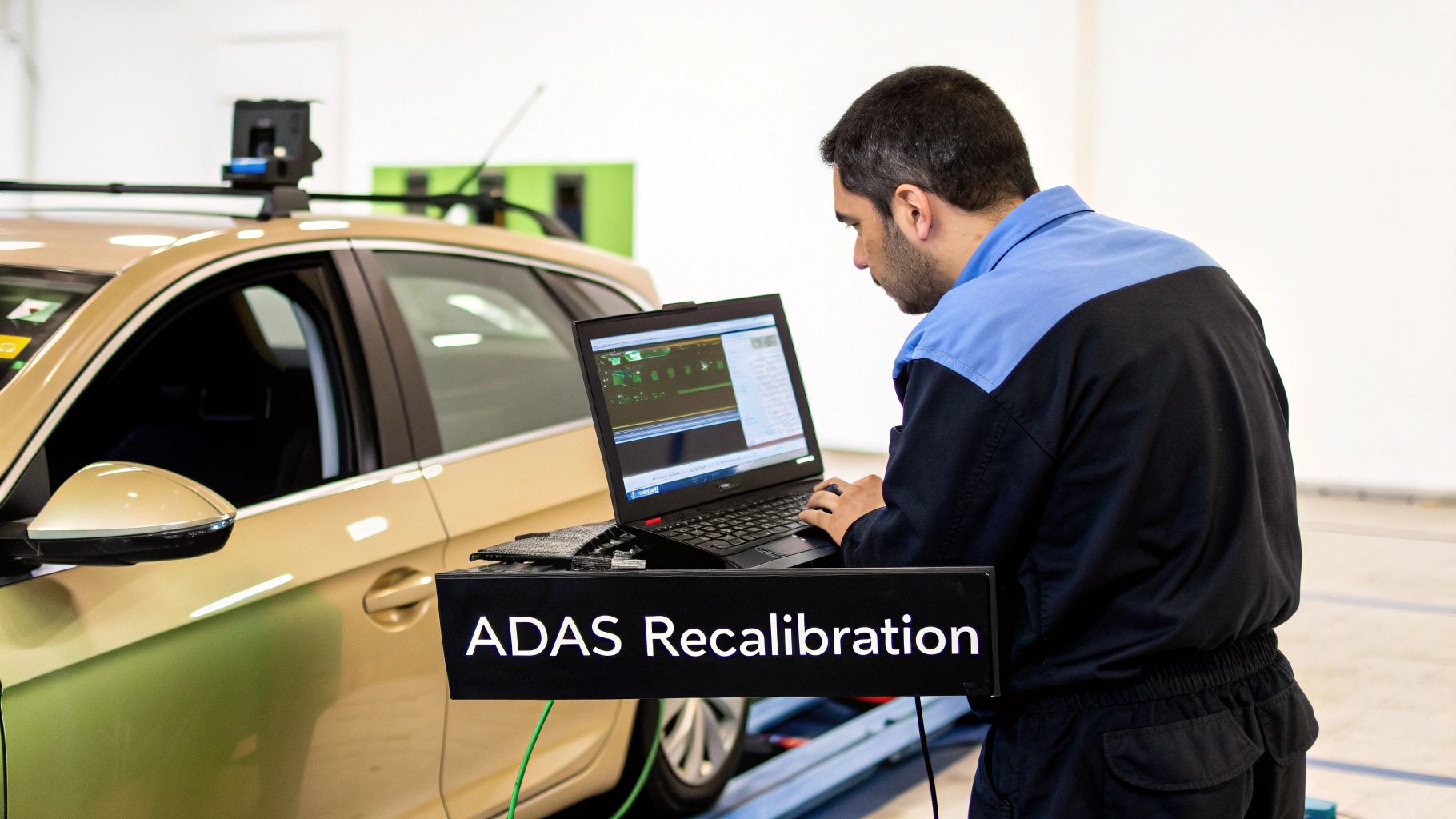
When you get a new windshield, you're not just a customer—you're the owner of a vehicle whose safety depends on that installation being done right. Walking into your appointment with a few key questions turns you into an empowered, informed partner in the process.
It shows your installer you're serious about safety and gives them a chance to prove their expertise. This builds confidence and ensures you know exactly what you're paying for.
Questions About the Adhesive
The urethane adhesive is what holds everything together. It’s arguably the most critical safety component in the entire job, so don't hesitate to ask about it.
What specific urethane are you using, and what is its official Safe Drive-Away Time (SDAT)? A pro should be able to answer this without skipping a beat. You're listening for a confident response like, "We use a fast-cure urethane from Sika, which has an SDAT of 45 minutes in today's conditions." This tells you they’re using professional-grade products and they know their stuff.
How will the current weather affect that SDAT? This is a great follow-up to see if they're actively thinking about the environment. A good installer will explain how the day's temperature and humidity impact the cure time, perhaps mentioning they'll need to extend the wait on a cold, damp day.
A technician who can clearly explain their products and how environmental factors change the timeline is one you can trust. If you get vague answers, it might be a sign they aren't strictly following the manufacturer's guidelines.
Verifying Safety and Calibration Procedures
On any modern car, the work doesn't stop once the glass is in. Your vehicle's advanced safety systems are tied directly to that windshield.
Does my vehicle require ADAS recalibration after this replacement? If your car has features like lane-keeping assist, adaptive cruise control, or automatic emergency braking, the answer should be an immediate and confident "yes."
Do you perform the recalibration in-house, and do you have the right equipment for my make and model? This is a big one. Some shops have to send your car somewhere else for this service, which can cause delays and communication gaps. A shop that handles recalibration on-site with the proper, brand-specific equipment is set up to do the job right from start to finish. It’s your best bet for ensuring your safety features work perfectly the moment you drive away.
Got Questions About Your New Windshield? We've Got Answers
Even when the job is done by a pro, it's normal to have a few questions rattling around. Knowing what to expect helps you feel confident and protects your investment. Let's tackle some of the most common questions we hear from drivers every day.
So, Can I Really Drive My Car After an Hour?
Maybe, but don't just jump in and go. The answer depends completely on the specific adhesive your installer used and the weather that day. High-tech "fast-cure" urethanes are pretty amazing and are engineered to hit what we call the Safe Drive-Away Time (SDAT) in as little as an hour.
This initial bond is just strong enough to hold the windshield secure in a crash and allow your airbags to work as intended. But—and this is a big but—it’s far from a full cure. The adhesive is still working its magic, so you absolutely must follow the technician's instructions to the letter. Driving off even a few minutes too soon is a serious safety gamble.
That drive-away time your technician gives you isn't a suggestion; it's a safety mandate. It’s calculated based on the exact product they used, the temperature, and the humidity. Always trust their professional judgment.
What’s the Big Deal About Washing My Car?
Hitting a high-pressure car wash before the 24-hour mark can spell disaster for your new windshield. The powerful jets of water can easily disturb the urethane seal while it's still vulnerable.
When that happens, you're looking at immediate leaks and a permanently weakened bond between the glass and your car's frame. A bad seal can lead to annoying wind noise, water damage inside your car, and even compromise the vehicle's structural strength. The best advice? Wait at least 24-48 hours, and even then, make its first bath a gentle hand wash.
Will My Insurance Actually Cover ADAS Recalibration?
In nearly every case, yes. If your comprehensive insurance covers the glass replacement itself, it should also cover the necessary ADAS recalibration. Insurers recognize that for modern cars, this isn't an optional upgrade—it's an essential part of the repair.
Think about it: without recalibration, critical safety systems like automatic emergency braking or lane-keeping assist just won't work right.
Still, it’s always smart to double-check with your insurance agent when you first file the claim. Ask them directly, "Does my policy cover all related services, including the required safety system recalibration?" A quick, clear question like that upfront avoids any billing surprises and gives you total peace of mind.
When you need professional installation and precision ADAS recalibration, you need a team you can count on. Auto Renu Auto Glass LLC delivers expert mobile service across the Bay Area, making sure your vehicle is safe and road-ready. For dealership-quality work that comes to you, visit us at https://www.autorenu911.com.