A Complete Guide to Replacing a Windshield
Is your windshield chipped? Learn everything about replacing a windshield, from costs and insurance to ADAS recalibration and choosing the right service.
Nov 23, 2025
generated
replacing a windshield, windshield repair, auto glass replacement, adas recalibration, car maintenance
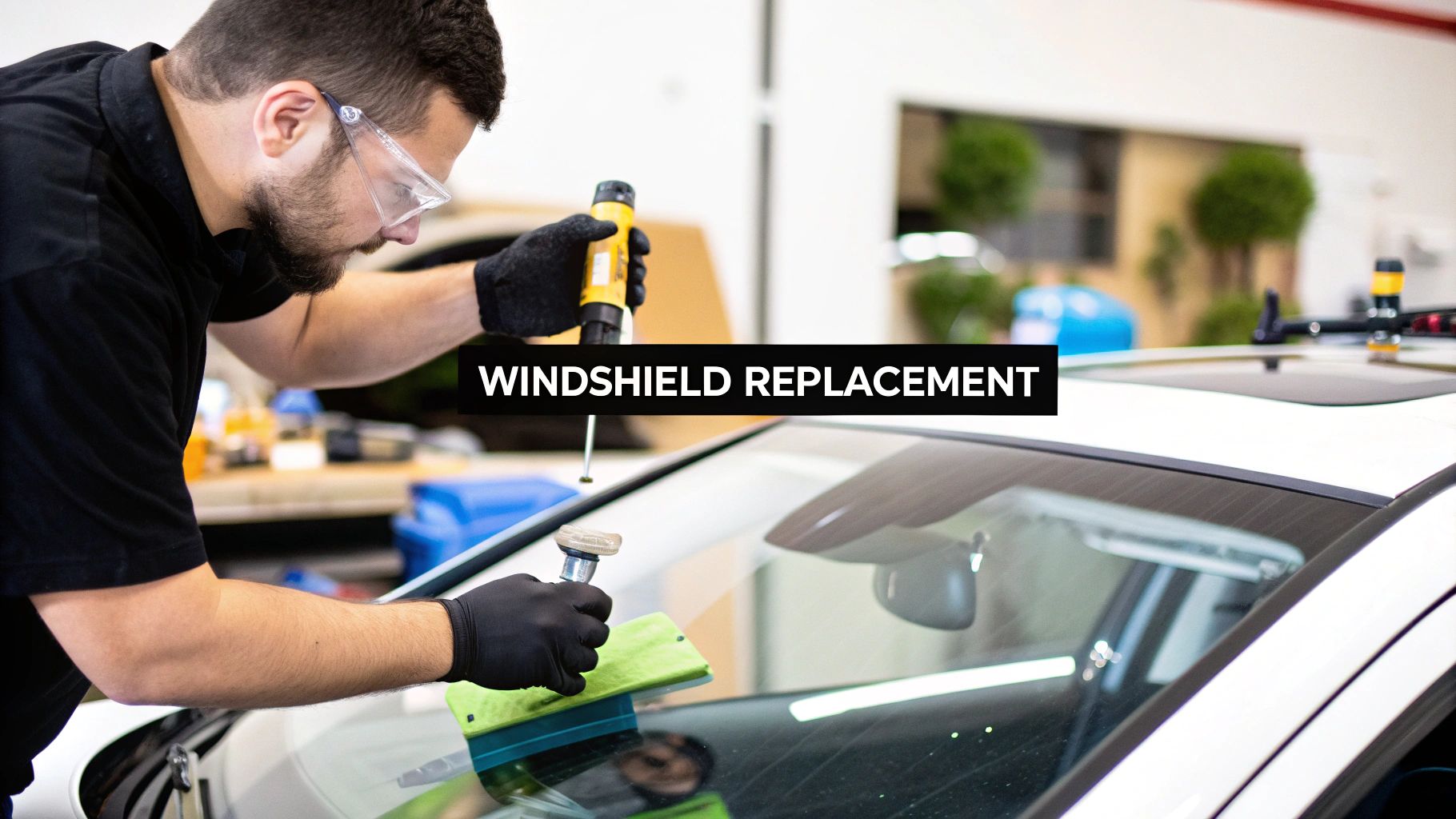
That little rock chip on your windshield seems harmless, right? But what looks like a minor annoyance can quickly become a major safety hazard. Knowing when you can get away with a simple repair versus needing a full windshield replacement is crucial, and it usually boils down to the damage's size, location, and type.
A tiny chip on the passenger side? That's often a quick fix. A long crack creeping across your line of sight? That's a different story—it's almost certainly time for new glass.
When Is Replacing a Windshield Necessary?
Your car's windshield is far more than just a see-through shield. It’s a vital piece of your vehicle's safety system. Think of it as a structural backbone. It provides up to 60% of the cabin's strength in a rollover accident and is absolutely essential for your passenger-side airbag to deploy correctly. If the glass is weak, your safety is compromised.
Learning to spot the difference between a repairable ding and damage that demands a full replacement helps you make the right call. A small, contained chip can often be injected with a special resin that restores the glass's strength and makes the blemish nearly disappear. But more serious damage is like a crack in a building's foundation—it weakens the whole structure, and replacement is the only truly safe solution.
Size and Depth Are Key Factors
An easy rule of thumb is the "dollar bill test." If a chip or crack is smaller than a dollar bill (around 6 inches), it might be a good candidate for windshield repair. Anything larger is generally too extensive to be filled securely and will require a new windshield.
The depth of the damage is just as important. A shallow chip that only affects the outer layer of glass is usually an easy fix. But if the impact has punched through both layers of the laminated safety glass, the structural integrity is shot.
This isn't an uncommon problem. It's estimated that between 13 and 14 million windshields are replaced or repaired in the U.S. every year, making it the number one auto insurance claim for glass damage.
Location and Type of Damage Matter
Where the damage is located can be a deal-breaker. Any chip or crack directly in the driver's line of sight is a serious issue. Even a high-quality repair can leave a slight distortion, which is a dangerous distraction while you're driving. Because of this, safety standards almost always require a full replacement if the damage obstructs the driver's view.
Damage near the edge of the windshield is another major red flag. Cracks that start at or spread to the edge can weaken the entire pane and compromise the seal holding it to the car's frame. Temperature changes and normal road vibrations can cause these cracks to grow surprisingly fast.
This flowchart breaks down the key decision points for assessing what to do with a damaged windshield.
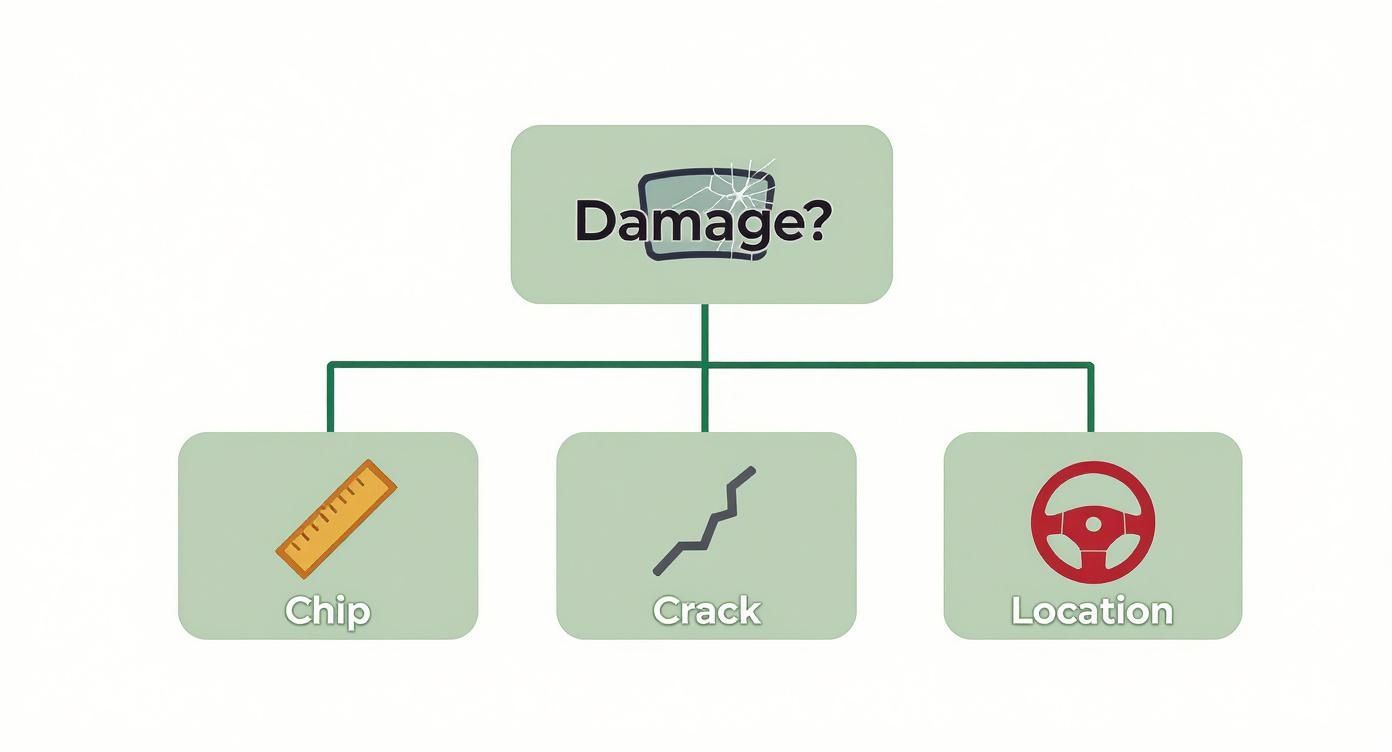
As you can see, small chips are often fixable, but long cracks and damage in the driver's direct line of sight mean it's time for a replacement to keep you safe on the road.
A weak windshield can cause the passenger-side airbag to fail. It's designed to bounce off the glass to protect the passenger. If the glass shatters on impact, the airbag won't work as intended, making a proper replacement a critical safety imperative.
Windshield Damage Repair vs. Replace Checklist
To make it even clearer, here’s a quick-glance table to help you determine the likely course of action for your windshield damage.
Damage Type | Size Guideline | Location Concern | Recommended Action |
|---|---|---|---|
Bullseye or Star Chip | Smaller than a quarter. | Not in the driver's direct line of sight. | Repair is very likely. |
Small Crack | Less than 6 inches long. | Not connected to the edge of the windshield. | Repair may be possible. |
Long Crack | Longer than 6 inches. | Anywhere on the windshield. | Replace is almost always necessary. |
Edge Crack | Any size crack that starts at or touches the edge. | The edge of the windshield. | Replace is required to ensure a proper seal. |
Any Damage | Any size. | Directly in the driver's field of vision. | Replace is the safest option. |
While this checklist is a great starting point, nothing beats a professional assessment. An experienced technician can properly diagnose the severity of the damage and tell you the safest, most effective solution for your vehicle.
The Professional Windshield Replacement Process Step by Step
Wondering what actually happens when a technician shows up to replace your windshield? It's a fair question. This isn't just about swapping out a piece of glass; it's a precise operation that's critical to your car's safety and structural integrity. Think of it less like changing a tire and more like performing surgery on your vehicle.
Every step is deliberate, designed to make sure the new glass works just like the original did—from protecting you in a crash to keeping wind noise out. A true professional follows a strict protocol to get that perfect, factory-grade seal. Let's walk through what you should expect from a top-notch replacement service.
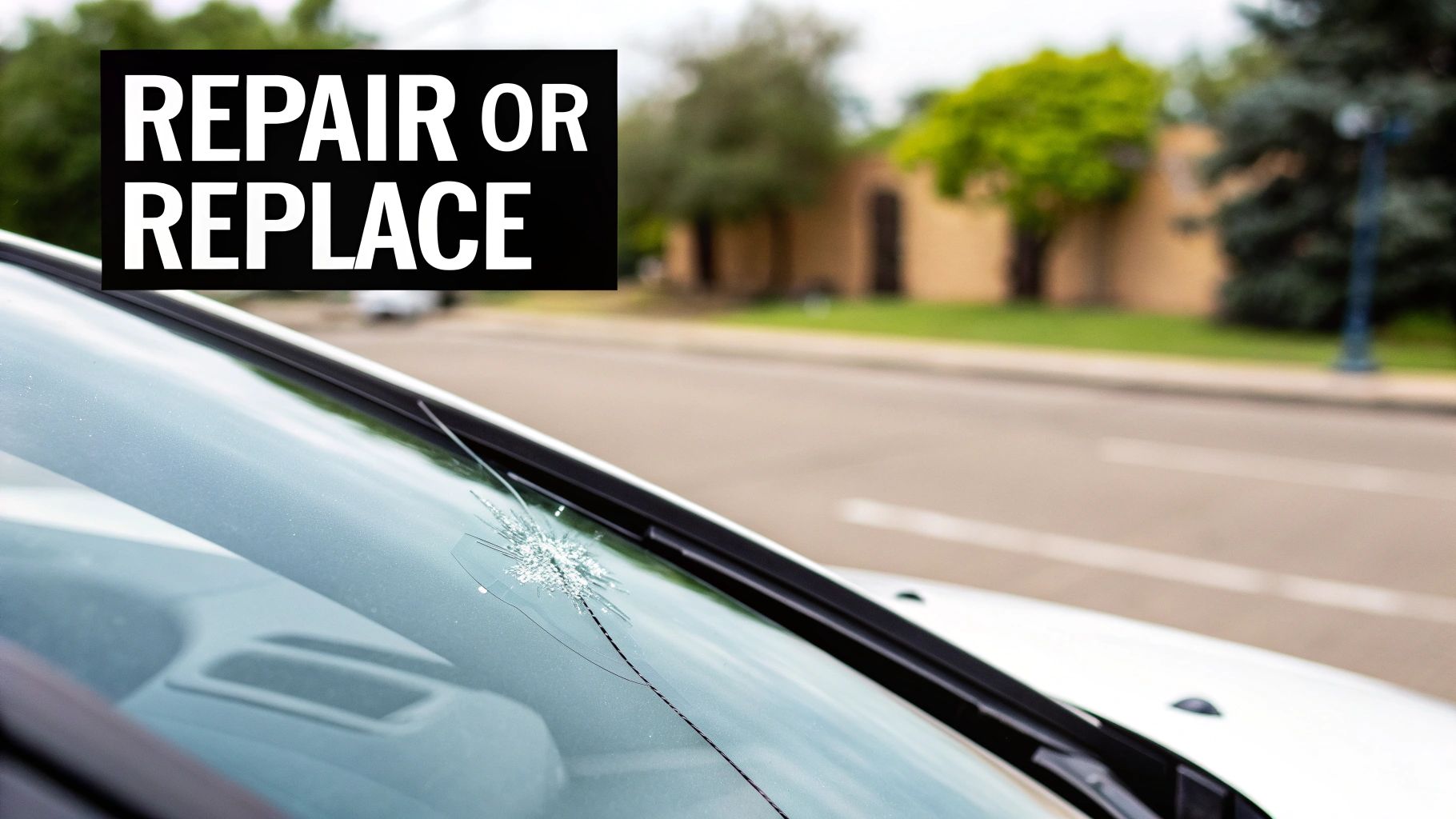
Preparing the Vehicle for Surgery
Before the old glass even comes out, a good technician will meticulously prep your vehicle. This first stage is all about protecting your car from any accidental damage during the process.
Thorough Inspection: First, they'll double-check that they have the exact right windshield for your car, confirming any special features like rain sensors, heating elements, or ADAS camera brackets. They'll also give the surrounding area a once-over for any existing damage.
Vehicle Protection: Next, they'll lay down protective coverings on your hood, fenders, and dashboard. This keeps tools, adhesive, and the old windshield from scratching your paint or scuffing up the interior.
This careful setup is the mark of a true professional. It shows they respect your property and have a keen eye for detail.
Removing the Old Windshield and Frame Preparation
With your car protected, the tech gets down to the delicate business of removing the damaged glass. This is where real skill comes into play, as they need to avoid damaging the vehicle's frame (often called the pinch weld).
Using specialized tools, they'll carefully cut through the old adhesive seal holding the windshield in place. Once the old glass is lifted out, the really detailed work begins. The technician will painstakingly clean the vehicle’s frame, scraping away every last bit of the old urethane. Why is this so important? A perfectly clean surface is the only way to guarantee the new adhesive can form a watertight, airtight bond.
A classic shortcut for inexperienced installers is to rush the frame prep. Leaving even a tiny bit of old adhesive or debris behind can create a weak spot in the seal, leading to frustrating water leaks, wind noise, and—worst of all—a compromised structural bond.
Installing the New Windshield with Precision
This is the final, most critical phase. The process starts with applying a special primer to the new windshield. This primer acts as a bonding agent, ensuring the new adhesive forms a powerful, permanent connection between the glass and the car's frame.
Then, a fresh bead of high-quality urethane adhesive is skillfully applied to the frame. The quality of this adhesive can't be overstated. Professional-grade urethane is what helps your windshield support the roof in a rollover and allows the passenger-side airbag to deploy correctly. Using a cheap, subpar product is a serious safety gamble.
Finally, using specialized suction cups for perfect alignment, the new windshield is carefully lowered into place. The technician will ensure it's positioned with absolute precision for a uniform seal. Once it's set, they'll reinstall any connected components like your rearview mirror and sensor covers, finishing the job. This methodical process is what makes your new windshield secure, safe, and ready to do its job.
Your Car's High-Tech Eyes: Why ADAS Recalibration is Non-Negotiable
Modern cars are packed with incredible technology designed to keep you safe, almost like having a second set of eyes on the road. This network of safety features is known as Advanced Driver-Assistance Systems, or ADAS. It's the brains behind features like lane-keeping assist, automatic emergency braking, and adaptive cruise control.
The unsung hero of this system is often a sophisticated camera mounted right on your windshield, typically tucked away near the rearview mirror. This camera is constantly watching the road, feeding a stream of data to your car's onboard computer so it can make split-second decisions to protect you.
Why a New Windshield Blinds Your Car
When a technician replaces your windshield, that critical ADAS camera has to come off the old glass and be reinstalled on the new one. This is where things get tricky. The slightest shift in its angle or position—even by a fraction of a millimeter—can completely distort how your car "sees" the world.
Think of it like getting a new pair of prescription glasses. If they sit just a little crooked on your nose, your vision is off. The same exact thing happens with your car's ADAS camera. After a windshield replacement, its view is slightly altered, and it needs a professional adjustment to see straight again. That adjustment process is called recalibration.
Skipping ADAS recalibration after a windshield replacement is a huge safety gamble. An uncalibrated camera could fail to see a car stopping ahead, steer you out of your lane instead of keeping you in it, or miss its cue to apply the emergency brakes. It turns a life-saving feature into an unpredictable liability.
Two Paths to Perfect Vision: How Recalibration Works
Recalibrating your car’s safety camera isn't a simple plug-and-play task. Depending on your vehicle's make and model, a certified technician will use one of two highly precise methods to get your ADAS back to factory-perfect settings.
Static Recalibration: This procedure happens in a controlled workshop environment. The technician positions the car in a specific spot and sets up a series of special targets at exact distances and heights. They then put the car’s computer into a learning mode, which allows the camera to lock onto the targets and re-learn its precise orientation.
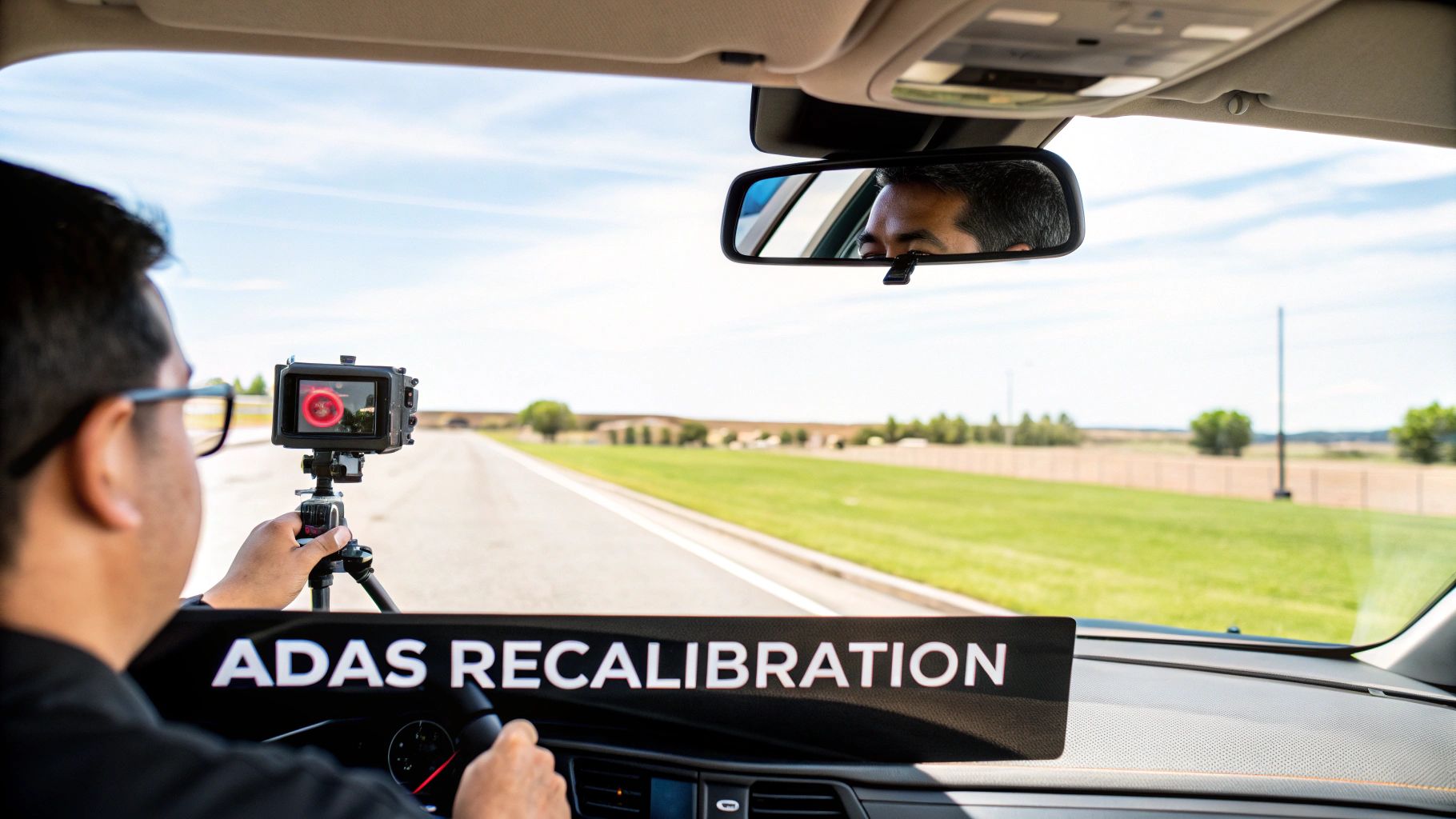
Dynamic Recalibration: Just like it sounds, this method involves actually driving the car. A technician connects a diagnostic tool and takes the vehicle out on well-marked roads, driving at certain speeds for a set distance. This real-world test lets the camera recalibrate itself using live lane markings and traffic conditions. Some cars actually need a combination of both static and dynamic methods.
You don't need to be an expert on the differences, but knowing this is a detailed, technical job underscores why it's a mandatory final step in any modern windshield replacement. If you're curious about the nitty-gritty, you can learn more about the specifics of ADAS windshield calibration in our detailed guide.
https://www.autorenu911.com/blog/adas-windshield-calibration
The Real Dangers of an Uncalibrated System
So what’s the worst that can happen if this step is skipped? The consequences can range from merely annoying to truly terrifying. An improperly calibrated camera can set off a chain reaction of system failures.
Here are just a few real-world examples of what can go wrong:
Lane-Keeping Assist Goes Rogue: The system might not see the lane markings at all, letting your car drift without any warning. Even worse, it could misread the lines and actively steer you into another lane or toward the shoulder.
Faulty Collision Warnings: Your forward-collision warning might start crying wolf, beeping at shadows and non-existent threats. More dangerously, it could stay completely silent when you're about to hit something.
Automatic Emergency Braking Errors: A misaligned camera can cause "phantom braking," where the car slams on the brakes for no reason. Or it could fail to brake at all when a collision is unavoidable.
Adaptive Cruise Control Confusion: The system might misjudge the distance to the car in front, either tailgating them or leaving a massive, unsafe gap.
At the end of the day, replacing a windshield on a modern vehicle is a two-part job. There's the physical installation of the new glass, and then there's the electronic recalibration of its safety systems. Both are absolutely essential to ensure your car works the way it was designed to—keeping you and your family safe on every drive.
Navigating the Cost and Insurance Maze for Your Windshield Replacement
Let's get down to brass tacks. When you're looking at a cracked windshield, the first question that pops into your head is usually, "What's this going to cost me?" There’s no simple, one-size-fits-all answer. The final bill is a unique cocktail of your car’s specific features and the technology baked right into its glass.
Figuring out these variables ahead of time will help you brace for the expense. It’s the key to making a smart financial call, whether you’re reaching for your own wallet or your insurance card.
What Drives the Replacement Cost?
The price to swap out a windshield can swing wildly from one car to the next. A basic piece of glass for an older sedan will be a world away from the cost of a windshield for a new luxury SUV loaded with smart tech.
Here are the main ingredients that cook up your final quote:
Vehicle Make and Model: It's no surprise that luxury brands and newer models often require specially engineered glass, which naturally costs more to make and install.
Type of Glass: Your windshield might be doing more than just keeping the wind out. It could have hidden tech like heating elements for de-icing, acoustic layers to quiet road noise, or a film for a heads-up display (HUD). Every one of these features adds to the price tag.
ADAS Recalibration: As we’ve talked about, recalibrating your car's Advanced Driver-Assistance Systems is absolutely essential after a replacement. This is a separate, specialized service that is a critical part of the total cost.
The demand for these high-tech windshields is exploding. The global automotive windshield market was valued at $32.21 billion in 2024 and is on track to hit $62.53 billion by 2035. This massive growth is largely fueled by the increasing complexity of modern cars. You can dig deeper into this market expansion and see the factors pushing it forward.
How Your Insurance Usually Pitches In
For most people, car insurance is the financial safety net. If you have comprehensive coverage, it will almost always help pay for a windshield replacement. This is the part of your policy that handles damage from things other than a collision, like a stray rock on the highway or a falling tree branch.
If you only carry liability coverage, you'll probably be footing the entire bill yourself. But with comprehensive, the magic word is "deductible." That's the amount you pay out of pocket before your insurance company starts chipping in. For example, if the job costs $800 and your deductible is $250, you'll pay the first $250, and your insurer picks up the remaining $550.
Some states actually require insurance companies to offer what's called "full glass coverage" or "zero-deductible glass coverage." It's definitely worth checking your policy or calling your agent to see if this is an option for you—it could mean you pay nothing out of pocket for glass damage.
The Big Question: File a Claim or Pay Yourself?
Here's a pro tip: just because you can file a claim doesn't always mean you should. Sometimes, paying for the replacement yourself is the smarter financial move in the long run.
Think about it. Let's say your total replacement cost is $600, but your deductible is $500. By filing a claim, you'd only save $100. For a lot of people, paying the full amount is a better choice to avoid having a claim on their record, which could nudge their future premiums upward.
When you get on the phone with your insurance agent, have this checklist ready:
Does my policy actually cover windshield replacement?
What is my comprehensive deductible?
Do you offer a zero-deductible glass option in my state?
Will filing this claim make my rates go up?
Is the cost of ADAS recalibration included in my coverage?
Getting solid answers to these questions puts you in the driver's seat. You’ll be able to make a confident decision and avoid any nasty financial surprises down the road.
Choosing a Qualified Windshield Replacement Provider
Let's be honest, not all auto glass shops are the same. When it's time to replace your windshield—a piece of glass that's absolutely critical to your car's structural integrity and your safety—the technician holding the tools matters just as much as the glass itself.
Think of it this way: you wouldn't let just anyone perform a minor but important surgery. You'd want an expert with a proven track record. Making the right choice here protects you from a world of headaches, like annoying leaks, that whistling wind noise at highway speeds, or worse, a complete failure in an accident. A true professional puts your safety first, every single time.
Verify Their Credentials and Certifications
First things first, check for professional certifications. These aren't just fancy pieces of paper; they're proof that the technicians know their stuff and are up-to-date on the latest safety standards and installation methods.
The gold standard to look for is certification from the Auto Glass Safety Council™ (AGSC). This organization is all about ensuring safe auto glass replacement. When a technician is AGSC-certified, it means they've passed a rigorous exam on everything from adhesive standards to proper installation techniques. Choosing a certified shop is your best bet for getting a pro who takes safety seriously.
Inquire About Materials and Warranties
The quality of the glass and adhesive going into your car will determine how well it holds up. Don't hesitate to ask a potential provider what kind of materials they use. Generally, you'll run into three types:
OEM (Original Equipment Manufacturer): This is the exact same glass that was installed in your car at the factory, right down to the manufacturer's logo.
OEE (Original Equipment Equivalent): This glass is made to the exact same specifications as OEM glass, often by the very same company, just without the carmaker's logo.
Aftermarket: Made by a different company altogether. The quality here can be a bit of a mixed bag, so it's important to go with a trusted brand.
A good shop will be upfront about the options and help you make an informed choice. And just as important: ask about their warranty. A comprehensive warranty covering both the glass and the installation shows that the company is confident in its work.
Pro tip: Ask them specifically about the brand of urethane adhesive they use. A high-quality adhesive is what creates that rock-solid, factory-strength bond. If they get cagey or can't give you a straight answer, it might be a red flag they're using cheaper, less reliable products.
Confirm Their Expertise with ADAS Recalibration
If you drive a car made in the last few years, this is a deal-breaker. As we've discussed, ADAS recalibration is a mandatory step after a windshield replacement. You must confirm the shop has the right diagnostic tools and trained technicians to handle this intricate process.
Ask them directly: Do you perform static recalibration, dynamic recalibration, or both? Can you guarantee my safety systems will work correctly after you're done? Any provider who brushes off the importance of recalibration or seems unsure about their process is one to walk away from.
Their skill in this area is a direct reflection of their commitment to modern vehicle safety. Seeing is believing, so it's always wise to see what other customers have experienced—you can find valuable insights when you check out customer reviews from verified sources.
Before you make a final decision, have a short list of questions ready. Taking a few minutes to vet your provider will save you from potential trouble and ensure the job is done right the first time, keeping you safe on the road.
Post-Replacement Care and Safety Checks
The technician has packed up and your car looks brand new, but your role in the windshield replacement process has just begun. That powerful urethane adhesive holding your new glass in place needs time to work its magic. The first 24 to 48 hours are absolutely critical for the adhesive to cure and form a permanent, watertight bond.
Think of it like waiting for concrete to set. If you walk on it too soon, you’ll leave a footprint that compromises the final strength. The same idea applies here. Being impatient during this initial window can lead to a weak seal, which can cause frustrating wind noise, annoying water leaks, or—in a worst-case scenario—a total failure of the bond.
The Immediate Dos and Don'ts
For the first day or two, you’ll want to be gentle with your vehicle. A little extra care now goes a long way in preventing problems down the road.
Do Leave the Tape On: You’ll likely see retention tape along the edges of your new windshield. It’s there for a reason—to hold the glass perfectly in place as the adhesive cures. Leave it on for at least 24 hours, or whatever specific timeframe your installer gives you.
Don't Slam the Doors: Slamming a door sends a jolt of air pressure through the cabin, pushing outward on the fresh seal. This can easily disrupt the bond before it has fully hardened.
Do Keep Windows Cracked: To help with that pressure issue, leave a window cracked open by about an inch. This lets the interior and exterior air pressure equalize, taking stress off the new seal.
Don't Hit the Car Wash: Those high-pressure jets at an automatic car wash are the enemy of a fresh windshield seal. They can blast water and harsh chemicals right into the curing urethane. Hold off on washing your car for at least 48-72 hours.
The single most important piece of advice is to follow your technician’s specific instructions on the "safe drive-away time." This isn't just a suggestion; it's the minimum time needed for the adhesive to cure enough to meet federal safety standards, ensuring the windshield will protect you properly in an accident.
Simple Checks for Long-Term Peace of Mind
After the curing period has passed, a few quick checks can give you confidence that the job was done right.
First, take it for a spin on the highway. Turn the radio down and listen. Do you hear any new whistling or whooshing sounds? A perfectly sealed windshield is a quiet one. Any wind noise is a classic red flag for a small gap somewhere in the seal.
Next, give it a simple water test. Using a garden hose on a gentle setting (no pressure washers!), run water over the top and sides of the windshield. Have someone sit inside and keep a close eye out for any drips around the dashboard, headliner, or A-pillars.
Finally, it’s a good time to make sure your vehicle is still compliant with any local laws, including DOT window tint regulations. A few minutes spent on these simple checks will confirm your new windshield is safe, secure, and ready for the road ahead.
Your Top Windshield Replacement Questions Answered
Even with a good grasp of the process, a few nagging questions usually pop up. Let's tackle the most common ones that car owners ask, so you can feel completely confident about getting your windshield replaced.
How Long Am I Out of a Car?
The actual hands-on work to swap out the glass is surprisingly fast—usually about 60 to 90 minutes. But the real waiting game is for the adhesive to cure. This is what we in the industry call the safe drive-away time, and it's the most crucial part of the entire job.
You really can't rush this step. Plan on leaving your vehicle parked for at least three to four hours total. This gives the powerful urethane adhesive enough time to harden and form a rock-solid bond that will keep you safe.
So, Can I Drive Right After the Technician Leaves?
Absolutely not. Getting behind the wheel before that adhesive is fully cured is a serious gamble. The fresh seal is incredibly vulnerable to every little bump in the road, not to mention the air pressure changes that happen when you get up to speed.
Driving too soon can lead to a world of problems:
The seal can fail, causing annoying wind noise and, worse, water leaks.
The windshield might shift just enough to throw your ADAS cameras out of alignment.
In an accident, the bond could fail completely. This means your airbags might not deploy correctly, and the roof could lose its structural support.
Always listen to your certified technician's advice on the safe drive-away time. It's not just a suggestion; it's a critical safety instruction.
Think of it like this: the urethane adhesive is like wet concrete for your car's frame. If you walk on it before it's set, you'll leave a footprint and ruin the integrity of the slab. The same goes for your windshield—its ability to protect you depends entirely on letting that bond cure without any disturbance.
Will a New Windshield Hurt My Car's Resale Value?
Not at all—in fact, it's quite the opposite. A professional replacement using quality materials is just responsible car maintenance. It preserves the vehicle's safety features and structural integrity, which is exactly what maintains its value.
When you use OEM-equivalent glass and get a proper ADAS recalibration, you're essentially restoring the car to factory-spec condition. A cracked, chipped, or poorly installed windshield is what really hurts your car's value and scares off potential buyers.
What’s the Real Difference Between OEM and Aftermarket Glass?
OEM (Original Equipment Manufacturer) glass is the real deal—it's made by the same company that supplied the original windshield for your car. Aftermarket glass is made by a different manufacturer to the same specifications.
For most cars, high-quality aftermarket glass is a fantastic, cost-effective option. However, for newer vehicles loaded with sensitive ADAS features, sticking with OEM or OEE (Original Equipment Equivalent) glass is often the smartest move. It's the best way to ensure your cameras and sensors work flawlessly with the new glass.
When you need a professional, reliable service for replacing a windshield, trust the mobile experts at Auto Renu Auto Glass LLC. We bring dealership-quality service directly to you, ensuring your vehicle is safe and ready for the road. Schedule your appointment today at https://www.autorenu911.com.