A Complete Guide to Safety Glass Repair
Your guide to safety glass repair. Understand when to repair vs. replace your windshield and the critical role of ADAS recalibration for vehicle safety.
Nov 24, 2025
generated
safety glass repair, windshield repair, ADAS recalibration, laminated glass, auto glass replacement
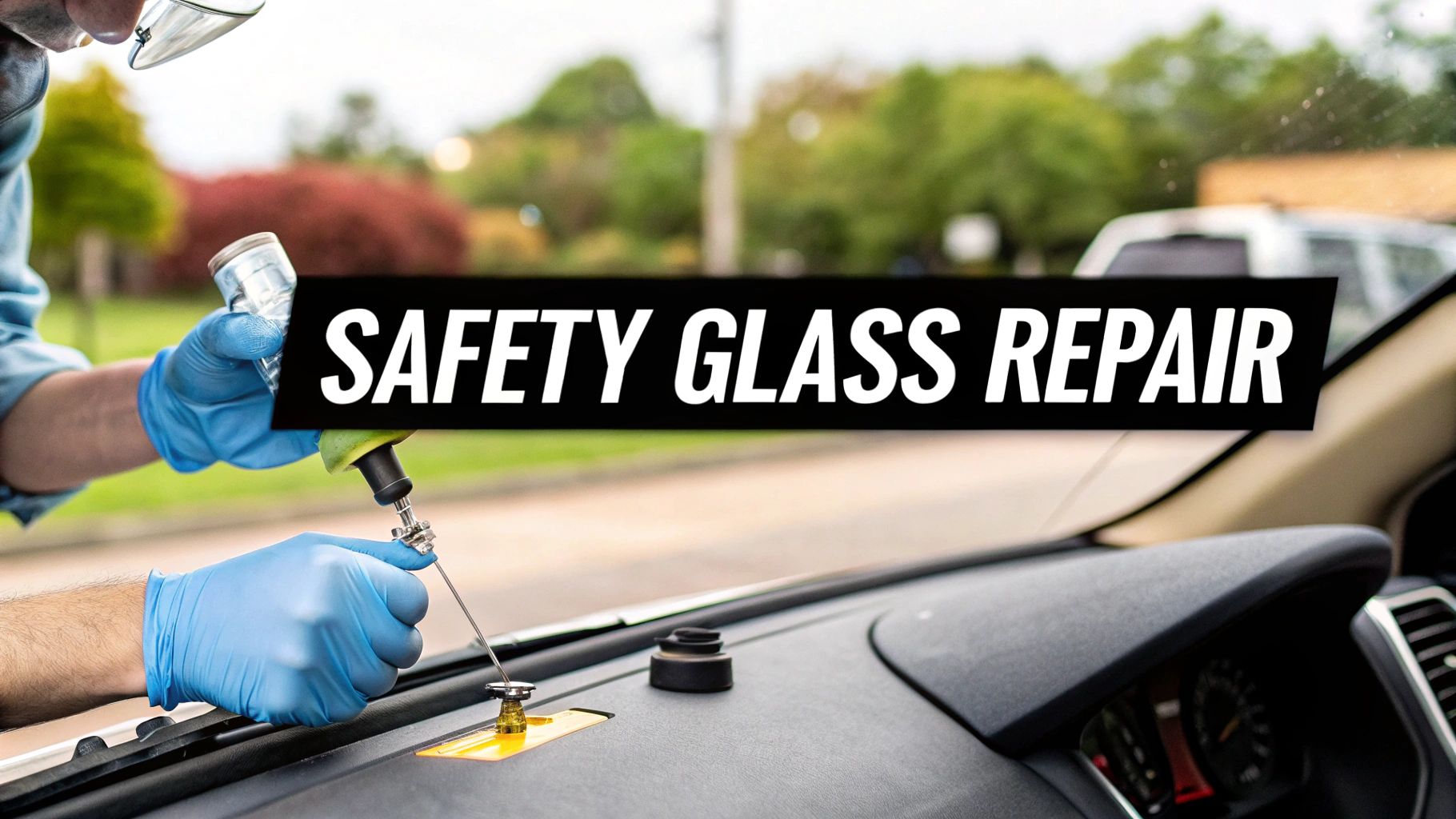
When you hear "safety glass repair," you might picture a quick fix for a cosmetic problem. But it's much more than that. It's a technical process that restores the strength and clarity of your windshield after it's been chipped or cracked. A technician carefully injects a special resin into the damaged spot, which then cures and bonds the glass, making it strong again.
This isn't just about looks. Your windshield is a critical safety feature, providing up to 30% of your vehicle's structural strength in a rollover accident. That tiny chip isn't so tiny when you consider what's at stake.
Understanding Your Vehicle's Safety Glass
Most of us see our windshield as just a shield against bugs and bad weather. In reality, it’s a highly engineered safety component. The "safety" part comes from how the glass is designed to break, protecting you and your passengers from serious injury. Your car actually uses two different kinds of safety glass, each in a specific place for a specific reason.
The Windshield's Glass Sandwich
Your front windshield is almost always made of laminated glass. The easiest way to picture it is as a glass sandwich. You have two layers of glass with a tough, clear plastic vinyl film—called polyvinyl butyral (PVB)—pressed between them.
When a rock strikes the windshield, that inner plastic layer is the unsung hero. It absorbs much of the impact and holds the broken pieces of glass in place, preventing dangerous shards from flying into the car. This is why you get those familiar spiderweb cracks instead of a gaping hole, and it’s precisely this construction that makes a professional repair possible.
The PVB interlayer does more than just stop the glass from shattering. It also filters out UV rays and helps quiet the cabin by dampening road noise.
Toughened Glass for Side and Rear Windows
Now, take a look at your side and rear windows. These are usually made from a different material: tempered glass. This type of glass is made incredibly strong—about four times stronger than regular glass—through a process of intense heating and rapid cooling.
Its real safety magic is in how it breaks. Instead of splintering into jagged, deadly daggers, tempered glass shatters into thousands of small, pebble-like pieces with relatively dull edges. This drastically reduces the risk of serious cuts in a collision or break-in.
Why the Distinction Matters for Repairs
Knowing the difference between these two types of glass is key. Laminated glass is built to be repaired because damage, like a rock chip, is often just on the outer layer. Tempered glass, on the other hand, can't be repaired. Its all-or-nothing design means that when it breaks, it shatters completely and has to be replaced.
As automotive technology has advanced, especially with the rise of Advanced Driver-Assistance Systems (ADAS), the need for expert glass repair and calibration has grown. You can explore more on the history and uses of glass through great resources like those found on facts.net. Ultimately, understanding what kind of glass you're dealing with explains why a chip in your windshield is a fixable issue, while a shattered side window always means a full replacement.
2. Repair or Replace? Making the Right Call
When you see that tell-tale star or crack appear on your windshield, your first thought is probably, "Can they fix this, or am I looking at a whole new windshield?" It's a great question, and the answer is about more than just cost—it's about keeping you safe and maintaining your car's structural integrity.
The decision to repair or replace comes down to three main things: the type of damage, its size, and exactly where it is on the glass.
Think of it like a doctor looking at an injury. A small, clean cut might just need a few stitches (a repair), but a deep, complex wound would require more serious intervention (a replacement). Windshield damage works the same way; not all dings are created equal.
What Kind of Damage Are We Looking At?
The first thing a technician will do is look at the shape of the damage. Different kinds of impacts leave different signatures, and some are much better candidates for repair than others.
Here are the usual suspects:
Chip or Pit: This is a small nick where a piece of glass is gone. It's usually the easiest type of damage to fix.
Bullseye: A classic circular, cone-shaped mark that looks just like its name. These are also great candidates for repair if you catch them early.
Star Break: This looks like a small starburst, with little cracks radiating out from the center.
Combination Break: A mix of a bullseye and a star break, which gets a little more complicated.
Crack: A straight or wavy line. Short ones can sometimes be repaired, but long cracks almost always mean it's time for a replacement.
Size and Location: The Two Most Important Factors
There’s an old saying that if the damage is smaller than a quarter, you can repair it. While that's a decent starting point, it's not the whole story. The size of the chip and where it’s located work together to determine if a repair can be done safely.
A tiny chip might be an easy fix in one spot but a deal-breaker in another. For example, any damage right in the driver's primary line of sight is a major issue. Even a perfect repair can leave a slight distortion, and you can't have anything messing with your view of the road. For that reason, any damage in this critical area will almost always require a full replacement.
The edges of the windshield are another no-go zone. A chip or crack too close to the edge compromises the seal and the structural strength of the entire piece of glass. Damage there is much more likely to spread from vibrations and temperature swings, making a simple repair a risky bet. If you want to dive deeper into the specifics, our guide on windshield repair breaks it all down.
A key takeaway: The outer edge of a windshield is under constant stress. Any damage within two to three inches of the frame is a prime candidate for spreading, which is why replacement is almost always the safer, more durable option in these cases.
Damage Assessment Guide: Repair vs. Replace
To make it even clearer, this chart breaks down how a technician typically weighs the key factors.
Damage Factor | Repair is a Viable Option When... | Replacement is Necessary When... |
|---|---|---|
Size | The chip is smaller than a quarter, and any crack is shorter than three inches. | The damage is larger than a quarter, or a crack extends beyond six inches. |
Location | The damage is outside the driver's direct line of sight and not near the edge. | The damage is in the driver's line of sight or within 2-3 inches of the windshield's edge. |
Depth | The impact has only damaged the outer layer of the laminated glass. | The damage has gone through both layers of glass or created an internal fracture. |
Quantity | There are only one or two distinct chips on the windshield. | There are three or more chips, which can weaken the overall structure. |
In the end, nothing beats a professional assessment. A certified technician can look at your specific situation, weigh all these factors, and give you the best recommendation to get you back on the road safely.
What to Expect During a Professional Glass Repair or Replacement
When a technician shows up to work on your windshield, they're not just patching a hole or swapping out a pane of glass. They're following a highly specific process to make sure your vehicle is as safe as it was before the damage occurred. It’s a craft that requires both technical precision and the right materials, whether you need a quick chip repair or a full windshield replacement.
Think of a chip repair like a dentist filling a small cavity. The very first thing the technician does is thoroughly clean out the damaged spot. Every last speck of dust, moisture, and tiny glass debris has to be removed to ensure the repair resin can form a perfect bond.
This image shows the three key things a technician evaluates before even starting: the type of damage, its size, and exactly where it is on the windshield.
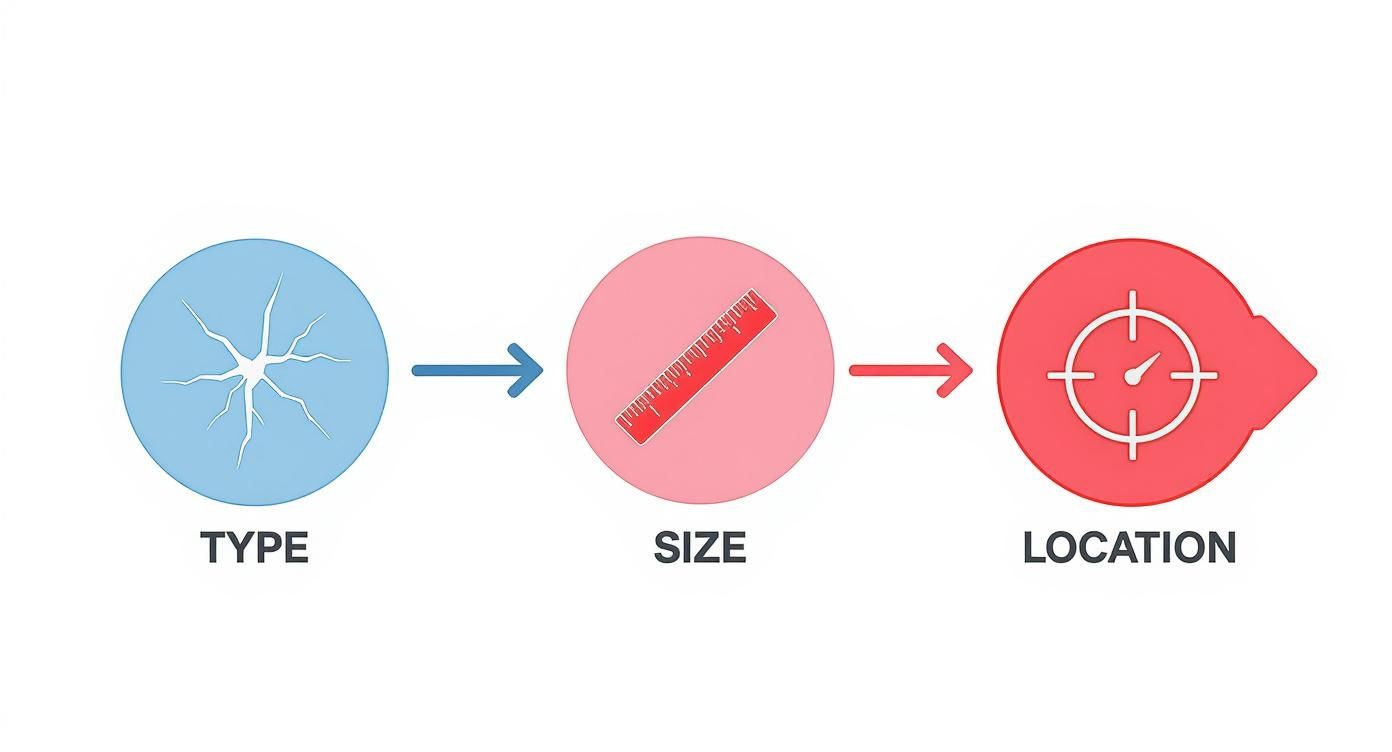
This initial assessment is critical. It's not just about fixing what’s visible; it’s about diagnosing the damage to determine the safest and most effective course of action.
The Art and Science of a Chip Repair
Once the impact point is spotless, the technician places a special tool directly over the chip. This device creates a vacuum to pull every bit of air out of the break. This step is non-negotiable—if any air is trapped inside, the repair resin won't be able to fill every microscopic crack, which could lead to a failed repair down the road.
Next, a high-quality, clear resin is injected under pressure, filling the void left by the vacuum. This isn't your average superglue. It's an advanced polymer specifically engineered to have the same optical properties as glass, which is the secret to making the damage seem to disappear.
A proper repair restores the structural integrity at the point of impact to nearly 100% of its original strength. This is what stops a small, annoying chip from turning into a massive crack the next time you hit a pothole or the temperature changes drastically.
To finish the job, a UV light is used to cure and harden the resin, permanently bonding it with the surrounding glass. What’s left is a smooth, clear finish that restores your windshield’s strength and makes the blemish nearly invisible.
The Full Windshield Replacement Procedure
If the damage is too significant for a repair, a full replacement is the only safe solution. This process is much more complex than just popping out the old glass and putting in a new one. A good technician starts by carefully draping protective coverings over your car's hood, fenders, and interior to prevent any accidental scrapes or messes.
Using specialized tools, they'll then cut through the powerful urethane seal that holds the old windshield to the vehicle’s frame. After lifting the old glass out, the real prep work begins. The technician meticulously scrapes away every bit of the old urethane from the frame (often called the "pinch weld"), cleaning the surface so the new adhesive can form a flawless, secure seal.
A special primer is then applied to the frame. This prevents rust and also helps the new adhesive grab hold. Finally, a thick, even bead of automotive-grade urethane adhesive is laid down around the entire frame. This adhesive is arguably the most critical component, as it's what holds your windshield in place during a collision.
Setting the New Glass: Using heavy-duty suction cups, the new windshield is carefully guided into place for a perfect fit.
Securing the Seal: The technician applies gentle, consistent pressure to embed the glass into the urethane, creating a seal that’s both watertight and airtight.
Curing Time is Crucial: You can't just drive off immediately. The vehicle needs to sit for a specific "Safe Drive-Away Time"—usually at least an hour—to allow the urethane to harden enough to meet federal safety standards.
This comprehensive procedure for auto glass replacement ensures the new windshield can do its job: supporting the roof in a rollover and providing the rigid backstop your airbags need to deploy correctly. It's a job where precision makes all the difference.
Why ADAS Recalibration Is a Critical Final Step
So, you've got a new windshield. Looks great, crystal clear. It’s tempting to think the job is finished and you can just drive off. But for most modern cars, the most important safety check is just about to begin.
Tucked behind that new glass are the sensitive cameras and sensors for your vehicle's Advanced Driver Assistance Systems (ADAS). Think of these as your car’s co-pilot. They run crucial safety features like automatic emergency braking, lane-keeping assist, and adaptive cruise control.
These systems see the road through a camera mounted near your rearview mirror. When a technician replaces your windshield, that camera’s position can shift by just a fraction of a millimeter. You’d never see it, but to a high-tech sensor, it’s a massive change. That tiny misalignment can cause your car to misjudge distances, overlook lane markings, or react a split-second too late in an emergency.
Static vs. Dynamic Recalibration Explained
To get everything working perfectly again, a technician performs an ADAS recalibration. This process essentially re-teaches the camera where it is, ensuring it sees the world exactly as the manufacturer intended. There are two ways to do this.
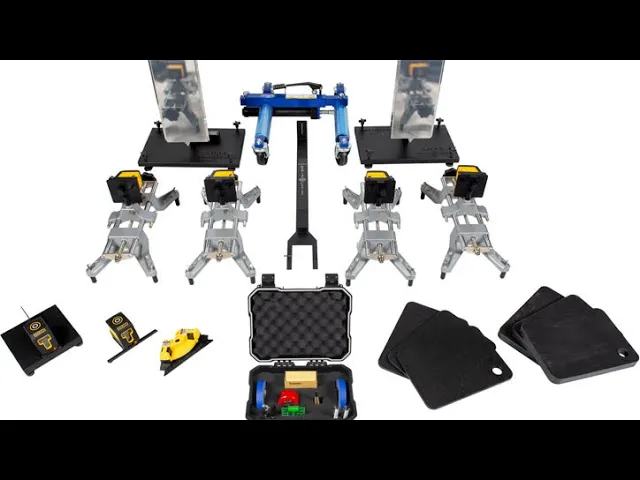
Static Recalibration: This happens in the shop with the car parked. Technicians place a specific, patterned target in front of the vehicle and use diagnostic tools to reset the camera's aim until it's perfectly aligned with the factory specs.
Dynamic Recalibration: This one happens on the road. A technician drives the car at certain speeds on clearly marked roads, allowing the ADAS system to use live road data to recalibrate itself as it moves.
Some cars need a static recalibration, some need a dynamic one, and many now require both to get the job done right. A pro will know exactly what your vehicle needs.
This Is a Non-Negotiable Safety Procedure
Skipping this step isn't just cutting a corner—it's a genuine safety risk. An uncalibrated system might not work when you need it most, or worse, it could brake or swerve unexpectedly. It creates a false sense of security.
An ADAS camera that's off by even one degree can misjudge the distance to another car by several feet. At highway speeds, that’s the difference between a near-miss and a serious accident. This isn’t an optional add-on; it's a mandatory safety procedure.
The rise of these complex systems is a huge part of the auto glass industry today. The global market for these services, valued at around $62.83 billion in 2025, is expected to jump to $87.83 billion by 2032. That growth is all about keeping up with vehicle technology. You can see more data on this trend from industry reports on IBISWorld.
This final step is what ensures the safety features you paid for actually protect you. If you want a deeper dive into how it all works, check out our detailed guide on ADAS recalibration. It's a small investment of time for a massive return in safety.
Choosing a Qualified Auto Glass Technician
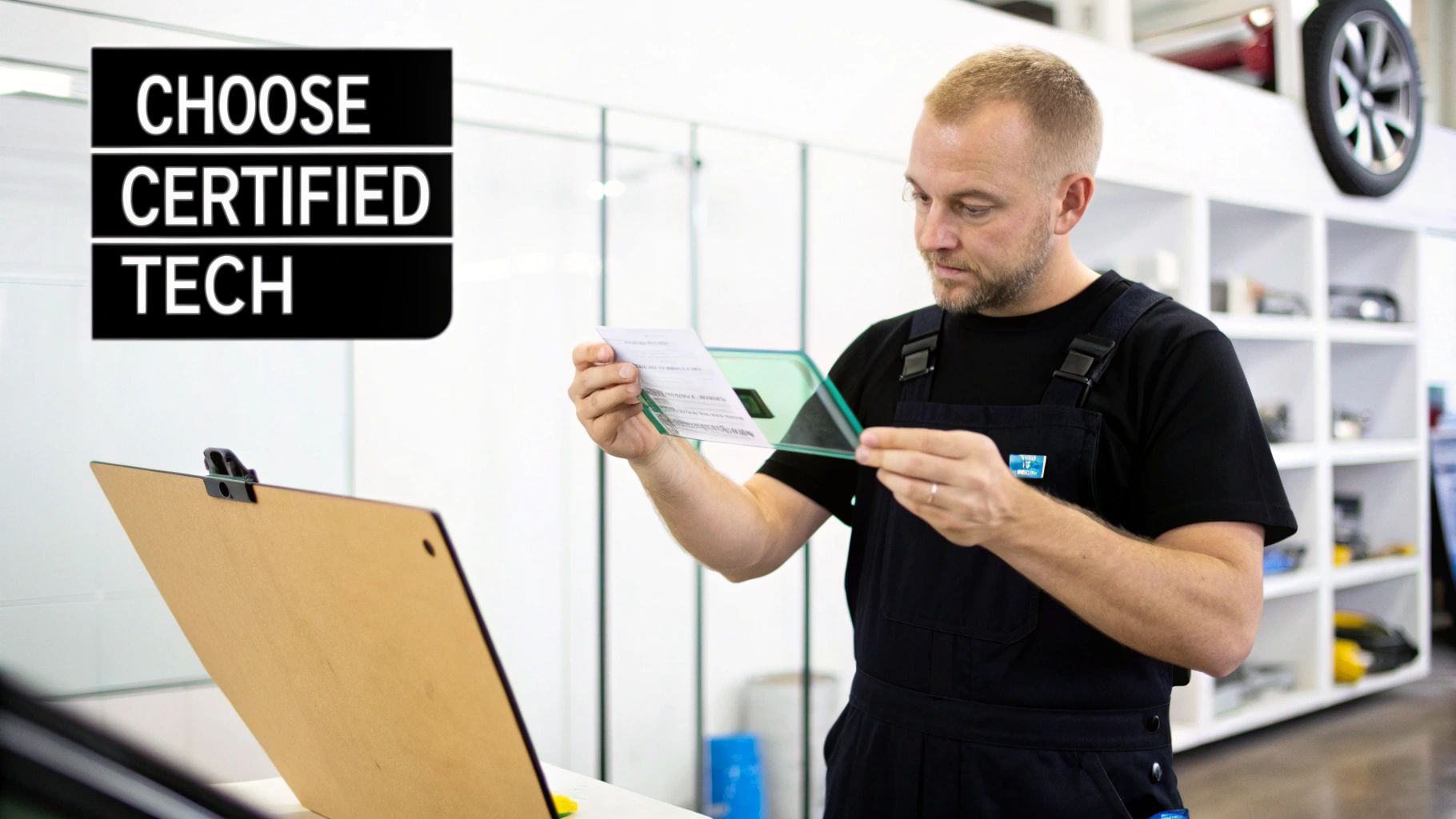
When it comes to auto glass, not all repair services are the same. The person you trust with your windshield replacement plays a huge role in your vehicle's overall safety. A rushed or sloppy job can lead to all sorts of problems down the road—think annoying wind noise, water leaks, or even a total failure during an accident. Choosing the right technician is about much more than just finding a good price; it's about protecting yourself and your passengers.
As you start your search, it helps to know how auto glass repair businesses improve their Google Business ranking. A strong online presence and a string of positive reviews are usually good signs, but they're just the starting point. You'll want to dig a little deeper to make sure you're handing your keys to a genuine professional.
Look for Certifications and Training
One of the best ways to gauge a technician's expertise is to look for professional certifications. These aren't just fancy pieces of paper; they prove a commitment to upholding strict safety and quality standards.
Auto Glass Safety Council (AGSC): This is the gold standard in the industry. An AGSC-certified technician has passed tough exams on the right procedures, materials, and safety rules. It’s a big deal.
Continuous Training: Car technology is always evolving, especially with new ADAS systems hitting the market. A great shop will invest in ongoing training to keep its team up-to-date on the latest vehicles and techniques.
Hiring a certified professional gives you confidence that the job will be done by the book, not by guesswork. It’s a clear sign that they take your safety seriously.
Ask About Materials: OEM vs. Aftermarket
The skill of the technician is critical, but so are the materials they use. The quality of the glass and, just as importantly, the adhesive can make or break an installation. You'll generally come across two types of replacement glass.
OEM (Original Equipment Manufacturer) Glass: This is the exact same glass that was installed in your car at the factory. It’s made by the same company and built to the same precise specs for fit, clarity, and safety.
Aftermarket Glass: This glass is made by a different company. While there are some excellent aftermarket brands out there, quality can vary. A trustworthy shop will only use aftermarket glass that meets or exceeds OEM standards.
Beyond the glass, the adhesive is probably the single most important part of a windshield replacement. You should always ask what kind of urethane adhesive they use and make sure it meets Federal Motor Vehicle Safety Standards (FMVSS). This isn't a place to cut corners.
A proper installation with premium adhesive is what ensures your windshield supports the roof in a rollover and allows airbags to deploy correctly. Don't be shy about asking exactly what products are being used on your car.
Demand a Written Warranty
Finally, any reputable auto glass shop will stand behind its work—no questions asked. Before you agree to anything, get the details on their warranty. A solid warranty should cover both the materials used and the quality of the workmanship.
This written guarantee is your safety net. It protects you from frustrating issues like leaks, excess wind noise, or defects in the glass itself. It's proof that the company is accountable for their work and gives you peace of mind that the job was done right the first time.
Dealing with Insurance and On-the-Go Repairs
A rock chip or a sudden crack in your windshield is always a hassle, but figuring out the repair logistics doesn't have to be. Let's walk through how to handle your insurance and why mobile service might be your best bet for a quick, painless fix.
Most drivers don't realize their comprehensive auto insurance policy is designed for exactly this kind of thing. For a small chip, insurers often waive the deductible completely. Think about it from their perspective: they’d much rather cover a small, proactive repair today than shell out for a full windshield replacement down the road.
How to Handle an Insurance Claim
If you're looking at a full replacement, you'll probably have to pay your deductible, but it's usually a smooth process. Having a few details on hand will make things go a lot faster, whether you call your insurance agent or the glass shop first.
Your Policy Number: Keep your insurance card or app handy.
Vehicle Details: Know the year, make, and model of your car.
Damage Info: Be ready to explain when and how the damage happened.
A good auto glass shop will often take the lead and file the claim directly with your insurance company, which saves you a ton of time and phone calls. If you're looking for specifics on coverage options in California, you can find helpful information on Auto Insurance California.
The Convenience of Mobile Repair
Mobile auto glass service is a game-changer. Instead of burning half a day at a repair shop, a certified technician comes right to your driveway, your office parking lot, or wherever is convenient. It saves you time and lets you get on with your day.
Mobile service isn't just a perk; it’s a safety measure. It keeps you from having to drive with a dangerously cracked windshield, ensuring the fix is done right, right where you are.
For a mobile appointment to work, the technician just needs a dry place to work. Rain and moisture are the enemies of a good repair—they can prevent the resin from setting in a chip repair or mess with the new windshield's adhesive seal. A garage, carport, or even just a clear weather forecast is all they need.
When the technician arrives, they'll prep your vehicle to protect it, use professional-grade tools for the job, and clean everything up afterward. If you got a replacement, they’ll tell you the Safe Drive-Away Time—the crucial waiting period that lets the adhesive fully cure before it's safe to drive.
Got Questions About Safety Glass Repair? We've Got Answers.
Even with a good handle on the process, you probably still have a few lingering questions. That's completely normal. Getting clear, honest answers is key to feeling confident about the work being done on your vehicle.
Let's walk through some of the most common questions we hear from drivers every day.
How Long Am I Looking at for a Windshield Repair or Replacement?
We know your time is valuable, so the good news is that most auto glass work is surprisingly efficient.
For a standard rock chip, a safety glass repair is incredibly fast. From start to finish—cleaning the chip, injecting the resin, and curing it with UV light—we're usually done in under 30 minutes. You'll be back on the road in no time.
A full windshield replacement is a bit more involved, typically taking about 60 to 90 minutes for the installation itself. The crucial part, though, is the adhesive cure time. We call this the "Safe Drive-Away Time," and you absolutely can't skip it. It usually requires at least an hour for the powerful adhesive to set properly, ensuring your windshield is a structural part of your car again. Your technician will give you the exact timeline based on the specific adhesive used and the day's weather.
Will I Still Be Able to See Where the Chip Was?
The number one goal of a chip repair is to restore the structural integrity of your windshield and stop that little chip from turning into a massive crack. While the repair makes a huge cosmetic difference, it won't make the damage 100% invisible.
Think of it like a small scar. A high-quality repair can restore 80-95% of the optical clarity, but you might still see a faint blemish where the original impact happened. The important thing is that the spot is no longer a weak point, and your glass is safe again.
The goal is structural integrity first and cosmetic improvement second. A successful repair stops a crack in its tracks and restores strength, which is the most important outcome for your safety.
Can You Fix My Windshield in the Rain or Cold?
Weather is a huge factor, especially for mobile services.
Rain and snow are the biggest enemies of a good repair. Any moisture that gets into the chip will prevent the resin from bonding correctly, which can cause the repair to fail down the road. Extreme cold can also mess with how the repair resins and replacement adhesives cure.
That’s why if the weather is acting up, our mobile techs need a dry spot to work, like a garage or carport. If it's just too cold out, we might suggest bringing your vehicle into a shop environment to guarantee the safety glass repair is done right and will last.
At Auto Renu Auto Glass LLC, we bring expert auto glass solutions directly to you, ensuring a safe, convenient, and professional experience every time. Get your free quote and schedule your mobile service today at https://www.autorenu911.com.