What Does Windshield Repair Cost Actually Mean?
Uncover the real windshield repair cost. This guide breaks down damage types, ADAS recalibration, and insurance factors so you know what to expect on your bill.
Nov 21, 2025
generated
windshield repair cost, auto glass repair, chip repair cost, car window pricing, windshield replacement
When that rock kicks up and leaves a starburst on your windshield, your first thought is probably, "Great, how much is this going to cost me?" It's a frustrating moment, but the good news is that a small chip doesn't always mean a huge bill.
More often than not, a quick repair is all you need. A minor chip fix typically runs between $75 and $150. Compare that to a full windshield replacement, which can easily range from $250 to over $600, and you can see why acting fast on small damage saves you serious money.
Understanding Windshield Repair Costs
The final price tag for any windshield work isn't just one set number—it depends on a handful of things we’ll get into. But to start, it helps to have a general idea of the financial landscape.
Looking at national averages for 2025, a typical windshield repair hovers around $100. A full replacement, however, is a much bigger investment, costing anywhere from $250 to $600 depending on your car. That means choosing to repair a chip when you can saves you a whopping 60-80%.
Estimated Windshield Repair vs Replacement Costs
The biggest takeaway here is just how much you can save by fixing a small problem before it becomes a big one. To make it crystal clear, here's a quick breakdown of what you can generally expect to pay for different types of services.
Service Type | National Average Cost Range | Potential Savings vs Replacement |
|---|---|---|
Minor Chip Repair | $75 - $150 | $175 - $450+ |
Long Crack Repair (up to 6") | $125 - $200 | $125 - $400+ |
Full Windshield Replacement | $250 - $600+ | N/A |
A professional repair isn't a temporary band-aid. It’s a permanent fix that injects a special resin into the break, restoring your windshield's structural integrity and stopping the damage from spreading. This is why getting that chip looked at right away is so important.
A high-quality repair restores the windshield's strength, stops the damage from spreading, and dramatically improves the visual clarity of the damaged area. It is the most cost-effective and efficient solution for minor impacts.
Understanding the difference is key. A simple chip repair can be done in under an hour, getting you back on the road without breaking the bank. You can learn more about how it all works in our guide to professional windshield repair services.
What's Really Driving Your Final Bill?

When you get a quote for a windshield repair, that final number isn’t just pulled out of a hat. It’s a carefully calculated figure based on several key factors that determine how complex the job is, what materials are needed, and how much time it will take to do it right. Getting a handle on these variables is the first step to understanding your estimate and seeing why the windshield repair cost for one car can be so different from another.
You might think two identical-looking rock chips would cost the same to fix, but that's rarely the case. The damage itself is just one piece of a much bigger puzzle. Let's pull back the curtain on the hidden elements that truly shape your final bill.
Damage Size and Complexity
The most obvious factor is the damage itself. A tiny, clean bullseye chip is a pretty straightforward fix, but a sprawling star break with cracks shooting out in every direction is a whole different ballgame. A good technician isn't just looking at the size; they're diagnosing the type and severity of the impact.
Size Matters: If the chip is smaller than a quarter, it’s usually a standard repair. But if that little chip has turned into a long, running crack, the process gets a lot more intricate, demanding more time and specialized resin, which bumps up the cost.
Type of Break: A "star break" has tiny legs radiating from the impact point, while a "combination break" is a messy mix of a bullseye and a star. Both are much harder to fill perfectly than a simple pit, and that difficulty is reflected in the price.
Contamination: A chip that’s been sitting there for weeks will collect dirt, road grime, and moisture. All that gunk makes it tough for the repair resin to get a clean, strong bond, potentially leading to more labor time and a less-than-perfect result.
As a general rule of thumb, we tell our customers that chips smaller than a quarter and cracks shorter than six inches are good candidates for repair. Anything bigger, and we almost always recommend a full replacement to ensure your safety.
The Technology Hiding in Plain Sight
Your windshield isn't just a piece of glass anymore. On most modern cars, it's a high-tech hub for some of your vehicle’s most critical safety features, known as Advanced Driver-Assistance Systems (ADAS). This is where the cost can really start to climb.
These systems rely on cameras and sensors—often mounted right behind your rearview mirror—to power features you probably use every day:
Lane-Keeping Assist: Helps keep you from drifting.
Automatic Emergency Braking: Hits the brakes for you to avoid a collision.
Adaptive Cruise Control: Automatically keeps a safe distance from the car in front.
If that rock chip is right in the camera's line of sight, even a simple repair has to be done with extreme precision. And if you need a full replacement? A process called recalibration is absolutely mandatory. This procedure tunes and realigns the cameras to the manufacturer's exact specifications. Even a one-millimeter error can cause a safety system to fail when you need it most.
The following table breaks down how these different variables can add to the base price of a repair.
How Different Factors Impact Your Repair Cost
Cost Factor | Description | Potential Price Impact |
|---|---|---|
Damage Complexity | A star or combination break requires more time and resin than a simple chip. | +$10 to +$30 |
Damage Contamination | An older, dirty chip needs extra cleaning and prep work for a proper bond. | +$5 to +$20 |
ADAS System Presence | Working around sensitive cameras, even for a repair, adds complexity and risk. | +$20 to +$50 |
Luxury Vehicle | Specialty glass (acoustic, heated, etc.) and unique sensor layouts increase costs. | +$25 to +$75+ |
Mobile Service Fee | The convenience of on-site service often includes a trip charge. | +$15 to +$40 |
As you can see, a "simple" repair can quickly become more involved depending on your specific vehicle and the nature of the damage.
The ADAS Recalibration Factor
Recalibration isn’t an optional upsell; it’s a non-negotiable safety requirement for any windshield replacement on an ADAS-equipped car. It requires specialized targeting equipment, a perfectly level workspace, and technicians who know exactly what they're doing. This added step is the single biggest reason why windshield service costs have shot up in recent years.
Think about it: the average cost of a repair has climbed from around $50-$75 in 2015 to $75-$125 by 2022. For more complex jobs, especially those involving ADAS, some shops now charge up to $150. This jump is a direct result of the investment in training and technology needed to service modern vehicles safely.
This is a critical topic, and if you'd like to dive deeper, you can learn more in our guide on the importance of ADAS windshield calibration.
Finally, the make and model of your car play a huge role. Luxury brands like Mercedes-Benz or high-tech vehicles like a Tesla often use special acoustic glass to dampen road noise or have proprietary sensor systems. This makes both the glass itself and the labor to install it more expensive than for a standard Honda or Toyota. The more tech your car is packed with, the more you should expect the repair cost to reflect it.
Navigating Insurance for Your Windshield Fix
That sinking feeling when you spot a new chip or crack is almost always followed by two questions: "How much will this cost?" and "Will my insurance cover it?" The answer to the second question is often a resounding "yes," and knowing how your policy works can save you a ton of cash.
The magic word here is comprehensive coverage. This isn't the part of your policy that covers a fender bender; it's designed for all the other chaos life throws at your car—things like hail, a falling tree branch, or a stray rock kicked up on the freeway. Since road debris is a non-collision event, your windshield's fate falls squarely under this coverage.
Here's a little industry secret: insurance companies want you to get that chip fixed. A small repair is a drop in the bucket compared to the cost of a full replacement. To encourage you to act fast, many insurers will waive your comprehensive deductible for a repair, meaning you could pay $0 out of pocket to get it fixed.
Will a Glass Claim Make My Rates Go Up?
This is the big fear, isn't it? The last thing you want is for your monthly premium to jump just because of a bit of bad luck on the road.
Relax. A single windshield repair is almost always considered a "no-fault" claim. A rock flying up and hitting your glass is a random act, something completely out of your control. Because of this, most insurance companies won’t hold it against you or hike your rates. Now, if you're filing glass claims every few months, that might raise a red flag, but one isolated repair is rarely a problem.
The Bottom Line: Using your insurance for a windshield repair is one of the safest claims you can make. It's unlikely to impact your rates, and your insurer would much rather pay for a small fix now than a massive replacement later.
How to File a Claim, Step by Step
Getting the claim process started is simpler than you might think. Experienced auto glass shops, like our team at Auto Renu Auto Glass LLC, deal with insurance companies daily and can often take the lead, handling the paperwork for you.
Here’s what the process generally looks like:
Get Your Ducks in a Row: Before making any calls, grab your insurance policy number and your car's vehicle identification number (VIN). It's also helpful to have a rough idea of when and where the damage happened.
Make the Call: You have two options. You can call your insurance agent first, or you can call a trusted glass shop directly. The easiest path is often calling the shop first, as they typically have direct billing relationships with insurers and can get the ball rolling on your behalf.
Verification & Green Light: The shop will contact your insurer to verify your comprehensive coverage. They'll confirm that a repair is covered and check if your deductible is waived.
Schedule the Fix: Once everything is approved, you just have to schedule the mobile repair. The technicians do the work, and the shop bills your insurance company directly. You're usually off the hook without ever pulling out your wallet.
What's the Deal with My Deductible?
Your deductible is simply the amount you agree to pay yourself before your insurance policy starts paying. For comprehensive coverage, this could be anything from $0 to over $1,000.
How this applies to your windshield depends entirely on the damage:
For a Repair: As we covered, there's a good chance your insurer will waive the deductible completely. They see it as a smart investment to prevent a bigger claim down the line. In this best-case scenario, the repair costs you nothing.
For a Replacement: If the crack is too big to be safely repaired, you'll almost certainly have to pay your deductible. For example, if a new windshield costs $700 and your deductible is $500, you’ll pay the $500, and your insurance will cover the remaining $200.
It's always a good idea to check your policy for specific "glass coverage" or a "glass waiver." Some policies offer a $0 deductible for all glass damage as an add-on. A quick call to your agent can clear up any confusion and help you make the best financial choice.
Should You Repair Or Replace Your Windshield?
Deciding whether to patch up a rock chip or replace your entire windshield isn’t just about the immediate windshield repair cost. It's a huge safety call. Many drivers don't realize their windshield provides up to 30% of their car's structural strength. It’s a critical safety component that helps keep the roof from caving in during a rollover and ensures your airbags pop out correctly.
https://www.youtube.com/embed/JvYBmhAbY4Q
Think of it like this: would you put a small patch on a tiny leak in a tire, or would you replace a tire with a massive gash in the sidewall? The logic is the same for your auto glass. A small, properly fixed chip is perfectly safe. But if the damage is too big or in a bad spot, a repair just won't cut it, and you're compromising the integrity of the whole vehicle.
Sizing Up The Damage
So, how do you know if the damage is "too big"? Technicians have a few simple, field-tested rules of thumb. The most common one is the "dollar bill rule." If a crack is shorter than a dollar bill, it’s usually a great candidate for a repair.
For those annoying circular bullseyes or star-shaped breaks from a flying rock, the rule is even simpler: if you can cover the entire damaged area with a quarter, you can almost certainly get it repaired.
Chip Size: As long as it's smaller than a quarter, a repair is likely on the table.
Crack Length: A single, clean crack under six inches can often be fixed.
Number of Hits: Got a few dings? Most pros will repair up to three separate chips. Any more than that, and the glass is probably too compromised for a safe repair.
Location, Location, Location
It's not just about how big the damage is, but where it is. A tiny chip in the wrong place can mean an automatic replacement.
The number one no-go zone is the driver's direct line of sight. Imagine a rectangle about the size of a piece of paper right in front of the steering wheel. Any damage there is a problem. Why? Because even the best repair can leave a tiny distortion or blemish. It might seem minor, but that little imperfection can catch the light or distract your eye at the worst possible moment.
Even a perfect, professional repair leaves a tiny scar in the glass. It's structurally sound, but you don't want that distortion sitting right in the middle of your view of the road. No reputable technician will take that risk.
The edges of the windshield are another critical area. Any crack or chip within two or three inches of the perimeter is bad news. The glass is under constant stress there, bonded directly to the vehicle's frame. Damage in this zone can spread quickly from normal driving vibrations, compromising the entire windshield.
This decision tree gives you a good idea of how your insurance company will likely look at the situation when you file a claim.
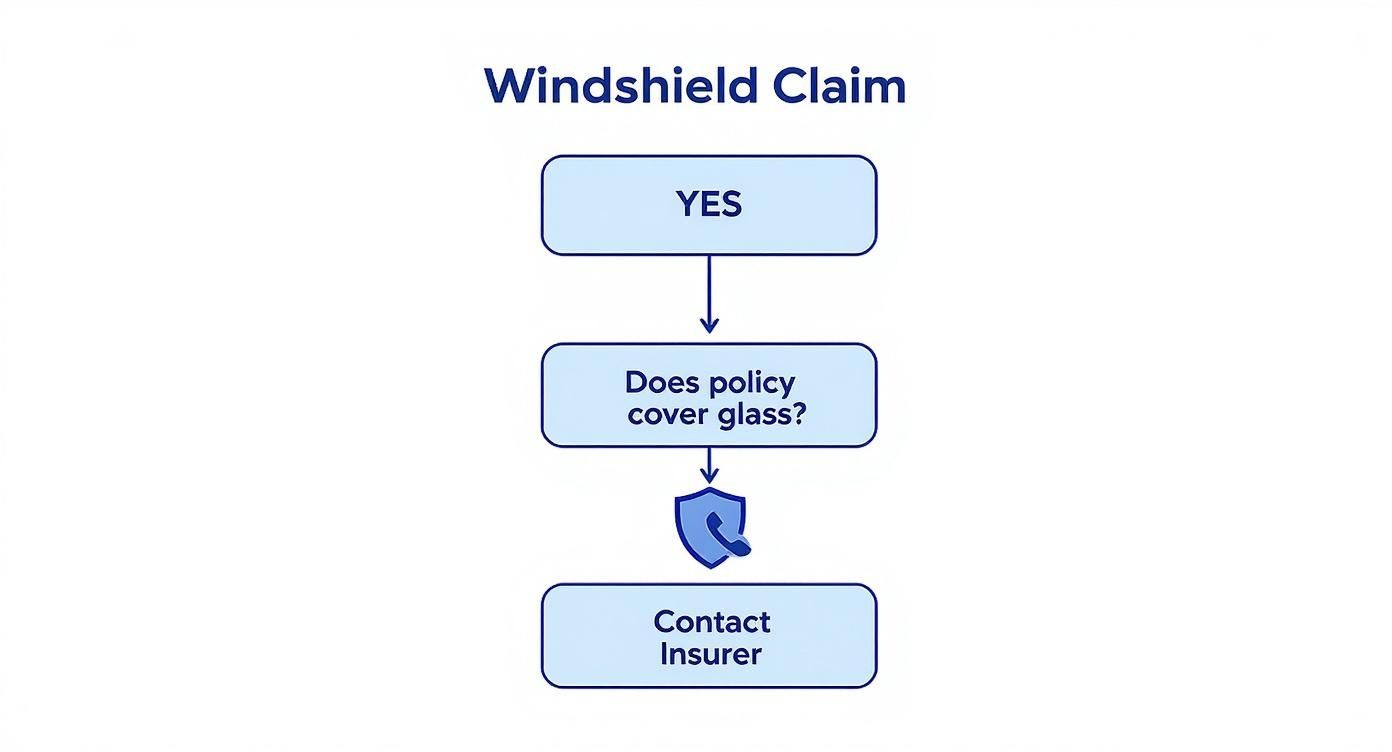
As you can see, both your coverage and the specifics of the damage—its size and location—play a direct role in whether you're getting a simple repair or a full replacement.
When Replacement Is The Only Safe Option
Sometimes, there's no debate. If a crack has snaked its way across half the windshield, or an impact was so severe it shattered the glass, a repair is completely off the table. Trying to fix that kind of damage is like trying to use a band-aid on a broken leg. It just doesn't address the fundamental structural failure.
When you're facing a full replacement, it helps to know what to expect. For a deep dive into the process, check out our guide on professional windshield replacement services. Knowing what’s involved will help you feel confident you're restoring your car's safety back to factory standards. Because at the end of the day, a clear, solid windshield is non-negotiable.
How to Get a Trustworthy Repair Quote

Getting a straight answer on your windshield repair cost shouldn't feel like a guessing game. To get a quote you can actually trust, you just need to have the right information ready. A truly professional auto glass company will ask you a handful of specific questions to dial in the scope of the work. This ensures the price they give you is the price you actually pay, with no surprises.
Think of it this way: you wouldn't ask a painter for a quote without telling them the size of the room or the condition of the walls. It’s the same with auto glass. A technician needs key details to do their job right. Being prepared not only makes the whole process faster but also helps you spot an experienced pro from someone just tossing out a lowball number to get in the door.
Gather Your Information Before You Call
Before you start making calls or filling out online forms, spend five minutes pulling together the essential details about your car and the damage. This prep work allows a technician to give you a precise quote, not just a vague ballpark figure.
Have this info on hand:
Your Vehicle Identification Number (VIN): This 17-digit code is your golden ticket. It tells the technician everything they need to know—your car's exact make, model, year, and any special features like rain sensors or a heated wiper park area.
A Clear Description of the Damage: Be ready to describe the damage. Is it a chip, a star break, or a long crack? How big is it? Using a coin for reference is a great way to describe the size. Also, note its exact location on the windshield.
Your Insurance Details: If you’re thinking about filing a claim, having your policy number ready is a good idea. Many professional shops, including ours, can work directly with your insurance company to make things easier.
A trustworthy auto glass shop will always ask for your VIN. This isn't just a formality. It’s the only way to guarantee they've identified the correct glass and any attached technology, like ADAS cameras. This step is absolutely critical for an accurate quote and, more importantly, a safe repair.
What to Expect From a Professional Service Call
Knowing what a high-quality mobile service looks and feels like helps you understand what you're paying for and spot any red flags. From the moment a technician shows up, their process should be clean, transparent, and completely focused on safety.
When a pro from a company like Auto Renu Auto Glass LLC arrives, the visit should follow a clear, predictable sequence:
Arrival and Assessment: First, the technician will introduce themselves and confirm the work to be done. They’ll then do their own hands-on inspection of the damage to confirm a repair is truly the safest and best option.
Preparation and Protection: Before any work begins, they should carefully place protective covers over your vehicle's hood and dashboard. This prevents any of the repair resin from accidentally dripping onto your paint or interior.
The Repair Process: Using specialized equipment, the technician will create a vacuum over the chip to pull out any trapped air and moisture. Then, they will slowly inject a high-quality, clear resin that flows into every tiny fissure of the break.
Curing and Finishing: A UV light is then used to cure and harden the resin, creating a powerful, permanent bond with the surrounding glass. Once cured, they’ll scrape away any excess resin and polish the area to a smooth, clear finish.
Cleanup and Final Review: A great technician leaves your car cleaner than they found it. They’ll clean the entire windshield, pack up all their tools and materials, and then walk you through the finished repair, explaining any warranty details.
Common Questions About Windshield Repair Cost
When your windshield gets a chip, your mind probably jumps to a few immediate questions. How much will this cost? Will it look like new? Is this going to be a huge hassle? It's completely normal to feel that way.
Let's walk through some of the most common concerns I hear from drivers every day. Getting straight answers will help you understand what to expect and make a confident decision about your car's safety and the final windshield repair cost.
Will A Repaired Chip Be Completely Invisible?
This is easily the number one question people ask, and it's important to set the right expectation. The main goal of a professional repair isn't cosmetic perfection; it's about restoring the structural integrity of your windshield. We're stopping that chip from spreading into a giant crack that requires a full replacement.
A high-quality repair will make the damage far less noticeable, often improving clarity by 80-95%. But will it vanish completely? Usually not. Think of it like a small scar—it's healed and strong, but if you look closely, you might see a faint mark where the damage was. The key to a cleaner, nearly invisible result is speed. The sooner you get a chip fixed, the less dirt and moisture can get trapped inside, which is what often makes an older repair more obvious.
A quality repair is all about restoring your windshield's strength and stopping the damage in its tracks. While the chip will look dramatically better—expect an 80-95% improvement in clarity—a faint blemish may remain visible if you know where to look.
What Is ADAS Recalibration And Why Is It So Expensive?
If you drive a car made in the last few years, you've probably heard the term ADAS. Your Advanced Driver-Assistance Systems are all those modern safety features—like lane-keeping assist, adaptive cruise control, and automatic emergency braking. The "eyes" for these systems are sophisticated cameras and sensors often mounted right on your windshield.
When you replace the windshield, those sensors have to be recalibrated with laser-like precision. Even being off by a single millimeter can cause these critical safety features to fail when you need them most. The high cost comes from the specialized, high-tech equipment needed to do the job right, the extensive training technicians undergo, and the time it takes to perform this meticulous alignment. When it comes to your safety systems, cutting corners just isn't an option.
How Long Does A Mobile Windshield Repair Actually Take?
One of the best parts of mobile service is just how little it disrupts your day. For a typical chip or a small crack (anything under six inches), the entire repair process is surprisingly quick. Most of the time, I'm in and out in about 30 to 60 minutes.
That window gives me enough time to properly clean and prep the damaged area, inject the high-grade resin, and then cure it with a UV light to create a permanent, rock-solid bond. As soon as I'm done, your car is safe to drive immediately. You can have it fixed in your driveway at home or in the parking lot at work—it’s designed to be that easy.
Is It Safe To Use A DIY Repair Kit From A Store?
I get it—those DIY kits on the shelf at the auto parts store look like a cheap and easy fix. But from a professional standpoint, they carry some serious risks that can easily cost you more in the long run.
The resin in those kits is almost never the same quality as what professionals use, and the plastic tools they provide can't create the vacuum-and-pressure cycle that is absolutely essential for a successful repair. That process is how we remove every last bit of air and moisture from the break, ensuring the resin penetrates every microscopic crack. A botched DIY job often makes the damage worse and can make it impossible for a professional to properly fix it later. When it comes to the structural integrity of your windshield, you really want a certified technician on the job.
Don't let a small chip become a big expense. For a fast, professional, and reliable mobile service that comes directly to you, trust the experts at Auto Renu Auto Glass LLC. Get your free, no-obligation quote today!