How to Get Ice Off Your Windshield Without Causing Damage
Discover how to get ice off your windshield safely and quickly. Our guide covers proven methods, common mistakes to avoid, and tips to prevent ice buildup.
Jan 14, 2026
generated
how to get ice off your windshield, windshield de-icer, winter car care, safe ice removal, prevent icy windshield
Waking up to a windshield completely encased in ice is a rough start to any morning, but learning how to get ice off your windshield the right way is pretty simple. The safest, most effective method always starts from inside your car. You'll want to get the engine running and turn on your defroster at a low setting, letting the glass warm up gradually long before you even think about scraping. This simple step prevents the thermal shock that can cause a tiny rock chip to turn into a massive, costly crack.
Your Guide to a Damage-Free Windshield De-Icing
Staring at a frozen windshield is more than just an inconvenience; it's a genuine safety hazard. For the nearly 70% of Americans who live in regions that get significant annual snowfall, this is a familiar winter ritual. Icy conditions are a huge factor in vehicle accidents, contributing to over 1,300 deaths and 116,800 injuries each year on slick roads, according to the Federal Highway Administration's data on winter weather events.
Before you reach for the first thing you can find and risk scratching your glass, it’s crucial to understand the proper sequence. The best method always starts with a bit of patience and your car's own systems. Trying to rush things with dangerous shortcuts like hot water or a metal spatula is a recipe for disaster.
The secret to safe de-icing isn't brute force—it's letting your car's defroster do the heavy lifting. By gently warming the glass from the inside, you break the ice's stubborn grip, making it dramatically easier and safer to clear away.
The Correct Defroster Sequence
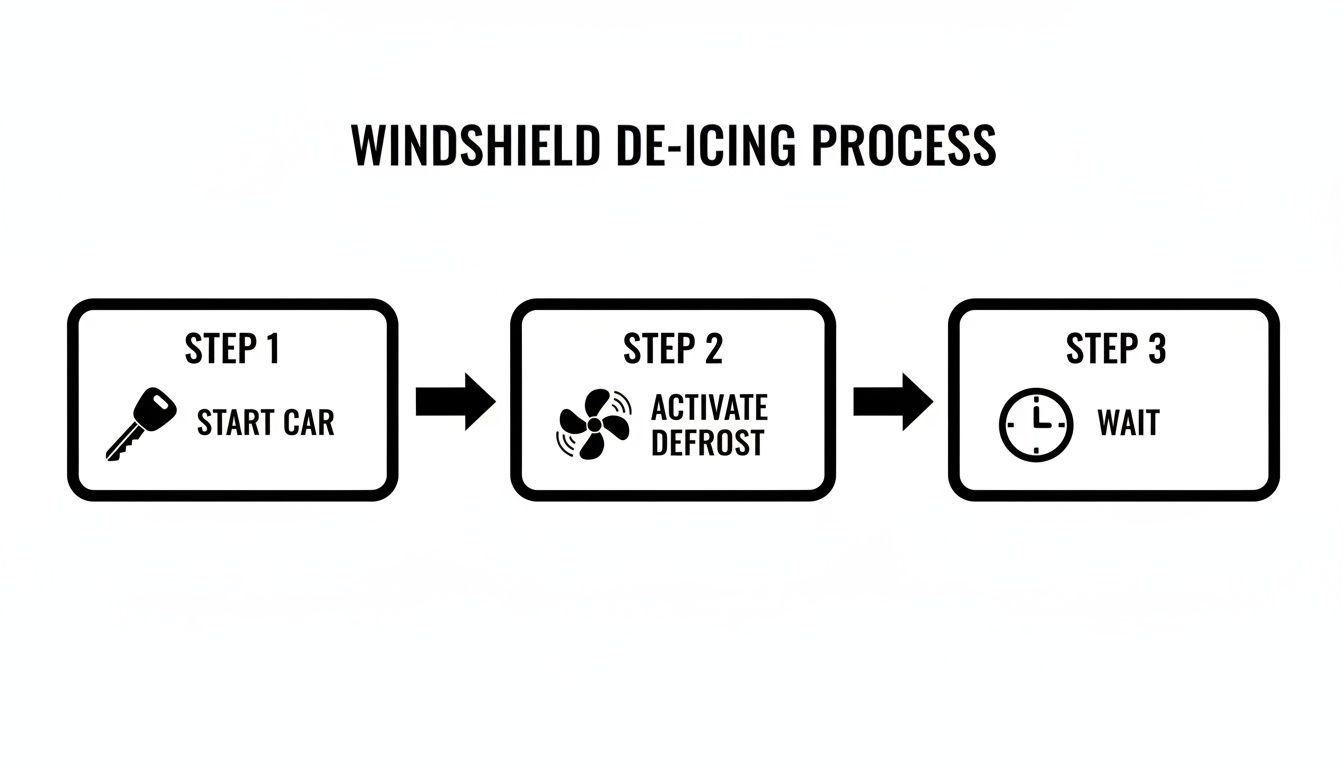
Your first move should always be to start your car and let the climate control do the work for you. Here’s how to do it right:
Start Your Engine: This gets the heater core warming up, which is what powers your defroster.
Set the Defroster Correctly: Turn on your front defroster right away, but keep the temperature low and the fan speed moderate at first. Blasting max heat on frozen glass is a huge no-no that can stress it.
Manage Air Circulation: For the first few minutes, hit the recirculate button. This uses the already-warming cabin air to speed things up. Once you feel some warmth, switch back to the fresh air intake setting to help prevent fog and condensation from building up on the inside.
This simple three-step process is the foundation for getting your windshield clear without causing any damage.
The key here is patience. Giving your defroster a good 10-15 minutes to work its magic will make every other step safer, faster, and a whole lot less frustrating.
Proven Methods for Removing Stubborn Windshield Ice
Alright, your defroster has been running for a bit, so now it's time to deal with the ice on the outside. You’ve got a few solid options here, and the best one often depends on how much ice you're facing and how much time you have. The real trick is picking a method that won't scratch your glass or damage the surrounding trim.
Let’s walk through the most reliable strategies, starting with the old-school classic and moving on to some time-saving alternatives.
The Defroster and Scraper Combo
This is the tried-and-true method for a reason: it just works. After letting your defroster warm the glass for a good 10-15 minutes, the ice that’s in direct contact with the windshield will start to get slushy. That’s your signal to start.
Now, grab a good-quality plastic ice scraper. I can't stress this enough—never use a metal spatula, your keys, or any other hard object. You'll end up with permanent gouges in your glass. A proper tool is non-negotiable.
Pro Tip: Use short, firm pushes with the scraper, starting from the outside edges and working your way in. You're not trying to chisel through a solid block of ice. Instead, let the defroster do the heavy lifting and just focus on pushing the softened slush off the glass.
Using Commercial De-Icer Sprays
On those mornings when you’re really in a hurry, a commercial de-icer spray can be a total game-changer. These sprays are made with chemicals that have an extremely low freezing point, so they get to work melting ice and frost almost instantly.
Just spray it liberally across the entire windshield. You'll see the ice start to break down and turn to slush right before your eyes. Give it a minute or two, and you can simply wipe the residue away with your wipers or a soft cloth.
Once the ice is gone, you'll want to make sure your view is crystal clear. For that final polish, check out our guide on how to clean your windshield without streaks.
A Safe and Effective DIY De-Icing Spray
Don't have any commercial spray on hand? No problem. You can easily whip up a surprisingly effective de-icer with a couple of things you probably already have at home. It's a fantastic, budget-friendly alternative.
Here’s my go-to recipe:
In a spray bottle, mix two parts 70% isopropyl alcohol with one part lukewarm water.
Give it a gentle shake to combine everything.
Spray the mixture directly onto the ice.
The alcohol’s freezing point is significantly lower than water’s, which is why it melts the ice so effectively. It’s a simple trick that gets the job done without any harsh chemicals.
No matter which method you choose, a clear windshield is non-negotiable for safety. In fact, at least 11 states have specific laws requiring drivers to completely clear all snow and ice from their windows. An obstructed view is a major factor in winter accidents. You can find more details in research on windshield safety regulations and related products.
Comparing Windshield De-Icing Methods
To help you decide which approach is best for your situation, here's a quick rundown of the most common methods.
Method | Effectiveness | Speed | Glass Safety | Cost |
|---|---|---|---|---|
Defroster + Scraper | High | Slow (10-15 mins) | High (with plastic scraper) | Low (one-time tool cost) |
Commercial De-Icer | Very High | Very Fast (1-2 mins) | High (when used as directed) | Moderate (ongoing cost) |
DIY Alcohol Spray | High | Fast (2-3 mins) | High | Very Low (household items) |
Hot Water | Low | Fast | DANGEROUS - High risk of cracking | Very Low |
As you can see, patience with your defroster or a little prep with a spray solution are your safest and most reliable bets. The one method to always avoid is using hot water, as the sudden temperature shock can easily crack your windshield.
Critical Mistakes That Can Crack Your Windshield
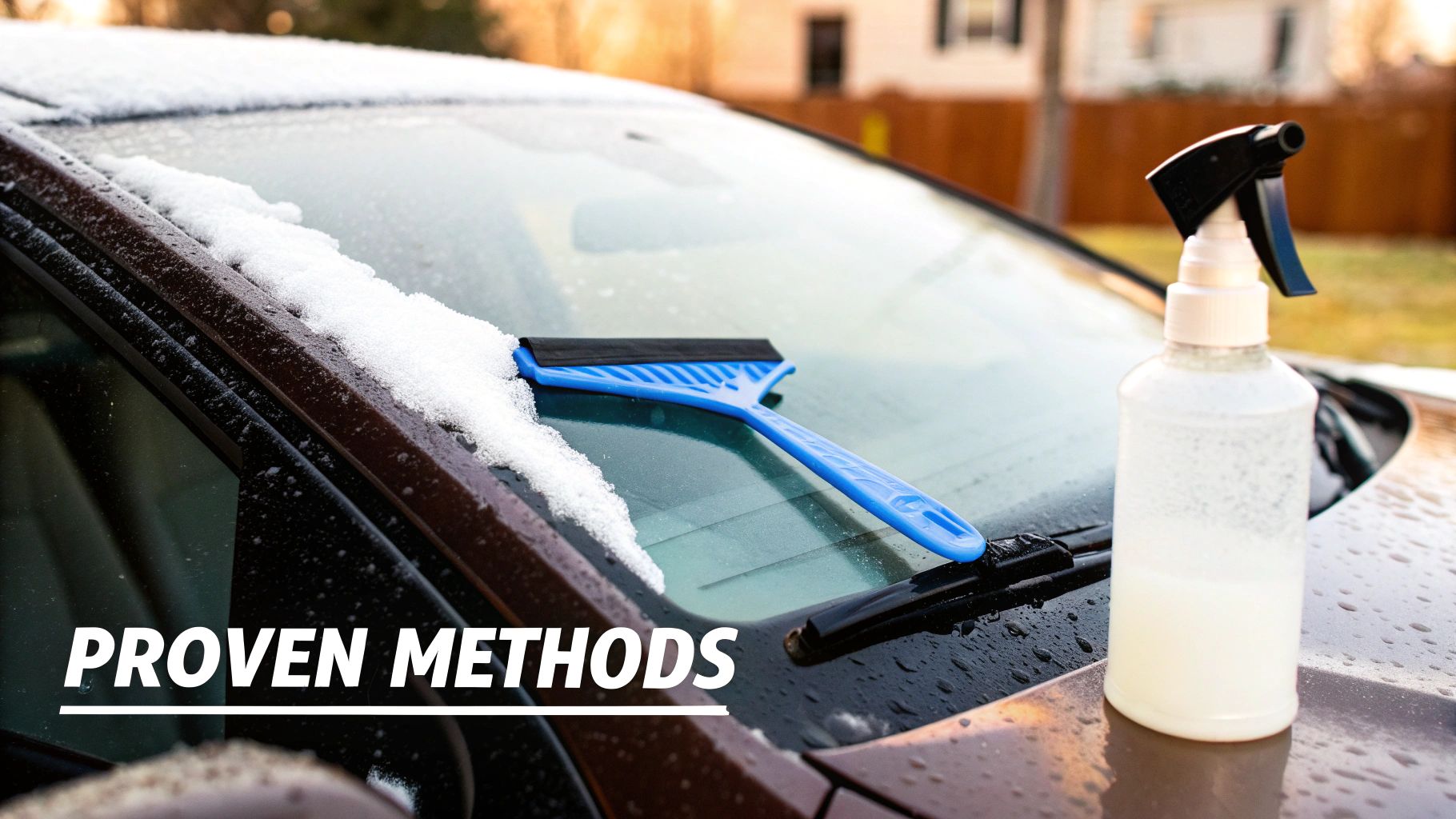
We’ve all been there: late for work, staring at a windshield encased in a solid sheet of ice. The temptation to find a shortcut is real, but some of those “quick fixes” can turn a minor morning inconvenience into a major repair bill. Knowing what not to do is just as crucial as knowing the right way to clear the ice.
The absolute worst thing you can do is pour hot water on the glass. It sounds logical—hot water melts ice, right? The problem is the violent, sudden temperature change, a phenomenon known as thermal shock.
That blast of heat causes the glass to expand instantly in one spot while the surrounding area stays frigid and contracted. This uneven stress is more than enough to cause a tiny, invisible chip to explode into a crack that races across your entire windshield.
The Dangers of Using the Wrong Tools
When you can’t find a proper ice scraper, it's easy to get desperate and grab whatever is handy. Unfortunately, using household items is a surefire way to cause permanent damage.
Metal Scrapers & Car Keys: Anything metal will dig into your windshield, leaving deep scratches and gouges. This kind of damage can’t just be buffed out; it obstructs your vision and compromises the glass.
Credit Cards: A plastic card might seem harmless, but it becomes incredibly brittle in the cold. It can easily snap, leaving you with a broken card and a still-frozen windshield. Plus, its hard edge can still cause fine scratches.
These little nicks and scratches do more than just look bad. They create weak points in the glass, making it far more likely to crack from a future stone chip or even just road vibrations. You can learn more about protecting your auto glass in our guide on how to prevent windshield cracks.
Your windshield is a critical piece of safety equipment, engineered to precise standards. When you use improper tools or methods like hot water, you compromise its strength. This can easily lead to a full replacement—a job for a pro who can ensure your car's safety systems are correctly recalibrated afterward.
Don't Force Your Wipers
Lastly, resist the urge to just flip on your wipers and hope they'll power through the ice. It’s a costly gamble. The delicate rubber on the blades will tear to shreds against the jagged, frozen surface, making them useless the next time it rains.
Worse yet, the wiper motor is not designed to push a heavy layer of ice. Forcing it to try can burn out the motor, leading to a much more involved and expensive repair than just buying new blades. Taking a few extra minutes to de-ice properly is always worth it.
The best way to handle a frozen windshield is to stop it from icing over in the first place. A few smart moves the night before can save you a world of frustration and a whole lot of time on a frosty morning.
Think of it as being proactive rather than reactive. This isn't just about making your morning easier; it also saves your vehicle from the usual winter abuse. Skipping the aggressive scraping and high-blast defrosting protects your windshield, wiper blades, and heater from unnecessary strain.
Use a Good Windshield Cover
Putting a physical barrier between your glass and the frigid air is easily the most effective trick in the book. If you live anywhere that gets ice or snow, a dedicated windshield cover is a brilliant investment.
Most of these are made from tough, weather-resistant fabric and are cut to fit your windshield snugly. They usually have little flaps you tuck into the doors, so even a strong winter wind won't blow them away. In the morning, you just peel the cover off, and all the ice and snow come right with it. It's that simple.
A quality cover is like a winter jacket for your car. It blocks the moisture and freezing temperatures that are essential for ice to form.
Park Smarter, Not Harder
Believe it or not, where you park your car overnight can make a huge difference. If you have a garage or even just a carport, use it. That’s the gold standard for keeping your car free from the elements.
If you have to park outdoors, a little strategy goes a long way:
Face East: Whenever you can, park your car facing east. The sun rises in the east, so your windshield will get the first rays of morning sun, giving you a head start on melting any ice that did form.
Find Natural Shelter: Parking next to a building or under a thick canopy of trees can shield your car from the worst of the wind and precipitation. This won't stop ice completely, but it can definitely lessen the severity.
Try a DIY Pre-Treatment Spray
You can also pre-treat your glass with a homemade solution that makes it harder for ice to stick. A simple vinegar and water spray is a classic for a reason—it works.
Just mix three parts white vinegar with one part water in a spray bottle. The night before a freeze is expected, give your clean, dry windshield a light misting. The acetic acid in the vinegar lowers the freezing point of water, preventing a hard layer of ice from forming. Just be careful and try not to get it on your car's paint.
Taking these small steps is just simple, effective car care. To truly get ahead of future problems, including those caused by winter weather, exploring professional preventative maintenance services is always a smart move for your vehicle's long-term health.
When a Small Chip Becomes a Big Problem
Sometimes, the biggest threat on a frosty morning isn't the ice itself, but a tiny chip you’ve been ignoring for weeks. That little starburst from a kicked-up rock on the highway is a ticking time bomb, and a cold snap is exactly what sets it off.
When you crank up the defroster, the glass goes from freezing to warm in minutes. This rapid temperature change creates a massive amount of stress. A healthy windshield can take it, but all that pressure hones in on the weakest point—that chip. This is the moment a tiny, fixable imperfection spiders into a massive crack right before your eyes.
Before the first real freeze hits, take a minute to walk around your car and really look at the glass. Check for any nicks, bullseyes, or small cracks, especially near the edges where they’re easy to miss but much more likely to spread. A quick, proactive repair now can save you from a full—and much more expensive—windshield replacement later.
What To Do When De-Icing Goes Wrong
Even if you do everything right, accidents can happen. Maybe you pressed a little too hard with the scraper, or that hidden chip just couldn't handle the thermal shock. If you suddenly see a crack spread across your vision while clearing the ice, it’s time to call in a pro.
Don't put this off. A compromised windshield is a serious safety issue. The glass provides up to 30% of your car's structural support in a rollover, so a crack isn't just an ugly blemish—it's a weak point in your vehicle's safety cage.
Modern cars bring another level of complexity to the table. If your vehicle is equipped with safety features like lane-keeping assist, adaptive cruise control, or automatic emergency braking, it relies on a camera system mounted directly to the windshield. This is known as the Advanced Driver-Assistance Systems (ADAS).
If you need a full windshield replacement, that ADAS system must be professionally recalibrated. If you skip this crucial step, your car's most important safety features simply won't work correctly, which is a huge risk on the road.
The good news is that mobile auto glass services can often come right to you. A technician can handle a professional chip repair or a full replacement, including the vital ADAS recalibration. If you're curious, you can learn all about the process of how to repair a windshield chip and see why getting it fixed quickly is so important.
A Few Common Questions About De-Icing Your Windshield
Even when you know the best ways to get ice off your windshield, some questions always seem to pop up. It’s one of those universal winter frustrations, and there's a ton of conflicting advice out there. Let's clear up a few of the most common myths and give you the straightforward answers you need.
Getting the facts straight helps you avoid some expensive mistakes and, more importantly, gets you on your way safely.
Can I Just Use a Credit Card to Scrape the Ice?
We’ve all been there. You're running late, can't find your ice scraper anywhere, and that credit card in your wallet starts looking like a good idea. But trust me on this one: it’s a terrible hack.
That hard plastic becomes incredibly brittle in freezing cold. I've seen them snap in half on a thick patch of ice, leaving you with a broken credit card and still a frozen windshield.
Worse yet, if the edge of the card chips, it can create a razor-sharp point that will absolutely put fine, permanent scratches into your auto glass. A proper ice scraper is cheap and designed for one thing: clearing ice without damaging your glass or the rubber seals around it. Just stick to the right tool for the job.
Will Pouring Cold Water on the Windshield Help?
This one sounds logical, especially after all the warnings about using hot water. If hot water can cause a crack from thermal shock, shouldn't cold water be safe? While you're right that it won't crack the glass, it's just not going to work.
The problem is physics. Cold water hitting an already-frozen surface is just going to freeze right on contact. Instead of solving the problem, you've just added another stubborn layer of ice you'll have to deal with. It actually makes your job harder.
The only liquids that truly work are those with a much lower freezing point than water. Think commercial de-icer sprays or a DIY mix with a high concentration of isopropyl alcohol. These actively break down the ice instead of just adding more frozen moisture.
How Long Should I Really Run the Defroster Before Scraping?
Patience is your best friend on an icy morning. As a rule of thumb, give your defroster a solid 10 to 15 minutes before you even grab the scraper. I know it feels like an eternity when you're in a hurry, but it makes a world of difference.
The goal here isn't to melt everything completely. You just want to gently warm the glass from the inside, which breaks the bond between the ice and the windshield surface. You'll know it's working when the edges of the ice start to look slushy or you can see a thin layer of water forming underneath.
Letting the defroster do the heavy lifting means you'll be pushing away slush instead of chipping away at a solid block of ice. It’s so much easier and way safer for your glass.
Does a Windshield Chip Make De-Icing More Dangerous?
Yes, absolutely. An existing chip or a small crack is a huge weak point in your windshield's structural integrity. The process of de-icing puts an incredible amount of stress on the glass, and that stress will always find the path of least resistance.
Think about it: your defroster is heating the inside of the glass while the outside is still freezing cold. This creates a powerful tension that pulls the glass in opposite directions, and that force zeroes in right on the chip. It's the perfect recipe for turning a small, repairable chip into a long, unfixable crack that means a full replacement is needed.
If your windshield is already damaged, be extremely cautious. Warm the cabin air slowly on a low setting before you aim the defroster vents directly at the glass. Honestly, the best solution is to get any chips professionally repaired before winter hits. A little proactive maintenance can save you a much bigger headache down the road.
If winter weather has already turned that small chip into a big problem, don't put it off. Auto Renu Auto Glass LLC offers expert mobile windshield repair and replacement, including the critical ADAS recalibration that modern vehicles require. Contact us today for a free quote.