Mobile Auto Glass Repairs: Quick On-Site Fixes & Clear Coverage Guide
Discover mobile auto glass repairs on-site, with easy steps, ADAS calibration basics, and tips for insurance and choosing a trusted provider.
Feb 3, 2026
generated
mobile auto glass repairs, windshield repair, adas calibration, on-site auto glass, car glass replacement
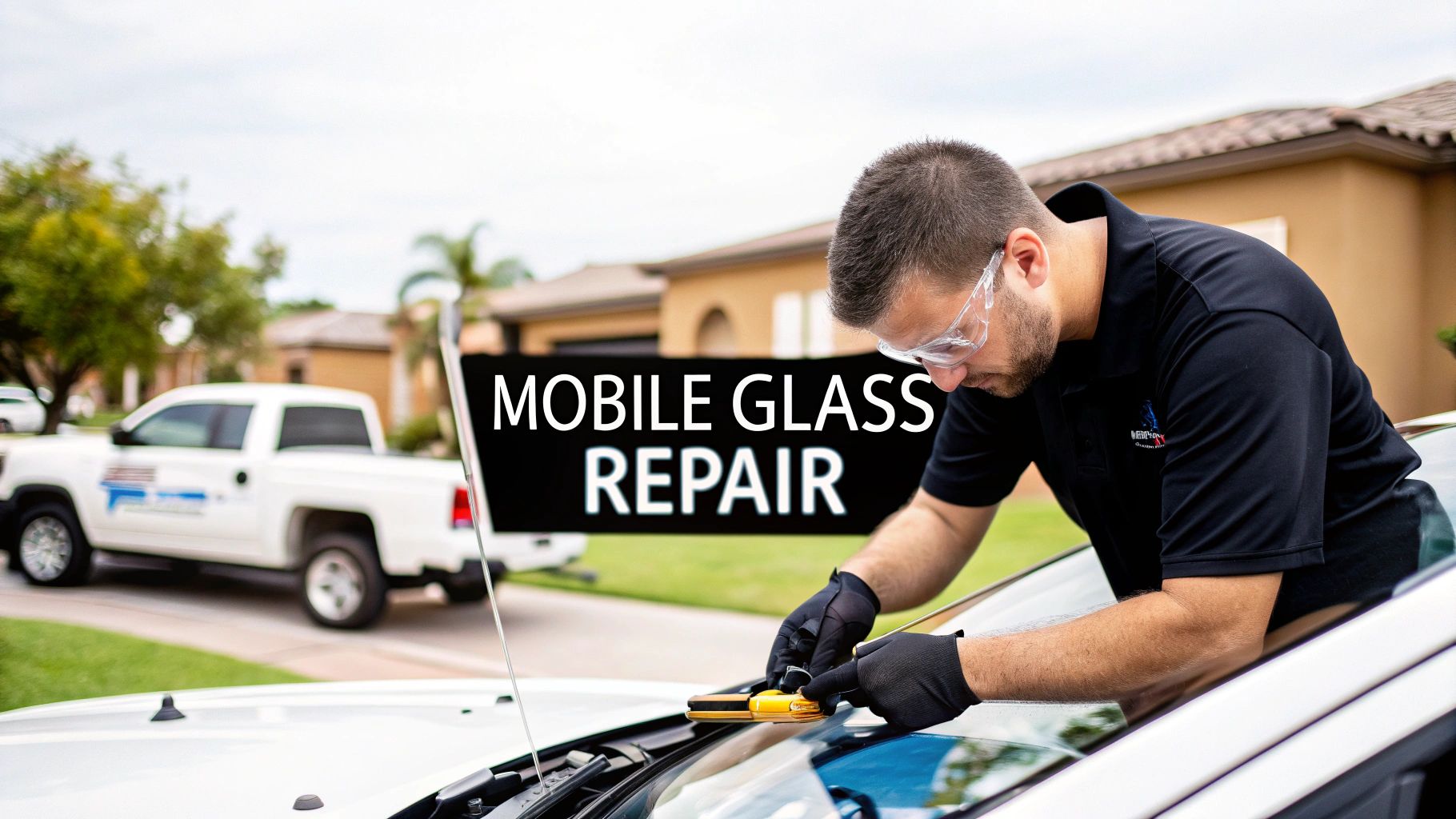
Picture this: you're getting ready for work and notice a fresh rock chip on your windshield. The old way meant calling a shop, scheduling a time, and then burning half a day in a waiting room. Mobile auto glass repair completely flips that script.
Instead of you going to the shop, the shop comes to you. A certified technician rolls up to your home, office, or wherever you happen to be and handles the entire repair or replacement on the spot. It's that simple.
What Exactly Are Mobile Auto Glass Repairs?
Think of it as a "house call for your car's glass." It’s a service designed for modern, busy lives, taking away the hassle and danger of driving around with a compromised windshield. Your schedule doesn't have to bend—the service fits right into it.
A fully equipped, specialized van arrives with everything needed to do the job right. We're talking about high-quality glass, powerful industrial adhesives, and all the specialized tools you'd find in a traditional brick-and-mortar shop. The technician performs the exact same professional-grade work, just with unparalleled convenience.
The Scope of On-Site Services
And don't think this is just for tiny, superficial fixes. A top-tier mobile service is equipped to handle the full spectrum of auto glass problems right where you are.
Technicians are experts at everything from quick resin injections that stop a small chip from turning into a massive crack to full-blown windshield, side window, or rear glass replacements.
The best mobile providers also handle crucial related services, including:
Advanced Driver-Assistance Systems (ADAS) Recalibration: This is a non-negotiable for newer vehicles. It ensures safety features like lane-keeping assist and emergency braking work perfectly after a new windshield is installed.
Leak Diagnosis and Repair: Got a pesky water leak? They can find the source and seal it up for good.
Window Regulator and Motor Repair: If your window is stuck or struggling to move, they can fix the mechanicals behind it.
The real goal is to deliver dealership-level quality and craftsmanship without ever making you leave your home or office. It's about restoring your vehicle's safety with the least amount of disruption to your life.
Essentially, mobile auto glass repair turns your driveway into a professional service station. It saves you time, prevents a small chip from becoming a big problem, and gets you safely back on the road in just a couple of hours. It’s all about bringing expert care directly to you.
A Look at the On-Site Repair Process, From Start to Finish
So, what actually happens when that mobile auto glass repair van shows up? It's not just a quick fix; it’s a professional, carefully orchestrated process designed to be safe, efficient, and get you back on the road with minimal fuss. Knowing the steps can give you real peace of mind about the quality of work happening right in your own driveway.
The job begins the second the technician arrives. It's much more than just swapping out glass—it's about a detailed assessment to find the perfect, safest solution for your specific vehicle.
This simple flow shows just how customer-focused the entire mobile repair journey is.
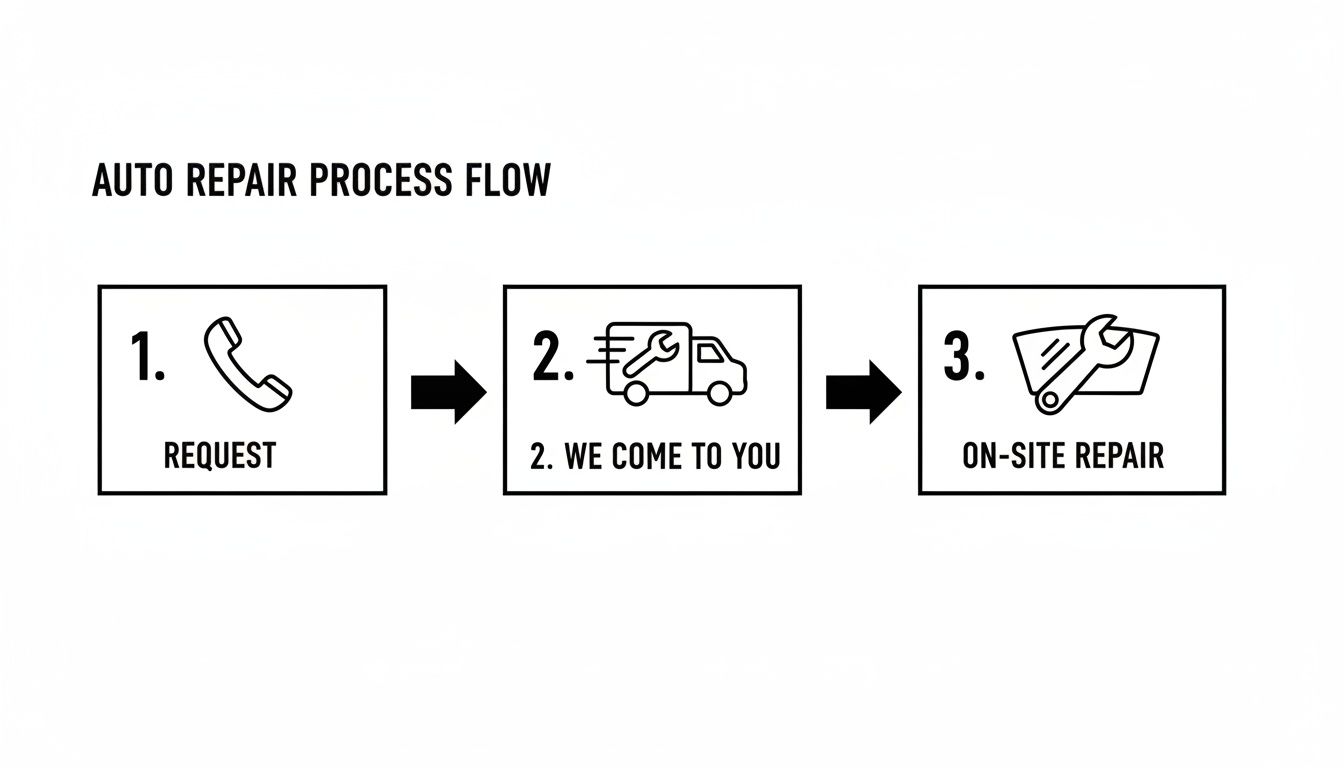
From that first call to the finished repair, the entire system is built to bring the expertise directly to you.
Initial Damage Assessment
First things first, a thorough inspection is a must. A certified technician will get a close look at the damage to decide the best path forward, checking the chip or crack's size, depth, and exact location.
As a rule of thumb, chips smaller than a quarter and cracks shorter than a dollar bill are often good candidates for repair. But if the damage is right in the driver's line of sight or too close to the edge of the windshield, a full replacement is almost always the safer bet to restore the glass's structural integrity. You can find a deeper dive into what that involves here: https://www.autorenu911.com/blog/on-site-car-window-replacement.
The Repair or Replacement Procedure
With the assessment done, it's time for the hands-on work. The technique used will be completely different for a simple repair versus a full-on replacement.
For Chip Repairs: The tech starts by meticulously cleaning any tiny bits of debris from the damaged spot. They then use a special tool that creates a vacuum over the chip before injecting a clear, industrial-strength resin. This resin is then cured with a UV light, which hardens it to bond the glass back together, restoring both its strength and clarity.
For Full Replacements: The technician’s first move is to protect your car’s interior and exterior paint. Next, they carefully remove the old, damaged windshield. Then comes a critical step: they completely clean the frame of all the old adhesive before applying a new, powerful urethane adhesive. Finally, the new windshield is expertly set into place for a perfect fit.
A crucial component of delivering timely and convenient mobile auto glass repairs is the underlying logistics and appointment management, often streamlined by advanced solutions like efficient field service scheduling software.
Curing and Final Touches
Once the new glass is in, the adhesive needs time to cure and form an unbreakable bond. This is what we call the Safe Drive-Away Time. It can take anywhere from 30 to 60 minutes, depending on the specific adhesive used and even the day's weather conditions. Your technician will give you a precise time.
It’s absolutely critical not to drive the car during this window. That bond is hardening to provide the structural support your car was designed to have, which is especially important in an accident. Once the curing time is up, the technician will clean up the work area completely, leaving your car spotless and ready to hit the road.
Why ADAS Recalibration Is a Non-Negotiable Step
If your car is equipped with modern safety features—think lane-keeping assist, adaptive cruise control, or automatic emergency braking—then your windshield is more than just a piece of glass. It’s the high-tech mounting point for the cameras and sensors that make those systems work.
When that windshield gets replaced, even a flawless installation can throw the camera's angle off by a tiny, almost imperceptible margin. But that fraction of a degree matters. It's like slightly bumping the scope on a rifle; what looks like a minor shift up close can cause you to completely miss the target down range. For your car, it could mean a critical safety system failing to react when you need it most.
What Is ADAS Recalibration?
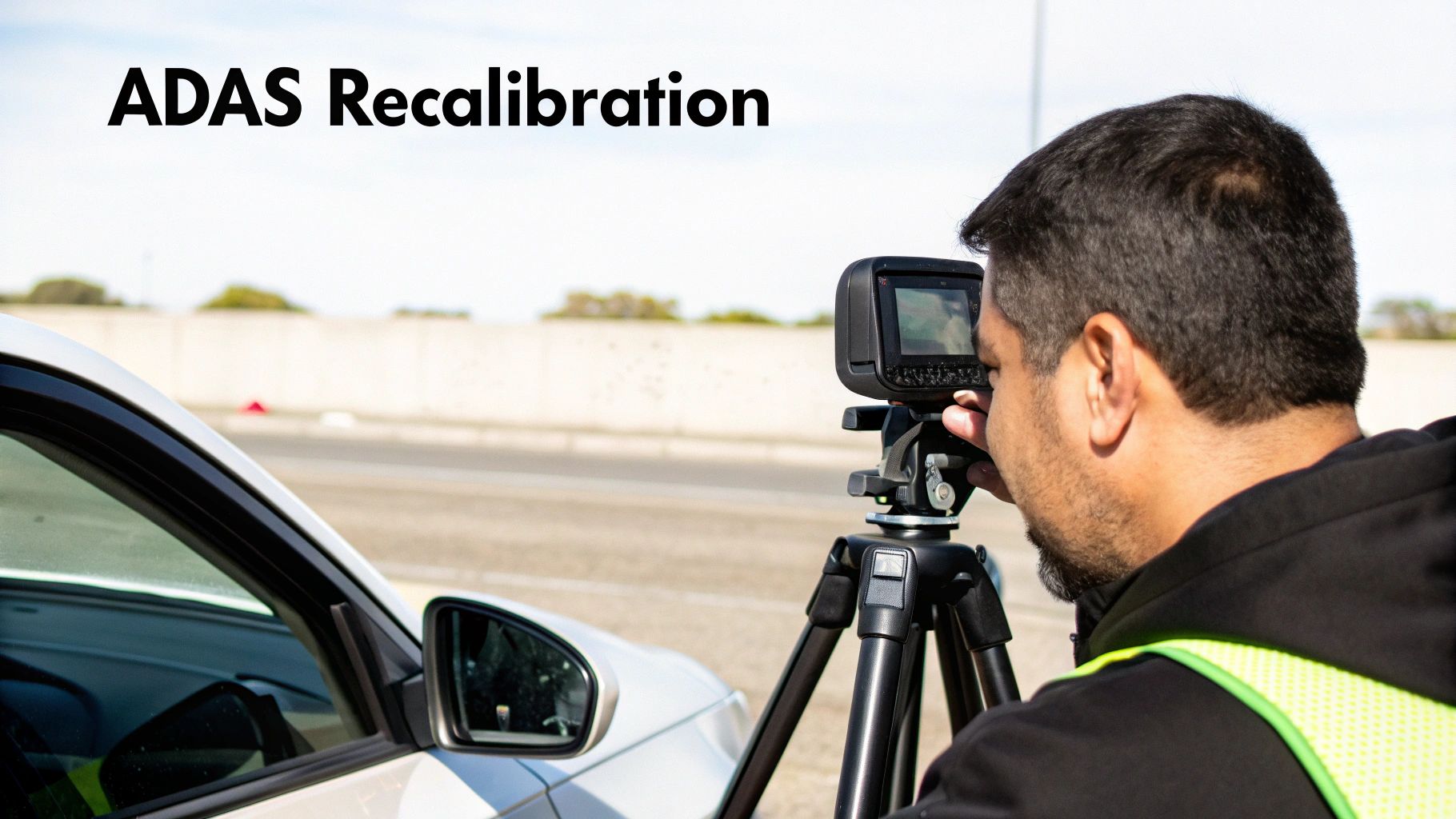
Advanced Driver-Assistance Systems (ADAS) recalibration is the meticulous process of re-aiming those cameras and sensors back to the manufacturer's exact specifications. It’s how we ensure they "see" the road ahead with perfect accuracy and function just as they were designed to.
Without this step, your car's safety features might become unreliable, or worse, they could deactivate completely. This isn't something you can do with a simple software update; it requires specialized targeting equipment and technicians who know how to use it. In fact, most automakers mandate it after any windshield replacement. A top-tier mobile auto glass repairs service will have the tools to handle this on-site, especially for tech-heavy brands like Tesla, Mercedes, and Audi.
The need for this specialized work has fueled major growth in our industry. The auto glass sector in the US has been expanding at a 6.8% annual growth rate and is projected to become a $7.4 billion market in 2025. Much of this boom comes from the dual need for both the glass replacement and the complex electronic recalibration that follows. You can find more data on this trend over at kentleyinsights.com.
Why You Cannot Skip This Step
Putting off ADAS recalibration is a genuine safety gamble. Just think about the systems that rely on those forward-facing cameras:
Lane Departure Warning: It might not see the lane markings clearly, failing to alert you when you start to drift.
Automatic Emergency Braking: The system could miscalculate the distance to the car in front of you, braking too late or not at all.
Adaptive Cruise Control: It may struggle to maintain a consistent, safe distance from the vehicle ahead.
Skipping recalibration is like getting a new pair of prescription glasses but never having an optometrist fit them to your face. The lenses are perfect, but if they aren't positioned correctly in the frames, your vision will be dangerously skewed. The same logic applies to your car’s digital "eyes."
Any reputable mobile technician will first identify if your car has ADAS and then walk you through the recalibration process. Our team's guide on ADAS recalibration dives deeper into how this works and what it means for your vehicle. Remember, getting this done as part of your mobile auto glass repairs isn't an upsell; it's a fundamental part of doing the job right and keeping you safe.
The Real Benefits of Choosing a Mobile Service
Sure, the biggest draw of mobile auto glass repairs is the sheer convenience. Who wouldn't want to skip a trip to the shop? But the real advantages run much deeper than just saving you a drive. When the service comes to you, you're getting a solution that’s safer, more efficient, and often smarter for your wallet.
The whole point is to keep your day moving. Instead of carving out a few hours to drive to a shop, wait around, and then drive back, the repair happens right where you are. Your car gets fixed in the office parking lot while you're in a meeting or in your driveway while you're handling things at home. No interruptions, no lost time.
To really get why this matters, look at the bigger picture of home service industry trends. The "we come to you" model isn't just a gimmick; it’s a fundamental shift in meeting customer needs, and auto glass is a perfect example of why it works so well.
Maximizing Safety and Structural Integrity
One of the most overlooked benefits is how quickly you can address the damage. A chip or crack isn't just an annoying blemish in your line of sight; it’s a weak point in your car’s safety system. Your windshield is a key structural component, providing up to 30% of the vehicle’s strength in a rollover. A crack seriously undermines that.
A mobile technician can fix that problem right away, so you don't have to drive a car with compromised safety.
Then there's the adhesive. After a windshield replacement, that urethane seal needs time to cure properly—what we call the Safe Drive-Away Time. This is non-negotiable for a secure bond.
At a shop: It's easy to feel rushed. You might be tempted to drive off before the adhesive has fully set, which is a major safety risk.
With mobile service: Your car can sit undisturbed in your own driveway or parking space. This guarantees the bond cures perfectly, giving it the strength it needs without you having to guess if it's ready.
Saving Time and Money
Let's be honest, time is money. Every hour spent driving to a repair shop, waiting in a lobby, and heading back is an hour you can’t bill a client, spend with your family, or just relax. Mobile service gives you that time back. For anyone with a demanding job or a busy household, that’s huge.
Think about all the little costs that go along with a traditional shop visit:
Lost Work Hours: Time you have to take off or step away from your job.
Fuel Costs: The gas burned driving back and forth.
Alternative Transportation: Maybe you need to call an Uber or arrange for a rental.
Mobile auto glass repairs simply wipe those hidden costs off the board. It's a direct, no-fuss approach that shows a genuine respect for both your schedule and your budget.
Dealing with Insurance for Your Glass Repair (It's Easier Than You Think)
Let's be honest, nobody enjoys dealing with insurance paperwork. The thought of phone calls, claims, and deductibles can be a real headache. But here's some good news: when it comes to mobile auto glass repairs, the process is usually far less painful than you'd expect. In many situations, your comprehensive auto insurance has you covered, and you might not have to pay a dime.
It all comes down to what's in your policy. Most comprehensive plans have specific language for glass damage. For small chips and dings, many insurance companies will even waive your deductible. Why? It's simple math for them. They'd much rather pay for a quick, inexpensive chip repair today than shell out for a full windshield replacement down the road when that tiny chip turns into a giant crack.
Let the Pros Handle the Paperwork for You
One of the biggest perks of working with a professional mobile glass company is that they take the insurance hassle completely off your plate. Instead of you navigating phone menus and talking to claims agents, the repair shop can bill your insurance company directly.
It’s a smooth, hands-off experience for you. Typically, you just need to give them three pieces of information:
The name of your insurance provider
Your policy number
The date the damage happened
That's it. From there, the technician and their support team manage everything—submitting the claim, getting approval, and handling the billing. You get to skip the administrative runaround entirely.
The windshield repair business is a huge global market, valued at around $15 billion. A big reason for this growth is insurance backing. In fact, roughly 85% of comprehensive plans in developed countries now include specific coverage for glass damage. It’s a standard feature for a reason.
What If You're Paying Out of Pocket?
No comprehensive coverage? Or maybe you just prefer to pay for it yourself? That's perfectly fine. The most important thing here is transparency. A good, honest provider will give you a clear, detailed quote right from the start, with no surprise charges.
If a company is cagey about their pricing or won't break down the costs for labor, materials, and any disposal fees, consider that a red flag.
For a deeper dive into this topic, our guide on how insurance covers windshield replacement has all the details you'll need. Whether insurance is paying the bill or you are, the end goal is always the same: a simple, straightforward repair that gets you back on the road safely and without any financial surprises.
How to Choose a Trusted Mobile Auto Glass Provider
When it comes to mobile auto glass repairs, not all providers are created equal. The quality of service can vary wildly, and since your windshield is a critical safety feature, you can't afford to cut corners. Choosing the right company is about more than just a quick fix; it's about ensuring the job is done safely and correctly.
Think of it like hiring a contractor for your house. You'd want to see their credentials and past work, right? The same logic applies here. A little bit of homework before you book an appointment can save you from a faulty installation that could compromise your safety down the road.
Check Their Certifications and Training
Your first question should always be, "Are your technicians certified?" The auto glass industry has rigorous standards for a good reason. You want a company whose team is professionally trained and up-to-date on the latest vehicle technology.
The gold standard in the industry is certification from the Auto Glass Safety Council (AGSC). An AGSC-certified technician has proven they know the proper installation techniques, current safety protocols, and how to use advanced adhesives correctly. It’s the single best indicator that you’re dealing with a true professional.
Ask About the Glass and Adhesives They Use
The technician's skill is only half the equation; the quality of the materials they use is just as critical. When discussing the glass itself, you'll likely hear two acronyms: OEM and OEE. Knowing what they mean will help you make an informed choice.
OEM (Original Equipment Manufacturer): This is the exact same glass that your car's manufacturer used on the assembly line. It guarantees a perfect fit, matching tint, and precise thickness.
OEE (Original Equipment Equivalent): This glass is made by a third-party manufacturer but is engineered to meet the same strict safety and quality standards as OEM glass. Good OEE glass is a reliable and more budget-friendly alternative.
A reputable shop will be completely transparent about which type of glass they use and will happily explain the pros and cons of each. They should also be using a top-tier adhesive, like Dow urethane, which is essential for creating a bond as strong as the original factory seal.
Confirm They Guarantee Their Work and Understand ADAS
Any company that’s confident in its work will back it up with a solid warranty. Don't settle for anything less than a lifetime workmanship warranty. This should cover any installation-related issues, like air whistles or water leaks, giving you peace of mind that you're protected.
And finally, if your car has features like lane-keep assist or automatic emergency braking, you absolutely must ask about ADAS recalibration. A professional provider should be able to explain their entire process for recalibrating these systems accurately. If they seem unsure or try to downplay its importance, that's a huge red flag. Your safety systems depend on it, so find a provider who makes it a priority.
Got Questions? We've Got Answers
To wrap things up, let's tackle some of the most common questions we hear about mobile auto glass repairs. This should help clear up any lingering doubts and give you total confidence in having the repair shop come to you.
Does Bad Weather Mean I Have to Reschedule?
It definitely can. For a windshield replacement, the technician needs a dry environment. This is because the powerful urethane adhesive used to bond the glass to your car's frame needs to cure perfectly to create a strong, waterproof seal.
Rain, snow, or even very high humidity can mess with that process. If the weather's not cooperating, your technician will likely ask to move the job into a garage or covered space. If that's not an option, rescheduling is the safest bet to guarantee a flawless installation.
How Long Will I Be Out of Commission?
It really depends on what you’re having done.
Chip Repair: Fixing a small rock chip is incredibly quick. Most of the time, a technician can have it done in under 30 minutes.
Windshield Replacement: A full replacement is a more detailed job, usually taking about 60 to 90 minutes from start to finish. But don't forget about the adhesive's "Safe Drive-Away Time"—you'll need to wait another 30-60 minutes after the new glass is in before it's safe to hit the road.
Is a Mobile Repair Really as Good as Going to a Shop?
Absolutely. There's a common misconception that mobile service is somehow a "lesser" option, but that couldn't be further from the truth.
Professional mobile technicians use the exact same high-quality OEE or OEM glass and industrial-strength adhesives you'd find at a top-tier shop. Our experts are AGSC-certified and their vans are essentially workshops on wheels, fully stocked to deliver the same precise, dealership-quality result—just without you having to go anywhere.
The quality of the job has nothing to do with where it's done. It all comes down to the technician's skill and the materials they use. A certified pro can achieve a factory-perfect installation in your driveway just as well as they can in a service bay.
Ready to experience the easiest auto glass service you've ever had? Auto Renu Auto Glass LLC brings expert repairs, replacements, and tinting right to where you are. Get your on-site service scheduled by visiting us at https://www.autorenu911.com.