Fixing a Cracked Windshield A Guide to Smart Repair Choices
Is fixing a cracked windshield the right choice? Learn how to assess damage, explore DIY options, and know when to call a pro for a safe, lasting repair.
Dec 30, 2025
generated
fixing a cracked windshield, windshield repair, auto glass replacement, ADAS calibration, DIY windshield repair
That sound is unmistakable—a sharp crack against your windshield, and just like that, a new, unwelcome blemish is staring back at you. When this happens, the first thing to do is take a deep breath and assess the situation calmly. Your first moves are critical: safely check out the damage without touching it and snap a few clear photos for your insurance company.
The First Five Minutes: What to Do When Your Windshield Cracks
That startling impact from a stray rock is enough to make anyone jump, but what you do right after it happens can be the difference between a simple, inexpensive repair and a full, costly replacement. It's easy to panic, but a few deliberate steps can save you a major headache down the road.
First things first: safety. If you’re flying down the highway, don't slam on the brakes. Keep driving until you can safely pull over into a parking lot or a quiet side street. Stopping suddenly on a busy shoulder is asking for trouble. Once you’re safely parked, then it's time to play detective.
Hands Off! Assess the Damage from a Distance
I know the urge is strong, but whatever you do, don't run your finger over the chip or crack. It's a natural reaction, but touching the spot grinds dirt, oils, and moisture from your skin deep into the break.
This contamination is the enemy of a good repair. It can stop the repair resin from setting correctly, turning what should have been an easy fix into a permanent flaw that even a pro can't make disappear.
Instead, just use your eyes. Look at the damage from both outside and inside the car. How big is it? What's the shape? Is it a small, clean bull's-eye, or does it have little legs branching out like a star? Pay close attention to its location—if it’s right in your line of sight, that’s a whole different ballgame for safety and repair laws.
Pro Tip: Keeping a fresh break clean is the single best thing you can do. A clean chip or crack gives a technician the best possible chance to perform a seamless, nearly invisible repair.
Document the Damage Immediately
Before you even think about calling for a repair, grab your phone. Take several clear, well-lit pictures of the damage from a few different angles.
Get a close-up to show the specific type of break. Then, take a wider shot to show where it is on the windshield. These photos are gold for your insurance claim, providing time-stamped proof of the initial damage before it has a chance to spread. It makes the whole process smoother.
Know Your Cracks: A Quick Guide
When you call a glass shop, being able to describe the damage helps them know what they're dealing with. Most windshield dings fall into a few common categories. For a deep dive, you can check out our guide to the different types of windshield damage, but here's the gist of it:
Chip or Pit: This is a small nick where a piece of glass is gone. It's often the starting point for a much bigger problem.
Bull's-Eye: Looks just like it sounds—a dark, circular break. These are usually the easiest to repair if you get to them fast.
Star Break: An impact point with small cracks shooting out from the center. These are notorious for spreading quickly, especially with temperature changes.
Crack: A single line in the glass. It might be short or long, but any crack near the edge of the windshield is particularly bad news because it can compromise the glass's structural integrity.
Understanding these basics helps you have a more productive conversation with the repair technician. In these first few moments, your goal is simple: stay safe, assess without touching, document everything, and get ready to fix that cracked windshield.
Deciding Between Windshield Repair and Replacement
So, you've got a chip or a crack. The immediate next step is figuring out the big question: can this be repaired, or am I looking at a full replacement? This isn't just a matter of saving a few bucks; it's about making sure your car is safe. Your windshield is a serious piece of safety equipment, providing up to 60% of your vehicle's structural strength if you're ever in a rollover. Getting this decision right is non-negotiable.
Thankfully, you don't have to guess. Technicians have a clear set of criteria they run through every time, and it mostly boils down to three things: the size of the damage, where it's located, and how deep it goes.
The Critical Factors: Size and Location
You've probably heard the old "dollar bill rule." The general idea is if a crack is shorter than a dollar bill or a chip is smaller than a quarter, it's usually fixable. That's a decent starting point, but it's not the whole story.
Honestly, location is often more important than size. A tiny chip can be a major problem if it's sitting right in your line of sight while you're driving. Even the best resin repair can leave a tiny distortion or blur, and that's a distraction you just can't afford on the road.
This chart breaks down the common types of damage and the typical path forward—either a quick repair or a full replacement.
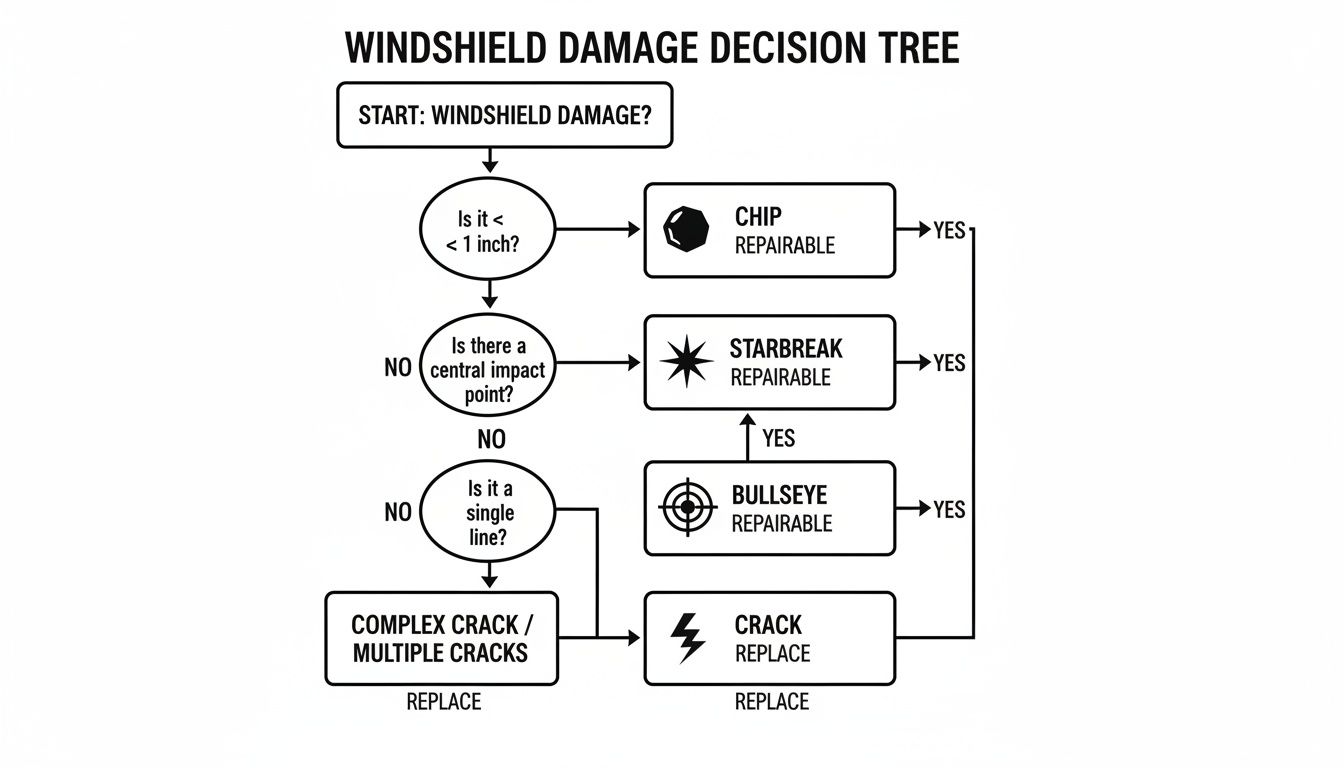
As you can see, a simple bullseye chip is almost always a straightforward repair job. But once you get into long, spidering cracks, you’re almost always looking at a replacement.
Another critical spot to check is the edge of the windshield. Any crack that touches the edge or starts there is bad news. It can mess with the crucial seal between the glass and your car's frame, weakening the whole structure. In that case, replacement is the only safe bet.
A small chip on the passenger side is an easy fix. That same chip right in front of the driver’s seat? That’s a safety issue that almost always means a new windshield is in your future.
Understanding Damage Depth and Type
Not all dings are created equal. Your windshield isn't just one piece of glass; it’s a sandwich made of two glass layers with a tough plastic (PVB) layer in the middle. A repair works by injecting a special resin into the outer layer of glass to fill the chip and bond it all back together.
If the impact was hard enough to go through the outer glass and into that middle plastic layer—or worse, all the way to the inner glass—it's too deep to repair. This kind of severe damage isn't common from a flying rock, but it can happen. More often, we see this when someone tries a DIY kit incorrectly or just lets a small chip fester for too long until it spreads and deepens.
A Clear Comparison for Your Decision
To make things even clearer, here’s a quick checklist you can use to size up the damage on your own windshield.
Windshield Damage Repair vs Replacement Checklist
This table should give you a good idea of whether you're likely dealing with a simple fix or a full replacement.
Damage Characteristic | Likely Repairable If... | Requires Replacement If... |
|---|---|---|
Size | The crack is shorter than 6 inches (or a dollar bill). | The crack is longer than 6 inches. |
Location | The damage is outside the driver's direct line of sight. | The damage obstructs the driver's view. |
Edge Proximity | The damage is more than two inches from the edge. | The crack starts at or runs to the windshield's edge. |
Depth & Type | It's a small chip, bullseye, or star break on the outer layer. | The crack penetrates both layers of glass or is a complex combination break. |
Whenever possible, repairing the damage is the smart move. The auto glass industry, valued at $15 billion in 2025 and projected to hit $23 billion by 2033, is built on efficiently fixing these problems. Opting to repair a chip can save you up to 70% of the cost of a full replacement, which is a pretty powerful incentive.
Knowing when to repair versus replace is key to saving time and money while keeping your car safe. For a more in-depth look at complex situations, take a look at our detailed guide on when to replace a windshield.
Should You Try a DIY Windshield Repair Kit?
When you spot that first chip on your windshield, the temptation to grab a cheap DIY kit is real. It seems like the perfect fix—spend a few bucks and an hour of your time, and the problem vanishes. But is fixing a cracked windshield yourself a smart move, or are you just setting yourself up for a bigger, more expensive headache?
Honestly, it all comes down to the kind of damage you're dealing with. These kits are really only built for one thing: a fresh, clean, simple bull's-eye chip that’s smaller than a dime. If that’s exactly what you have, and you’re a patient person, a DIY kit might work out for you.
However, if you're looking at a crack of any length, a star-shaped break, or a chip with spider-webbing legs, put the kit down. Trying to fix the wrong kind of damage is where a small problem turns into a big one, fast.
The Real Risks of a Botched DIY Repair
That initial savings from a DIY kit can evaporate the moment things go wrong. A failed repair isn't just an ugly spot on your glass; it can completely ruin any chance of a professional being able to fix it later. Once you’ve injected your own resin into that chip, there’s no turning back.
If you trap air bubbles, push the resin in too hard, or don't let it cure correctly, you'll be left with a cloudy blemish that’s more distracting than the original chip. Worse, you might have created a new weak point. The crack you thought you fixed could start spreading from that very spot days or weeks later.
A professional technician once told me, "I can fix almost any chip, but I can't fix a bad DIY repair." Once the damage is filled with low-quality resin and air pockets, there's nothing for their professional-grade materials to bond to.
There's a reason the global glass repair services market is a massive $59.92 billion industry. Professionals use advanced resin injection technology that can boost a repair's durability by 40%, delivering a near-invisible and long-lasting result. In stark contrast, some studies show DIY kits can fail up to 30% of the time, often making the damage unrepairable and forcing a full windshield replacement. You can discover more insights about the global glass repair market and its trends to see why pro tools make a difference.
A Cautious Guide to Using a Repair Kit
If you’ve sized up the damage and it truly is just a small, simple bull's-eye, then your best bet is to proceed with extreme caution. Success hinges on being meticulous and following the instructions to the letter.
Your Toolkit for Success
A quality repair kit: Don't just grab the cheapest one. Look for a kit that includes a bridge-style applicator for better pressure and stability.
Rubbing alcohol and a microfiber cloth: The surface has to be perfectly clean. No shortcuts here.
A safety pin or thumbtack: You'll need this to gently pick out any loose glass fragments from the impact point.
Patience: Rushing this is the fastest way to fail.
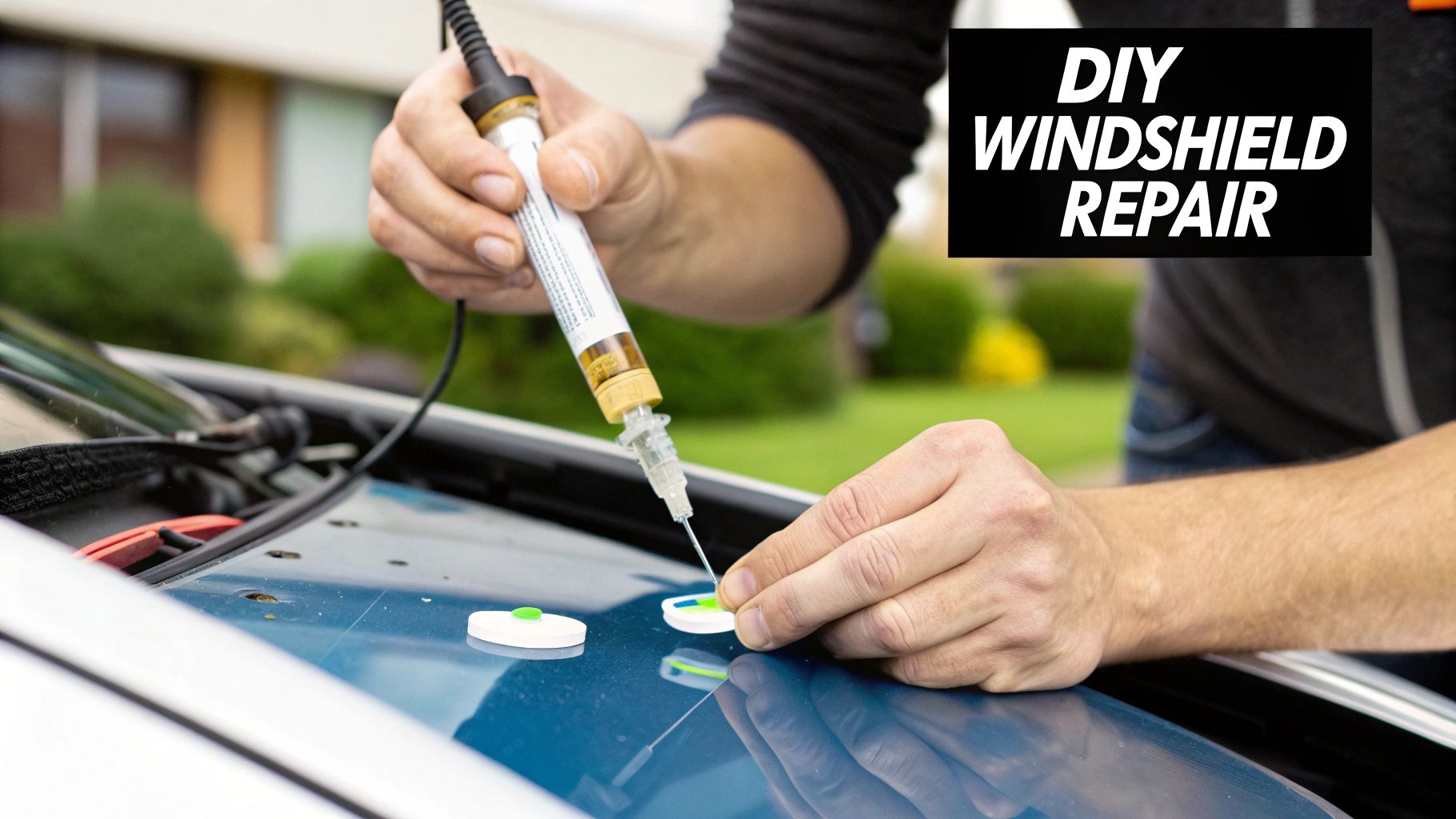
The process starts with cleaning the area thoroughly with rubbing alcohol. Next, you’ll use the thumbtack to carefully pick out any tiny, loose shards of glass from the center of the chip. Then, you’ll mount the adhesive bridge over the damage, making sure the injector tip is perfectly centered.
Injecting the resin is the most critical part. You have to go slow and steady to avoid trapping air. After the chip is full, you apply a curing strip over the top and move the car into direct sunlight—the UV rays are what actually harden the resin and bond the glass. Once it’s cured for the recommended time, you use a razor blade to scrape off the excess. When done perfectly, the result can be impressive. But if even one step goes wrong, your next call will likely be to a windshield replacement service.
When to Call a Professional for Windshield Service
That little chip or crack might seem like a perfect candidate for a DIY repair kit, but knowing where to draw the line is critical for your safety. Honestly, some jobs just aren’t meant for a garage project. Certain types of damage demand the specialized tools, materials, and steady hand of a professional technician, making a service call non-negotiable.
So, when is it time to put down the DIY kit and pick up the phone? Look for these clear red flags. If your windshield damage fits any of these descriptions, professional help is the only safe way to go.
Size Really Does Matter: A good rule of thumb is the "dollar bill test." If a crack is longer than a dollar bill (that's about six inches), it’s too big for an over-the-counter kit.
Location is Everything: Any damage directly in the driver's line of sight needs a pro. Even a flawless DIY repair can leave a slight distortion, and that’s the last thing you want obstructing your view.
Danger at the Edge: Cracks that touch the edge of the windshield are a serious problem. They compromise the entire structural seal of the glass, and a DIY fix just won't be strong enough.
Complex Damage: If you're looking at a "star break" with multiple legs, a bull's-eye with cracks shooting off, or several chips clustered together, a simple kit isn't going to cut it.
The Professional Repair Advantage
When you hire a pro, you're getting more than just their labor. You're investing in a far more advanced process and professional-grade materials that you simply can't buy at an auto parts store.
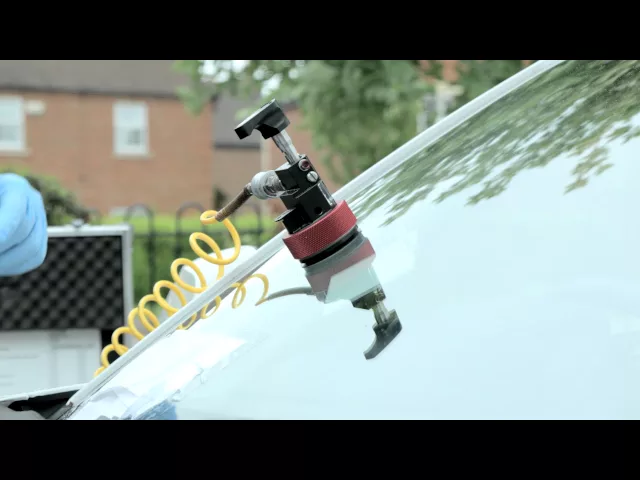
Technicians use a specialized vacuum and pressure-injection system. First, they attach a tool that creates a powerful vacuum over the chip, sucking out every last bit of air and moisture trapped deep inside the glass. This is a crucial step that a simple syringe can't replicate. Only then do they inject a high-quality resin under pressure, forcing it into every microscopic crevice. This is what truly restores the windshield's structural integrity.
The resin itself is a game-changer. Professional resins are optically matched to your glass and cure to a much harder, more durable state, making the repair nearly invisible and incredibly strong.
Understanding Windshield Replacement
Sometimes, the damage is simply beyond repair. If a full replacement is the only solution, a professional is your only option. They aren't just swapping a piece of glass; they're restoring one of your car’s most important safety features.
You'll generally have two choices for the glass itself:
OEM (Original Equipment Manufacturer): This glass is identical to the one your car had from the factory, made by the same company. It's a perfect match for fit, tint, and quality.
OEE (Original Equipment Equivalent): This is aftermarket glass made by a different company but designed to meet the same strict safety and quality standards as OEM glass. It's often a more budget-friendly choice.
The adhesive they use is just as critical. Professionals bond the new windshield with a high-modulus urethane adhesive that creates a factory-strength seal. This bond is vital for proper airbag deployment in a crash and helps prevent the roof from caving in during a rollover.
The Critical Role of ADAS Recalibration
In modern cars, a windshield replacement is a high-tech procedure. Most new vehicles come equipped with Advanced Driver-Assistance Systems (ADAS) like lane-keeping assist, forward collision warnings, and automatic emergency braking. The cameras and sensors for these systems are mounted directly to the windshield.
After a replacement, these systems must be recalibrated. Even a millimeter of misalignment can cause these critical safety features to fail or function incorrectly. This isn't an optional upsell—it's a mandatory safety procedure. Skipping it puts you, your passengers, and others on the road at serious risk.
The Convenience of Mobile Service
One of the best reasons to call a professional is that you don't have to drive with a dangerously compromised windshield. Most reputable auto glass companies, like Auto Renu Auto Glass LLC, offer mobile service. A technician comes right to your home or workplace to handle the repair or replacement on-site.
This service saves you time and keeps you off the road until your car is safe. After all, ignoring cracks can double the visual obstruction hazards. With the automotive windshield market projected to be worth $20.4 billion by 2025, it’s clear that getting a proper, professional fix is more important than ever. You can read the full analysis on the automotive windshield market to see just how advanced this technology has become.
When in doubt, a quick call to an expert will give you a clear path forward and a safe, lasting solution.
Navigating Insurance and Preventing Future Damage
Once you've sorted out the immediate fix for your cracked windshield, there are two last things to think about: who pays for it, and how to keep it from happening again. Getting a handle on your insurance policy and tweaking a few driving habits can save you a lot of money and headaches down the road.
Here’s a pleasant surprise for most drivers: a windshield repair might not cost you a single dime. Many comprehensive auto insurance policies will cover 100% of the repair cost, often waiving the deductible entirely.
Why? It’s just smart business for them. A simple repair is much cheaper than a full replacement, which can easily cost hundreds, if not thousands, of dollars—especially when you factor in ADAS recalibration. By making it easy for you to fix small chips right away, they avoid a much bigger payout later.
Filing Your Insurance Claim with Ease
Getting your claim filed is usually pretty painless, but having your ducks in a row makes it go that much faster. In fact, most mobile repair services, like Auto Renu Auto Glass LLC, will often handle the insurance paperwork for you, taking the whole task off your plate.
Before you make the call, it's a good idea to have this info ready:
Your Insurance Policy Number: Just have your insurance card or app open.
The Date and Cause of Damage: A quick note on when and how the chip happened.
Photos of the Damage: Those pictures you snapped right after it happened? Perfect.
Having this information handy just smooths out the whole approval process. If you want a deeper dive into what to expect, you can learn more about how insurance covers windshield replacement and repairs.
Key takeaway: Acting fast is the smartest financial move you can make. The longer you wait, the greater the chance that a small, no-cost chip will spiderweb into a major crack, forcing a full replacement that will involve your deductible.
Smart Habits to Prevent Future Windshield Damage
Look, you can't dodge every single piece of debris on the road, but you can definitely stack the odds in your favor. A few simple adjustments to how you drive and maintain your car can make a huge difference.
Maintain a Safe Following Distance This is, without a doubt, the single best way to avoid rock chips. Tailgating—especially behind big trucks or on gravel-dusted roads—is like asking for trouble. It puts your windshield right in the firing line for kicked-up stones. Give yourself a buffer of at least three to four seconds between you and the car ahead.
Avoid Extreme Temperature Shocks Glass expands and contracts with heat and cold. A tiny, almost invisible chip is a weak point, and a sudden temperature swing can cause it to split into a long, ugly crack.
On a blistering summer day, avoid pointing the A/C vents directly at the hot glass on full blast.
In the winter, never pour hot water on an icy windshield. Let your defroster do the work gradually.
Replace Worn Wiper Blades Old, brittle wiper blades don't just leave streaks; they can actually damage your windshield. They drag grit and dirt across the glass, creating tiny scratches that weaken the surface. Over time, this makes the glass more prone to cracking from even a minor impact. Make it a habit to replace your blades every year. Your clear view—and your wallet—will thank you.
Common Questions About Fixing a Cracked Windshield
Even with a good grasp of the basics, you probably still have a few questions about your cracked windshield. That’s perfectly normal. Dealing with the nitty-gritty of safety, timing, and modern car tech can be confusing, but getting straight answers will help you make the right call for your vehicle.
Let's tackle some of the most frequent questions I hear from drivers.
Can I Drive My Car with a Cracked Windshield?
This is the big one, and the answer is: it depends.
For a tiny chip that’s way over on the passenger side and not in your line of sight, you’re probably okay to drive carefully to a repair shop. But if you're looking at a long crack, especially one that has started to spread, or any damage right in your field of vision, you shouldn’t be driving it at all. In many places, it's not just unsafe—it's illegal.
A cracked windshield is a weak windshield. Its ability to protect you in a rollover or support the airbag in a crash is seriously compromised. Cracks also create a dangerous glare at night or when it's raining. The smartest move? Call a mobile repair service. They'll come to you.
How Long Does a Professional Windshield Repair Take?
You'll be pleasantly surprised by how fast a professional can handle it. Most simple chip or small crack repairs are done in under 30 to 60 minutes. It's the kind of thing you can have taken care of in your office parking lot during a long meeting.
A full replacement is a bit more involved, of course. The actual installation usually takes around 60 to 90 minutes.
Crucial Note: The most important part of a replacement isn't the installation time—it's the adhesive cure time. The technician will give you a "safe drive-away time," which is at least one hour after they finish. This gives the urethane adhesive enough time to set properly and ensure the windshield is structurally sound. Don't rush this.
What Is ADAS Recalibration and Why Is It Necessary?
If you drive a car made in the last few years, pay close attention. ADAS stands for Advanced Driver-Assistance Systems. This is the brain behind your car's safety features:
Lane-keeping assist
Automatic emergency braking
Forward collision alerts
These systems rely on cameras and sensors mounted directly to your windshield. When a new windshield goes in, even a tiny shift of a millimeter can throw the whole system out of whack.
Recalibration is the process of realigning those cameras and sensors back to the manufacturer's exact specifications. Skipping this step is a huge gamble. It could mean your automatic braking fails to engage when you need it most. For any modern car, this isn't optional—it's a critical safety procedure after a replacement.
And remember, a repaired windshield is only as safe as what you can see through it. Keeping your glass clean is just as important. For some great tips, check out this guide on how to clean your car windshield streak-free. A clear view is always your best defense.
At Auto Renu Auto Glass LLC, we bring expert repair, replacement, and ADAS recalibration directly to you. We handle the insurance paperwork and ensure your vehicle is safe and ready for the road with minimal downtime.
Don't let a crack compromise your safety. Schedule your mobile service with Auto Renu Auto Glass LLC today!